Whatsapp Me
We’re nominated for Egypt’s Leading Travel Agency 2026 – Your vote matters! Vote Now
Egypt Tours Portal
Egypt Civilization

Ancient Egyptian Food and Drinks: What Did They Eat and How?

Ancient Egyptian food was influenced by the fertile Nile, offering a varied diet based on geography, social status, and religious customs. Bread and beer were staples for all, while the wealthy enjoyed meat, poultry, and spices. Vegetables like onions and garlic, and fruits such as dates and figs, were common. Preservation techniques like drying, salting, and fermenting were used, with honey as the primary sweetener. Food played a role in religious rituals, and preparation methods included stewing, baking, grilling, and boiling. The use of spices, oils, and grains by the ancient Egyptians has left a lasting impact on culinary practices.

ETP TEAM
Written by ETP TEAM
Published Aug 08, 2019 Updated Jun 12, 2025 15 min read

Ancient Egyptian Food and Drinks: What Did They Eat and How?

Summary

  • Ancient Egyptian food was shaped by the fertile lands of the Nile, offering a diverse diet influenced by geography, social status, and religious practices.
  • Bread and beer were staples for all classes, while meat, poultry, and luxurious spices were enjoyed by the wealthy. Vegetables like onions, garlic, and lentils, along with fruits like dates and figs, were commonly consumed.
  • Preservation techniques such as drying, salting, and fermenting allowed for food storage, while honey was the primary sweetener. The diet was integral to religious rituals, with offerings made to the gods.
  • Archaeological findings reveal that food was prepared using stewing, baking, grilling, and boiling, often accompanied by complex dishes like sausages and stews.
  • The ancient Egyptians' use of spices, oils, and grains influenced future culinary practices, leaving a lasting legacy on food culture.

Ancient Egyptian food included lots of different dishes, as the Egyptians had a great taste when it came to their cuisine. No one has left Hungary in Ancient Egypt; they enjoyed a great variety of foods not much different from what we consume today.

The ancient Egyptian civilization had access to better food due to their rich soil and the Nile River, which provided irrigation for the crops and water for the livestock. The ancient Egyptians were able to cultivate the art of cooking as they changed how ancient people looked at food by creating amazing recipes.

The ancient Egyptian society main food was bread and beer, often accompanied by fruits, vegetables, and fish, eaten by the poor, while meat and poultry were eaten by the rich. The ancient world was not good for health, as the food was less nutritious, but in Egypt, it was a different story, as the food led to the overall prosperity and fertility for thousands of years.

Discover the Amazing Ancient Egyptian Meals
Ancient Egyptian Food and Meals - Egypt Tours Portal

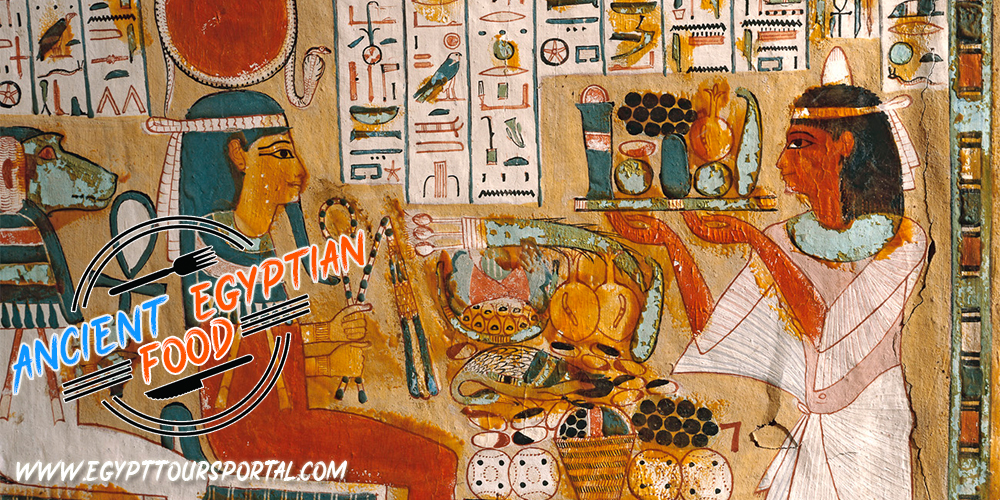
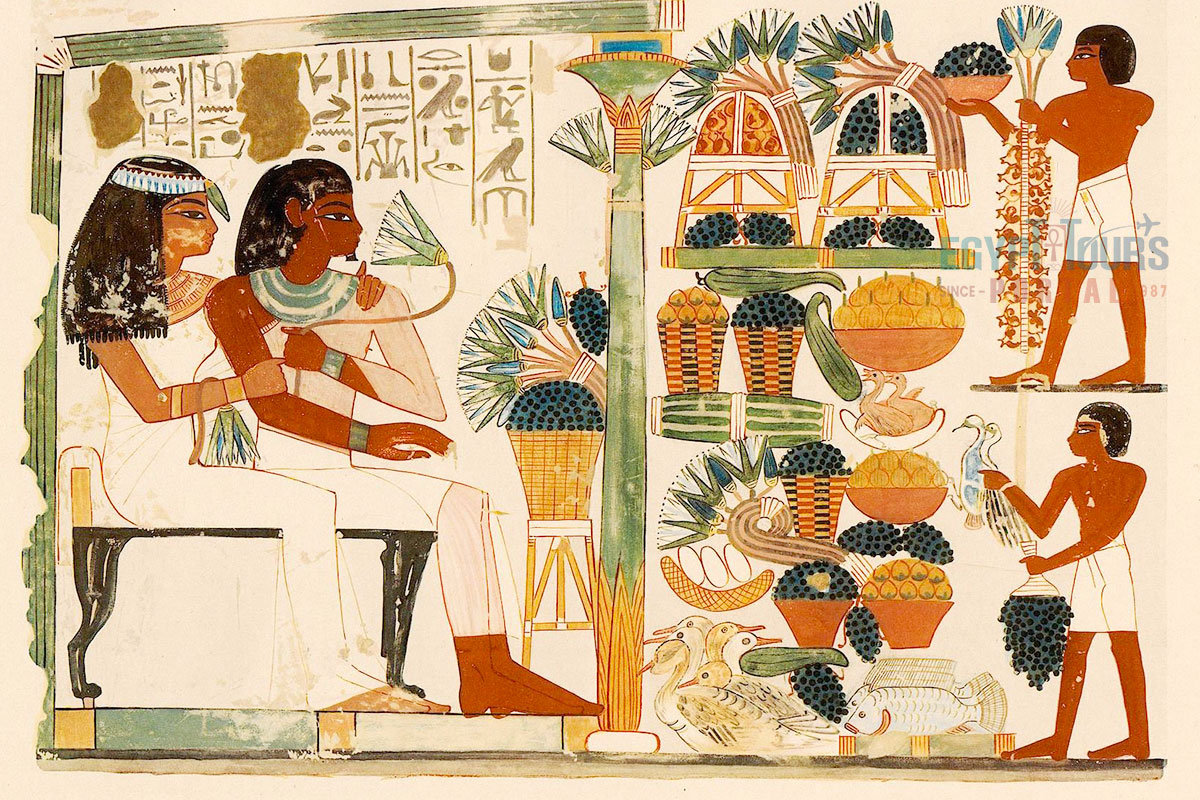
Many carvings and images can be found on temple and tomb walls showing ancient Egyptian food from Egypt old kingdom (2700–2200 B.C.E) and Egypt new kingdom (1570–1070 B.C.E). Most depictions were in the afternoon, and men and women were separated in the images unless they were married. The seating positions varied according to social status, with those in the higher status sitting on chairs while the middle class sat on stools and the lowest class sat on the raw floor. 

Before the food was passed, basins were provided with perfume cones to spread pleasant smells. The dishes consisted of stews served with great amounts of bread, fresh vegetables, and fruit, and for dessert, there were cakes baked with dates and flavored with honey.

What Did Ancient Egyptians Eat: Ancient Egyptian Food List
Foods of the Ancient Egyptian People - Egypt Tours Portal

The ancient Egyptian diet was rich in grains and vegetables, which was nutritionally adequate and sustained a large population. The Ancient Egyptian cuisine was largely shaped by the geography, the environment, and the Nile’s cycles, and the Egyptians used every resource available to ensure food security. The fertile land around the Nile River provided a wide variety of food, and the diet varied based on social status. Here is a comprehensive list of what Ancient Egyptians ate:

Staples:

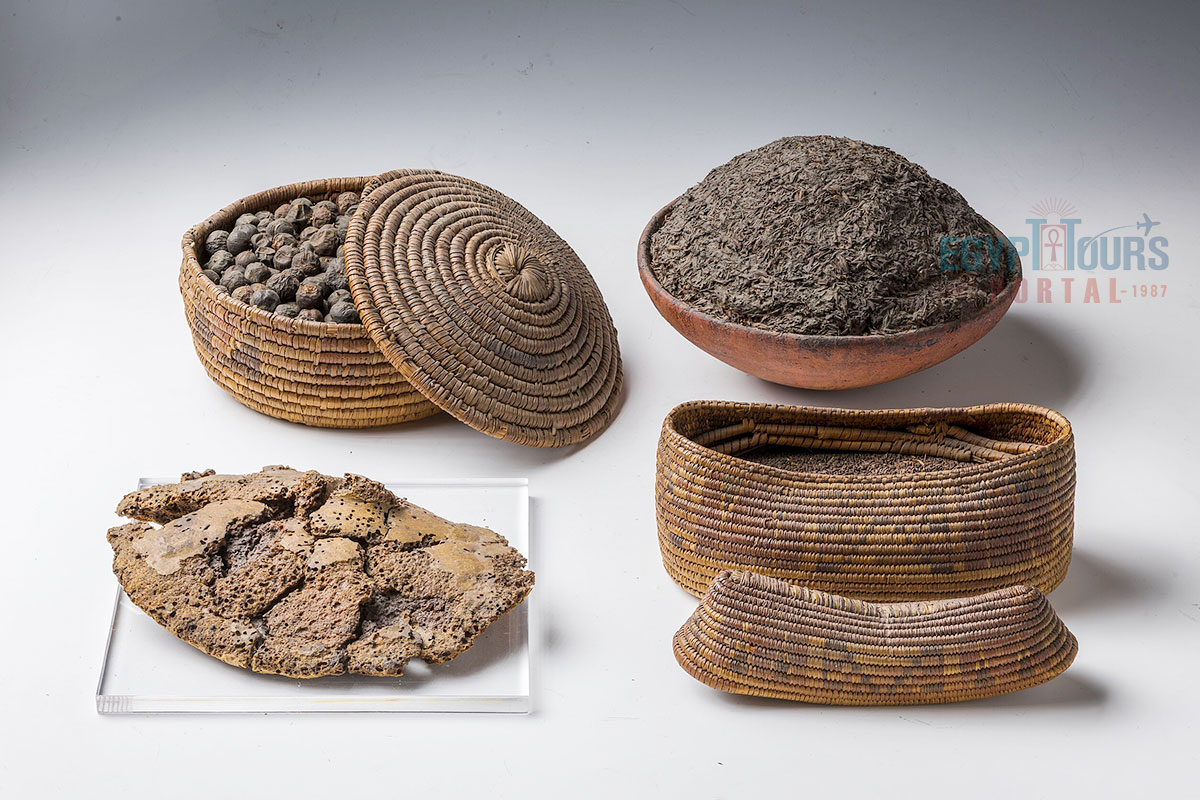
Bread: Made from emmer wheat or barley, bread was a primary component of the Egyptian diet. It was often thick and coarse due to the use of stone-ground flour, which introduced small particles of sand into the bread which causing tooth wear, which can be seen in the mummies.

Beer: Made from fermented barley, beer was a staple drink in Egypt and consumed by all classes. It was thick, more like a porridge than modern beer, and flavored with herbs or fruits. Different types (red and black beer) were categorized by alcohol content.

Wines were also made from fruits like dates, figs, and pomegranates. Wine was made in small quantities for the elite, with some imported from Greece and Mesopotamia.

Vegetables:

  • Onions, leeks, and garlic were staple vegetables and often used for flavoring dishes.
  • Lettuce was a popular leafy green, both raw and cooked.
  • Cucumbers were consumed raw or in salads.
  • Radishes, turnips, and celery were commonly grown and eaten fresh or preserved.
  • Legumes like Lentils, chickpeas, peas, and beans were important protein sources.
  • Aquatic plants like papyrus reeds were also consumed, and fruits like figs, dates, and grapes were common snacks and desserts.

Fruits:

  • Dates were eaten fresh or dried, and dates were also used as a sweetener in various dishes.
  • Figs and pomegranate fruits were widely consumed, often dried for preservation.
  • Grapes were eaten fresh, dried as raisins, or fermented into wine.

Meat and Fish:

  • Beef, lamb, and goat were consumed by wealthier Egyptians, often during religious festivals or feasts. Pork was considered unclean by the majority of Egyptians.
  • Wild game like gazelles and birds were hunted for food. Domesticated animals were raised, but meat was mainly consumed during feasts and sacrifices.
  • Poultry like Ducks, geese, pigeons, and quails were common sources of meat, with eggs also being widely consumed.
  • Fish were caught from the Nile, varieties included catfish, mullet, and tilapia. Fish were eaten fresh or preserved by salting or drying, and certain fish, like the elephantfish, were considered sacred.

Dairy:

  • Milk from both cows’ and goat’s milk was consumed.
  • Cheese and butter were made from milk, though these were rare and more available to wealthier classes.

Spices and Sweeteners:

  • Honey was the primary sweetener in Ancient Egypt, and it was highly valued.
  • Salt and herbs were used to season food. Herbs like coriander, cumin, dill, parsley, and thyme were common in the Egyptian kitchen to improve the overall taste.

Oils and Fats:

  • Oils were produced from various sources, including lettuce and radish seeds, safflower, ben, balanites, and sesame.
  • Animal fat was also commonly used in cooking, with storage jars for this fat discovered in numerous settlements.

Special Foods:

  • Lotus seeds and roots: The lotus plant was a delicacy in Egyptian culture.
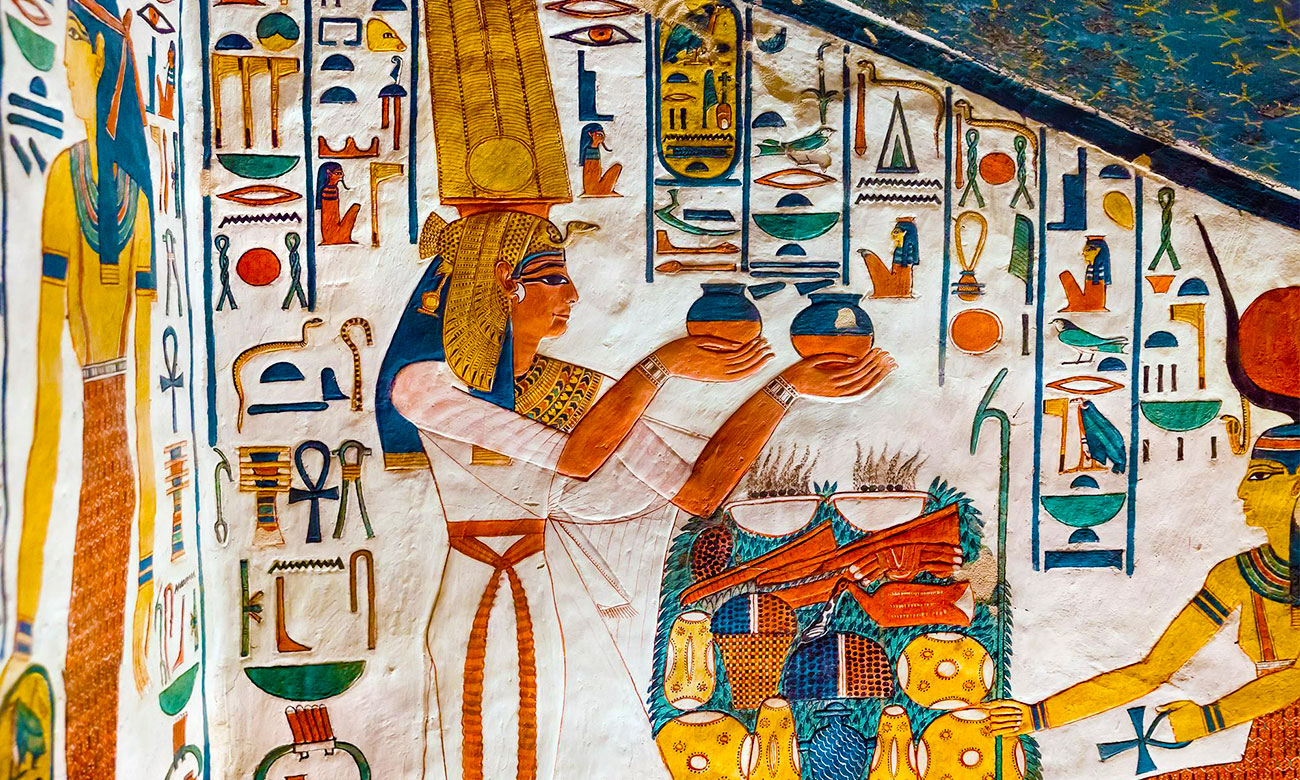
  • Bread and beer offerings: Used in religious rituals and ceremonies, often presented to the gods.
Apr 22, 2025

Ancient Egyptian People: How the Ancient Egyptians Shaped a 5000-Year Legacy of Civilization

Discover the lives and foods of the ancient Egyptian people

Learn About Ancient Egyptian Food Sources
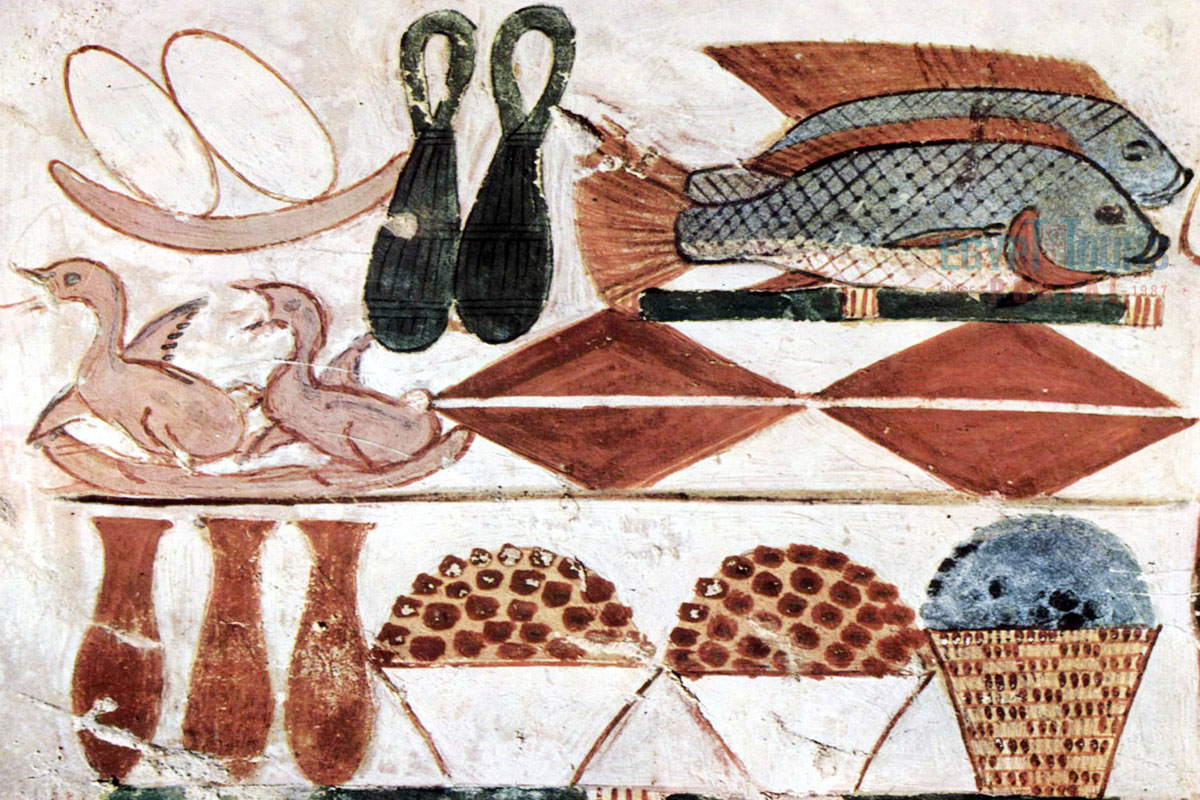
Ancient Egyptian Food Sources - Egypt Tours Portal

The main source of food for the Ancient Egyptians came from the fertile lands of the Nile River Valley, which provided ample crops for consumption. Key sources included:

Agriculture: The Nile's annual flooding deposited rich silt on the banks, making the land fertile for growing wheat, barley, lentils, vegetables, and fruits. The ancient Egyptians were skilled farmers who grew a wide variety of crops.

Fishing: The Nile River and the Mediterranean Sea were rich sources of fish. Fishing was an important food source, especially for commoners.

Livestock Farming: Egyptians raised cattle, sheep, goats, and pigs, but meat was more of a luxury for the wealthy. Poultry, such as ducks and geese, was more widely available.

Trade: Egypt traded with neighboring regions for goods such as spices, exotic fruits, and oils, allowing the wealthy to access a broader array of foods.

How Cooking in Ancient Egypt Took Place
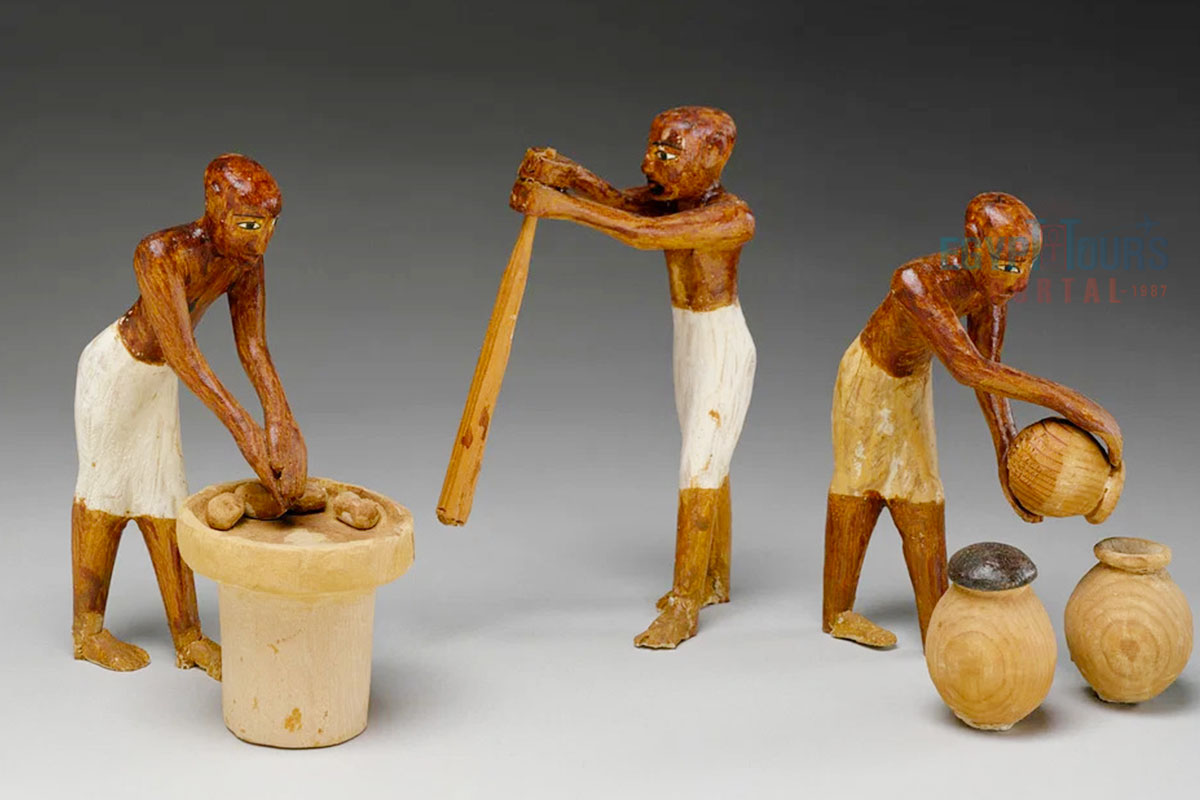
Cooking in Ancient Egypt - Egypt Tours Portal

Food preparation and cooking in ancient Egypt were a complex process involving various methods such as stewing, boiling, baking, grilling, frying, and roasting. Archaeological findings, including records and depictions in ancient Egyptian tombs and on papyrus scrolls, reveal that the Egyptians used herbs and spices to enhance flavor, although these spices were expensive imports, making them available only to the wealthy. To preserve their food, Egyptians used methods like salting meat and drying fruits, such as dates and raisins, for long-term storage.

The primary sweetener in ancient Egyptian cuisine was honey, which was harvested from wild or domesticated bees kept in pottery hives and was also a costly commodity. Cooking oils made from lettuce, safflower, beans, sesame, balanitis, and olive were commonly used, along with animal fats, which were all stored in jars for preservation.

Bread and beer, both vital staples in Egyptian diets, were often made together, as the yeast used for bread also served as a fermenting agent for beer. These staples were typically produced in dedicated bakeries, though many households made them at home, selling any surplus in the market.

Witness the Delicious Ancient Egyptian Food Recipes
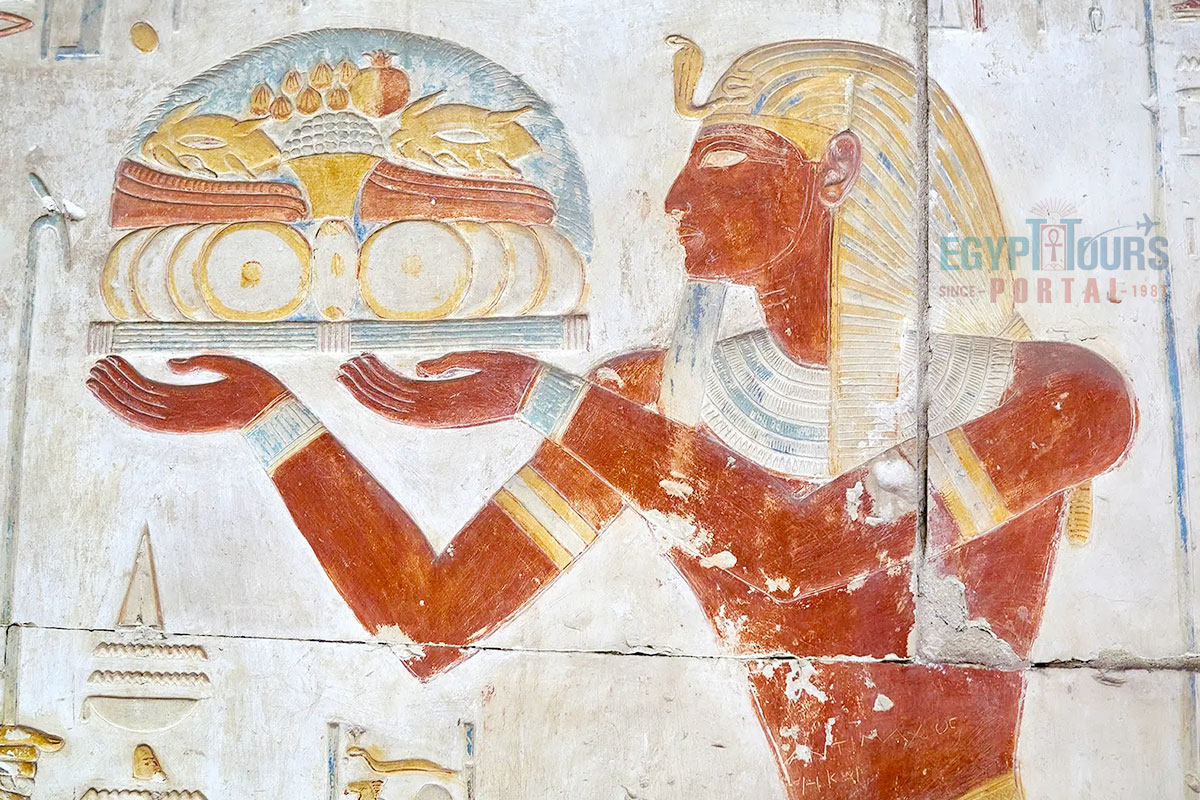
Ancient Egyptian Food Recipes - Egypt Tours Portal

Over the years, the ancient Egyptians were able to use their intelligence and creativity to create several essential recipes that harnessed the crops of their blessed environment. Here are some typical ancient Egyptian food recipes used during the golden times of the ancient Egyptian civilization:

Bread: Bread was made by mixing flour from emmer wheat or barley with water. The dough was sometimes enriched with dates, honey, or herbs. It was baked in clay ovens or on hot stones. Ancient bread was often dense and gritty due to the coarse flour used.

Beer: To make beer, barley was first sprouted, dried, and ground into a mash. This mash was mixed with water, fermented, and strained, resulting in a thick, nutritious beverage. Beer was often flavored with dates or herbs.

Lentil Stew: Lentils were boiled with onions, garlic, and leeks, seasoned with salt and herbs. Sometimes, oil or fat from animals was added to give the stew richness. It was a popular and simple dish.

Fish Preparation: Fish was cleaned, salted, and either dried or smoked for preservation. Fresh fish was grilled or boiled and served with bread or vegetables.

Duck or Goose Roasted with Figs: Wealthier Egyptians enjoyed roasted meats, especially ducks or geese. These were sometimes stuffed with figs or dates for added flavor, then roasted over an open flame or in an oven.

Some of the most common recipes in ancient Egypt included: 

1.    Besara (Broad Bean Purée)

Ingredients:

  • Egyptian broad beans
  • Cumin, coriander, parsley, salt
  • Dry bush okra

Preparation:

  1. Boil the broad beans until soft.
  2. Crush the beans into a thick, smooth paste.
  3. Add spices and herbs (cumin, coriander, parsley, and salt), along with dry bush okra.

2. Brown Lentil Soup

Ingredients:

  • Brown lentils
  • Red onions
  • Ghee or sesame paste
  • Salt, cumin, anise, dried dill
  • Water or stock

Preparation:

  1. Wash the lentils and boil over low heat for 15 minutes.
  2. Add anise and cumin.
  3. Chop the onions and fry in fat until golden brown.
  4. Add onions and dill to the lentils.
  5. Season with salt and serve.

3. Tiger-Nut Dessert (for 4 servings)

Ingredients:

  • 2 cups of tiger nuts, ground and sieved
  • 1 cup of honey
  • 2 tablespoons of butter

Preparation:

  1. Knead the ground tiger nuts and honey to form a pliable dough.
  2. Add butter and cook in a saucepan over low heat until thickened and fully cooked.
  3. Remove from the oven and leave to cool.
  4. Shape the dough into conical loaves and serve.

4. White Lotus Bread

Ingredients:

  1. Fresh lotus heads
  2. 1 cup of whole milk
  3. 1 cup of warm water for rising
  4. Pinch of salt

Preparation:

  1. Wash and extract the fruit from ripe lotus heads.
  2. Dry the fruit in the sun and grind it into flour.
  3. Mix with water, milk, and salt to form a malleable dough.
  4. Shape the dough into round loaves.
  5. Cook in a cone placed directly over the heat until fully baked.
  6. These recipes reflect the simplicity and resourcefulness of ancient Egyptian cuisine, relying on easily available ingredients like beans, lentils, honey, and lotus.

Analyze the Magical Ancient Egypt Bread
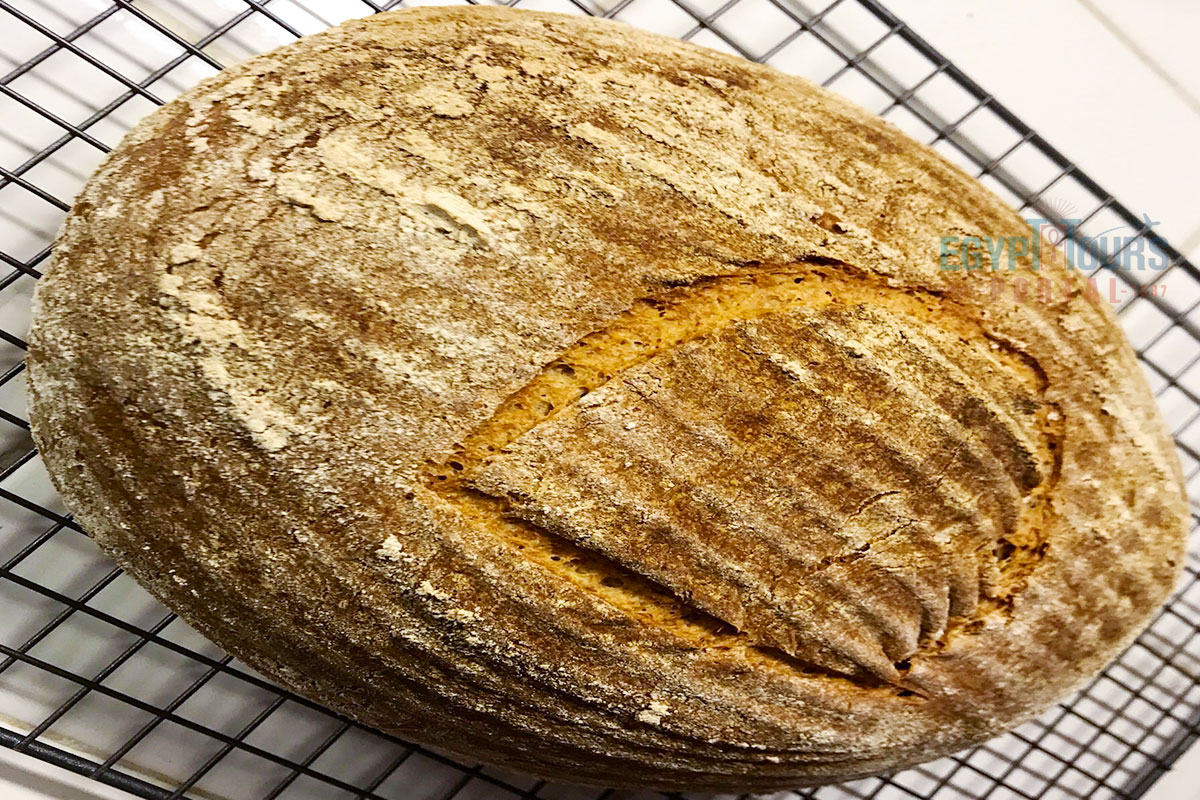
Ancient Egypt Bread - Egypt Tours Portal

The staple of ancient Egyptian cuisine was bread, which was eaten by both the rich and the poor. It was consumed daily and was made from wheat or barley. Making bread was a strenuous task were the grains first grounded into the floor by women through a grinding mill to form a flour. The sand was added into the grinder to speed up the process, which means the bread has sand in it that was the cause of many dental problems, like tooth decay, as evident in the teeth of various mummies.

When mixing the flour with water and yeast, the dough would be formed, which would then be placed in a clay mold before being cooked in a stone oven. There were fine desserts, bread, and cakes made from high-grade flour. The bread came in different sizes and shapes like human figures, fish, and many animals; they were also seasoned with coriander seeds and dates.

Taste the Tasty Drinks in Ancient Egypt
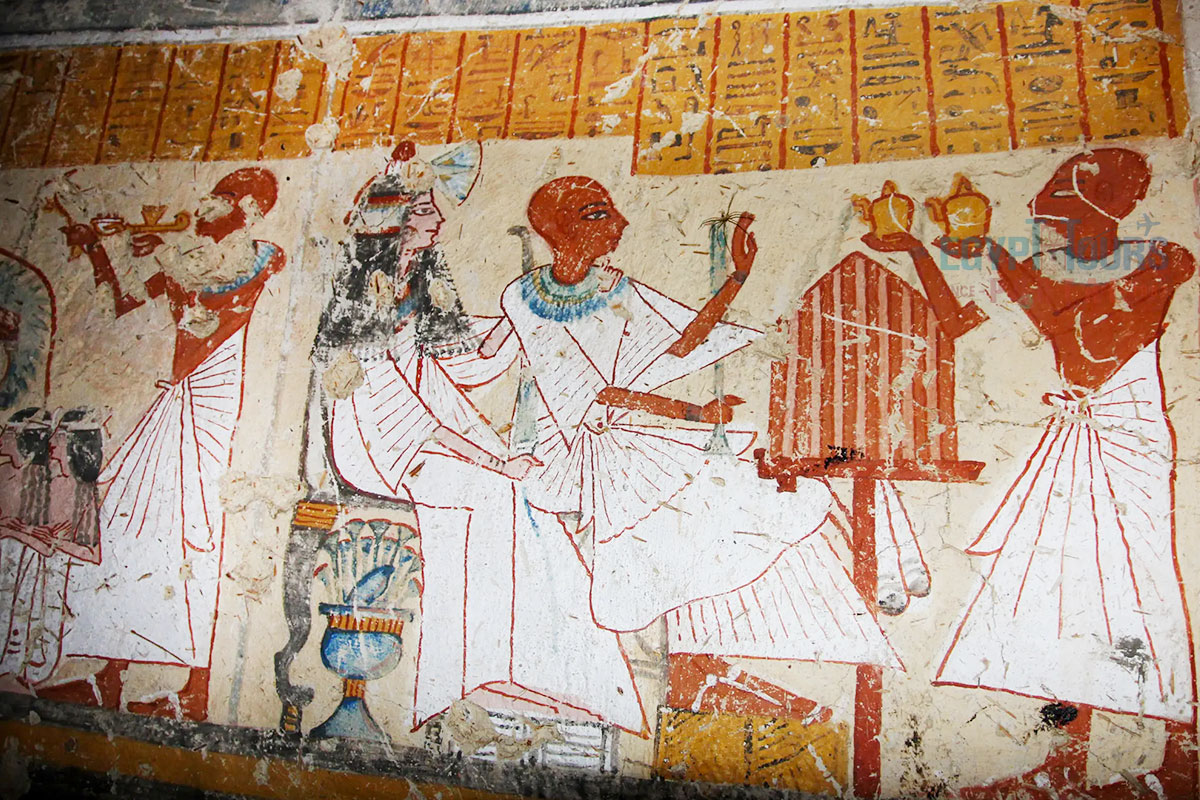
Drinks in Ancient Egypt - Egypt Tours Portal

Beer was the most common drink in Ancient Egypt, the cornerstone of ancient Egyptian beverages. It was called "Beer Bread was an important part of the Egyptian diet and was even used as a currency. Most of the ancient Egyptians did not drink water directly from the Nile, as they observed that people got sick after drinking it, so they drank beer instead. 

The Ancient Egyptians made beer by half-cooking barley, then soaking it in water and leaving it to set. It was highly nutritious food containing high protein, minerals, and vitamins. It was the same thickness as a milkshake and contained a low level of alcoholic content. The ancient Egyptians also made white and red wine from grapes, which were combined with spices and honey. They made many non-alcoholic drinks from fruits like dates.

Enjoy the Marvelous Fruits and Vegetables in Ancient Egyptian Food
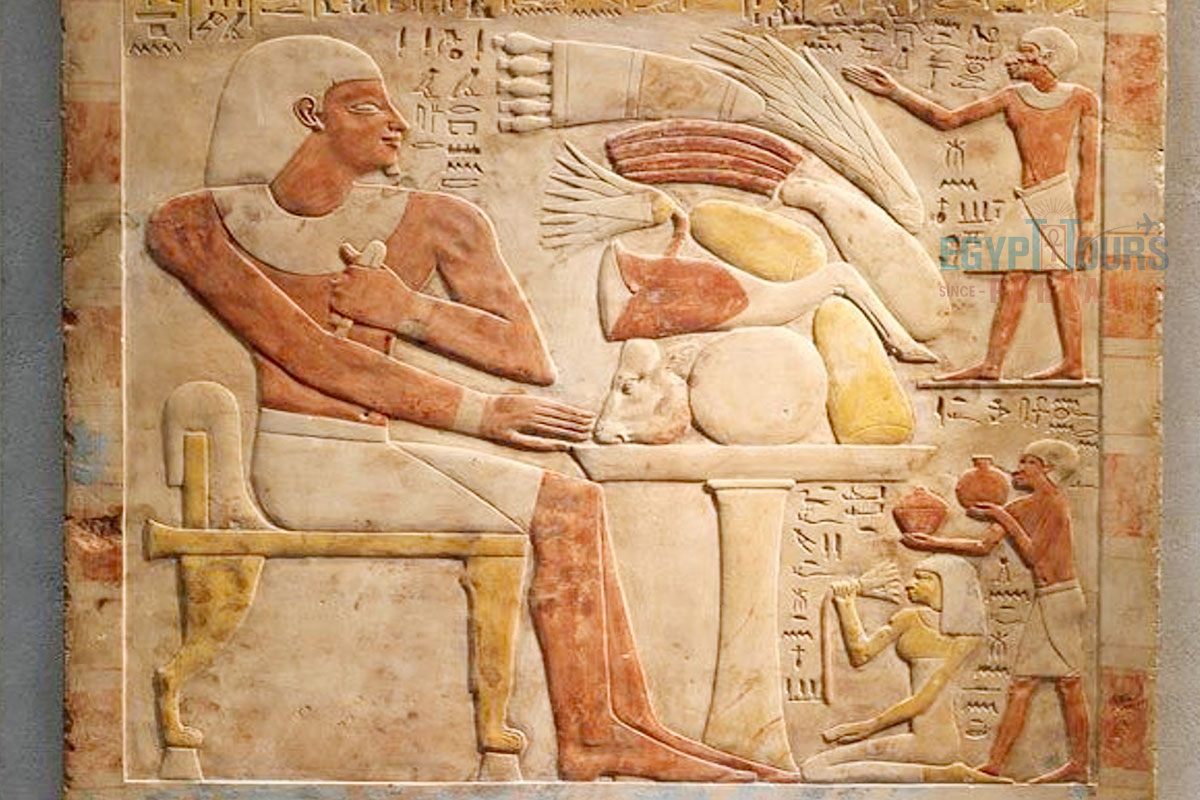
Fruits and Vegetables in Ancient Egypt - Egypt Tours Portal

Despite the fact that the Nile was not the main source of hydration, it was the main reason for the land's fertile nature and the variety of ancient Egyptian food due to its annual flooding, which allowed the plantation of various crops of fruits and vegetables.

The most common vegetables were green onions and garlic, which were used for medical purposes, plus leek, cucumber, lentils, lettuce, celery, beans, peas, lentils, radish, and turnip, plus the papyrus, which was used to create paper, was eaten raw, boiled, and even roasted. The most common fruit was dates, but they also consumed fruits like figs, grapes, melons, apples, and pomegranates.

Where Did the Meat in Ancient Egypt Come From
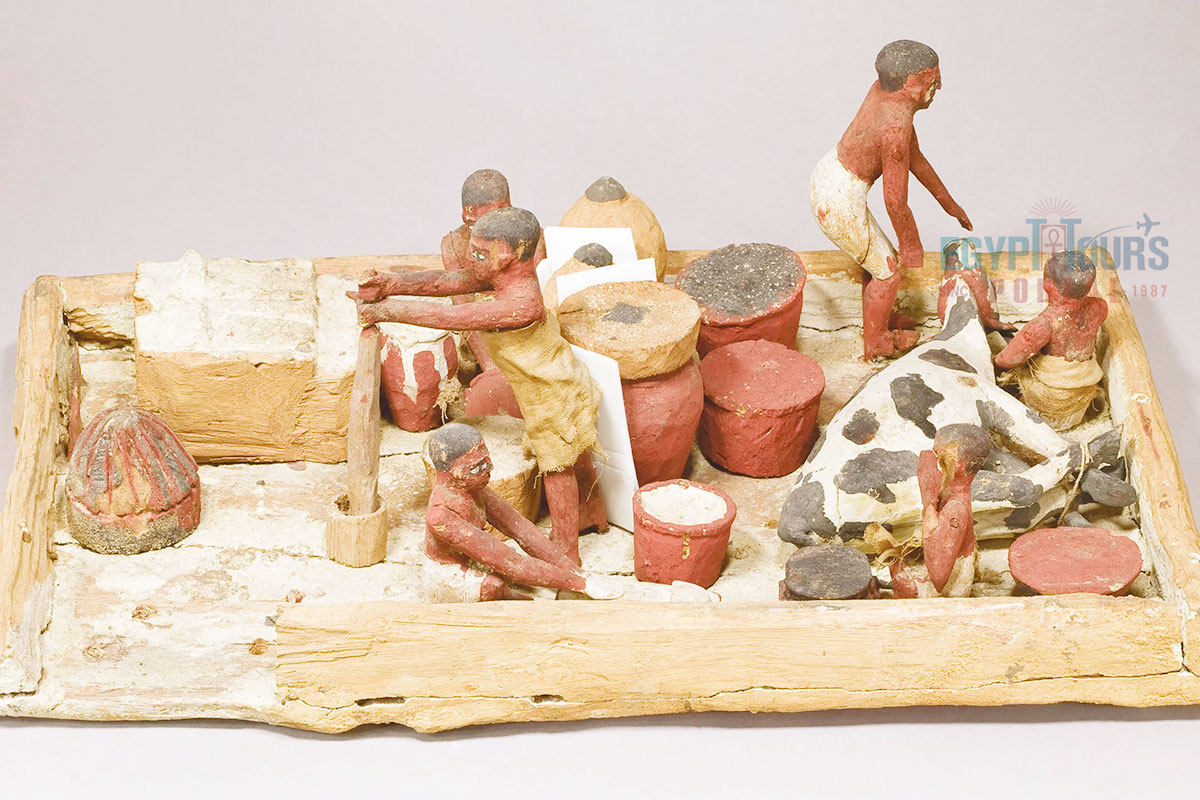
Meat in Ancient Egypt - Egypt Tours Portal

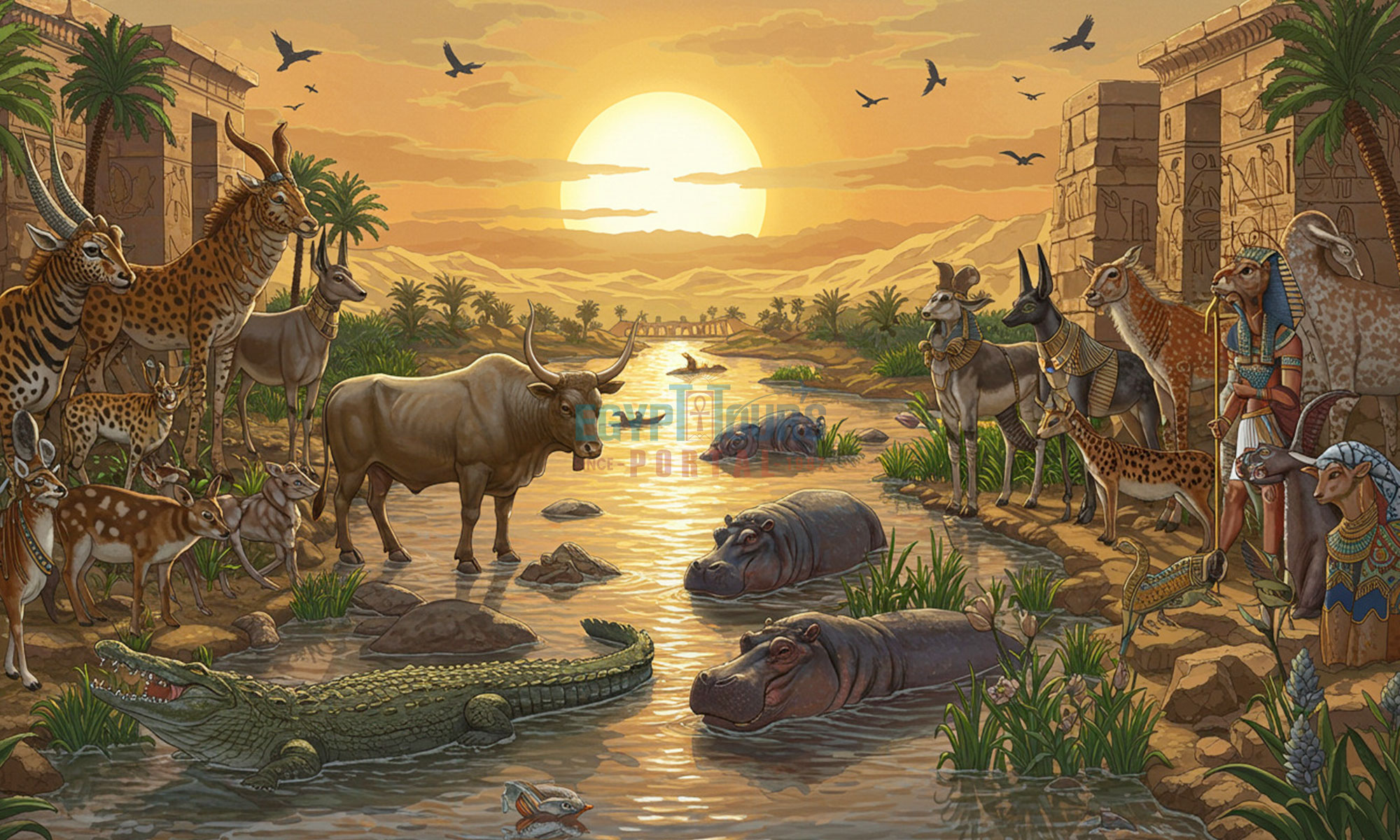
Meat was a valuable but not always readily available source of protein. While fish and poultry were more common and accessible to a wider range of people, red meat like beef was expensive and typically consumed by the ancient Egyptian nobles, the wealthy, or during special occasions. Pigs, though considered unclean by ancient Egyptian priests, were commonly consumed by the less affluent, and various wild animals such as wild boar, gazelle, antelope, hippopotamus, and crocodile were hunted, often reserved for the elite.

Cattle, particularly prized for their red meat, were highly valued, with the left foreleg being considered especially valuable. Sheep and goats were also sources of red meat, primarily for those who could afford them. Fish, a staple protein, was often preserved through drying or salting. Meat preservation techniques, including salting and drying, were widely used to extend shelf life, particularly for trade or long-distance travel.

Other preservation methods, such as smoking and curing with fat, beer, or honey, were also utilized. Meat preparation methods included boiling, roasting, and grilling, while sausages, like the spicy sogouq, and other dishes such as trotters soup were also popular in ancient Egyptian cuisine.
Dec 04, 2024

Ancient Egyptian Animals and Their Role in Daily Life and Mythology

Discover the incredible animals and meat sources of the ancient Egyptian civilization

Learn All You Can About Ancient Egyptian Food Facts

  • The food that Ancient Egyptians ate often depended on their social status. Commoners primarily ate bread, beer, and vegetables, while wealthier Egyptians had access to more meat, fruits, and imported spices.
  • Food played a significant role in religious offerings and rituals. Bread and beer were commonly presented to the ancient Egyptian gods, and after the offerings were made, priests would consume the food.
  • Due to the hot climate, Ancient Egyptians relied on drying, salting, and fermenting food to preserve it. Fish, meat, and grains were particularly prone to spoilage and thus preserved in this way.
  • Honey was the primary sweetener in ancient Egypt, as sugar was not yet available. It was often used in bread, cakes, and even in ancient Egyptian medicine.
  • The Egyptian diet, rich in vegetables, legumes, and grains, was nutritious, though the coarse bread and reliance on grain-heavy meals may have led to dental issues due to the sand in the flour.
  • The tomb of Tutankhamun is famous for its golden artifacts, but it also contained foodstuffs for his journey to the afterlife, including wheat, garlic, chickpeas, cumin, watermelon, and almonds, some of which were common in Egypt, while others, like almonds, might have been imports.
  • The kitchen was typically an open yard behind the house, equipped with a wood-fired oven, a grindstone, and storage pots. 
  • Food was served on trays or baskets, without plates, and people ate with their fingers. In family settings, everyone sat around the food and helped themselves, while at larger parties, servants served food and drinks to the guests.
  • The ancient Egyptians did use silverware like spoons, which dated back to 1500 - 2000 BC, which was made of wood, flint, and ivory, and were primarily used by Egyptian clients of the clergy and Pharaohs.
  • Ancient Egyptians stored food in clay jars, baskets, and granaries.

Enjoy Every Bite of Egypt's Greatness With Our Delicious Trips

Everything in Egypt feels like heaven, so don't miss the chance to explore the beauty and wonder of this holy country with a magical Nile river cruise and an Egypt vacation to the great cities of Cairo, Luxor, Alexandria, Hurghada, and Aswan.

ETP TEAM

Egypt Tours Portal is dedicated to preserving and sharing the rich history, culture, and mysteries of ancient Egypt, helping travelers and history enthusiasts explore Egypt’s most iconic destinations and monuments. The team consists of experienced Egyptologists, archaeologists, historians, travelers, content creators, marketers, consultants, and explorers with 5–20 years of expertise in their respective fields.

The website provides accurate, regularly updated information developed by qualified experts and supported by trusted sources to ensure reliability and educational value. Drawing on more than 39 years of industry knowledge and resources, Egypt Tours Portal offers a wide range of travel services, including Egypt tours, Nile cruises, day tours, shore excursions and multi-country tours. Their services have earned positive reviews from travelers, recognition through awards, and mentions by respected news outlets and travel blogs, delivering both educational and memorable travel experiences across Egypt.

Leave a Comment

Don't Just See Egypt. Experience It.

From private sunrise viewings at Giza to dining with local families in Aswan, unlock an extraordinary journey crafted entirely around your pacing and desires.

Private Certified Egyptologists Handpicked Heritage Stays 100% Tailor-Made Pacing Zero Hidden Service Fees
Explore Egypt Tours
Pick Your Journey

Related Tours to This Article

4 Days Cairo Tour Packages
IATA-Egypt-Tours-Portal

4 Days Cairo Tour Packages

Great journey in Egypt for 4 days Cairo tour Packages joining a private tour guide to visit Giza Pyramids complex, Coptic & Islamic landmarks in old Cairo.
Cairo – Giza
4 Days / 3 Nights Classic Tour
4 Days Cairo and Alexandria Itinerary
IATA-Egypt-Tours-Portal

4 Days Cairo and Alexandria Itinerary

Explore Cairo and Alexandria's iconic monuments on a private 4-day itinerary, complete with 5-star hotel stays. Book now to secure your journey!
Cairo / Giza / Alexandria
4 Days / 3 Nights Classic Tour
5 Days Cairo and Alexandria Tour Package
IATA-Egypt-Tours-Portal

5 Days Cairo and Alexandria Tour Package

Enjoy a 5-day Cairo and Alexandria tour with Giza Pyramids, Old Cairo, Alexandria Library, Qaitbay Citadel, Pompey's Pillar, hotels, guide and transfers.
Cairo / Giza / Alexandria
5 Days / 4 Nights Classic Tour
5 Days Cairo & Luxor Tour Package
IATA-Egypt-Tours-Portal

5 Days Cairo & Luxor Tour Package

Experience the Pyramids, Cairo, and Luxor with a private guide on our 5-day tour package. Book now for an unforgettable Cairo and Luxor adventure!
Cairo / Luxor
5 Days / 4 Nights Classic Tour
6 Days Cairo, Luxor & Aswan Holiday
IATA-Egypt-Tours-Portal

6 Days Cairo, Luxor & Aswan Holiday

Enjoy 6 Days Cairo, Luxor & Aswan tour package-joining a private tour guide to visit the most famous tourist attraction in Cairo, Luxor & Aswan. Book Now!
Cairo / Giza / Aswan / Luxor
6 Days / 5 Nights Classic Tour
6 Days Cairo and Nile Cruise Package
IATA-Egypt-Tours-Portal

6 Days Cairo and Nile Cruise Package

Exceptional 6 days Cairo and Nile Cruise package to visit Cairo & Pyramids, then Nile cruise Aswan to Luxor to visit ancient temples and tombs, Book Now!!!
Cairo / Aswan / Kom Ombo / Edfu / Luxor
6 Days / 5 Nights Classic Tour
7 Days Cairo and Hurghada Holiday
IATA-Egypt-Tours-Portal

7 Days Cairo and Hurghada Holiday

Plan your escape with a 7-day Cairo and Hurghada holiday, visiting Cairo's historical attractions and relaxing in Hurghada.
Cairo – Giza – Hurghada
7 Days / 6 Nights Classic Tour
7 Days Cairo, Luxor & Hurghada Holiday
IATA-Egypt-Tours-Portal

7 Days Cairo, Luxor & Hurghada Holiday

Enjoy a 7-day Egypt tour to Cairo, Luxor, and Hurghada with Giza Pyramids, Karnak, Valley of the Kings, Hatshepsut Temple, Red Sea snorkeling & expert guides.
Cairo – Giza – Luxor – Hurghada
7 Days / 6 Nights Classic Tour
8 Days Cairo Nile Cruise and Hurghada Tour
IATA-Egypt-Tours-Portal

8 Days Cairo Nile Cruise and Hurghada Tour

Enjoy an 8-day adventure starting in Cairo, cruising the Nile to see Luxor & Aswan's ancient sites, and then unwinding in Hurghada's Red Sea vistas.
Cairo / Giza / Aswan / Kom Ombo / Edfu / Luxor / Hurghada
8 Days / 7 Nights Classic Tour
9 Days Cairo, Luxor & Hurghada Tour Package
IATA-Egypt-Tours-Portal

9 Days Cairo, Luxor & Hurghada Tour Package

Enjoy 8 nights / 9 days Cairo, Luxor & Hurghada tour package to visit ancient Egypt monuments in Cairo & Luxor, then move to Hurghada. Book now!!!
Cairo / Giza / Luxor / Hurghada
9 Days / 8 Nights Classic Tour
9 Days Alexandria, Cairo & Sharm El Sheikh Holiday
IATA-Egypt-Tours-Portal

9 Days Alexandria, Cairo & Sharm El Sheikh Holiday

Explore Alexandria, Cairo & Sharm El Sheikh in 9 days, with iconic sights in Cairo & Alexandria, and Red Sea adventures in Sharm El Sheikh.
Cairo / Giza / Alexandria / Sharm El Sheikh
9 Days / 8 Nights Budget Tour
10 Days Egypt Tour Cairo, Nile Cruise & Hurghada
IATA-Egypt-Tours-Portal

10 Days Egypt Tour Cairo, Nile Cruise & Hurghada

Experience Cairo, cruise the Nile to visit Luxor and Aswan, and unwind in Hurghada on our comprehensive 10-day Egypt tour. Book today!
Cairo / Giza / Aswan / Kom Ombo / Edfu / Luxor / Hurghada
10 Days / 9 Nights Classic Tour
12 Days Hurghada, Cairo & Nile Cruise Holiday Package
IATA-Egypt-Tours-Portal

12 Days Hurghada, Cairo & Nile Cruise Holiday Package

Enjoy 12 Days Egypt tours to Cairo, Nile Cruise & Hurghada to visit the most famous attractions in Egypt. joining a private tour guide. Book Now!
Cairo / Giza / Aswan / Kom Ombo / Edfu / Luxor / Hurghada
12 Days / 11 Nights Classic Tour
13 Days Alexandria, Cairo, Hurghada Nile Cruise Holiday
IATA-Egypt-Tours-Portal

13 Days Alexandria, Cairo, Hurghada Nile Cruise Holiday

Enjoy 13 days Cairo and Nile cruise holidays in addition to visiting Alexandria sightseeing, then move to enjoy Red Sea holidays in Hurghada. Book Now!
Cairo / Giza / Aswan / Abu Simbel / Kom Ombo / Edfu / Luxor / Hurghada / Alexandria
13 Days / 12 Nights Classic Tour
15 Days Marvelous Tour Package in Egypt
IATA-Egypt-Tours-Portal

15 Days Marvelous Tour Package in Egypt

Reserve your 15-day Egypt tour today to explore the iconic landmarks in top tourist cities, followed by a relaxing holiday at the Red Sea in Hurghada.
Cairo/Giza/Aswan/Abu Simbel/Kom Ombo/Edfu/Luxor/Hurghada/Alexandria
15 Days / 14 Nights Classic Tour
Keep Exploring

What to Read Next

Dive deeper into this topic. Discover more insights, expert advice, and inspiration in our recommended articles.

Wed, 16 Jul 2025

ETP Team

Ancient Egyptian Medicine: The Sacred Science and Origins of Healing Practices

Discover how ancient Egyptian doctors blended magic, surgery, and herbal remedies to treat disease, shaping the foundation of modern medicine.

Sun, 03 Aug 2025

ETP Team

Ancient Egyptian Mathematics: The Foundation of Geometry and Engineering

Explore how Ancient Egyptian mathematics shaped civilization through geometry, fractions, and engineering marvels like pyramids, using advanced calculations.

Thu, 12 Jun 2025

ETP Team

Ancient Egyptian Food and Drinks: What Did They Eat and How?

Explore ancient Egyptian food recipes & drinks like bread and beer, meats, vegetables, and fruits, plus the diet of commoners and royalty, and cooking methods.

Sun, 03 Aug 2025

ETP Team

Ancient Egyptian Entertainment: Sports, Music, and Games

Discover how Ancient Egyptians celebrated life through sports, music, dance, games, and festivals, blending joy with faith in daily and sacred traditions.

Sun, 03 Aug 2025

ETP Team

Ancient Egyptian Economy: Planning Mastery & Resource Management

Discover how ancient Egypt’s detailed bureaucracy and the Nile fueled one of history’s greatest economies, blending agriculture, trade, and cultural wealth.

Mon, 04 Aug 2025

ETP Team

Ancient Egyptian Craftsmen: The Skilled Artisans Behind the Immortal Milestones of Egypt

Discover the legacy of ancient Egyptian craftsmen, stone masons, jewelers, potters, and more, whose artistry shaped Egypt’s cultural and spiritual identity.

Tue, 15 Jul 2025

ETP Team

Ancient Egyptian Calendar: Time, Nature, System, & Divine Order

Explore how the ancient Egyptian calendar used stars, Nile floods, and myth to guide farming, rituals, and daily life for over 5,000 years of civilization.

Sun, 03 Aug 2025

ETP Team

Ancient Egyptian Coins: Symbols of Power, Wealth, and Culture

Discover the history of Ancient Egyptian coins, from barter and metal weights to Ptolemaic minting, Roman influence, and the symbolism behind their design.

Sun, 03 Aug 2025

ETP Team

Discover the Life-Changing Discovery of Tutankhamun Tomb

Discovery of Tut’s tomb by Howard Carter in 1922 stunned the world, reshaping Egyptology and igniting global fixation with ancient Egypt & the Pharaoh's curse.

Sat, 17 Feb 2024

ETP Team

Ancient Egyptian Trade

Explore the ancient Egyptian trade history, goods, routes, trading partners, ships, cultural impact, and fascinating facts in this comprehensive article.

Thu, 19 Jun 2025

ETP Team

Thebes: The Eternal Capital of Ancient Egypt

Explore Thebes, Egypt’s grand capital of the New Kingdom; home to Karnak, Luxor, the Valley of the Kings, and the grand legacy of ancient Egyptian civilization.

Thu, 01 Feb 2024

ETP Team

Ancient Egyptian Art

Explore Ancient Egyptian Art history, colors, hieroglyphics, literature, paintings, sculptures, styles, papyrus, tombs, animals, martial art, and facts.

Tue, 12 Dec 2023

ETP Team

Crime & Punishment in Ancient Egypt

Punishment was one of the fundamental elements of the life of Egyptians. Read more about crime & punishment in ancient Egypt.

Thu, 06 Jun 2024

ETP Team

False Doors In Ancient Egypt

The Story of False Doors in Ancient Egypt: Examining their evolution, inscriptions, religious implications, and essential facts!

Sat, 26 Jul 2025

ETP Team

Ancient Nubia: The Culture That Shaped Egypt’s South

Explore the rich heritage of Nubian culture in Egypt, from ancient kingdoms and temples to language, crafts, and vibrant traditions still alive today.

Book With Confidence

Why Travel With Egypt Tours Portal

The "Boutique" Advantage

01

We offer private, customizable journeys tailored to your pace, moving away from the "factory-style" mass-market tours.

Gold-Standard Guides

02

Travel with elite, licensed Egyptologists who act as storytellers, not just tour leaders.

Seamless Logistics

03

24/7 "high-touch" support with a dedicated coordinator for every aspect of your multi-vendor itinerary.

2026/04/egypt-tours-portal-clients-at-giza-pyramids.jpg
04

True Customization

Our "Tailor-Made" planning workflow ensures your trip matches your specific priorities and interests.

05

Luxury & Comfort

We prioritize premium guide quality and vetted, safe hotels to ensure a stress-free environment.

06

Protection & Security

Advanced safety protocols and 24/7 emergency contact for total peace of mind during your adventure.

Book With Confidence.

Book your trip with peace of mind knowing every detail is handled with care.

Enjoy flexible options, secure payments, and dedicated support to make your journey smooth and worry-free from start to finish.

Read Our Confidence Policy

Pay Monthly

Split your total trip cost into easy monthly installments, making it more flexible and affordable for your budget.

Fast Booking

Complete your booking in just a few simple steps with a quick and streamlined process designed to save you time.

24/7 Support

Our dedicated support team is available around the clock to assist you before, during, and after your trip.

Rated 5 Stars

Highly rated by thousands of travelers for quality service, reliable experiences, and unforgettable journeys.

Pay Monthly

Split your total trip cost into easy monthly installments, making it more flexible and affordable for your budget.

Fast Booking

Complete your booking in just a few simple steps with a quick and streamlined process designed to save you time.

24/7 Support

Our dedicated support team is available around the clock to assist you before, during, and after your trip.

Rated 5 Stars

Highly rated by thousands of travelers for quality service, reliable experiences, and unforgettable journeys.

Traveler Video Reviews

Inside The Experience: Watch Authentic Traveler Stories Before Booking

Clients Feedback
https://dynamic-media-cdn.tripadvisor.com/media/photo-o/12/04/24/3e/rk-w.jpg
Erin W
Kiawah Island, South Carolina

"We had a great experience touring Aswan, Edfu, and Luxor with Mahmoud. I would highly recommend him as a guide. He adapted to our needs (2 teenagers) and kept everything interesting. He was always prompt, professional, and easy to communicate with. He was also very prompt answering questions via WhatsApp"

Read More
https://dynamic-media-cdn.tripadvisor.com/media/photo-o/1a/f6/f1/79/default-avatar-2020-21.jpg
Estelle V

"We would like to share our wonderful experience with Egypt Tours Portal. From the very first quote to our final airport drop-off, we were impressed by the professionalism, organization, and excellent communication from Walaa and the entire team. Our tour guides in both Luxor (“Habibi” was the best!) and Cairo were incredibly knowledgeable, helpful, and passionate about sharing Egypt’s history and treasures with us. We especially appreciated how thoughtfully the itinerary was planned — allowing us time to rest in the afternoons, scheduling visits during the cooler hours, and remaining flexible to accommodate our needs. Everything was smooth, well-organized, and made our trip truly memorable. We wholeheartedly recommend Egypt Tours Portal to anyone looking to discover the incredible history, culture, and wonders Egypt has to offer."

Read More
https://dynamic-media-cdn.tripadvisor.com/media/photo-o/1a/f6/e7/3d/default-avatar-2020-55.jpg
Tim K

"We had an outstanding time touring Luxor with our guide, Essra. She was knowledgeable, professional, and incredibly kind throughout the entire experience. Her explanations of Karnak Temple, Luxor Temple, the Valley of the Kings, Hatshepsut Temple, and the Colossi of Memnon brought Egypt's history to life. What really set her apart was her thoughtfulness. She made sure we stayed comfortable in the heat, surprising us with water and refreshments. She also took us to an excellent local restaurant that we never would have found on our own. Her attention to detail, genuine care, and passion for sharing Egypt made this one of the highlights of our trip. We highly recommend her to anyone visiting Luxor. On another note, the drivers we had each day were great. So professional, always on time and personable."

Read More
https://dynamic-media-cdn.tripadvisor.com/media/photo-o/1a/f6/e2/a7/default-avatar-2020-44.jpg
Will S
Bluff Park, Alabama

"We had a great vacation. Omar Haridi did our Nile Cruise and Zizi did our Cairo tour. They were amazing and very knowledgeable."

Read More
https://dynamic-media-cdn.tripadvisor.com/media/photo-o/1a/f6/ed/00/default-avatar-2020-4.jpg
Mira F

"The best experience of my lifetime! Nour, the tour guide was absolutely amazing! Went over and beyond thinking about every little thing. I had a mishap and Egypt Air overbooked my flight and bumped me to a later flight causing me to miss an entire day of activities. Nour made sure I got to do every single thing I missed that first day. But that’s not all: his knowledge of old Egypt is unparalleled, he truly brings Egypt (Aswan Luxor) alive. I’ve traveled all over the world and met many tour guides: Nour stands apart from all of them. He’s also considerate, caring and genuinely wants his guests to enjoy the trip and learn the most about the incredible history of Egypt. He’s also funny and genuinely great to be around. Please, do yourself a favor when booking a trip in Upper Egypt and ask for Nour. Hands down the best guide ever!"

Read More
https://dynamic-media-cdn.tripadvisor.com/media/photo-o/1a/f6/f6/0d/default-avatar-2020-34.jpg
Paul B
Hook, United Kingdom

"Excellent guide Mr Mohamed Osman, who was incredibly knowledgeable and very informative. Couldn't ask for more. Food on day 1 was ok, but much better at lunch on day 2. Hotel was excellent. Also our driver was excellent. All in all a great experience. Would highly recommend."

Read More
https://dynamic-media-cdn.tripadvisor.com/media/photo-o/1a/f6/eb/6d/default-avatar-2020-19.jpg
Marianna A

"Our experience in Egypt, especially in Luxor and Aswan, was truly unforgettable, and a huge part of that was thanks to our incredible guide Omar. We cannot recommend him highly enough. From the moment we met him, it was clear that he was exceptionally knowledgeable, professional, and deeply passionate about Egyptian history and culture. What made our tour extraordinary was that our guide is not only a master’s in Egyptology but is also currently pursuing a PhD in Egyptology. His depth of knowledge was absolutely remarkable. He is also very creative and artistic. Every temple, tomb, monument, and historical site came alive through his explanations. He did not simply recite facts, he explained the historical context, symbolism, religious beliefs, architecture, and fascinating stories behind everything we saw. It truly felt like we were traveling through ancient Egypt with a real scholar and expert by our side. He brought ancient Egyptian history to life by assigning us the roles of Egyptian gods and legendary heroes. Through these interactive mini-plays, we were able to experience, understand, and truly connect with the stories he shared. In Luxor, visiting Karnak Temple, Luxor Temple, the Valley of the Kings, and Hatshepsut Temple became an unforgettable educational and emotional experience because of the way he explained the history in such an engaging and easy-to-understand manner. In Aswan, his insights about Philae Temple, Nubian history, and ancient Egyptian civilization added so much depth to our trip. He answered every question thoughtfully and with incredible detail, and you could genuinely feel his passion for Egyptology. Beyond his academic expertise, he was one of the kindest and most caring people we met during our travels. He constantly made sure we were comfortable, safe, hydrated, and enjoying ourselves. He was patient, attentive, organized, and always willing to help with anything we needed. His warm personality and kindness made us feel welcomed not just as tourists, but as friends. He also paced the tours perfectly, allowing us enough time to truly appreciate each site without ever feeling rushed. His professionalism, friendliness, and genuine care created a relaxed and enjoyable atmosphere throughout the trip. Thanks to him, our visit to Egypt became far more than a vacation. It became an unforgettable journey into history and culture. If you are planning to visit Luxor, Aswan, or anywhere in Egypt, choosing this guide will be one of the best decisions you can make. He is truly exceptional, and we feel incredibly lucky to have had him as our guide. Thank you again for such an amazing experience. We will never forget it. Marianna and Khris"

Read More
https://dynamic-media-cdn.tripadvisor.com/media/photo-o/1a/f6/f0/d5/default-avatar-2020-17.jpg
James H

"This has been a tour agency and guides I can’t wait to give a glowing review to and to recommend to friends and family. Both Riham and Walid were happy to help coordinate excursions and share a wealth of knowledge. 10/10 experience"

Read More
https://dynamic-media-cdn.tripadvisor.com/media/photo-o/1a/f6/ec/a2/default-avatar-2020-3.jpg
H D

"We had a wonderful experience with the 5 day cruise. The price is wry reasonable. The best part is that the visits are done in very small numbers with a guide. It is almost like having a private guide. The food was good with lots of variety and all the staff members are very friendly and helpful. Omar Haradi, our guide was very knowledgeable and very generous with his time and with sharing his knowledge."

Read More
https://dynamic-media-cdn.tripadvisor.com/media/photo-o/1a/f6/f2/59/default-avatar-2020-24.jpg
Marlina
West Palm Beach, Florida

"We just returned home from an incredible trip to Egypt, and we cannot say enough good things about Egypt Tours. From the moment we booked our trip until the day we flew home, their communication, organization, and attention to detail were outstanding. Our adventure began in Cairo, where we were warmly welcomed at the airport by our guide, Abdulrahman Mosbah. He immediately made us feel comfortable and at ease, and our Nile River sunset cruise was the perfect introduction to Egypt. Abdul’s warm personality and infectious enthusiasm made our first day both fun and memorable. The following day, we toured with Reda Elgendy, who brought the pyramids to life with fascinating stories and historical insights. Seeing the Grand Egyptian Museum (GEM) was truly breathtaking and a highlight of our time in Cairo. In Aswan, we were greeted at the airport by Ahmed Haggag, who guided us over the next two days. Ahmed was incredibly knowledgeable, thorough in his explanations, and always kept us entertained with his great sense of humor. We learned so much while enjoying every moment of our time with him. Our final stop was Luxor, where we met Ghada Kamel. Saving the best for last, Ghada was absolutely exceptional. Her passion for Egypt’s history and culture made our visits to the temples and the Valley of the Kings unforgettable. She was engaging, informative, and truly outstanding. This trip exceeded all of our expectations. Not only did we experience some of the world’s most amazing historical sites, but each of our guides also shared valuable insights into Egyptian culture and daily life. We returned home with wonderful memories, a deeper appreciation for Egypt, and gratitude for the amazing team at Egypt Tours. We highly recommend Egypt Tours to anyone planning a trip to Egypt. It was truly the trip of a lifetime!"

Read More
https://dynamic-media-cdn.tripadvisor.com/media/photo-o/1a/f6/de/5a/default-avatar-2020-36.jpg
Alejandro M

"We loved it, great experience and treatment. Our guide Noah had great knowledge of the subject. Thank you very much."

Read More
https://dynamic-media-cdn.tripadvisor.com/media/photo-o/1a/f6/f0/d5/default-avatar-2020-17.jpg
Jeff T

"Our trip in May 2026 was fantastic! We saw all the major wonders of Egypt! Our incredibly knowledgeable guide Walid Ahmed met us at the hotel and was great at explaining all the particular uniqueness of each tomb and temple, inserting background myths and stories, keeping our tour on track, taking and sharing so many pictures so we could be in them as a couple and helping us navigate local customs. We strongly recommend Egypt, the tour and Walid!"

Read More
https://dynamic-media-cdn.tripadvisor.com/media/photo-o/1a/f6/e7/3d/default-avatar-2020-55.jpg
Joe P

"We had a wonderful week long vacation in Egypt, split between Cairo and Luxor. The tour was very professionally run with excellent communication starting weeks before our arrival and then nearly daily while in Egypt. A highlight was our English-speaking guide in Luxor, Walid Ahmed, who was extremely knowledgeable and exceptionally kind. The tour was flexible and accommodating, allowing last minute special detours and restaurant choices. Overall, it was one of the best vacations of our life."

Read More
https://dynamic-media-cdn.tripadvisor.com/media/photo-o/1a/f6/f1/79/default-avatar-2020-21.jpg
Damien B

"We had Ahmed Refaat as our family guide in Cairo, and he truly made our trip to Egypt unforgettable. His positive attitude, passion for Egypt’s history and culture, and incredible patience made all the difference throughout our stay in Cairo. Ahmed brought every site to life with fascinating explanations and was always attentive to our needs, making the experience enjoyable for both adults and children. We especially recommend him for visits to Saqqara and the Grand Egyptian Museum (GEM), where his deep knowledge and enthusiasm greatly enhanced our understanding and appreciation of these extraordinary places. Without any hesitation, we highly recommend Ahmed Refaat to anyone visiting Egypt. Thank you again for helping create such wonderful memories for our family!"

Read More
https://dynamic-media-cdn.tripadvisor.com/media/photo-o/1a/f6/ef/73/default-avatar-2020-13.jpg
Departure20554993605

"Knowledgeable guide, clean vehicle, interesting stories about the sites. Tour guide: Muhmmed Abd El-aal was very nice to be in the company of, dry attentive and honest."

Read More
HELP CENTER

Frequently Asked Questions

Food preparation in Ancient Egypt was mainly a household activity that was performed by wives and female family members, who were primarily responsible for cooking and preparing food. In wealthier households, servants often handled this work. For religious ceremonies or offerings to gods, priests or temple staff prepared the sacred meals. Professional cooks and bakers in royal households managed food preparation for the Pharaoh and nobility, with specialized chefs for bread, meats, and other delicacies.
Ancient Egyptians stored food in clay jars, baskets, and granaries. These storage vessels were often sealed with clay or mud to keep food fresh and protect it from pests like insects and rodents. Grain was the staple of the Egyptian diet which was stored in large silos or granaries, typically near temples, homes, or farms. These storage systems helped Egyptians manage their harvests and maintain a steady food supply, especially during the annual flooding of the Nile, which could affect food availability.
Egyptian priests had very strict diets as part of their religious obligations. They primarily consumed clean and pure foods that were ritually prepared. Staples included bread, vegetables, fruits, fish, and occasionally meat. Priests avoided certain foods like fish on religious grounds, as some types were considered impure. Offerings made to the gods often included bread, beer, wine, and fruits, and priests would consume a portion of these offerings after rituals.
Pharaohs enjoyed a rich and varied diet that reflected their wealth and status. Their meals included fine breads, honey, fruits such as figs and dates, various vegetables, and meats like beef, lamb, and poultry. They also consumed fish, and the finest wines and beers were served at royal banquets. Pharaohs had access to exotic foods that were not commonly available to ordinary Egyptians, such as rare spices or imported delicacies from neighboring regions. They dined in luxury, often with meals carefully prepared by royal chefs.
Farmers in Ancient Egypt typically kept a portion of their harvest for personal consumption and used the rest to pay taxes or trade. The central administration, including temples and the Pharaoh’s granaries, collected much of the surplus food. Farmers stored grains like wheat and barley in their granaries, often located near their homes or fields, but large portions were allocated to the state as a form of tribute. The food distribution system ensured that the farmers had enough for their households while supporting the needs of the kingdom and the gods. Their saved portion would often be traded for meats, fish, fruits, and vegetables.
Ancient Egyptian food was simpler and largely plant-based compared to modern diets. Bread, made from emmer wheat or barley, and beer were the staple foods, while fruits, vegetables, legumes, and fish were common. Meat, though eaten, was less frequent for commoners and reserved for special occasions. Today’s food includes a wider variety of ingredients, modern farming methods, and technological preservation methods that allow for the availability of diverse and processed foods. Ancient Egyptian cuisine lacked processed sugars, refined grains, and modern spices, relying more on local ingredients like honey for sweetening and herbs for flavor.
The Egyptians were keenly aware of food preservation techniques to prevent food waste. Due to the hot and arid climate of Egypt, food spoiled relatively quickly if not properly preserved. To extend the shelf life, Ancient Egyptians developed methods like drying, salting, and fermenting. Grains and dried foods, such as dates and legumes, could last for long periods when stored properly in sealed containers or granaries. Meat and fish were often salted or dried to prevent spoilage. Fresh produce and cooked food would spoil within a few days in the absence of refrigeration, which did not exist at the time.
The entire country of Egypt deserve to be explored with its every heavenly detail but there are places that must be seen before any other such as the breathtaking Hurghada's red sea, The wonders of Cairo the pyramids of Giza, the great sphinx, the Egyptian Museum, Khan El Khalili Bazaar, the wonders of Luxor like Valley of the Kings, Karnak & Hatshepsut temple and the wonders of Aswan such as Abu Simbel temples, Philea temple, Unfinished obelisk and The Wonders of Alexandria like Qaitbat Citadel, Pompey's Pillar and Alexandria Library. Read more about the best places to visit in Egypt.
If you want to apply for a Visa On Arrival that lasts for 30 days then you should be one of the eligible countries, have a valid passport with at least 6 months remaining and pay 25$ USD in cash, as for the E-Visa for 30 day you should have a valid passport for at least 8 months, complete the online application, pay the e-visa fee then print the e-visa to later be presented to the airport border guard. You could also be one of the lucky ones who can obtain a free visa for 90 days. Read more about Egypt travel visa.
Egypt has a variety of delicious cuisines but we recommend "Ful & Ta'meya (Fava Beans and Falafel)", Mulukhiya, "Koshary", a traditional Egyptian pasta dish, and Kebab & Kofta, the Egyptian traditional meat dish. Read more about Top Traditional Egyptian Food.
The best time to travel to Egypt is during the winter from September to April, as the climate becomes a little tropical, accompanied by a magical atmosphere of warm weather with a winter breeze. You will be notified in the week of your trip if the Climate is unsafe and if any changes have been made. Read more about Best Time to Visit Egypt.
You should pack everything you could ever need in a small bag so you can move easily between your destinations. Read more about What to Pack for Your Egypt Tour.
We have been creating the finest vacations for more than 20 years around the most majestic destinations in Egypt. Our staff consists of the best operators, guides and drivers who dedicate all of their time & effort to make you have the perfect vacation. All of our tours are customized by Travel, Financial & Time consultants to fit your every possible need during your vacation. It doesn't go without saying that your safety and comfort are our main priority and all of our resources will be directed to provide the finest atmosphere until you return home.
You will feel safe in Egypt as the current atmosphere of the country is quite peaceful after the government took powerful measures like restructuring the entire tourist police to include all the important and tourist attractions in Egypt. Read more about is it safe to travel to Egypt.
Wear whatever feels right and comfortable. It is advised to wear something light and comfortable footwear like a closed-toe shoe to sustain the terrain of Egypt. Put on sun block during your time in Egypt in the summer to protect yourself from the sun.
The best activity is by far boarding a Nile Cruise between Luxor and Aswan or Vise Versa. Witness the beauty of Egypt from a hot balloon or a plane and try all the delicious Egyptian cuisines and drinks plus shopping in old Cairo. Explore the allure and wonders of the red sea in the magical city resorts of Egypt like Hurghada and many more by diving and snorkeling in the marine life or Hurghada. Behold the mesmerizing western desert by a safari trip under the heavenly Egyptian skies.
There are a lot of public holidays in Egypt, too many to count, either religious or nation, the most important festivals are the holy month of Ramadan, which ends with Eid Al Fitr, Christmas, and New Year's Eve. Read more about festivals & publich holidays in Egypt.
Egypt is considered to be one of the most liberal Islamic countries but it has become a little bit conservative in the last couple of decades so it is advised to avoid showing your chest, shoulders or legs below the knees.
Arabic is the official language and Most Egyptians, who live in the cities, speak or understand English or at least some English words or phrases. Fewer Egyptians can speak French, Italian, Spanish, and German. Professional tour guides, who work in the tourism sector, are equipped to handle visitors who cannot speak Arabic and they will speak enough English and other languages to fulfill the needs of all our clients.
The fastest way is a car, of course, a taxi. If you are in Cairo ride a white taxi to move faster or you could board the fastest way of transportation in Egypt metro if the roads are in rush hour.
The temperature in Egypt ranges from 37c to 14 c. Summer in Egypt is somehow hot but sometimes it becomes cold at night and winter is cool and mild. The average of low temperatures vary from 9.5 °C in the wintertime to 23 °C in the summertime and the average high temperatures vary from 17 °C in the wintertime to 32 °C in the summertime. The temperature is moderate all along the coasts.
It is the home of everything a traveler might be looking for from amazing historical sites dating to more than 4000 years to enchanting city resorts & beaches. You will live the vacation you deserve as Egypt has everything you could possibly imagine.
Our Partners

Partners Who Share Our Vision of Quality Travel

Partner Logo
Partner Logo
Partner Logo
Partner Logo
Partner Logo
Partner Logo
Partner Logo
Partner Logo
Partner Logo
Partner Logo