Whatsapp Me
We’re nominated for Egypt’s Leading Travel Agency 2026 – Your vote matters! Vote Now
Egypt Tours Portal
Cairo Monuments

Memphis: The First Great Capital of Ancient Egypt

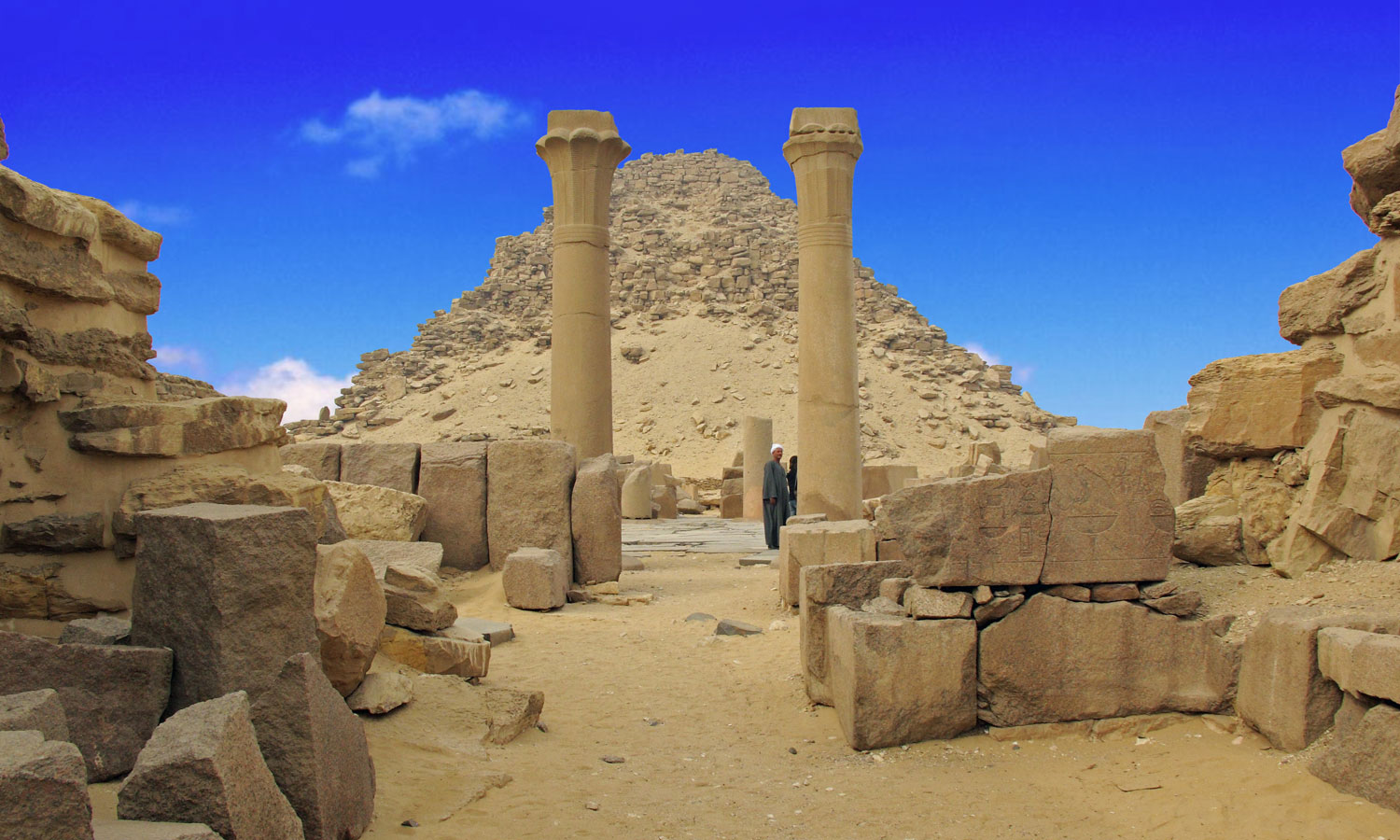
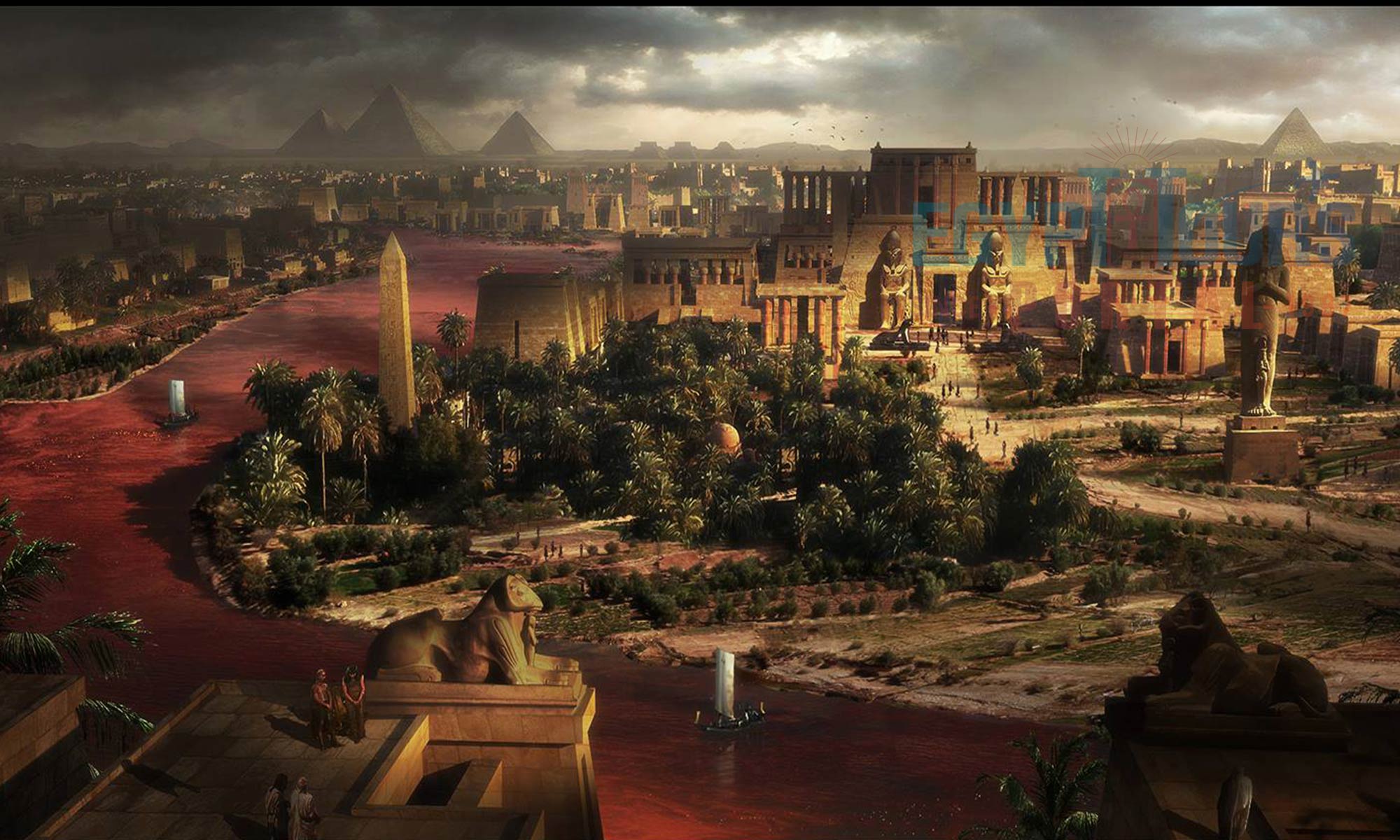
Memphis was one of ancient Egypt’s greatest cities and served as a major capital, religious center, royal residence, industrial hub, and gateway between Upper and Lower Egypt. Located near modern Mit Rahina about 20 km south of Cairo, it was sacred to Ptah, whose great temple Hut-ka-Ptah formed the heart of the city and may have influenced the modern name “Egypt.” Across its long history, Memphis witnessed the rise of dynasties, royal coronations, temple building, foreign invasions, Persian rule, Alexander the Great’s coronation, and Ptolemaic religious decrees such as the one preserved on the Rosetta Stone. Its remains include temples, palaces, statues of Ramesses II, the Apis cult, the Memphite Necropolis, and evidence of foreign communities and trade. Although the city declined after Alexandria, Christianity, and the rise of Fustat, modern excavations revealed its former glory as Egypt’s first great capital and one of the most important archaeological landscapes in the world.

ETP TEAM
Written by ETP TEAM
Published Nov 18, 2017 Updated May 04, 2026 22 min read

Memphis: The First Great Capital of Ancient Egypt

Summary

  • Memphis was one of ancient Egypt’s earliest and most important capitals, serving as a political, religious, industrial, and royal center from the Early Dynastic Period and Old Kingdom.
  • The city stood near Mit Rahina, Badrashin, Giza Governorate, about 20 km south of Cairo, in a strategic position between Upper and Lower Egypt.
  • Memphis was sacred to Ptah, god of creation and craftsmanship, whose Great Temple, Hut-ka-Ptah, became the spiritual heart of the city.
  • Its archaeological remains include the Great Temple of Ptah, temples of Ramesses II, Merneptah, Hathor, Apis, Amun, Aten, colossal statues of Ramesses II, royal palaces, and the Memphite Necropolis.
  • Memphis declined after the rise of Alexandria and later Fustat, but its ruins and necropolis, including Saqqara and nearby pyramid fields, were listed by UNESCO in 1979.

Memphis is the most significant and ancient Egyptian city, which served as the first major capital during the Early Dynastic Period and the Old Kingdom of Egypt (2686–2181 BCE) after Menes ' unification of Egypt. Memphis was a political capital, religious center, industrial hub, royal residence, and gateway between Upper and Lower Egypt. Ancient tradition, recorded by the Egyptian priest Manetho, connected its foundation with King Menes, the legendary ruler associated with the unification of Egypt. The city was already in existence before the 31st century BC and remained important for thousands of years until its decline in late antiquity and abandonment by the 7th century AD.

What makes Memphis special is its strategic position at the mouth of the Nile Delta, where it controlled movement, trade, administration, and communication between northern and southern Egypt. It became the heart of Egypt’s early state and remained closely tied to the history of the country itself. Its great port, Peru-nefer, contained workshops, factories, warehouses, and distribution centers that helped move food and goods across the kingdom. 

Memphis was also sacred to Ptah, the god of craftsmen and creation, whose great temple Hut-ka-Ptah, meaning “Enclosure of the ka of Ptah,” was one of the city’s most important monuments. The Greek rendering of this temple name is believed to be connected to the origin of the modern name Egypt. Today, Memphis and its vast necropolis, including pyramid fields such as Giza, Saqqara, Abusir, Dahshur, and Abu Gorab, form a UNESCO World Heritage landscape and an open-air museum that preserves the memory of Egypt’s first ever capital.

The Grand Meaning Behind Memphis Etymology and Meaning
Memphis City Name - Egypt Tours Portal

Memphis had several names over nearly four millennia, and each name reveals a different part of its identity. One of its earliest ancient Egyptian names was Inebu-hedj, meaning “White Walls.” This may refer to the city’s early fortifications, palace walls, or symbolic association with royal authority.

Another important name was Ankh-Tawy, meaning “Life of the Two Lands,” which emphasized Memphis’s powerful position between Upper Egypt and Lower Egypt. This name appears especially from the Middle Kingdom of Egypt (2040–1780 BCE)  and reflects the city’s role as a symbolic and practical link between the two halves of the country.

The name most closely connected with “Memphis” is Men-nefer, meaning “Enduring and Beautiful.” This name originally referred to the pyramid complex of Pepi I west of the city, but it later became associated with the wider city itself. In Coptic, it became Memfi, and in Greek it was adapted as Memphis. In the Bible, the city appears as Noph or Moph. 

The nearby modern village of Mit Rahina has also been linked by some to an ancient phrase meaning “Road of the Ram-Headed Sphinxes,” referring to a processional route connected with the burial of the sacred Apis bull at Saqqara, although this explanation is rejected by many Egyptologists, who connect the village’s name more cautiously with earlier Arabic forms.

Discover the Answer to Where Is Memphis In Egypt?
Memphis Location - Egypt Tours Portal

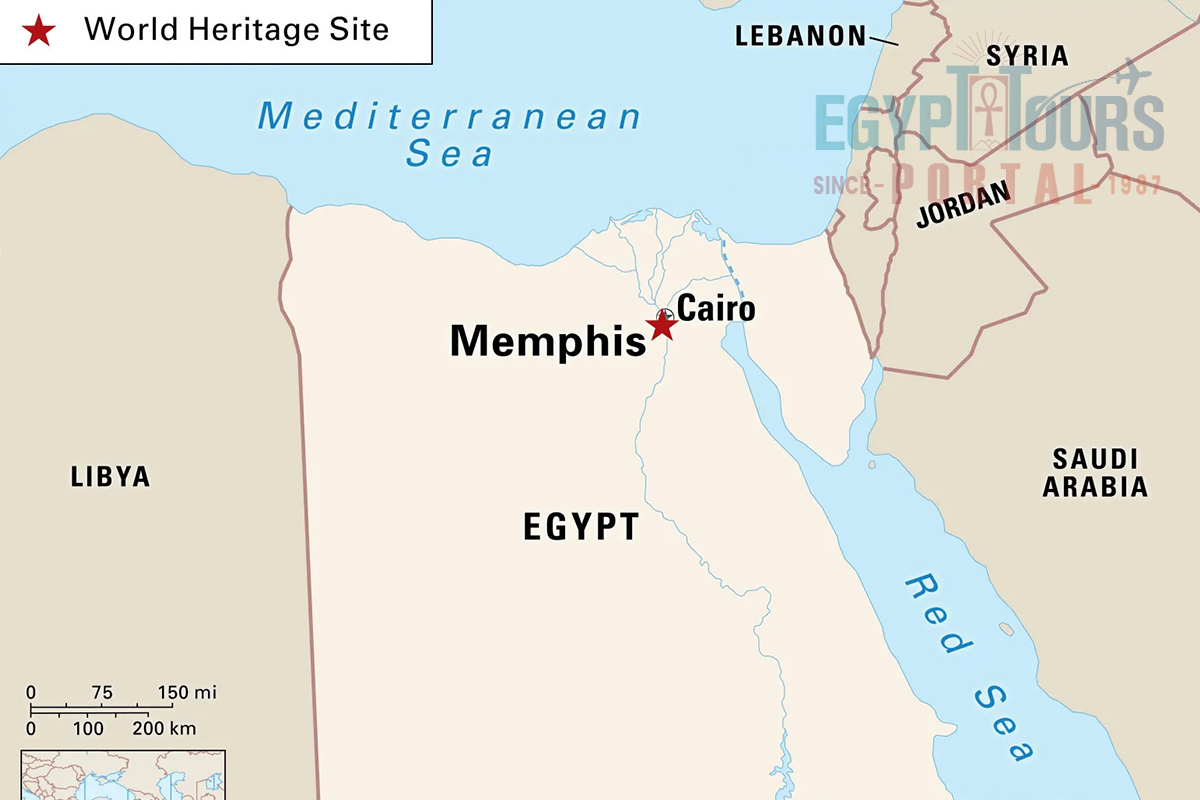
Memphis is located in Mit Rahina, in the Badrashin district, Giza Governorate of Egypt. It lies in Lower Egypt, about 20 km / 12 miles south of Cairo, on the west bank of the Nile River. Its coordinates are approximately 29°50′58″N, 31°15′18″E. This location was highly strategic because it stood near the meeting point between the Nile Valley and the Nile Delta, allowing Memphis to control traffic, trade, administration, and military movement between Upper and Lower Egypt.

The wider historical zone of Memphis included areas now associated with Mit Rahina, Saqqara, Dahshur, Abusir, Abu Gorab, and Zawyet el-Aryan. These sites formed a huge cultural and funerary landscape stretching westward into the desert plateau for more than 30 km / 19 miles, including some of Egypt’s most famous pyramids and royal necropolises. 

The city also marked a boundary zone between the 22nd nome of Upper Egypt and the 1st nome of Lower Egypt, strengthening its identity as the place where the Two Lands met. Today, the archaeological remains of Memphis are open to the public as an open-air museum, where visitors through our Memphis tours can cast their eyes on the most incredible colossal statues, sphinxes, temple remains, and fragments of the city’s once-great sacred and royal architecture.

Oct 18, 2020

Ancient Egyptian Cities: Centers of Power, Faith, and Innovation

Explore all the Magical Cities of the Golden Cities of Egypt


The Ancient Population of the Golden City of Memphis
Population of Memphis in the Old Kingdom - Egypt Tours Portal

The population of ancient Memphis is difficult to calculate with certainty because the city existed for thousands of years, changed in size across different periods, and much of its urban area is now buried or destroyed. Today, the actual footprint of the ancient city is uninhabited, while the nearest modern settlement is Mit Rahina. Ancient population estimates vary widely depending on the scholar and method used.

According to Tertius Chandler, Memphis may have had around 30,000 inhabitants and may have been one of the largest settlements in the world from its foundation until about 2250 BC, and again from 1557 to 1400 BC.

Other scholars are more cautious. Egyptologist K. A. Bard estimates that the city’s population during the Old Kingdom may have been closer to 6,000 inhabitants. The difference between these estimates reflects how difficult it is to reconstruct ancient urban populations, especially in a city like Memphis, where administrative, religious, industrial, and residential zones may have spread over a very large area.

Regardless of the exact number of ancient Egyptian People, Memphis was clearly one of ancient Egypt’s most important urban centers, housing royal officials, priests, craftsmen, merchants, laborers, soldiers, and workers connected with temples, ports, workshops, and nearby necropolises.
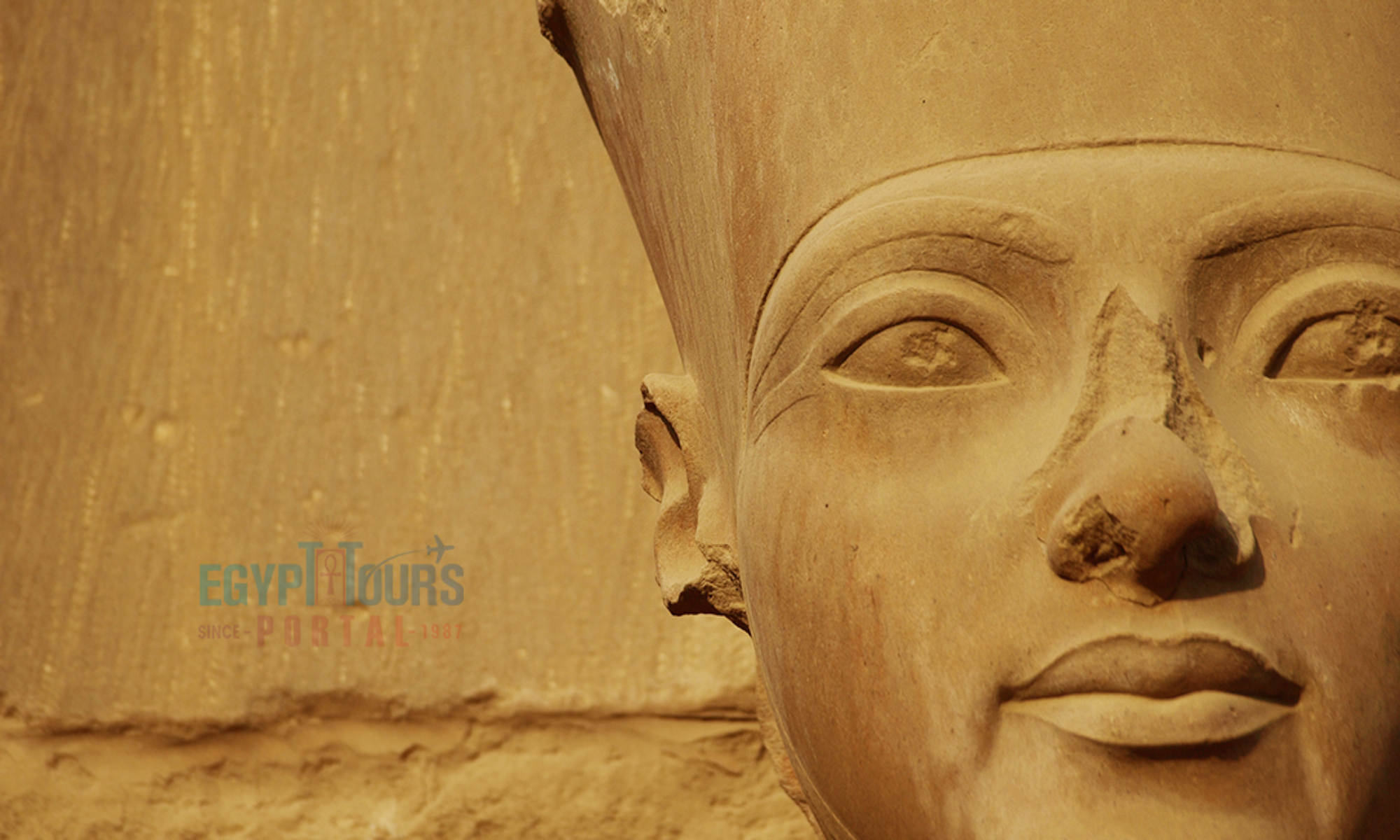
Apr 22, 2025

Ancient Egyptian People: How the Ancient Egyptians Shaped a 5000-Year Legacy of Civilization

Discover the spectacular lives of ancient Egyptian People


Explore the Rich History of the Ancient Capital City of Memphis
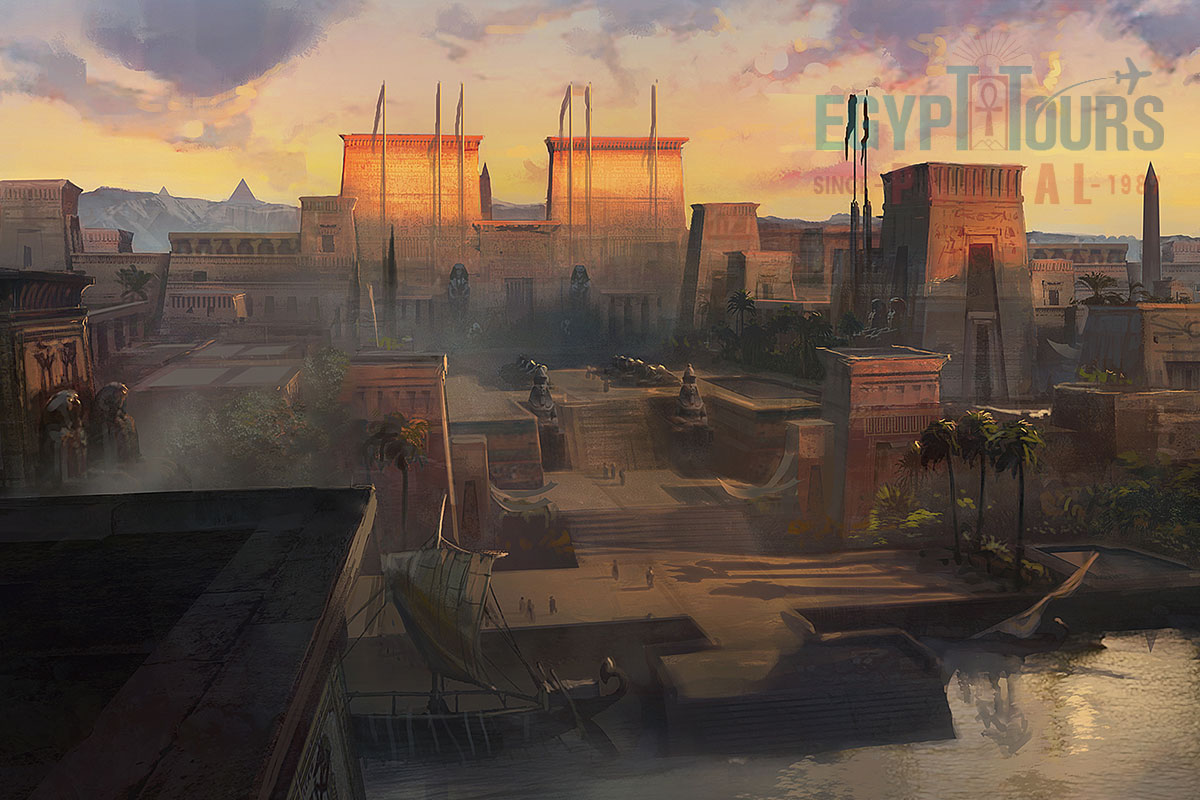
Memphis History - Egypt Tours Portal

Memphis was one of ancient Egypt’s earliest and most important capitals, serving as the political center for more than six consecutive dynasties during the Early Dynastic Period and Old Kingdom, and reaching major prestige under the Sixth Dynasty as the sacred city of Ptah, god of creation, craftsmanship, and art. Its religious identity centered on the Memphite Triad of Ptah, Sekhmet, and Nefertem, while the alabaster sphinx of the Temple of Ptah still reflects its former power. 

According to Manetho, Memphis was founded by Menes, the legendary unifier of Upper and Lower Egypt, who supposedly diverted the Nile with dikes; Herodotus repeated a similar story, though scholars debate whether Menes was mythical, identical with Narmer, or preceded by earlier rulers, especially after a 2012 inscription showed Iry-Hor visited Memphis before Narmer.

From the First Dynasty onward, Memphis, known as Ineb-hedj or “White Walls,” controlled the newly united kingdom, while Djoser’s Saqqara complex, coronations, Sed festivals, the Temple of Ptah, priestly records, and the Palermo Stone show its central role in royal power, religion, and funerary ideology. 

The city expanded into a vast megalopolis connected to Giza, Saqqara, and pyramid fields, with craftsmen’s camps, sacred enclosures, ports, roads, and canals centered around the Temple of Ptah. In the Middle Kingdom, although political power shifted to Thebes, Memphis remained a major commercial and artistic center, with 12th Dynasty kings such as Amenemhat I, Amenemhat II, Senusret II, and Amenemhat III contributing to religious architecture; high priests of Ptah built mastabas near Saqqara, some 13th Dynasty kings were buried there, and around 1650 BC the Hyksos captured and looted the city. 

In the New Kingdom, Memphis regained prosperity through its strategic trade position and the port of Peru-nefer, became an educational center for royal princes, received monuments from Amenhotep III, an Aten temple from Akhenaten, restoration activity from Tutankhamun, and renewed political importance under Ramesses II and Merneptah. During the Third Intermediate Period, Memphis continued religious development under kings from Tanis, with works by Siamun and Sheshonq I, including additions to the Temple of Ptah and a shrine for the Apis bull. 

In the Late Period, Memphis became a battleground among Kushites, Assyrians, Persians, and native Egyptian rulers: Piankhi captured and restored it, Esarhaddon sacked it in 671 BC, Ashurbanipal sacked it again in 664 BC, and the Saite kings later fortified it, including the palace of Apries at Kom Tuman.

Under Persian rule after Cambyses conquered Egypt in 525 BC, Memphis became the administrative capital of the Persian satrapy and remained commercially important; Amyrtaeus ended Persian rule in 404 BC but was executed there in 399 BC by Nepherites I, while Nectanebo I and Nectanebo II rebuilt temples and sanctuaries before Persia reconquered Egypt in 340 BC, followed by the brief liberation of Khababash and later recovery by Darius III. 

In the Ptolemaic period, Alexander the Great was crowned in the Temple of Ptah in 332 BC, Ptolemy I brought Alexander’s body to Memphis for embalming after his death in 323 BC, introduced the cult of Serapis, and developed the Saqqara Serapeum; later, the Decrees of Memphis in 216 BC and 196 BC established religious policy and royal honors in Demotic, hieroglyphic, and Greek, with the most famous example being the Rosetta Stone, which later enabled the deciphering of ancient Egyptian writing.

Decline and Abandonment of Memphis Capital City
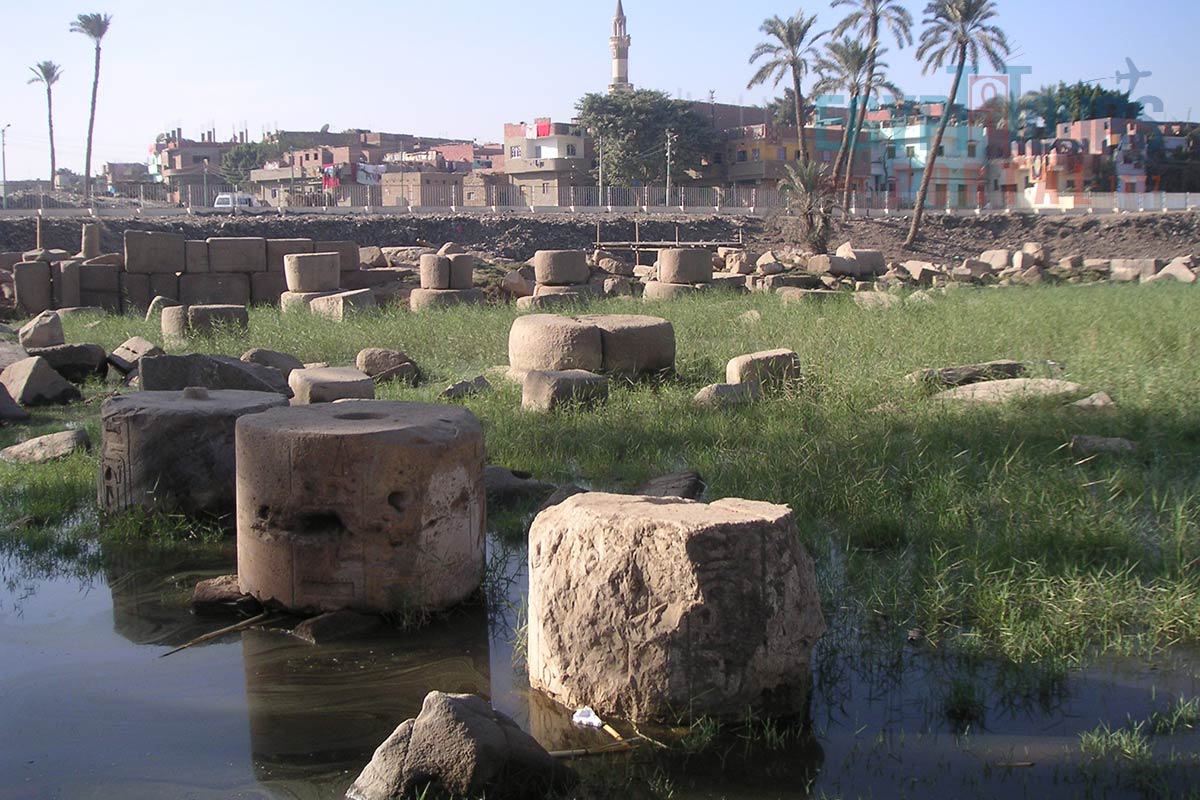
Decline and Abandonment of Memphis Capital City - Egypt Tours Portal

Under the Romans, Memphis permanently lost its leading position to Alexandria, which was better connected to the Mediterranean world. The rise of Serapis and later the spread of Christianity weakened the old Memphite cults. During the Byzantine and Coptic periods, the city dwindled and eventually disappeared as an active urban center. After the Arab conquest, nearby Fustat, founded in 641 AD, became the new capital, and Memphis was largely abandoned and used as a quarry for building materials.

Stones from its temples and necropolises helped build later settlements, including Fustat and Cairo. In the 13th century, the Arab chronicler Abd-ul-Latif described the ruins as vast and astonishing, despite centuries of destruction and stone removal. Modern archaeology, including the work of Flinders Petrie, revealed part of the city’s former glory. In 1979, Memphis and its necropolis, including rock tombs, mastabas, temples, and pyramids, were inscribed on the UNESCO World Heritage List.

Witness the Golden Remains and Archaeological Marvels of Memphis
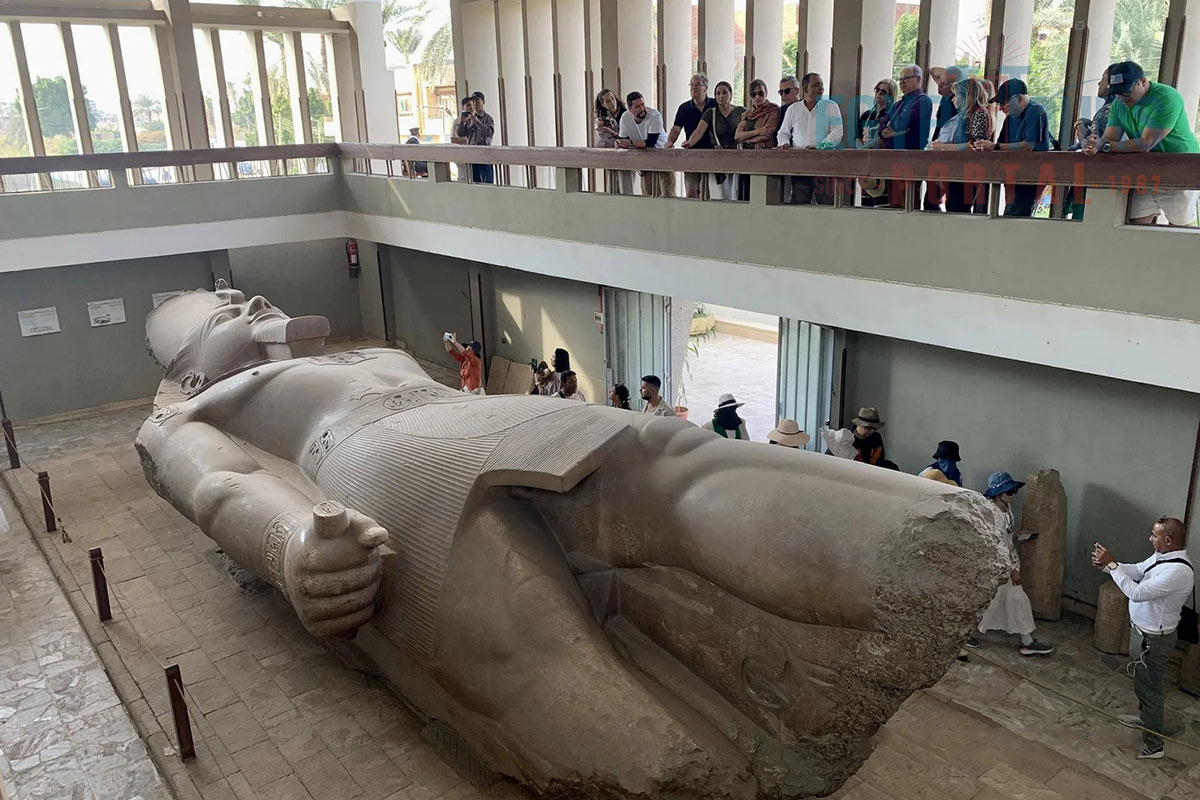
Remains and Archaeological of Memphis - Egypt Tours Portal

Under the rulers of the 19th Dynasty in the New Kingdom (1570–1070 BCE), Memphis regained major political, religious, and architectural importance. Although Thebes remained highly powerful, Memphis flourished again because of its strategic location, its connection to royal administration, and its sacred role as the city of Ptah.

Under kings such as Seti I, Ramesses II, and Merneptah, the city expanded in size and prestige, rivaling Thebes in both political influence and monumental construction. A chapel of Seti I dedicated to Ptah reflects this renewed royal attention, while more than a century of excavations has helped archaeologists gradually reconstruct the layout of the ancient city and its religious districts.

The Great Temple of Ptah

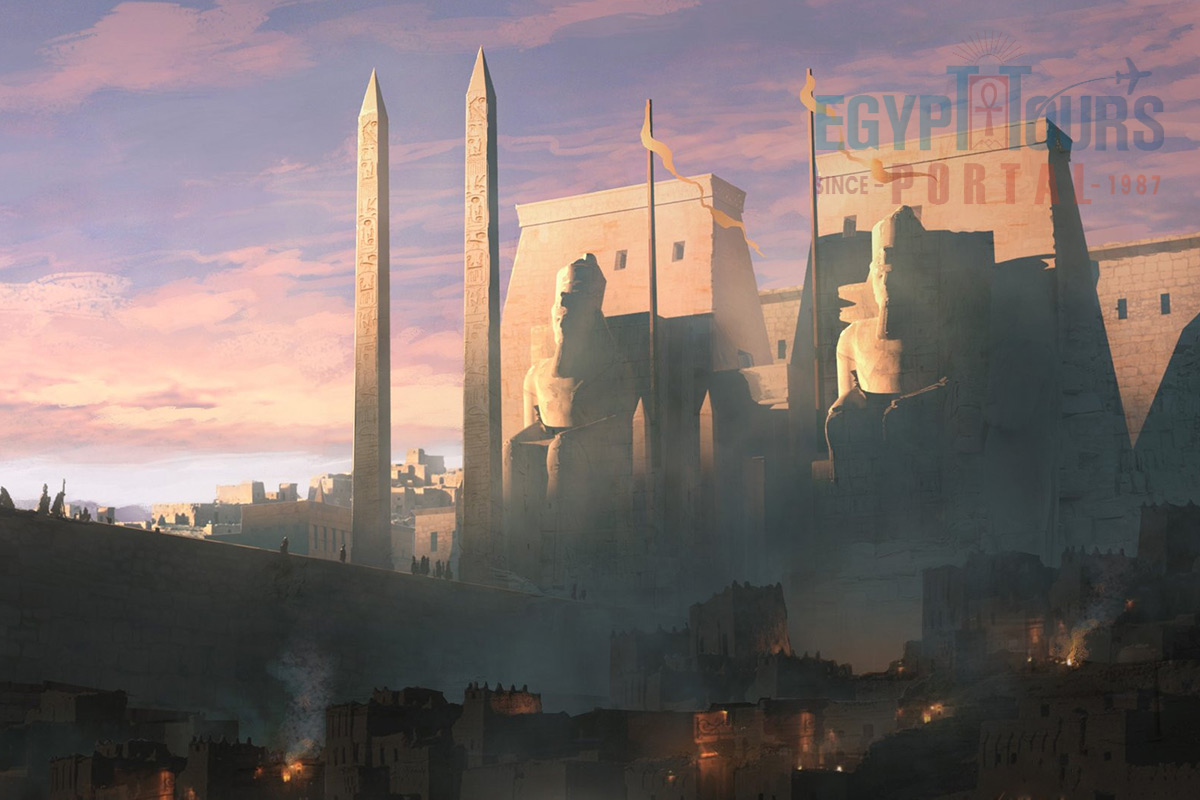
The Great Temple of Ptah, known as Hout-ka-Ptah, meaning “Enclosure of the ka of Ptah,” was the largest and most important temple in ancient Memphis. Dedicated to Ptah, the creator god and patron of craftsmen, this temple formed the spiritual heart of the city. It was considered one of the three greatest religious centers of ancient Egypt, alongside the temple of Ra at Heliopolis and the temple of Amun at Thebes.

Ancient writers such as Herodotus claimed that the temple was founded by Menes and that its inner core was restricted to priests and kings. Archaeology has revealed a vast walled compound with monumental gates on the southern, western, and eastern sides. Today, its remains form part of the open-air museum near the great colossus of Ramesses II, which once marked the temple’s southern axis.

The site also contains a large alabaster sphinx, probably from the reign of Amenhotep II or Thutmose IV, and many statues, sphinxes, colossi, and architectural fragments, although many major finds were moved to museums, especially the Grand Egyptian Museum in Cairo.

Temple of Ptah of Ramesses II

The Temple of Ptah of Ramesses II was a smaller temple attached to the southwest corner of the larger Ptah complex. It was dedicated to the deified Ramesses II and to the major state ancient Egyptian gods Horus, Ptah, and Amun. Its full name was the Temple of Ptah of Ramesses, Beloved of Amun, God, Ruler of Heliopolis. The temple was discovered in 1942 by Ahmed Badawy and excavated in 1955 by Rudolf Anthes.

Excavations revealed a complete religious structure with a tower, offering courtyard, columned portico, pillared hall, and tripartite sanctuary, all enclosed within mudbrick walls. Its eastern entrance opened toward a path lined with other religious buildings, proving that the southern part of Memphis contained many sacred structures dedicated especially to Ptah.

Temple of Ptah and Sekhmet of Ramesses II

The Temple of Ptah and Sekhmet of Ramesses II stood farther east, near the great colossus of Ramesses II. It likely belonged to the 19th Dynasty and was dedicated to Ptah, his divine consort Sekhmet, and the deified Ramesses II. Unfortunately, the temple is poorly preserved because its limestone foundations were quarried after the city was abandoned in late antiquity. Two giant statues from the Middle Kingdom once decorated its façade, which opened to the west. These statues were later moved inside the Memphis Museum and show the king standing in a marching pose while wearing the Hedjet, the white crown of Upper Egypt.

Temple of Ptah of Merneptah

The Temple of Ptah of Merneptah was founded by King Merneptah, son and successor of Ramesses II, in the southeastern area of the Great Temple complex. It was built to honor Ptah, the chief deity of Memphis. The temple was discovered in the early 20th century by Flinders Petrie, who connected it with the Greek god Proteus mentioned by Herodotus.

Excavations during the First World War by Clarence Stanley Fisher revealed a large courtyard of about 15 square meters, opening to the south through a large doorway decorated with the names of Merneptah and epithets of Ptah. Archaeologists also found traces of a large mudbrick ceremonial palace beside the temple.

Parts of the stone temple were sent to the University of Pennsylvania Museum, which funded the excavation, while other pieces remained in the Egyptian Museum in Cairo. The temple continued to be used during the New Kingdom, later fell into decline, and by the Late Period had become ruined and covered by later city buildings.

The Healing Temple of Hathor

The Temple of Hathor at Memphis was discovered south of the great wall of the Hout-ka-Ptah by Abdullah al-Sayed Mahmud in the 1970s. It dates to the reign of Ramesses II and was dedicated to Hathor, Lady of the Sycamore. Although small, it is important because it is currently the only building dedicated to Hathor found in the ruins of Memphis.

Its architecture resembles small temple-shrines known from sites such as Karnak, suggesting that it may have served a processional role during major religious festivals. Ancient sources suggest that a larger and more important Hathor temple may have existed elsewhere in Memphis, but it has not yet been found. A nearby depression may indicate the possible location of a larger enclosure or monument connected with her worship.

Other Grand Temples of Memphis

Memphis likely contained many temples dedicated to gods associated with Ptah and the wider religious life of the city. A temple of the goddess Neith was said to have stood north of the Temple of Ptah, though it has not yet been discovered. Other sanctuaries are known from hieroglyphic references but remain archaeologically unidentified. Continued surveys and excavations at Mit Rahina may reveal more about the sacred layout of Memphis and its many temples.

The Various Temples to Foreign Deities

Because Memphis was a major political, military, and commercial center, it also contained temples to foreign deities. A Roman-period temple of Mithras was discovered north of Memphis, showing the presence of Roman religious traditions in the area. Herodotus also described a temple of Astarte, a goddess associated with fertility and war, located in the district reserved for Phoenicians, but this temple has not yet been found. These references show that Memphis was not only Egyptian in character but also cosmopolitan, reflecting trade, migration, and foreign communities.

The Captivating Temple of Sekhmet

A temple dedicated to Sekhmet, the lioness goddess and consort of Ptah, has not yet been discovered, but Egyptian sources confirm its existence. Archaeologists believe it may have stood within the precinct of the Hout-ka-Ptah. Evidence includes a stone block mentioning a “great door” with Sekhmet’s epithet and a column inscription of Ramesses II calling him “beloved of Sekhmet.” The Great Harris Papyrus also records that during the reign of Ramesses III, a statue of Sekhmet was commissioned alongside statues of Ptah and Nefertem for the deities of Memphis within the great temple.

The Religious Temple of Apis

The Temple of Apis was the main sanctuary for the sacred Apis bull, regarded as a living manifestation of Ptah. Classical writers such as Herodotus, Diodorus, and Strabo described the temple, although its full location has not yet been identified. Herodotus described a courtyard surrounded by columns and giant statues, while Strabo wrote that the temple had two chambers, one for the bull and one for its mother, and stood near the Temple of Ptah. Apis functioned as an oracle, with his movements interpreted as divine signs.

His breath was believed to heal disease, and his presence was thought to bless fertility and vitality. During festivals, the bull was shown through a temple window or led through the city decorated with jewelry and flowers. In 1941, Ahmed Badawy discovered a mortuary chamber within the Temple of Ptah precinct used for embalming the sacred bull. A stela from Saqqara shows that Nectanebo II restored this building, and 30th Dynasty remains confirm that it may be the surviving part of the larger Apis temple mentioned by ancient writers. Most known Apis statues come from the Serapeum of Saqqara, where the oldest burials date to Amenhotep III.

The Golden Temple of Amun

During the 21st Dynasty, King Siamun built a shrine to Amun south of the Temple of Ptah. This temple was probably dedicated to the Theban Triad of Amun, Mut, and Khonsu, serving as an Upper Egyptian religious counterpart to the Memphite Triad of Ptah, Sekhmet, and Nefertem. Its presence shows how Memphis incorporated national religious traditions beyond its own local theology.

 The Shining Temple of Aten

A temple dedicated to the Aten existed in Memphis during the late 18th Dynasty, as confirmed by hieroglyphic evidence from tombs of Memphite officials at Saqqara. One important title belonged to Tutankhamun, who began his career under Akhenaten as “steward of the temple of Aten in Memphis.”

Since the earliest excavations in the late 19th and early 20th centuries, Amarna-period remains have been found in different parts of Memphis, proving that a building for the worship of the solar disk existed there. Its exact location remains unknown, but scholars continue to debate its position based on where Amarna-style fragments were discovered.

 The Glorious Statues of Ramesses II

Memphis has produced many statues of Ramesses II, reflecting his strong architectural presence in the city. The most famous is a colossal limestone statue about 10 meters long, discovered in 1820 near the southern gate of the Temple of Ptah by Italian archaeologist Giovanni Caviglia. Because its feet and base are broken, it is displayed lying on its back in the Memphis open-air museum.

Some original color survives, and the statue is admired for its refined anatomical detail and representation of the king wearing the Hedjet, the white crown of Upper Egypt. Caviglia once offered to send it to the Grand Duke of Tuscany, but transportation was too costly; Muhammad Ali Pasha later offered it to the British Museum, which declined because shipping it to London was too difficult.

A second colossus from the same pair was restored to a standing height of 11 meters, displayed in Cairo’s Ramses Square, moved to Giza in 2006, restored, and installed at the entrance of the Grand Egyptian Museum in January 2018.

The Divine Memphite Necropolis

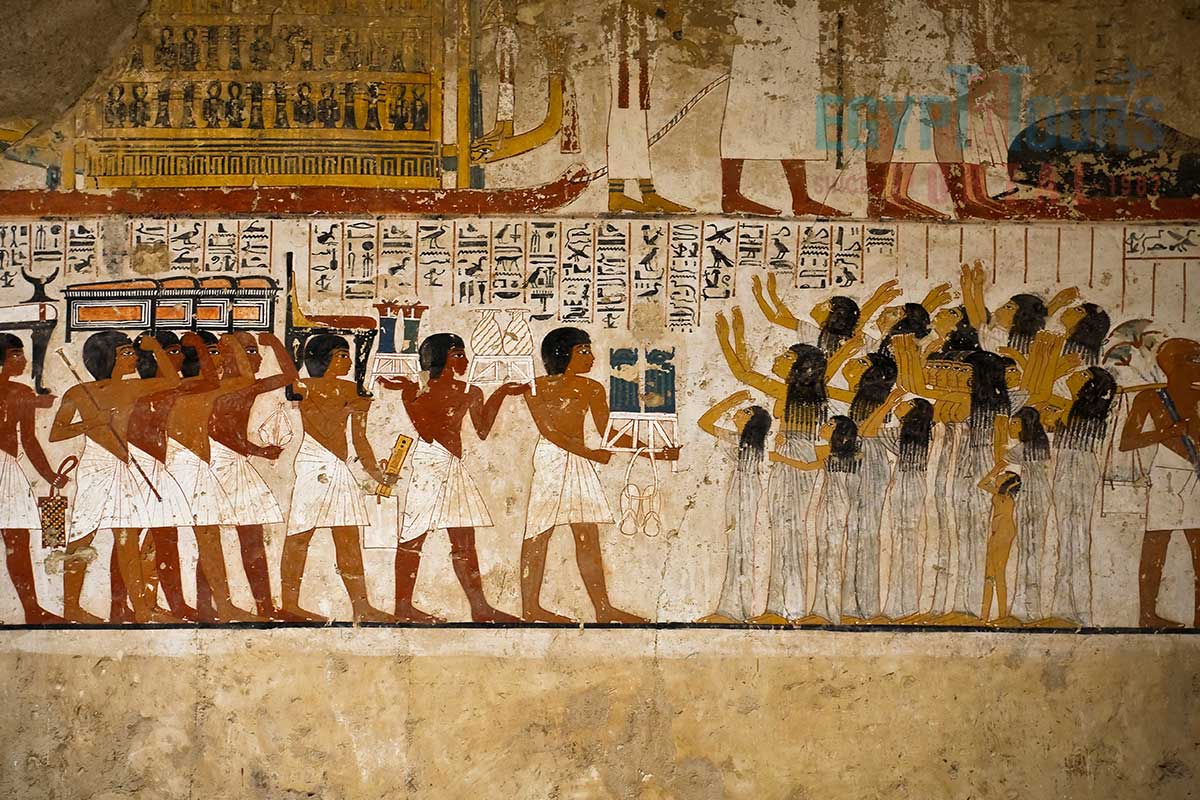
Because Memphis was ancient, powerful, and densely populated, it had several necropolises spread along the desert edge, especially Saqqara, the most famous cemetery of the city. The Memphite necropolis included royal pyramids, mastabas, tombs, temples, and burial grounds used by kings, priests, officials, and ordinary worshippers.

Many people came to these sacred places to honor Osiris, make offerings, or seek burial near holy ground. The district called Ankh-tawy was already part of the Middle Kingdom necropolis, and the western sector of the Temple of Ptah was expanded by 22nd Dynasty rulers seeking to revive Ramesside glory. This area included a necropolis for Memphis’s high priests, possible chapels to Bastet, and New Kingdom mortuary temples comparable in function to the Theban “Temples of Millions of Years.”

The Extravagant Royal Palaces of the Golden Capital of Memphis

Memphis was a royal seat for kings of more than eight dynasties, and ancient tradition credited Hor-Aha, successor of Narmer, with founding the first royal palace there inside a white-walled fortress. Old Kingdom sources mention enormous palaces, some built beneath major royal pyramids, decorated with parks and lakes.

Other sources mention a palace founded by Thutmose I, still functioning under Thutmose IV. Merneptah built a large walled enclosure containing a new temple and adjoining palace, while Apries later constructed a palace complex at Kom Tuman, overlooking the city. This Late Period complex included a royal palace, fortress, barracks, and armories, and excavations by Flinders Petrie revealed strong evidence of military activity.

Other Buildings and Urban Districts

Memphis was not only a city of temples and palaces; it was a living urban center with workshops, arsenals, dockyards, and residential neighborhoods. Some districts were inhabited by foreign communities, including Hittites, Phoenicians, Persians, and Greeks, reflecting Memphis’s position at the crossroads of Mediterranean and Nile trade routes.

Imported goods from many regions entered the city, making it a commercial and cultural meeting point. Ancient sources also show that Memphis developed continuously over time, while the Nile gradually shifted eastward, creating new land in the eastern part of the old capital. This area was dominated by the large eastern gate of the Temple of Ptah, further emphasizing the temple’s role as the heart of Memphis’s urban and sacred landscape.

Learn About the Various Archaeological Explorations and Discoveries of Memphis City
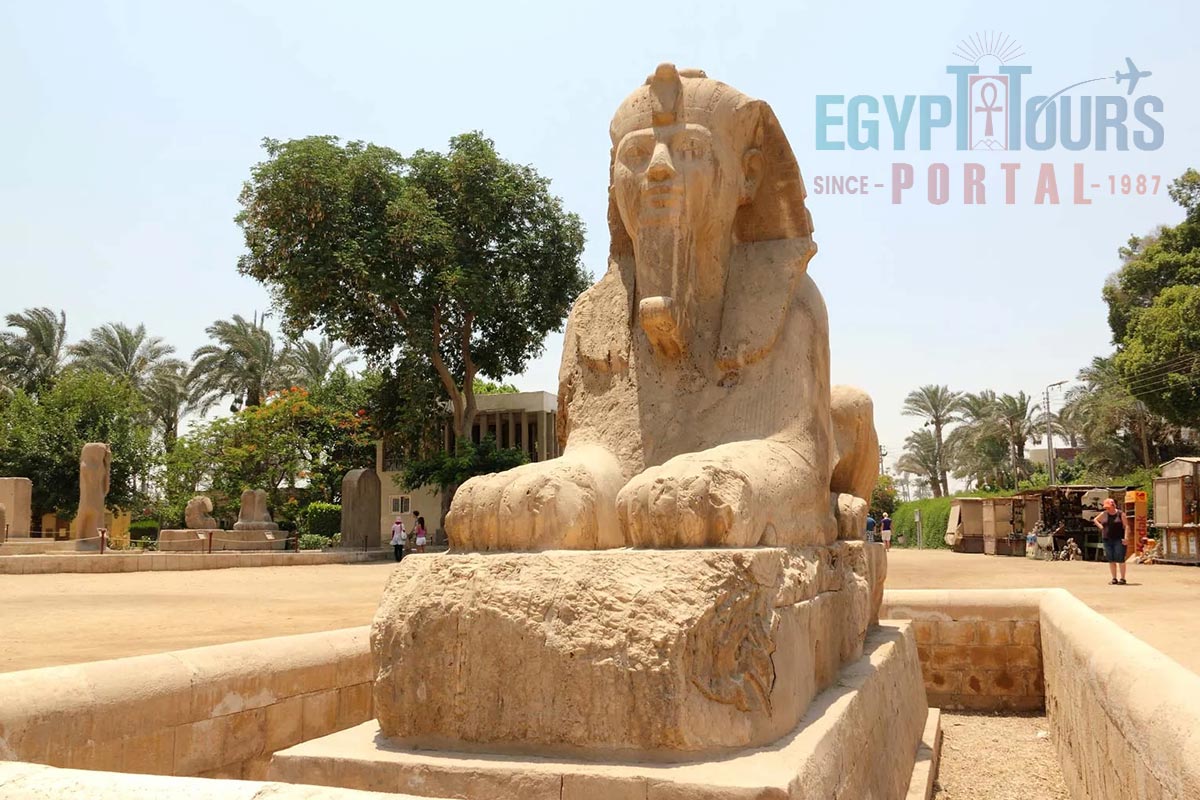
Archaeological Explorations and Discoveries of Memphis City - Egypt Tours Portal

Memphis has been known across the ancient lands of history and culture through Egyptian, foreign, diplomatic, classical, Arab, and modern archaeological sources. Diplomatic records such as the Amarna Letters show its trade and correspondence with powers in Babylon, Lebanon’s city-states, the Mediterranean, the Ancient Near East, and Africa. From the first millennium BC onward, classical writers described the city more frequently: Herodotus visited during the first Persian Achaemenid rule in the 5th century BC, Diodorus Siculus recorded information during the 1st century BC Ptolemaic era, and Strabo visited during the Roman conquest in the late 1st century BC. 

Later Greek and Latin writers, including Suetonius and Ammianus Marcellinus, also mentioned Memphis, especially its sacred Apis bull cult. After the Christian period, Memphis largely disappeared from written memory until Arab authors such as Abd al-Latif in the 13th century and Al-Maqrizi in the 14th century described its ruins. Modern identification began in 1652 with Jean de Thévenot, while Napoleon’s 1798 expedition produced the first scientific studies and accurate mapping in Description de l’Égypte. 

In the 19th century, Caviglia and Sloane began excavations in 1820 and discovered the fallen colossal statue of Ramesses II; Champollion visited between 1828 and 1830, described the statue, dug briefly, and decoded inscriptions; and Lepsius created the first detailed map in 1842. Later accidental discoveries included the 1847 Roman Mithras temple near Mit Rahina with statues linked to Greek intellectual figures such as Homer, Plato, Aristotle, Pindar, Thales, Heraclitus, and Protagoras. 

Between 1852 and 1854, Joseph Hekekyan found Amarna-period Aten relief blocks reused at Kom el-Khanzir and a pink granite colossus of Ramesses II. Concern over antiquities leaving Egypt led Auguste-Édouard Mariette to establish the Egyptian Antiquities Organisation in 1859, after which excavations revealed early evidence of the Great Temple of Ptah and Old Kingdom royal statues. 

In the 20th century, Flinders Petrie’s 1907–1912 excavations uncovered many visible remains, including the pillared hall of the Temple of Ptah, Ramesses II’s pylon, the alabaster sphinx, the wall north of Apries’ palace, the Temple of Amun of Siamun, and the Temple of Ptah of Merneptah.

Later work revealed Merneptah’s temple and palace, the small Temple of Ptah of Ramesses, Prince Shoshenq’s chapel, Seti I’s chapel, a Middle Kingdom necropolis at Kom el-Fakhri, the Apis embalming chapel, the small Temple of Hathor, Amenemhat II annal blocks, high priests’ tombs, Saqqara necropolis research, renewed Hathor temple excavations in 2003, and a Russian-Belgian mission in 2003–2004 exploring the great wall north of Memphis.

Explore the Ethereal City of Memphis Through Our Marvelous Trips

Memphis city is the key to discovering the great civilization of ancient Egypt through the many waves of time, then you can check our Egypt tour packages and Nile river cruises, to book your favorite journey, in order to enjoy the most thrilling historical experience of your lifetime. 

ETP TEAM

Egypt Tours Portal is dedicated to preserving and sharing the rich history, culture, and mysteries of ancient Egypt, helping travelers and history enthusiasts explore Egypt’s most iconic destinations and monuments. The team consists of experienced Egyptologists, archaeologists, historians, travelers, content creators, marketers, consultants, and explorers with 5–20 years of expertise in their respective fields.

The website provides accurate, regularly updated information developed by qualified experts and supported by trusted sources to ensure reliability and educational value. Drawing on more than 39 years of industry knowledge and resources, Egypt Tours Portal offers a wide range of travel services, including Egypt tours, Nile cruises, day tours, shore excursions and multi-country tours. Their services have earned positive reviews from travelers, recognition through awards, and mentions by respected news outlets and travel blogs, delivering both educational and memorable travel experiences across Egypt.

Leave a Comment

Don't Just See Egypt. Experience It.

From private sunrise viewings at Giza to dining with local families in Aswan, unlock an extraordinary journey crafted entirely around your pacing and desires.

Private Certified Egyptologists Handpicked Heritage Stays 100% Tailor-Made Pacing Zero Hidden Service Fees
Explore Egypt Tours
Pick Your Journey

Related Tours to This Article

Cairo Stopover Tour
IATA-Egypt-Tours-Portal

Cairo Stopover Tour

Explore ancient wonders with a Cairo Stopover tour to the Sphinx, Giza Pyramids, and more, ending at Cairo airport. Book now!
Cairo / Giza
1 Day Private
Day Tour in Cairo and the Pyramids
IATA-Egypt-Tours-Portal

Day Tour in Cairo and the Pyramids

Enjoy a private day tour in Cairo to visit the pyramids, the Egyptian Museum, and Khan EL Khalili bazaar, then drive you back to your hotel. Book now!!
Cairo / Giza
1 Day Private
Day Trip to Pyramids from Cairo
IATA-Egypt-Tours-Portal

Day Trip to Pyramids from Cairo

Enjoy a private day trip from Cairo to visit the Giza Pyramids, the Great Sphinx, Saqqara Step Pyramid, and Memphis city. Book now!
Giza
1 Day Private
Saqqara & Memphis Tour from Cairo
IATA-Egypt-Tours-Portal

Saqqara & Memphis Tour from Cairo

Enjoy a private tour from Cairo to Saqqara & Memphis. Visit the historic Memphis city and the pioneering Sakkara Step Pyramids. Book now!
Memphis and Sakkara
1 Day Private
Egyptian Museum & Old Cairo Tour
IATA-Egypt-Tours-Portal

Egyptian Museum & Old Cairo Tour

Enjoy an Old Egyptian Museum & Old Cairo Tour. Visit the Egyptian Museum, King Tut's treasures, the Citadel, and Old Cairo, then return to your hotel.
Cairo
1 Day Private
Half-Day Tour to the Egyptian Museum
IATA-Egypt-Tours-Portal

Half-Day Tour to the Egyptian Museum

Enjoy a half-day tour to the Egyptian museum displaying the miraculous artifacts and monuments which are filled with captivating history, beauty, and art.
Cairo
1/2 Day Private
Half Day Pyramids Tour in Cairo
IATA-Egypt-Tours-Portal

Half Day Pyramids Tour in Cairo

Enjoy a private half day pyramids tour in Cairo joining your tour guide to visit Giza Pyramids & the Sphinx, then transfer back to your hotel. Book now!
Giza
1/2 Day Private
Day Tour from Cairo to Luxor By Plane
IATA-Egypt-Tours-Portal

Day Tour from Cairo to Luxor By Plane

Book your private day tour from Cairo to Luxor by plane to explore Karnak & Hatshepsut temples, Valley of the Kings & Colossi of Memnon, then fly back.
Luxor
1 Day Private
Day Trip to Alexandria from Cairo by Car For Australian Travelers
IATA-Egypt-Tours-Portal

Day Trip to Alexandria from Cairo by Car For Australian Travelers

Enjoy a private day trip to Alexandria from Cairo by car to visit the catacomb, Pompey's pillar, the citadel, and the library then you back to your hotel.
Alexandria
1 Day Private
Day Tour to Abu Simbel from Cairo by Plane
IATA-Egypt-Tours-Portal

Day Tour to Abu Simbel from Cairo by Plane

Enjoy a day tour to Abu Simbel from Cairo by plane to visit Abu Simbel temples joining your private tour guide then catch your flight back to your Cairo.
Abu Simbel
1 Day Private
Overnight Safari Trip to Bahariya and White Desert from Cairo
IATA-Egypt-Tours-Portal

Overnight Safari Trip to Bahariya and White Desert from Cairo

Enjoy a 2-day safari trip to Bahariya and the White Desert. Visit the Black Mountains, White Desert, and Crystal Mountain. Book now!
Bahariya / White Desert
2 Days / 1 Night Private
Two Days Trips to Luxor from Cairo by Plane
IATA-Egypt-Tours-Portal

Two Days Trips to Luxor from Cairo by Plane

Enjoy 2-day trips to Luxor from Cairo by plane to visit Karnak temples, Valley of the Kings, Hatshepsut temple, Colossi of Memnon, then fly back to Cairo.
Luxor
2 Days / 1 Night Private
Two Days Luxor and Aswan Trip from Cairo
IATA-Egypt-Tours-Portal

Two Days Luxor and Aswan Trip from Cairo

Embark on a 2 days Luxor & Aswan exploration from Cairo, visiting key sites before returning. Secure your booking now!
Luxor / Aswan
2 Days / 1 Night Private
4 Days Nile Cruise from Cairo to Aswan
IATA-Egypt-Tours-Portal

4 Days Nile Cruise from Cairo to Aswan

Experience a 4-day Luxor & Aswan Nile cruise from Cairo, exploring renowned archaeological sites with expert guides. Book your adventure now!
Aswan / Kom Ombo / Edfu / Luxor
4 Days / 3 Nights Sightseeing Tour
5 Days Luxury Nile Cruise from Cairo to Luxor
IATA-Egypt-Tours-Portal

5 Days Luxury Nile Cruise from Cairo to Luxor

Enjoy 5 days luxury Nile cruise from Cairo to Luxor o visit ancient Egypt attractions, Read more about luxury Nile cruise from Cairo.
Luxor / Edfu / Kom Ombo / Aswan
5 Days / 4 Nights Sightseeing Tour
Keep Exploring

What to Read Next

Dive deeper into this topic. Discover more insights, expert advice, and inspiration in our recommended articles.
Bayt Al-Suhaymi
Sat, 07 Sep 2019

Bayt Al-Suhaymi

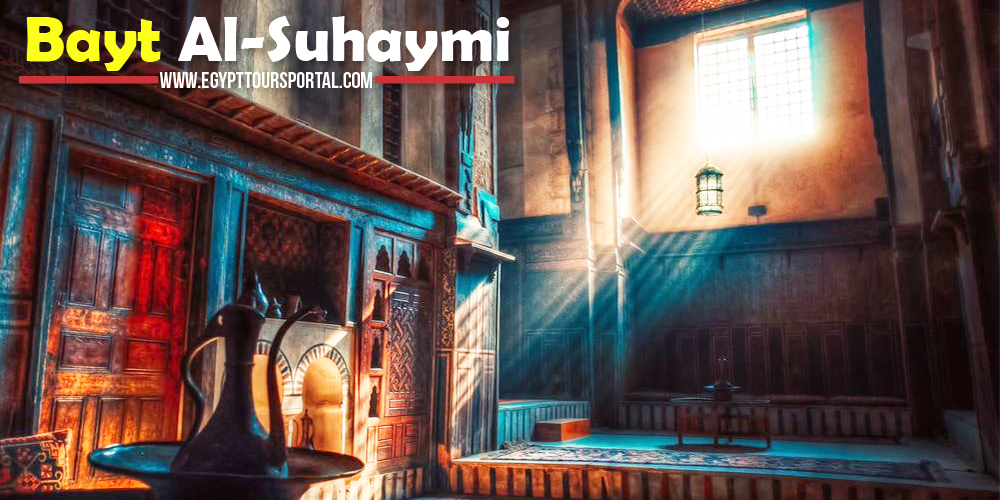
Learn more about Bayt Al-Suhaymi, an impressive Cairo landmark crafted in 1648 by Adel Wahab El Tablawy.

The Royal Mummy Room in the National Museum of Egyptian Civilization
Mon, 09 Sep 2019

The Royal Mummy Room in the National Museum of Egyptian Civilization

Discover Egypt’s Royal Mummy Room at NMEC, home to 20 royal mummies from New Kingdom pharaohs and queens, showcasing history, mummification, and heritage.

Gates of Cairo: Guardians of a Timeless Capital
Tue, 10 Sep 2019

Gates of Cairo: Guardians of a Timeless Capital

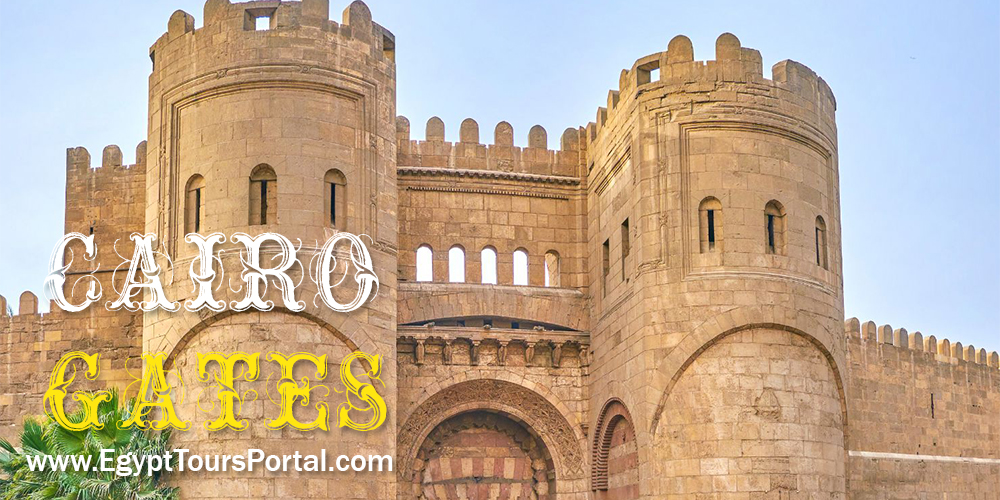
Discover Cairo’s historic gates, from Bab Zuweila to Bab al-Nasr, the symbols of defense, power, and artistry spanning the Fatimid, Ayyubid, and Mamluk eras.

Abusir Necropolis
Wed, 05 May 2021

Abusir Necropolis

Discover Abusir Necropolis' mysteries, delve into its rich history, pyramids, temples, tombs, mummies, and ancient secrets!

Church of Saint George In Coptic Cairo
Sun, 22 Sep 2019

Church of Saint George In Coptic Cairo

Examine St. George Church in Coptic Cairo, a stunning blend of Roman, Coptic, and Greek Orthodox history, architecture, Design, and deep spiritual significance.

St. Virgin Mary Church In Maadi
Sun, 22 Sep 2019

St. Virgin Mary Church In Maadi

Explore St. Virgin Mary Church in Maadi, a sacred Coptic site tied to the Holy Family’s journey, known for miracles, relics, and peaceful Nile-side reflection.

Khan El-Khalili Bazaar: The Living Heart of Islamic Cairo
Sat, 18 Nov 2017

Khan El-Khalili Bazaar: The Living Heart of Islamic Cairo

Explore Khan El Khalili Bazaar in Cairo, founded 1382 CE, a 600-year-old market with crafts, spices, cafes, and rich Islamic architecture.

Memphis: The First Great Capital of Ancient Egypt
Sat, 18 Nov 2017

Memphis: The First Great Capital of Ancient Egypt

Explore Memphis, Egypt’s first capital, its Ptah temple, Ramesses II statues, Saqqara necropolis, history, location, ruins, and legacy.

Pyramid of Khafre
Sun, 11 Apr 2021

Pyramid of Khafre

The pyramid of Khafre is known in greek as Chephren and is the second tallest pyramid. Read more facts about Khafre pyramid history.

Muhammad Ali Mosque: History, Architecture, and Glorious Legacy
Sun, 19 Nov 2017

Muhammad Ali Mosque: History, Architecture, and Glorious Legacy

Explore Muhammad Ali Mosque history, Ottoman architecture, Citadel location, tomb, restoration, and why Cairo’s Alabaster Mosque still captivates visitors.

Menkaure Pyramid
Mon, 12 Apr 2021

Menkaure Pyramid

Visit the Menkaure Pyramid to explore its historical architecture and uncover the secrets of King Menkaure pyramid and his monumental tomb.

Giza Pyramids Complex: History, Construction, Layout, and Facts
Sun, 19 Nov 2017

Giza Pyramids Complex: History, Construction, Layout, and Facts

Explore the Giza Pyramids Complex, its history, layout, construction, hidden secrets, and key facts about Egypt’s most iconic ancient wonder.

Cairo Citadel: Saladin’s Medieval Fortress and the Crown of Islamic Cairo
Sun, 19 Nov 2017

Cairo Citadel: Saladin’s Medieval Fortress and the Crown of Islamic Cairo

Explore Cairo Citadel, Saladin’s medieval fortress, its history, layout, mosques, museums, Muhammad Ali Mosque, and UNESCO legacy.

The Great Sphinx
Sun, 19 Nov 2017

The Great Sphinx

Prefer to explore info about the great Sphinx, want to know more about the Sphinx's nose, the Sphinx of Giza, open the article to read more.

The Great Pyramid of Giza: Ancient Engineering Marvel & Celestial Wonder
Mon, 25 Dec 2017

The Great Pyramid of Giza: Ancient Engineering Marvel & Celestial Wonder

Discover the Great Pyramid of Giza’s history, architectural marvels, construction secrets, and mysterious finds that stood the test of time for over 4500 years.

Book With Confidence

Why Travel With Egypt Tours Portal

The "Boutique" Advantage

01

We offer private, customizable journeys tailored to your pace, moving away from the "factory-style" mass-market tours.

Gold-Standard Guides

02

Travel with elite, licensed Egyptologists who act as storytellers, not just tour leaders.

Seamless Logistics

03

24/7 "high-touch" support with a dedicated coordinator for every aspect of your multi-vendor itinerary.

2026/04/egypt-tours-portal-clients-at-giza-pyramids.jpg
04

True Customization

Our "Tailor-Made" planning workflow ensures your trip matches your specific priorities and interests.

05

Luxury & Comfort

We prioritize premium guide quality and vetted, safe hotels to ensure a stress-free environment.

06

Protection & Security

Advanced safety protocols and 24/7 emergency contact for total peace of mind during your adventure.

Book With Confidence.

Book your trip with peace of mind knowing every detail is handled with care.

Enjoy flexible options, secure payments, and dedicated support to make your journey smooth and worry-free from start to finish.

Read Our Confidence Policy

Pay Monthly

Split your total trip cost into easy monthly installments, making it more flexible and affordable for your budget.

Fast Booking

Complete your booking in just a few simple steps with a quick and streamlined process designed to save you time.

24/7 Support

Our dedicated support team is available around the clock to assist you before, during, and after your trip.

Rated 5 Stars

Highly rated by thousands of travelers for quality service, reliable experiences, and unforgettable journeys.

Pay Monthly

Split your total trip cost into easy monthly installments, making it more flexible and affordable for your budget.

Fast Booking

Complete your booking in just a few simple steps with a quick and streamlined process designed to save you time.
24/7 Support

Our dedicated support team is available around the clock to assist you before, during, and after your trip.

Rated 5 Stars

Highly rated by thousands of travelers for quality service, reliable experiences, and unforgettable journeys.

Traveler Video Reviews

Inside The Experience: Watch Authentic Traveler Stories Before Booking

Clients Feedback
https://dynamic-media-cdn.tripadvisor.com/media/photo-o/12/04/24/3e/rk-w.jpg
Erin W
Kiawah Island, South Carolina

"We had a great experience touring Aswan, Edfu, and Luxor with Mahmoud. I would highly recommend him as a guide. He adapted to our needs (2 teenagers) and kept everything interesting. He was always prompt, professional, and easy to communicate with. He was also very prompt answering questions via WhatsApp"

Read More
https://dynamic-media-cdn.tripadvisor.com/media/photo-o/1a/f6/f1/79/default-avatar-2020-21.jpg
Estelle V

"We would like to share our wonderful experience with Egypt Tours Portal. From the very first quote to our final airport drop-off, we were impressed by the professionalism, organization, and excellent communication from Walaa and the entire team. Our tour guides in both Luxor (“Habibi” was the best!) and Cairo were incredibly knowledgeable, helpful, and passionate about sharing Egypt’s history and treasures with us. We especially appreciated how thoughtfully the itinerary was planned — allowing us time to rest in the afternoons, scheduling visits during the cooler hours, and remaining flexible to accommodate our needs. Everything was smooth, well-organized, and made our trip truly memorable. We wholeheartedly recommend Egypt Tours Portal to anyone looking to discover the incredible history, culture, and wonders Egypt has to offer."

Read More
https://dynamic-media-cdn.tripadvisor.com/media/photo-o/1a/f6/e7/3d/default-avatar-2020-55.jpg
Tim K

"We had an outstanding time touring Luxor with our guide, Essra. She was knowledgeable, professional, and incredibly kind throughout the entire experience. Her explanations of Karnak Temple, Luxor Temple, the Valley of the Kings, Hatshepsut Temple, and the Colossi of Memnon brought Egypt's history to life. What really set her apart was her thoughtfulness. She made sure we stayed comfortable in the heat, surprising us with water and refreshments. She also took us to an excellent local restaurant that we never would have found on our own. Her attention to detail, genuine care, and passion for sharing Egypt made this one of the highlights of our trip. We highly recommend her to anyone visiting Luxor. On another note, the drivers we had each day were great. So professional, always on time and personable."

Read More
https://dynamic-media-cdn.tripadvisor.com/media/photo-o/1a/f6/e2/a7/default-avatar-2020-44.jpg
Will S
Bluff Park, Alabama

"We had a great vacation. Omar Haridi did our Nile Cruise and Zizi did our Cairo tour. They were amazing and very knowledgeable."

Read More
https://dynamic-media-cdn.tripadvisor.com/media/photo-o/1a/f6/ed/00/default-avatar-2020-4.jpg
Mira F

"The best experience of my lifetime! Nour, the tour guide was absolutely amazing! Went over and beyond thinking about every little thing. I had a mishap and Egypt Air overbooked my flight and bumped me to a later flight causing me to miss an entire day of activities. Nour made sure I got to do every single thing I missed that first day. But that’s not all: his knowledge of old Egypt is unparalleled, he truly brings Egypt (Aswan Luxor) alive. I’ve traveled all over the world and met many tour guides: Nour stands apart from all of them. He’s also considerate, caring and genuinely wants his guests to enjoy the trip and learn the most about the incredible history of Egypt. He’s also funny and genuinely great to be around. Please, do yourself a favor when booking a trip in Upper Egypt and ask for Nour. Hands down the best guide ever!"

Read More
https://dynamic-media-cdn.tripadvisor.com/media/photo-o/1a/f6/f6/0d/default-avatar-2020-34.jpg
Paul B
Hook, United Kingdom

"Excellent guide Mr Mohamed Osman, who was incredibly knowledgeable and very informative. Couldn't ask for more. Food on day 1 was ok, but much better at lunch on day 2. Hotel was excellent. Also our driver was excellent. All in all a great experience. Would highly recommend."

Read More
https://dynamic-media-cdn.tripadvisor.com/media/photo-o/1a/f6/eb/6d/default-avatar-2020-19.jpg
Marianna A

"Our experience in Egypt, especially in Luxor and Aswan, was truly unforgettable, and a huge part of that was thanks to our incredible guide Omar. We cannot recommend him highly enough. From the moment we met him, it was clear that he was exceptionally knowledgeable, professional, and deeply passionate about Egyptian history and culture. What made our tour extraordinary was that our guide is not only a master’s in Egyptology but is also currently pursuing a PhD in Egyptology. His depth of knowledge was absolutely remarkable. He is also very creative and artistic. Every temple, tomb, monument, and historical site came alive through his explanations. He did not simply recite facts, he explained the historical context, symbolism, religious beliefs, architecture, and fascinating stories behind everything we saw. It truly felt like we were traveling through ancient Egypt with a real scholar and expert by our side. He brought ancient Egyptian history to life by assigning us the roles of Egyptian gods and legendary heroes. Through these interactive mini-plays, we were able to experience, understand, and truly connect with the stories he shared. In Luxor, visiting Karnak Temple, Luxor Temple, the Valley of the Kings, and Hatshepsut Temple became an unforgettable educational and emotional experience because of the way he explained the history in such an engaging and easy-to-understand manner. In Aswan, his insights about Philae Temple, Nubian history, and ancient Egyptian civilization added so much depth to our trip. He answered every question thoughtfully and with incredible detail, and you could genuinely feel his passion for Egyptology. Beyond his academic expertise, he was one of the kindest and most caring people we met during our travels. He constantly made sure we were comfortable, safe, hydrated, and enjoying ourselves. He was patient, attentive, organized, and always willing to help with anything we needed. His warm personality and kindness made us feel welcomed not just as tourists, but as friends. He also paced the tours perfectly, allowing us enough time to truly appreciate each site without ever feeling rushed. His professionalism, friendliness, and genuine care created a relaxed and enjoyable atmosphere throughout the trip. Thanks to him, our visit to Egypt became far more than a vacation. It became an unforgettable journey into history and culture. If you are planning to visit Luxor, Aswan, or anywhere in Egypt, choosing this guide will be one of the best decisions you can make. He is truly exceptional, and we feel incredibly lucky to have had him as our guide. Thank you again for such an amazing experience. We will never forget it. Marianna and Khris"

Read More
https://dynamic-media-cdn.tripadvisor.com/media/photo-o/1a/f6/f0/d5/default-avatar-2020-17.jpg
James H

"This has been a tour agency and guides I can’t wait to give a glowing review to and to recommend to friends and family. Both Riham and Walid were happy to help coordinate excursions and share a wealth of knowledge. 10/10 experience"

Read More
https://dynamic-media-cdn.tripadvisor.com/media/photo-o/1a/f6/ec/a2/default-avatar-2020-3.jpg
H D

"We had a wonderful experience with the 5 day cruise. The price is wry reasonable. The best part is that the visits are done in very small numbers with a guide. It is almost like having a private guide. The food was good with lots of variety and all the staff members are very friendly and helpful. Omar Haradi, our guide was very knowledgeable and very generous with his time and with sharing his knowledge."

Read More
https://dynamic-media-cdn.tripadvisor.com/media/photo-o/1a/f6/f2/59/default-avatar-2020-24.jpg
Marlina
West Palm Beach, Florida

"We just returned home from an incredible trip to Egypt, and we cannot say enough good things about Egypt Tours. From the moment we booked our trip until the day we flew home, their communication, organization, and attention to detail were outstanding. Our adventure began in Cairo, where we were warmly welcomed at the airport by our guide, Abdulrahman Mosbah. He immediately made us feel comfortable and at ease, and our Nile River sunset cruise was the perfect introduction to Egypt. Abdul’s warm personality and infectious enthusiasm made our first day both fun and memorable. The following day, we toured with Reda Elgendy, who brought the pyramids to life with fascinating stories and historical insights. Seeing the Grand Egyptian Museum (GEM) was truly breathtaking and a highlight of our time in Cairo. In Aswan, we were greeted at the airport by Ahmed Haggag, who guided us over the next two days. Ahmed was incredibly knowledgeable, thorough in his explanations, and always kept us entertained with his great sense of humor. We learned so much while enjoying every moment of our time with him. Our final stop was Luxor, where we met Ghada Kamel. Saving the best for last, Ghada was absolutely exceptional. Her passion for Egypt’s history and culture made our visits to the temples and the Valley of the Kings unforgettable. She was engaging, informative, and truly outstanding. This trip exceeded all of our expectations. Not only did we experience some of the world’s most amazing historical sites, but each of our guides also shared valuable insights into Egyptian culture and daily life. We returned home with wonderful memories, a deeper appreciation for Egypt, and gratitude for the amazing team at Egypt Tours. We highly recommend Egypt Tours to anyone planning a trip to Egypt. It was truly the trip of a lifetime!"

Read More
https://dynamic-media-cdn.tripadvisor.com/media/photo-o/1a/f6/de/5a/default-avatar-2020-36.jpg
Alejandro M

"We loved it, great experience and treatment. Our guide Noah had great knowledge of the subject. Thank you very much."

Read More
https://dynamic-media-cdn.tripadvisor.com/media/photo-o/1a/f6/f0/d5/default-avatar-2020-17.jpg
Jeff T

"Our trip in May 2026 was fantastic! We saw all the major wonders of Egypt! Our incredibly knowledgeable guide Walid Ahmed met us at the hotel and was great at explaining all the particular uniqueness of each tomb and temple, inserting background myths and stories, keeping our tour on track, taking and sharing so many pictures so we could be in them as a couple and helping us navigate local customs. We strongly recommend Egypt, the tour and Walid!"

Read More
https://dynamic-media-cdn.tripadvisor.com/media/photo-o/1a/f6/e7/3d/default-avatar-2020-55.jpg
Joe P

"We had a wonderful week long vacation in Egypt, split between Cairo and Luxor. The tour was very professionally run with excellent communication starting weeks before our arrival and then nearly daily while in Egypt. A highlight was our English-speaking guide in Luxor, Walid Ahmed, who was extremely knowledgeable and exceptionally kind. The tour was flexible and accommodating, allowing last minute special detours and restaurant choices. Overall, it was one of the best vacations of our life."

Read More
https://dynamic-media-cdn.tripadvisor.com/media/photo-o/1a/f6/f1/79/default-avatar-2020-21.jpg
Damien B

"We had Ahmed Refaat as our family guide in Cairo, and he truly made our trip to Egypt unforgettable. His positive attitude, passion for Egypt’s history and culture, and incredible patience made all the difference throughout our stay in Cairo. Ahmed brought every site to life with fascinating explanations and was always attentive to our needs, making the experience enjoyable for both adults and children. We especially recommend him for visits to Saqqara and the Grand Egyptian Museum (GEM), where his deep knowledge and enthusiasm greatly enhanced our understanding and appreciation of these extraordinary places. Without any hesitation, we highly recommend Ahmed Refaat to anyone visiting Egypt. Thank you again for helping create such wonderful memories for our family!"

Read More
https://dynamic-media-cdn.tripadvisor.com/media/photo-o/1a/f6/ef/73/default-avatar-2020-13.jpg
Departure20554993605

"Knowledgeable guide, clean vehicle, interesting stories about the sites. Tour guide: Muhmmed Abd El-aal was very nice to be in the company of, dry attentive and honest."

Read More
HELP CENTER

Frequently Asked Questions

The entire country of Egypt deserve to be explored with its every heavenly detail but there are places that must be seen before any other such as the breathtaking Hurghada's red sea, The wonders of Cairo the pyramids of Giza, the great sphinx, the Egyptian Museum, Khan El Khalili Bazaar, the wonders of Luxor like Valley of the Kings, Karnak & Hatshepsut temple and the wonders of Aswan such as Abu Simbel temples, Philea temple, Unfinished obelisk and The Wonders of Alexandria like Qaitbat Citadel, Pompey's Pillar and Alexandria Library. Read more about the best places to visit in Egypt.
If you want to apply for a Visa On Arrival that lasts for 30 days then you should be one of the eligible countries, have a valid passport with at least 6 months remaining and pay 25$ USD in cash, as for the E-Visa for 30 day you should have a valid passport for at least 8 months, complete the online application, pay the e-visa fee then print the e-visa to later be presented to the airport border guard. You could also be one of the lucky ones who can obtain a free visa for 90 days. Read more about Egypt travel visa.
Egypt has a variety of delicious cuisines but we recommend "Ful & Ta'meya (Fava Beans and Falafel)", Mulukhiya, "Koshary", a traditional Egyptian pasta dish, and Kebab & Kofta, the Egyptian traditional meat dish. Read more about Top Traditional Egyptian Food.
The best time to travel to Egypt is during the winter from September to April, as the climate becomes a little tropical, accompanied by a magical atmosphere of warm weather with a winter breeze. You will be notified in the week of your trip if the Climate is unsafe and if any changes have been made. Read more about Best Time to Visit Egypt.
You should pack everything you could ever need in a small bag so you can move easily between your destinations. Read more about What to Pack for Your Egypt Tour.
We have been creating the finest vacations for more than 20 years around the most majestic destinations in Egypt. Our staff consists of the best operators, guides and drivers who dedicate all of their time & effort to make you have the perfect vacation. All of our tours are customized by Travel, Financial & Time consultants to fit your every possible need during your vacation. It doesn't go without saying that your safety and comfort are our main priority and all of our resources will be directed to provide the finest atmosphere until you return home.
You will feel safe in Egypt as the current atmosphere of the country is quite peaceful after the government took powerful measures like restructuring the entire tourist police to include all the important and tourist attractions in Egypt. Read more about is it safe to travel to Egypt.
Wear whatever feels right and comfortable. It is advised to wear something light and comfortable footwear like a closed-toe shoe to sustain the terrain of Egypt. Put on sun block during your time in Egypt in the summer to protect yourself from the sun.

The best activity is by far boarding a Nile Cruise between Luxor and Aswan or Vise Versa. Witness the beauty of Egypt from a hot balloon or a plane and try all the delicious Egyptian cuisines and drinks plus shopping in old Cairo. Explore the allure and wonders of the red sea in the magical city resorts of Egypt like Hurghada and many more by diving and snorkeling in the marine life or Hurghada. Behold the mesmerizing western desert by a safari trip under the heavenly Egyptian skies.
There are a lot of public holidays in Egypt, too many to count, either religious or nation, the most important festivals are the holy month of Ramadan, which ends with Eid Al Fitr, Christmas, and New Year's Eve. Read more about festivals & publich holidays in Egypt.
Egypt is considered to be one of the most liberal Islamic countries but it has become a little bit conservative in the last couple of decades so it is advised to avoid showing your chest, shoulders or legs below the knees.
Arabic is the official language and Most Egyptians, who live in the cities, speak or understand English or at least some English words or phrases. Fewer Egyptians can speak French, Italian, Spanish, and German. Professional tour guides, who work in the tourism sector, are equipped to handle visitors who cannot speak Arabic and they will speak enough English and other languages to fulfill the needs of all our clients.
The fastest way is a car, of course, a taxi. If you are in Cairo ride a white taxi to move faster or you could board the fastest way of transportation in Egypt metro if the roads are in rush hour.
The temperature in Egypt ranges from 37c to 14 c. Summer in Egypt is somehow hot but sometimes it becomes cold at night and winter is cool and mild. The average of low temperatures vary from 9.5 °C in the wintertime to 23 °C in the summertime and the average high temperatures vary from 17 °C in the wintertime to 32 °C in the summertime. The temperature is moderate all along the coasts.
It is the home of everything a traveler might be looking for from amazing historical sites dating to more than 4000 years to enchanting city resorts & beaches. You will live the vacation you deserve as Egypt has everything you could possibly imagine.
Our Partners

Partners Who Share Our Vision of Quality Travel

Partner Logo
Partner Logo
Partner Logo
Partner Logo
Partner Logo
Partner Logo
Partner Logo
Partner Logo
Partner Logo
Partner Logo