Whatsapp Me
We’re nominated for Egypt’s Leading Travel Agency 2026 – Your vote matters! Vote Now
Egypt Tours Portal
Egypt Civilization

Ancient Egyptian Craftsmen: The Skilled Artisans Behind the Immortal Milestones of Egypt

Ancient Egyptian craftsmen were highly skilled artisans whose work defined Egypt’s cultural and architectural legacy. Spanning from the Old Kingdom to the Greco-Roman era, they crafted temples, jewelry, tools, and more using materials like stone, gold, wood, and clay. Respected for their talents, many worked under royal or temple patronage and lived in specialized communities such as Deir el-Medina. Their techniques reflected religious values like Ma’at, and while most names remain unknown, their enduring creations continue to showcase the brilliance of ancient Egyptian craftsmanship.

ETP TEAM
Written by ETP TEAM
Published Aug 10, 2019 Updated Jul 19, 2025 22 min read

Ancient Egyptian Craftsmen: The Skilled Artisans Behind the Immortal Milestones of Egypt

Summary

  • Ancient Egyptian craftsmen were master artisans whose creativity and technical expertise shaped the very essence of Egyptian civilization.
  • From the Old Kingdom to the Greco-Roman period, these skilled workers—stone masons, jewelers, potters, weavers, carpenters, and others—used materials like clay, wood, gold, and stone to create everything from monumental temples to intricate jewelry and everyday tools.
  • Craftsmen held a valued status, working under royal patronage or temple supervision, often living in communities like Deir el-Medina.
  • Their tools and techniques were remarkably advanced, and their artistry adhered to religious principles like Ma’at, emphasizing order and harmony.
  • Though many remained anonymous, their creations remain a vivid testament to Egypt's enduring legacy in art, architecture, and ritual life.

The ancient Egyptians were true original artisans, who were expert craftsmen, totally aware of their incredible skill and amazing capabilities. The ancient Egyptian craftsmen were responsible for the creation of some of the most enchanting pieces of art, which showcased the brilliance and allure of the ancient Egyptian civilization for infinite generations. These artists were considered to be more socially superior to common laborers thanks to their incredible gifts.

Explore the Marvelous Materials of the Ancient Egyptian Craftsmen's

Materials of the Ancient Egyptian Craftsmen - Egypt Tours Portal

The ancient Egyptian craftsmen existed in Egypt since prehistoric times. The main materials used during this period were stones, clay, wood, plant fibers, ivory, animal skins, bones, and feathers. Stones such as limestone, granite, and sandstone were commonly used due to their availability and durability, and they were often chosen for creating statues, monuments, and sarcophagi.

Wood, being less abundant in Egypt, was highly valuable and imported primarily from regions like Lebanon. Clay was used extensively for ancient Egyptian pottery and construction, while plant fibers were crafted into ropes, baskets, and mats. Ivory, sourced from hippopotamus and elephants, was often used for carving fine details in small statues, jewelry, and inlay work.

Later in Egyptian history, metals were introduced into the crafting process. Gold was found in its metallic state in various locations like the Eastern Desert and Nubia, and was extensively used due to its association with the divine. Silver, which was less common in Egypt, was often imported and was frequently used as an adjunct to gold, creating precious two-tone artifacts.

Copper, tin, and iron also found their way into Egyptian craftsmanship, with copper being used in tools and weapons. Bronze, an alloy of copper and tin, marked a significant advancement, particularly during the Middle Kingdom and the New Kingdom, enabling craftsmen to create more durable tools and ancient Egyptian weapons. Iron, known as the "metal of heaven" because early iron was sourced from meteorites, became more common in the later periods and was often reserved for special ceremonial tools.

Shed Light on the Social Value of Ancient Egyptian Craftsmen
Social Value of Ancient Egyptian Craftsmen - Egypt Tours Portal

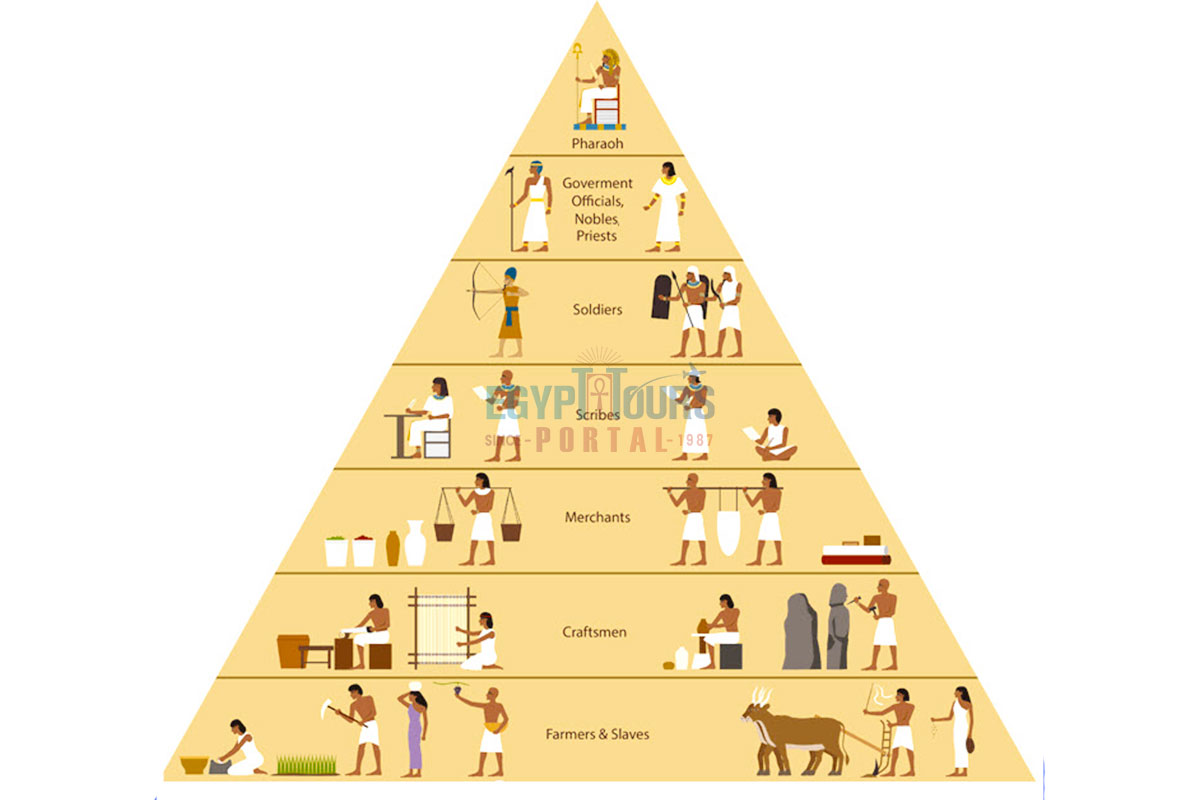
The role of craftsmen in ancient Egyptian society was pivotal but stratified according to the social hierarchy. Most of the artifacts produced by the craftsmen, including intricately carved furniture, statues, jewelry, and funerary items, were beyond the reach of the average Egyptian. Their primary clients were the pharaoh, the nobility, and the wealthy middle class, who could afford their services and appreciated the high-quality craftsmanship.

These individuals commissioned elaborate tomb goods, statues, furniture, and ritual items, which played a significant role in ensuring their comfort and prestige both in life and in the afterlife. Craftsmanship flourished in ancient Egypt partly due to the stability and economic prosperity fostered by agricultural surplus and successful trade. Trade relations with neighboring regions like Nubia, Punt, and the Levant ensured a steady flow of raw materials, which allowed craftsmen to work on a wide range of products.

The economy of ancient Egypt was bolstered by the craftsmanship industry, and many luxury items served as symbols of status and wealth. The disparity in product quality reflected the differences in social classes. The rich had beautifully carved and adorned furniture, which showcased the artisans' skills in intricate detailing, while the middle class settled for simpler, less refined products, often painted crudely. The lower class had little access to these items, often using utilitarian tools and vessels made from mud or reed.

Discover the Incredible Tools and Products of Ancient Egyptian Craftsmen
Tools and Products of Ancient Egyptian Craftsmen - Egypt Tours Portal

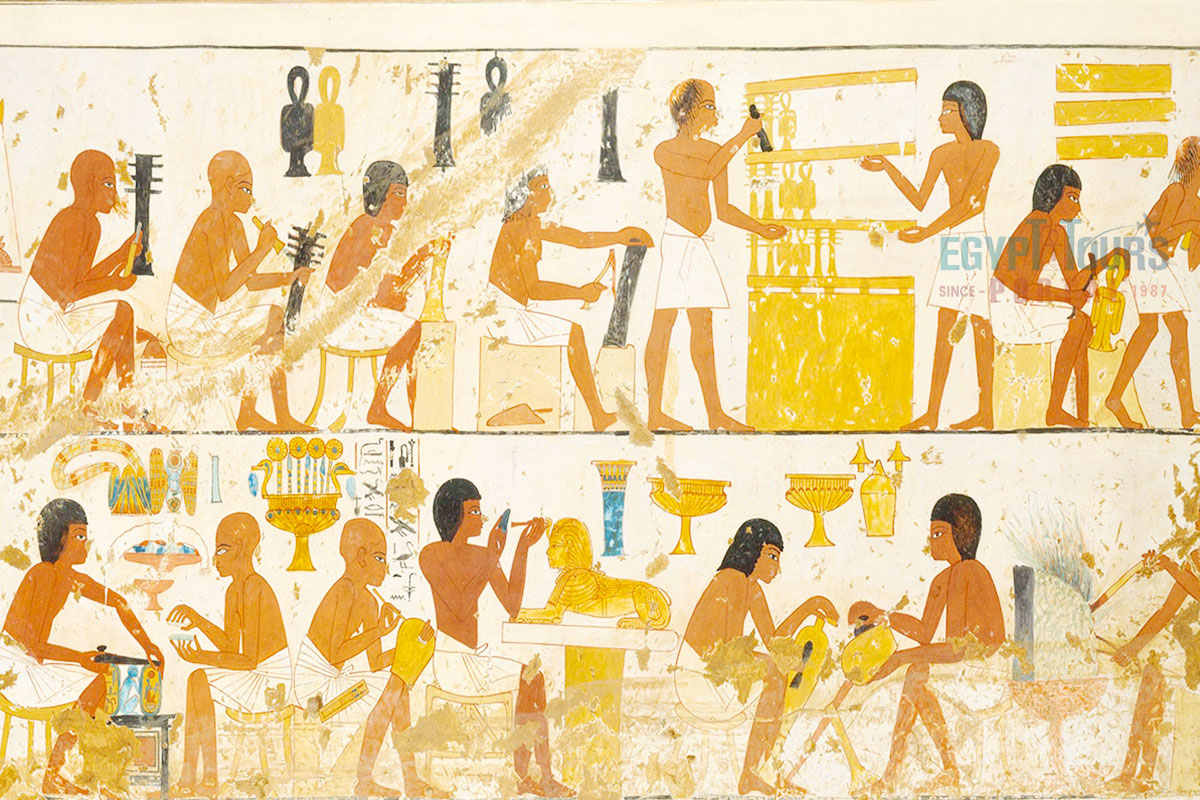
The ancient Egyptian craftsmen used an array of tools to create their products, many of which were remarkably advanced for their time. Carpenters, for instance, created a wide range of items, including roofing beams, furniture, and wooden statues. They used tools like saws, axes, chisels, adzes, bow drills, and wooden mallets. The wood, primarily imported from Lebanon due to the scarcity of native trees suitable for carpentry, was a precious commodity. Carpenters often used sycamore, acacia, and tamarisk, with cedar being particularly prized for its quality and durability.

Sculptors and stonemasons shaped and smoothed stone using hammers made of dolerite, a very hard stone that could be used to pound granite, and copper chisels, which were periodically hardened by re-tempering. They worked on materials ranging from the soft limestone of the Nile Valley to the harder granite and basalt. The colossal statues, life-sized sculptures, and intricately carved reliefs adorning temples and tombs were all products of their labor. The level of skill required to create these enduring monuments is a testament to their craftsmanship, given the limitations of their tools compared to modern equipment.

Brickmakers and potters were also integral to Egyptian society. They used the mud from the Nile River banks to produce bricks for construction and pottery for everyday use. The bricks were made by mixing Nile silt with sand and straw, placing the mixture in wooden molds, and then drying it in the sun. Potters, on the other hand, produced a wide variety of vessels using the potter's wheel. The pots were often coated with a reddish slip or decorated with geometric patterns or figures using a comb or stylus before being fired in kilns.

Bead makers and jewelers were particularly creative, producing exquisite pieces of jewelry that were both decorative and amuletic. Semi-precious stones like carnelian, turquoise, lapis lazuli, and feldspar were commonly used. The bead makers would break the stones into smaller pieces, roll them between harder stones to shape them, and then use a bow drill to bore holes through the beads. These beads were then strung together to create intricate necklaces, bracelets, and other adornments. Goldsmiths worked with gold leaf and filigree to create elaborate jewelry, sometimes inlaid with colorful stones or glass.

Leatherworkers, basket makers, and textile workers also played significant roles. Leather was used to make sandals, quivers, shields, and other items. Basket makers used palm leaves, reeds, and other plant materials to create sturdy containers for carrying goods, while textile workers spun flax into linen, which was then woven into garments. The fine linen produced in Egypt was famous for its quality and was used by all levels of society, although the finest grades were reserved for the elite.
Aug 08, 2019

Ancient Egyptian Artifacts

Explore the marvelous artifacts of the ancient Egyptian civilization

Explore The Various Craftsmen and Artisans of Ancient Egypt
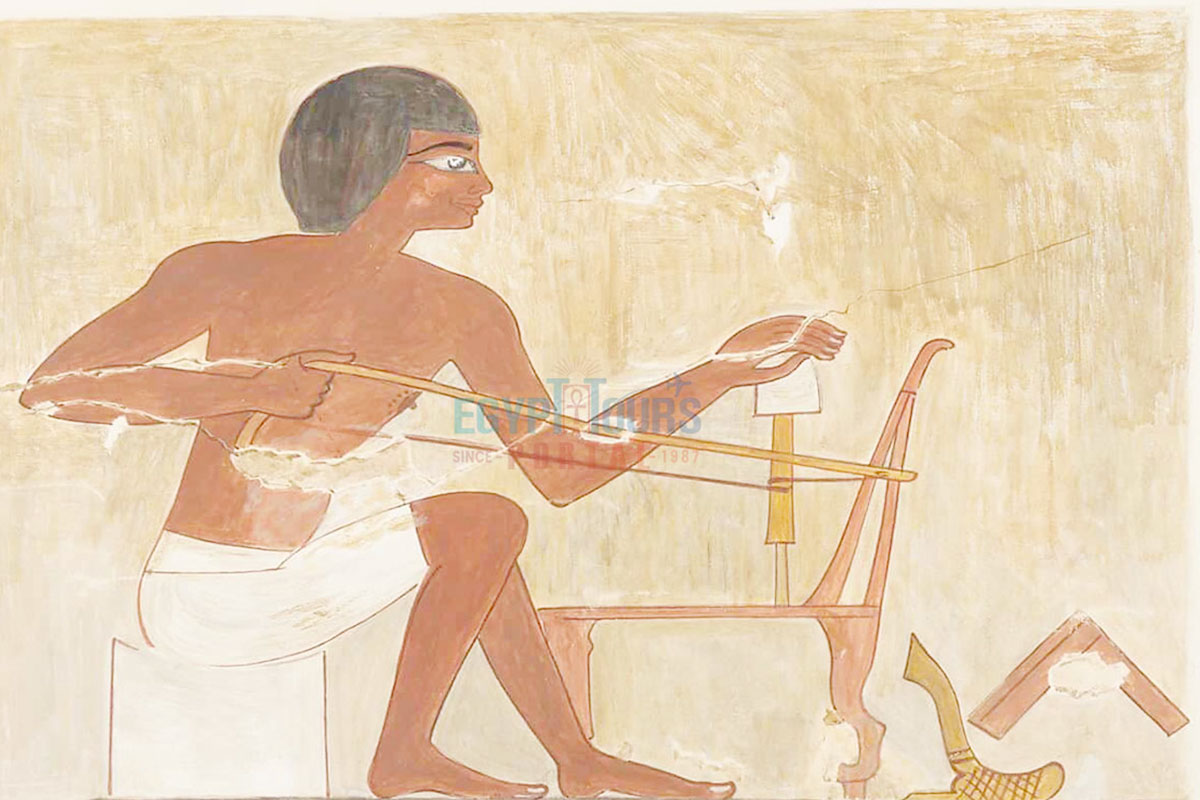
Craftsmen and Artisans of Ancient Egypt - Egypt Tours Portal

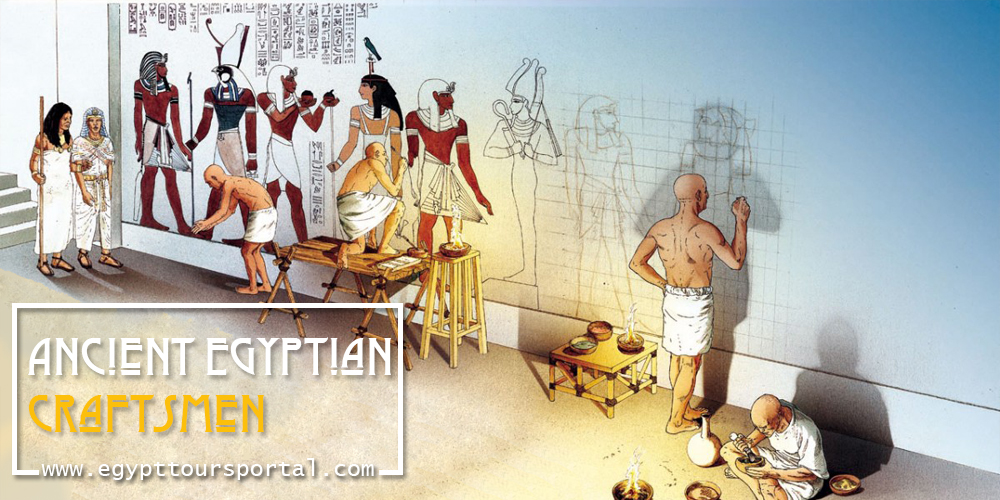
The craftsmen of ancient Egypt, whether working with stone, metal, wood, clay, or fabric, contributed significantly to the cultural richness and enduring legacy of the civilization. Their work, driven by the principles of Ma'at, was not merely functional but also symbolic, often designed to serve a religious or ceremonial purpose. The grandeur of their creations, from monumental temples to intricately fashioned jewelry, reflects their exceptional skill and dedication, as well as the important role they played in shaping the history and identity of ancient Egypt. Explore the many professions of the Ancient Egyptian Craftsmen in Ancient Egypt, which are:

1.    Stone Masons in Ancient Egypt

Ancient Egyptian Stonemason - Egypt Tours Portal

Stone masonry was a cornerstone of ancient Egyptian civilization, quite literally. Stone masons were the artisans behind Egypt’s iconic monuments, including the legendary Egyptian pyramids, colossal statues, and grand temples that remain marvels of engineering and artistry. Working primarily with limestone, sandstone, and granite, these craftsmen used rudimentary yet effective tools such as copper chisels, wooden mallets, and stone hammers.

The precision required in shaping massive stone blocks for monumental structures like the Great Pyramid at Giza or the grand temples of Karnak was remarkable. Beyond physical skill, stone masons needed to have a deep understanding of geometry, measurement, and the properties of each stone to ensure that their creations would withstand the test of time. Their meticulous labor, often working in teams under master architects, helped create structures so robust and precise that many still stand today, showcasing their extraordinary skills.

2. Jewelers in Ancient Egypt
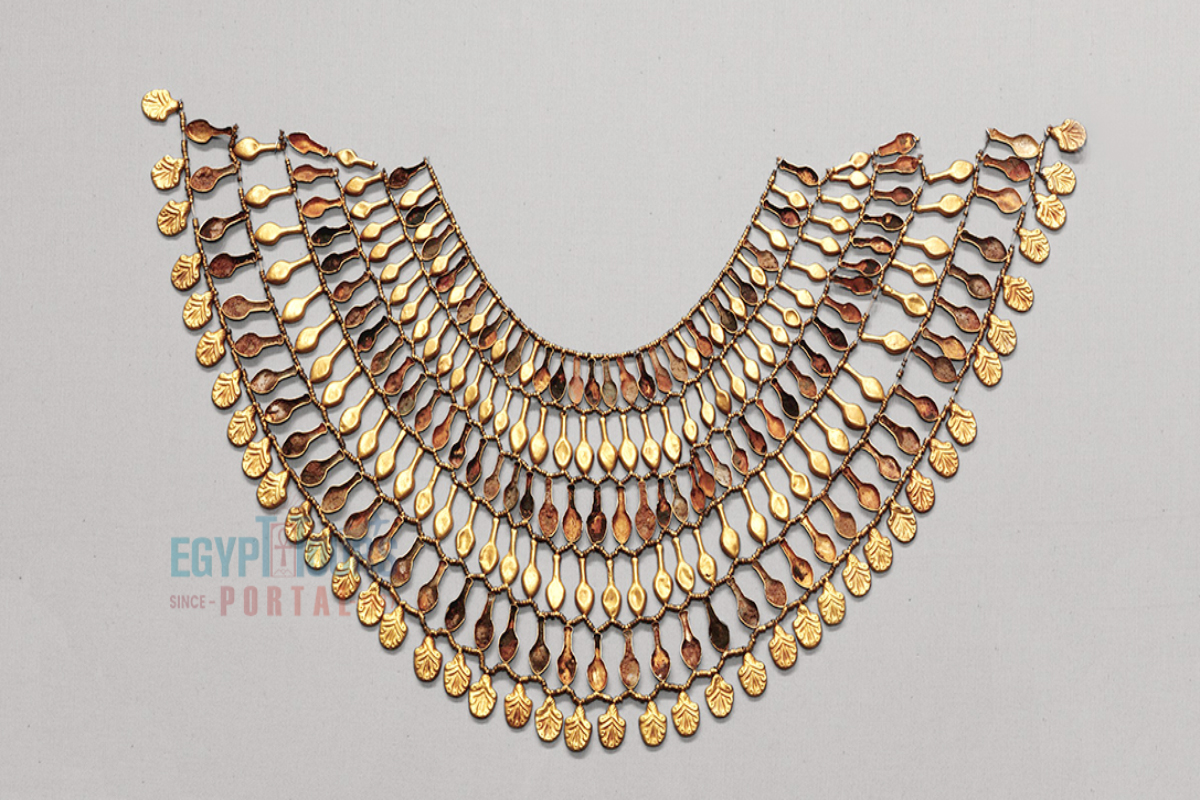
Ancient Egyptian Jewelers - Egypt Tours Portal

Jewelers in ancient Egypt held a prestigious position, as their creations symbolized wealth, protection, and divine favor. Jewelry was not merely decorative; it had spiritual significance and was often imbued with magical properties believed to protect the wearer. Jewelers crafted intricate pieces such as rings, bracelets, earrings, pectorals, and amulets from precious metals like gold and copper and adorned them with semi-precious stones like turquoise, carnelian, lapis lazuli, and malachite.

These craftsmen used techniques like inlaying, engraving, and cloisonné to create richly detailed designs, often depicting gods, animals, or symbols like the ankh and the Eye of Horus. Because the pharaohs and nobility prized jewelry, jewelers were highly regarded and could sometimes achieve significant status. They worked in workshops affiliated with temples or palaces, where their designs became part of the religious rituals and personal adornments of ancient Egyptian elites.

3. Potters in Ancient Egypt

Ancient Egyptian Potters - Egypt Tours Portal

Potters were indispensable to ancient Egyptian society, as they provided the necessary vessels for daily life, ceremonial practices, and the storage of food and water. Pottery in Egypt ranged from simple utilitarian ware to finely decorated ritual pots. Potters shaped clay by hand or used a manually operated wheel to create bowls, jars, jugs, and large storage vessels. After shaping, they fired their wares in open-air kilns or ovens, often coating them with a slip (a thin layer of liquid clay) to enhance durability and appearance.

The artistry of pottery lay in both its functionality and its aesthetics, as some pottery was decorated with red ochre, geometric patterns, or painted scenes depicting nature and the daily life of ancient Egyptians. Pottery served multiple purposes in ancient Egypt, from kitchenware to containers for sacred offerings in temples, and some fine pieces were placed in tombs as grave goods, underscoring the respect and value of a potter’s work.

4. Weavers in Ancient Egypt

Ancient Egyptian Weavers - Egypt Tours Portal

Weaving was an essential skill in ancient Egypt, producing textiles from linen that were used across all levels of society, from the common laborer to the elite. Linen, spun from flax plants grown along the Nile, was the primary material for clothing due to Egypt’s hot climate. The process began with spinning flax fibers into thread, which was then woven on upright looms operated by skilled weavers. The finished products ranged from simple, functional garments for everyday wear to elaborate, finely woven pieces worn by royalty and priests.

Skilled weavers produced a variety of fabrics, including sheer linens that symbolized luxury and were often adorned with decorative borders. Linen was also used for other essential items, such as sails, household items, and burial shrouds for the mummified dead. The labor-intensive process of weaving, often performed by women, made textiles a valuable commodity in ancient Egypt, one that contributed to both the economy and culture.

5. Artists in Ancient Egypt

Ancient Egyptian Artists - Egypt Tours Portal

Artists in ancient Egypt were tasked with creating the distinctive visual style that defined ancient Egyptian art. Their work adorned the walls of temples and tombs, as well as papyrus scrolls and steles, depicting scenes that ranged from gods and pharaohs to ancient Egyptian animals and daily life. Egyptian artists adhered to strict conventions, using a highly stylized approach that included specific postures, profile views, and hierarchical proportions.

These conventions were not mere artistic preferences but were tied to ancient Egyptian religious beliefs about how the images would serve their purpose in the afterlife or communicate with the gods. Artists often worked in groups, with a master artist overseeing apprentices and journeymen who specialized in different tasks, from drawing outlines to mixing pigments and painting. Their artwork was not only decorative but also a means to convey important cultural, religious, and political messages, making artists respected members of society who preserved Egyptian ideology in visual form.

6. Blacksmiths in Ancient Egypt
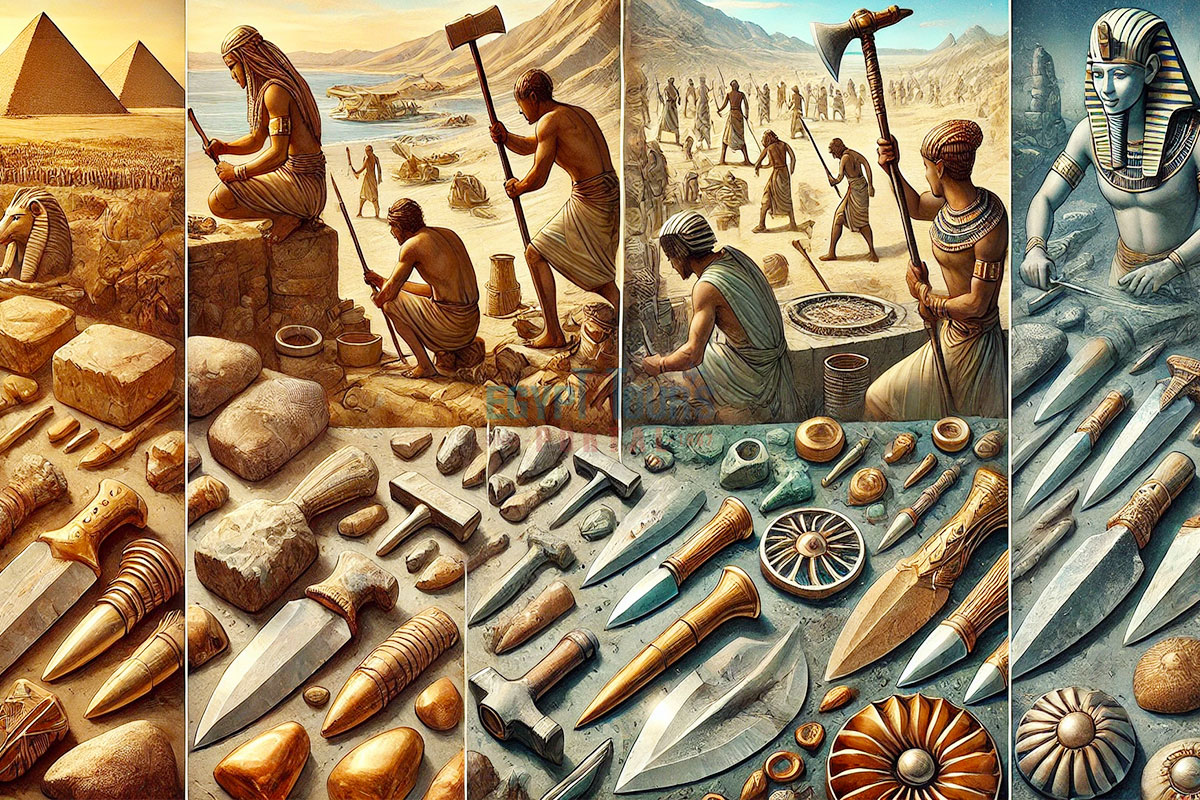
Ancient Egyptian Blacksmiths - Egypt Tours Portal

In a society where metal was scarce, blacksmiths played a critical role in crafting essential tools, weapons, and ceremonial objects. Early blacksmiths worked primarily with copper and bronze, as iron became more accessible in later periods. The blacksmith’s forge was a place of intense labor and skill, requiring knowledge of smelting and metalworking to transform raw materials into functional items.

Blacksmiths produced tools used in agriculture, construction, and even jewelry, crafting items like chisels, saws, plows, and decorative weapons. They also played a role in creating ceremonial objects used in religious rituals, adding to the symbolic weight of their work. As metalworkers, blacksmiths operated at the forefront of technological innovation, and their skills were highly valued, especially as iron smelting became more advanced, leading to tools and weapons that were stronger and more effective.

7. Carpenters in Ancient Egypt

Ancient Egyptian Carpenter - Egypt Tours Portal

Carpenters in ancient Egypt were essential for crafting a wide range of wooden items, from practical tools and furniture to the grand ancient Egyptian chariots and wooden ancient Egyptian coffins used in burial practices. Despite the scarcity of quality wood, carpenters honed their skills with locally available materials like acacia and sycamore, and occasionally imported cedar from Lebanon for elite projects. Carpenters built boats, storage chests, beds, and intricately designed pieces that were inlaid with gold or painted with symbolic designs.

Skilled carpenters worked for the royal palace, temples, and the affluent classes, creating objects that were often decorated or painted with scenes from ancient Egyptian mythology and everyday life. Their work also extended to ceremonial items such as shrines and offering tables, which were important in religious practices. Given the complexity of their tasks and the status of their clients, carpenters were highly respected artisans whose craft was integral to Egyptian society.

8. Basket Weavers in Ancient Egypt

Basket Weavers - Egypt Tours Portal

Basket weaving was an age-old skill that produced indispensable items for daily life in ancient Egypt. Basket weavers used readily available materials such as reeds, palm leaves, and grasses to make baskets for carrying goods, storing food, and even for ceremonial purposes. The craft required a thorough understanding of plant materials and how they could be manipulated for durability and function.

The weavers created baskets of various shapes and sizes, from large storage containers to smaller, finely woven baskets for holding delicate items. Some baskets were simple and functional, while others were decorated or dyed, depending on their purpose and the status of the owner. In addition to everyday use, baskets were also used in religious rituals, such as offerings made to deities, showing how deeply embedded this craft was in Egyptian life.

9. Shipbuilders in Ancient Egypt

Ancient Egyptian Shipbuilders - Egypt Tours Portal

Ancient Egyptian shipbuilders constructed vessels crucial for transportation, trade, fishing, and even military expeditions along the Nile River and the Mediterranean Sea coast. Using local acacia and imported cedar, shipbuilders crafted boats ranging from small fishing canoes to large barges that could carry heavy cargo. Shipbuilding required advanced skills, as these vessels were designed to navigate the Nile’s current while supporting large numbers of passengers or cargo.

They employed various joinery techniques, including pegged planks, lashings, and dowel joints, to build strong, reliable boats. These boats enabled the transportation of goods and people, facilitating trade with neighboring regions, and played a role in ceremonies and processions. As a result, shipbuilders were highly valued for their contributions to Egypt’s economy and mobility, making their skills essential to the kingdom’s infrastructure and trade networks.

10. Glassmakers in Ancient Egypt

Ancient Egyptian Glassmakers - Egypt Tours Portal

Glassmaking was a refined and specialized craft that emerged in ancient Egypt, where glassmakers produced vibrant beads, figurines, and small decorative vessels. Glass was an expensive luxury, usually reserved for the elite and used in rituals and personal adornments. Egyptian glassmakers worked with sand and natron (sodium carbonate) and used high-temperature furnaces to melt and shape the glass, which they then tinted with minerals to achieve colors such as blue, green, and purple.

These craftsmen became known for their skill in creating translucent and opaque glass, and their colorful beads were highly valued in ancient Egyptian trade. The precision required to control temperatures and the addition of specific compounds made glassmaking one of the most complex crafts in Egypt, reflecting the technical knowledge and creative skill of the artisans who practiced it.

11. Bakers in Ancient Egypt

Ancient Egyptian Bakers - Egypt Tours Portal

Bakers were fundamental to Egyptian society, as they provided staple ancient Egyptian foods—primarily bread and beer—that were daily essentials for all classes. Baking was a demanding and labor-intensive job that involved grinding grains into flour, kneading dough, and baking it in clay ovens. Bakers created various types of bread, from simple loaves to intricate shapes flavored with honey, dates, or spices, which were often used as temple offerings.

Some bread was produced as part of a ration system, especially for workers in state projects, while other loaves were crafted for the elite with more elaborate recipes. As bakers played a role in sustaining the workforce and providing religious offerings, they held a respected position within their communities, essential to both the social and religious fabric of Egyptian society.

12. Scribes in Ancient Egypt

Ancient Egyptian Scribes - Egypt Tours Portal

Scribes held an elite and indispensable role in ancient Egypt, as they were among the few who could read and write the complex Egyptian script. Scribes were responsible for keeping records, writing legal documents, documenting ancient Egyptian literature, and chronicling events. Training as a scribe was a lengthy process, beginning in childhood and requiring years of study under master scribes.

They used tools like reed brushes and ink to write on papyrus, a material crafted from Nile reeds, and worked in settings ranging from temples and royal courts to construction sites. Scribes played a critical role in government administration, tax collection, religious rituals, and historical preservation. Their literacy gave them access to powerful positions, as only those with knowledge of the written language could record, interpret, and implement the laws and edicts of the kingdom.

13. Shoemakers in Ancient Egypt

Ancient Egyptian Shoemakers - Egypt Tours Portal

Shoemakers in ancient Egypt crafted footwear from leather, papyrus, and other plant fibers, producing sandals that varied in design and decoration depending on the wearer’s status. Sandals were the most common form of footwear, though they were not worn by everyone, as many Egyptians walked barefoot. Elite members of society, however, wore finely crafted sandals, some of which were richly decorated with gold, beading, and elaborate designs.

Shoemakers used simple hand tools to cut, shape, and sew materials, creating footwear for everyday use as well as ceremonial occasions. Footwear was often tied to religious rituals, with ancient Egyptian priests wearing special sandals in temple ceremonies, underscoring the cultural significance of a shoemaker’s trade.

14. Embalmers in Ancient Egypt

Ancient Egyptian Embalmers - Egypt Tours Portal

Embalming was a sacred and highly specialized profession in ancient Egypt, with embalmers responsible for preparing bodies for the afterlife through mummification. This intricate process began with the removal of internal organs, which were preserved separately, followed by the desiccation of the body using natron salts. Embalmers then wrapped the body in layers of linen, sometimes inserting amulets for protection.

The mummification process could take up to seventy days and was accompanied by complex rituals and prayers. Only certain individuals, often members of the priesthood, were permitted to perform this task, and they did so in accordance with religious guidelines that ensured the deceased would be properly prepared for eternity. The role of embalmers was one of reverence and respect, as they played a crucial role in fulfilling Egypt’s religious beliefs in the afterlife.

15. Pottery Painters in Ancient Egypt

Ancient Egyptian Pottery Painters - Egypt Tours Portal

Pottery painters were skilled artists who decorated pottery used in everyday life as well as in religious and funerary contexts. Their work transformed simple clay vessels into beautifully adorned artifacts, often depicting animals, plants, and scenes from Egyptian mythology. Pottery painters used natural pigments to create lasting designs that could withstand the firing process, ensuring that the artwork would endure.

Their decorative work not only added beauty but also served as a form of storytelling, often depicting symbols or motifs that held significant cultural meaning. As pottery was used in both domestic and sacred settings, these artisans held a respected role in society, blending artistry with utility.

16. Wig Makers in Ancient Egypt
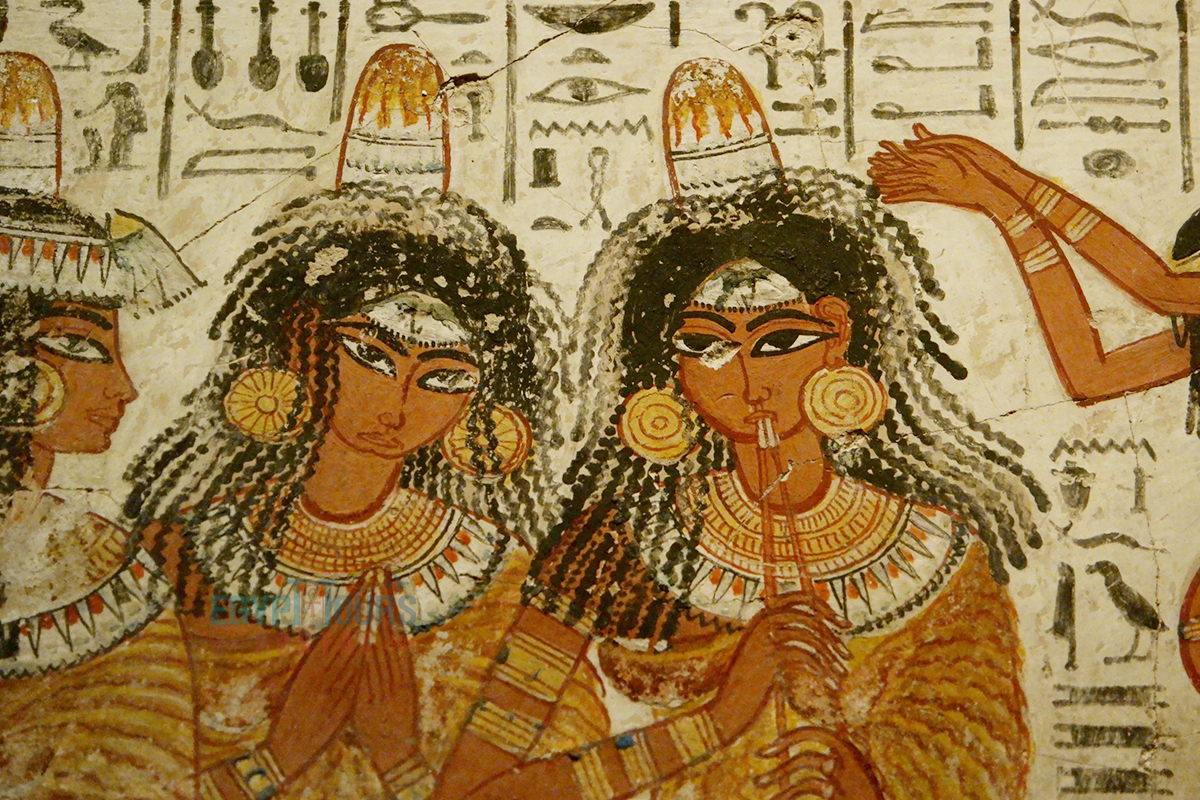
Ancient Egyptian Wig-Makers - Egypt Tours Portal

Wigs were popular in ancient Egypt, worn by both men and women to signify status and for practical reasons. Wig makers crafted wigs from human hair, wool, and sometimes plant fibers, often weaving the strands into complex braids and curls. Wigs were a practical solution to Egypt’s hot climate, as they allowed people to shave their heads for comfort and cleanliness while still presenting themselves fashionably.

The elite often wore elaborate wigs adorned with gold beads, ribbons, and ornaments, while priests and royals donned wigs in religious ceremonies to symbolize purity. Wig makers were highly skilled and created wigs for various occasions, from everyday wear to formal events, making them integral to Egypt’s cultural and social identity.

How the Skilled Craftsmen Fit in Ancient Egypt
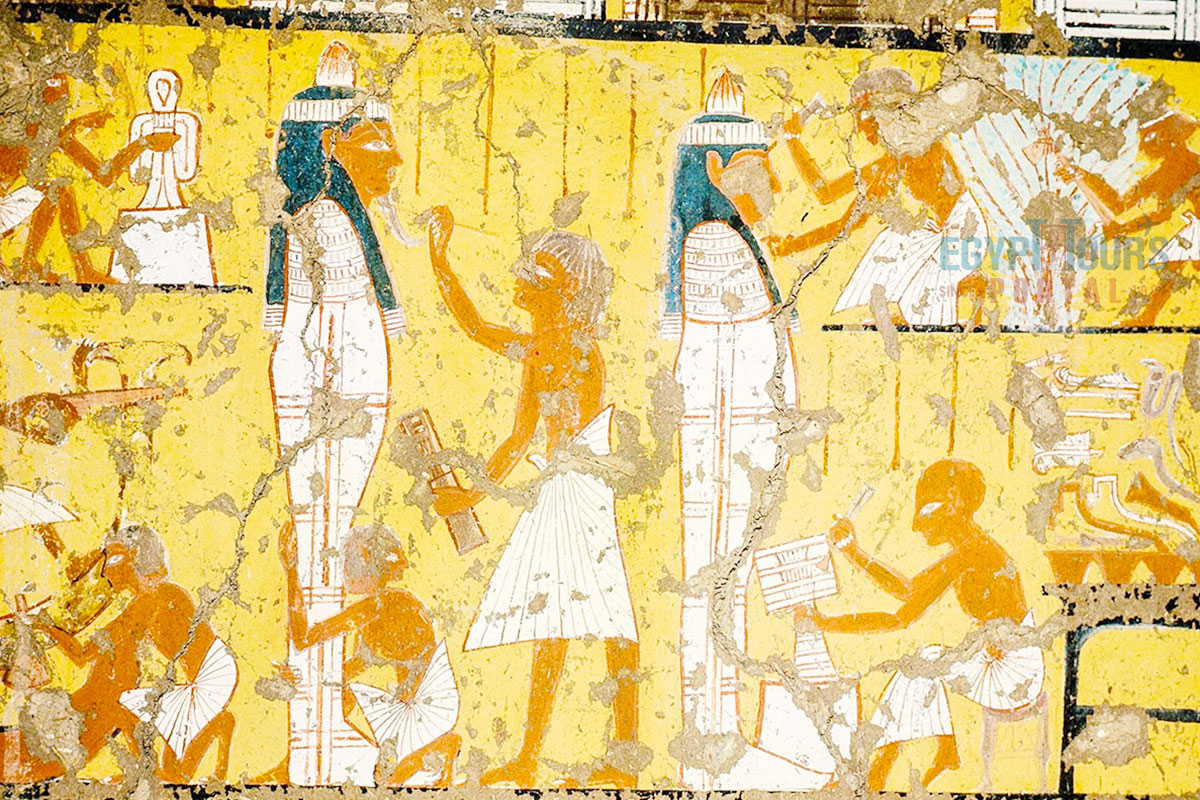
Skilled Craftsmen in Ancient Egypt  - Egypt Tours Portal
Skilled Craftsmen in Ancient Egypt - Egypt Tours Portal

Skilled craftsmen in ancient Egypt were highly respected for their abilities, although they did not enjoy the same level of prestige as the nobles or priests. They were specialized in their respective fields, ensuring that their work was of the highest quality. Many of these craftsmen worked under royal patronage, which provided them with stable employment and access to high-quality materials. They played an essential role in creating the monuments, artifacts, and everyday items that contributed to the culture and daily life of ancient Egypt.
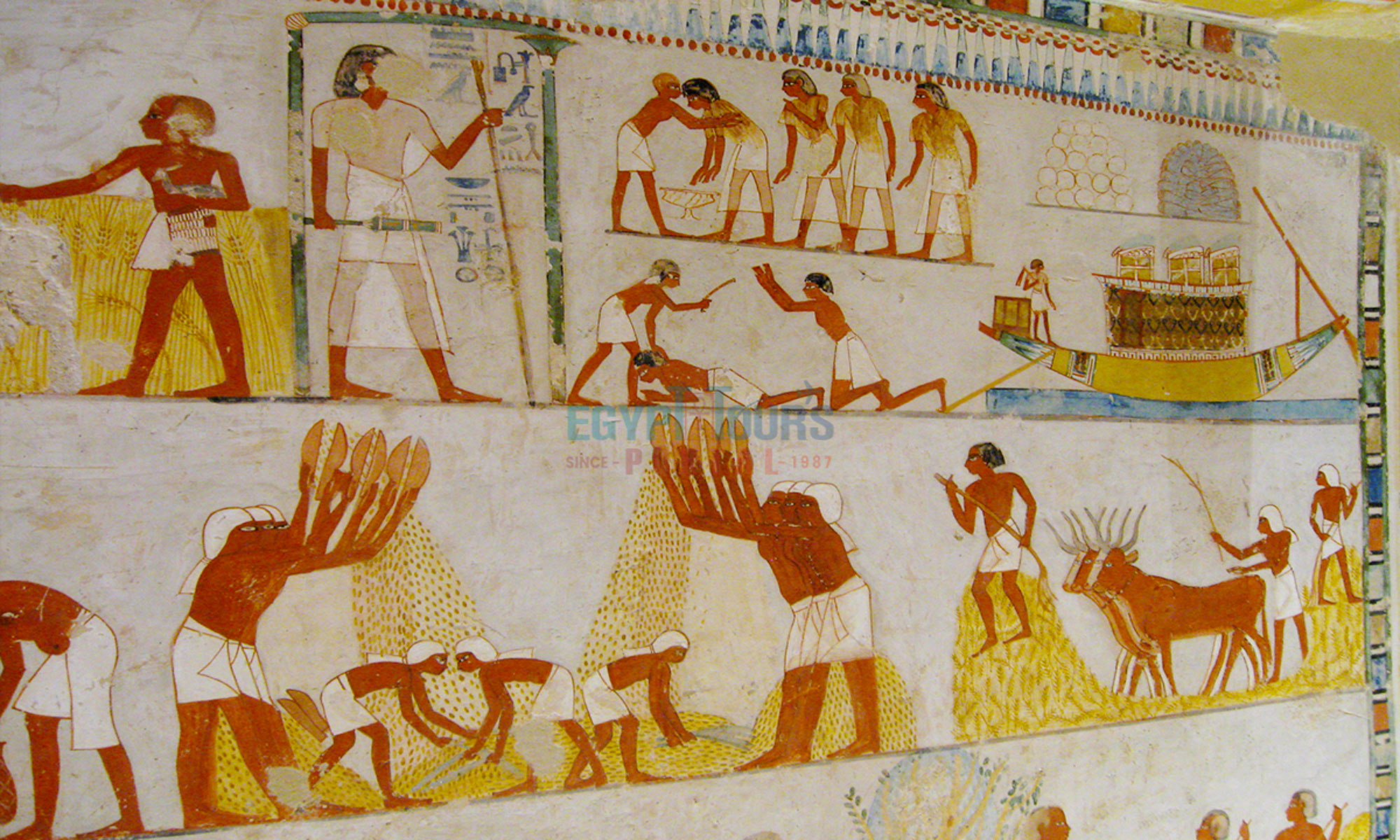
Dec 14, 2024

Jobs in Ancient Egypt: The Professions That Built a Civilization

Explore the magnificent Professions and jobs that built a civilization

What Did the Homes of the Ancient Egyptian Craftsmen Look Like
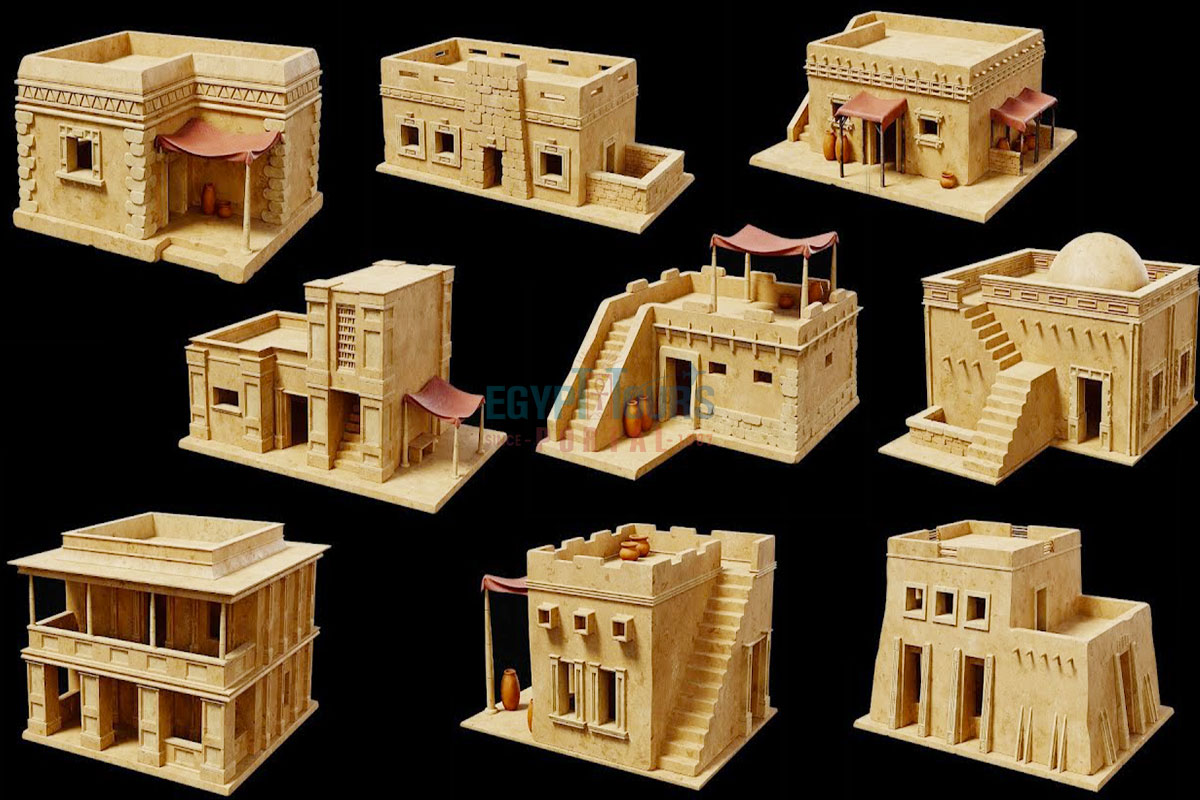
Homes of the Ancient Egyptian Craftsmen - Egypt Tours Portal

Craftsmen in ancient Egypt typically lived in modest ancient Egyptian homes, often located in villages or communities near their place of work. The craftsmen of Deir el-Medina lived in small, stone-built houses with limited space, usually consisting of a few rooms for cooking, sleeping, and working. The homes were simple but functional, reflecting the craftsmen's middle-class status. These communities were tightly knit, with a shared sense of purpose and pride in their work. The state or temple authorities often provided these homes as part of the craftsmen's compensation for their labor.

Facts About Ancient Egyptian Craftsmen

  • Ancient Egyptian craftsmen, or artisans, operated within a strict hierarchical structure, with most employed by the centralized government, pharaohs, or temples.
  • Their work focused on fulfilling the highest standards of craftsmanship for religious and royal purposes, with strict guidelines in place to maintain continuity in style and symbolism across generations.
  • Craftsmen typically worked in well-organized workshops and lived in designated communities, such as Deir el-Medina, a famous artisans' village near the Valley of the Kings.
  • Deir el-Medina housed skilled workers who constructed royal tombs during the New Kingdom period, highlighting the significance of craftsmen in royal and religious projects.
  • Artisans in these communities received food, housing, and other essentials in exchange for their labor, signifying their value to society, though they were still ranked below the elite.
  • Skills were often passed down within families, with artisans teaching their craft to children or apprentices, ensuring continuity in technique and knowledge over generations.
  • Craftsmen upheld the principles of Ma'at (order, balance, and harmony), reflected in their meticulous work that aligned with religious and cultural ideals.
  • Despite their essential contributions, individual craftsmen’s names were rarely recorded, leaving them largely anonymous compared to the nobility and royalty who commissioned their work.
  • Various crafts were practiced, including carpentry, stone masonry, sculpture, building, weaving, blacksmithing, spinning, dressmaking, glassblowing, pottery, and foundry work, each playing a unique role in society.
  • Stonemasons and sculptors created colossal statues and intricately decorated temples, defining Egyptian architecture.
  • Glassblowers produced vibrant glass items colored with metal oxides, highly prized for their aesthetic and ceremonial value.
  • Weavers and spinners crafted fine linen textiles, essential for clothing and burial shrouds, making them valuable in both daily and spiritual life.
  • Scribes, though not traditional craftsmen, were essential in documenting transactions, drafting designs, and ensuring that craftwork met religious standards, playing a key role in Egypt’s artisan workforce.

Witness the Beauty and Greatness of Ancient Egypt With Our Grand Tours

Egypt has always been known to reflect the immortal ancient beauty better than anyone, and there is no better experience than boarding a Nile river cruise on the life force and inspiration of the ancient Egyptian civilization through our Egypt Vacations to enjoy such a divine beauty of art.

ETP TEAM

Egypt Tours Portal is dedicated to preserving and sharing the rich history, culture, and mysteries of ancient Egypt, helping travelers and history enthusiasts explore Egypt’s most iconic destinations and monuments. The team consists of experienced Egyptologists, archaeologists, historians, travelers, content creators, marketers, consultants, and explorers with 5–20 years of expertise in their respective fields.

The website provides accurate, regularly updated information developed by qualified experts and supported by trusted sources to ensure reliability and educational value. Drawing on more than 39 years of industry knowledge and resources, Egypt Tours Portal offers a wide range of travel services, including Egypt tours, Nile cruises, day tours, shore excursions and multi-country tours. Their services have earned positive reviews from travelers, recognition through awards, and mentions by respected news outlets and travel blogs, delivering both educational and memorable travel experiences across Egypt.
Leave a Comment

Don't Just See Egypt. Experience It.

From private sunrise viewings at Giza to dining with local families in Aswan, unlock an extraordinary journey crafted entirely around your pacing and desires.

Private Certified Egyptologists Handpicked Heritage Stays 100% Tailor-Made Pacing Zero Hidden Service Fees
Explore Egypt Tours
Pick Your Journey

Related Tours to This Article

4 Days Cairo Tour Packages
IATA-Egypt-Tours-Portal

4 Days Cairo Tour Packages

Great journey in Egypt for 4 days Cairo tour Packages joining a private tour guide to visit Giza Pyramids complex, Coptic & Islamic landmarks in old Cairo.
Cairo – Giza
4 Days / 3 Nights Classic Tour
4 Days Cairo and Alexandria Itinerary
IATA-Egypt-Tours-Portal

4 Days Cairo and Alexandria Itinerary

Enjoy a luxurious 4-day private itinerary to Cairo and Alexandria, including visits to renowned monuments and stays in 5-star hotels. Book now!
Cairo / Giza / Alexandria
4 Days / 3 Nights Classic Tour
5 Days Cairo and Alexandria Tour Package
IATA-Egypt-Tours-Portal

5 Days Cairo and Alexandria Tour Package

Enjoy a 5-day Cairo and Alexandria tour with Giza Pyramids, Old Cairo, Alexandria Library, Qaitbay Citadel, Pompey's Pillar, hotels, guide and transfers.
Cairo / Giza / Alexandria
5 Days / 4 Nights Classic Tour
5 Days Cairo & Luxor Tour Package
IATA-Egypt-Tours-Portal

5 Days Cairo & Luxor Tour Package

Discover the wonders of Cairo and Luxor in just 5 days with our private guided tours. Book now for an unforgettable experience!
Cairo / Luxor
5 Days / 4 Nights Classic Tour
6 Days Cairo, Luxor & Aswan Holiday
IATA-Egypt-Tours-Portal

6 Days Cairo, Luxor & Aswan Holiday

Enjoy 6 Days Cairo, Luxor & Aswan tour package-joining a private tour guide to visit the most famous tourist attraction in Cairo, Luxor & Aswan. Book Now!
Cairo / Giza / Aswan / Luxor
6 Days / 5 Nights Classic Tour
6 Days Cairo and Nile Cruise Package
IATA-Egypt-Tours-Portal

6 Days Cairo and Nile Cruise Package

Exceptional 6 days Cairo and Nile Cruise package to visit Cairo & Pyramids, then Nile cruise Aswan to Luxor to visit ancient temples and tombs, Book Now!!!
Cairo / Aswan / Kom Ombo / Edfu / Luxor
6 Days / 5 Nights Classic Tour
7 Days Cairo and Hurghada Holiday
IATA-Egypt-Tours-Portal

7 Days Cairo and Hurghada Holiday

Secure your spot today for a 7-day Cairo and Hurghada holiday, exploring ancient attractions in Cairo before enjoying the Red Sea in Hurghada.
Cairo – Giza – Hurghada
7 Days / 6 Nights Classic Tour
7 Days Cairo, Luxor & Hurghada Holiday
IATA-Egypt-Tours-Portal

7 Days Cairo, Luxor & Hurghada Holiday

Enjoy a 7-day Egypt tour to Cairo, Luxor, and Hurghada with Giza Pyramids, Karnak, Valley of the Kings, Hatshepsut Temple, Red Sea snorkeling & expert guides.
Cairo – Giza – Luxor – Hurghada
7 Days / 6 Nights Classic Tour
8 Days Cairo Nile Cruise and Hurghada Tour
IATA-Egypt-Tours-Portal

8 Days Cairo Nile Cruise and Hurghada Tour

Traverse Cairo's ancient landmarks, cruise the Nile to Luxor and Aswan and bask in Hurghada's Red Sea on an 8-day tour.
Cairo / Giza / Aswan / Kom Ombo / Edfu / Luxor / Hurghada
8 Days / 7 Nights Classic Tour
9 Days Cairo, Luxor & Hurghada Tour Package
IATA-Egypt-Tours-Portal

9 Days Cairo, Luxor & Hurghada Tour Package

Enjoy 8 nights / 9 days Cairo, Luxor & Hurghada tour package to visit ancient Egypt monuments in Cairo & Luxor, then move to Hurghada. Book now!!!
Cairo / Giza / Luxor / Hurghada
9 Days / 8 Nights Classic Tour
9 Days Alexandria, Cairo & Sharm El Sheikh Holiday
IATA-Egypt-Tours-Portal

9 Days Alexandria, Cairo & Sharm El Sheikh Holiday

Explore Alexandria, Cairo & Sharm El Sheikh in 9 days, with iconic sights in Cairo & Alexandria, and Red Sea adventures in Sharm El Sheikh.
Cairo / Giza / Alexandria / Sharm El Sheikh
9 Days / 8 Nights Budget Tour
10 Days Egypt Tour Cairo, Nile Cruise & Hurghada
IATA-Egypt-Tours-Portal

10 Days Egypt Tour Cairo, Nile Cruise & Hurghada

Discover the highlights of Cairo, Luxor, and Aswan on a Nile cruise, followed by leisure time in Hurghada with our 10-day Egypt tour. Book now!
Cairo / Giza / Aswan / Kom Ombo / Edfu / Luxor / Hurghada
10 Days / 9 Nights Classic Tour
12 Days Hurghada, Cairo & Nile Cruise Holiday Packages
IATA-Egypt-Tours-Portal

12 Days Hurghada, Cairo & Nile Cruise Holiday Packages

Enjoy 12 Days Egypt tours to Cairo, Nile Cruise & Hurghada to visit the most famous attractions in Egypt. joining a private tour guide. Book Now!
Cairo / Giza / Aswan / Kom Ombo / Edfu / Luxor / Hurghada
12 Days / 11 Nights Classic Tour
13 Days Alexandria, Cairo and Nile Cruise Holidays
IATA-Egypt-Tours-Portal

13 Days Alexandria, Cairo and Nile Cruise Holidays

Enjoy 13 days Cairo and Nile cruise holidays in addition to visiting Alexandria sightseeing, then move to enjoy Red Sea holidays in Hurghada. Book Now!
Cairo / Giza / Aswan / Abu Simbel / Kom Ombo / Edfu / Luxor / Hurghada / Alexandria
13 Days / 12 Nights Classic Tour
15 Days Marvelous Tour Package in Egypt
IATA-Egypt-Tours-Portal

15 Days Marvelous Tour Package in Egypt

Reserve a 15-day exploration of Egypt to visit the top landmarks in the best tourist cities, followed by a rejuvenating Red Sea holiday in Hurghada.
Cairo/Giza/Aswan/Abu Simbel/Kom Ombo/Edfu/Luxor/Hurghada/Alexandria
15 Days / 14 Nights Classic Tour
Keep Exploring

What to Read Next

Dive deeper into this topic. Discover more insights, expert advice, and inspiration in our recommended articles.

Wed, 16 Jul 2025

ETP Team

Ancient Egyptian Medicine: The Sacred Science and Origins of Healing Practices

Discover how ancient Egyptian doctors blended magic, surgery, and herbal remedies to treat disease, shaping the foundation of modern medicine.

Mon, 30 Jun 2025

ETP Team

Ancient Egyptian Mathematics: The Foundation of Geometry and Engineering

Explore how Ancient Egyptian mathematics shaped civilization through geometry, fractions, and engineering marvels like pyramids, using advanced calculations.

Thu, 12 Jun 2025

ETP Team

Ancient Egyptian Food and Drinks: What Did They Eat and How?

Explore ancient Egyptian food recipes & drinks like bread and beer, meats, vegetables, and fruits, plus the diet of commoners and royalty, and cooking methods.

Mon, 30 Jun 2025

ETP Team

Ancient Egyptian Entertainment: Sports, Music, and Games

Discover how Ancient Egyptians celebrated life through sports, music, dance, games, and festivals, blending joy with faith in daily and sacred traditions.

Tue, 24 Jun 2025

ETP Team

Ancient Egyptian Economy: Planning Mastery & Resource Management

Discover how ancient Egypt’s detailed bureaucracy and the Nile fueled one of history’s greatest economies, blending agriculture, trade, and cultural wealth.

Sat, 19 Jul 2025

ETP Team

Ancient Egyptian Craftsmen: The Skilled Artisans Behind the Immortal Milestones of Egypt

Discover the legacy of ancient Egyptian craftsmen, stone masons, jewelers, potters, and more, whose artistry shaped Egypt’s cultural and spiritual identity.

Tue, 15 Jul 2025

ETP Team

Ancient Egyptian Calendar: Time, Nature, System, & Divine Order

Explore how the ancient Egyptian calendar used stars, Nile floods, and myth to guide farming, rituals, and daily life for over 5,000 years of civilization.

Tue, 01 Jul 2025

ETP Team

Ancient Egyptian Coins: Symbols of Power, Wealth, and Culture

Discover the history of Ancient Egyptian coins, from barter and metal weights to Ptolemaic minting, Roman influence, and the symbolism behind their design.

Sun, 01 Jun 2025

ETP Team

Discover the Life-Changing Discovery of Tutankhamun Tomb

Discovery of Tut’s tomb by Howard Carter in 1922 stunned the world, reshaping Egyptology and igniting global fixation with ancient Egypt & the Pharaoh's curse.

Sat, 17 Feb 2024

ETP Team

Ancient Egyptian Trade

Explore the ancient Egyptian trade history, goods, routes, trading partners, ships, cultural impact, and fascinating facts in this comprehensive article.

Thu, 19 Jun 2025

ETP Team

Thebes: The Eternal Capital of Ancient Egypt

Explore Thebes, Egypt’s grand capital of the New Kingdom; home to Karnak, Luxor, the Valley of the Kings, and the grand legacy of ancient Egyptian civilization.

Thu, 01 Feb 2024

ETP Team

Ancient Egyptian Art

Explore Ancient Egyptian Art history, colors, hieroglyphics, literature, paintings, sculptures, styles, papyrus, tombs, animals, martial art, and facts.

Tue, 12 Dec 2023

ETP Team

Crime & Punishment in Ancient Egypt

Punishment was one of the fundamental elements of the life of Egyptians. Read more about crime & punishment in ancient Egypt.

Thu, 06 Jun 2024

ETP Team

False Doors In Ancient Egypt

Decoding Ancient Egypt's False Doors: A look at their evolution, inscriptions, religious roles, and fascinating facts!

Sat, 26 Jul 2025

ETP Team

Ancient Nubia: The Culture That Shaped Egypt’s South

Explore the rich heritage of Nubian culture in Egypt, from ancient kingdoms and temples to language, crafts, and vibrant traditions still alive today.

Book With Confidence

Why Travel With Egypt Tours Portal

The "Boutique" Advantage

01

We offer private, customizable journeys tailored to your pace, moving away from the "factory-style" mass-market tours.

Gold-Standard Guides

02

Travel with elite, licensed Egyptologists who act as storytellers, not just tour leaders.

Seamless Logistics

03

24/7 "high-touch" support with a dedicated coordinator for every aspect of your multi-vendor itinerary.

2026/04/egypt-tours-portal-clients-at-giza-pyramids.jpg
04

True Customization

Our "Tailor-Made" planning workflow ensures your trip matches your specific priorities and interests.

05

Luxury & Comfort

We prioritize premium guide quality and vetted, safe hotels to ensure a stress-free environment.

06

Protection & Security

Advanced safety protocols and 24/7 emergency contact for total peace of mind during your adventure.

Book With Confidence.

Book your trip with peace of mind knowing every detail is handled with care.

Enjoy flexible options, secure payments, and dedicated support to make your journey smooth and worry-free from start to finish.

Read Our Confidence Policy

Pay Monthly

Split your total trip cost into easy monthly installments, making it more flexible and affordable for your budget.

Fast Booking

Complete your booking in just a few simple steps with a quick and streamlined process designed to save you time.

24/7 Support

Our dedicated support team is available around the clock to assist you before, during, and after your trip.

Rated 5 Stars

Highly rated by thousands of travelers for quality service, reliable experiences, and unforgettable journeys.

Pay Monthly

Split your total trip cost into easy monthly installments, making it more flexible and affordable for your budget.

Fast Booking

Complete your booking in just a few simple steps with a quick and streamlined process designed to save you time.

24/7 Support

Our dedicated support team is available around the clock to assist you before, during, and after your trip.

Rated 5 Stars

Highly rated by thousands of travelers for quality service, reliable experiences, and unforgettable journeys.

Traveler Video Reviews

Inside The Experience: Watch Authentic Traveler Stories Before Booking

Clients Feedback
https://dynamic-media-cdn.tripadvisor.com/media/photo-o/12/04/24/3e/rk-w.jpg
Erin W
Kiawah Island, South Carolina

"We had a great experience touring Aswan, Edfu, and Luxor with Mahmoud. I would highly recommend him as a guide. He adapted to our needs (2 teenagers) and kept everything interesting. He was always prompt, professional, and easy to communicate with. He was also very prompt answering questions via WhatsApp"

Read More
https://dynamic-media-cdn.tripadvisor.com/media/photo-o/1a/f6/f1/79/default-avatar-2020-21.jpg
Estelle V

"We would like to share our wonderful experience with Egypt Tours Portal. From the very first quote to our final airport drop-off, we were impressed by the professionalism, organization, and excellent communication from Walaa and the entire team. Our tour guides in both Luxor (“Habibi” was the best!) and Cairo were incredibly knowledgeable, helpful, and passionate about sharing Egypt’s history and treasures with us. We especially appreciated how thoughtfully the itinerary was planned — allowing us time to rest in the afternoons, scheduling visits during the cooler hours, and remaining flexible to accommodate our needs. Everything was smooth, well-organized, and made our trip truly memorable. We wholeheartedly recommend Egypt Tours Portal to anyone looking to discover the incredible history, culture, and wonders Egypt has to offer."

Read More
https://dynamic-media-cdn.tripadvisor.com/media/photo-o/1a/f6/e7/3d/default-avatar-2020-55.jpg
Tim K

"We had an outstanding time touring Luxor with our guide, Essra. She was knowledgeable, professional, and incredibly kind throughout the entire experience. Her explanations of Karnak Temple, Luxor Temple, the Valley of the Kings, Hatshepsut Temple, and the Colossi of Memnon brought Egypt's history to life. What really set her apart was her thoughtfulness. She made sure we stayed comfortable in the heat, surprising us with water and refreshments. She also took us to an excellent local restaurant that we never would have found on our own. Her attention to detail, genuine care, and passion for sharing Egypt made this one of the highlights of our trip. We highly recommend her to anyone visiting Luxor. On another note, the drivers we had each day were great. So professional, always on time and personable."

Read More
https://dynamic-media-cdn.tripadvisor.com/media/photo-o/1a/f6/e2/a7/default-avatar-2020-44.jpg
Will S
Bluff Park, Alabama

"We had a great vacation. Omar Haridi did our Nile Cruise and Zizi did our Cairo tour. They were amazing and very knowledgeable."

Read More
https://dynamic-media-cdn.tripadvisor.com/media/photo-o/1a/f6/ed/00/default-avatar-2020-4.jpg
Mira F

"The best experience of my lifetime! Nour, the tour guide was absolutely amazing! Went over and beyond thinking about every little thing. I had a mishap and Egypt Air overbooked my flight and bumped me to a later flight causing me to miss an entire day of activities. Nour made sure I got to do every single thing I missed that first day. But that’s not all: his knowledge of old Egypt is unparalleled, he truly brings Egypt (Aswan Luxor) alive. I’ve traveled all over the world and met many tour guides: Nour stands apart from all of them. He’s also considerate, caring and genuinely wants his guests to enjoy the trip and learn the most about the incredible history of Egypt. He’s also funny and genuinely great to be around. Please, do yourself a favor when booking a trip in Upper Egypt and ask for Nour. Hands down the best guide ever!"

Read More
https://dynamic-media-cdn.tripadvisor.com/media/photo-o/1a/f6/f6/0d/default-avatar-2020-34.jpg
Paul B
Hook, United Kingdom

"Excellent guide Mr Mohamed Osman, who was incredibly knowledgeable and very informative. Couldn't ask for more. Food on day 1 was ok, but much better at lunch on day 2. Hotel was excellent. Also our driver was excellent. All in all a great experience. Would highly recommend."

Read More
https://dynamic-media-cdn.tripadvisor.com/media/photo-o/1a/f6/eb/6d/default-avatar-2020-19.jpg
Marianna A

"Our experience in Egypt, especially in Luxor and Aswan, was truly unforgettable, and a huge part of that was thanks to our incredible guide Omar. We cannot recommend him highly enough. From the moment we met him, it was clear that he was exceptionally knowledgeable, professional, and deeply passionate about Egyptian history and culture. What made our tour extraordinary was that our guide is not only a master’s in Egyptology but is also currently pursuing a PhD in Egyptology. His depth of knowledge was absolutely remarkable. He is also very creative and artistic. Every temple, tomb, monument, and historical site came alive through his explanations. He did not simply recite facts, he explained the historical context, symbolism, religious beliefs, architecture, and fascinating stories behind everything we saw. It truly felt like we were traveling through ancient Egypt with a real scholar and expert by our side. He brought ancient Egyptian history to life by assigning us the roles of Egyptian gods and legendary heroes. Through these interactive mini-plays, we were able to experience, understand, and truly connect with the stories he shared. In Luxor, visiting Karnak Temple, Luxor Temple, the Valley of the Kings, and Hatshepsut Temple became an unforgettable educational and emotional experience because of the way he explained the history in such an engaging and easy-to-understand manner. In Aswan, his insights about Philae Temple, Nubian history, and ancient Egyptian civilization added so much depth to our trip. He answered every question thoughtfully and with incredible detail, and you could genuinely feel his passion for Egyptology. Beyond his academic expertise, he was one of the kindest and most caring people we met during our travels. He constantly made sure we were comfortable, safe, hydrated, and enjoying ourselves. He was patient, attentive, organized, and always willing to help with anything we needed. His warm personality and kindness made us feel welcomed not just as tourists, but as friends. He also paced the tours perfectly, allowing us enough time to truly appreciate each site without ever feeling rushed. His professionalism, friendliness, and genuine care created a relaxed and enjoyable atmosphere throughout the trip. Thanks to him, our visit to Egypt became far more than a vacation. It became an unforgettable journey into history and culture. If you are planning to visit Luxor, Aswan, or anywhere in Egypt, choosing this guide will be one of the best decisions you can make. He is truly exceptional, and we feel incredibly lucky to have had him as our guide. Thank you again for such an amazing experience. We will never forget it. Marianna and Khris"

Read More
https://dynamic-media-cdn.tripadvisor.com/media/photo-o/1a/f6/f0/d5/default-avatar-2020-17.jpg
James H

"This has been a tour agency and guides I can’t wait to give a glowing review to and to recommend to friends and family. Both Riham and Walid were happy to help coordinate excursions and share a wealth of knowledge. 10/10 experience"

Read More
https://dynamic-media-cdn.tripadvisor.com/media/photo-o/1a/f6/ec/a2/default-avatar-2020-3.jpg
H D

"We had a wonderful experience with the 5 day cruise. The price is wry reasonable. The best part is that the visits are done in very small numbers with a guide. It is almost like having a private guide. The food was good with lots of variety and all the staff members are very friendly and helpful. Omar Haradi, our guide was very knowledgeable and very generous with his time and with sharing his knowledge."

Read More
https://dynamic-media-cdn.tripadvisor.com/media/photo-o/1a/f6/f2/59/default-avatar-2020-24.jpg
Marlina
West Palm Beach, Florida

"We just returned home from an incredible trip to Egypt, and we cannot say enough good things about Egypt Tours. From the moment we booked our trip until the day we flew home, their communication, organization, and attention to detail were outstanding. Our adventure began in Cairo, where we were warmly welcomed at the airport by our guide, Abdulrahman Mosbah. He immediately made us feel comfortable and at ease, and our Nile River sunset cruise was the perfect introduction to Egypt. Abdul’s warm personality and infectious enthusiasm made our first day both fun and memorable. The following day, we toured with Reda Elgendy, who brought the pyramids to life with fascinating stories and historical insights. Seeing the Grand Egyptian Museum (GEM) was truly breathtaking and a highlight of our time in Cairo. In Aswan, we were greeted at the airport by Ahmed Haggag, who guided us over the next two days. Ahmed was incredibly knowledgeable, thorough in his explanations, and always kept us entertained with his great sense of humor. We learned so much while enjoying every moment of our time with him. Our final stop was Luxor, where we met Ghada Kamel. Saving the best for last, Ghada was absolutely exceptional. Her passion for Egypt’s history and culture made our visits to the temples and the Valley of the Kings unforgettable. She was engaging, informative, and truly outstanding. This trip exceeded all of our expectations. Not only did we experience some of the world’s most amazing historical sites, but each of our guides also shared valuable insights into Egyptian culture and daily life. We returned home with wonderful memories, a deeper appreciation for Egypt, and gratitude for the amazing team at Egypt Tours. We highly recommend Egypt Tours to anyone planning a trip to Egypt. It was truly the trip of a lifetime!"

Read More
https://dynamic-media-cdn.tripadvisor.com/media/photo-o/1a/f6/de/5a/default-avatar-2020-36.jpg
Alejandro M

"We loved it, great experience and treatment. Our guide Noah had great knowledge of the subject. Thank you very much."

Read More
https://dynamic-media-cdn.tripadvisor.com/media/photo-o/1a/f6/f0/d5/default-avatar-2020-17.jpg
Jeff T

"Our trip in May 2026 was fantastic! We saw all the major wonders of Egypt! Our incredibly knowledgeable guide Walid Ahmed met us at the hotel and was great at explaining all the particular uniqueness of each tomb and temple, inserting background myths and stories, keeping our tour on track, taking and sharing so many pictures so we could be in them as a couple and helping us navigate local customs. We strongly recommend Egypt, the tour and Walid!"

Read More
https://dynamic-media-cdn.tripadvisor.com/media/photo-o/1a/f6/e7/3d/default-avatar-2020-55.jpg
Joe P

"We had a wonderful week long vacation in Egypt, split between Cairo and Luxor. The tour was very professionally run with excellent communication starting weeks before our arrival and then nearly daily while in Egypt. A highlight was our English-speaking guide in Luxor, Walid Ahmed, who was extremely knowledgeable and exceptionally kind. The tour was flexible and accommodating, allowing last minute special detours and restaurant choices. Overall, it was one of the best vacations of our life."

Read More
https://dynamic-media-cdn.tripadvisor.com/media/photo-o/1a/f6/f1/79/default-avatar-2020-21.jpg
Damien B

"We had Ahmed Refaat as our family guide in Cairo, and he truly made our trip to Egypt unforgettable. His positive attitude, passion for Egypt’s history and culture, and incredible patience made all the difference throughout our stay in Cairo. Ahmed brought every site to life with fascinating explanations and was always attentive to our needs, making the experience enjoyable for both adults and children. We especially recommend him for visits to Saqqara and the Grand Egyptian Museum (GEM), where his deep knowledge and enthusiasm greatly enhanced our understanding and appreciation of these extraordinary places. Without any hesitation, we highly recommend Ahmed Refaat to anyone visiting Egypt. Thank you again for helping create such wonderful memories for our family!"

Read More
https://dynamic-media-cdn.tripadvisor.com/media/photo-o/1a/f6/ef/73/default-avatar-2020-13.jpg
Departure20554993605

"Knowledgeable guide, clean vehicle, interesting stories about the sites. Tour guide: Muhmmed Abd El-aal was very nice to be in the company of, dry attentive and honest."

Read More
HELP CENTER

Frequently Asked Questions

The Ancient Egyptian Craftsmen were responsible for designing and building all aspects of Egypt. There are a number of craftsmen found in ancient Egypt such as stonemasons, carpenters, builders, sculptors, potters, blacksmiths, weavers, spinners, glass-blowers, dressmakers, scribes, and more.
Ancient Egyptian craftsmen wore simple clothing made from linen. Men usually wore a kilt-like garment known as a shendyt, while women wore long dresses. The quality of the linen varied depending on the craftsman's social status. Footwear was generally not worn while working, but sandals made from papyrus or leather were used on special occasions. In colder weather, they might wear cloaks made from thicker materials.
In their free time, ancient Egyptian craftsmen engaged in various recreational activities. They spent time with their families, attended communal gatherings, and participated in religious festivals. Music, dance, and board games like Senet were popular forms of entertainment. Craftsmen also took part in community events and religious ceremonies, which played an important role in their social lives. Hunting and fishing were also leisure activities enjoyed by those who had access to the necessary resources.
Ancient Egyptian craftsmen worshiped Ptah, the god of craftsmen and creation. Ptah was considered the patron deity of artisans, builders, and architects. He was believed to have created the world through thought and word, which resonated with the craftsmen's own creative processes. Craftsmen would often offer prayers and make small offerings to Ptah, seeking his blessings for their work. Other gods, such as Hathor, the goddess of joy, love, and beauty, and Thoth, the god of wisdom and writing, were also revered by those involved in artistic pursuits.
The diet of ancient Egyptian craftsmen consisted mainly of bread and beer, which were staples for most Egyptians. They also ate vegetables like onions, garlic, and leeks, as well as fruits such as dates, figs, and pomegranates. Meat, including fish, poultry, and occasionally beef, was consumed when available, especially during festivals or as part of their payment for work. Craftsmen who worked for the pharaoh or temples often received food rations as part of their compensation, which ensured a stable diet.
The role of craftsmen in ancient Egypt was to produce the goods and structures that supported both daily life and the spiritual needs of society. They were responsible for building temples, tombs, and monuments, as well as creating tools, household items, and luxury goods. Their work was essential for maintaining the economy, supporting the elite's lifestyle, and ensuring that the religious and cultural practices of Egypt could be carried out. Craftsmen contributed significantly to the development of Egyptian art and architecture, leaving behind a legacy that continues to be admired today.
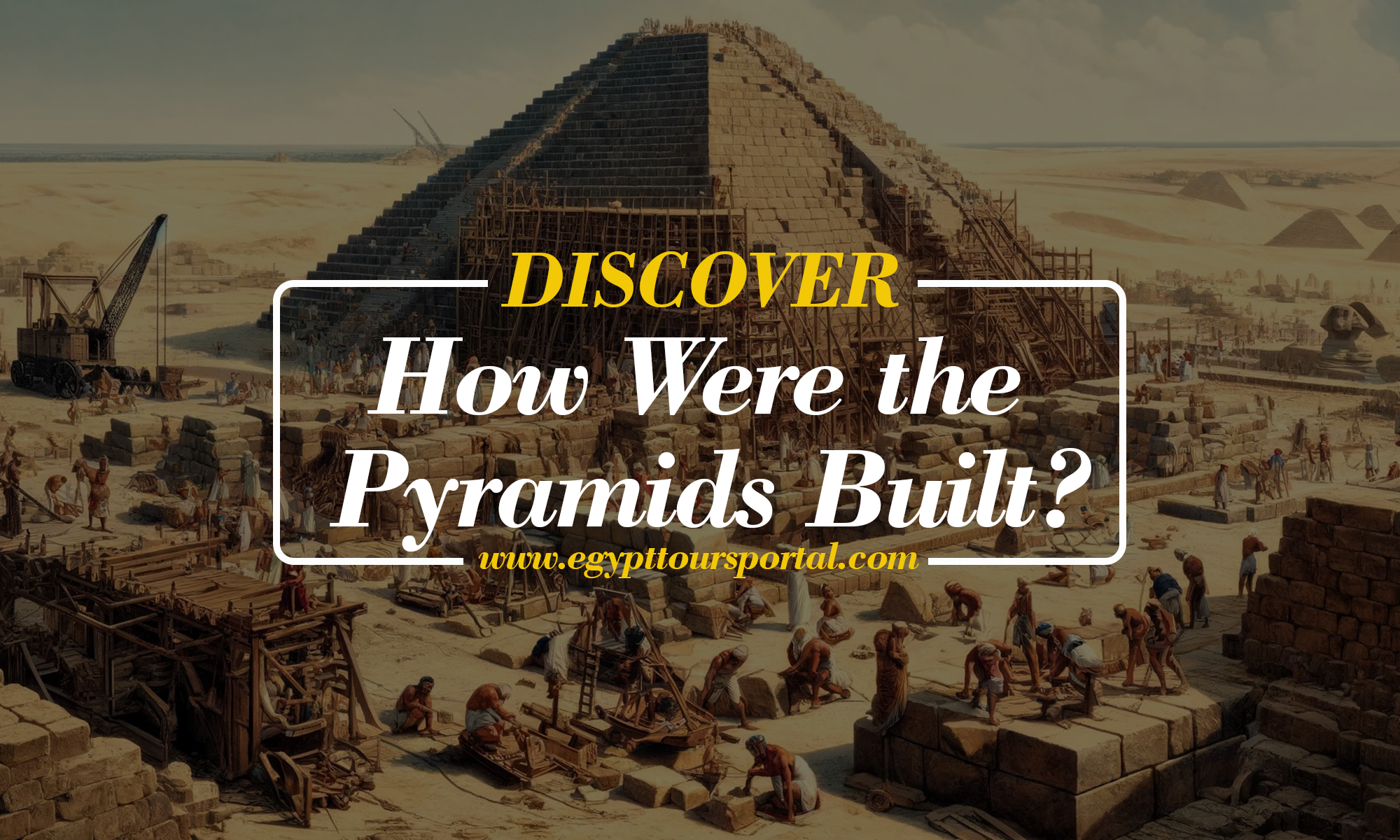
The pyramids were primarily built by a large workforce that included both skilled craftsmen and laborers. The skilled craftsmen were responsible for the intricate stonework, carving, and finishing touches on the pyramid's interior and exterior. They worked on the statues, reliefs, and other decorative elements that adorned the pyramids. The laborers, on the other hand, handled the heavy lifting, quarrying, and transportation of massive stone blocks. Contrary to popular belief, the workers who built the pyramids were not slaves but rather paid laborers who worked in rotations and were provided with food, shelter, and medical care.
The entire country of Egypt deserve to be explored with its every heavenly detail but there are places that must be seen before any other such as the breathtaking Hurghada's red sea, The wonders of Cairo the pyramids of Giza, the great sphinx, the Egyptian Museum, Khan El Khalili Bazaar, the wonders of Luxor like Valley of the Kings, Karnak & Hatshepsut temple and the wonders of Aswan such as Abu Simbel temples, Philea temple, Unfinished obelisk and The Wonders of Alexandria like Qaitbat Citadel, Pompey's Pillar and Alexandria Library. Read more about the best places to visit in Egypt.
If you want to apply for a Visa On Arrival that lasts for 30 days then you should be one of the eligible countries, have a valid passport with at least 6 months remaining and pay 25$ USD in cash, as for the E-Visa for 30 day you should have a valid passport for at least 8 months, complete the online application, pay the e-visa fee then print the e-visa to later be presented to the airport border guard. You could also be one of the lucky ones who can obtain a free visa for 90 days. Read more about Egypt travel visa.
Egypt has a variety of delicious cuisines but we recommend "Ful & Ta'meya (Fava Beans and Falafel)", Mulukhiya, "Koshary", a traditional Egyptian pasta dish, and Kebab & Kofta, the Egyptian traditional meat dish. Read more about Top Traditional Egyptian Food.
The best time to travel to Egypt is during the winter from September to April, as the climate becomes a little tropical, accompanied by a magical atmosphere of warm weather with a winter breeze. You will be notified in the week of your trip if the Climate is unsafe and if any changes have been made. Read more about Best Time to Visit Egypt.
You should pack everything you could ever need in a small bag so you can move easily between your destinations. Read more about What to Pack for Your Egypt Tour.
We have been creating the finest vacations for more than 20 years around the most majestic destinations in Egypt. Our staff consists of the best operators, guides and drivers who dedicate all of their time & effort to make you have the perfect vacation. All of our tours are customized by Travel, Financial & Time consultants to fit your every possible need during your vacation. It doesn't go without saying that your safety and comfort are our main priority and all of our resources will be directed to provide the finest atmosphere until you return home.
You will feel safe in Egypt as the current atmosphere of the country is quite peaceful after the government took powerful measures like restructuring the entire tourist police to include all the important and tourist attractions in Egypt. Read more about is it safe to travel to Egypt.
Wear whatever feels right and comfortable. It is advised to wear something light and comfortable footwear like a closed-toe shoe to sustain the terrain of Egypt. Put on sun block during your time in Egypt in the summer to protect yourself from the sun.
The best activity is by far boarding a Nile Cruise between Luxor and Aswan or Vise Versa. Witness the beauty of Egypt from a hot balloon or a plane and try all the delicious Egyptian cuisines and drinks plus shopping in old Cairo. Explore the allure and wonders of the red sea in the magical city resorts of Egypt like Hurghada and many more by diving and snorkeling in the marine life or Hurghada. Behold the mesmerizing western desert by a safari trip under the heavenly Egyptian skies.
There are a lot of public holidays in Egypt, too many to count, either religious or nation, the most important festivals are the holy month of Ramadan, which ends with Eid Al Fitr, Christmas, and New Year's Eve. Read more about festivals & publich holidays in Egypt.
Egypt is considered to be one of the most liberal Islamic countries but it has become a little bit conservative in the last couple of decades so it is advised to avoid showing your chest, shoulders or legs below the knees.
Arabic is the official language and Most Egyptians, who live in the cities, speak or understand English or at least some English words or phrases. Fewer Egyptians can speak French, Italian, Spanish, and German. Professional tour guides, who work in the tourism sector, are equipped to handle visitors who cannot speak Arabic and they will speak enough English and other languages to fulfill the needs of all our clients.
The fastest way is a car, of course, a taxi. If you are in Cairo ride a white taxi to move faster or you could board the fastest way of transportation in Egypt metro if the roads are in rush hour.
The temperature in Egypt ranges from 37c to 14 c. Summer in Egypt is somehow hot but sometimes it becomes cold at night and winter is cool and mild. The average of low temperatures vary from 9.5 °C in the wintertime to 23 °C in the summertime and the average high temperatures vary from 17 °C in the wintertime to 32 °C in the summertime. The temperature is moderate all along the coasts.
It is the home of everything a traveler might be looking for from amazing historical sites dating to more than 4000 years to enchanting city resorts & beaches. You will live the vacation you deserve as Egypt has everything you could possibly imagine.
Our Partners

Partners Who Share Our Vision of Quality Travel

Partner Logo
Partner Logo
Partner Logo
Partner Logo
Partner Logo
Partner Logo
Partner Logo
Partner Logo
Partner Logo
Partner Logo