



Summary
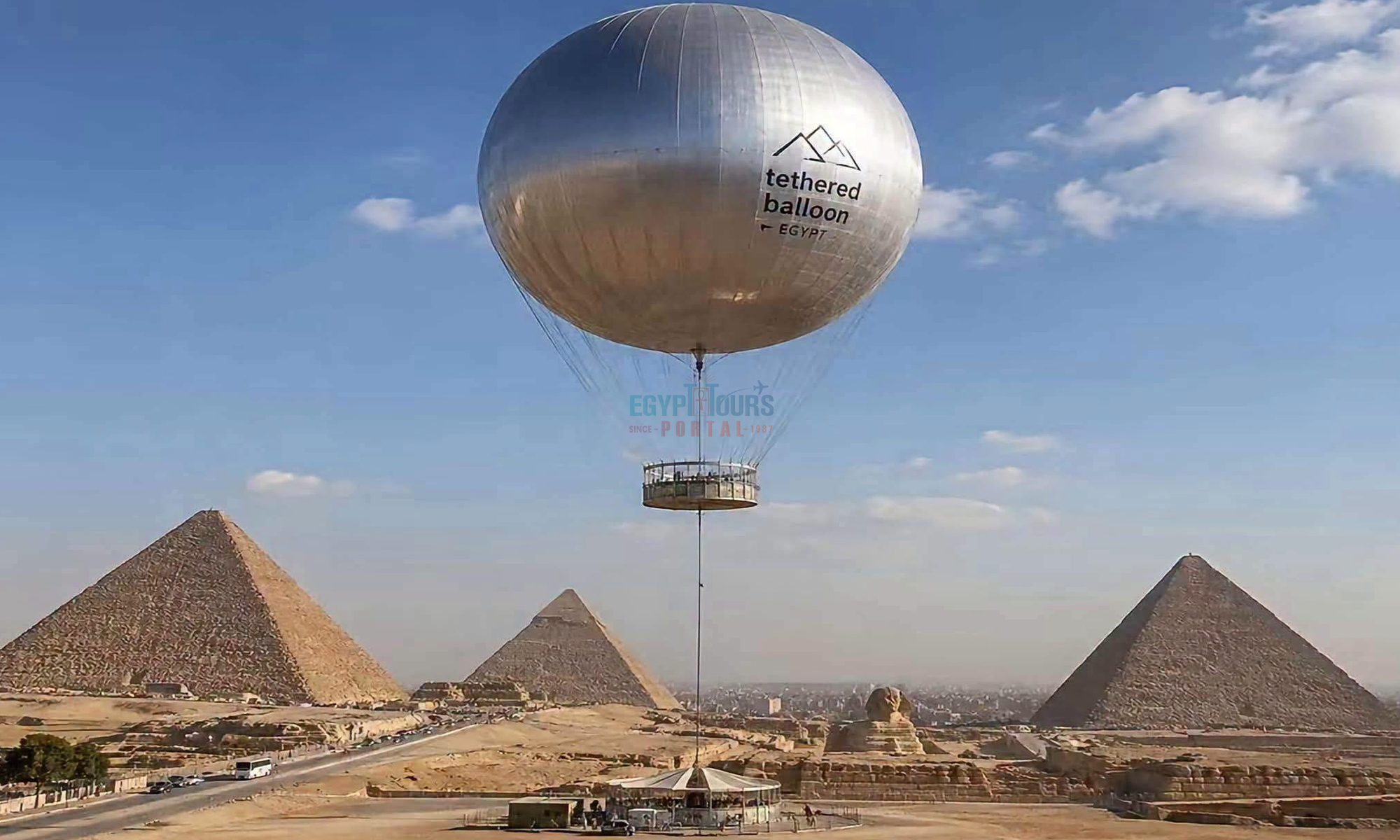
- Egypt's Tourism Ministry is preparing trial operations for a new tethered balloon that lifts visitors 150 metres above the Giza Plateau for a 15-minute ride.
- The project is built by Egypt's Tashereef Tourist Marketing with France's Aerophile, the company behind the Paris 2024 Olympic flame balloon and 120+ installations worldwide.
- The ground station sits about 2 kilometres from the pyramids and 2.2 kilometres from the Sphinx, built entirely above ground with no excavation affecting the site.
- Onboard commentary is available in 12 languages and was prepared under the supervision of the Supreme Council of Antiquities.
- The balloon is the latest piece of Giza's broader transformation, alongside the Grand Egyptian Museum's 2025 opening and a new 15-year master plan for the Giza-Dahshur corridor.
Egypt is on the verge of opening the skies of the Giza Pyramids Complex to travelers from all over the world who wish to catch a glimpse of the glory of one of the most challenging works of architecture in the history of humanity. A balloon that lifts visitors 150 metres above the desert floor for a slow, 15-minute turn over the Giza Plateau is preparing for its first trial flights, Egypt's Ministry of Tourism confirmed this week. Tourism Minister Sherif Fathy inspected the site on 30 August 2026, ahead of what will be the Pyramids' first fixed aerial attraction.
Visitors have long only looked up at the Pyramids of Giza; this new ride flips that view entirely, sending them up over the plateau instead. Here is what the balloon involves, who is building it, where exactly it sits on the plateau, and how it fits into Giza's wider shift from a quick photo stop into a longer, richer visit.
What Is the New Giza Balloon Ride
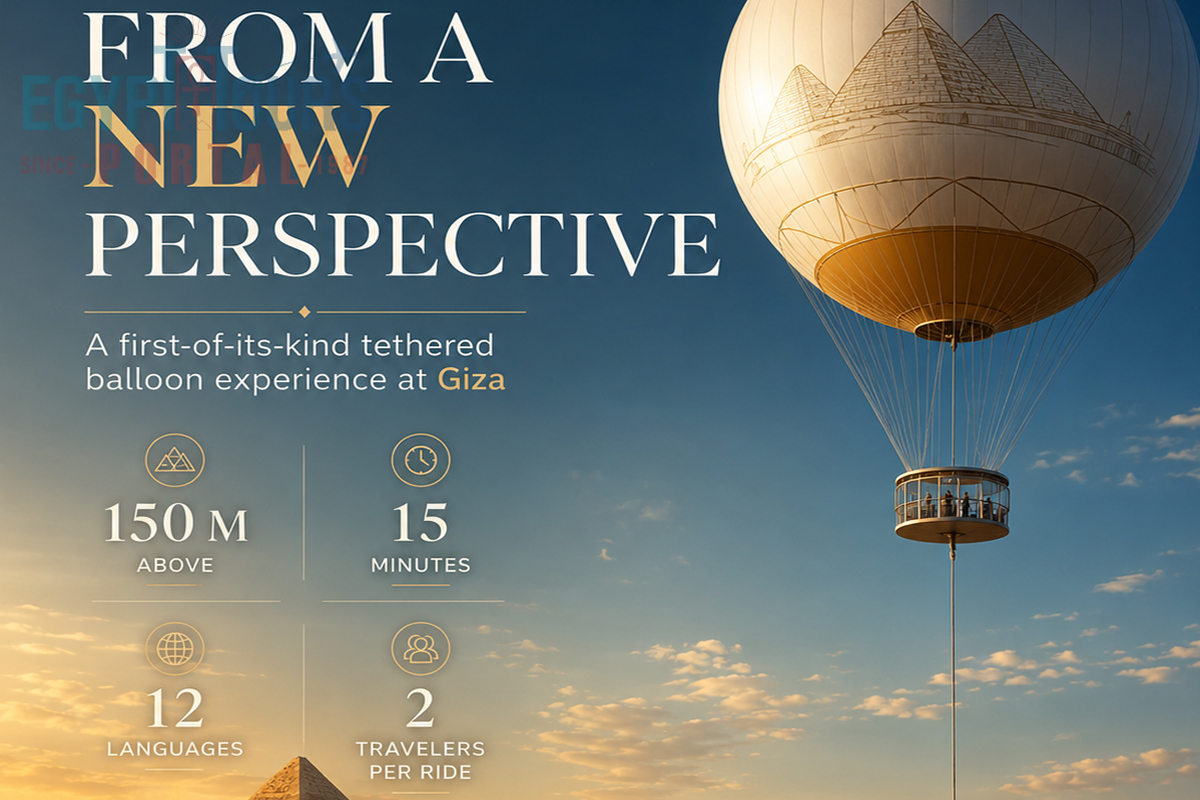
The attraction is a tethered balloon, sometimes called a captive balloon, rather than the free-flying hot air balloons familiar from dawn flights over Luxor. It stays anchored to a fixed ground station by cables and rises and descends in a straight vertical line, carrying passengers to roughly 150 metres before lowering them back down after about 15 minutes. From that height, the ride offers a panoramic view of the pyramids, the Sphinx, and the surrounding desert that no ground-level vantage point can match.
The project is a joint effort between Tashereef Tourist Marketing, an Egyptian company, and Aerophile, a French firm that specializes in exactly this kind of installation. It is, according to the Egyptian cabinet, the first balloon of its kind built specifically for the area around the pyramids.
The Company Behind the Balloon
Aerophile is not new to landmark settings. Jérôme Giacomoni and Matthieu Gobbi founded the company in 1993, and Aerophile launched its first modern tethered balloon the following year at Chantilly, France. Since then, it has installed more than 120 balloons across nearly 40 countries, including the long-running Ballon de Paris in the Tuileries Gardens, installations at Disneyland Paris and Walt Disney World in Orlando, and one at the San Diego Zoo Safari Park.
Most recently, Aerophile designed and operated the tethered balloon that carried the Olympic flame into the Paris sky each evening during the 2024 Games, watched by an estimated 1.5 billion television viewers and now returning seasonally through 2027.
That track record is part of why the Giza project has drawn attention beyond Egypt. Aerophile project manager Eric Bachelier, who joined Fathy's inspection, said he was proud to be building "at the spectacular location next to the Giza Pyramids," and confirmed the joint commitment to complete the project with the Egyptian side.
Where the Balloon Sits on the Giza Plateau
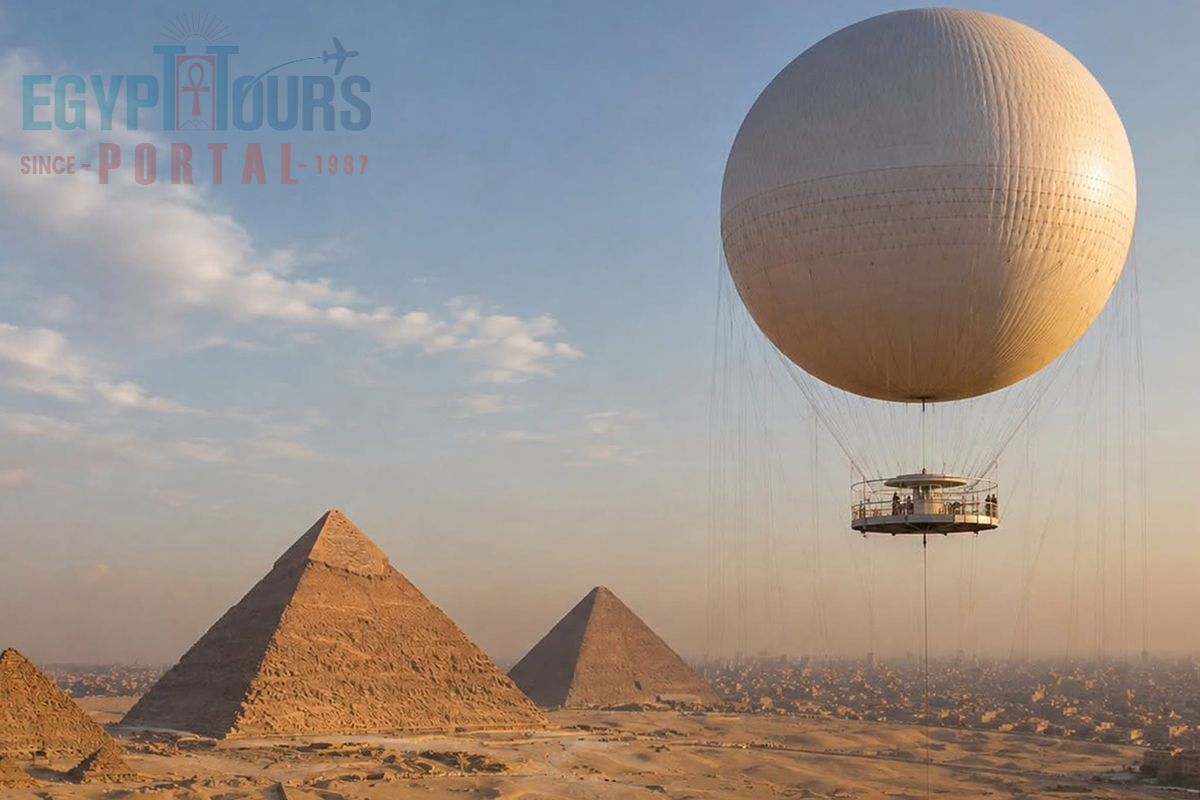
The ground station sits about 2 kilometres from the pyramids and 2.2 kilometres from the Sphinx, in the desert just outside the site's immediate archaeological boundaries. Bachelier said every structure on site was built from lightweight, prefabricated components installed above ground, with no underground excavation and no concrete construction that could affect the soil beneath. The balloon itself stays anchored to the ground at all times and moves only vertically, a design Bachelier described as meeting the highest current standards for safety, security, and sustainability.
According to Fathy, preserving the archaeological character of the plateau was a top priority throughout the project's planning, alongside meeting international safety and environmental benchmarks for a site of this significance.
What Visitors Will Experience Aboard
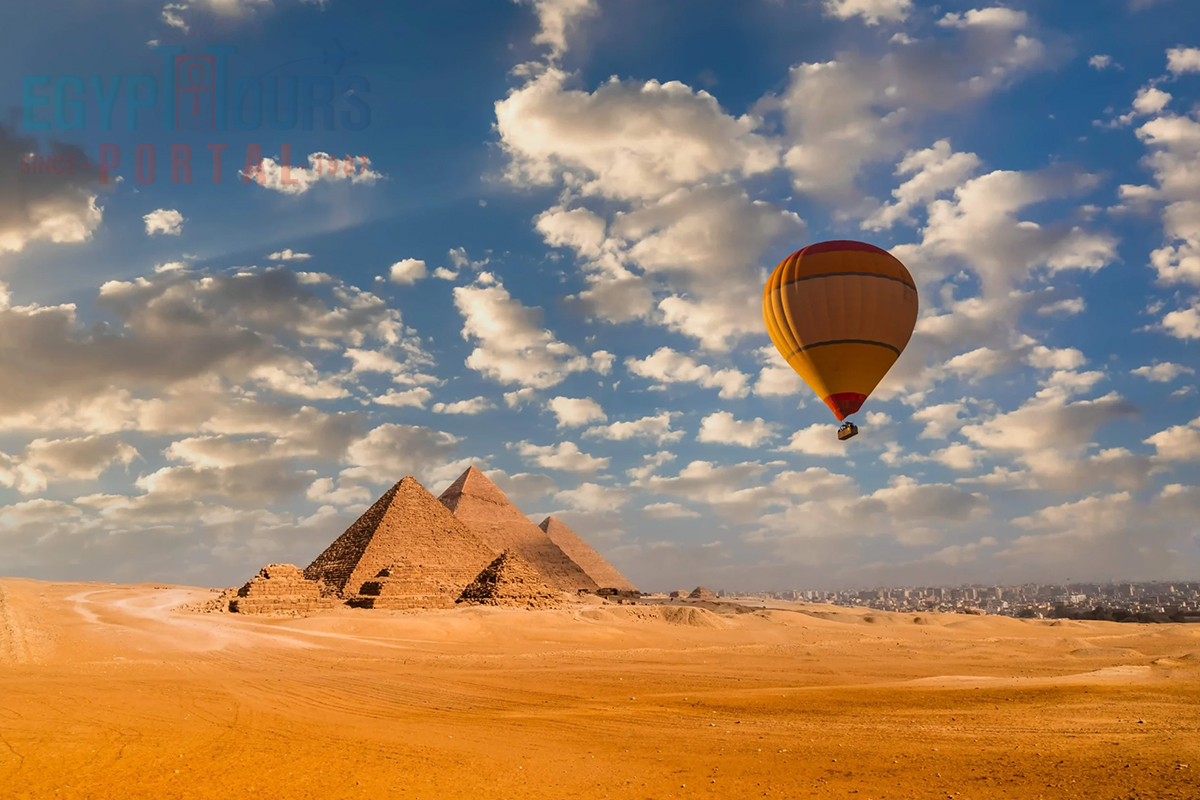
Once airborne, visitors will hear commentary on the landmarks below through dedicated glasses and headsets, offered in 12 languages and prepared under the supervision of the Supreme Council of Antiquities. From 150 metres, the pyramids lose their usual foreground clutter of tour buses and vendors, and the layout of the plateau, the causeways connecting the monuments, the edge of the Sahara pressing against the edge of Cairo, becomes visible all at once in a way no camel ride or ground tour ever quite manages.
Fathy described the project as letting visitors "view the pyramids and their surroundings from a different perspective," positioning it as a new addition to the recreational activities available at one of the world's most significant archaeological sites, alongside the more traditional ways of experiencing Giza.
Part of a Larger Giza Transformation
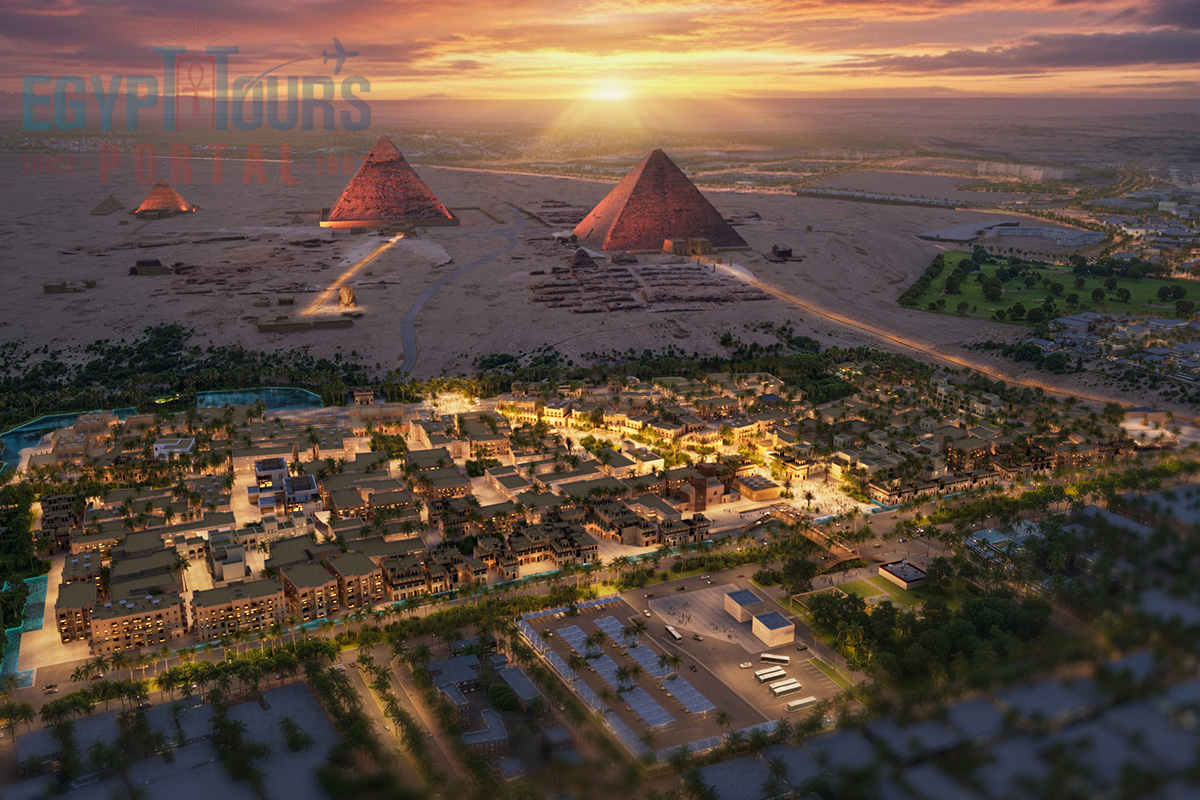
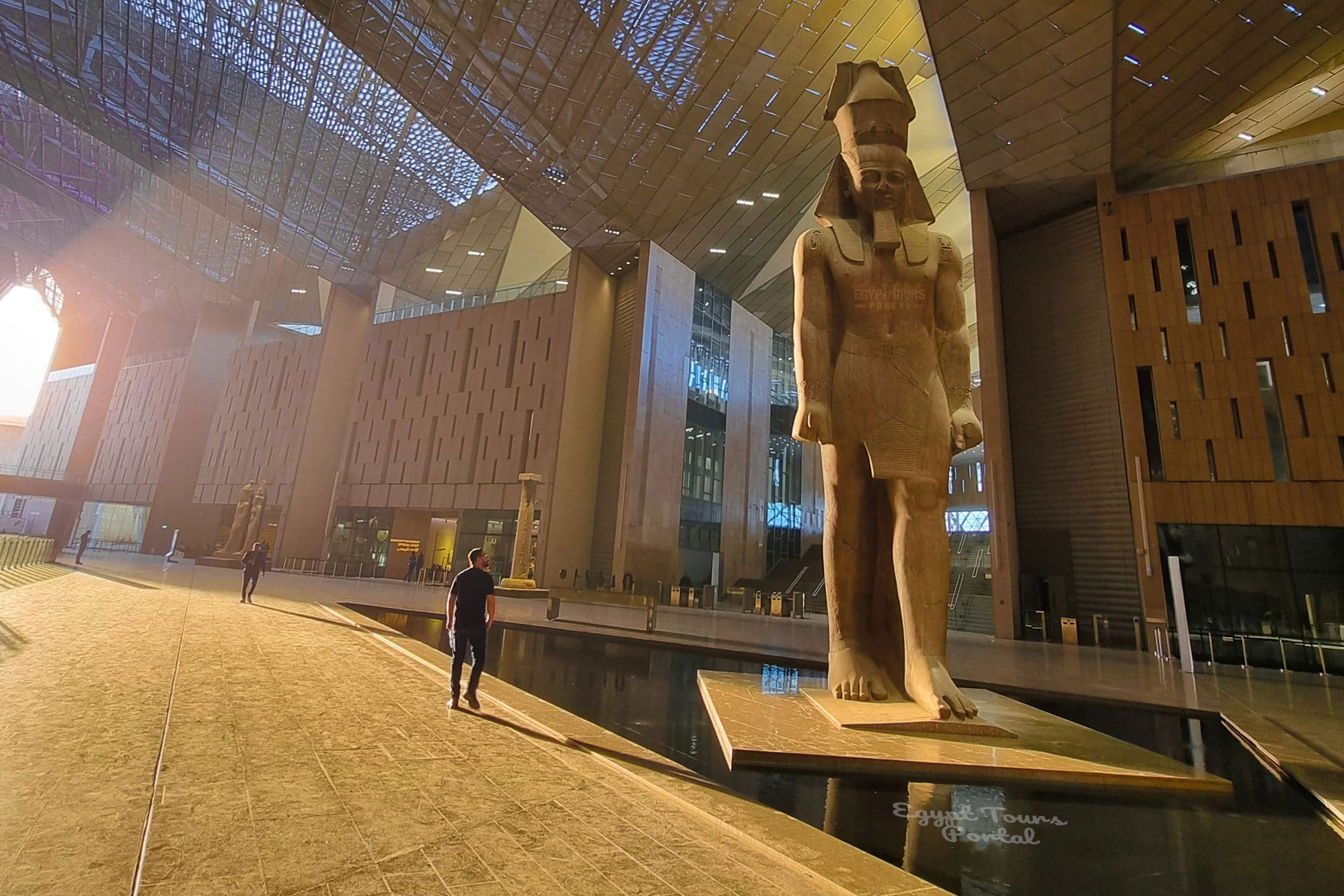
The balloon is the latest piece of a redevelopment that has been reshaping the plateau for several years. Under a 2018 cooperation protocol between Orascom Pyramids Entertainment and the Supreme Council of Antiquities, the wider Giza Plateau project began trial operations on 7 April 2025 through the Fayoum Desert Road entrance, with total investment reaching EGP 1.5 billion after an additional EGP 500 million was announced in November 2024. The adjoining Grand Egyptian Museum opened on 1 November 2025, following an earlier launch planned for July that was postponed, and has since drawn renewed international attention to the area.
That attention has included visits from Hollywood, with actors Martin Lawrence and Giancarlo Esposito touring the plateau's modernized visitor pathways in May 2026. More recently, a 15-year master plan for the Giza-Dahshur corridor, developed by the hospitality design firm WATG and unveiled in June 2026, set out a longer-term vision for the region, aligned with Egypt's Vision 2040 strategy, aimed at turning the pyramids from a brief photo stop into a multi-day destination. The balloon ride is a small but visible part of that same push, according to Fathy, who said the project reflects the ministry's broader effort to develop new products for Giza rather than relying solely on the recreational activities traditionally available to tourists.
Plan Your Visit Across the Great Structures & Skies of Giza
The balloon ride is still in its trial phase, but the rest of the Giza Plateau, the pyramids, the Sphinx, and now the Grand Egyptian Museum, is already open and easy to build a day around. A Giza Pyramids tour covers the three main pyramids and the Sphinx in a single outing, while a half-day tour to the Grand Egyptian Museum pairs well with it for travelers who want both in one trip. For a broader look at Cairo alongside the plateau, the Cairo day tours hub lists the full range of combinations, and once the balloon opens to the public, it promises to be one more reason to build a full day around Giza rather than a quick stop on the way to somewhere else.

Egypt Tours Portal is dedicated to preserving and sharing the rich history, culture, and mysteries of ancient Egypt, helping travelers and history enthusiasts explore Egypt’s most iconic destinations and monuments. The team consists of experienced Egyptologists, archaeologists, historians, travelers, content creators, marketers, consultants, and explorers with 5–20 years of expertise in their respective fields.
The website provides accurate, regularly updated information developed by qualified experts and supported by trusted sources to ensure reliability and educational value. Drawing on more than 39 years of industry knowledge and resources, Egypt Tours Portal offers a wide range of travel services, including Egypt tours, Nile cruises, day tours, shore excursions and multi-country tours. Their services have earned positive reviews from travelers, recognition through awards, and mentions by respected news outlets and travel blogs, delivering both educational and memorable travel experiences across Egypt.




























Leave a Comment