
Summary
- Ancient Egyptian architecture is a key aspect of their civilization, reflecting their relationship with the land and gods. It is characterized by monumental structures like temples and pyramids, showcasing the Egyptians' belief in an eternal afterlife, theocratic principles, and their religious dogma.
- The architecture dates back to before 3100 BC, evolving through periods such as the Old, Middle, and New Kingdoms. Key developments include the use of obelisks, the construction of the step pyramid of Djoser, and the innovation of smooth-sided pyramids during the Old Kingdom's golden age.
- Ancient Egyptian architecture includes pyramids, temples, houses, columns, tombs, palaces, gardens, and fortresses. Each type served specific purposes and was designed with particular principles in mind, such as the pyramids for tombs and temples for worship.
- Egyptian architecture influenced various cultural styles and incorporated techniques like using mud bricks for fortifications and stone for temples. Notable achievements include the construction of the Great Pyramid at Giza and the development of architectural styles throughout different periods.
- Famous structures like the Luxor Temple, the Temple of Hatshepsut, and Abu Simbel reflect the brilliance of ancient Egyptian architecture. The culture and value system emphasized symmetry, and the architecture was instrumental in honoring gods and showcasing the spirit of ancient Egyptian art.
Ancient Egyptian architecture is the most synonymous and familiar aspect of ancient Egyptian civilization. It tells the stories of the Egyptians and showcases their powerful relationship with their lands and gods.
Ancient Egyptians were driven by fundamental characteristics that also shaped the ancient Egyptian culture; they believed in the concept of an eternal afterlife, the principles of theocracy whose Pharaoh was worshipped like a god, and the representation of their religious dogma and belief system.
Timeline & History of Ancient Egyptian Architecture
The history of ancient architecture is very vast, dating back to before 3100 BC. That's why historians divided the development and transformation into time periods and stages: Everything started during the predynastic and early dynastic periods when the concept of architecture was first explored.
The obelisks are large stone monuments with four sides and tapered tops that reflect the relationship between the gods and the people who were raised in pairs. Constructing the obelisks required certain skills like quarrying, carving, transporting, and the employment of a massive workforce. Mastering these skills made Egypt ready to change the face of architecture by creating the pyramids.
In 3100 BC, many important elements saw the light for the first time, like the unification of Egypt, the common usage of hieroglyphs, and the creation of the Mastabas, which is a one-story brick box with burial tombs that were used in the construction of the step pyramid of Djoser in 2630 BC which was designed by one of the greatest architects in ancient Egyptian history Imhotep.
It reflected the incredible elements of symmetry, balance, and grandeur, which represent the core values of ancient Egyptian culture. The step pyramids showcase how advanced the Egyptians' understanding of architectural design and construction was, which acts as an important link between the past and future of the pyramid constructions.
The Old Kingdom of Egypt (2686-2181 BC) was duped as the golden age of architecture because of the number of pyramids constructed during this period. Everything began due to Imhotep's innovations; a wave of Pyramid constructions swiped the land. King Sneferu (2613-2589) of the 4th dynasty constructed the first pyramid of Meidum, initiating the golden age of the old kingdom.
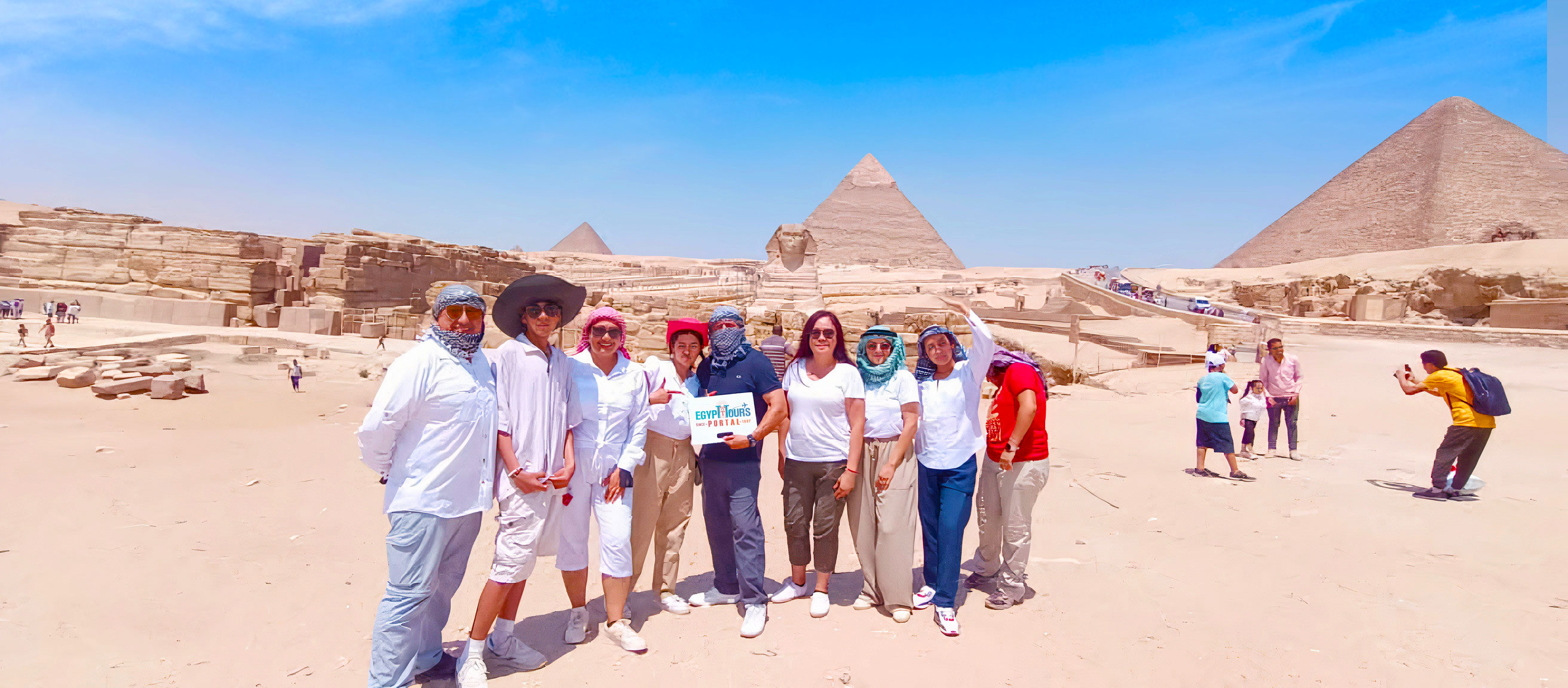
His son and successor, Pharaoh Khufu (2589-2566 BC), continued his legacy and directed his administration in constructing the Great Pyramid of Giza, the last intact seven wonders of the ancient world; it was built by paid workers to be the final resting place of the pharaohs.
The architects of the old kingdom created smooth-sided pyramids out of limestone that aligned with the sun to make it easier for the pharaoh's soul to ascend to the heavens and join their rightful place with the gods. The art of architecture reached a high point at Giza, Dashure, and Saqqara through the construction of the pyramid, whose interior was decorated with sculptures, statues, and paintings that showcased the beauty of ancient Egyptian art.
In the Middle Kingdom of Egypt, there was a cultural shift due to the control of the monarchs and priests. This led to the decline of the artworks and the architecture of the pyramids in both size and quality and the rise of enchanting chapels, rock-carved tombs, decorative columns, and painted walls. This era showcased the brilliance and beauty of ancient Egyptian architecture better than anyone else, and the style reflected the universe and the origin of creation by Atum.
In the New Kingdom of Egypt (1550-1070 BC), the construction of temples, rock-cut tombs, and wall reliefs was the most dominant. In the new kingdom, the most celebrated architectural achievements were constructed, like the Hatshepsut temple, Luxor temple, Karnak temple, Abu Simbel, and the Valley of the Kings.
The most celebrated architectural achievements of this era included the great stone temples dedicated to the numerous gods of ancient Egypt. The design includes a colossal gateway, a colonnaded courtyard, a hall of columns, and a shrine chamber. The new architectural design of columns, pillars, and capitals was based on plant motifs, such as mural decoration.
The Ptolemaic Era (332 -30 BC) The Greek dynasty assumed the role of the pharaohs after the city of Alexandria was built and architecturally designed to reflect the majestic beauty of the Greek empire in 331 BC. During this period, the Greek influence began to manifest in the ancient Egyptian designs, as showcased in the Philae temple and Edfu temple after they also embraced the ancient Egyptian beliefs.
This process was continued by the Romans as they added architectural techniques and materials of their own. These monuments continued to inspire travelers from all over the world, defying the passage of time and the classic notion of architecture.
Ancient Egypt Architecture Types
Ancient Egyptian Architecture comes in many different shapes and sizes. Where every traveler can enjoy the architectural brilliance and artistic creativity of the ancient Egyptians, who were successful in cultivating their environment and establishing everlasting structures that convey many important facts and information about the principles of architecture that we can see today. The ancient Egyptians had principles for each of the different types of architecture that they utilized in their society, which were explicitly designed in order to serve their main designated role and purposes.
1. Ancient Egyptian Architecture of Pyramids
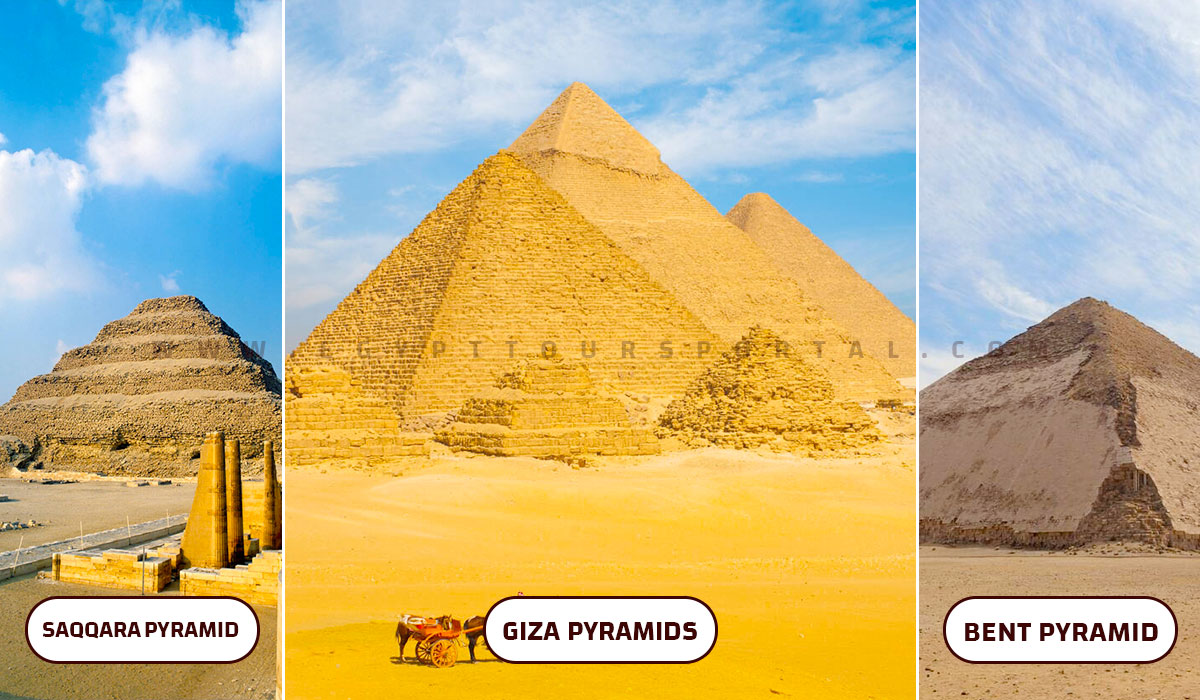
Egypt's pyramids, like those at Giza, were built during the Old Kingdom period, primarily as tombs for the Pharaohs and other elites. Their architecture is characterized by their large, carefully constructed geometric shape, with a square base and four triangular sides that meet at a point on top.
These pyramids were built using massive mud bricks, limestone, and granite blocks quarried locally and transported to the construction site. The blocks were precisely cut and fitted together without mortar using sophisticated engineering techniques such as ramps, levers, and sleds. The sides of the pyramids were initially smooth, but most of the outer casing stones have since been removed, revealing the rougher core structure. Granite and other harder stones were used for specific elements requiring extra strength within the interior.
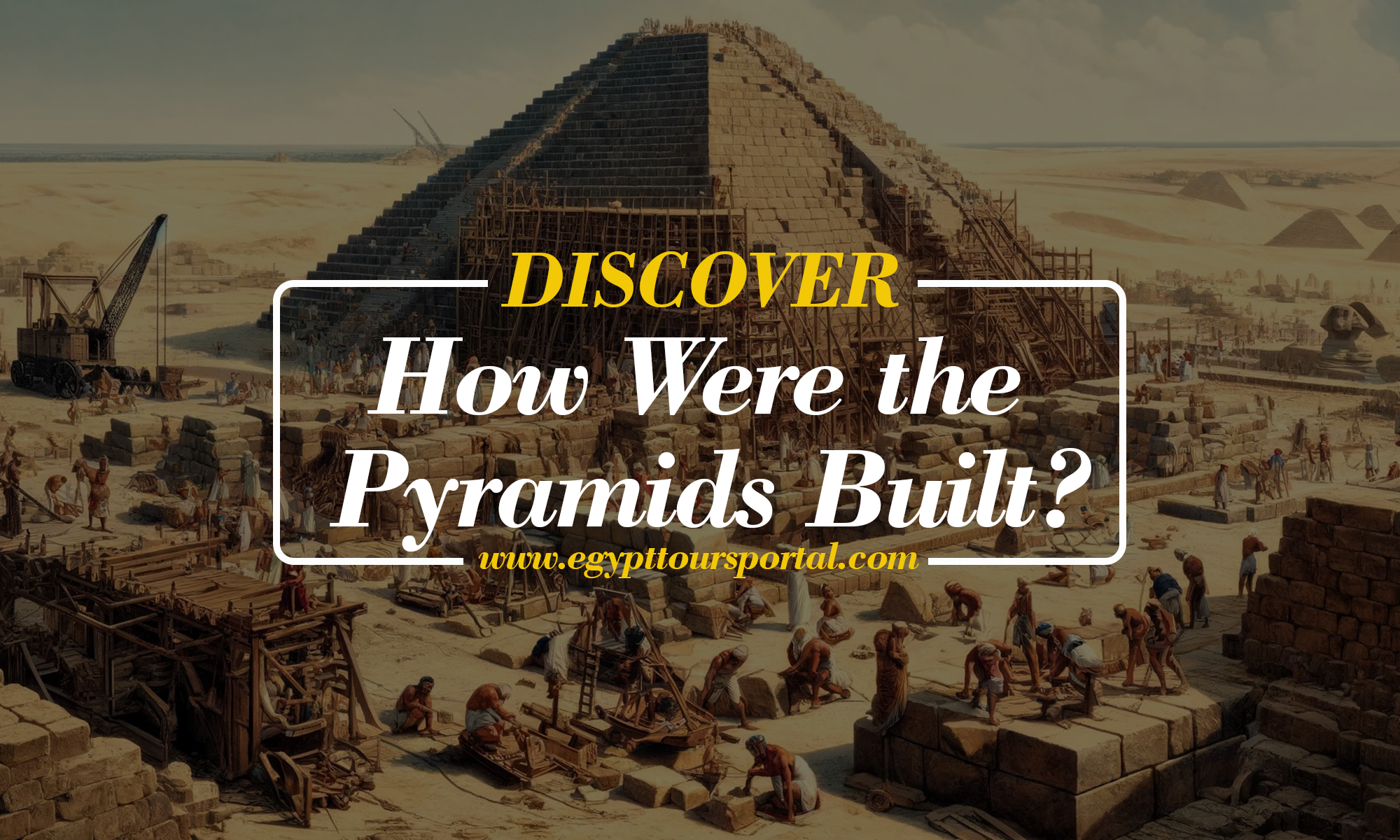
How Were the Pyramids Built?
Solved, how the Pyramids were built, explore the top information about this question, read more about the workforce, architecture, and more..
This technique involves using vertical posts (columns) to support horizontal beams (lintels) to create doorways and passageways. Inside the pyramids, there are various chambers and passageways, including the burial chamber where the Pharaoh's sarcophagus was placed. The Great Pyramid of Giza, for example, contains several internal chambers and passages, including the King's Chamber and the Grand Gallery, which used precise architecture to make it a reality.
2. Ancient Egyptian Architecture of Temples
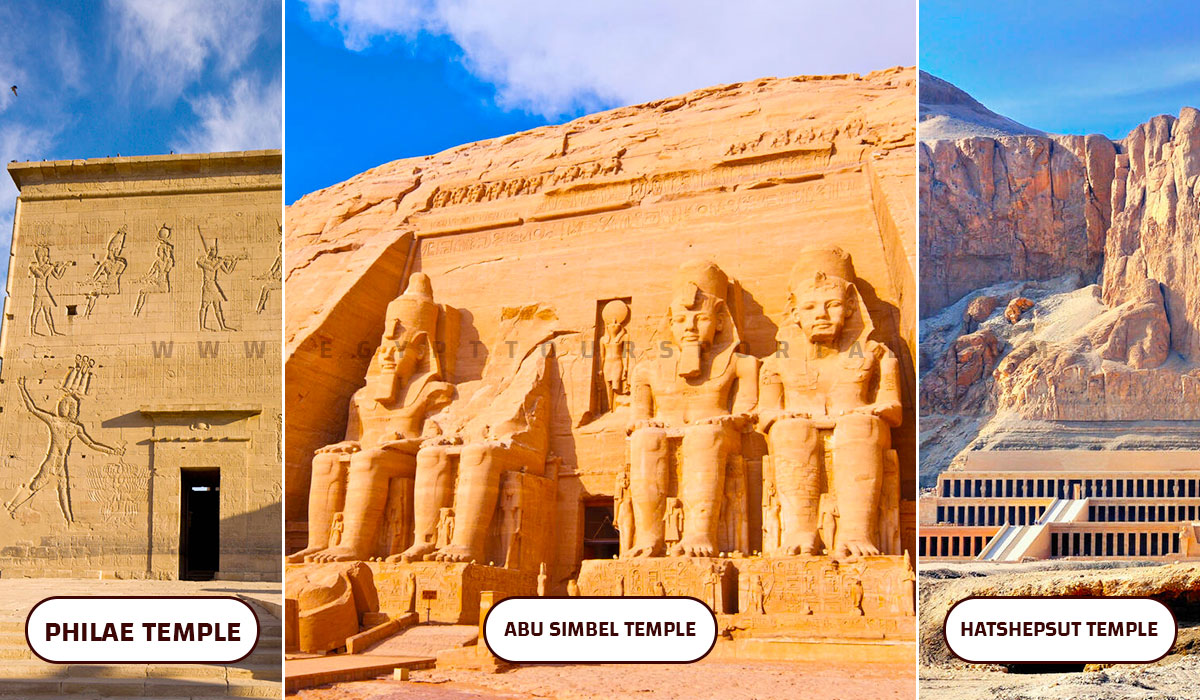
The architecture of ancient Egyptian temples has continuously evolved throughout Egyptian history, from smaller structures built of organic materials to large stone monuments. Ancient Egyptian temples can be divided into two main types: cult temples and funerary temples. Cult temples were dedicated to deities for daily worship, while funerary temples honored deceased kings. No two temples are the same, but most surviving examples share a similar set of features when it comes to architecture and art, which include:
The pylon stands tall, and it is a grand gateway comprised of twin towers connected by a central passage, emblematic of the horizon with its resemblance to the hieroglyph for the horizon. Adorned with solar motifs, the doorway, at times, reflects the celestial significance.
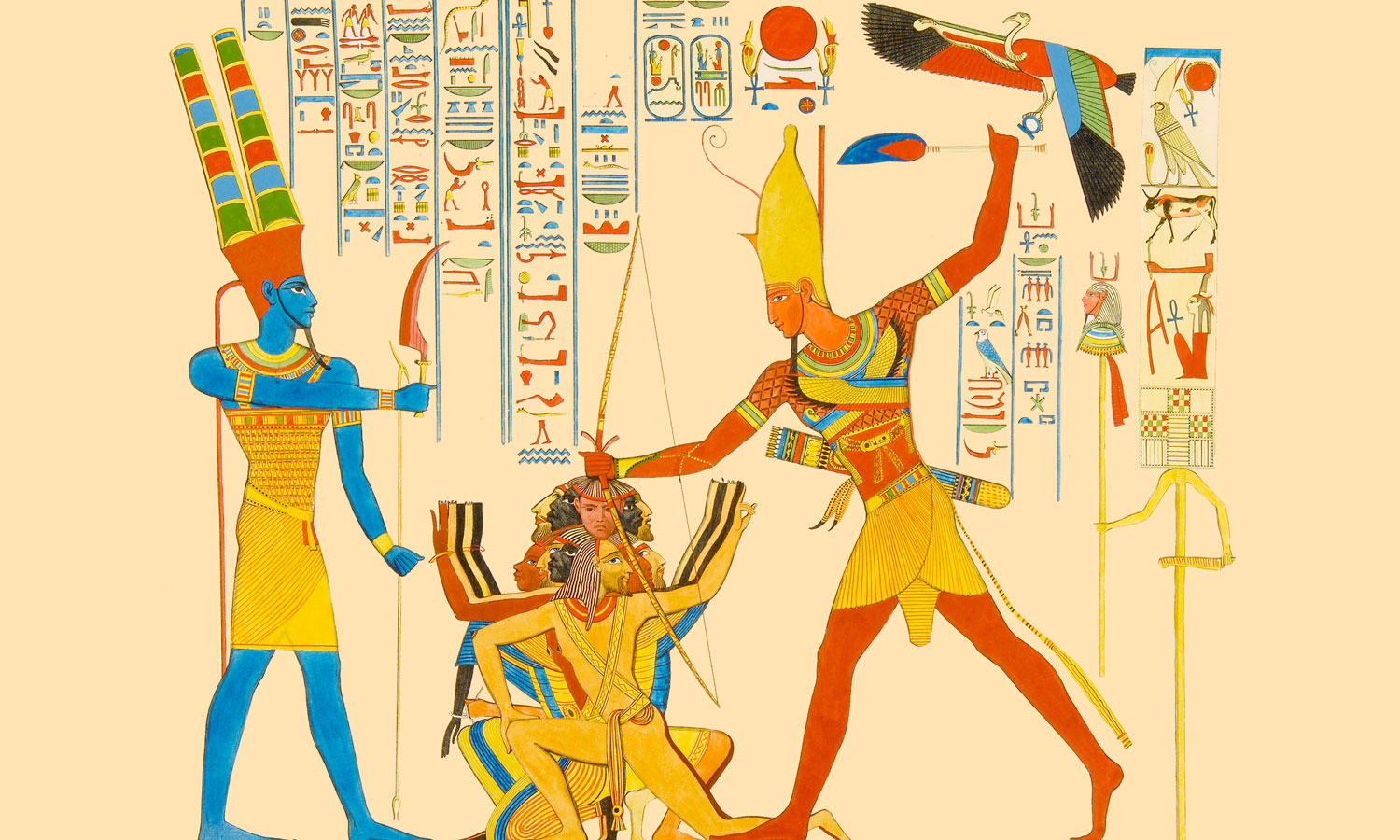
Its exterior is adorned with flagpoles and depictions of the pharaoh vanquishing adversaries, conveying the might of the ruler and warding off chaos from the temple precincts. At the left flank of the Temple of Horus at Edfu, the pylon features four recesses for flag-bearing. Adjacent to the horizon hieroglyph, a depiction of the sun disk is lodged between two peaks adorning the right side. Beyond the pylon lies the open court, a space reserved for festivals and sacred rituals.
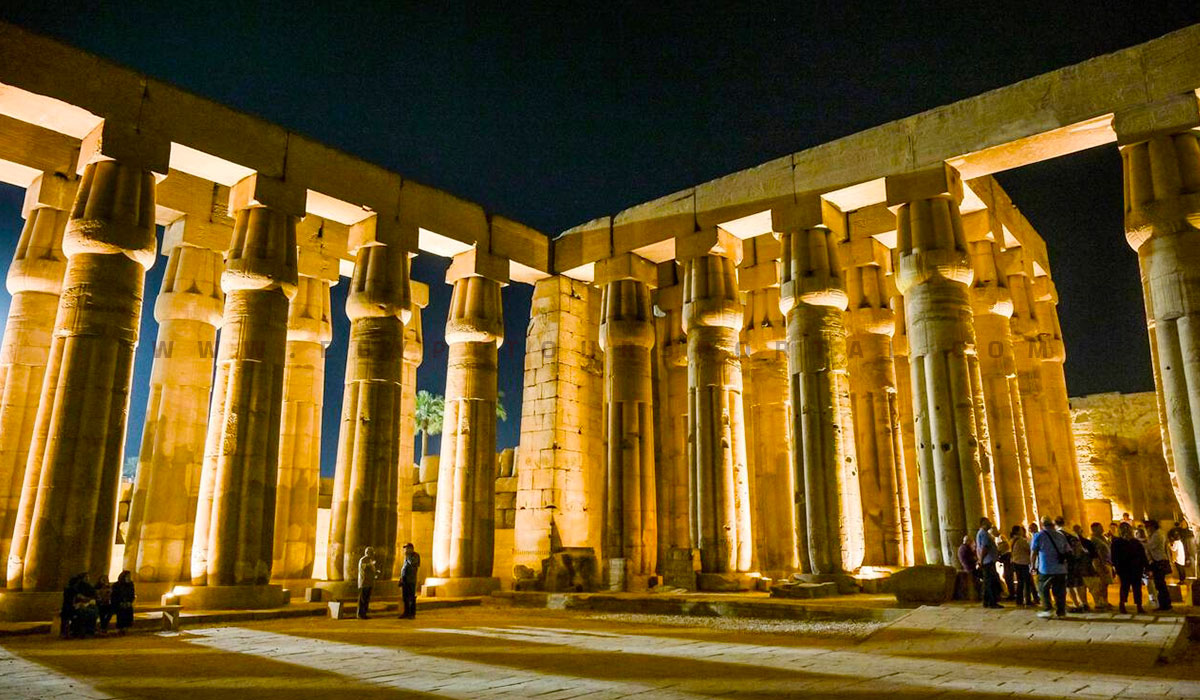
Following this, the hypostyle hall unfolds, its roofed expanse supported by columns often fashioned in the likeness of papyrus plants. These columns evoke the mythological marshes surrounding the primordial mound of creation, the first land to emerge from the ancient waters. Within the inner sanctuary lies the holiest precinct, housing the deity's shrine.
This secluded chamber, elevated from the ground, mimics the primordial mound, ensuring the protection of the god's statue. Many temples also have a sacred lake, like the Karnak temple, Dendera temple, and more, where priests purify themselves before attending to the deity.
One of the oldest examples of temples dating to the Old Kingdom was the cult temples at Heliopolis. These temples were influenced by the sun god Re's cult and typically lacked shrines. Sun temples, which focused on worship around a cult object called the Benben, include those built by 5th dynasty kings at Abu Grab.
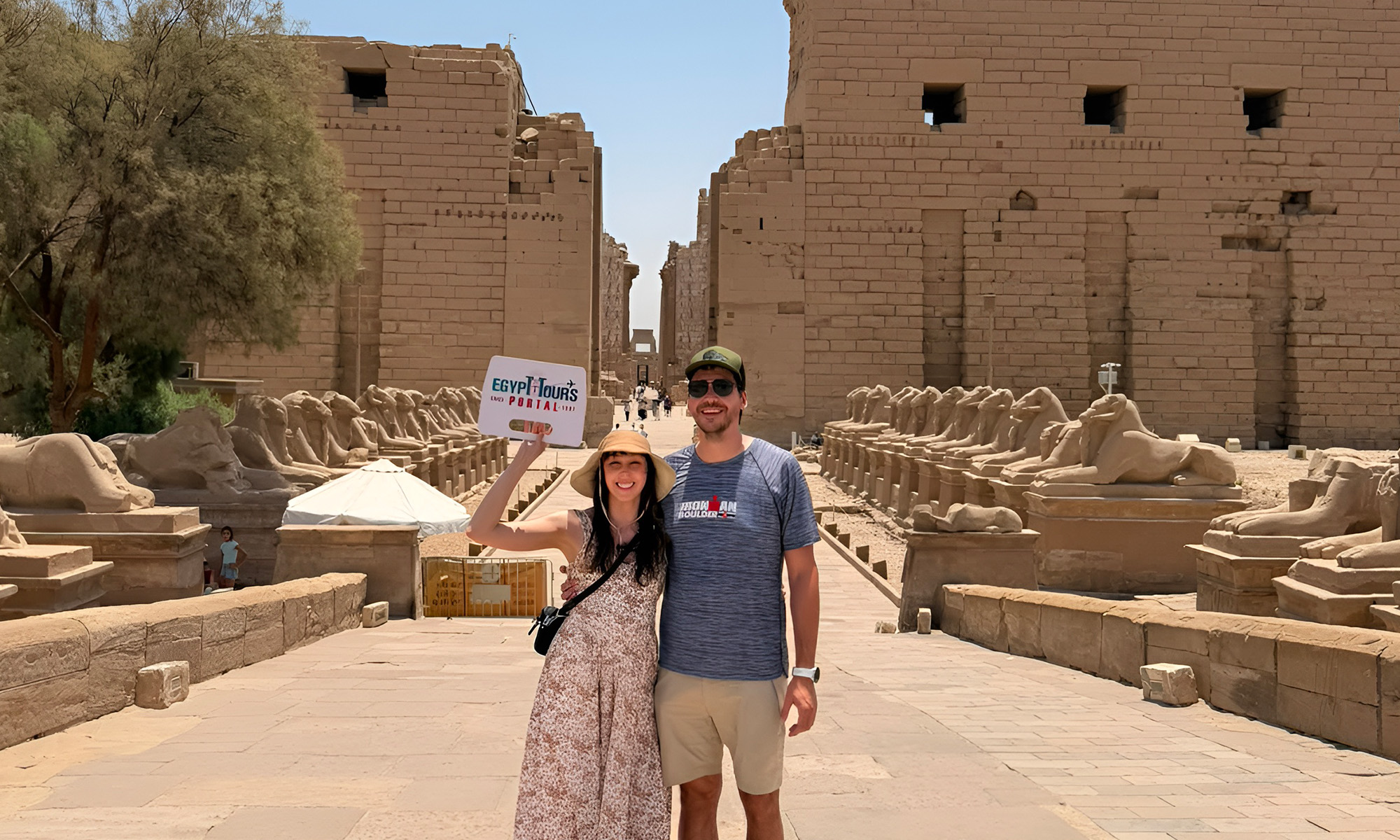
During the New Kingdom in Thebes, Luxor Temple exemplified pinnacle cult temple architecture. It was dedicated to Amon and featured grand structures like open courts, colonnades, and sanctuaries. Karnak Temple showcased architectural innovations like the hypostyle hall and the Festival Hall of Thutmose III.
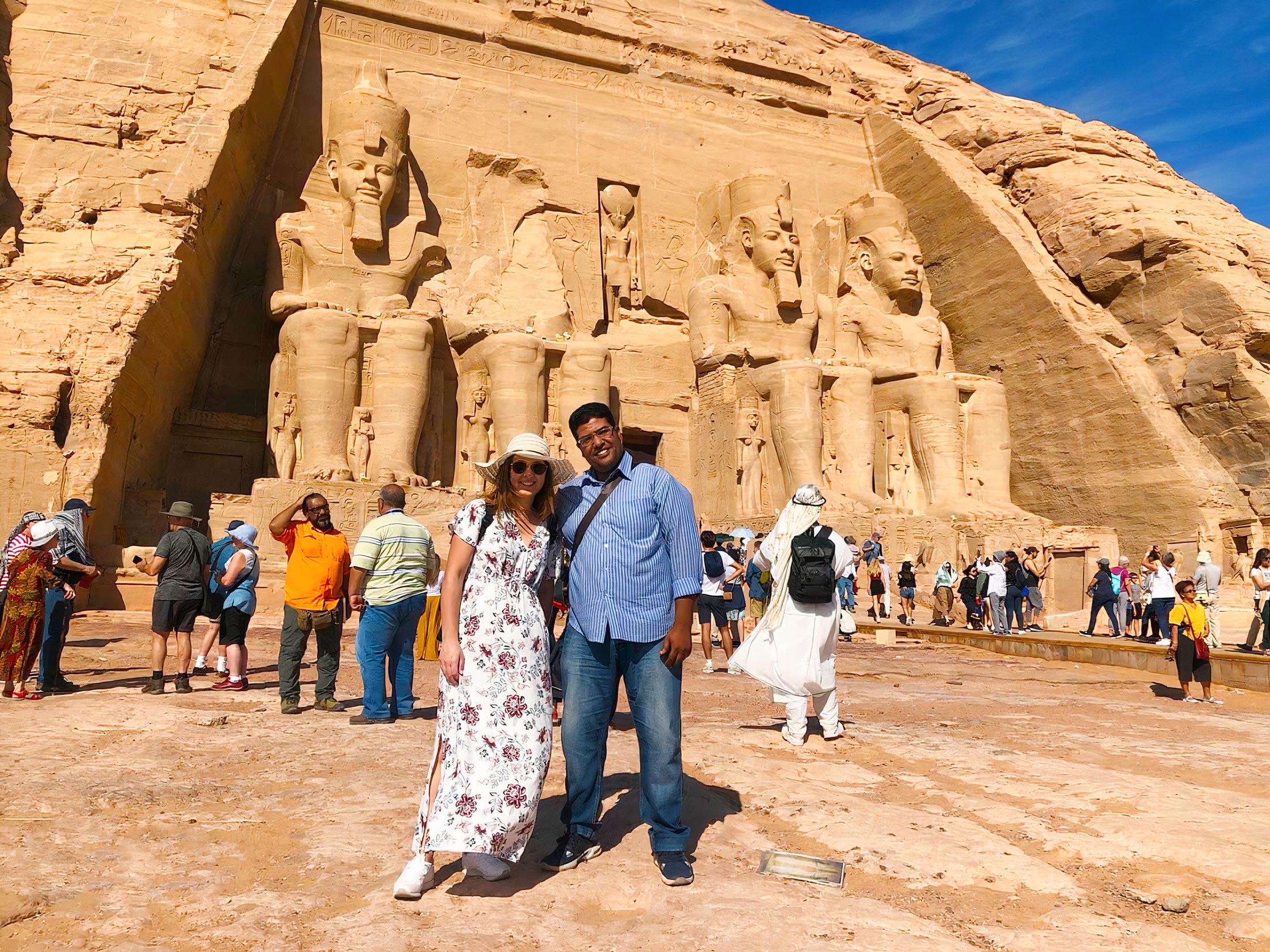
Ramses II's temple at Abu Simbel followed traditional plans, with rock-cut features and reliefs depicting victories. Funerary temples, part of pyramid complexes, facilitated rituals and honored deceased kings' cults. The Old and Middle Kingdoms included valley temples and mortuary temples, as seen in the Giza complex, dachshund, Saqqara, Upper Egypt, and more.
In the New Kingdom, funerary temples shifted near rock-cut tombs, like the Hatshepsue temple at Dayr al-Baḥrī and Amenhotep III's largely lost temple. Ramses III's temple at Madīnat Habu showcased Theban mortuary architecture with chapels, shrines, and ritual scenes depicted in murals.
3. Ancient Egyptian Architecture of Houses
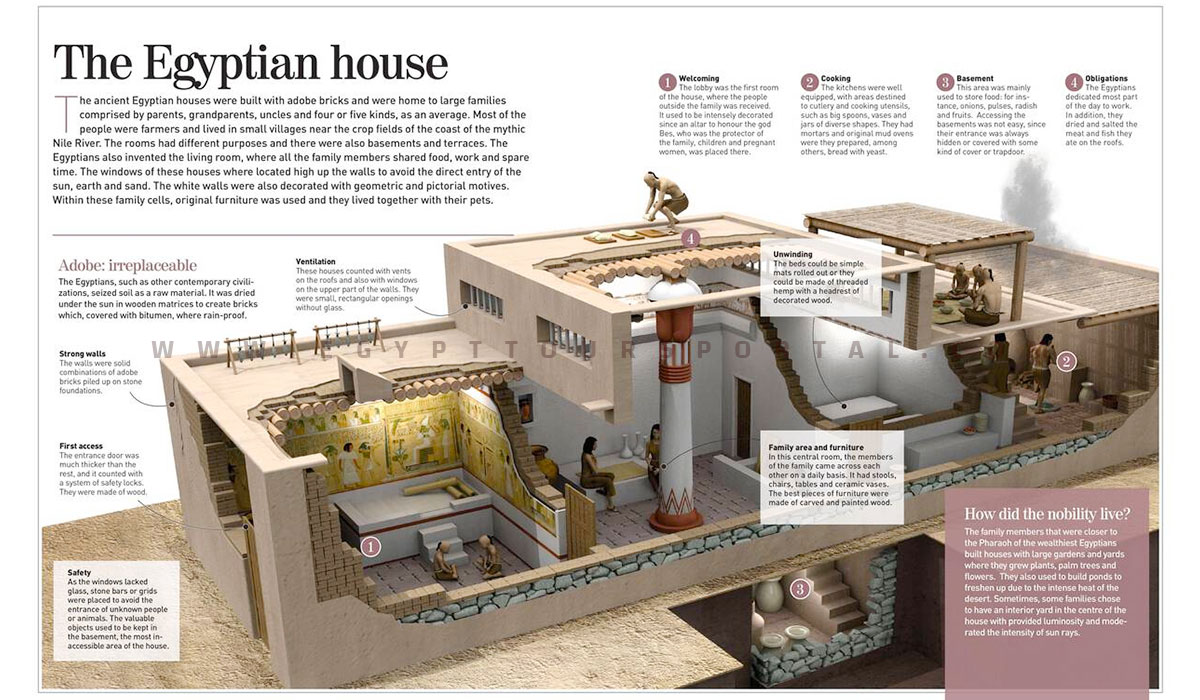
The architecture of ancient Egyptian houses dates back to the Predynastic period in the Stone Age, around 6,000 B.C. Ancient Egyptians adapted their house construction to withstand the intense sun and Nile floods, which explains why it was made of mud and papyrus, which has proved unsustainable due to flooding. They then turned to mud bricks made from clay and mud from the Nile, dried in the sun for durability.
Wood was scarce and used sparingly for support. Houses had flat roofs for simplicity and to escape the sun's heat. Rich and poor families had differing house layouts, influenced by urban or rural living.
Poor Egyptians lived in simple one-room houses, which were often with woven straw mats, wooden furniture, and a ladder or staircase leading to a flat roof for cooler sleeping. Reed mat coverings on windows and doors helped keep out heat, dust, and flies. Courtyards housed vegetable gardens, clay braziers for cooking, and livestock. Bathrooms were bare, with waste disposal options including tossing waste into the Nile or using chamber pots.
Water was fetched from the village. In ancient Egyptian cities, houses were tightly packed, with ground floors for business and upper floors for living. Pyramid workers had homes, as seen across the surrounding of the Giza complex. Wealthier Egyptians had thicker mud-brick or stone houses with amenities like granite gateways and locks.
Wealthy Egyptians favored homes along the Nile that were painted white or adorned with sparkling limestone. Inside the houses, artists decorated walls with pastel colors. Large houses had up to 30 rooms for storage, children, guests, and bathrooms. Barred windows and raised living rooms provided security and protection from sand.
Nobleman might have a master suite with a toilet and pipes leading to the garden. Though lacking modern plumbing, the rich had mirrors, shelves, pots, beds, and even fountains. Gardens and pools adorned their homes, some with fish and blooming flowers.
4. Ancient Egyptian Architecture of Columns
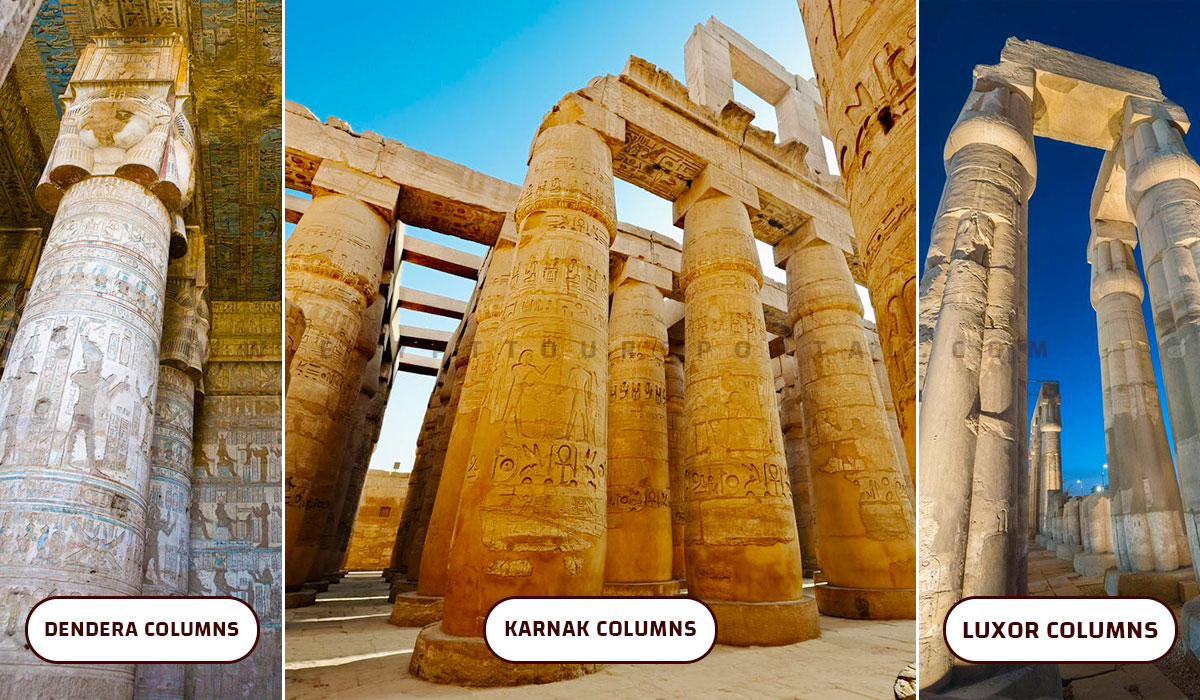
Ancient Egyptian architecture featured a diverse selection of column styles, with over 30 variations identified. The history of column creation can be traced back to the architect Imhotep in 2600 BC, who showcased innovative design by incorporating stone columns reminiscent of bundled reeds such as papyrus, lotus, and palm, as seen across the complex of the step pyramid of Djoser.
This architectural motif was inspired by ancient reed-built shrines, which evolved later in ancient Egyptian architecture to include faceted cylinders. These columns were crafted from stone and adorned with intricate carvings, painted hieroglyphs, texts, ritualistic symbols, and natural elements. They feature prominently in the grandeur of the Great Hypostyle Hall of Karnak, which dates to around 1224 BC and has 134 columns arranged in 16 rows, with some towers up to 24 meters in height.
The design of the columns varied based on their location within the temple, with bud-style columns common in outer temple courts and open-style capitals in central areas. These columns typically imitated natural forms, such as lotuses, papyrus, or palm trees, and were often constructed in sectional blocks. Fluted columns are believed to be the world's first stone columns, and their design influenced later column styles.
Other notable types include palmiform columns, lotiform columns, papyriform columns, coniform columns, tent pole columns, campaniform columns, composite columns, Hathoric columns featuring the cow-headed goddess Hathor, and Osiride pillars resembling statues of the god Osiris on pillars' front surfaces. These column styles evolved over time, with increased variation seen in the Graeco-Roman period, and some designs like the Hathoric columns appearing in the Middle Kingdom and continuing into later periods.
Among the significant and most seen types of columns are the papyriform columns, which trace their lineage back to the 5th Dynasty and were made from lotus (papyrus) stems bound together and adorned with decorative bands; these columns exhibit a distinctive capital design. Unlike the traditional bellflower shape, the capital swells out before narrowing akin to a budding flower. The base, tapering to resemble the stem of a lotus, features a recurring stipule decoration. These columns at the Luxor Temple evoke the imagery of papyrus bundles, possibly symbolizing the marshlands where ancient Egyptians believed the world's creation unfolded.
5. Ancient Egyptian Architecture of Tombs
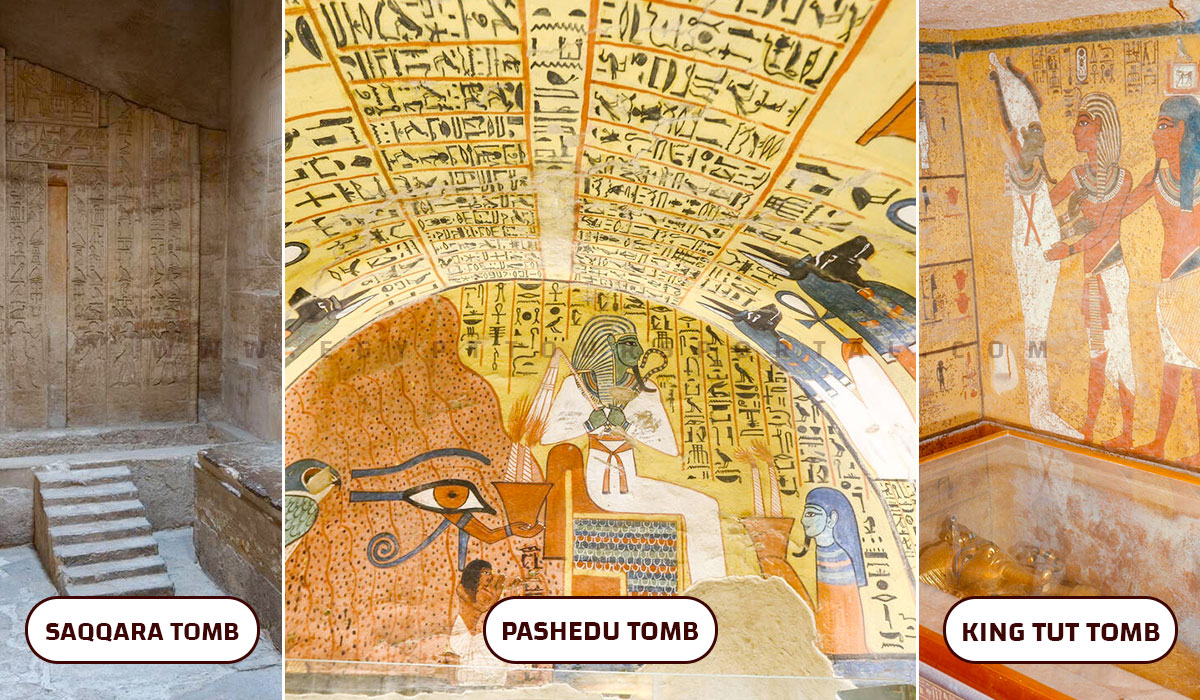
Ancient Egyptian tombs were considered to be houses of eternity, which required master builders and supervisors to perform specific rituals and guidelines when it came to how to design them, build them, and what materials to use to make them a reality.
Egyptian mortuary architecture showcased grandeur and sophistication, with tombs typically consisting of a burial chamber and a chapel for offerings. Tombs varied in size, design, and complexity, including pyramids, mastabas, and rock-cut chambers, influenced by factors like the owner's wealth, status, evolving religious beliefs, and political context. In royal burials, the chapel often evolved into a mortuary temple, separate from the tomb, especially from the New Kingdom onward.
Mastabas were famous in early dynasties and featured rectangular superstructures made of mud brick or stone, housing burial chambers underground and offering niches above ground. A burial chamber of the tomb, especially in the new kingdom, was underground for the body and spirit's protection, and an above-ground mortuary chapel was used by visitors to perform rites and offer food and drink.
Ancient Egyptian burial chambers served as hidden galleries, never intended for public viewing but rather as spaces adorned with intricate artwork meant to communicate with the gods. Also, Acting as a bridge between the mortal and immortal realms, this art held the transformative power to liberate individuals from the stillness of death.
Throughout the Old Kingdom, mastabas displayed changes in size and internal arrangements, reflecting evolving nonroyal posthumous expectations. Djoser's tomb, initially a mastaba, later expanded into the first step pyramid, showcasing innovative stone architecture and design elements like engaged columns resembling papyrus blossoms.
True pyramids became characteristic of tomb building, with Khufu's Great Pyramid at Giza epitomizing monumental scale and precision, later transforming into the symbol of ancient Egypt across the world. In the Middle Kingdom, smaller and less elaborate pyramids became common, with exceptions like the tomb of Mentuhotep II, which was notable for its architectural complexity. To deter tomb robbers, New Kingdom royal tombs were hidden in the Valley of the Kings, carved deep into limestone with no outward structure, while private tombs featured rock-cut chambers with architectural embellishments.
Beni Hasan exemplified Middle Kingdom nobles' tombs, featuring precisely carved chambers with rock-cut architectural elements complementing painted murals. During the Ramessid period in the Valley of Kings, hidden tombs were marked only by carved doorways adorned with religious and funerary texts and images.
Seti I's tomb stands out for its vastness and spectacular burial chamber. Later, royal tombs shifted to simpler structures within the temple enclosure at Tanis. No royal tombs were identified in Egypt after the end of the 20th dynasty.
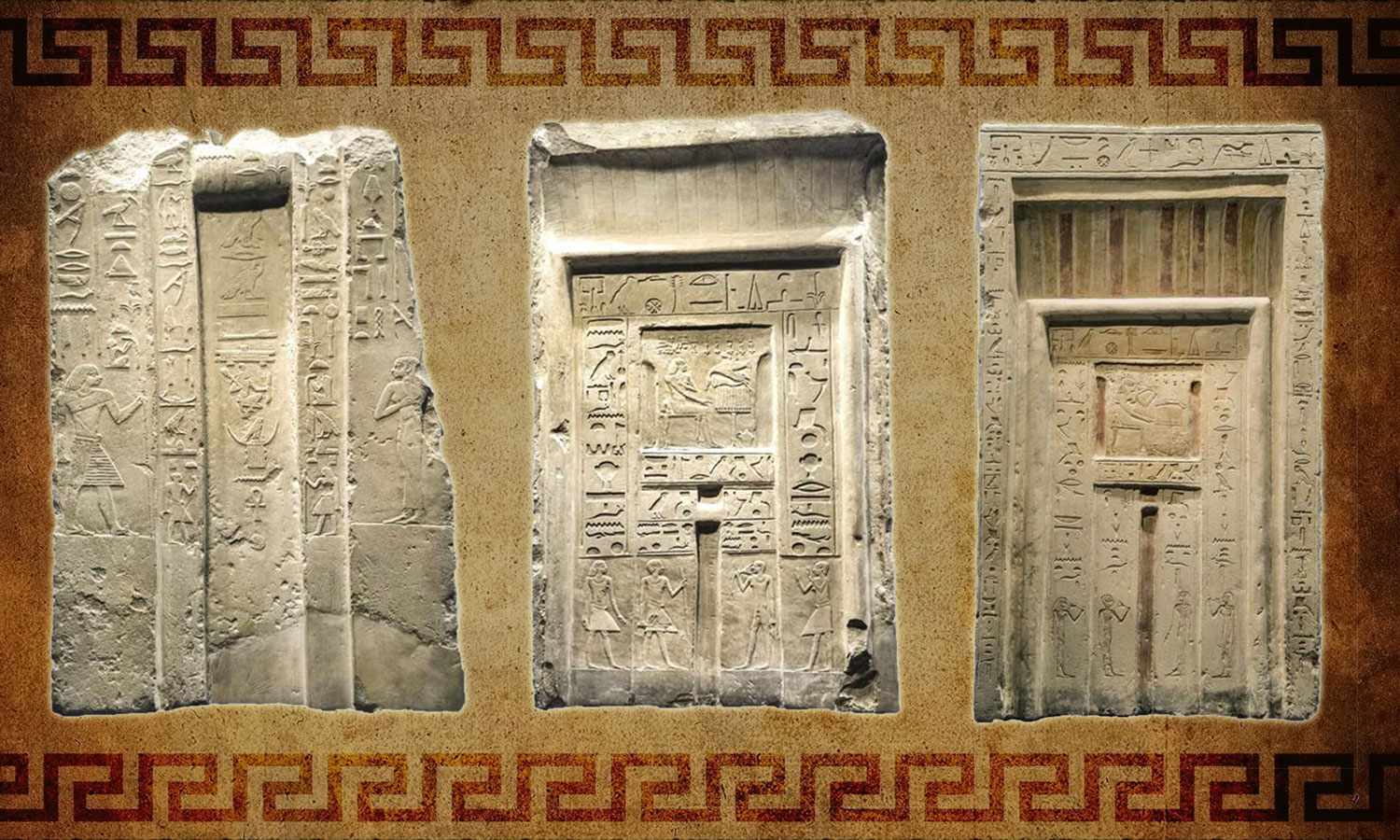
Tomb art was revered as sacred and imbued with magical properties. It served as a means to combat the chaotic and malevolent forces threatening universal harmony. For example, False doors in these chapels facilitated a connection between the living and the dead, allowing the spirit to receive offerings.
Whether mass-produced or specially commissioned, artworks in various forms, such as paintings, sculptures, carvings, and hieroglyphic scripts, played a pivotal role in maintaining cosmic order. Through these artworks, prayers, and appeals were made to the gods to ensure the safe passage and eternal nourishment of the deceased in the afterlife.
6. Ancient Egyptian Architecture of Palaces
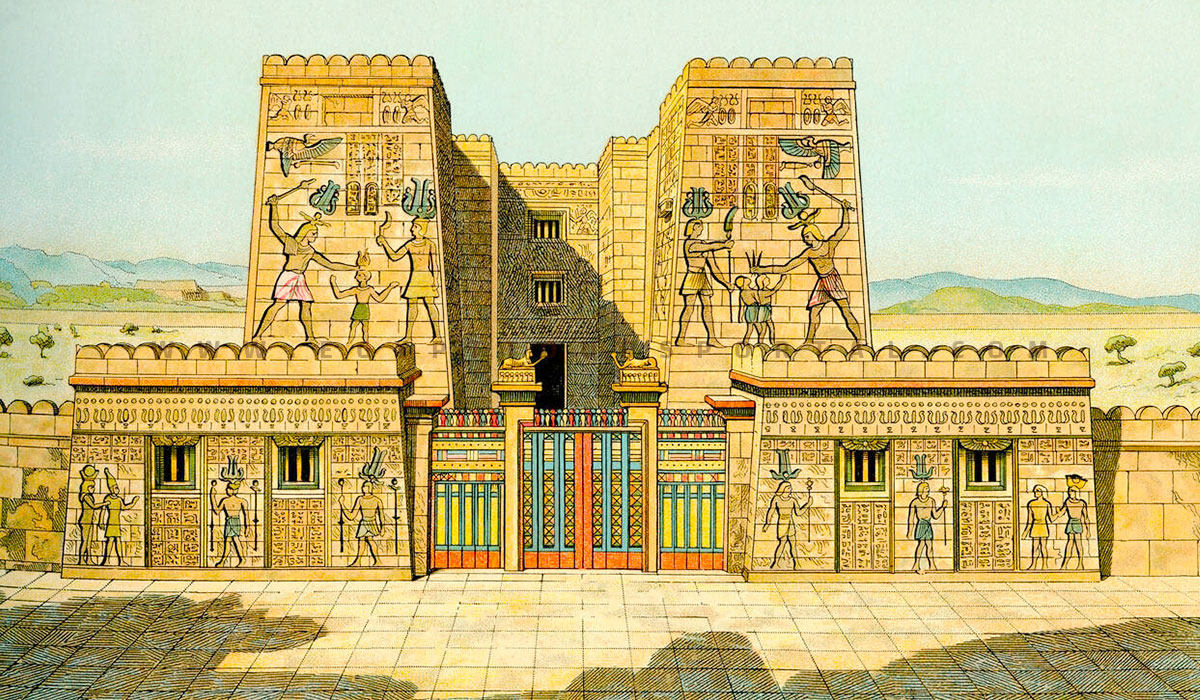
The architectural designs of the palaces of the ancient Egyptian pharaohs and royalties were designed for luxury, comfort, and accessibility. The palaces, like the temples, were created to become an elite theatre of pure power, and all the objects within them were made to become a visible example of greatness.
They were made to become entirely symmetrical from the outside, plus the main material for construction was mud bricks, which explains why they were built very rapidly and also why they didn’t survive for very long. They were also sometimes a mixture of functional units that were not hidden behind a unifying façade, even when they were built by one pharaoh in one single order from start to finish. The wall of the Egyptian palaces, known as the serekh glyph, held the name of the king, who was also the builder and owner of the palace.

Egyptian Palaces, Citadel & Castles
Egypt is known for its rich history and cultural heritage, which is reflected in its magnificent palaces & citadels. Read more about Egyptian castles & palaces!!
The frame and the sides of the serekh represented walls that were seen in the plan, while the cartouche symbol was the emblem of the royal palace where the pharaoh was seen as the embodiment of Horus. The palaces were architecturally designed to house the secondary wives, their offspring, and the concubines, plus a small army of servants. They were entirely enclosed and separated from the whole capital but still remained close to the temples, services suppliers, and the seat of the administration. They were also used as a venue for ceremonial activity for both the public and the private audiences.
The majority of the most recognized palaces were made across the new kingdom during ancient Egypt's 18th Dynasty; Malkata Palace was built for Amenhotep III near his Luxor mortuary temple. Two of Akhenaten's five palaces at Amarna, the North Palace, and the Great Palace, are by far the most incredibly notable. In the 19th Dynasty, excavations at the Palace of Merenptah in Memphis revealed a throne room. In the 20th Dynasty, Medinet Habu, Ramesses III's palace, remains one of the most significant palaces ever made.
Akhenaten's palace was separated from the main one by an avenue connected by a bridge. Ay's palace is depicted in a tomb painting, which appears symmetrical, resembling a castle and a palace. Ramesses III's Temple and Palace, located across from Luxor and Thebes, symbolically unite him with eternity through Amun's estate.
7. Ancient Egyptian Architecture of Gardens
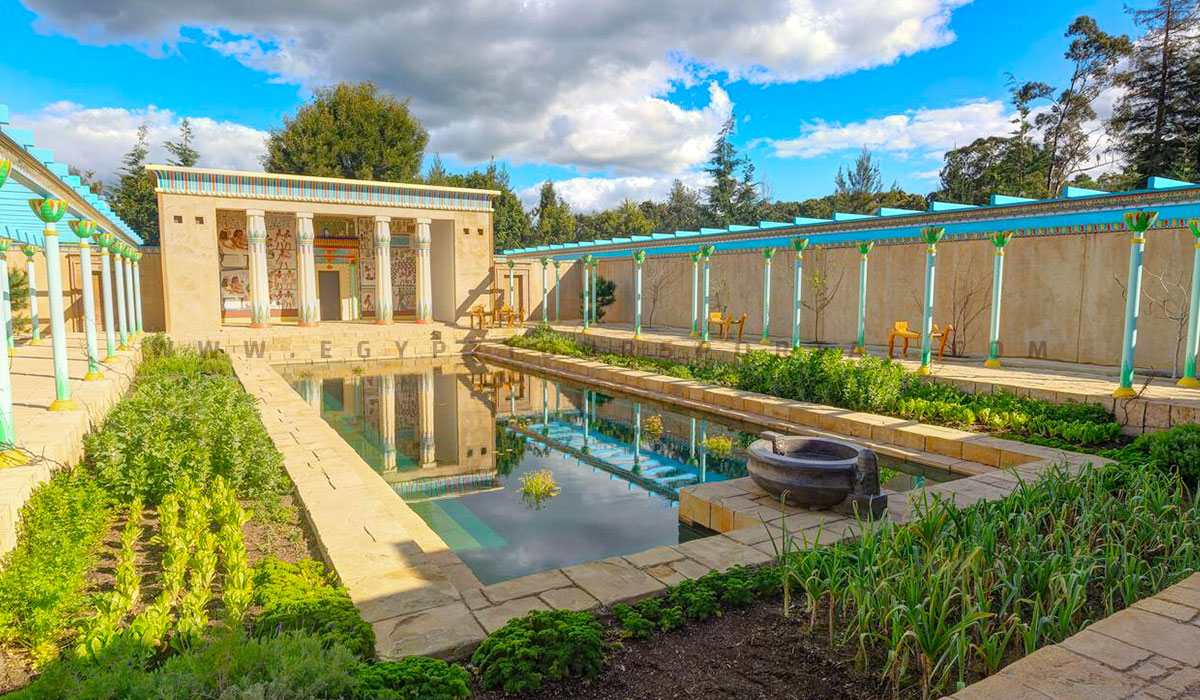
Ancient Egypt is known to have three distinct types of gardens: temple gardens, private gardens, and vegetable gardens. Temples like those found at Deir el-Bahri used to be filled with lush groves and sacred Ished Trees, while private pleasure gardens, depicted in artifacts like the tomb model of Meketra from the 11th Dynasty, were enclosed by tall walls, adorned with trees and flowers and provided serene shaded spots. Fruits and fragrant plants were cultivated with cornflowers, poppies, and daisies among the blooms, while the pomegranate gained popularity as a shrub during the New Kingdom era.
Wealthier individuals decorated their gardens with ornamental pools teeming with fish, waterfowl, and water lilies. Vegetable gardens, whether belonging to individuals or temples, were organized into square plots divided by water channels strategically located near the Nile River for easy irrigation, either by hand or, later on, with the introduction of the shaduf during the late 18th Dynasty.
8. Ancient Egyptian Architecture of Fortress
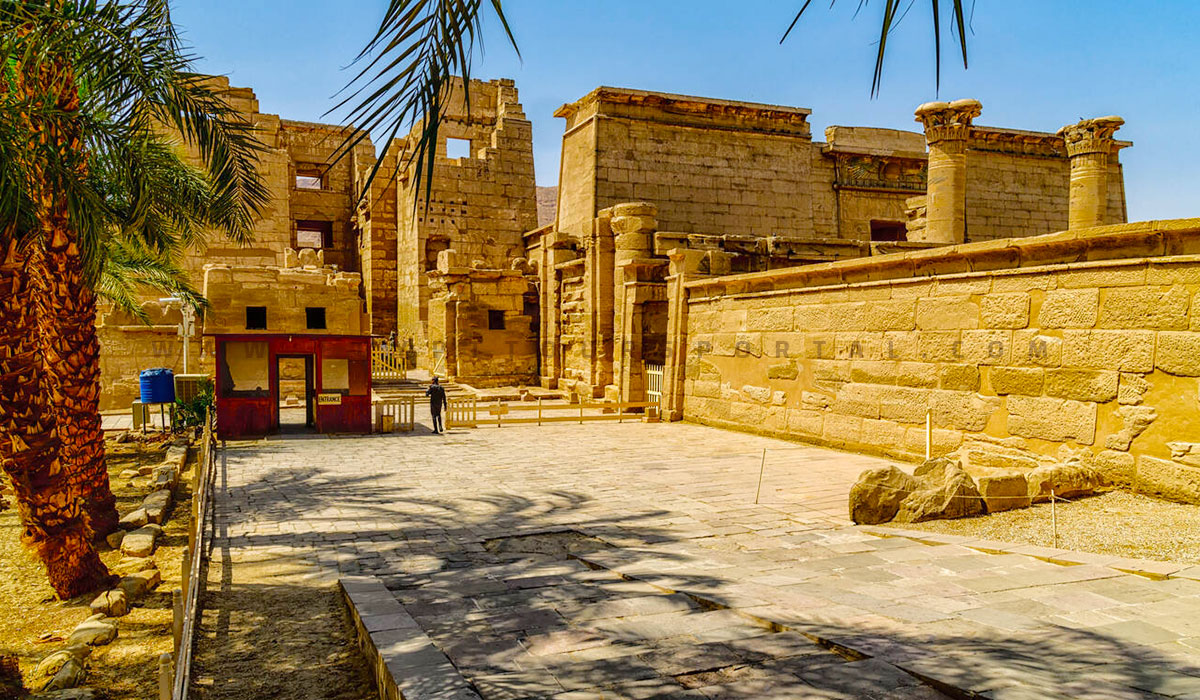
Ancient Egyptians developed advanced techniques for constructing defense structures and transporting earth and stone with skill. Egyptian fortresses throughout history were renowned for their invulnerability. During periods of conflict between rival principalities in Ancient Egypt, fortifications were crucially constructed using similar materials, primarily mud brick reinforced with timber and occasionally stone.
Secondary walls, positioned close to the main walls, posed challenges for invaders, who had to breach multiple barriers. If invaders managed to breach the first barrier, a ditch would be strategically constructed between the secondary and main walls, exposing them to arrow fire. These fortifications were dismantled during times of unity, with materials reused for other purposes.
Ancient Egyptian fortresses served various functions; they prioritized securing sensitive borders with strong defenses, which included control over the Nubian Riverside during the Middle Kingdom Period. Positioned on rocky or sandy terrain, these sites aimed to extend influence and deter raids from rival groups. Inspections of Nubian forts revealed evidence of copper smelting materials, indicating trade relationships with miners in the region.
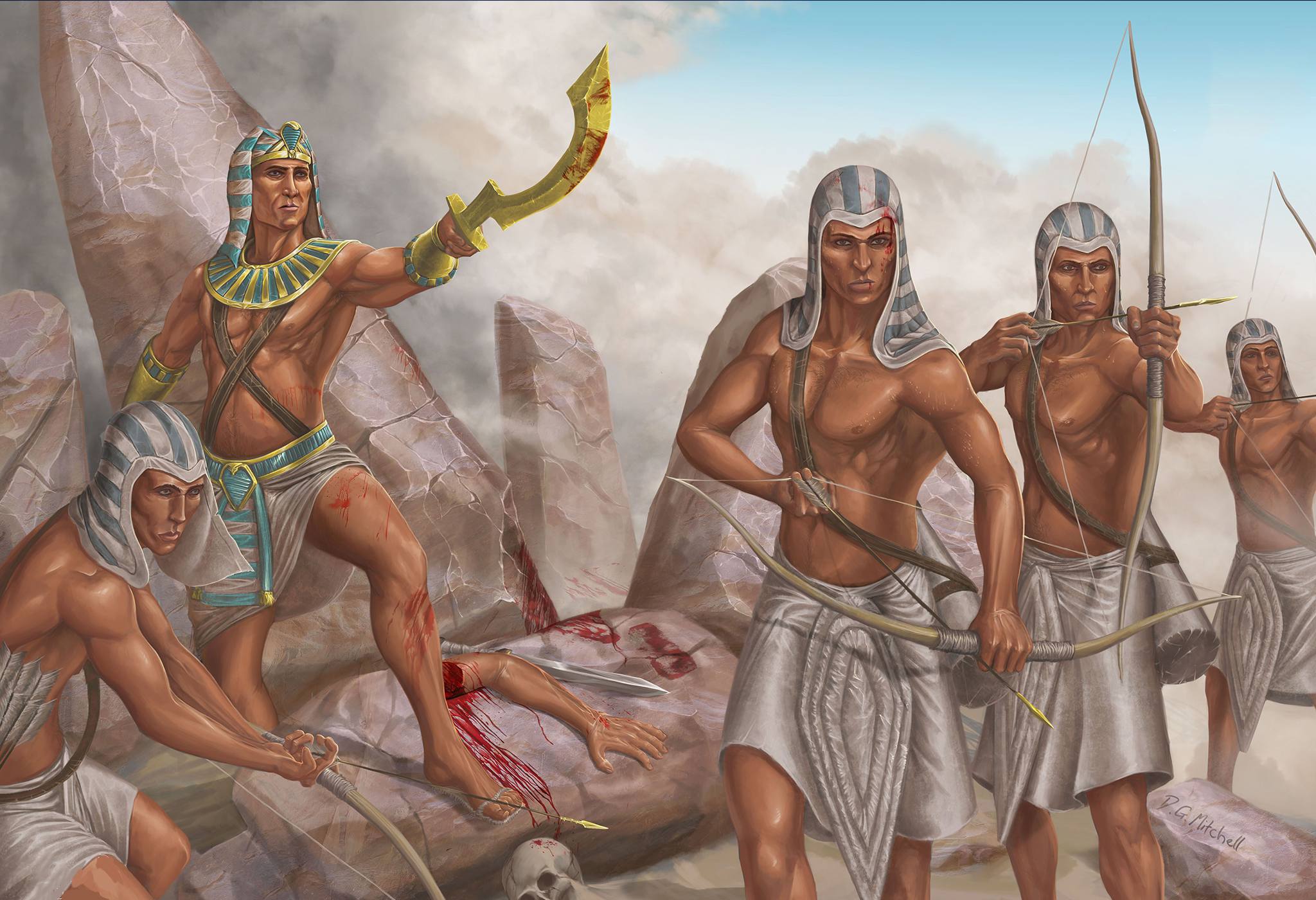
Ancient Egyptian Battles
Discover the most famous and tiptop ancient Egyptian battles, read more about the ancient Egyptian wars, and more....
These forts facilitated trade by providing food and water in exchange for mined materials, allowing Egypt to maintain control over Nubia until the Thirteenth dynasty. Royal palaces and tombs were surrounded by high clay walls, showcasing the evolution of defensive architecture over time. Some of the most prominent examples of fortresses include the Zoser wall in Sakkara and fortresses with oval shapes and round supports that demonstrate continuity in building styles across epochs. During the Middle Kingdom, defenses became more sophisticated, featuring tall mud-brick castles with dual walls, barriers, and mobile towers.
Snosert III strategically built fourteen fortresses between the first and third cataracts on the Nile, showcasing innovative defensive strategies. Amnemhat I'm Prince's Wall in Al-Tolombat Valley defended against Asian invaders and possibly inspired myths of extensive defense walls. During the Modern Kingdom, Egyptian fortresses adopted Asian designs like the Migodol, resembling European medieval castles, with arrow ports and small towers.
9. Ancient Egyptian Architecture of Obelisks
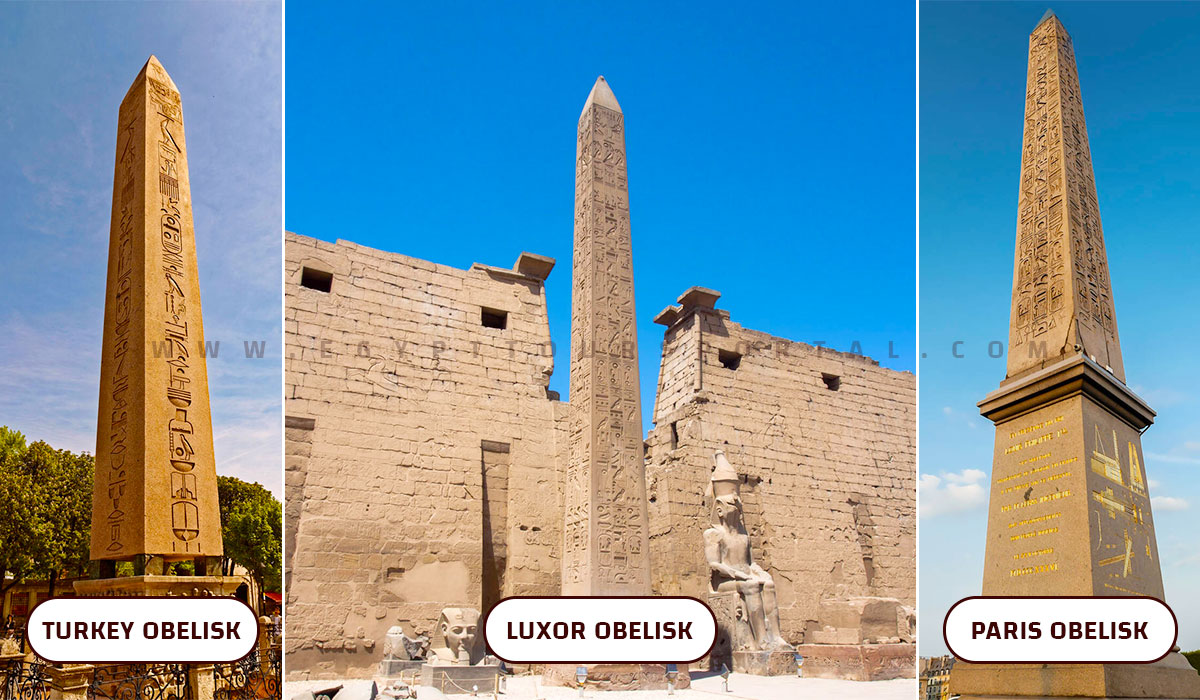
The practice of sanctifying obelisks traces back to ancient Egypt's pre-dynasty era, with widespread architectural utilization emerging during the Modern Kingdom, particularly in Heliopolis. The obelisk's architecture began when pairs of obelisks flanked temple gates, while solitary ones were erected at temple centers during the resurgence of the sun cult.
These obelisks, characterized by vertical sides and pyramidal caps, symbolized devotion to the sun. Most obelisks were crafted from red Aswan granite, and their construction methods remain somewhat complex and mysterious. These structures, some weighing hundreds of tons, highlight the engineering prowess of ancient Egypt, with the largest unfinished obelisk surpassing 1000 tons. Only five obelisks endure in Egypt, contrasting with over 50 found in prominent squares across European and American capitals.
Ancient Egypt Architecture Influence
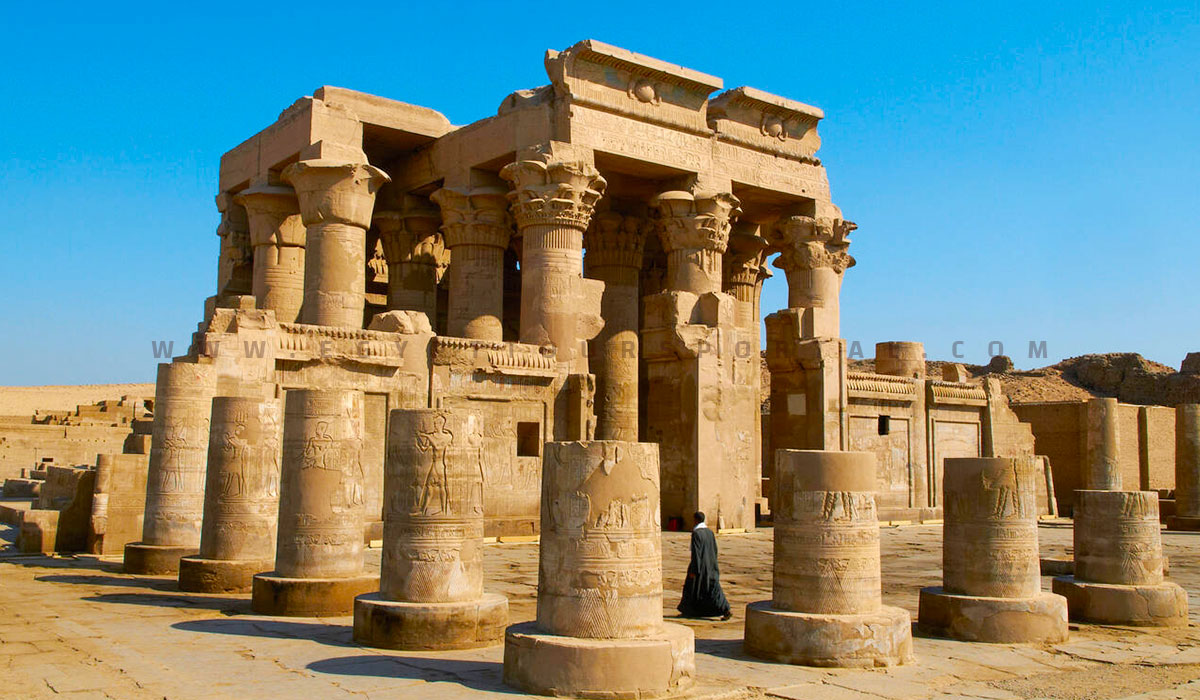
Ancient Egyptian Architecture in any form of design or identification, much like the entire heritage, was highly influenced by cultural norms and common political systems. Various foreign rulers introduced European, British, and other architectural styles into Egyptian culture, fostering a dynamic interplay between social, political, and architectural realms.
Architecture and design, as well as their identification, are often shaped by the prevailing political systems and cultural expressions. In the case of Egyptian culture and heritage, including architecture, a myriad of cultural styles exerted significant influence. Throughout history, various foreign rulers introduced European, British, and other architectural styles into Egyptian culture, fostering a dynamic interplay between social, political, and architectural realms.
Egyptian architecture is known to have been heavily infused with the columnar and trabeated architectural typology, centered around religious edifices such as temples, tombs, and obelisks. Symbolism rooted in religious beliefs manifested in architectural elements like lotus, papyrus, and palm capitals, while features like dromos, sphinxes, and sculptures were integral to the religious narrative.
Structures like Deir-el-Bahari and the temple complexes of Luxor and Karnak exemplify the influence of Neo-classicism and Rational architecture, evident in the expansive temples, elongated ramps, and facades adorned with plain square columns. The evolution of Egyptian architecture reflects the imprint of various styles, including Hellenistic culture, Roman architecture, Islamic Architecture, and Rational architecture, each contributing to its rich and diverse architectural heritage over time while also influencing the architecture of all the different cultures and civilizations all around it.
Ancient Egypt Architecture Techniques

The architectural prowess of the ancient Egyptians remains unparalleled, even by today's standards, and they hold many techniques that play a role in the modern world. It's truly astounding to consider how they achieved such feats of construction using rudimentary tools compared to our modern machinery. Their mastery of theoretical and applied sciences, though lacking in sophistication compared to ours, was by all standards remarkable. With simple tools like a builder's thread, an angle, a 52cm measuring arm, and a straight edge, they crafted intricate schematics and plans for colossal structures that continue to inspire wonder.
Their Pharaonic monuments were examined, and it became clear that the stone blocks were shaped with solid stones and copper or bronze tools. Blocks were transported and lifted using mud and earth ramps, wooden gliders, rollers, ropes, and levers. Teams of skilled workers navigated stone-carrying boats across the Nile and hauled massive boulders overland with immense effort and patience. This monumental undertaking required the synchronized efforts of countless workers and staff, demonstrating a remarkable harmony and unity of purpose.
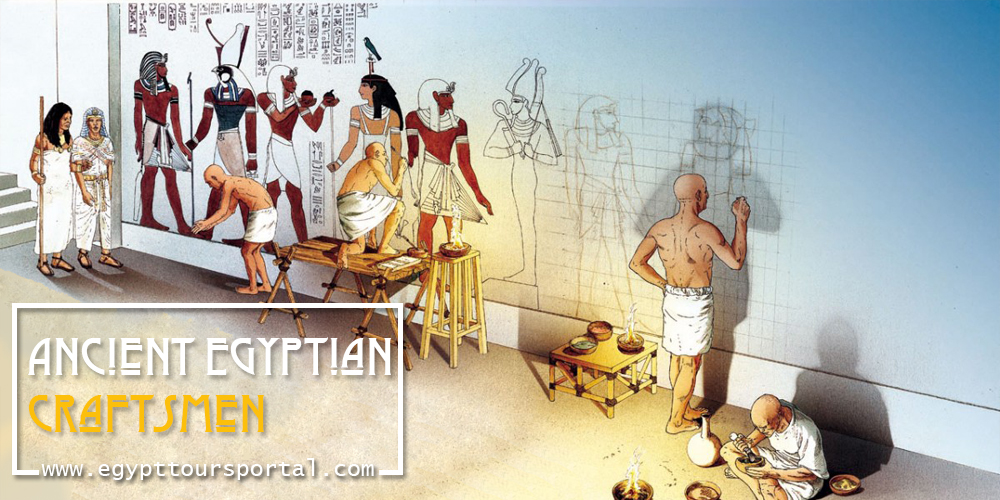
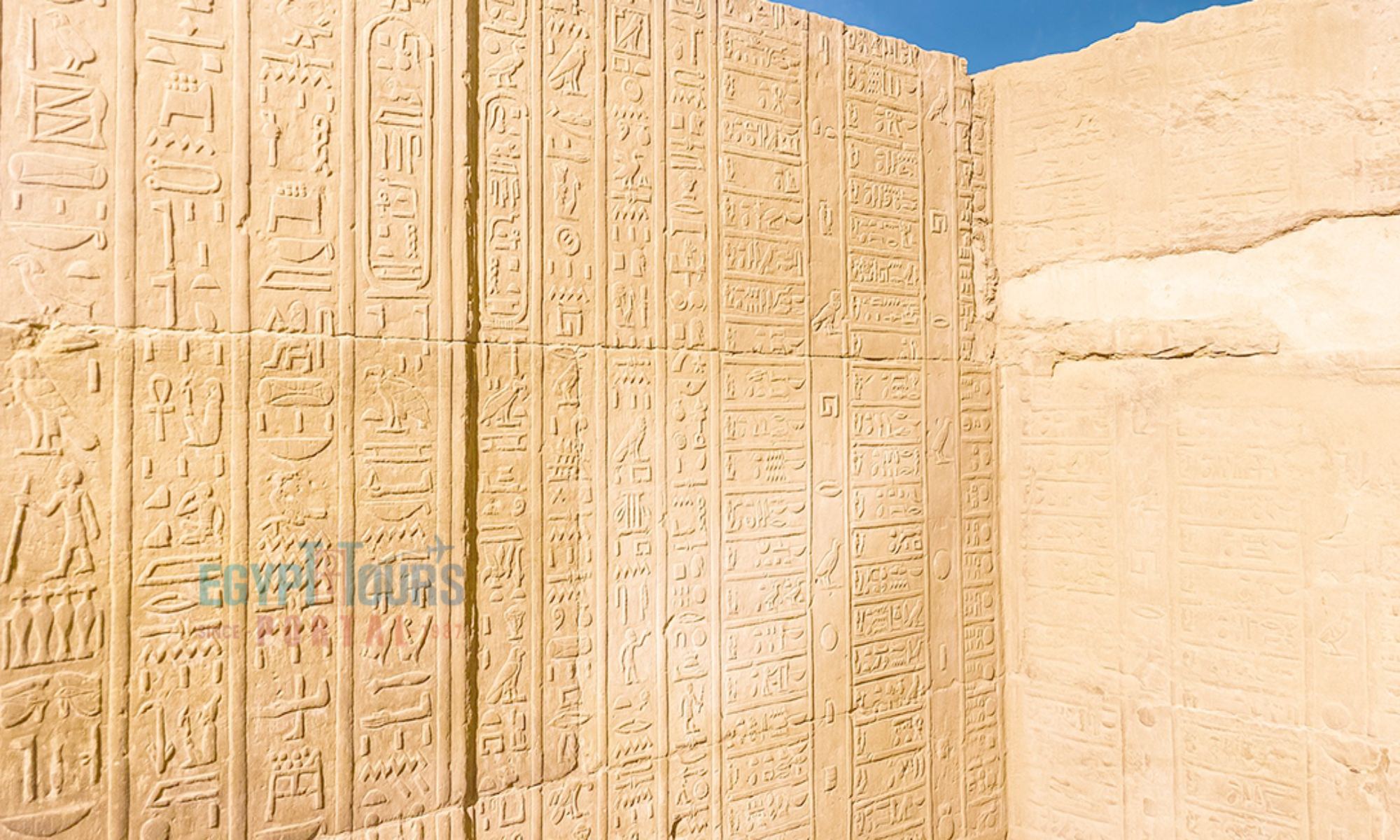
It was through the power of simplicity and ingenuity that Ancient Egyptian architects achieved incredible techniques that were able to make enduring greatness, leaving behind monuments that stand as immortal testaments to their extraordinary achievements. Ancient Egyptians are known to have utilized different types of decorative arts in their architecture, which possessed paintings depicting images of mythology and religion, sculptures that depict pharaohs, gods, & very influential figures, and hieroglyphs, which is a type of writings that create an image filled with sounds & words.
Ancient Egypt Architecture Materials
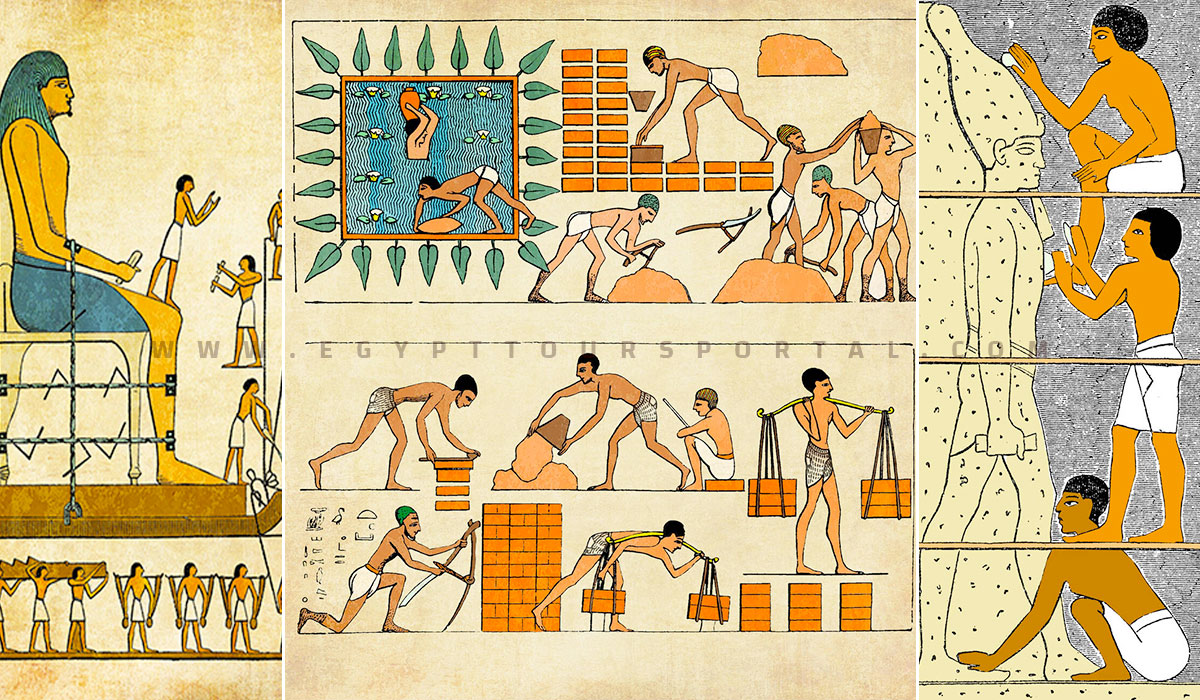
Ancient Egyptian architecture was highly creative and resourceful in acquiring and utilizing materials, which resulted in the creation of some of the most epic archaeological wonders. There were two distinct categories of stones used across the history of ancient Egypt which one is known as precious stones like turquoise, emerald, carnelian, granite, and lapis lazuli, which were sourced from eastern mines and brought in small bags and limestone which was taken offer the surroundings area of the construction. These precious stones were often used for ornamental purposes, such as in jewelry or inlay work on wood or gold.
The other category, which was mainly stone blocks utilized by sculptors and builders, was predominantly limestone, and it was abundantly available. Rough stones were employed for constructing interior walls and foundations, while carefully cut fine stones adorned main walls and formed the structure of grand temples. Various types of limestone were procured from different regions, including yellow limestone from Al-Silsila Mount, white limestone from Tura, and gray or red granite from Aswan, along with alabaster from central Egypt.
Basalt was commonly used for paving roads and laying the lower courses of buildings. Stones like diorite, marble, and porphyries, alongside convertible diorite, were favored materials for crafting statues and utensils. The renowned Chephren statue was carved from convertible diorite. Softer materials like steatite were employed in creating scarabs and various artistic objects.
Characteristics of Ancient Egyptian Architecture
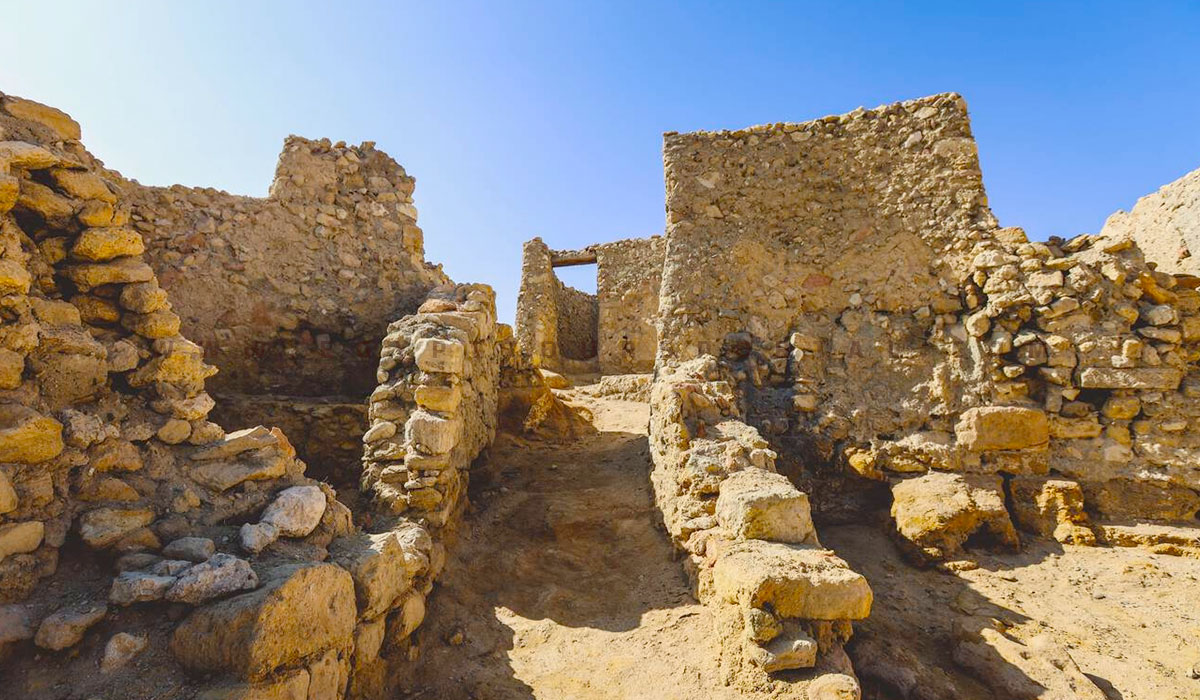
Ancient Egyptian architecture was highly monumental and creative; they used stone, mainly limestone, granite, and sandstone, to make their constructions due to the lack of wood, which was balanced by an abundance of sun-baked mud bricks, which was the main substance of construction in the early dynastic period.
These mud-brick stones were used to construct everything, such as royal palaces, fortified buildings, outbuildings, temple walls, and countless others, until the rise of stone construction in the 2nd dynasty (2890-2670 BC). These early buildings were oval before the creation of bricks, and after, they became rectangular with a vaulted roof, a garden, and a courtyard.
Most of the constructions, like the temples and the pyramids, were built near the Nile River because the building materials were transported by river, and they contained a flat roof supported by external walls and columns decorated with magical Hieroglyphs for the purpose of protection or recording historical events. As civilization advanced, the community gathered together for protection and gave rise to cities like Memphis and Thebes, which elevated the art of architecture to new heights, as well as the appearance of windows and doors.
The traditional houses of the ancient Egyptians were created using mud bricks and timber with occasional stone rests for thresholds or column bases. The palaces of the nobles were constructed with two entrances, two receiving halls, and two throne rooms to maintain symmetry and balance while representing both upper and lower in the design.
Ancient Egypt Architecture Achievements

Historians and Egyptologists agree that the ancient Egyptians were pioneers in building, teaching humanity how to design and construct buildings. This laid the foundation for civilization, urbanization, and settled communities. Pharaonic architecture evolved with techniques such as using mud bricks for fortifications in 3200 BC, which lasted for a long time. Then, it transitioned to temples for the ancient Egyptian deities, which were more durable stone constructions.
Architectural innovations, like those of Imhotep in 2800 BC, further advanced building practices when it came to using stones for building great structures and even homes, leading to iconic structures such as the pyramids. The Old Kingdom saw significant developments in the features, styles, and decorations of ancient Egyptian architecture, which continued all the way to the Greek-Roman period in 30 BC.
Great Examples of Ancient Egyptian Architecture
The three most popular structures of ancient Egypt are probably the Great Pyramid at Giza (A.K.A Pyramid of Khufu Or the Pyramid of Cheops), the Great Sphinx of Giza (The Terrifying One or the Sole Protector of Egypt), and the Step Pyramid of Djoser at Saqqara. There are many great structures in the magical cities of Luxor and Aswan that truly reflect the beauty and brilliance:
- The Luxor Temple is a vast religious complex founded in 1400 BCE for the Opet festival.
- The beautiful Temple of Hatshepsut is a mortuary temple designed by the queen's architect, Senenmut, in the 15th century BCE to reflect the form of classical architecture.
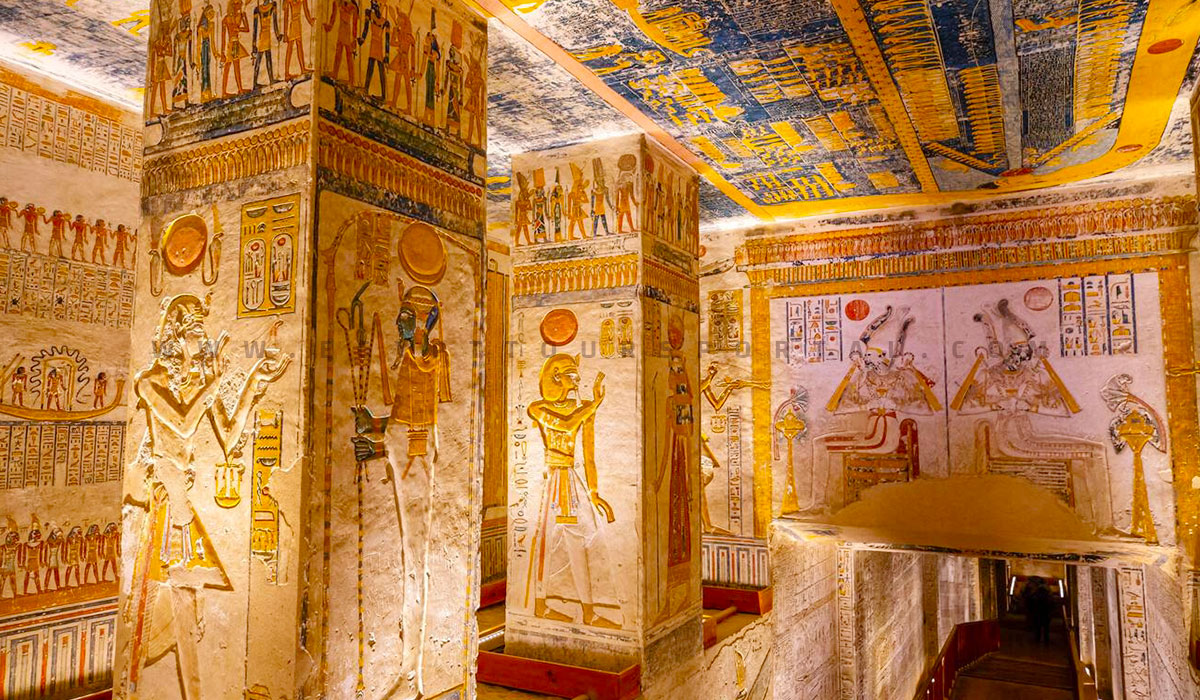
- The Valley of the Kings contains more than 60 known tombs of kings and queens from different dynasties and is highly famous for its incredible hypnotic decoration and marvelous design.
- The holy Temple of Karnak is a vast construction built for the holy triad of Amun, Mut, and Khonsu between 2055 BC and 100 AD. It has several sections that have been deconstructed and reconstructed over the years.
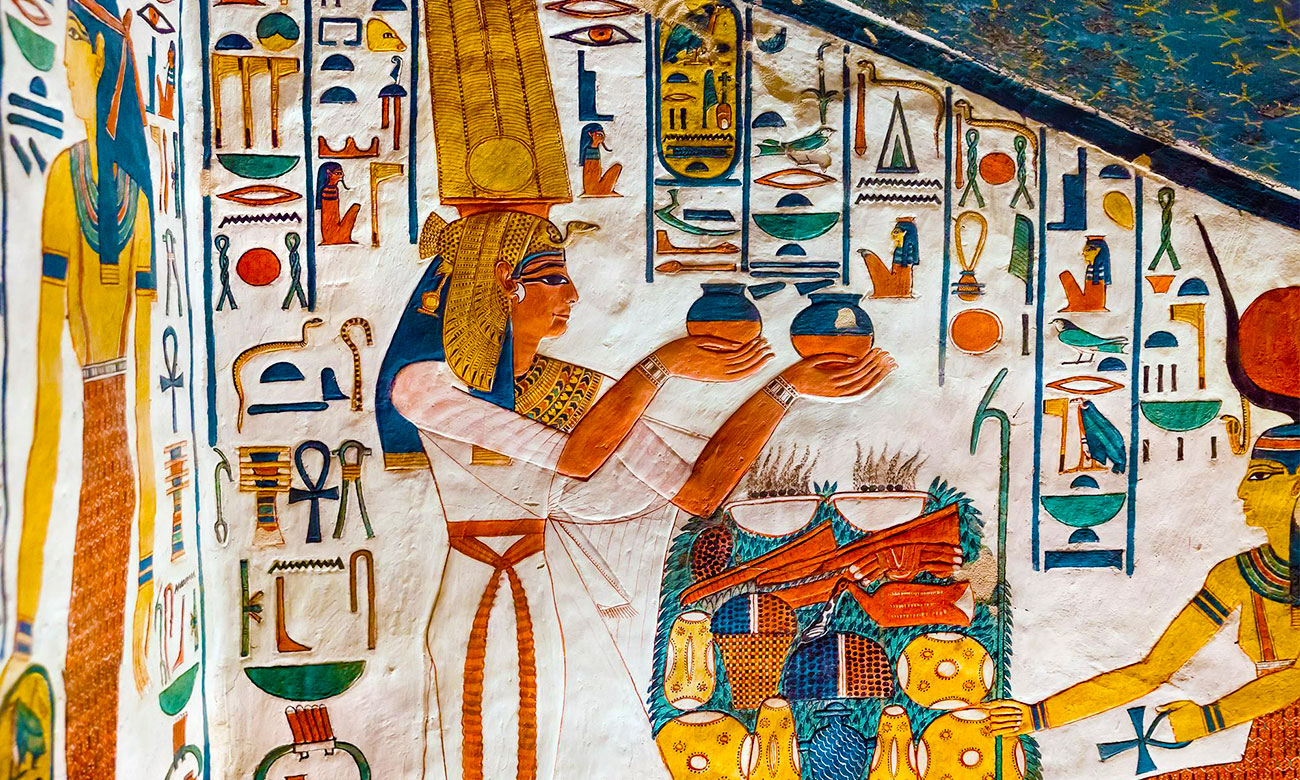
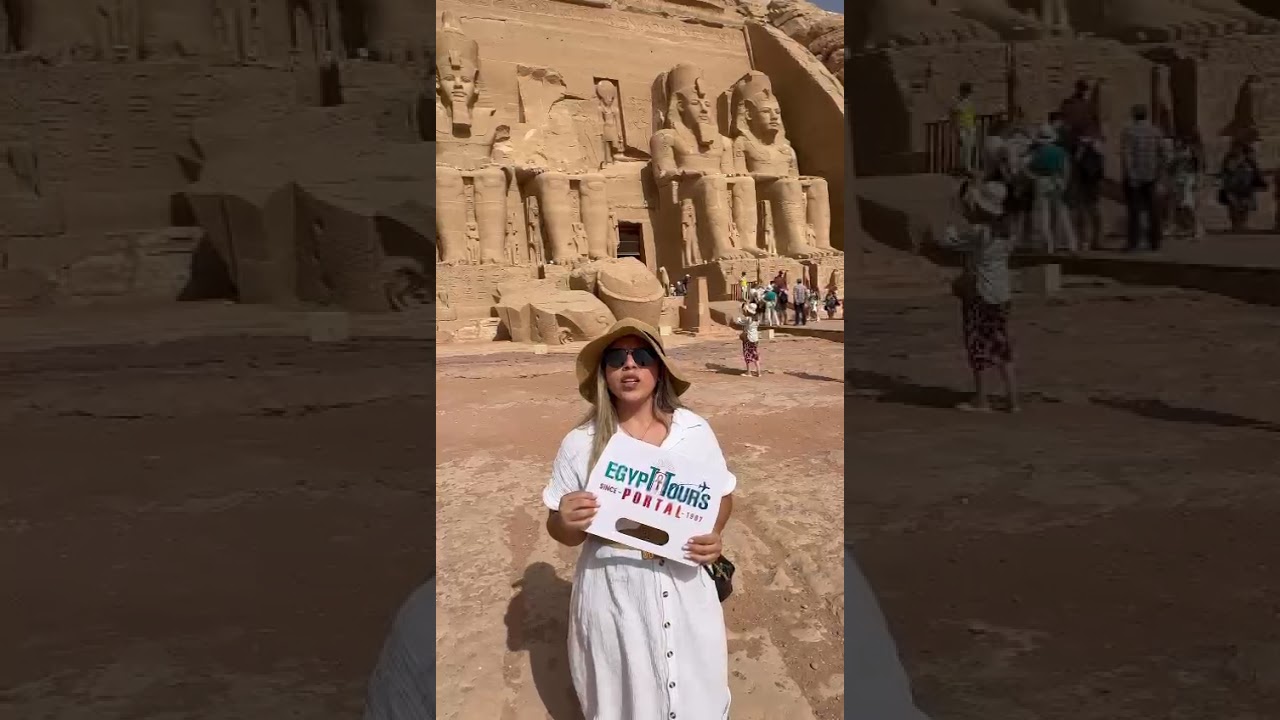
- Abu Simbel is Egypt's final frontier on the southern border and the commander of miracles. It is home to two magnificent temples, the small one of Nefertari and the bigger one of Ramses the Great.
Interesting Fact about Ancient Egyptian Architecture
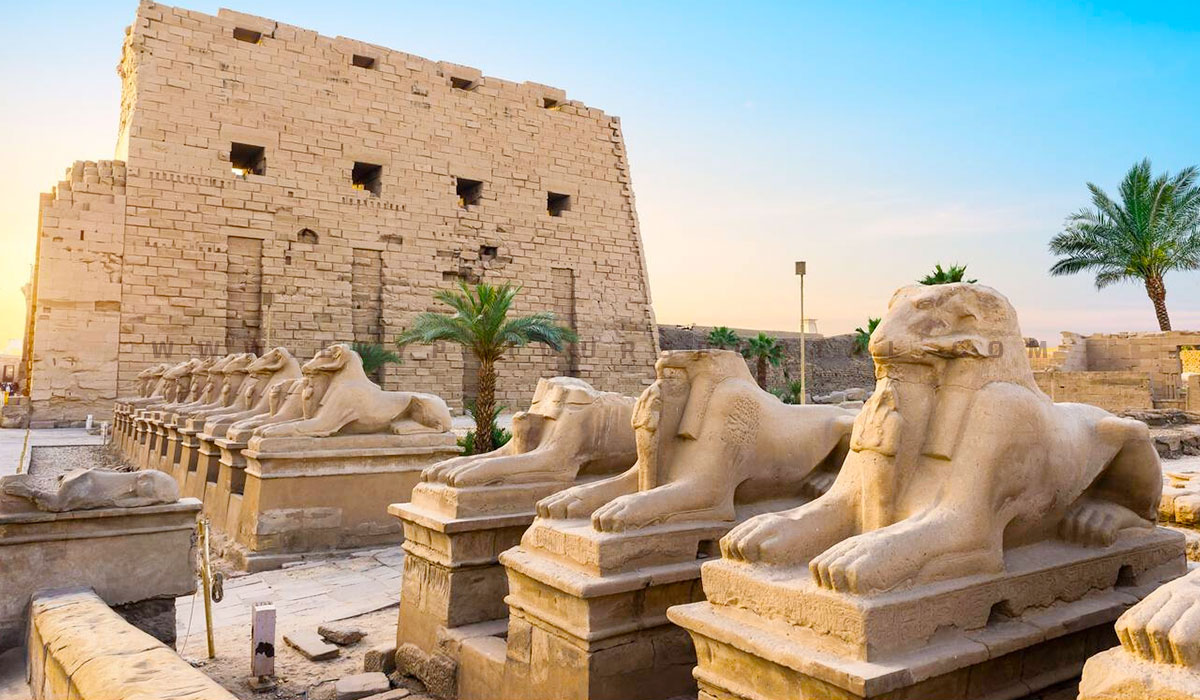
- The ancient Egyptian culture and value system were very instrumental in showcasing the symmetry of the structures, the interior design, and the inscriptions.
- With their incredible architectural designs, building materials, and gigantic labor farce, they were able to create immortal structures like the Giza pyramids and Sphinx, which became the most recognizable symbols of ancient Egypt and for the purpose of honoring the gods like Osiris, Isis, Horus, Ra, and countless others so various great temples were constructed in the great cities of Luxor and Aswan which manifest the beautiful spirit of ancient Egyptian art.
- Ancient Egyptian monotheism, particularly the myth of creation, states that Atum created the universe from his primordial mound at the beginning of time and played a vital role in choosing the shape, design, and role of these structures. The ancient Egyptian language has no word for "architect," so each master-builder was known as "director of the entire king's works", which shows that they held a special position of trust with the king and frequently acted as his vizier.
Explore Ancient Egyptian Civilization On the Reality
There is no better place on earth that can reflect the true soul of ancient architecture than the enchanting monuments of Egypt. Don't miss the chance to be in the land of wonder and beauty through our Egypt vacation packages or onboard a Nile river cruise and sail on the holy spirit of the past.