Whatsapp Me
We’re nominated for Egypt’s Leading Travel Agency 2026 – Your vote matters! Vote Now
Egypt Tours Portal
Pyramids

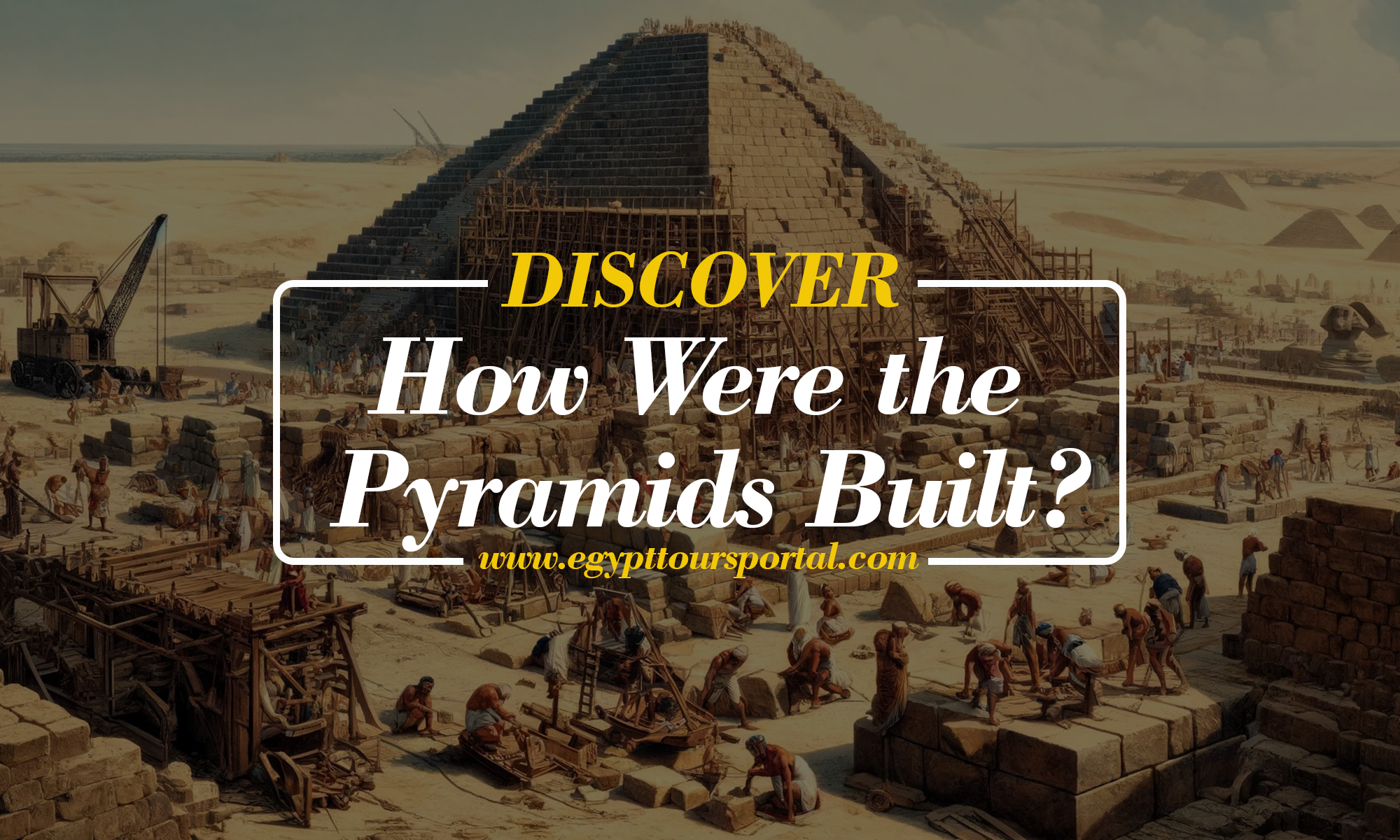
How Were the Pyramids Built?

Discover the ancient secrets behind the construction of the pyramids in Egypt. Explore theories, workforce insights, architectural precision, and innovative construction methods used by skilled workers over 4,500 years ago. Unravel one of history's greatest mysteries

ETP TEAM
Written by ETP TEAM
Published Apr 13, 2019 Updated Apr 04, 2024 10 min read

How Were the Pyramids Built?

Summary

  • The most accepted theory is that the pyramids were built using massive limestone blocks carved from quarries, dragged, and lifted into position. The Ramp Theory and Water Shaft Theory are two popular explanations for how the stones were transported and placed.
  • Contrary to the belief that the pyramids were built by slave labor, research indicates that they were constructed by tens of thousands of skilled workers who were paid with bread or beer and worked in a highly organized manner.
  • The pyramids were strategically built on the west side of the Nile River, on higher ground to avoid flooding, and close to the capital for easy access to resources and labor.
  • The pyramids were designed with astronomical precision, with each side facing a cardinal point. The base was made flat by filling channels with water to mark the level, and the corners were perfectly aligned using bisected angles.
  • Ramps, both external and internal, were likely used to raise the blocks as the pyramids grew in size. The use of water to reduce friction for dragging sleds with stones is also a significant discovery in understanding the construction process.

How the Pyramids Were Built 

How the Pyramids were built is a highly debated question that has wandered the minds of scholars from all over the world for thousands of years. The main goal of this article is to offer every traveler all the information and facts about how the ancient Egyptians were able to build the pyramids. This article was written by a very knowledgeable and professional team of Egyptologists, tour guides, travel consultants, and historians who know all the details about how the pyramids of Egypt were built.

One of history's most ancient puzzles is the construction of the pyramids; over and over again, through the course of history, many nations, scholars, and scientists have asked the question, "How were the pyramids built?". 4,500 years ago, Giza Pyramids were constructed to immortalize the legacy of the ancient Egyptian civilization for many generations to come, it also was able to offer insight into the life aspects of the ancient Egyptians, from religious to agricultural practices, through the magical wall illustrations of the pyramids.

Theories About How the Pyramids Were Built
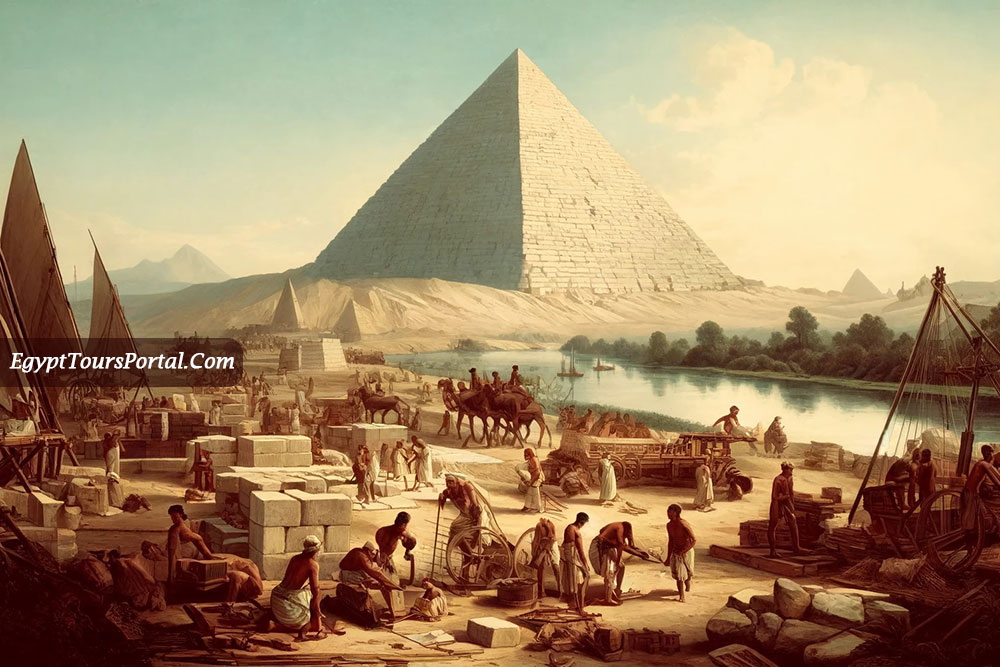
Theories About How the Pyramids Were Built - Egypt Tours Portal 

How the pyramids were built is the world's oldest puzzle, and many highly educated scholars have given many controversial theories and hypotheses. The most generally believed theory is that the massive limestone blocks were carved from the quarries in Giza using copper and bronze chisels, then dragged and lifted into the accurate position. The manner of the movement and placement of these stone blocks and the size of the workforce are under great debate even today. 

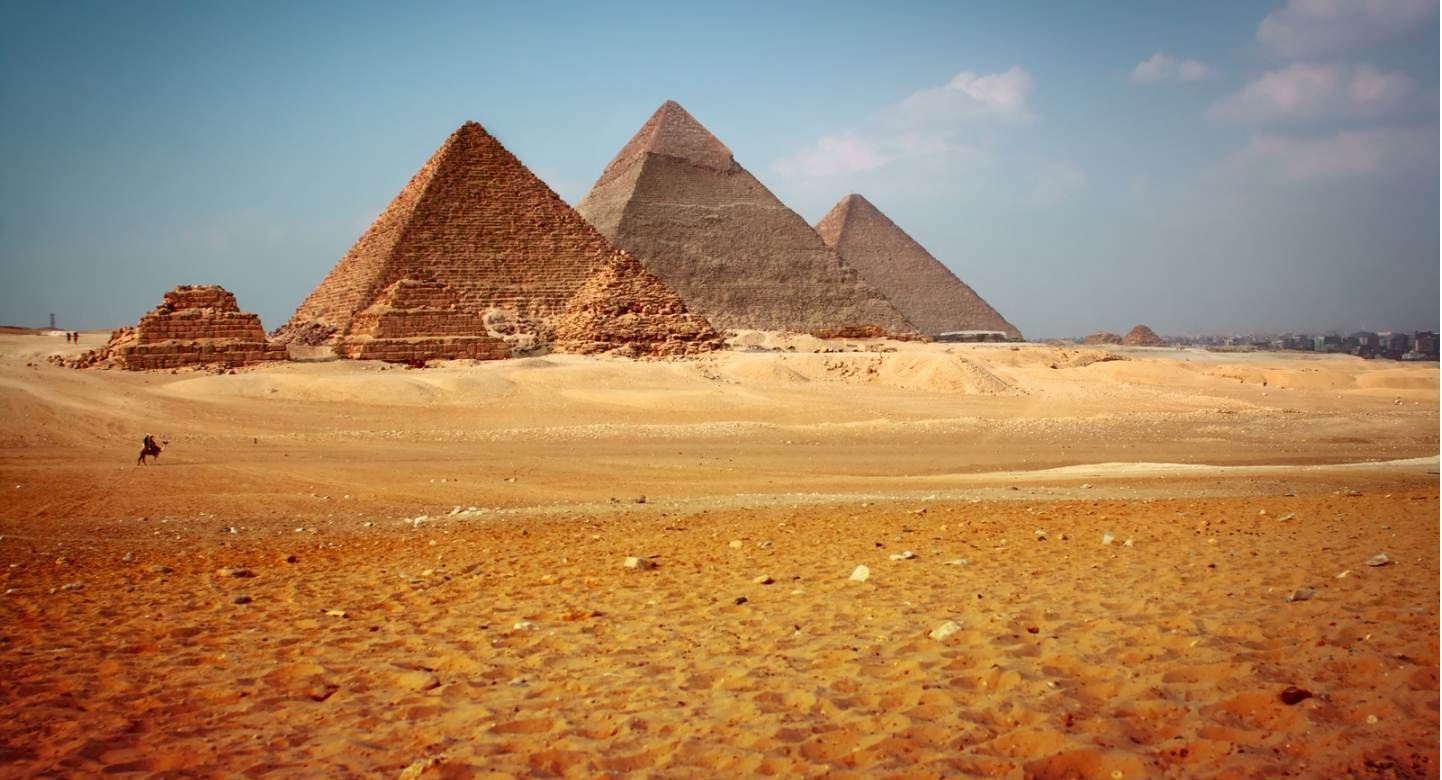
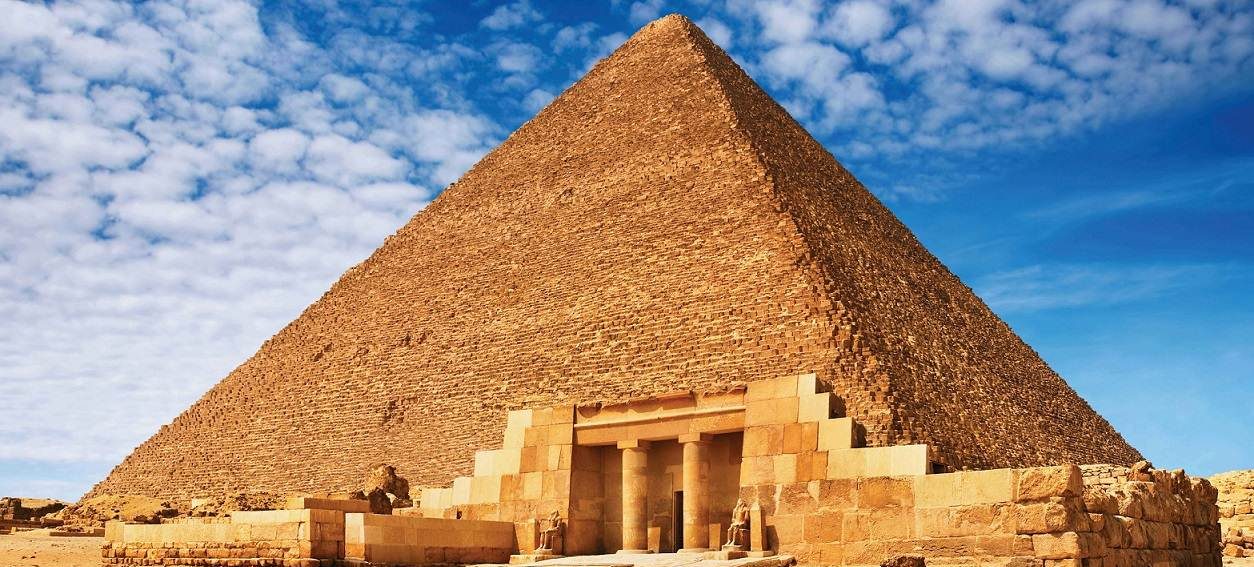
Egyptian Pyramid construction techniques are one of history's greatest mysteries. The great pyramids of Giza stand as the ultimate puzzle and the best source of information; it was constructed over 4,500 years ago with over 2 million stones and took 20 to 30 years to make, but many have argued over the question "How?". There are two common theories that many believe have played a part in constructing the pyramids: the ramp theory and the water shaft theory, plus the limestone concrete theory. The complexity of the construction and level of accuracy and magnitude became the source of a number of pseudoscientific theories as means of providing any sort of explanation.

Ramp Theory

The Ramp Theory is considered by far the most accepted by the Egyptology community, who believe that the pyramid was made by sheer will and human power, using a massive workforce and incredible intelligence to transport the stones across the desert through sleds and ropes. They used wet sand to drag the stones to reduce the fraction and make the dragging process easier.

Many images and carvings can be seen on all the temples. When the stones arrived after being dragged across the desert, the ancient Egyptians used a series of ramps to drag the stones all the way to the top. The ancient Egyptians either used a straight ramp up one side or a spiraling ramp wrapped around the pyramid, but many believe a combination of the two was used. Levers were used once a significant height was reached, and ramps were no longer useful and needed. A number of documents and images were discovered to support the fact that sleds were made.

Water Shaft

The Water Shaft Theory states that the stones were transported through a water canal that was built all the way to the construction sites, which allowed the stones to float across the waters and made the transportation process very easy. The floats were made of cedar wood or inflated animal skins wrapped in papyrus, then attached to the stones, which would allow the stones to be pulled from the shore. Then, the floating stones are led to the canals all the way to a moat, which is found all around the construction site, and the stone blocks are allowed to be taken to any place needed. Four water pipelines were used to float the blocks up the hill, and they were extended when the pyramid grew in size.

The gates controlled how the stone blocks moved all the way to the top of the moat. A pool of water on the top of the construction site, "Water Elevators" allowed for more floating and positioning without any dragging or actual heavy lifting. There is no concrete or valid evidence of this theory, but many traces of water throughout the structure and imperfections across the middle of all four sides have been identified to support this theory.

There are many theories about the construction of the pyramids floating all over the internet, such as the limestone concrete theory, which states that soft limestone with a high content of kaolinite was quarried in the wadi on the southern side of the Giza Plateau. The clay-wet limestone concrete would be carried and packed in reusable wooden molds, and then, in a few days, the blocks would be turned into stones.

The Workforce of the Pyramids
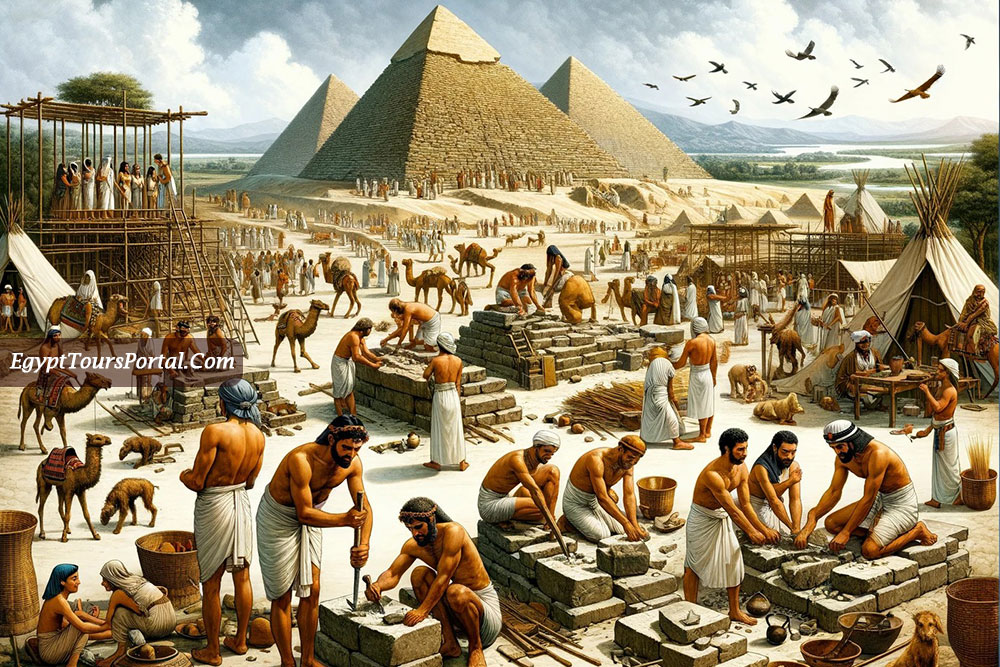
The Workforce of the Pyramids - Egypt Tours Portal

The techniques used in constructing the Egyptian pyramids have baffled historians and scientists for countless years. The pyramids are the subject of many controversial hypotheses. The general theory is based on the belief that the huge stones were carved from the quarries using copper chisels and then dragged and lifted into position. However, the method concerning the movement and placement of these stones was highly disputed.

The form of the workforce was under a huge debate as it was believed that the pyramids were constructed using slave labor, but after research published in 1990, it turned out that the pyramids were built by "Tens of Thousands of Free Skilled Workers" who lived and buried near the great pyramid and worked for a salary, a wage of ten loaves of bread or a jug of beer per day or a form of tax payment until the construction was completed. They used hammers, chisels, and levers capable of handling the stones. The workforce was highly organized and managed to the highest level.

Location of the Pyramids
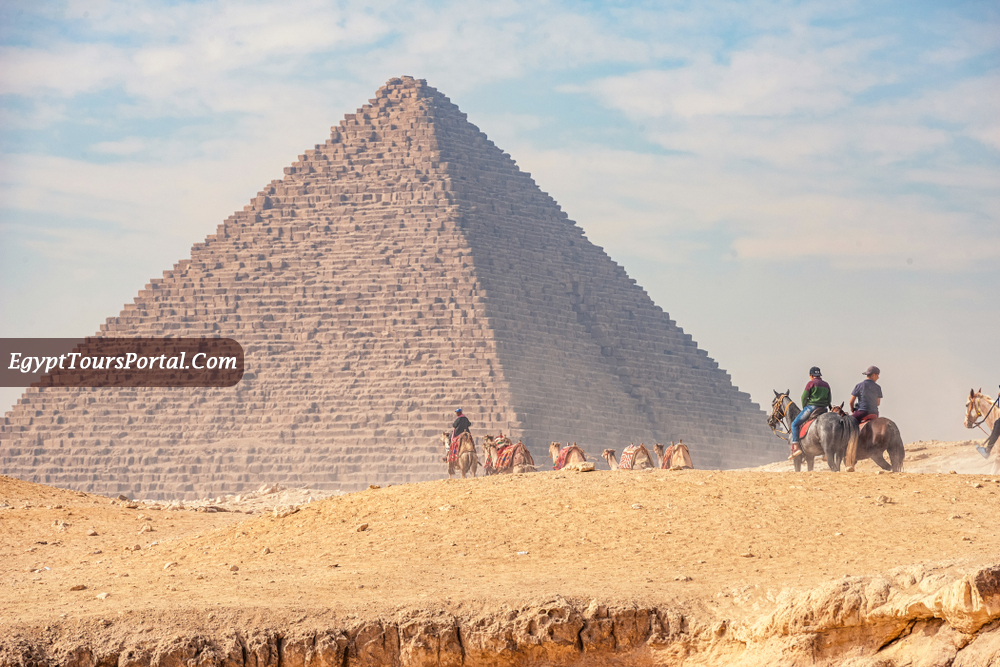
Location of the Pyramids - Egypt Tours Portal

The most important element in constructing a pyramid is choosing the right location. The pyramids were constructed on the west side of the Nile River, where the sunset was believed to be, which was believed to be where the dead entered the underworld. The location also needed to be on higher ground to avoid the danger of flooding at the time of the Nile's inundation.

The location must be in close proximity to the Nile River and on a firm rock base capable of supporting the massive weight of any Pyramids without cracking or showing signs of structural weakness. More importantly, it must be within close reach of the current capital.

The Base of the Pyramids
The Base of the Pyramids - Egypt Tours Portal

The pyramids were constructed using locally quarried limestone, which was the main material of choice. A higher quality of limestone quarried near modern Cairo was used for the outer casing. Granite, quarried near Aswan, was used in the construction of architectural elements of the roofs and the burial chamber, as well as in the outer casing, like the King Menkaure Pyramid. The workers began their work by preparing a strong foundation by removing the loose sand from the rock base, which was made completely flat.

The flat base was accomplished by building low mud walls all around the base and cutting the channels in a grid pattern over the surface. The channels were then filled with water, and the level at which the water reached was marked. After the water was drained, all the sticking-out rocks were removed, and any void was filled with stones to make the surface perfectly flat.

The Architecture of the Pyramids
The Architecture of the Pyramids - Egypt Tours Portal

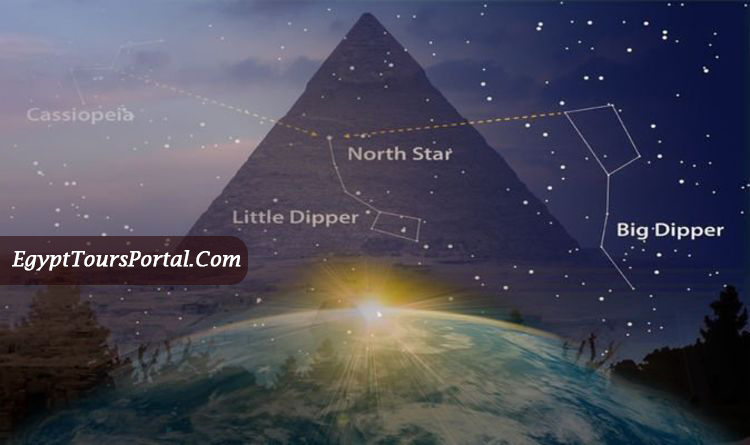
The ancient Egyptians were highly advanced in the field of astronomy, and each side of the pyramid was designed to face one of the cardinal points. The ancient Egyptian builders observed the rising and setting of the northern star on the horizon, which explains why they began by establishing the true north first, then the rest of the other directions.

They were able to make all four sides exactly the same length and in the right perfect corners. They bisected the angle, thus obtaining north and south lines; they also used their instruments to draw the right angles and find the east and the west angles.

Blocks Placement of the Pyramids
Blocks Placement of the Pyramids - Egypt Tours Portal

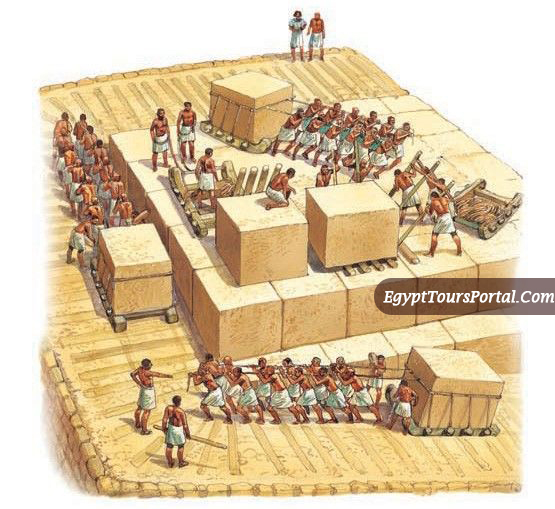
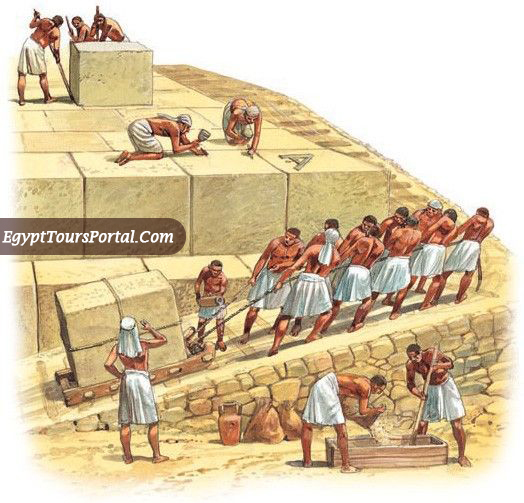
One of the biggest mysteries surrounding the construction of the pyramid is the process by which the massive limestone blocks weighing 2.2 tons were moved across the desert. A wall painting on a tomb dating to 1900 BC depicts 170 men dragging a huge state using ropes attached to a sled, and in front of it are men pouring water over the sand in order to reduce friction and make it easier to operate the sled. The ancient Egyptians understood that adding water to the sand increased its stiffness to drag the sleds more easily across the surface.

They calculated the amount of water necessary to reduce the friction depending on the type of sand and the optimal amount of waterfalls between 2% and 5% of the complete value of the sand. This discovery is highly important as it not only explains how the blocks were moved but also helps the researchers understand the behavior of other granular materials like coal or even asphalt or concrete.

Construction Method of the Pyramids

Construction Method of the Pyramids - Egypt Tours Portal

One of the most acknowledged theories on what method was used to raise the blocks among the Egyptologists is ramps. The Greek historian shows in his writings the use of levers to raise the blocks from one level to the next. As the pyramids grew in size, so did the ramps to the point where the ramp had to be as huge as the pyramid.

Internal ramps were also used as the grand gallery is believed to have acted as a trolley guide for counterbalance weights. There is also a theory that states that a form of limestone concrete was cast in wooden molds, and then it would transform from a wet to a hard substance after undergoing a chemical reaction. The method of the pyramids is completely shrouded with mystery, and many theories are still open to discussion.

Tours to the Pyramids

Egypt has always been the home of the impossible; within the heart of the country in Cairo lies the miraculous Pyramids of Giza, where the impossible is yet to be explained. The cities of Egypt like Giza, Cairo, Aswan, and Luxor are the purest reflection of how the ancient Egyptians' vision was extraordinary, so we offer you the chance to enjoy a marvelous trip to Egypt with the Nile river cruise. Also, our Cairo day tours are the best way to book your trip if you are in Cairo. Check our Egypt day tours if you are in any of Egypt's top destinations to arrange your tours.

ETP TEAM

Egypt Tours Portal is dedicated to preserving and sharing the rich history, culture, and mysteries of ancient Egypt, helping travelers and history enthusiasts explore Egypt’s most iconic destinations and monuments. The team consists of experienced Egyptologists, archaeologists, historians, travelers, content creators, marketers, consultants, and explorers with 5–20 years of expertise in their respective fields.

The website provides accurate, regularly updated information developed by qualified experts and supported by trusted sources to ensure reliability and educational value. Drawing on more than 39 years of industry knowledge and resources, Egypt Tours Portal offers a wide range of travel services, including Egypt tours, Nile cruises, day tours, shore excursions and multi-country tours. Their services have earned positive reviews from travelers, recognition through awards, and mentions by respected news outlets and travel blogs, delivering both educational and memorable travel experiences across Egypt.
Leave a Comment

Don't Just See Egypt. Experience It.

From private sunrise viewings at Giza to dining with local families in Aswan, unlock an extraordinary journey crafted entirely around your pacing and desires.

Private Certified Egyptologists Handpicked Heritage Stays 100% Tailor-Made Pacing Zero Hidden Service Fees
Explore Egypt Tours
Pick Your Journey

Related Tours to This Article

Half Day Giza Plateau Signature Experience Tour
IATA-Egypt-Tours-Portal

Half Day Giza Plateau Signature Experience Tour

Enjoy a smoother Giza Plateau Signature Experience tour with expert guiding, golf cart access, refreshments, Priority Pass options, and upgraded routes.
Giza
1/2 Day Private Tour
Keep Exploring

What to Read Next

Dive deeper into this topic. Discover more insights, expert advice, and inspiration in our recommended articles.
Pyramid of Djedefre
Sun, 18 Apr 2021

Pyramid of Djedefre

The pyramid of Djedefre was considered to be one of the most beautiful of all the pyramids. Read more facts about the Djedefre pyramid.

Pyramid Of Unas
Wed, 21 Apr 2021

Pyramid Of Unas

Uncover King Unas'pyramid: Its location, architecture, intricate texts, restoration, and profound contents revealed in ancient incantations.

Pyramid of Teti
Mon, 19 Apr 2021

Pyramid of Teti

Unravel the legacy of King Teti Pyramid. Explore history, architecture, texts, and the intriguing necropolis at Teti Pyramid. Discover its wonders today!

Black Pyramid of Amenemhat III
Thu, 06 May 2021

Black Pyramid of Amenemhat III

Explore Amenemhat III's Black Pyramid in Dahshur, Giza. Delve into its history, architecture, location, contents, and the fascinating Pyramidion!

Pyramid of Sahure
Tue, 20 Apr 2021

Pyramid of Sahure

The pyramid of Sahure was once known as Kha-ba Sahure, which means the rising of the Spirit of Sahure. Read more about the pyramid of Sahure!

Giza Pyramids Complex: History, Construction, Layout, and Facts
Sun, 19 Nov 2017

Giza Pyramids Complex: History, Construction, Layout, and Facts

Explore the Giza Pyramids Complex, its history, layout, construction, hidden secrets, and key facts about Egypt’s most iconic ancient wonder.

Menkaure Pyramid
Mon, 12 Apr 2021

Menkaure Pyramid

Uncover the history and architectural genius of the Menkaure Pyramid. Learn about King Menkaure's pyramid secrets.

The Great Sphinx
Sun, 19 Nov 2017

The Great Sphinx

Prefer to explore info about the great Sphinx, want to know more about the Sphinx's nose, the Sphinx of Giza, open the article to read more.

The Great Pyramid of Giza: Ancient Engineering Marvel & Celestial Wonder
Mon, 25 Dec 2017

The Great Pyramid of Giza: Ancient Engineering Marvel & Celestial Wonder

Discover the Great Pyramid of Giza’s history, architectural marvels, construction secrets, and mysterious finds that stood the test of time for over 4500 years.

The Bent Pyramid: Egypt's Landmark of Architectural Innovation
Tue, 16 Jul 2019

The Bent Pyramid: Egypt's Landmark of Architectural Innovation

Explore the most important information & facts about the Bent Pyramid of Sneferu read all you need to know about the Bent Pyramid of Dahshur.

Mysteries Facts About the Pyramids
Sun, 17 Feb 2019

Mysteries Facts About the Pyramids

There are many secret facts about the Pyramids, the theories of construction the Pyramids and more, open our article to read more about them.

How Were the Pyramids Built?
Sat, 13 Apr 2019

How Were the Pyramids Built?

Solved, how the Pyramids were built, explore the top information about this question, read more about the workforce, architecture, and more..

The Meidum Pyramid
Mon, 02 Nov 2020

The Meidum Pyramid

The Meidum pyramid is without a doubt is the most unusual-looking pyramid, Read more facts about the Meidum pyramid architecture.

Pyramid of Khafre
Sun, 11 Apr 2021

Pyramid of Khafre

The pyramid of Khafre is known in greek as Chephren and is the second tallest pyramid. Read more facts about Khafre pyramid history.

Pepi I Pyramid Complex
Tue, 04 May 2021

Pepi I Pyramid Complex

Explore the enigmatic Pepi I Pyramid: uncover its history, location, structure, texts, and the complex content within. Discover Pepi I's intriguing legacy.

Book With Confidence

Why Travel With Egypt Tours Portal

The "Boutique" Advantage

01

We offer private, customizable journeys tailored to your pace, moving away from the "factory-style" mass-market tours.
Gold-Standard Guides

02

Travel with elite, licensed Egyptologists who act as storytellers, not just tour leaders.

Seamless Logistics

03

24/7 "high-touch" support with a dedicated coordinator for every aspect of your multi-vendor itinerary.

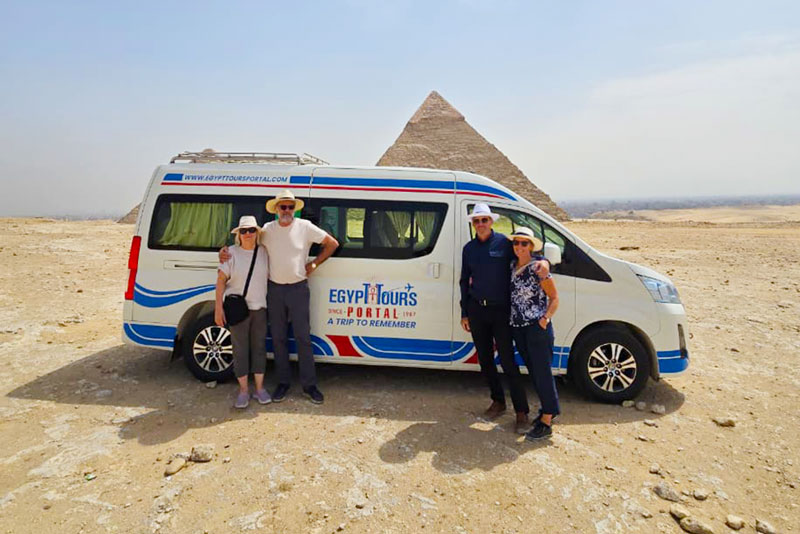
2026/04/egypt-tours-portal-clients-at-giza-pyramids.jpg
04

True Customization

Our "Tailor-Made" planning workflow ensures your trip matches your specific priorities and interests.

05

Luxury & Comfort

We prioritize premium guide quality and vetted, safe hotels to ensure a stress-free environment.

06

Protection & Security

Advanced safety protocols and 24/7 emergency contact for total peace of mind during your adventure.

Book With Confidence.

Book your trip with peace of mind knowing every detail is handled with care.

Enjoy flexible options, secure payments, and dedicated support to make your journey smooth and worry-free from start to finish.

Read Our Confidence Policy

Pay Monthly

Split your total trip cost into easy monthly installments, making it more flexible and affordable for your budget.

Fast Booking

Complete your booking in just a few simple steps with a quick and streamlined process designed to save you time.

24/7 Support

Our dedicated support team is available around the clock to assist you before, during, and after your trip.

Rated 5 Stars

Highly rated by thousands of travelers for quality service, reliable experiences, and unforgettable journeys.

Pay Monthly

Split your total trip cost into easy monthly installments, making it more flexible and affordable for your budget.

Fast Booking

Complete your booking in just a few simple steps with a quick and streamlined process designed to save you time.

24/7 Support

Our dedicated support team is available around the clock to assist you before, during, and after your trip.

Rated 5 Stars

Highly rated by thousands of travelers for quality service, reliable experiences, and unforgettable journeys.

Traveler Video Reviews

Inside The Experience: Watch Authentic Traveler Stories Before Booking

Clients Feedback
https://dynamic-media-cdn.tripadvisor.com/media/photo-o/12/04/24/3e/rk-w.jpg
Erin W
Kiawah Island, South Carolina

"We had a great experience touring Aswan, Edfu, and Luxor with Mahmoud. I would highly recommend him as a guide. He adapted to our needs (2 teenagers) and kept everything interesting. He was always prompt, professional, and easy to communicate with. He was also very prompt answering questions via WhatsApp"

Read More
https://dynamic-media-cdn.tripadvisor.com/media/photo-o/1a/f6/f1/79/default-avatar-2020-21.jpg
Estelle V

"We would like to share our wonderful experience with Egypt Tours Portal. From the very first quote to our final airport drop-off, we were impressed by the professionalism, organization, and excellent communication from Walaa and the entire team. Our tour guides in both Luxor (“Habibi” was the best!) and Cairo were incredibly knowledgeable, helpful, and passionate about sharing Egypt’s history and treasures with us. We especially appreciated how thoughtfully the itinerary was planned — allowing us time to rest in the afternoons, scheduling visits during the cooler hours, and remaining flexible to accommodate our needs. Everything was smooth, well-organized, and made our trip truly memorable. We wholeheartedly recommend Egypt Tours Portal to anyone looking to discover the incredible history, culture, and wonders Egypt has to offer."

Read More
https://dynamic-media-cdn.tripadvisor.com/media/photo-o/1a/f6/e7/3d/default-avatar-2020-55.jpg
Tim K

"We had an outstanding time touring Luxor with our guide, Essra. She was knowledgeable, professional, and incredibly kind throughout the entire experience. Her explanations of Karnak Temple, Luxor Temple, the Valley of the Kings, Hatshepsut Temple, and the Colossi of Memnon brought Egypt's history to life. What really set her apart was her thoughtfulness. She made sure we stayed comfortable in the heat, surprising us with water and refreshments. She also took us to an excellent local restaurant that we never would have found on our own. Her attention to detail, genuine care, and passion for sharing Egypt made this one of the highlights of our trip. We highly recommend her to anyone visiting Luxor. On another note, the drivers we had each day were great. So professional, always on time and personable."

Read More
https://dynamic-media-cdn.tripadvisor.com/media/photo-o/1a/f6/e2/a7/default-avatar-2020-44.jpg
Will S
Bluff Park, Alabama

"We had a great vacation. Omar Haridi did our Nile Cruise and Zizi did our Cairo tour. They were amazing and very knowledgeable."

Read More
https://dynamic-media-cdn.tripadvisor.com/media/photo-o/1a/f6/ed/00/default-avatar-2020-4.jpg
Mira F

"The best experience of my lifetime! Nour, the tour guide was absolutely amazing! Went over and beyond thinking about every little thing. I had a mishap and Egypt Air overbooked my flight and bumped me to a later flight causing me to miss an entire day of activities. Nour made sure I got to do every single thing I missed that first day. But that’s not all: his knowledge of old Egypt is unparalleled, he truly brings Egypt (Aswan Luxor) alive. I’ve traveled all over the world and met many tour guides: Nour stands apart from all of them. He’s also considerate, caring and genuinely wants his guests to enjoy the trip and learn the most about the incredible history of Egypt. He’s also funny and genuinely great to be around. Please, do yourself a favor when booking a trip in Upper Egypt and ask for Nour. Hands down the best guide ever!"

Read More
https://dynamic-media-cdn.tripadvisor.com/media/photo-o/1a/f6/f6/0d/default-avatar-2020-34.jpg
Paul B
Hook, United Kingdom

"Excellent guide Mr Mohamed Osman, who was incredibly knowledgeable and very informative. Couldn't ask for more. Food on day 1 was ok, but much better at lunch on day 2. Hotel was excellent. Also our driver was excellent. All in all a great experience. Would highly recommend."

Read More
https://dynamic-media-cdn.tripadvisor.com/media/photo-o/1a/f6/eb/6d/default-avatar-2020-19.jpg
Marianna A

"Our experience in Egypt, especially in Luxor and Aswan, was truly unforgettable, and a huge part of that was thanks to our incredible guide Omar. We cannot recommend him highly enough. From the moment we met him, it was clear that he was exceptionally knowledgeable, professional, and deeply passionate about Egyptian history and culture. What made our tour extraordinary was that our guide is not only a master’s in Egyptology but is also currently pursuing a PhD in Egyptology. His depth of knowledge was absolutely remarkable. He is also very creative and artistic. Every temple, tomb, monument, and historical site came alive through his explanations. He did not simply recite facts, he explained the historical context, symbolism, religious beliefs, architecture, and fascinating stories behind everything we saw. It truly felt like we were traveling through ancient Egypt with a real scholar and expert by our side. He brought ancient Egyptian history to life by assigning us the roles of Egyptian gods and legendary heroes. Through these interactive mini-plays, we were able to experience, understand, and truly connect with the stories he shared. In Luxor, visiting Karnak Temple, Luxor Temple, the Valley of the Kings, and Hatshepsut Temple became an unforgettable educational and emotional experience because of the way he explained the history in such an engaging and easy-to-understand manner. In Aswan, his insights about Philae Temple, Nubian history, and ancient Egyptian civilization added so much depth to our trip. He answered every question thoughtfully and with incredible detail, and you could genuinely feel his passion for Egyptology. Beyond his academic expertise, he was one of the kindest and most caring people we met during our travels. He constantly made sure we were comfortable, safe, hydrated, and enjoying ourselves. He was patient, attentive, organized, and always willing to help with anything we needed. His warm personality and kindness made us feel welcomed not just as tourists, but as friends. He also paced the tours perfectly, allowing us enough time to truly appreciate each site without ever feeling rushed. His professionalism, friendliness, and genuine care created a relaxed and enjoyable atmosphere throughout the trip. Thanks to him, our visit to Egypt became far more than a vacation. It became an unforgettable journey into history and culture. If you are planning to visit Luxor, Aswan, or anywhere in Egypt, choosing this guide will be one of the best decisions you can make. He is truly exceptional, and we feel incredibly lucky to have had him as our guide. Thank you again for such an amazing experience. We will never forget it. Marianna and Khris"

Read More
https://dynamic-media-cdn.tripadvisor.com/media/photo-o/1a/f6/f0/d5/default-avatar-2020-17.jpg
James H

"This has been a tour agency and guides I can’t wait to give a glowing review to and to recommend to friends and family. Both Riham and Walid were happy to help coordinate excursions and share a wealth of knowledge. 10/10 experience"

Read More
https://dynamic-media-cdn.tripadvisor.com/media/photo-o/1a/f6/ec/a2/default-avatar-2020-3.jpg
H D

"We had a wonderful experience with the 5 day cruise. The price is wry reasonable. The best part is that the visits are done in very small numbers with a guide. It is almost like having a private guide. The food was good with lots of variety and all the staff members are very friendly and helpful. Omar Haradi, our guide was very knowledgeable and very generous with his time and with sharing his knowledge."

Read More
https://dynamic-media-cdn.tripadvisor.com/media/photo-o/1a/f6/f2/59/default-avatar-2020-24.jpg
Marlina
West Palm Beach, Florida

"We just returned home from an incredible trip to Egypt, and we cannot say enough good things about Egypt Tours. From the moment we booked our trip until the day we flew home, their communication, organization, and attention to detail were outstanding. Our adventure began in Cairo, where we were warmly welcomed at the airport by our guide, Abdulrahman Mosbah. He immediately made us feel comfortable and at ease, and our Nile River sunset cruise was the perfect introduction to Egypt. Abdul’s warm personality and infectious enthusiasm made our first day both fun and memorable. The following day, we toured with Reda Elgendy, who brought the pyramids to life with fascinating stories and historical insights. Seeing the Grand Egyptian Museum (GEM) was truly breathtaking and a highlight of our time in Cairo. In Aswan, we were greeted at the airport by Ahmed Haggag, who guided us over the next two days. Ahmed was incredibly knowledgeable, thorough in his explanations, and always kept us entertained with his great sense of humor. We learned so much while enjoying every moment of our time with him. Our final stop was Luxor, where we met Ghada Kamel. Saving the best for last, Ghada was absolutely exceptional. Her passion for Egypt’s history and culture made our visits to the temples and the Valley of the Kings unforgettable. She was engaging, informative, and truly outstanding. This trip exceeded all of our expectations. Not only did we experience some of the world’s most amazing historical sites, but each of our guides also shared valuable insights into Egyptian culture and daily life. We returned home with wonderful memories, a deeper appreciation for Egypt, and gratitude for the amazing team at Egypt Tours. We highly recommend Egypt Tours to anyone planning a trip to Egypt. It was truly the trip of a lifetime!"

Read More
https://dynamic-media-cdn.tripadvisor.com/media/photo-o/1a/f6/de/5a/default-avatar-2020-36.jpg
Alejandro M

"We loved it, great experience and treatment. Our guide Noah had great knowledge of the subject. Thank you very much."

Read More
https://dynamic-media-cdn.tripadvisor.com/media/photo-o/1a/f6/f0/d5/default-avatar-2020-17.jpg
Jeff T

"Our trip in May 2026 was fantastic! We saw all the major wonders of Egypt! Our incredibly knowledgeable guide Walid Ahmed met us at the hotel and was great at explaining all the particular uniqueness of each tomb and temple, inserting background myths and stories, keeping our tour on track, taking and sharing so many pictures so we could be in them as a couple and helping us navigate local customs. We strongly recommend Egypt, the tour and Walid!"

Read More
https://dynamic-media-cdn.tripadvisor.com/media/photo-o/1a/f6/e7/3d/default-avatar-2020-55.jpg
Joe P

"We had a wonderful week long vacation in Egypt, split between Cairo and Luxor. The tour was very professionally run with excellent communication starting weeks before our arrival and then nearly daily while in Egypt. A highlight was our English-speaking guide in Luxor, Walid Ahmed, who was extremely knowledgeable and exceptionally kind. The tour was flexible and accommodating, allowing last minute special detours and restaurant choices. Overall, it was one of the best vacations of our life."

Read More
https://dynamic-media-cdn.tripadvisor.com/media/photo-o/1a/f6/f1/79/default-avatar-2020-21.jpg
Damien B

"We had Ahmed Refaat as our family guide in Cairo, and he truly made our trip to Egypt unforgettable. His positive attitude, passion for Egypt’s history and culture, and incredible patience made all the difference throughout our stay in Cairo. Ahmed brought every site to life with fascinating explanations and was always attentive to our needs, making the experience enjoyable for both adults and children. We especially recommend him for visits to Saqqara and the Grand Egyptian Museum (GEM), where his deep knowledge and enthusiasm greatly enhanced our understanding and appreciation of these extraordinary places. Without any hesitation, we highly recommend Ahmed Refaat to anyone visiting Egypt. Thank you again for helping create such wonderful memories for our family!"

Read More
https://dynamic-media-cdn.tripadvisor.com/media/photo-o/1a/f6/ef/73/default-avatar-2020-13.jpg
Departure20554993605

"Knowledgeable guide, clean vehicle, interesting stories about the sites. Tour guide: Muhmmed Abd El-aal was very nice to be in the company of, dry attentive and honest."

Read More
HELP CENTER

Frequently Asked Questions

The ancient Egyptians constructed the pyramids as tombs for their royal members like kings, or pharaohs. Egyptian beliefs state that when the pharaoh died, his spirit or soul remained essential in the afterlife. In addition to the pharaoh's mummy, the pyramids contained all the items that the pharaoh would need like food, furniture, and others in the afterlife.
Ancient Egyptian Pyramids were built for religious purposes, a passage to the afterlife. The ancient Egyptians were one of the first civilizations on earth to believe in an afterlife and act on it. They believed that a second self-called the ka lived within every human being and when the physical body demised, the ka enjoyed eternal life.
What makes how the pyramid was built a complete mystery is the complete lack of information when it comes to the construction techniques, as despite all the extensive research and archaeological discoveries, there is still no consensus on the exact methods and tools employed by the ancient Egyptians in constructing these colossal structures. Moving and precisely placing millions of massive stones must have taken sophisticated techniques that haven't been fully documented for over 4500 years, which makes the entire subject a complete enigma. All that was left with are a number of theories and hypotheses that try to explain the creation of this wonder that would be near-impossible to build in the current state and time.
The pyramids of Egypt were built over a very long period, ranging from the 26th century BCE to the 17th century BCE. The Great Pyramid of Giza is considered to be the largest pyramid ever, which is estimated to have been built around 2560 BC, which makes it 4500 years, while the oldest pyramid to be built is the step pyramid of Djoser, which was completed in 2650 BC.
Despite our understanding of ancient Egyptian architecture and engineering, which has completely advanced, unfortunately, we do not have any clear answer; we have a series of theories that could hold the answer. Over time, researchers and Egyptologists were able to come up with a number of important facts as all the limestone and granite were extracted from nearby quarries using copper chisels and hammers, plus they likely used sleds lubricated with water or fat to move the stones on ramps constructed of earth and debris. Also, Levers, rollers, ramps, and inclines are believed to have been used to maneuver the stones into place. There is also evidence that the Nile River played a role in transporting the stones through the upper and lower Egypt. Also, evidence discovered states that the builders were not slaves but paid laborers with specialized skills in quarrying, transporting, and setting stones.
The theory that the pyramids were built by slave labor has been debunked by archaeological evidence, thus proving to be more skilled workers, builders, and artisans who were likely organized into labor groups for specific periods of service. Archaeological excavations of the workers' village near the Giza complex provide evidence of this, as well as insights into their living conditions and treatment. Skeletons unearthed at the site reveal fractures that were carefully treated, indicating a level of care for the workers' well-being. Also, the workers consumed a diet richer in protein than the general population, suggesting they were better nourished and received better healthcare, which was inconsistent with the harsh conditions expected of slaves. Hieroglyphic inscriptions in the worker’s village depict organized workforces with supervisors and skilled laborers, not slaves.
The construction of the pyramid is a very highly debated subject as everything remains a subject of debate. The workforce of the Great Pyramid is about 400000 paid workers who functioned in different shifts. Workers extracted all the limestone and granite needed for the pyramids from nearby quarries, employing copper chisels and hammers. To transport the massive stones, they likely utilized Sledges lubricated with water or fat, moving them along ramps made of earth and debris. Levers, rollers, ramps, and inclines were employed to maneuver the stones into position. Evidence suggests that the Nile River also played a crucial role in transporting the stones across Upper and Lower Egypt. Advance tools like plumb bobs and sighting instruments were made to ensure all alignment and angles were perfect. Each pyramid may have employed different techniques across the spanning of time which depended on the location and the time period.

The Pyramids were built during the Old Kingdom period of Ancient Egypt (2700–2200 BC) primarily as monumental tombs for the pharaohs. The construction likely involved a combination of skilled labor, advanced planning, careful measurement, skilled craftsmanship, and innovative engineering techniques.
The absolute symmetry and precision of the great pyramids of Egypt are due to incredible advanced engineering and architectural brilliance. Archaeologists and historians continue to study the available evidence in an attempt to unravel the mystery behind its mastery and perfect state beyond the boundaries of time. Stonemasons possessed advanced skills in cutting and shaping stones. They likely used tools like plumb bobs and sighting instruments to ensure alignment and angles. The pyramid was built layer by layer, allowing for continuous adjustments and corrections.
The pyramids were built between 2650 BC and 2400 BC to be the final resting place for the pharaohs of the 3rd and 4th dynasties. Construction involved a combination of skilled labor, advanced planning, and innovative engineering techniques.
Archaeological evidence suggests the pyramid workforce comprised skilled laborers, artisans, and engineers who were organized into teams and employed for specific periods, receiving compensation and provisions for their labor.
Yes, overwhelming evidence confirms that humans built the Egyptian pyramids, which is based on the fact that Extensive excavations around the pyramids have unearthed tools, implements, and worker settlements, all consistent with human construction techniques. Inscriptions and artwork depict the building process, showcasing human laborers involved in quarrying, transporting, and positioning stones. Analysis of worker cemeteries near the pyramids reveals signs of good health and proper care, incompatible with the harsh conditions expected of slaves often portrayed in fictionalized accounts. The pyramids were built during well-documented periods of Egyptian history, with established societal structures and technological advancements capable of supporting such large-scale projects.
The construction of the Pyramids involved skilled craftsmen, laborers, engineers, builders, and architects who worked under the direction of the pharaohs and their appointed officials.
No, the Pyramids were built thousands of years before the advent of Islam. They were constructed during ancient Egypt's Old Kingdom period, long before the rise of Islam in the region. The oldest pyramids date back to the 26th century BCE, belonging to the Old Kingdom of Egypt, long predating any Islamic presence in the region.
The notion of aliens building the pyramids is a popularized myth with no scientific backing. This theory often stems from misconceptions about the pyramids' age, complexity, the capabilities of ancient civilizations, and the stupidity of unintellectual folks.
Yes, the pyramids were built significantly before Jesus Christ. The construction of the pyramids spanned from the 26th century BCE to the 17th century BCE, whereas Jesus is estimated to have lived between 4 BC and 30 AD. This translates to a gap of several millennia between the pyramid-building era and the life of Jesus.
Throughout Egypt's history, there have been many attempts where different kinds of natural disasters like earthquakes, wind erosion, and sandstorms have caused some damage over time. Plus, in the Fatimid and Mamluk periods, limestone and white granite were removed from the pyramids over time to create all the great Islamic monuments found all over Cairo.
While the Pyramids have remained intact for thousands of years, many believe that they are indestructible, but this is not the case. Natural disasters, such as earthquakes or flooding, as well as human activities, could potentially damage the structures over time, which explains all the efforts to preserve and protect the Pyramids to ensure their survival for future generations.
The entire country of Egypt deserve to be explored with its every heavenly detail but there are places that must be seen before any other such as the breathtaking Hurghada's red sea, The wonders of Cairo the pyramids of Giza, the great sphinx, the Egyptian Museum, Khan El Khalili Bazaar, the wonders of Luxor like Valley of the Kings, Karnak & Hatshepsut temple and the wonders of Aswan such as Abu Simbel temples, Philea temple, Unfinished obelisk and The Wonders of Alexandria like Qaitbat Citadel, Pompey's Pillar and Alexandria Library. Read more about the best places to visit in Egypt.
If you want to apply for a Visa On Arrival that lasts for 30 days then you should be one of the eligible countries, have a valid passport with at least 6 months remaining and pay 25$ USD in cash, as for the E-Visa for 30 day you should have a valid passport for at least 8 months, complete the online application, pay the e-visa fee then print the e-visa to later be presented to the airport border guard. You could also be one of the lucky ones who can obtain a free visa for 90 days. Read more about Egypt travel visa.
Egypt has a variety of delicious cuisines but we recommend "Ful & Ta'meya (Fava Beans and Falafel)", Mulukhiya, "Koshary", a traditional Egyptian pasta dish, and Kebab & Kofta, the Egyptian traditional meat dish. Read more about Top Traditional Egyptian Food.
The best time to travel to Egypt is during the winter from September to April, as the climate becomes a little tropical, accompanied by a magical atmosphere of warm weather with a winter breeze. You will be notified in the week of your trip if the Climate is unsafe and if any changes have been made. Read more about Best Time to Visit Egypt.
You should pack everything you could ever need in a small bag so you can move easily between your destinations. Read more about What to Pack for Your Egypt Tour.
We have been creating the finest vacations for more than 20 years around the most majestic destinations in Egypt. Our staff consists of the best operators, guides and drivers who dedicate all of their time & effort to make you have the perfect vacation. All of our tours are customized by Travel, Financial & Time consultants to fit your every possible need during your vacation. It doesn't go without saying that your safety and comfort are our main priority and all of our resources will be directed to provide the finest atmosphere until you return home.
You will feel safe in Egypt as the current atmosphere of the country is quite peaceful after the government took powerful measures like restructuring the entire tourist police to include all the important and tourist attractions in Egypt. Read more about is it safe to travel to Egypt.
Wear whatever feels right and comfortable. It is advised to wear something light and comfortable footwear like a closed-toe shoe to sustain the terrain of Egypt. Put on sun block during your time in Egypt in the summer to protect yourself from the sun.
The best activity is by far boarding a Nile Cruise between Luxor and Aswan or Vise Versa. Witness the beauty of Egypt from a hot balloon or a plane and try all the delicious Egyptian cuisines and drinks plus shopping in old Cairo. Explore the allure and wonders of the red sea in the magical city resorts of Egypt like Hurghada and many more by diving and snorkeling in the marine life or Hurghada. Behold the mesmerizing western desert by a safari trip under the heavenly Egyptian skies.
There are a lot of public holidays in Egypt, too many to count, either religious or nation, the most important festivals are the holy month of Ramadan, which ends with Eid Al Fitr, Christmas, and New Year's Eve. Read more about festivals & publich holidays in Egypt.
Egypt is considered to be one of the most liberal Islamic countries but it has become a little bit conservative in the last couple of decades so it is advised to avoid showing your chest, shoulders or legs below the knees.
Arabic is the official language and Most Egyptians, who live in the cities, speak or understand English or at least some English words or phrases. Fewer Egyptians can speak French, Italian, Spanish, and German. Professional tour guides, who work in the tourism sector, are equipped to handle visitors who cannot speak Arabic and they will speak enough English and other languages to fulfill the needs of all our clients.
The fastest way is a car, of course, a taxi. If you are in Cairo ride a white taxi to move faster or you could board the fastest way of transportation in Egypt metro if the roads are in rush hour.
The temperature in Egypt ranges from 37c to 14 c. Summer in Egypt is somehow hot but sometimes it becomes cold at night and winter is cool and mild. The average of low temperatures vary from 9.5 °C in the wintertime to 23 °C in the summertime and the average high temperatures vary from 17 °C in the wintertime to 32 °C in the summertime. The temperature is moderate all along the coasts.
It is the home of everything a traveler might be looking for from amazing historical sites dating to more than 4000 years to enchanting city resorts & beaches. You will live the vacation you deserve as Egypt has everything you could possibly imagine.
Our Partners

Partners Who Share Our Vision of Quality Travel

Partner Logo
Partner Logo
Partner Logo
Partner Logo
Partner Logo
Partner Logo
Partner Logo
Partner Logo
Partner Logo
Partner Logo