



Summary
- Nefertiti was the Great Royal Wife of Akhenaten and one of the most powerful queens of Egypt’s 18th Dynasty.
- Her origins remain uncertain, but she became central to the Amarna Period and the worship of Aten.
- She and Akhenaten had six daughters and appeared together in unusually intimate and symbolic royal family scenes.
- Nefertiti may have ruled as pharaoh under the name Neferneferuaten, though this remains debated.
- Her death, tomb, and mummy are still unknown, while her famous Berlin bust made her a global icon.
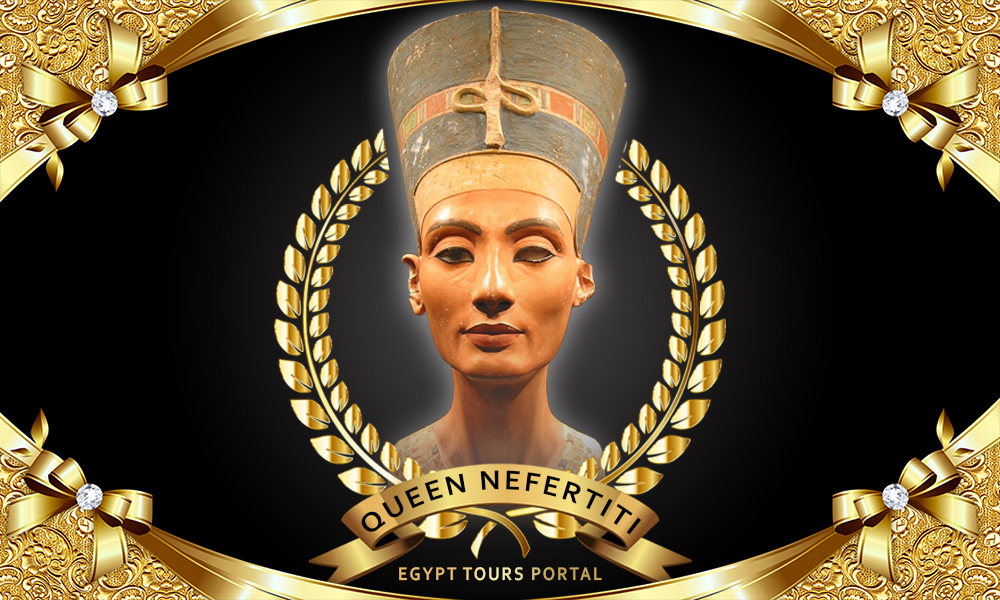
Queen Nefertiti (1370-1336 BCE) is synonymous with beauty and greatness for over a century, since her bust became the center of attention. The queen lived in the most transformative times as she and her husband, Akhenaten (1353–1336 BC), sought to change the main foundational pillars of ancient Egyptian society, which was their religion. Queen Nefertiti has lived and seen what a few queens have in their lifetime when it comes to artistic expression and a one-of-a-kind religious revolution, plus she lived in the wealthiest period of Ancient Egyptian Civilization. Even her so-called son, Tutankhamun, is cursed with fame due to all the mysteries surrounding his life. Nefertiti deserves all the praise and respect as she was able to carve her name in the history book like no other.
Enjoy The Illuminating Answer To Who Is Queen Nefertiti?
Queen Neferneferuaten Nefertiti was one of the most powerful and legendary royal women of ancient Egypt. She lived during the 18th Dynasty at the dawn of the New Kingdom, around the 14th century BCE, and was the Great Royal Wife of Amenhotep IV, who later changed his name to Akhenaten. Her life belongs to the dramatic Amarna Period, a short but revolutionary era when Egypt’s religion, art, politics, and royal imagery were transformed around the worship of the sun disk god, Aten.
Nefertiti is often remembered today because of her world-famous painted bust in Berlin, but her historical role was far greater than beauty alone. She was one of the most visible queens in Egyptian art, appearing in temples, palace scenes, private altars, and ritual images. In several scenes, she performs actions normally associated with kings, such as making offerings directly to the god and smiting Egypt’s enemies. This unusual visibility suggests that Nefertiti held an exceptional level of religious and political authority beside Akhenaten.
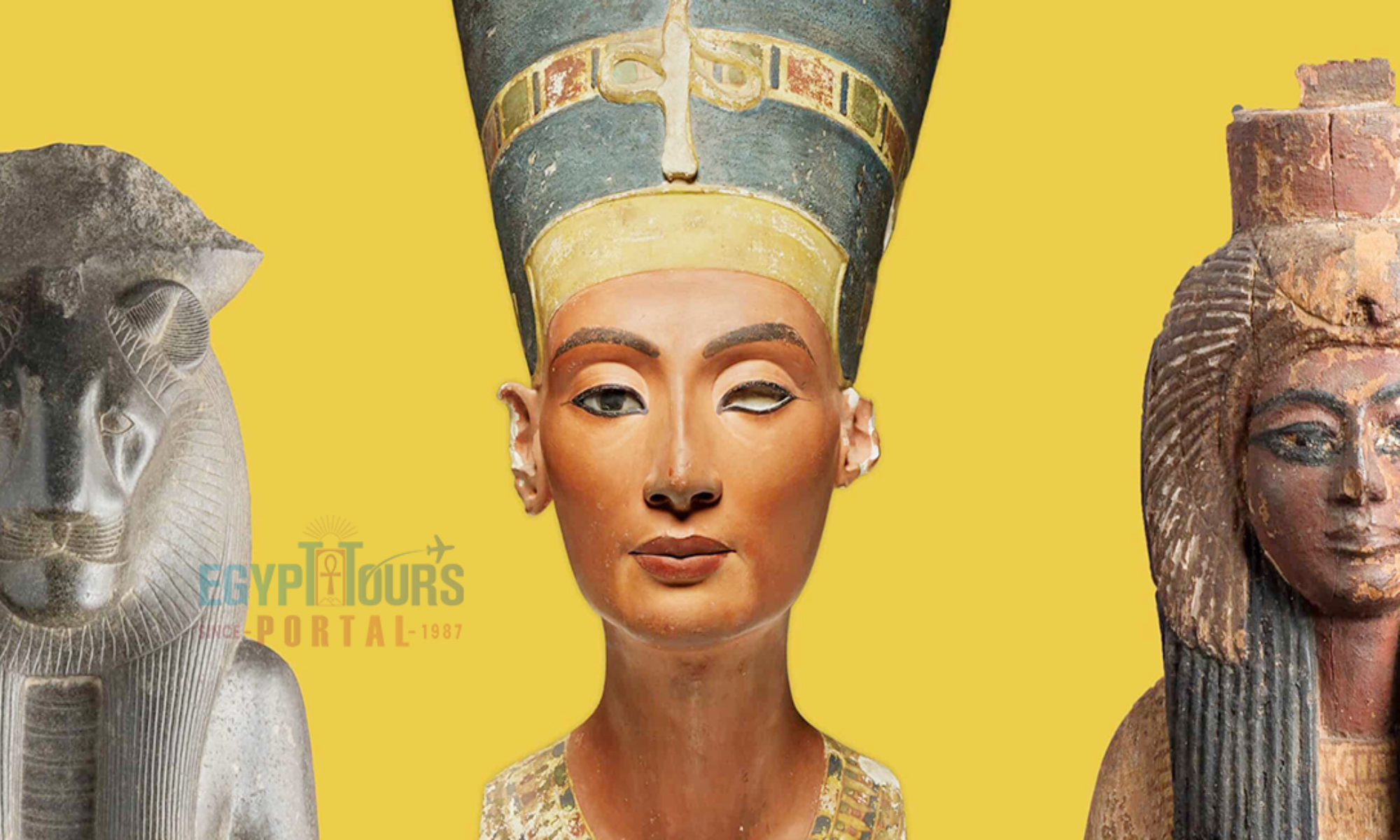
Ancient Egyptian Women: How Women Shaped Society, Culture, and Power in Ancient Egypt
Learn about all the Women of the ancient Egyptian civilization
Discover the Many Titles and Names of Queen Nefertiti
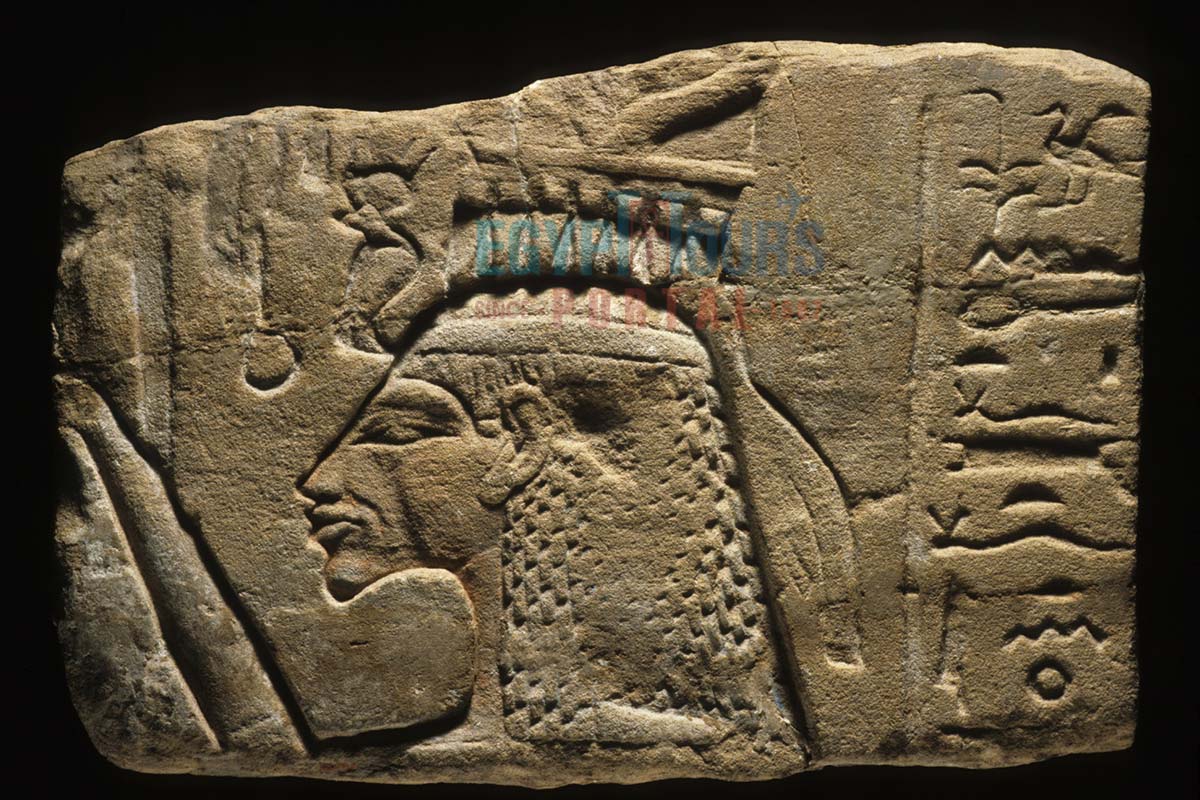
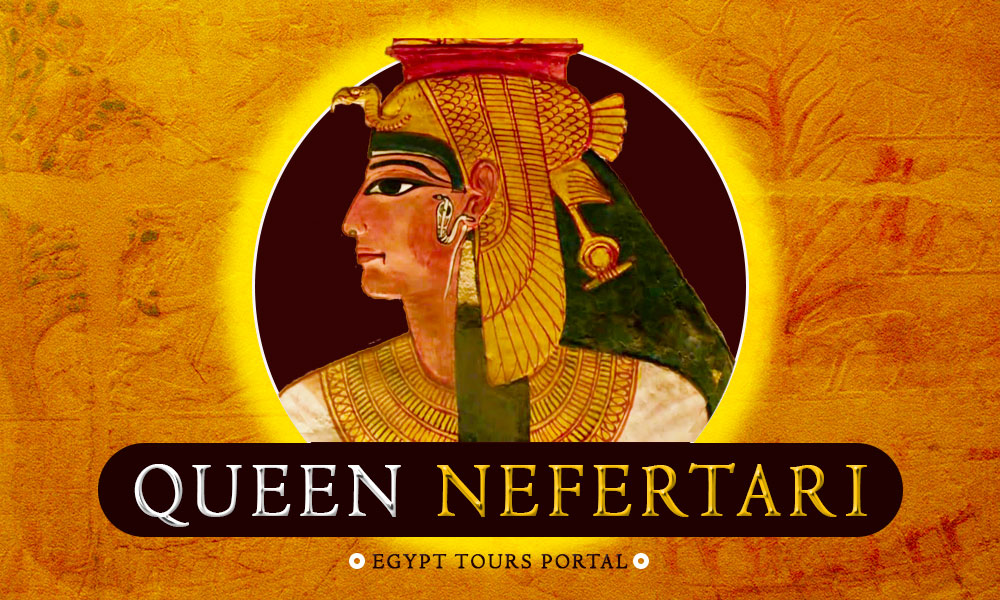
The name Nefertiti is usually translated as “the beautiful one has come.” During Akhenaten’s religious reforms, her full name became Neferneferuaten Nefertiti, often interpreted as “Beautiful are the beauties of Aten; the beautiful one has come.” This expanded name connected her directly with Aten, the divine center of the new religious order.
Her titles included Great Royal Wife, Lady of the Two Lands, Mistress of Upper and Lower Egypt, Lady of All Women, Great of Praises, Lady of Grace, and Sweet of Love. These were not casual decorations; in ancient Egypt, titles defined rank, sacred identity, and political meaning. The title Great Royal Wife placed her above other royal women, while Lady of the Two Lands connected her symbolically with the unity of Egypt itself.
Her name also appeared in royal cartouches, a practice normally linked to royal and divine names. She was revered as a living fertility goddess at some point due to her many children. This is especially important because it placed Nefertiti visually and ideologically close to the pharaoh and Aten. In the Amarna system, where the royal family became the bridge between humanity and the god, Nefertiti’s name and titles helped present her as a sacred partner in rule, not merely a queen behind the throne.
Learn about the Great Family of Queen Nefertiti
Nefertiti’s origins will be filled with many gaps and mysteries. No surviving inscription clearly names her father or mother, which is surprising given her later importance. One major theory links her to Ay, a powerful court official who later became pharaoh after Tutankhamun. This theory is based partly on the fact that Ay’s wife, Tey, held the title “Nurse of the Great Royal Wife.” Some scholars believe Ay may have been Nefertiti’s father and Tey her nurse or stepmother, but this remains unproven.
Another older theory suggested that Nefertiti may have been the Mitanni princess Tadukhipa, because her name could be read as “the beautiful woman has come,” possibly implying foreign origin. However, this theory is weak because there is no direct evidence that Tadukhipa became Nefertiti, and Nefertiti’s titles do not clearly identify her as foreign royalty.
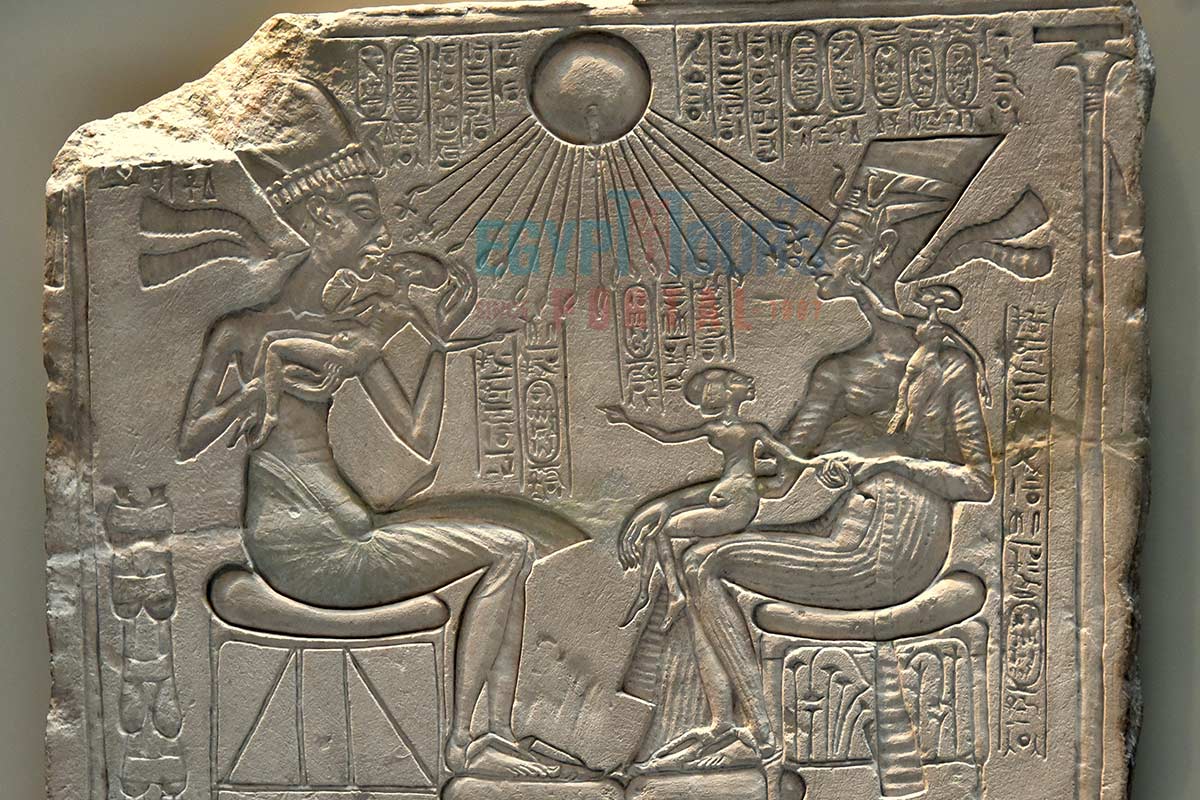
Nefertiti and Akhenaten had six daughters, who became central figures in Amarna royal imagery. Their daughters were Meritaten, Meketaten, Ankhesenpaaten later known as Ankhesenamun, Neferneferuaten Tasherit, Neferneferure, and Setepenre. Their family scenes are among the most intimate in Egyptian royal art, showing the king and queen kissing, holding, or playing with their children under the rays of Aten. These images were not just domestic portraits; they were religious statements showing the royal family as the living channel of divine blessing.
Nefertiti was once suggested as the mother of Tutankhamun, but modern DNA evidence makes this unlikely. Tutankhamun’s mother is now generally identified as the mummy known as the Younger Lady from tomb KV35 in the Valley of the Kings, who appears to have been a daughter of Amenhotep III and Queen Tiye. Since Nefertiti is not known to have been their daughter, she is unlikely to have been Tutankhamun’s biological mother.
The Incredible Life and Importance of Queen Nefertiti
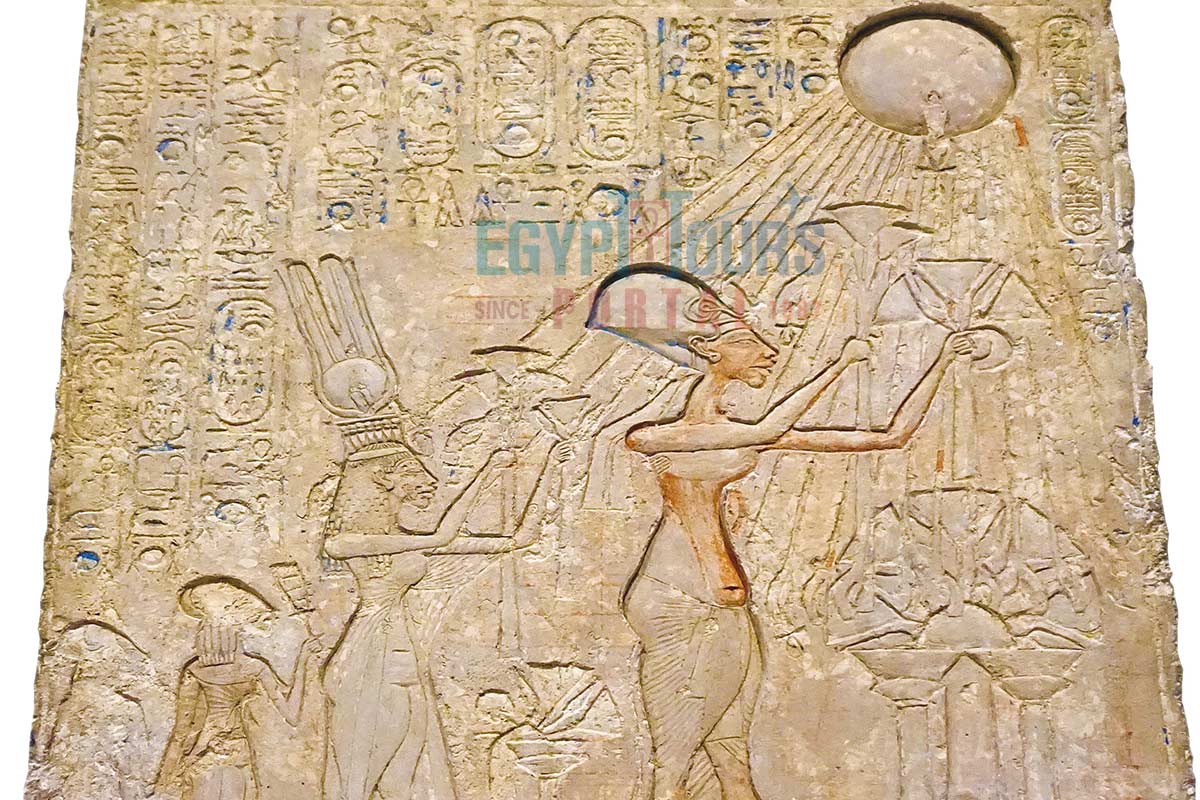
Nefertiti first appears in the early years of Akhenaten’s reign, when he was still called Amenhotep IV. At this stage, the royal court was still based in Thebes, but the king had already begun promoting Aten worship. Nefertiti appears in early religious scenes beside him, including scenes connected with Aten rituals. This shows that her elevated role began early, not only after the move to Amarna.
In the early years of the reign, Akhenaten built Aten temples at Karnak, including the Mansion of the Benben, a structure closely associated with Nefertiti. This is highly significant because Karnak was traditionally the great religious center of Amun. By building Aten temples there, Akhenaten was challenging older religious power, and Nefertiti was already part of that challenge. Some preserved blocks from these early temples show her in roles that were usually royal and ritualistic, including offering scenes and symbolic acts of power.
Around Year 4 or Year 5 of Akhenaten’s reign, the royal family founded a new capital called Akhetaten, meaning “Horizon of Aten,” at modern Tell el-Amarna. This move was one of the most dramatic acts of the reign. Instead of ruling from Thebes or Memphis, Akhenaten created a new religious city dedicated to Aten. Nefertiti moved there with him and became one of the central figures of the new royal ideology.
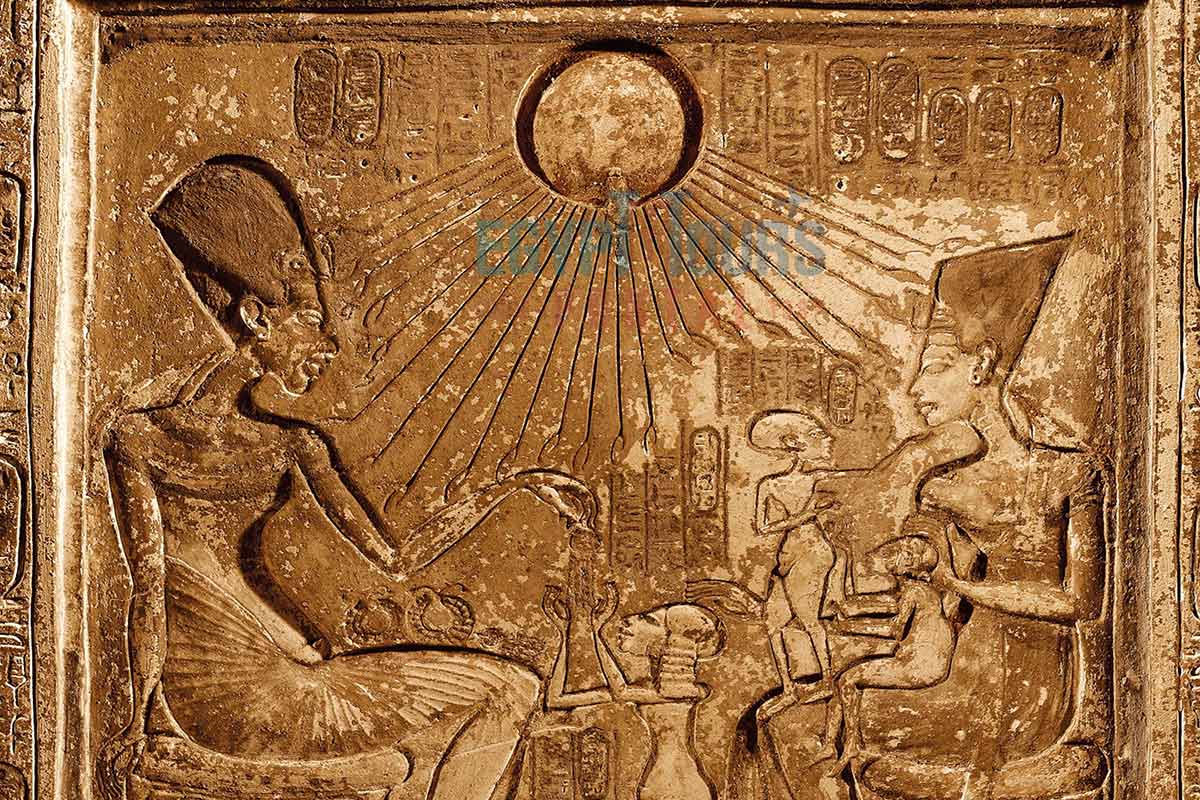
In Year 5, Amenhotep IV changed his name to Akhenaten, meaning “effective for Aten” or “beneficial to Aten,” and Nefertiti’s expanded name Neferneferuaten Nefertiti became more prominent. At Amarna, the royal family appeared constantly in temples, palaces, tombs, and household shrines. The famous family altar from Amarna shows Akhenaten and Nefertiti with three of their daughters beneath Aten’s rays, which end in hands holding symbols of life. This image captures the core of Amarna ideology: Aten gives life through the royal family.
For a long time, scholars believed Nefertiti disappeared after Year 12 of Akhenaten’s reign. This led to older theories that she died, fell from favor, or was replaced. However, a major discovery changed that picture. A quarry inscription at Dayr Abu Hinnis, dated to Year 16, names Nefertiti as Great Royal Wife, proving she was alive and still chief queen near the end of Akhenaten’s reign. Since Akhenaten died in Year 17, this means Nefertiti remained important almost until the end of his rule.
The Great Revolutionary King Akhnaton
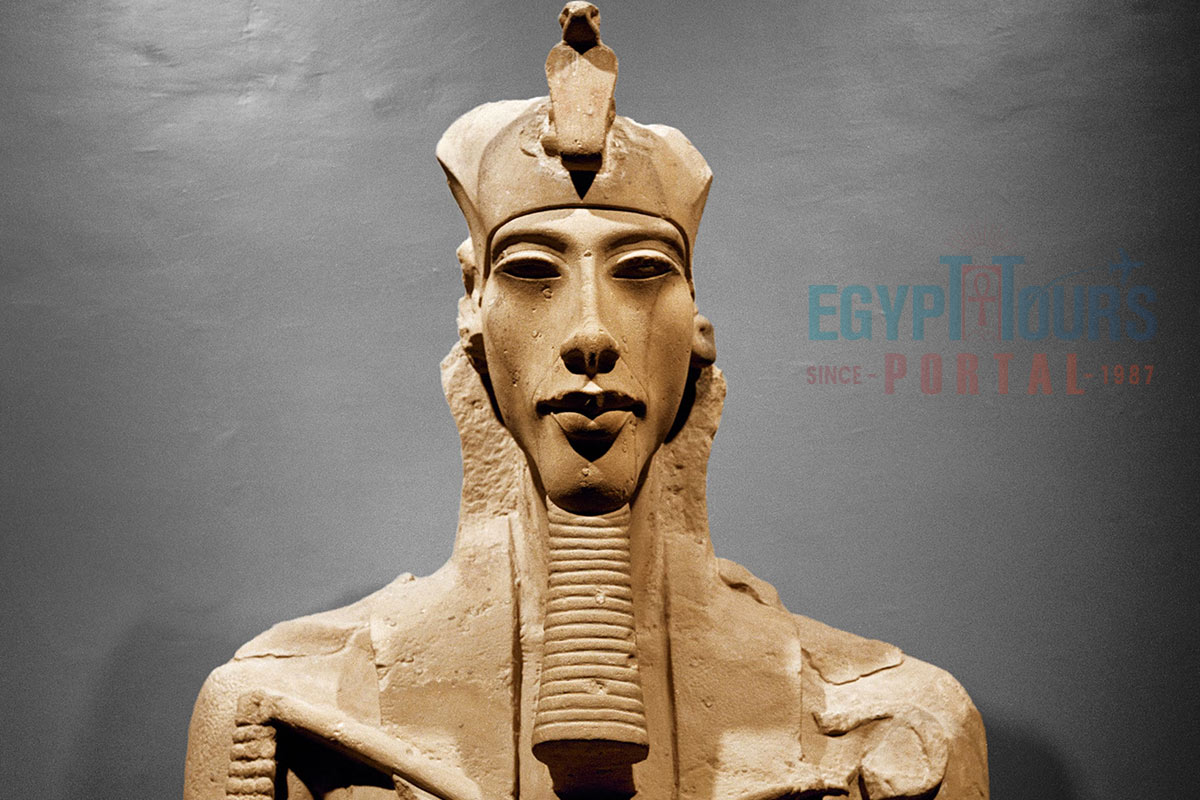
Nefertiti’s husband, Akhnaton or Akhenaten, was born Amenhotep IV and ruled Egypt for about 17 years, roughly in the mid-14th century BCE. He was the son of Amenhotep III and Queen Tiye, and he inherited one of the richest and most powerful kingdoms in the ancient world. Instead of simply continuing traditional royal policy, he launched one of the most controversial reforms in Egyptian history.
Akhenaten promoted the worship of Aten, the visible disk of the sun, above Egypt’s traditional gods. He eventually moved the capital to Akhetaten and reduced the importance of the powerful priesthood of Amun. These actions made him one of history’s most debated pharaohs. Some describe his religion as monotheistic, while others prefer terms such as monolatry or henotheism, because Aten was elevated above other gods rather than necessarily denying their existence in a fully modern monotheistic sense.
Nefertiti’s importance cannot be separated from Akhenaten’s reforms. The new religion placed the royal couple at the center of worship. Ordinary people did not approach Aten in the same way they had approached traditional gods; instead, divine life flowed through Aten to the king and queen, and from them to the world. This made Nefertiti an essential sacred figure within the new system.
The Important Role of Queen Nefertiti in the Religious Revolution
Nefertiti’s role in the Aten revolution was exceptional because the new religion elevated the entire royal family, especially the king and queen. In traditional Ancient Egyptian Religion, the pharaoh was the chief ritual mediator between humans and the gods. Under Akhenaten, that idea was reshaped around Aten, and Nefertiti was repeatedly shown participating in this sacred mediation.
She is shown making offerings to Aten, sometimes without Akhenaten, which strongly suggests that she could act ritually in her own authority. Some scenes even show her in pharaonic postures, such as striking enemies. In Egyptian royal art, smiting enemies was one of the most powerful symbols of kingship, showing the ruler defeating chaos and protecting cosmic order. For Nefertiti to appear in this role was extraordinary and reveals how far Amarna ideology expanded the queen’s public authority.
The famous Amarna family scenes also had religious meaning. The images of Akhenaten, Nefertiti, and their daughters were not simply affectionate family portraits. They expressed fertility, divine life, and cosmic renewal. Aten’s rays reach down to the royal family, often ending in tiny hands holding ankh signs to their noses, symbolizing the breath of life. In these scenes, Nefertiti appears almost as Akhenaten’s female counterpart, participating in the transmission of divine power to Egypt.

Tell El-Amarna
Discover Tell El-Amarna's history, tombs, letters, and more! Explore its excavations, art, architecture, and ancient secrets in this detailed guide.
The Beautiful Queen Nefertiti As a Pharaoh
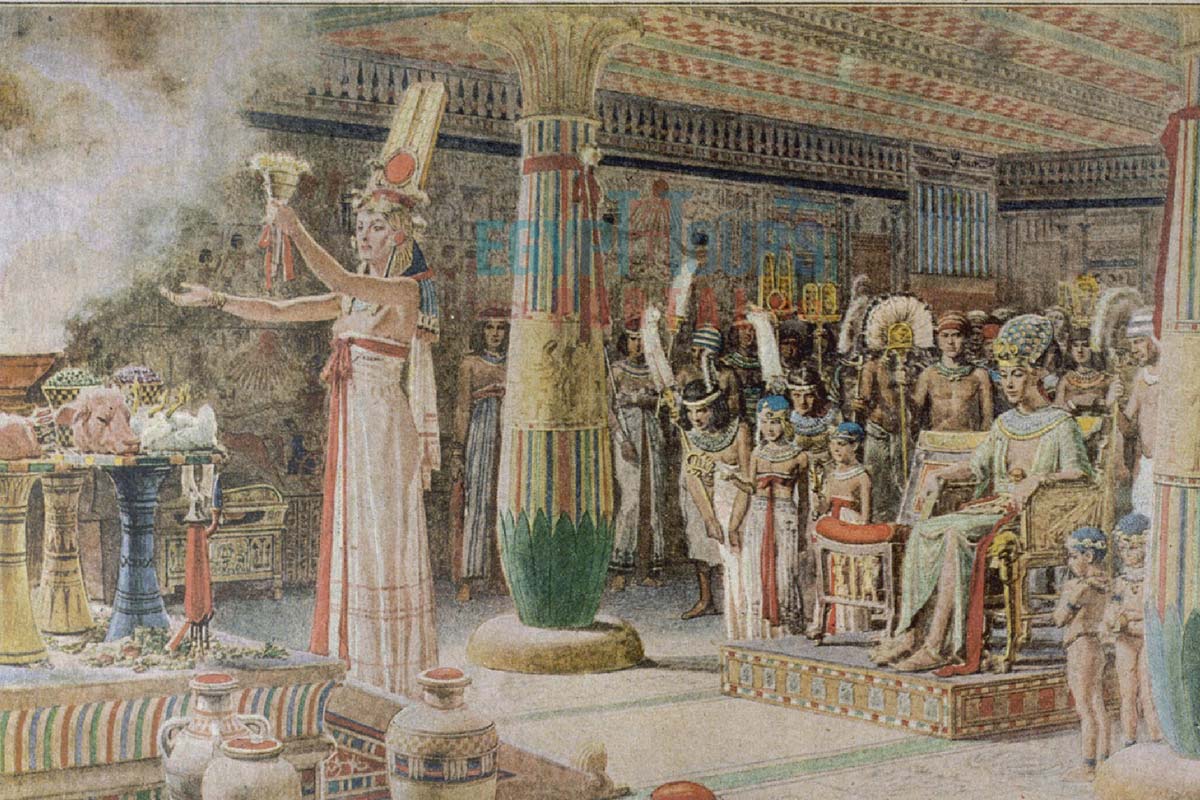
The question of whether Nefertiti became pharaoh remains one of the most fascinating debates in Egyptology. After Akhenaten’s death, the succession becomes unclear. Two short-lived rulers appear in the record: Smenkhkare and Neferneferuaten. Many scholars now believe that Neferneferuaten was a female ruler, because some of her epithets use feminine forms. Since Nefertiti had already used the name Neferneferuaten as queen, she is one of the strongest candidates for this mysterious female pharaoh.
The Year 16 inscription is crucial because it proves Nefertiti was still alive late in Akhenaten’s reign. This makes it possible that, after Akhenaten’s death in Year 17, she ruled either as a co-regent, a sole pharaoh, or a transitional ruler before Tutankhamun. Some scholars argue that she may have taken power to protect the young Tutankhamun and stabilize Egypt after the crisis of the Amarna Period.
However, the evidence is not final. Some scholars identify Neferneferuaten with Nefertiti, while others suggest it may have been her daughter Meritaten or another royal woman. What is certain is that Nefertiti held powers and visual privileges that were unusually close to kingship. Even if she never became pharaoh in the formal sense, her imagery and titles show that she was one of the most powerful queens Egypt ever produced.
Witness What Did Queen Nefertiti Look Like?
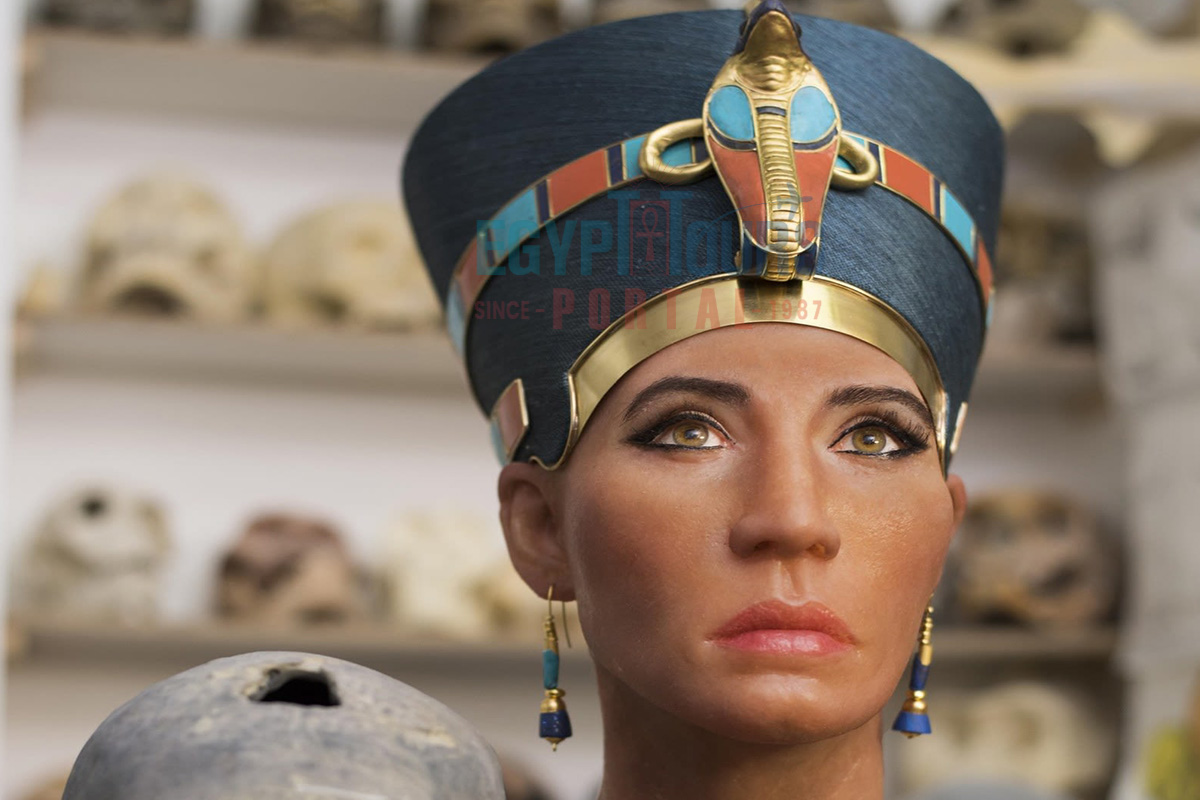
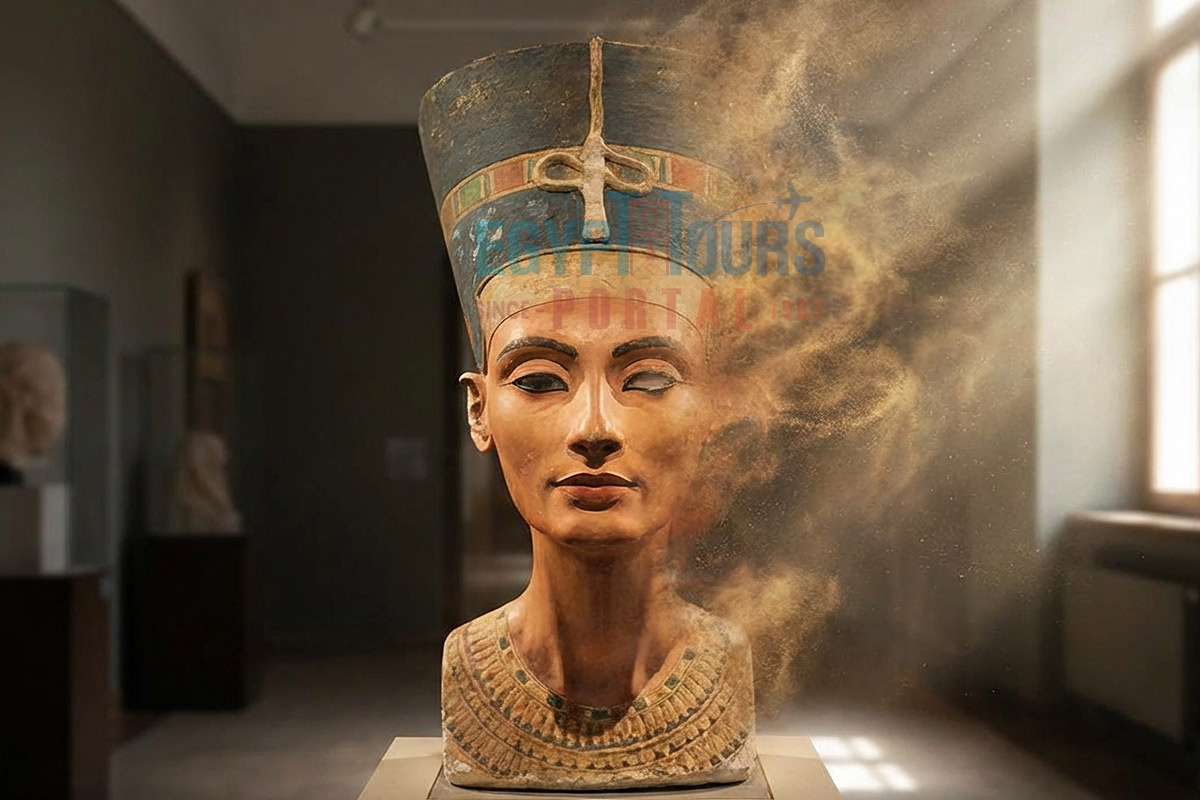
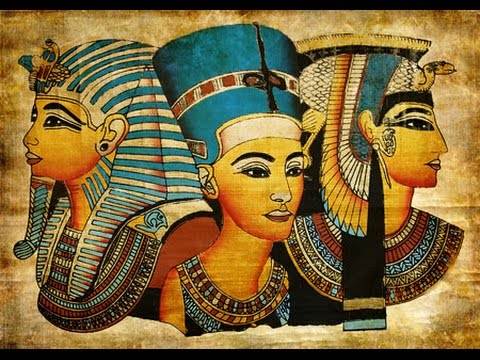
Nefertiti’s appearance is one of the most famous in ancient history, yet it is also difficult to define with certainty. The Berlin bust presents her with a long elegant neck, high cheekbones, arched brows, almond-shaped eyes, a straight nose, full lips, and a tall flat-topped blue crown. This image has shaped the modern idea of Nefertiti as a symbol of beauty.
Other Amarna artworks show her differently. Some reliefs depict her with the exaggerated features typical of early Amarna art, including a long face, slanted eyes, sharp nose, pronounced chin, and elongated body forms. The Metropolitan Museum notes that one relief shows her with thin slanted eyes, sharply angled nose and brow, and an arm raised in offering to Aten. These features resemble the style used for Akhenaten, suggesting that artistic ideology often mattered more than realistic portraiture.
Therefore, Nefertiti’s real face cannot be known with total certainty. Her surviving images combine portraiture, ideal beauty, religious meaning, and Amarna artistic style. The bust may preserve something of her actual features, but it was also a sculptor’s model and an idealized royal image. The safest conclusion is that Nefertiti’s appearance was transformed by art into a timeless symbol of divine queenship and royal beauty.
Cast Your Eyes on the Majestic Bust of Nefertiti
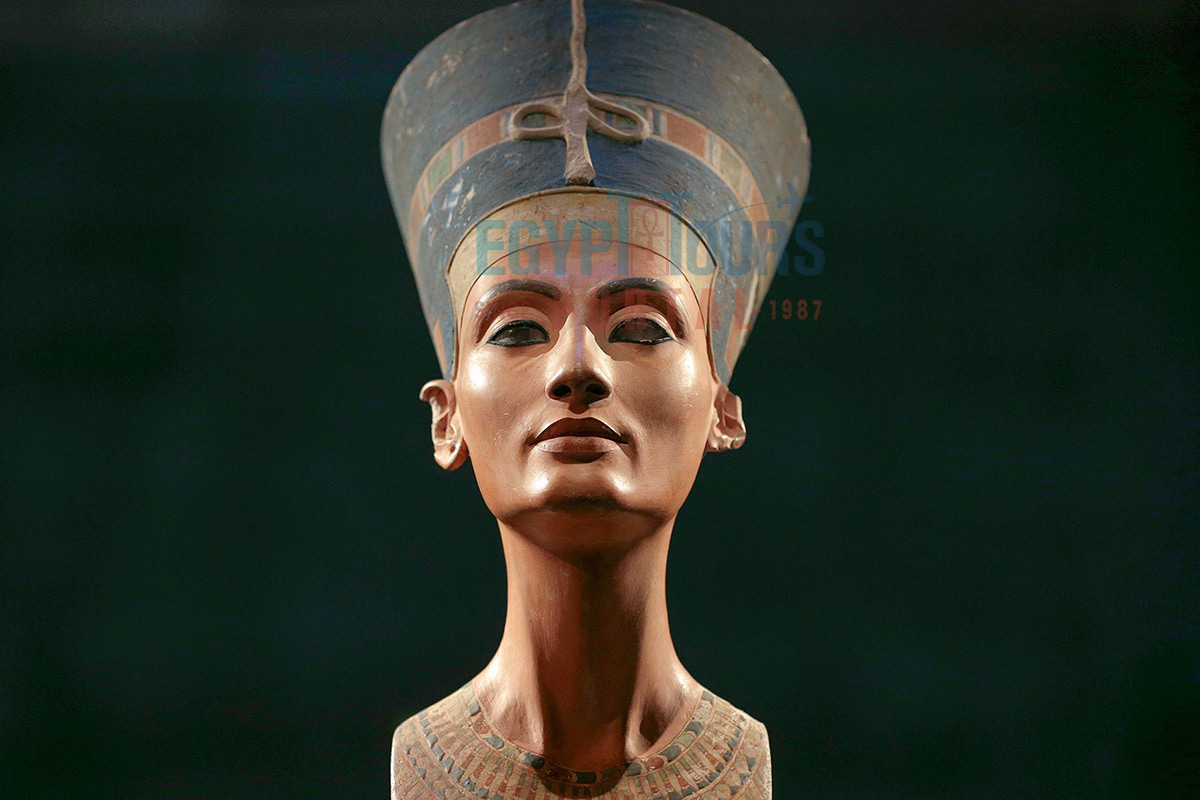
The Bust of Nefertiti is one of the most famous archaeological objects and examples of ancient Egyptian arts in the world. It was discovered on 6 December 1912 at Tell el-Amarna by a German archaeological team led by Ludwig Borchardt, inside the workshop of the sculptor Thutmose. The bust is made of limestone covered with painted stucco and is generally dated to around 1340 BCE. It is now displayed in the Neues Museum in Berlin.
The bust is not a complete statue but a sculptural model, probably used in the workshop as a reference for royal images. Its preservation is extraordinary: the colors remain vivid, the facial modeling is refined, and the tall blue crown has become inseparable from Nefertiti’s identity. The bust helped transform Nefertiti into a modern global icon, representing ancient Egyptian elegance, mystery, and feminine power.
It is also politically important today. Egypt has repeatedly called for the bust’s return, arguing that it should be displayed in its homeland, while German institutions have maintained that it was legally acquired and is too fragile to move. In 2024, Zahi Hawass launched a petition calling for its return from Berlin to Egypt, showing that the bust remains not only an artwork but also a major symbol in modern debates over cultural heritage and repatriation.
Explore the Mysterious Death, Burial, and Mummy of Queen Nefertiti
Nefertiti’s death remains one of the greatest mysteries of the Amarna Period. Earlier scholars believed she disappeared after Year 12 of Akhenaten’s reign, but the Year 16 Dayr Abu Hinnis inscription proved she was still alive near the end of Akhenaten’s rule. Since Akhenaten died in Year 17, Nefertiti may have survived him and possibly ruled afterward as Neferneferuaten.
Her burial place is unknown. The boundary stelae of Amarna suggest that members of the royal family were intended to be buried in the royal tombs of Akhetaten, but there is no confirmed evidence that Nefertiti was actually buried there. Political and religious changes after Akhenaten’s death may have disrupted burial plans, especially as Tutankhamun’s reign restored traditional religion and eventually abandoned Amarna.
Several mummies have been proposed as Nefertiti, but none has been confirmed. The Elder Lady from KV35 was once suggested, but she is now identified as Queen Tiye. The Younger Lady, also from KV35, was proposed by some, but DNA evidence indicates she was Tutankhamun’s biological mother and a daughter of Amenhotep III and Tiye, making her unlikely to be Nefertiti. Another possible candidate is KV21B, but the evidence is incomplete.
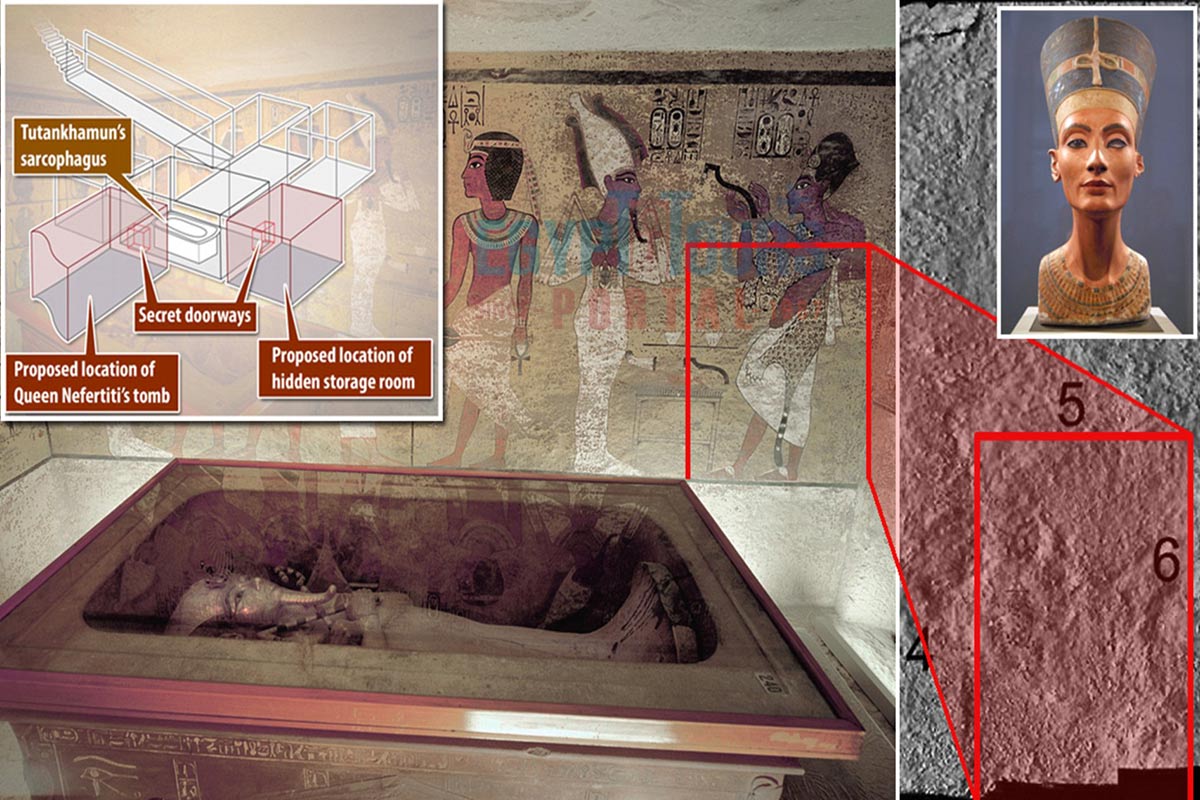
In 2015, archaeologist Nicholas Reeves proposed that hidden chambers behind Tutankhamun’s tomb might contain Nefertiti’s burial, but later radar scans did not confirm hidden rooms. As a result, Nefertiti remains both highly visible and deeply elusive: one of the most depicted queens of ancient Egypt, yet with no securely identified mummy, tomb, or final resting place.
The Connection Between the Bust of Nefertiti and Cosmic Surgery
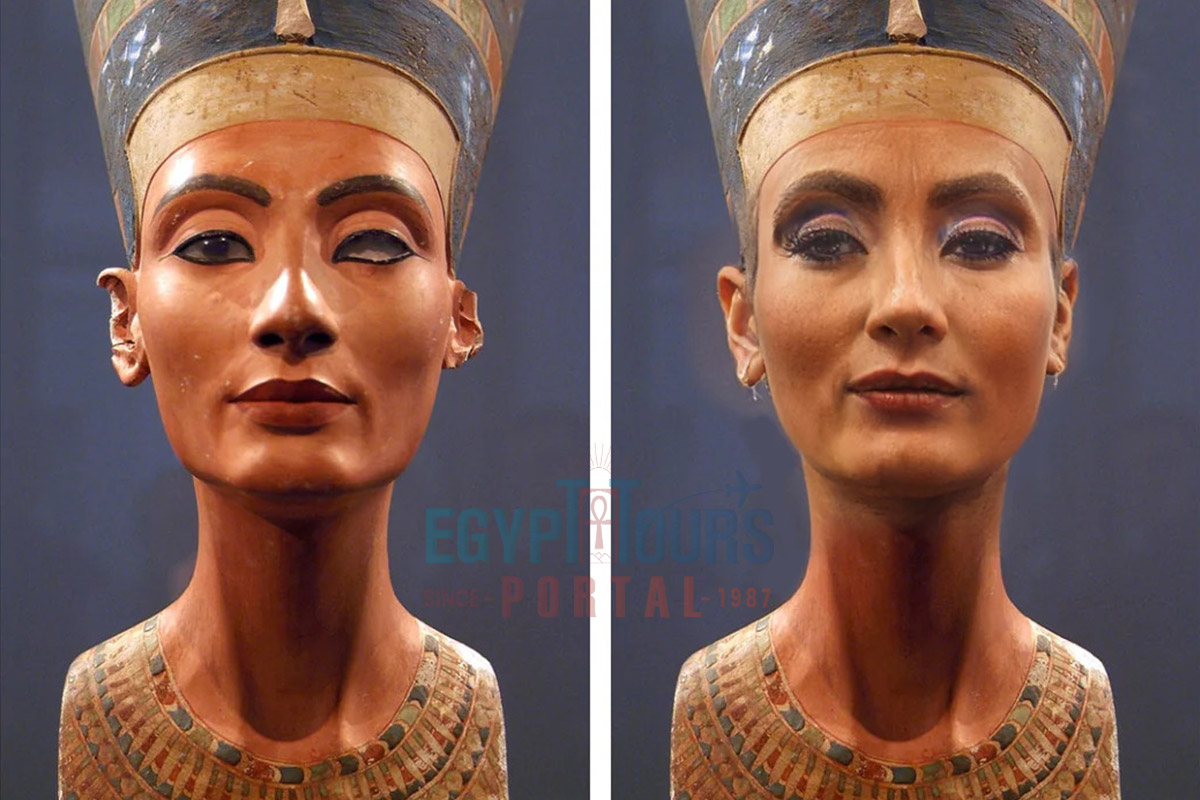
The “Nefertiti neck lift” is a non-surgical cosmetic treatment, usually performed with Botox, that targets the platysma muscles along the neck and jawline to create a more defined, lifted, and smoother profile inspired by Nefertiti’s famous long neck and sharp jawline. However, if the procedure is performed incorrectly, a “botched Nefertiti lift” may result, causing problems such as jawline asymmetry, neck weakness, or difficulty swallowing, which makes professional medical expertise essential. The modern use of the name “Nefertiti” reflects how Queen Nefertiti’s image has become a lasting symbol of elegance, beauty, and graceful proportions.
The name has also influenced modern body modification, such as the ear and nose piercing of Nefertiti, named for its association with elegance and symmetry rather than any direct historical link to the queen herself. All these cosmetic practices are strongly connected to the famous Nefertiti bust, discovered in 1912 at Amarna in the workshop of the sculptor Thutmose and now displayed in the Neues Museum, where its symmetry, high cheekbones, elegant neck, and blue crown made it one of the world’s most iconic images of ancient beauty.
Explore the Most Unique Facts About Queen Nefertiti
- Nefertiti’s origins remain uncertain, though she may have been Egyptian-born or connected to Mitanni.
- She likely married the future Akhenaten at a young age, possibly around 15.
- Nefertiti and Akhenaten had six daughters, several of whom became important royal figures.
- She helped lead the Aten religious revolution, which centered worship on the sun disk god Aten.
- Her name became Neferneferuaten-Nefertiti, linking her identity directly to Aten.
- She was shown with unusual authority in art, sometimes appearing equal to Akhenaten.
- Some images depict her performing pharaonic roles, such as smiting enemies.
- She lived during the wealthy and artistically innovative Amarna Period.
- Her death, tomb, and mummy remain unknown, despite many theories.
- Her famous bust, discovered in 1912, made her one of the most recognizable women of the ancient world.
Book one of our Magical Tours To Explore Egypt's wonders
There are a lot of mysteries about ancient Egyptian history. If you desire to discover it, then you can explore our Egypt tours or Nile river cruises and book your magical journey in the golden land of pharaohs.




















































Leave a Comment