Customized Tours for Large Groups
Build your trip your way, choose landmarks, pace & 24/7 support.
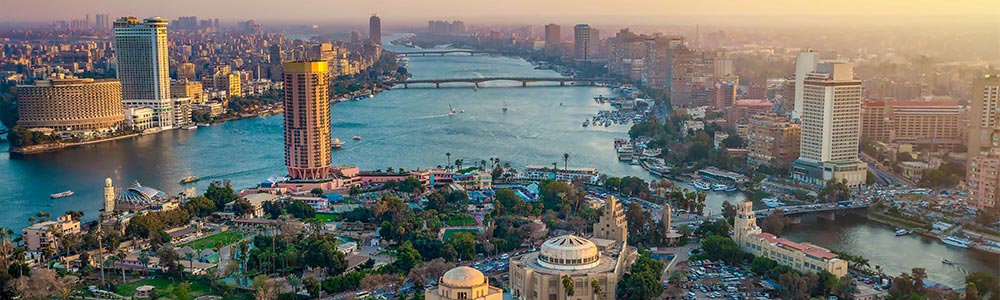
Upon your arrival at Cairo International Airport, you’ll be warmly greeted by our dedicated representative, who will handle every detail of your arrival with ease, assisting you through passport control, luggage identification, and portage to ensure a smooth and stress-free welcome to Egypt. From the airport, you’ll be escorted in the comfort of a private, air-conditioned vehicle to your hotel, where a seamless check-in awaits, giving you time to relax and settle in after your journey.
As the sun sets and the city lights begin to shimmer, you’ll be picked up from your hotel for an unforgettable Nile dinner cruise. Drift gracefully along the legendary river while enjoying a deliciously prepared dinner, accompanied by lively entertainment that brings Egyptian culture to life. The evening features captivating belly dancing, a traditional folkloric music band, and the spellbinding Tannoura show, a dazzling whirl of color inspired by Egypt’s ancient whirling dervish traditions.
After this magical night on the Nile, you’ll be transferred back to your hotel in comfort, where a peaceful and relaxing overnight stay awaits.
After enjoying breakfast, you’ll meet your private Egyptologist and step into the opening chapter of your Egypt & Morocco adventure with an immersive journey through Cairo’s most legendary landmarks.
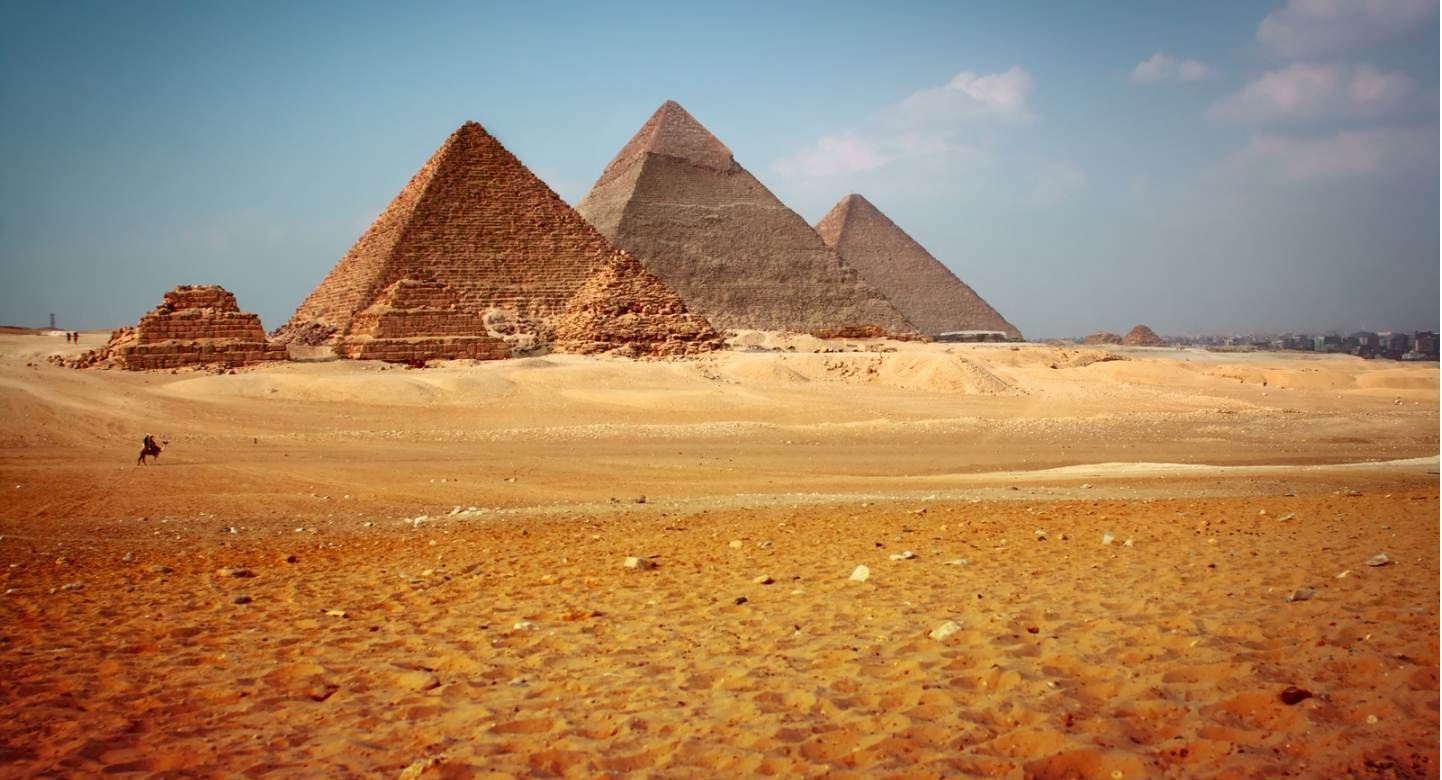
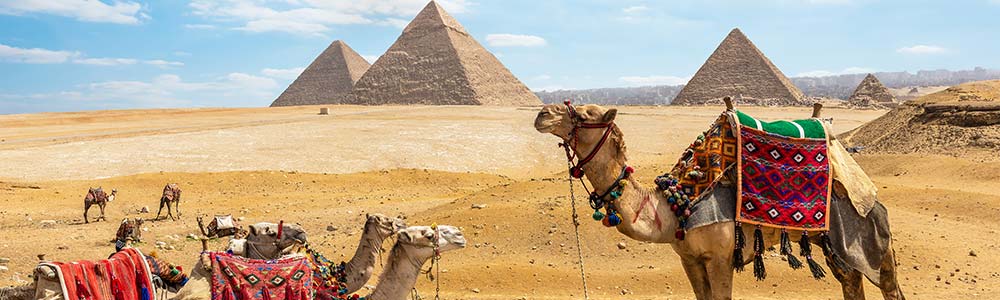
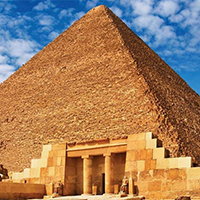
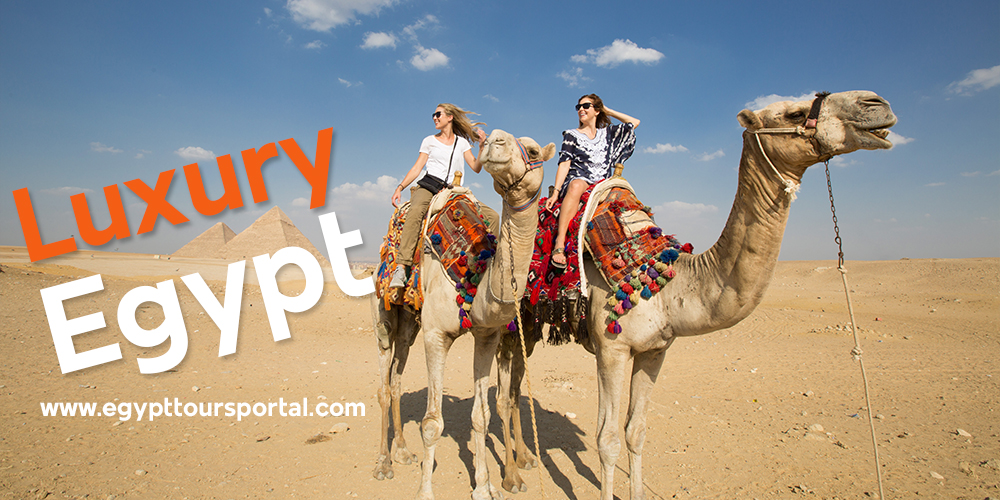
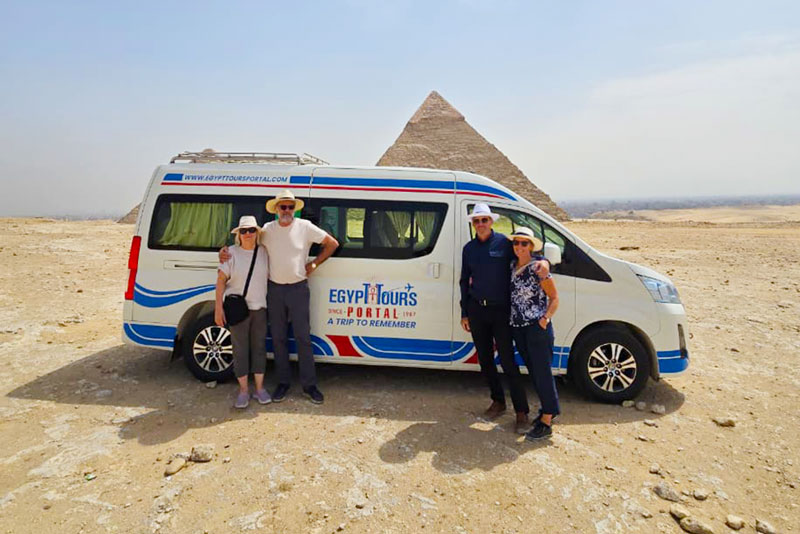
The celestial Giza Pyramids Complex, a timeless masterpiece that has stood since 2700 BC, eternally preserving the ambition, power, and spiritual vision of the rulers of the 4th Dynasty. Rising from the desert sands, this sacred plateau reflects the ancient Egyptians’ quest for immortality.
The immortal Great Pyramid of King Khufu (2609–2584 BC) is a gateway to the heavens that was conceived in 2570 BC by his master architect and vizier Hemiunu. It was built over many years by 400,000 free skilled workers laboring in organized shifts, the pyramid soared to a height of 147 meters, crafted from 2.3 million limestone blocks with a combined weight of nearly 6 million tons. Hidden within its colossal structure lie the King’s Chamber, Queen’s Chamber, the Grand Gallery, and other sophisticated architectural features that continue to astonish historians, engineers, and everyone who comes across it.
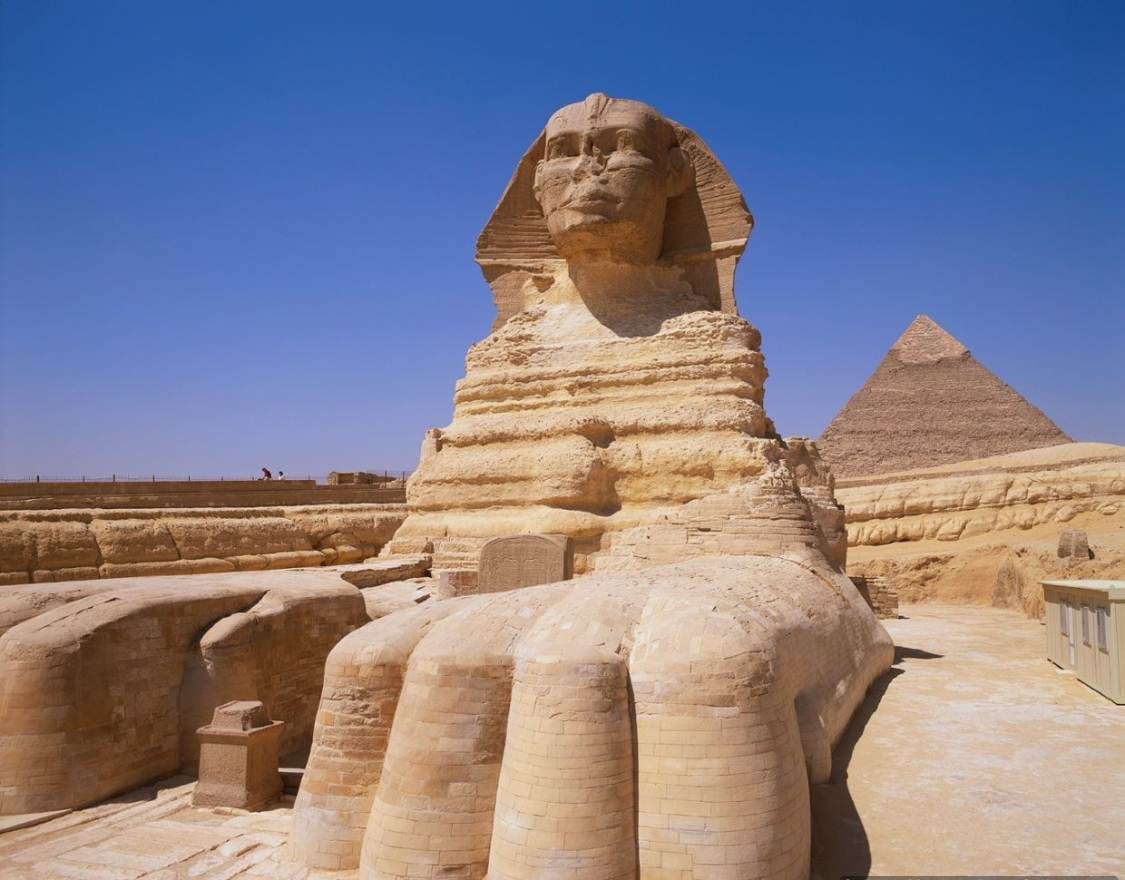
The great Sphinx also known as Horus of the Horizon, came into existence to watch over the Giza complex since the reign of King Khafre (2558–2532 BC). Measuring 73 meters in length, 19 meters in width, and 20 meters in height, this monumental sculpture merges the king’s face with the powerful body of a lion, symbolizing wisdom and strength. Between its paws rests the legendary Dream Stela of Thutmose IV, placed there in 1401 BC, recounting the divine promise that shaped royal destiny.
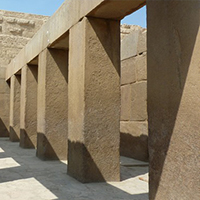
The golden mortuary valley temple of the 4th dynasty is a sacred mortuary complex that reveals the mystical rituals of purification and the mummification process practiced by the ancient Egyptians to join the deities of ancient Egypt. The valley is able to showcase timeless beliefs surrounding death, rebirth, and the afterlife come vividly to life.
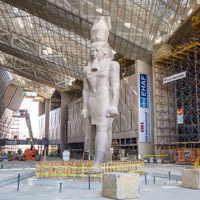
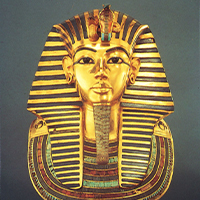
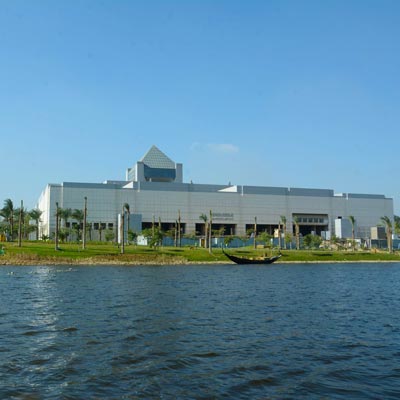
The Grand Egyptian Museum is a one-billion-dollar creation of true innovation that is perfectly aligned with the pyramids and spans nearly 490,000 square meters. This monumental institution presents 5,000 years of Egyptian history and culture that stood the test of time. It houses one of the Middle East’s largest conservation centers, alongside advanced research and educational facilities. Among its highlights are the Hanging Obelisk, the towering 11-meter colossus of Ramses II, and the complete collection of over 5,000 treasures from King Tutankhamun’s tomb, displayed together for the first time.
Enjoy lunch at a restaurant offering a grand pyramid and Nile views, before continuing to one of Egypt’s most revolutionary monuments.
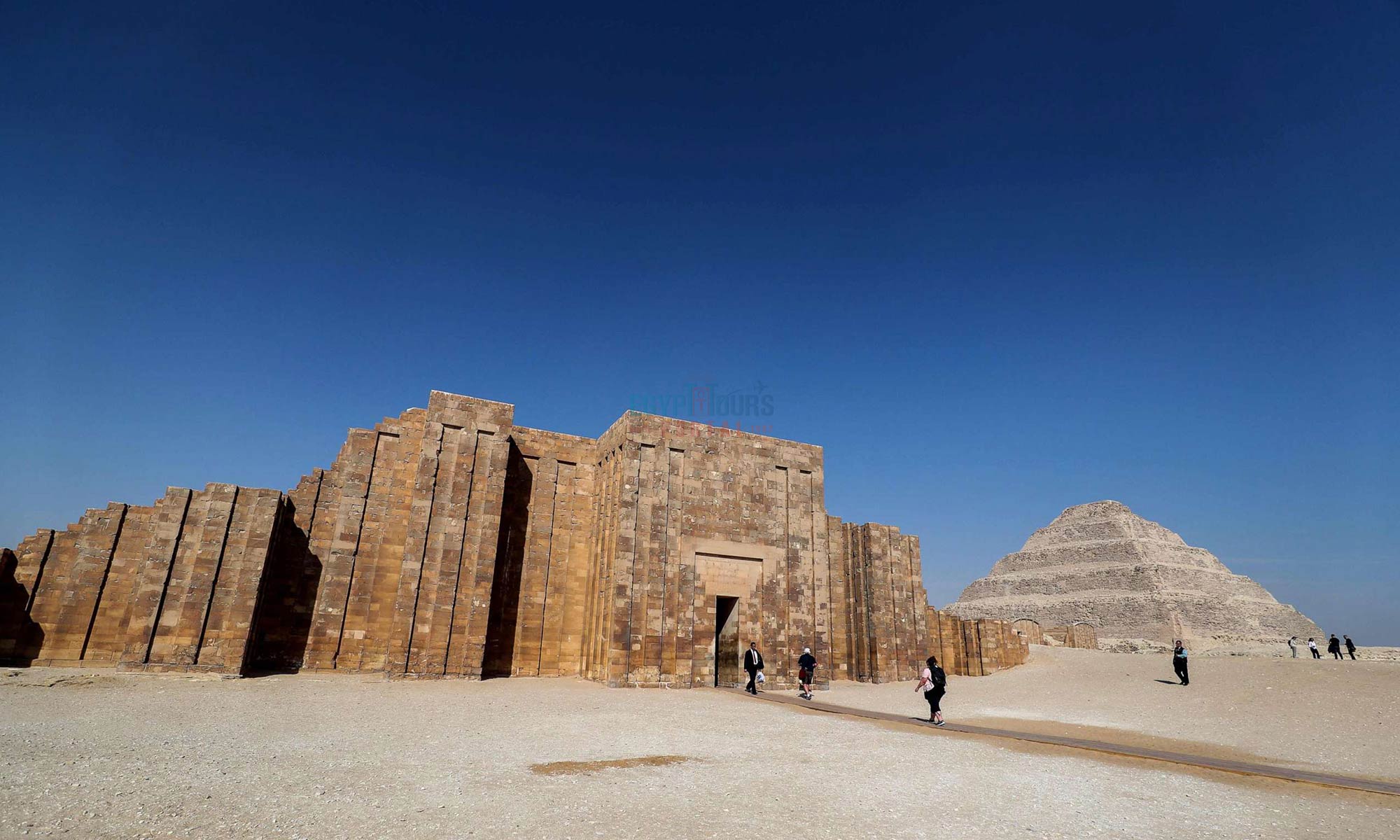
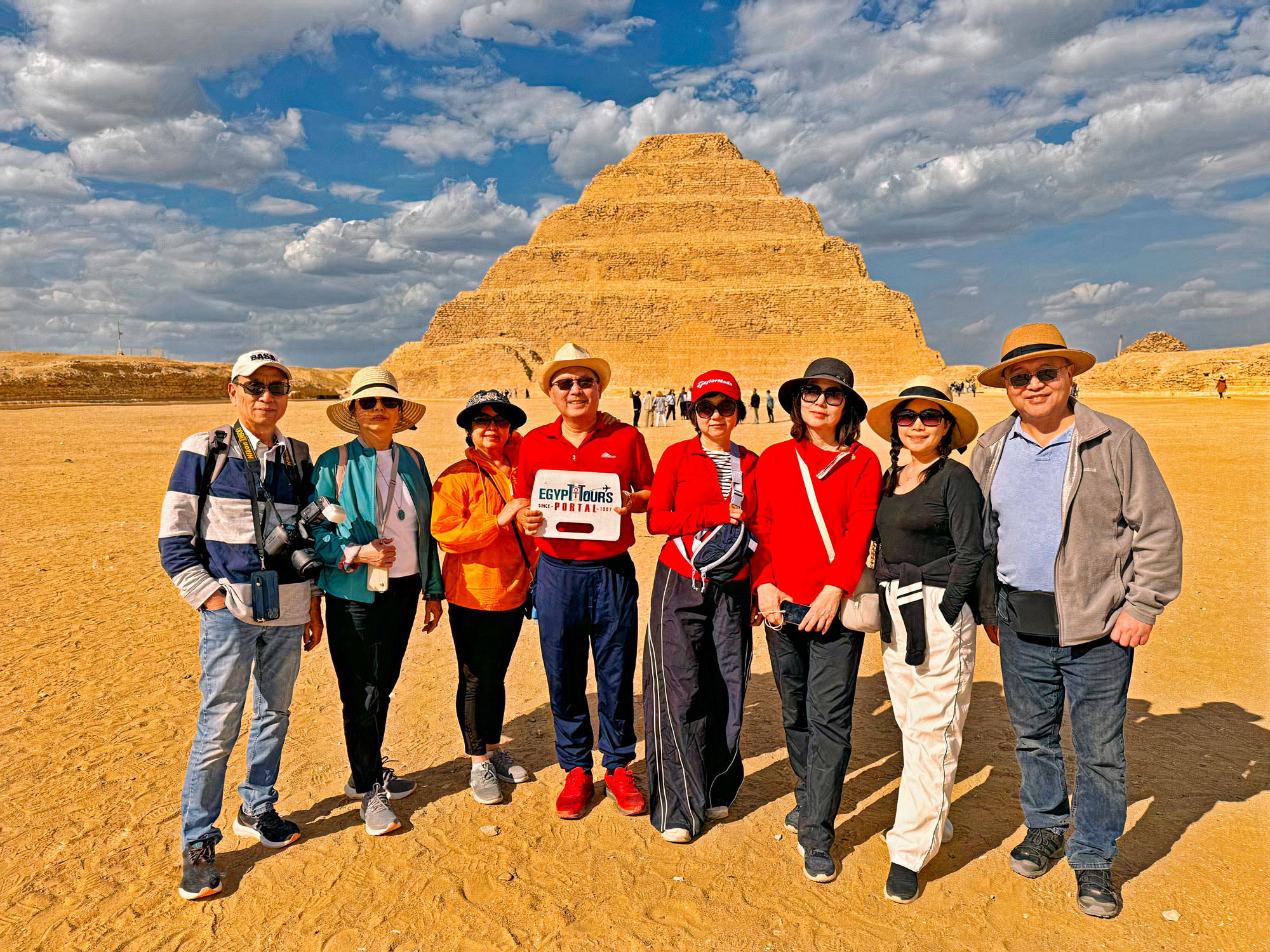
The brilliant Saqqara Step Pyramid is the world’s earliest large-scale stone structure. It was commissioned by Pharaoh Djoser (2649–2611 BC) and designed by the visionary architect Imhotep. This six-tiered pyramid rises 62 meters high and introduced the very first complete pyramid complex, marking a turning point in human architectural history.
As the day concludes, you’ll be transferred to the airport to catch your flight to Hurghada, where you’ll check into your hotel and enjoy a restful overnight stay, ready for the next chapter of your unforgettable journey.
After breakfast, head out for an unforgettable snorkeling excursion in the Red Sea, where crystal-clear waters open onto a dazzling underwater world filled with colorful coral gardens and lively marine life. After immersing yourself in this aquatic paradise, return to your hotel to unwind and enjoy a calm, restful overnight stay.
In the early morning, you will check out of your hotel in Hurghada and set off in a private, modern air-conditioned vehicle on a scenic drive toward Luxor, the ancient capital of Thebes. Upon arrival, you will be warmly greeted by your private tour guide, who will escort you on an inspiring journey through Luxor’s most celebrated East Bank treasures, beginning with one of humanity’s greatest archaeological masterpieces.
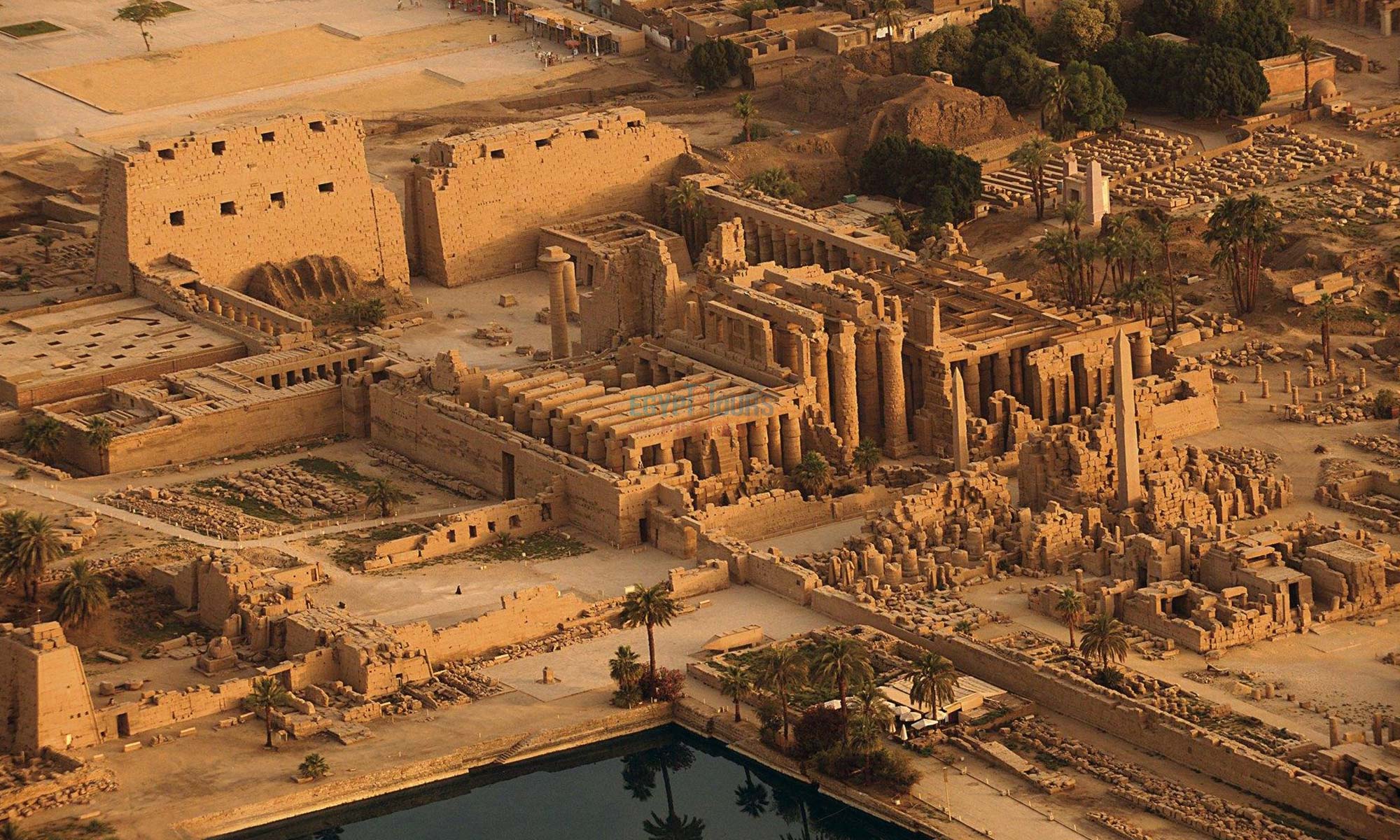
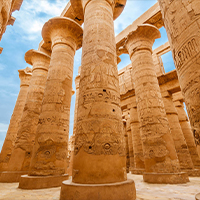
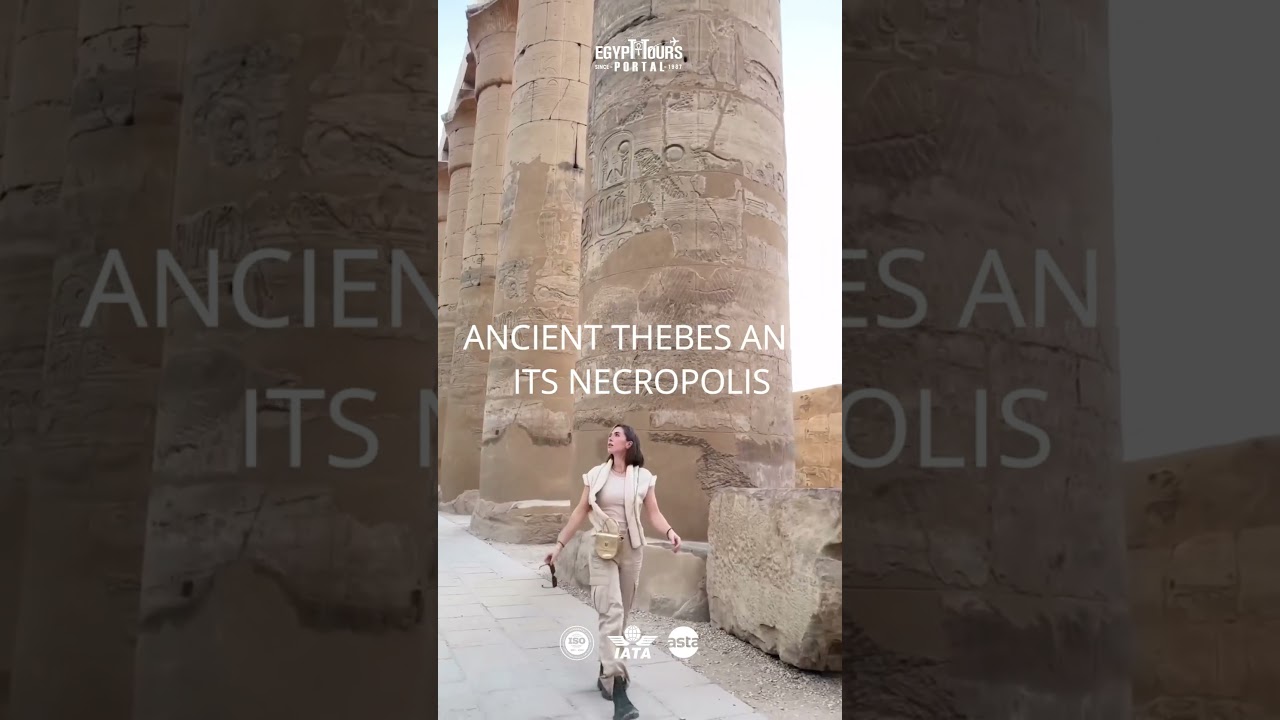
The celestial Karnak temples complex is a true living miracle known to be the largest religious structure ever created and one of the most magnificent sacred sites on Earth. It was constructed over centuries from 1971 BC to 30 BC, this vast complex was dedicated to the Theban Triad of the 18th Dynasty, Amun, Mut, and Khonsu. Its colossal pylons, sacred lakes, towering columns, and endless corridors reflect the spiritual devotion and architectural genius of ancient Egypt on an epic scale.
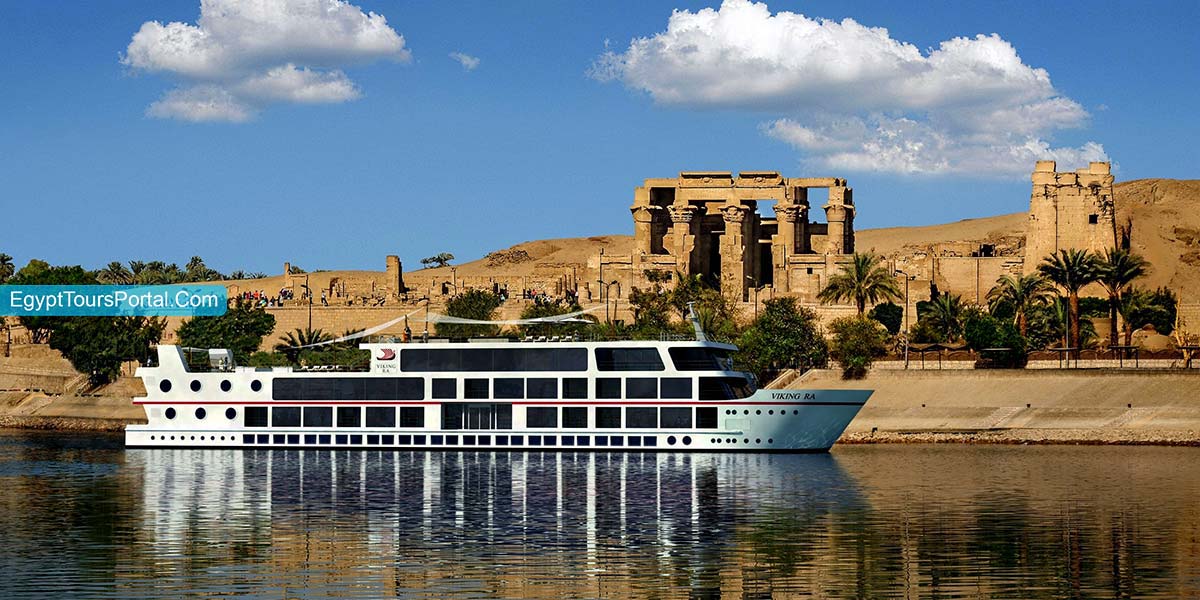
Following this remarkable visit, you will be transferred to your elegant 5-star Nile cruise for check-in. Enjoy a delicious lunch on board and take time to relax as the gentle rhythm of the Nile sets the mood for the evening. Later, you will reunite with your guide to explore another legendary monument of Luxor.
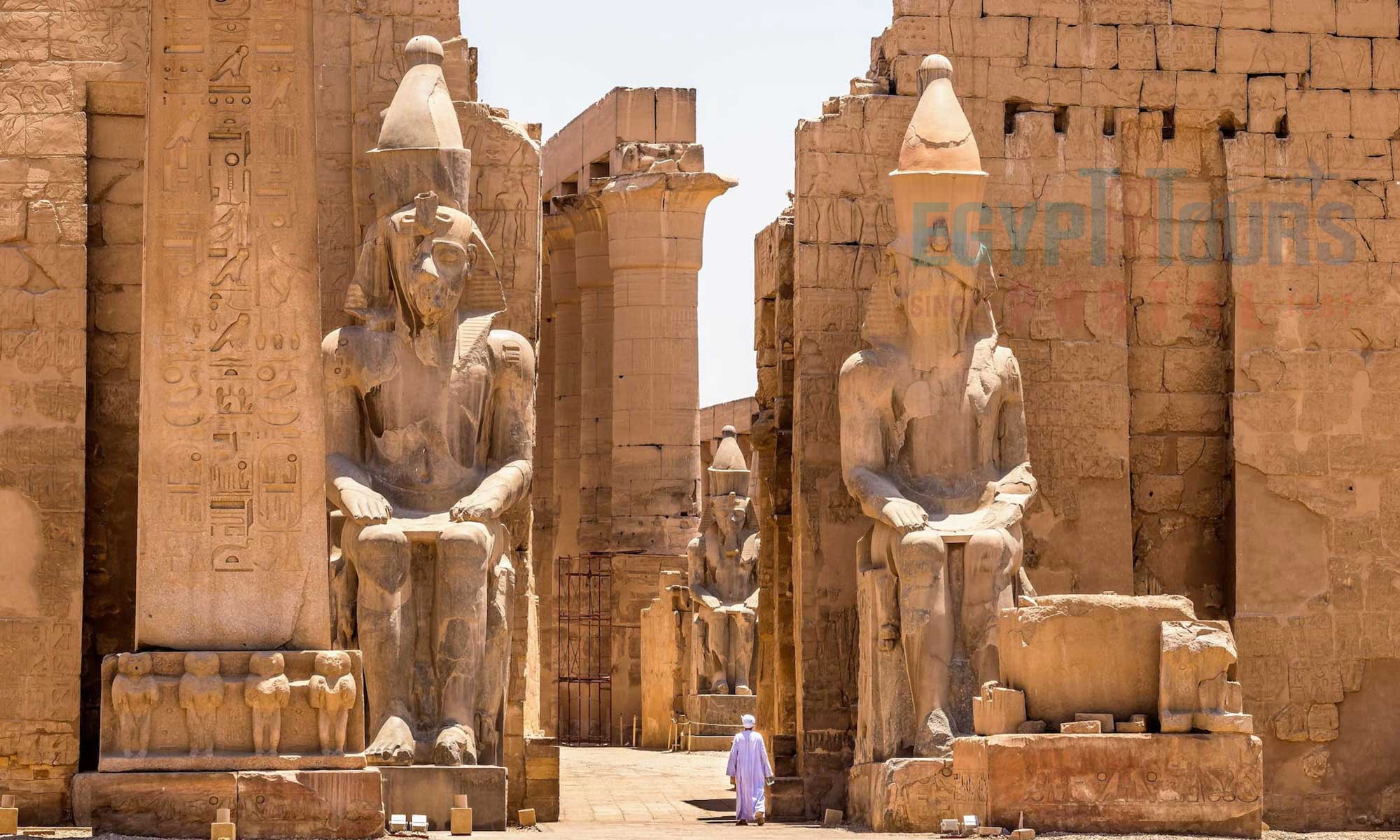
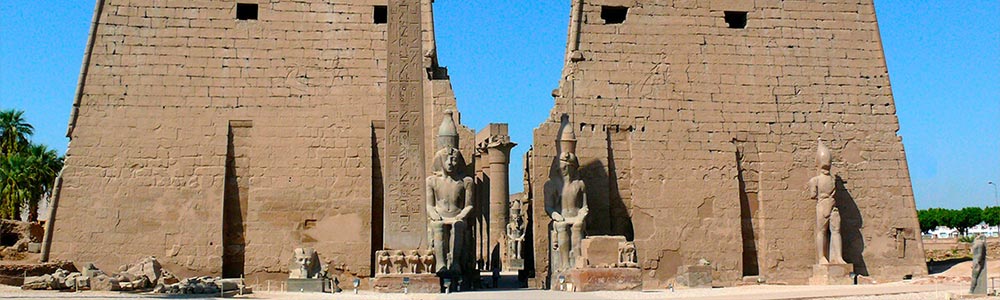
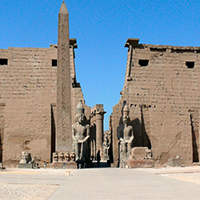
The golden Luxor Temple is a magical marvel that was built around 1400 BC, rising gracefully along the Nile as a sacred sanctuary of kingship and renewal. It served as a ceremonial site for the coronation of great rulers such as Amenhotep III, Ramses the Great, and even Alexander the Great. Adorned with majestic statues, grand columns, and connected to Karnak by the golden Avenue of Sphinxes, the temple remains a timeless symbol of divine power and artistic brilliance.
At the end of this magical day, you will return to your Nile cruise to enjoy dinner on board and spend a peaceful overnight, drifting gently through history on the legendary Nile.
As the sun rises over the Nile, you will enjoy a delicious breakfast on board your cruise before meeting your expert tour guide to begin an unforgettable exploration of Luxor’s legendary West Bank. This sacred landscape, once known as the Theban Necropolis, unfolds as a realm of myths, power, and eternal legacy.
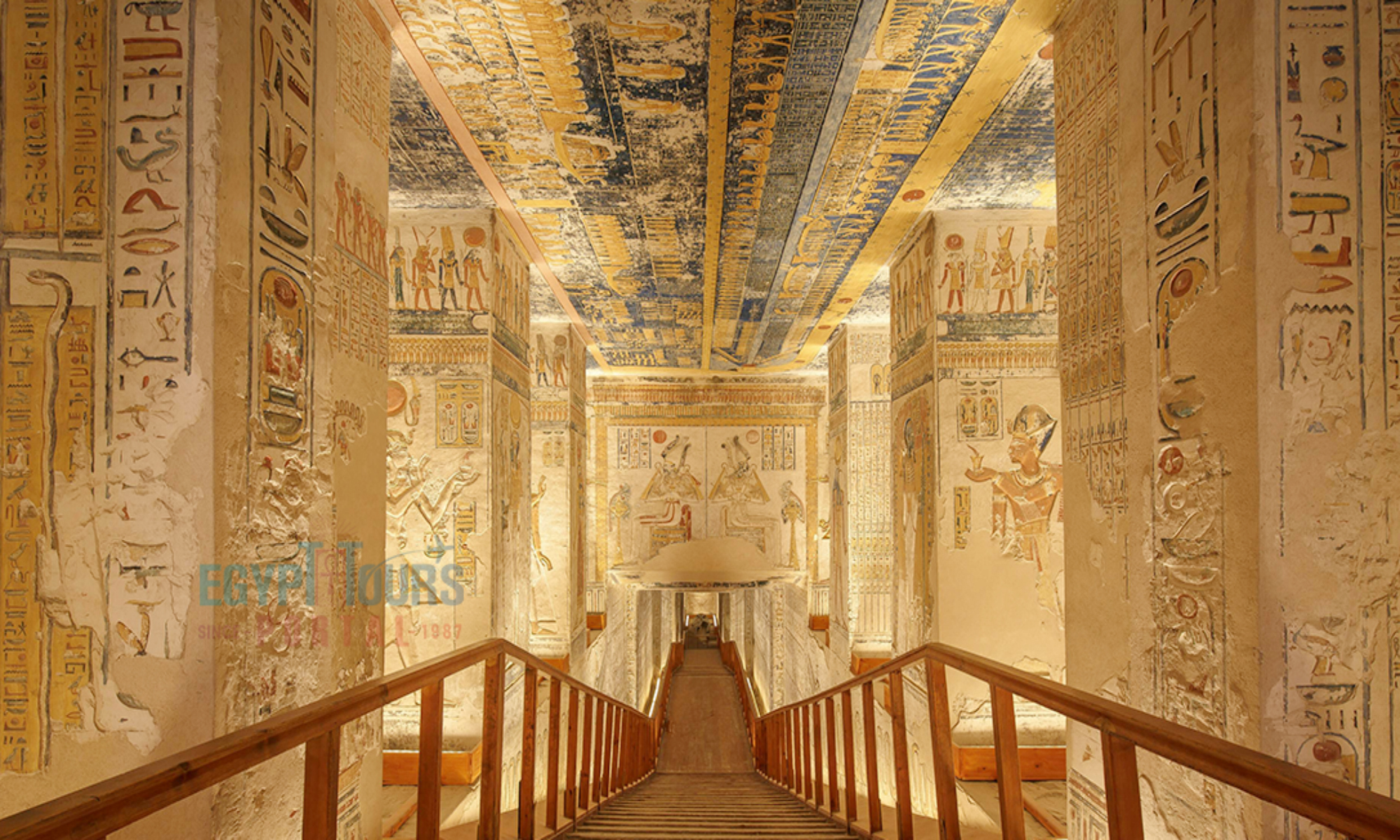
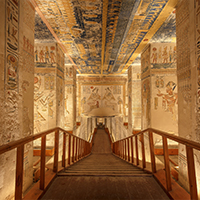
The blessed Valley of the Kings is a mythical quest leading to the magical marvels, leading to the hidden gems within the desert hills. This sacred burial ground contains an underground labyrinth of 63 tombs belonging to the most powerful kings, queens, and nobles of the New Kingdom (1570–1050 BC). Richly adorned with symbolic scenes and sacred texts, the valley reveals invaluable insight into ancient Egyptian funerary rituals, beliefs about the afterlife, and the spiritual imagination of one of history’s greatest civilizations.
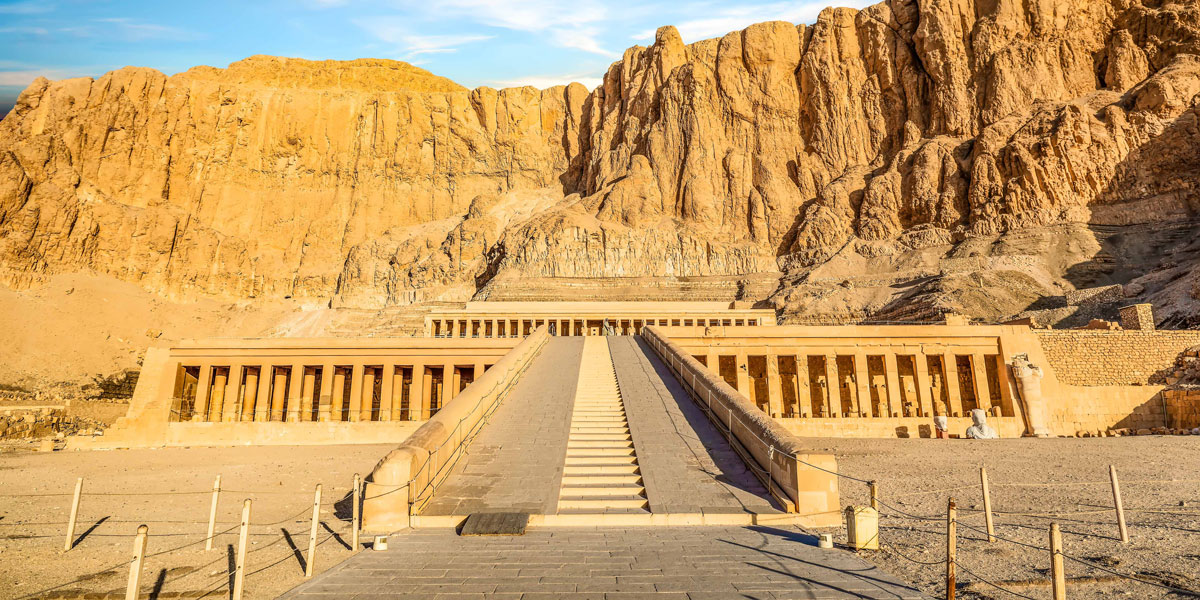
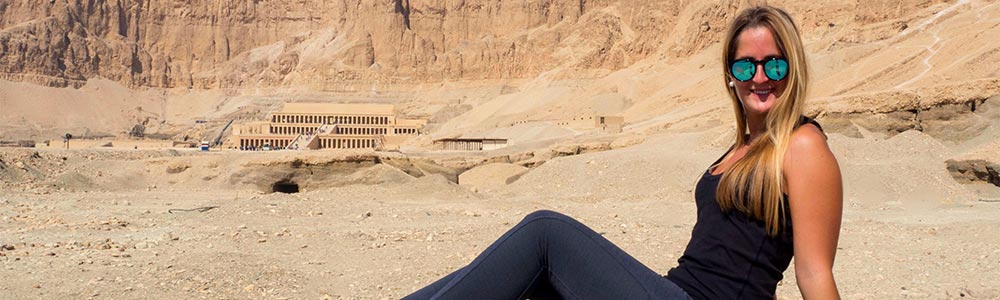
The captivating Hatshepsut Temple is one of the most majestic monuments ever built in ancient Egypt, which radiates pure allure and grandeur. Constructed in 1479 BC to honor Queen Hatshepsut in her role as the divine wife and chief priestess of Amun-Ra, the temple was carved directly into the cliffs of Deir el-Bahari. Rising in harmonious terraces, it stands as her eternal statement of power, success, and architectural perfection, widely regarded as the most complete and refined example of ancient Egyptian temple design.
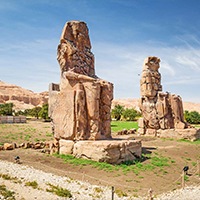
The everlasting statues of the Colossi of Memnon of Amenhotep III are poerful two colossal seated statues of Pharaoh Amenhotep III that stood the test of time. It was built in 1350 BC and standing 18 meters (60 feet) tall, these timeless guardians once marked the entrance to the pharaoh’s vast mortuary temple. Restored several times throughout history, particularly during the Greco-Roman period, the statues offer enduring insight into royal family life, religious symbolism, and the achievements of a golden age.
After completing your West Bank discoveries, you will be driven back to your Nile cruise to enjoy lunch and dinner on board. Spend the remainder of the day relaxing as the ship gently begins its voyage southward toward Edfu, allowing you to savor the peaceful rhythm of the Nile and the magic of Egypt unfolding along its timeless shores.
After savoring breakfast on board, you will be accompanied by your private Egyptologist for a journey into the heart of Upper Egypt’s sacred legends and architectural triumphs.
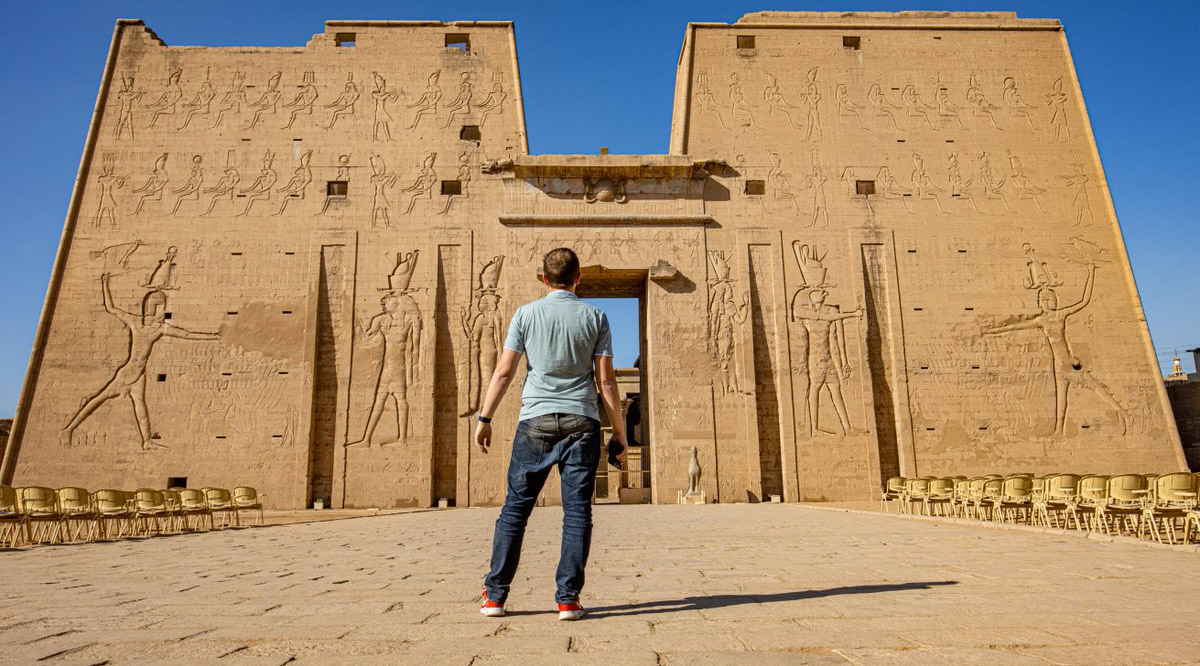
The Edfu Temple the legendary “House of Victory,” rises proudly on the west bank of the Nile. It was made between 237 BC and 57 BC during the Ptolemaic Dynasty, this extraordinary sanctuary stands on the very ground believed to have witnessed the mythical battle between Horus, the sky falcon god, and his evil uncle Set. Renowned as the best-preserved temple in Upper Egypt, Edfu captivates with its towering pylons, finely carved reliefs, and timeless symbolism of divine power, justice, and cosmic order.
Following this immersive visit, you will return to your Nile cruise to enjoy lunch as the vessel gently sails southward toward Kom Ombo. Upon arrival, you will once again join your private guide to explore one of Egypt’s most fascinating temples.
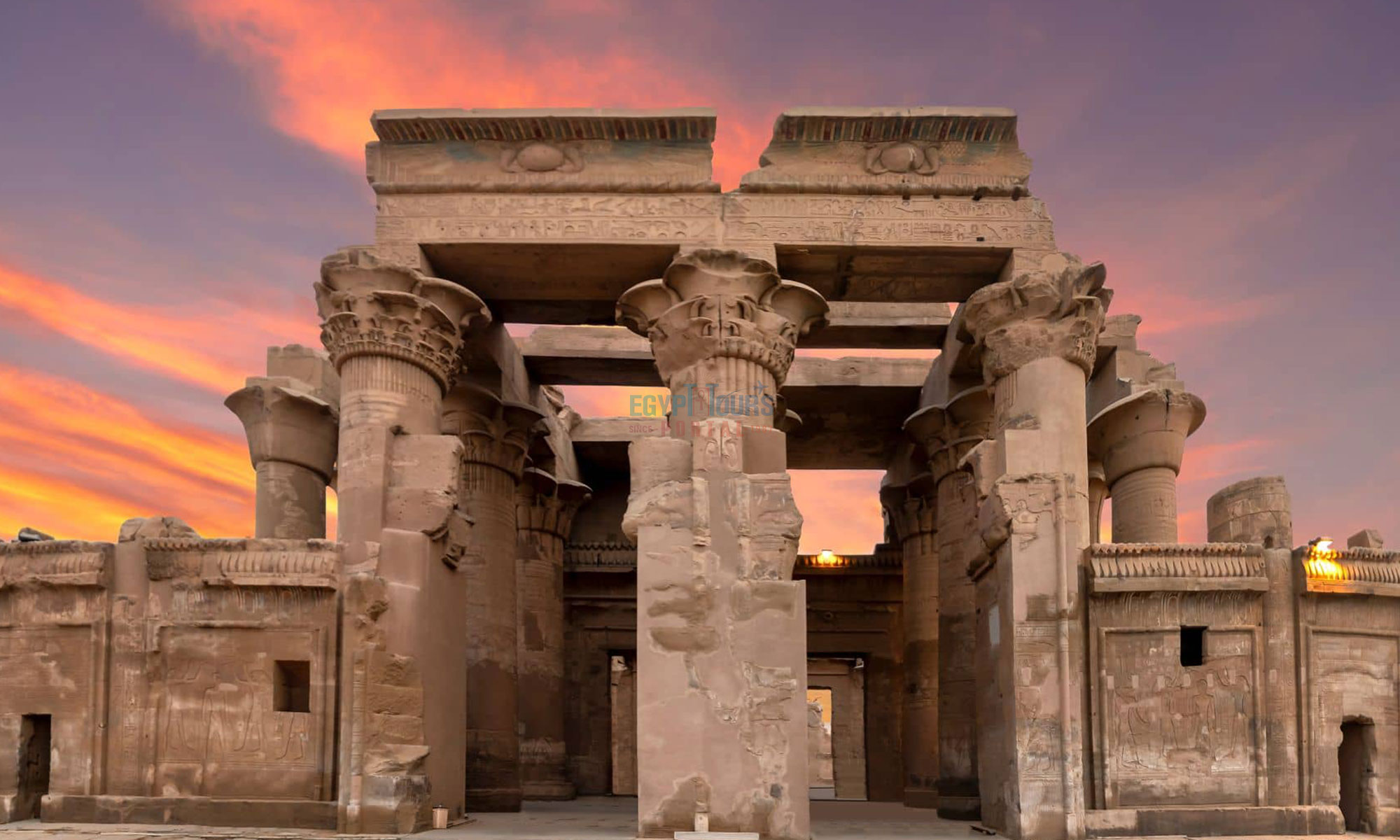
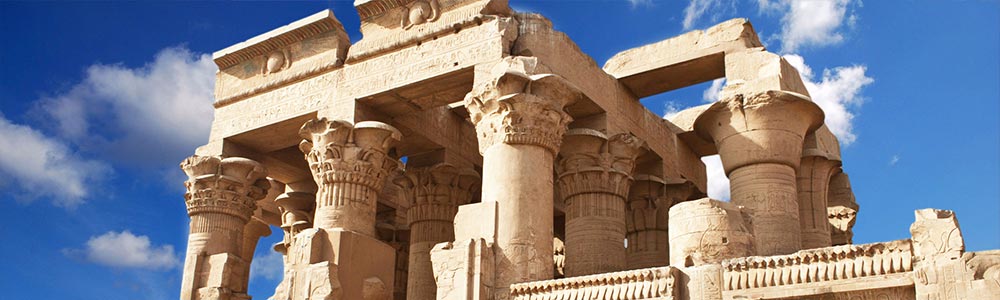
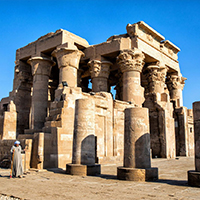
The magical double Kom Ombo Temple is a rare architectural marvel, uniquely designed as a double sanctuary. It was created between 180 BC and 47 BC in the Ptolemaic period, it honors two powerful deities simultaneously: Haroeris (Horus the Elder) on the northern side and Sobek, the crocodile god of the Nile, on the southern side. With twin entrances, halls, and sanctuaries, the temple is adorned with remarkable carvings that reveal advanced medical knowledge, surgical instruments, and astronomical observations, offering a glimpse into the scientific sophistication of ancient Egyptian civilization.
After completing your visit, you will be transferred back to your Nile cruise to enjoy dinner on board. As evening falls, the ship resumes its tranquil journey toward Aswan, where you will arrive and spend a peaceful overnight stay surrounded by the timeless beauty of the Nile.
After enjoying breakfast, you will set out with your expert tour guide on an unforgettable journey through Aswan, discovering some of the city’s most remarkable landmarks and stories.
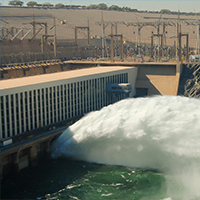
The majestic high dam of Aswan is a triumph of modern engineering, completed in the mid-1960s. This monumental project ushered Egypt into the industrial age by regulating the Nile’s waters for long-term irrigation and agriculture while generating hydroelectric power that transformed the nation’s economy and daily life.
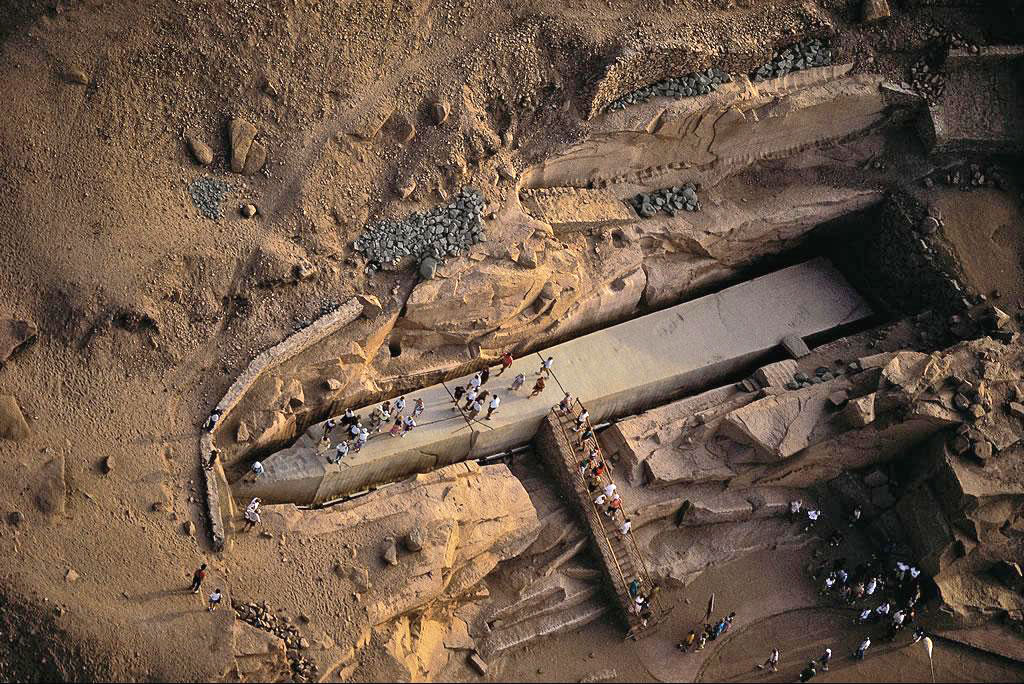
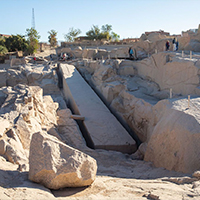
The captivating sky piercer Unfinished Obelisk of Queen Hatshepsut (1508-1458 BC) is a breathtaking open-air monument carved directly into the bedrock. Intended to stand at the entrance of Karnak Temple, this colossal obelisk reaches an astonishing height of 42 meters. It was abandoned when cracks appeared during its creation. Today, it offers one of the clearest insights into the techniques, precision, and ingenuity of ancient Egyptian craftsmen.
After savoring a delicious lunch at a local restaurant in Aswan, your journey continues to one of Egypt’s most enchanting sacred sites.
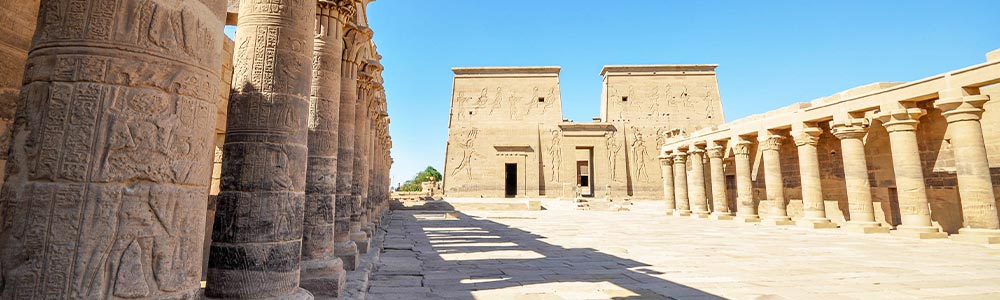
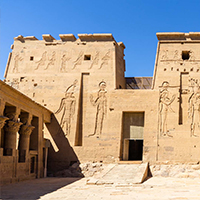
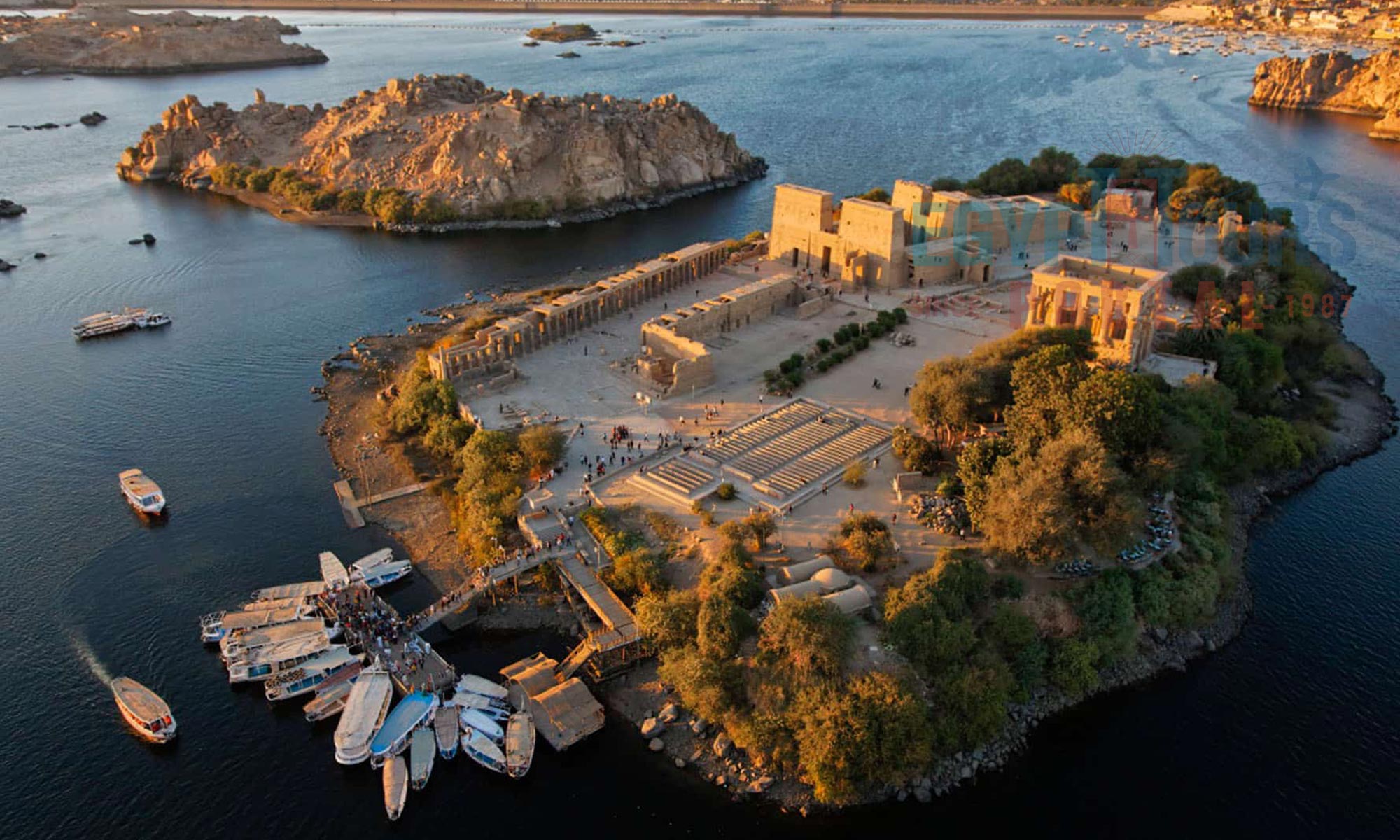
The legendary temple of Philae rises gracefully from its island setting. Its walls vividly recount the timeless “Myth of Osiris,” one of the most profound stories in human history. Originally constructed during the final days of ancient Egyptian civilization between 380 and 362 BC and later expanded in the Ptolemaic era between 282 and 145 BC, the temple stands as a radiant testament to devotion, mythology, and enduring beauty.
As the day draws to a close, you will return to your cruise in Aswan for a restful overnight stay, carrying with you the echoes of ancient legends and modern triumphs.
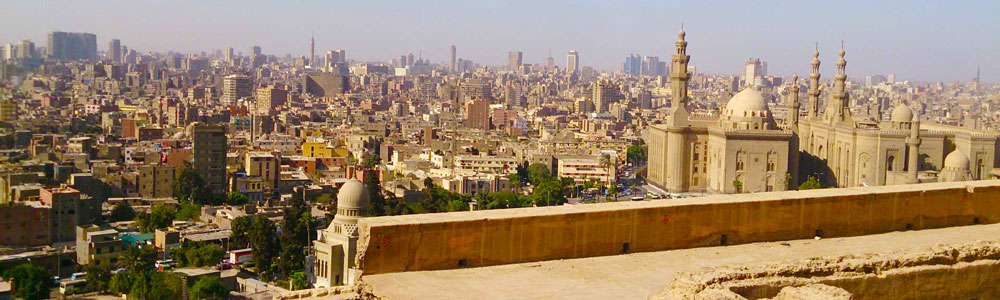
After breakfast, you will bid farewell to your Nile Cruise and check out, then be transferred to Aswan Airport to catch your flight back to Cairo. Upon arrival, you will meet your tour guide and set out on an extraordinary exploration of Cairo’s most distinguished cultural and historical landmarks.
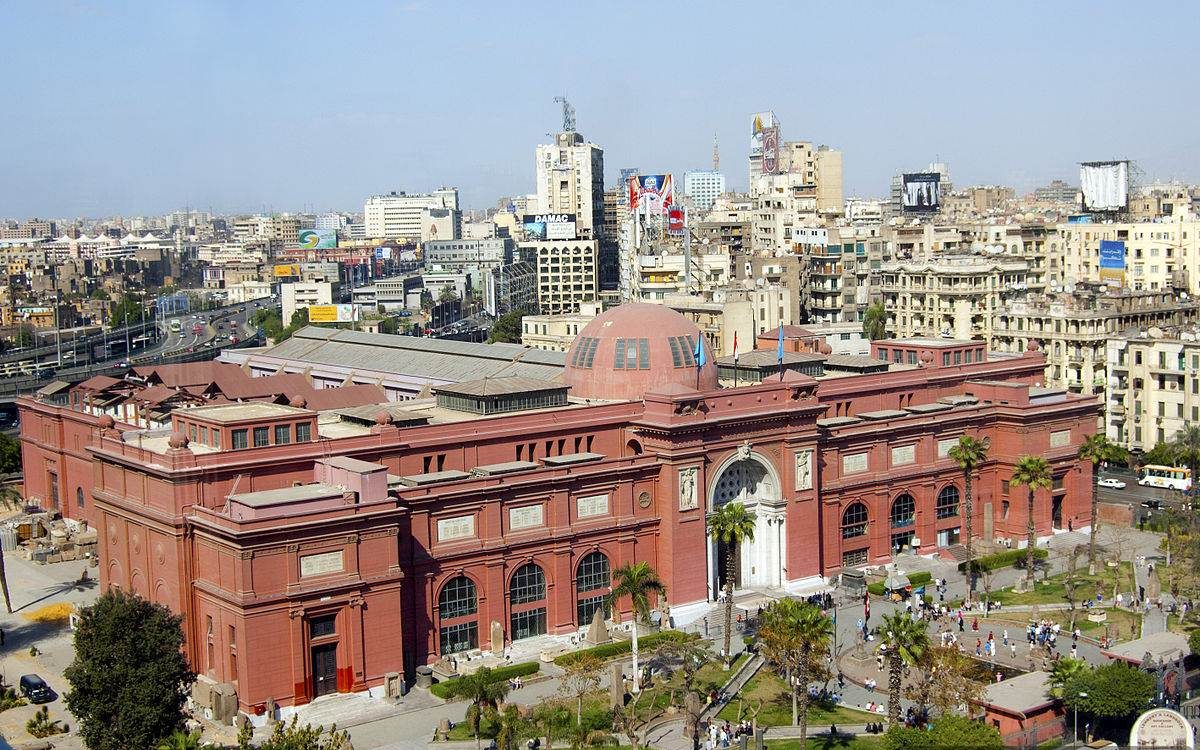
The golden spectacle Egyptian Museum is a great establishment standing in the heart of Cairo. Spread across two expansive floors, the museum houses an unparalleled collection of artifacts and monuments spanning more than 5,000 years of history, offering a powerful introduction to the grandeur of ancient Egyptian civilization.
You will then pause to enjoy lunch at a carefully selected local restaurant before continuing your immersive journey through Cairo’s heritage.
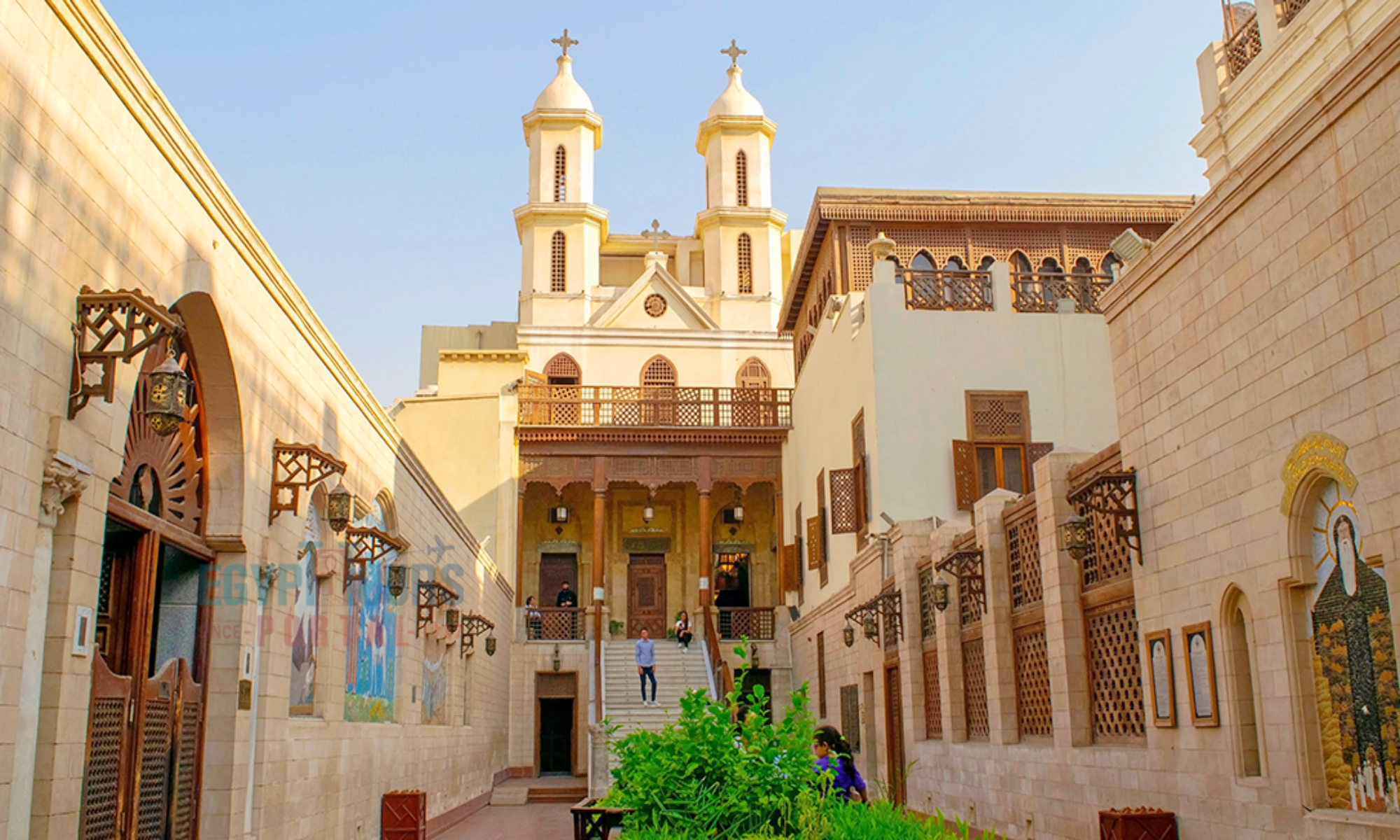
The most significant Coptic landmarks in the city, the Church of the Mother of God, Saint Virgin Mary, widely known as the Hanging Church served as a spiritual center for Egypt’s Coptic community. This remarkable structure dates back to the 5th century AD and was built atop one of the gatehouses of the Roman Babylon Fortress. Rising approximately 30 feet above ground, the church showcases exquisite architectural details and sacred artistry.
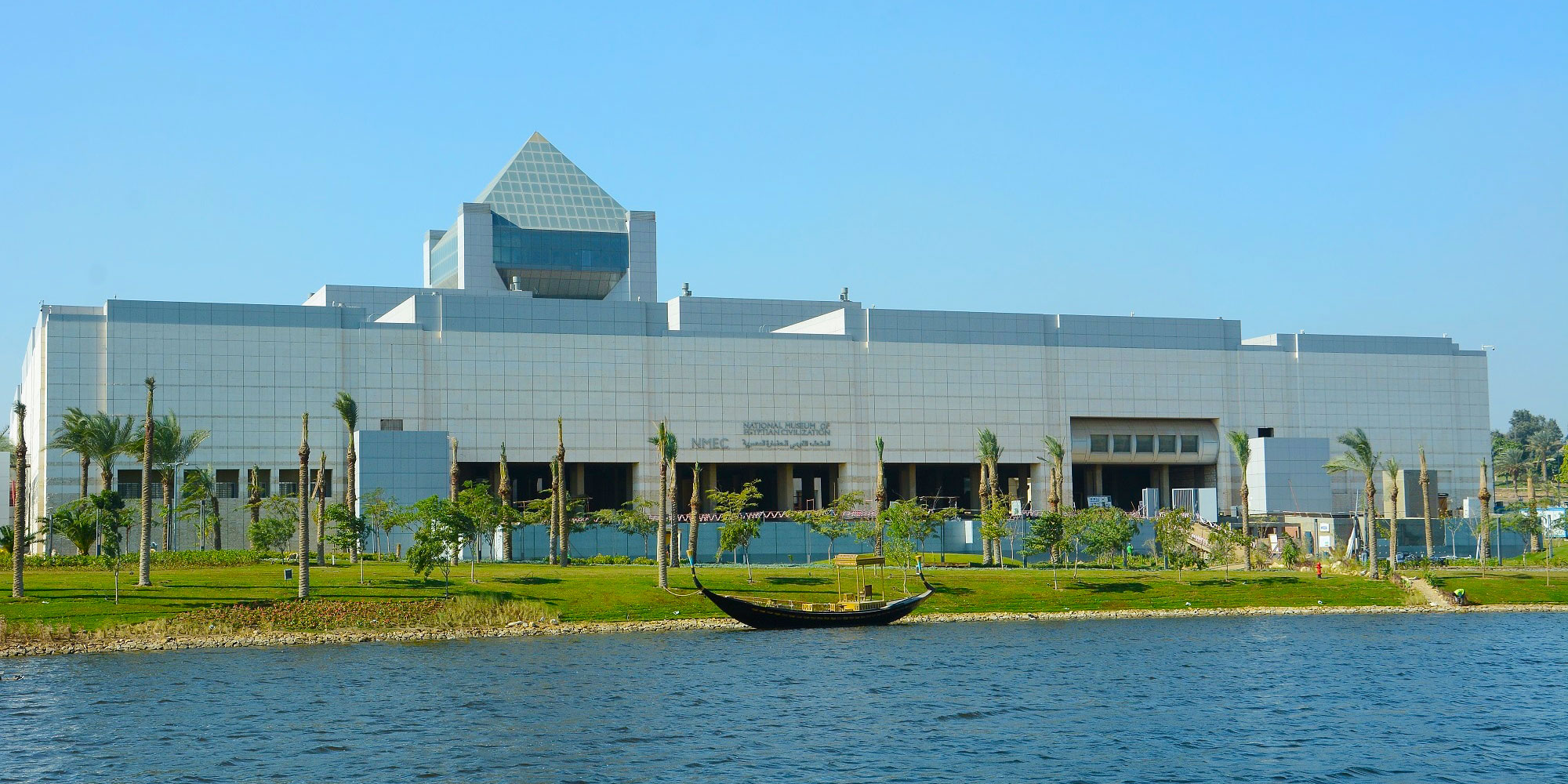
The National Museum of Egyptian Civilization (NMEC) is a legendary and monumental cultural institution and the first museum of its kind in Africa dedicated entirely to a single civilization. The museum displays a vast and diverse collection of around 50,000 artifacts representing every era of Egyptian history, crowned by the renowned Royal Mummies Hall, which brings ancient rulers face to face with the modern world.
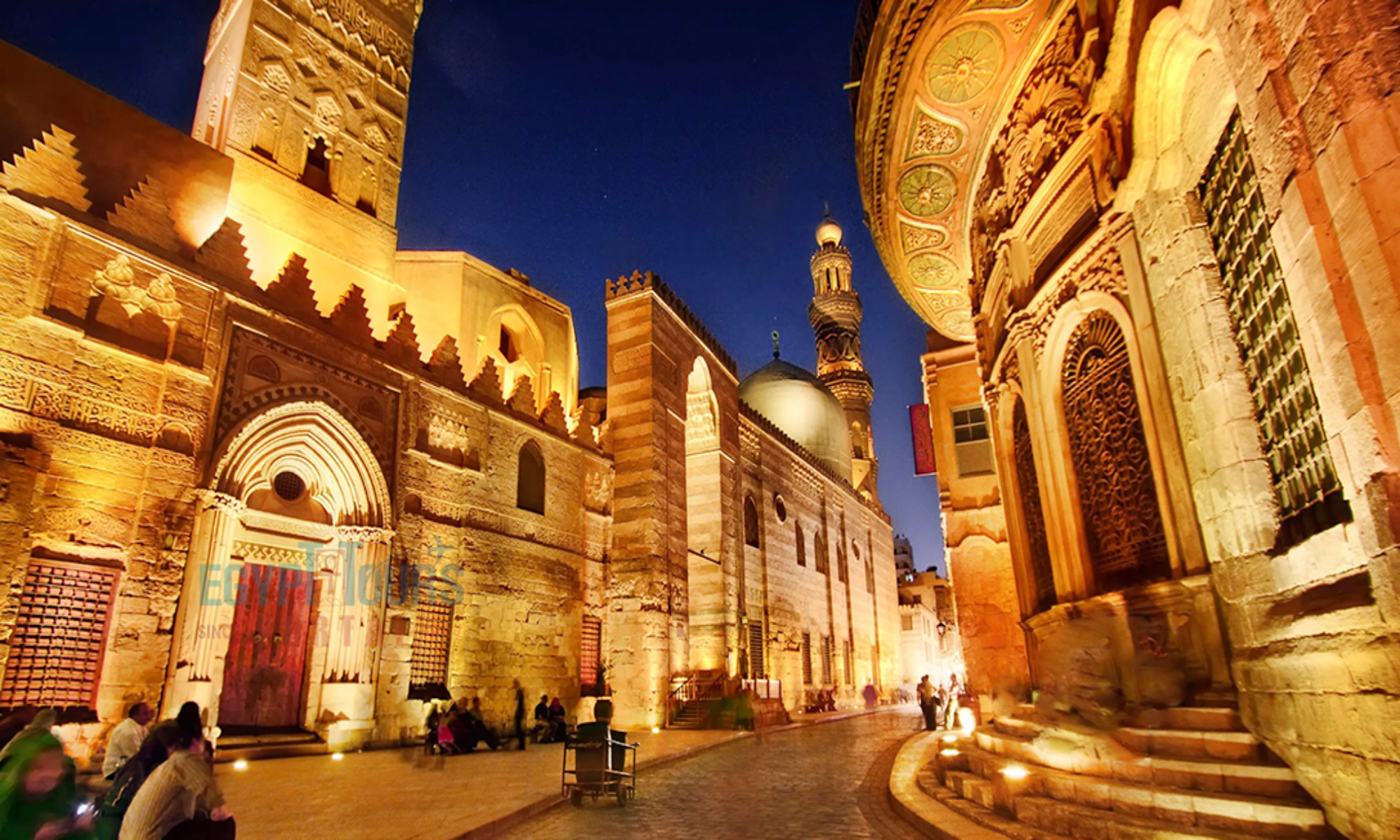
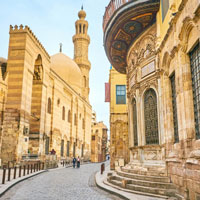
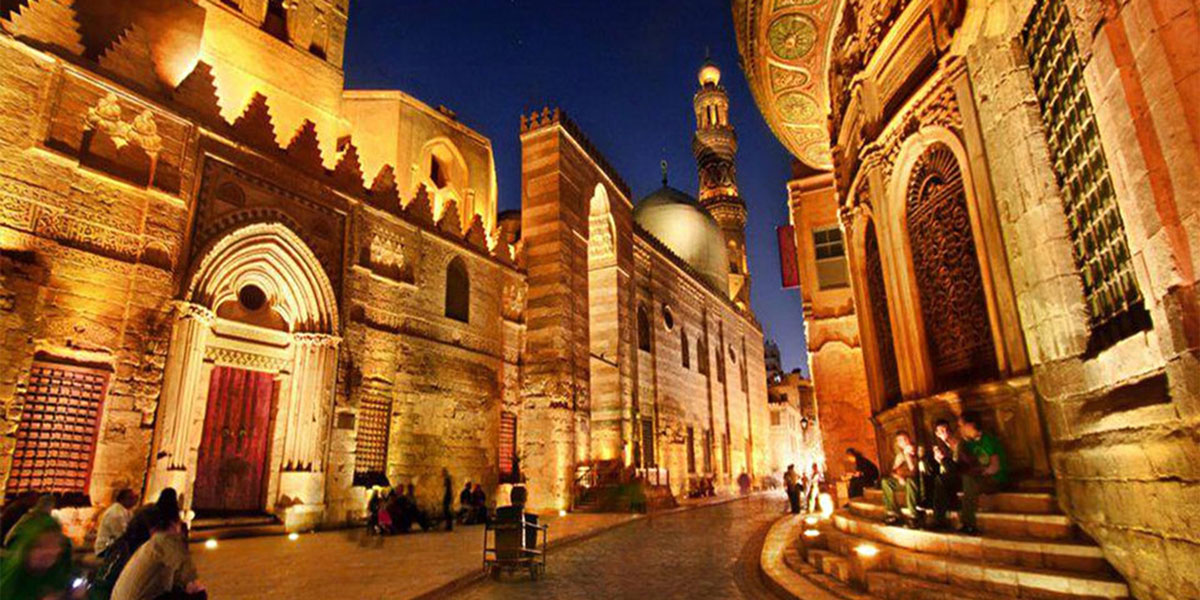
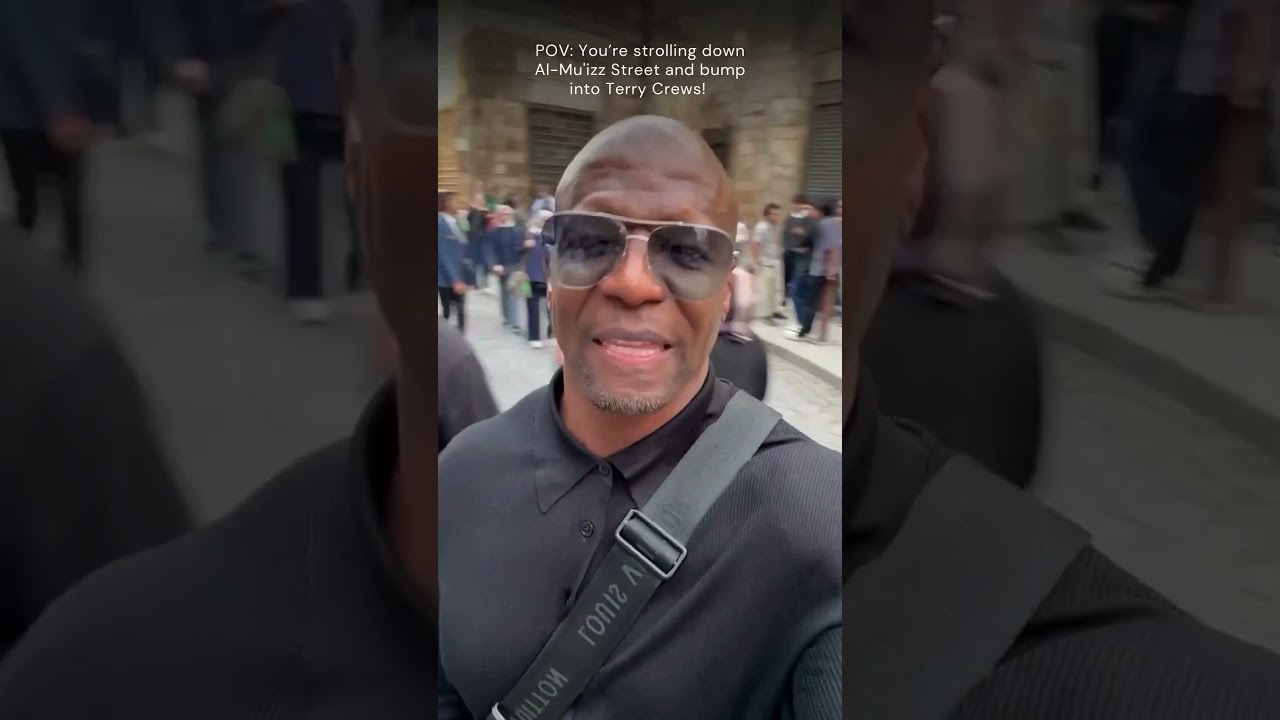
The golden Al Muizz street was established during the Fatimid period in the 10th century. This iconic avenue stands as a living museum of Islamic architecture, lined with historic houses, mosques, art galleries, and traditional cafés that trace the evolution of Cairo’s cultural and economic life through the centuries.
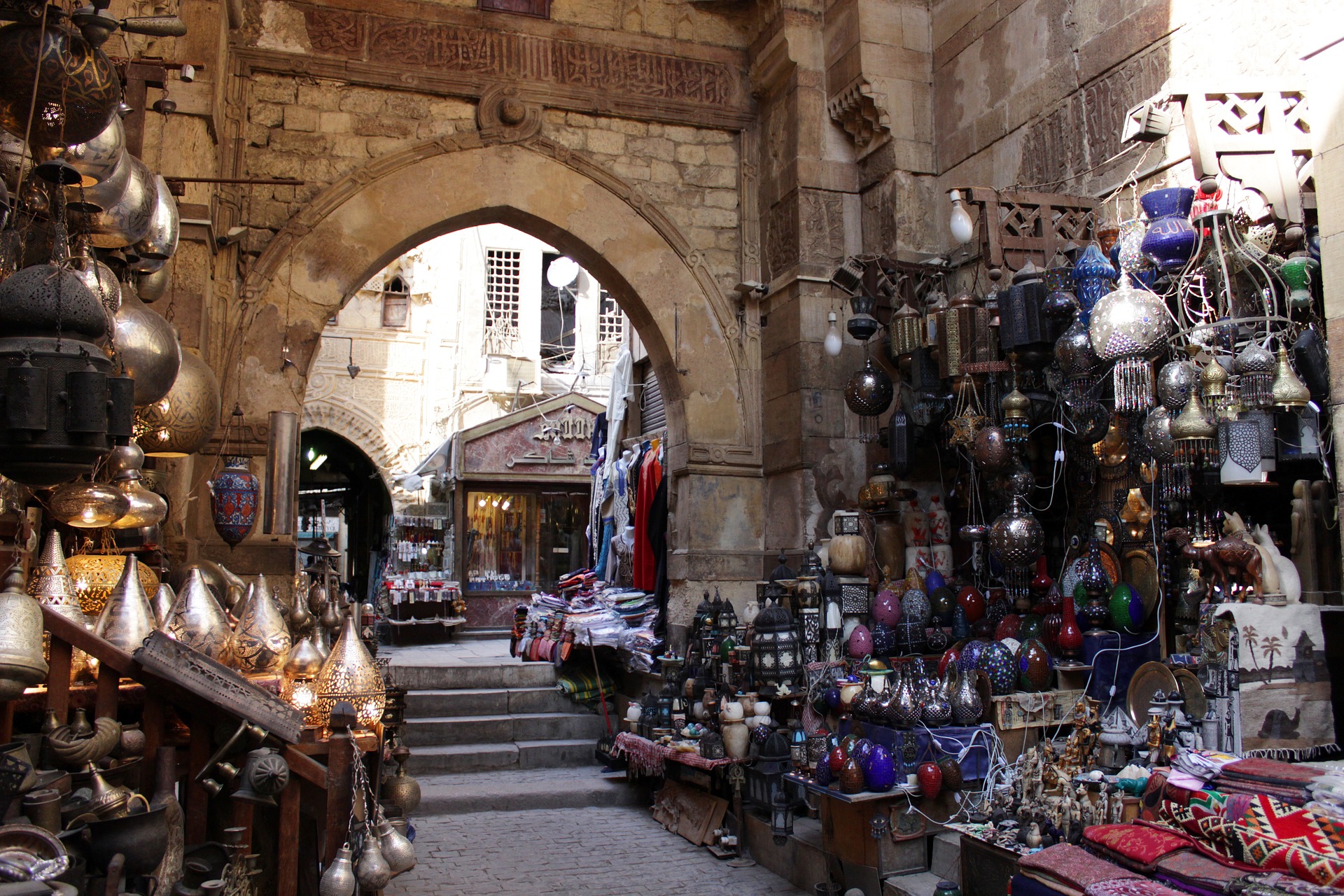
The sublime Khan El Khalili Bazaar is a vibrant commercial hub founded between 1382 and 1389 AD during the Mamluk era. This timeless marketplace is Egypt’s premier destination for shopping, home to master artisans and traders offering everything from handcrafted souvenirs to traditional jewelry and cultural treasures inspired by Egypt’s long and rich history.
At the end of this unforgettable day, you will be transferred back to your hotel in Cairo to relax and enjoy your overnight stay, reflecting on the layers of civilization you have just experienced.
After breakfast, you will check out of your hotel and meet our representative for a seamless and comfortable transfer to Cairo International Airport, where you will board your flight and continue your unforgettable Egypt & Morocco journey.
Upon landing at Mohammed V International Airport in Casablanca, you will be warmly welcomed by our local team holding a personalized name sign. They will assist you with arrival and visa formalities if required and then escort you to your private driver. From there, you will enjoy a relaxed private transfer to your hotel in Casablanca for check-in and a restful overnight stay, with the option to enjoy a gentle evening city tour upon request to begin discovering the city’s atmosphere.
You will start your day with breakfast at your hotel in Casablanca, then meet your private guide for a journey that gracefully weaves together Atlantic horizons and royal legacy.
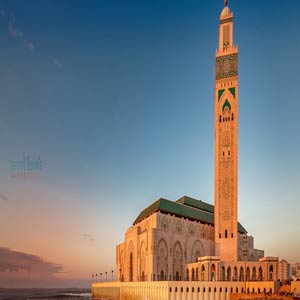
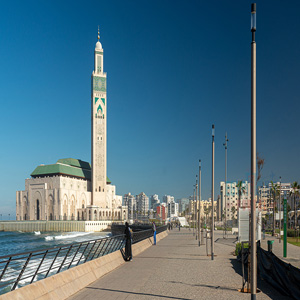
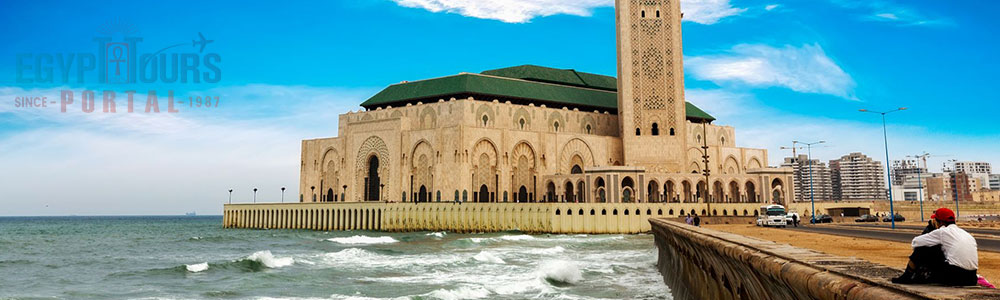
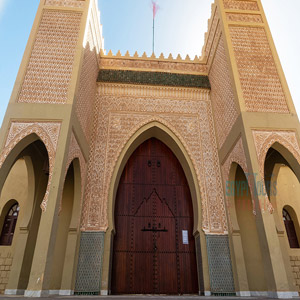
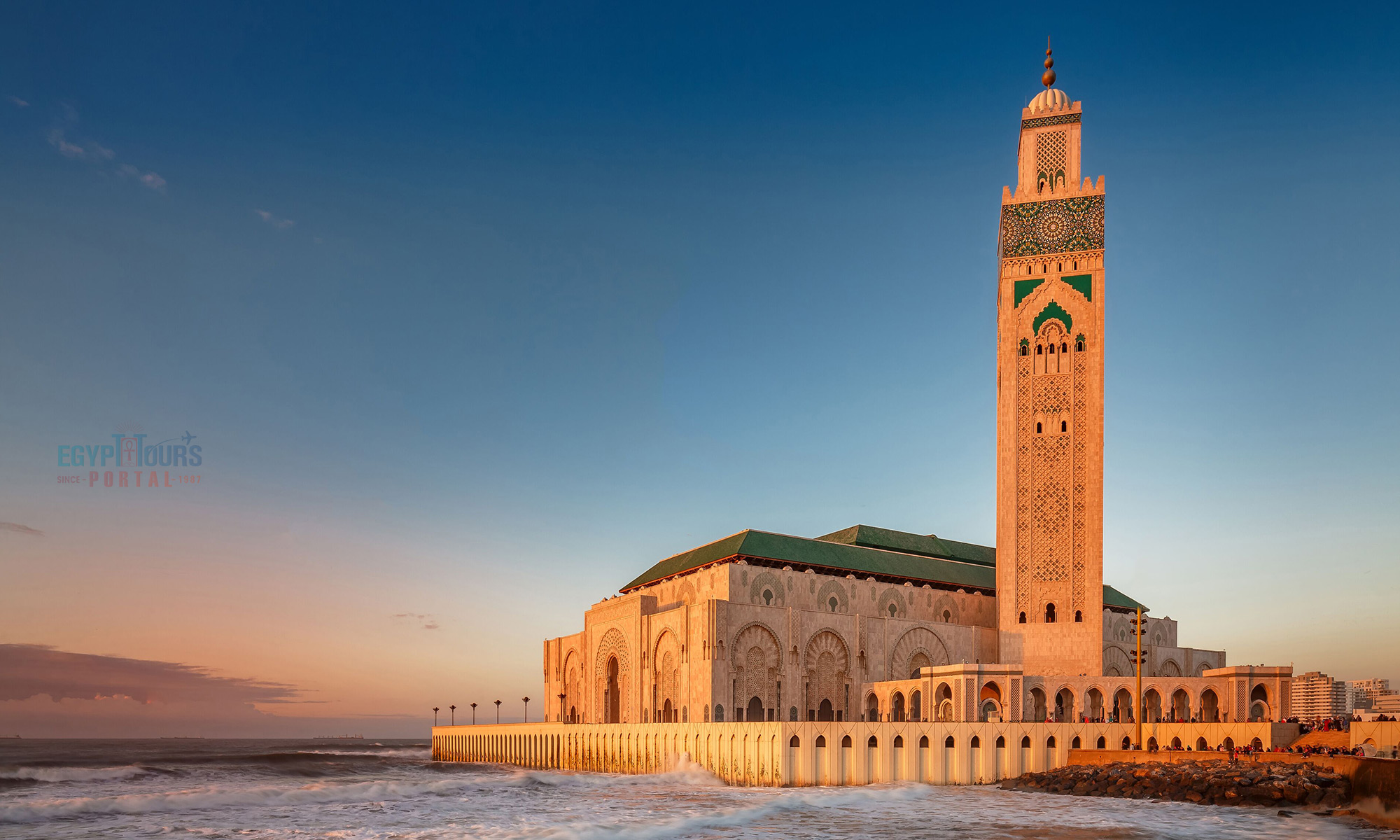
The Hassan II Mosque of Casablanca is a modern masterpiece where monumental scale meets exquisite craftsmanship. Completed in 1993 and dramatically poised above the Atlantic Ocean, the mosque was designed by architect Michel Pinseau and realized by master artisans from across Morocco. Its soaring 210-meter minaret, the tallest in the world at its time, rises above vast prayer halls and open courtyards, creating a breathtaking space that reflects deep spiritual devotion and artistic brilliance.
A panoramic tour of Casablanca follows, revealing the city’s many layers and contrasts. Along the Atlantic promenades of La Corniche and Ain Diab, contemporary life unfolds beside rolling waves, while wide boulevards shaped by French influence tell the story of the city’s 20th-century evolution. Historic quarters such as Quartier Habous and the Old Medina unveil older rhythms of life, complemented by iconic landmarks including Rick’s Café, Mohammed V Square, the Sacred Heart Cathedral, and the Central Market, each offering a vivid glimpse into Casablanca’s everyday pulse.
You then continue by private vehicle to Rabat, Morocco’s elegant capital, where history and modern governance exist in seamless harmony.
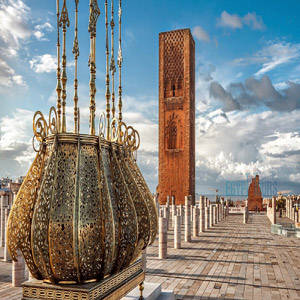
The impressive Hassan Tower is a lasting echo of Almohad ambition and greatness. It was commissioned in the 12th century by Caliph Abu Yusuf Yaqub al-Mansur; it was intended to anchor one of the largest mosques ever conceived. Construction ceased after his death in 1199, leaving the 44-meter minaret surrounded by rows of stone columns that still hint at the grandeur of the original vision.
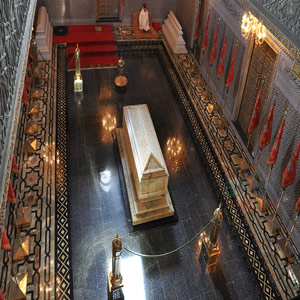
The serene Mausoleum of Mohammed V, the final resting place of King Mohammed V, offers a moment of quiet reverence. This honorable monument houses the tombs of King Mohammed V, King Hassan II, and Prince Abdallah. Completed in 1971 and designed by Cong Vo Toan, the white-marble structure blends traditional Moroccan artistry with refined modern lines, creating an atmosphere of dignity and calm.
Lunch is served at a local restaurant before continuing the exploration with Rabat’s historic treasures.
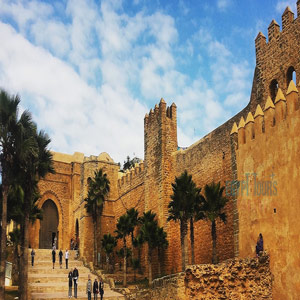
The Kasbah of the Udayas reveals a coastal fortress shaped by centuries of rule. Its winding alleys and sweeping ocean views are crowned by the beautifully decorated Bab Oudaia gate, dating back to the late 12th century, where classic Almohad stonework welcomes visitors with timeless character.
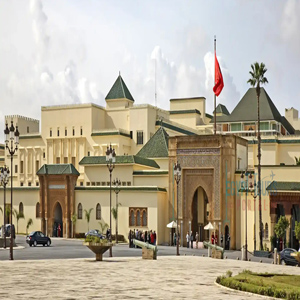
The Royal Palace of Rabat (Dar al-Makhzen) is the heart and pride of rabat that was made in 1864 and still serving as the active royal residence. Set within a guarded complex of ceremonial gates and courtyards, the palace stands as a powerful symbol of Morocco’s enduring monarchy. While interior access is restricted, the exterior alone conveys authority, tradition, and continuity.
You will drive to Chefchaouen with scenic stops and an evening walk through the blue-painted medina. You will then enjoy your overnight in Chefchaouen.
You will have your breakfast, then head with your tour guide in a private vehicle to explore the remarkable faded blue of Chefchaouen, starting with:
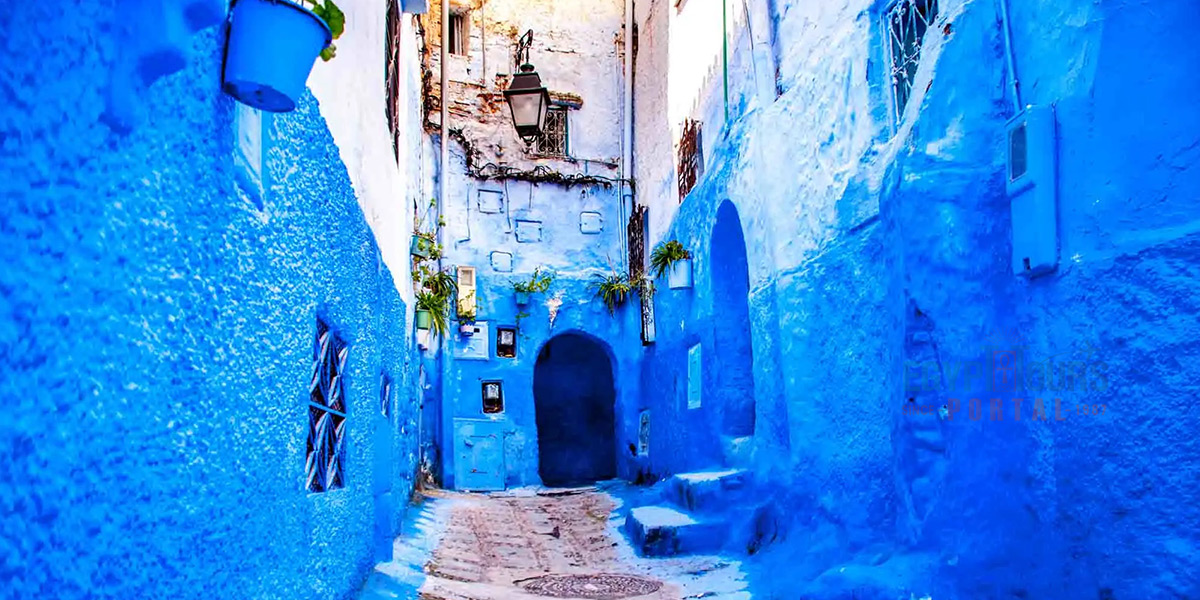
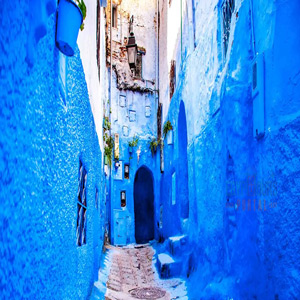
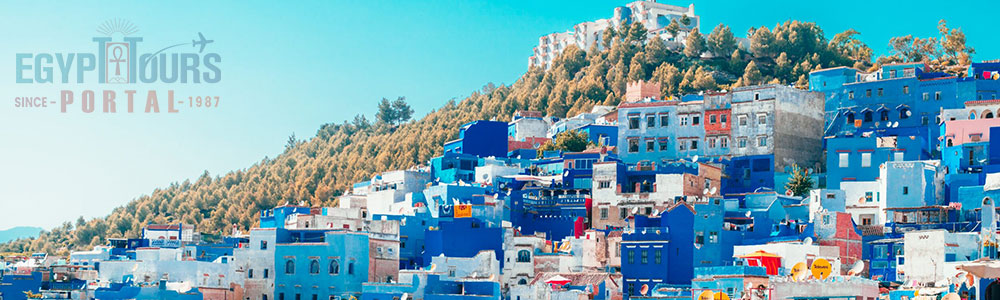
The Rif Mountains miracle of Chefchaouen was founded in 1471 AD as a fortified town. Its famous blue-painted alleys, a tradition that expanded notably from the 15th–16th centuries, reflect spiritual symbolism often linked to the sky, heaven, and tranquility. The medina’s narrow lanes, stairways, and arched doorways are washed in varying shades of blue, originally influenced by Andalusian and Jewish traditions, creating a calm, cooling atmosphere. The blue medina is Chefchaouen’s defining identity and one of Morocco’s most photographed historic urban landscapes.
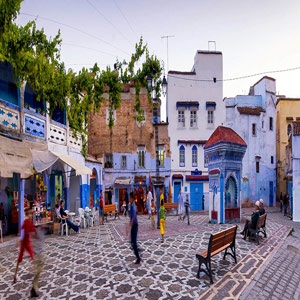
Outa el Hammam Square is a historical marvel that acts as the heart of Chefchaouen’s old town, Outa el Hammam Square has served for centuries as the city’s main social and cultural gathering place. The square is anchored by the Kasbah of Chefchaouen, built shortly after the city’s founding in the 15th century, whose red walls contrast strikingly with the surrounding blue streets. Lined with cafés, restaurants, and local shops, the square reflects daily life in the medina, from traditional mint tea rituals to evening gatherings. As night falls, its illuminated setting becomes the lively focal point of Chefchaouen’s communal rhythm.
You will then drive to Fes with lunch en route, then you will head with your tour guide to enter the Royal gate of the city and head to:
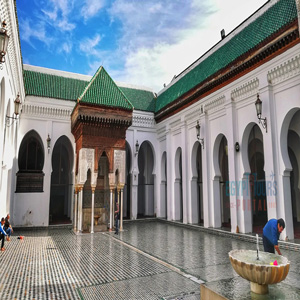
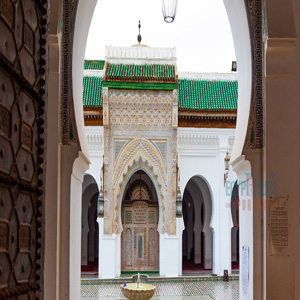
Al-Qarawiyyin University is a truly miraculous institution founded in 859 AD by Fatima al-Fihri and recognized as the world’s oldest continuously operating university. Within its historic halls, generations of scholars once studied theology, astronomy, mathematics, and law, shaping the foundations of Islamic scholarship and leaving a lasting influence on European thought.
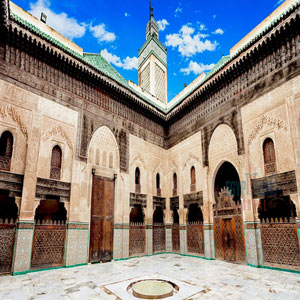
The refined elegance of Bou Inania Madrasa, a magnificent 14th-century masterpiece and a rare example of a madrasa that also served as a congregational mosque. Its finely carved cedar wood, polished marble floors, and intricate muqarnas ceilings showcase the peak of Marinid architectural artistry.
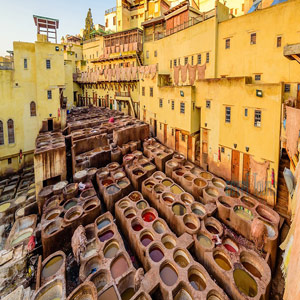
The legendary Chouara Tanneries have operated continuously since medieval times to bring color to Morocco. Using natural dyes such as saffron and indigo, artisans still tan leather as they have for centuries. From surrounding terraces, the colorful stone vats create one of Fez’s most iconic and enduring images of traditional craftsmanship.
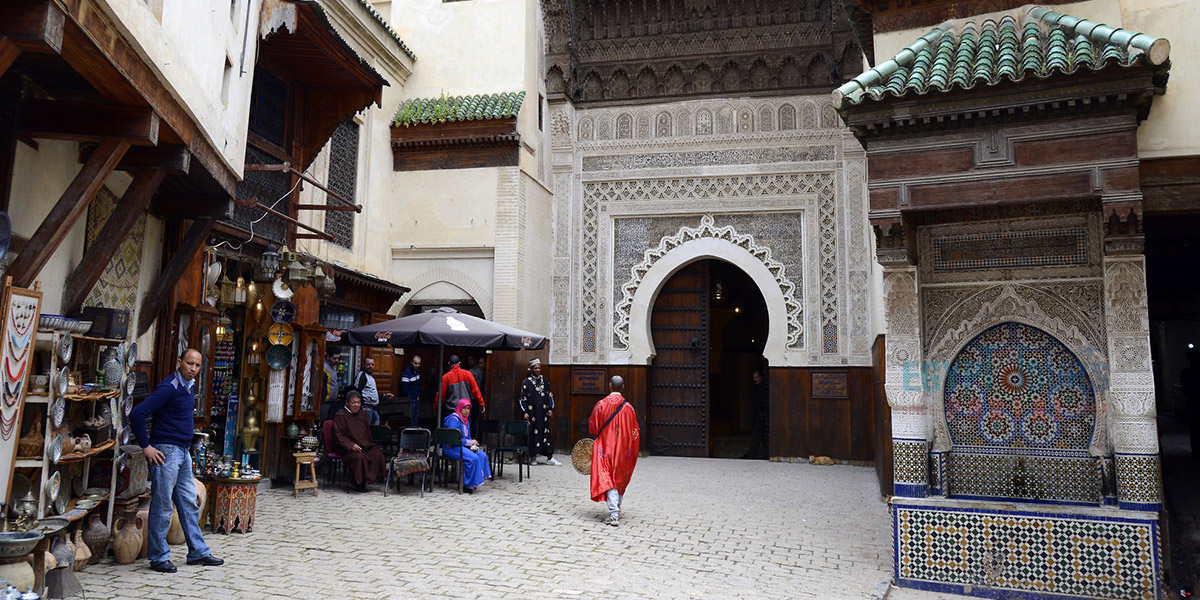
Nejjarine Fountain is an exquisite 18th-century creation adorned with floral zellij tiles and delicately carved cedar wood. Set beside a former caravanserai, it recalls the era when merchants from across North Africa gathered here along ancient trade routes.
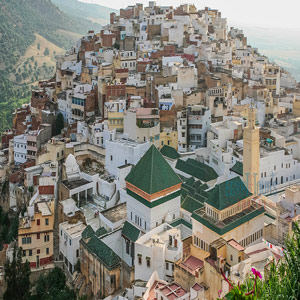
The Moulay Idriss Mausoleum is one of Fez’s most sacred landmarks, hidden within the alleys of Fez el-Bali and dedicated to Moulay Idriss II, founder of the city and a descendant of the Prophet Muhammad, who died in 828 AD. For centuries, it has served as a major spiritual center and pilgrimage site for Moroccans. Although non-Muslims cannot enter the inner sanctuary, visitors can admire its exquisite zellij tilework, carved cedar doors, marble columns, and lantern-lit details, which create a deeply reverent atmosphere. More than a monument, the mausoleum is a living part of Fez, where daily life slows in respect, revealing the city’s enduring blend of faith, history, and tradition.
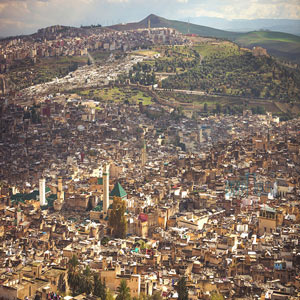
Fes el-Bali provides a magical passage to a living medieval world. With more than 9,000 narrow alleys, it is the largest car-free urban area on Earth. Donkeys still carry goods through its winding streets, and workshops resonate with age-old trades, preserving a way of life that has endured for centuries.
You will spend the night in a traditional riad in Fes
After breakfast, your desert adventure begins as you leave Fes behind and journey south toward Merzouga, where the Sahara slowly reveals its magic. The road first carries you through Ifrane, then into the tranquil cedar forests of Azrou, home to playful wild monkeys and some of Morocco’s most beautiful wilderness scenery, perfect for memorable photographs.
Continuing onward, you stop for lunch in Zaida, a small Berber village that offers a glimpse into local mountain life. The journey then unfolds through the dramatic landscapes of the Atlas Mountains, passing the highland town of Midelt, where rugged peaks and wide valleys stretch toward the horizon. As you reach Rich and later Erfoud, the scenery begins to change, and the first signs of the Tafilalet Saharan oasis emerge, signaling your approach to the desert.
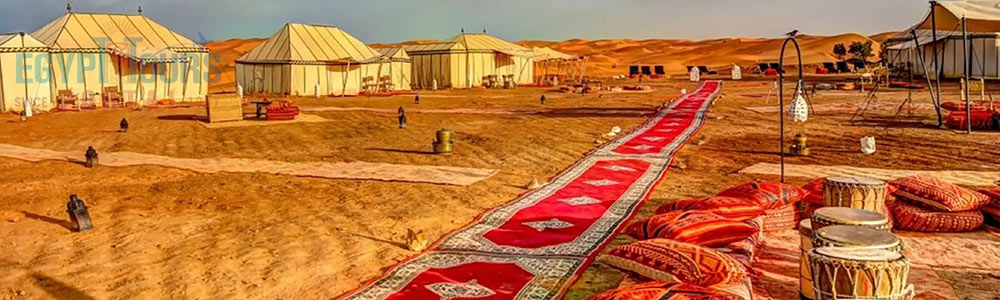
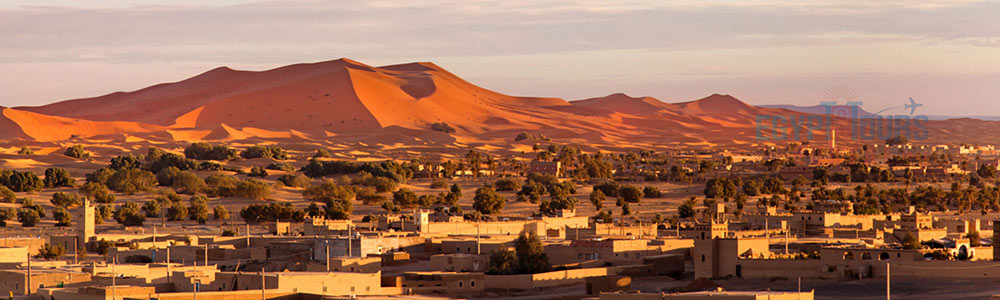
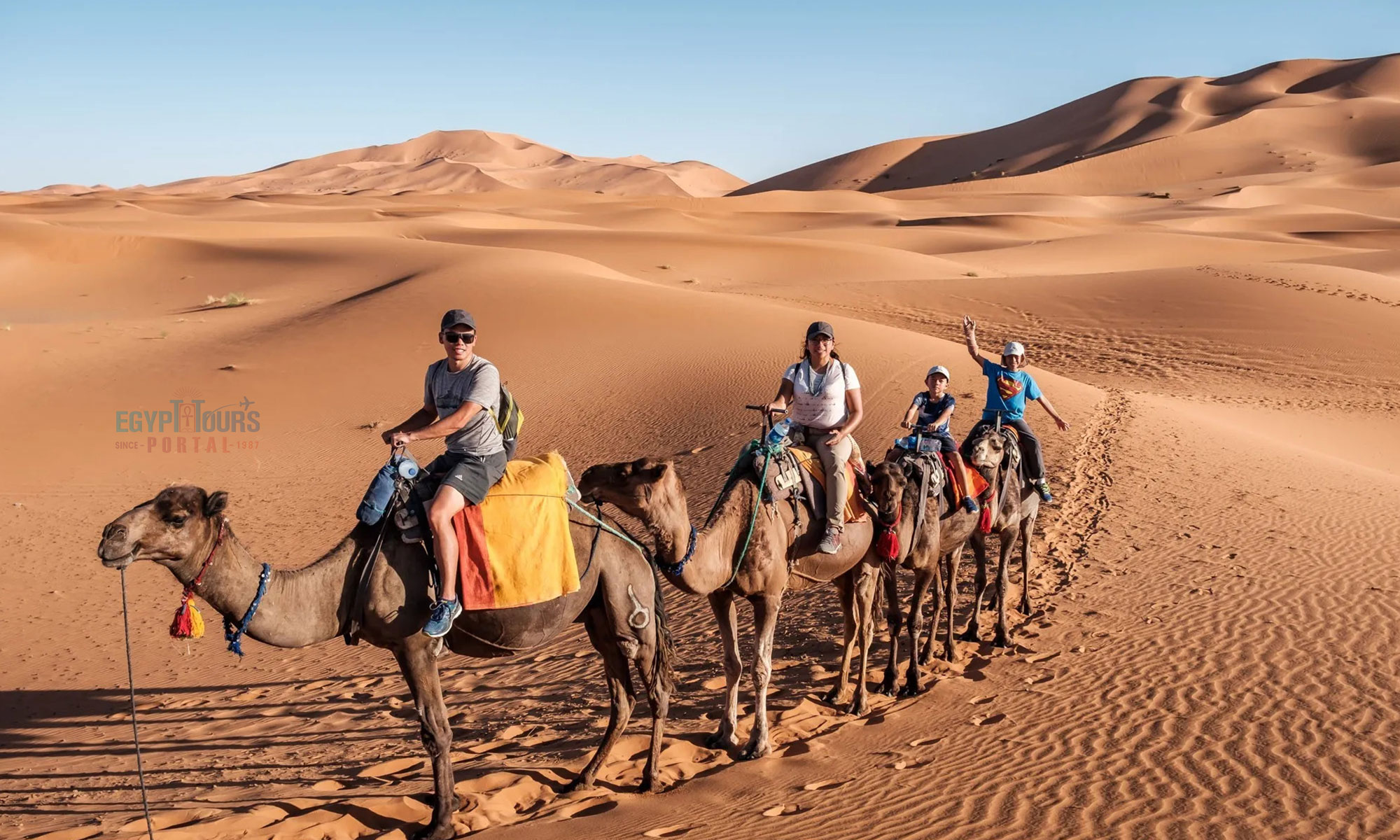
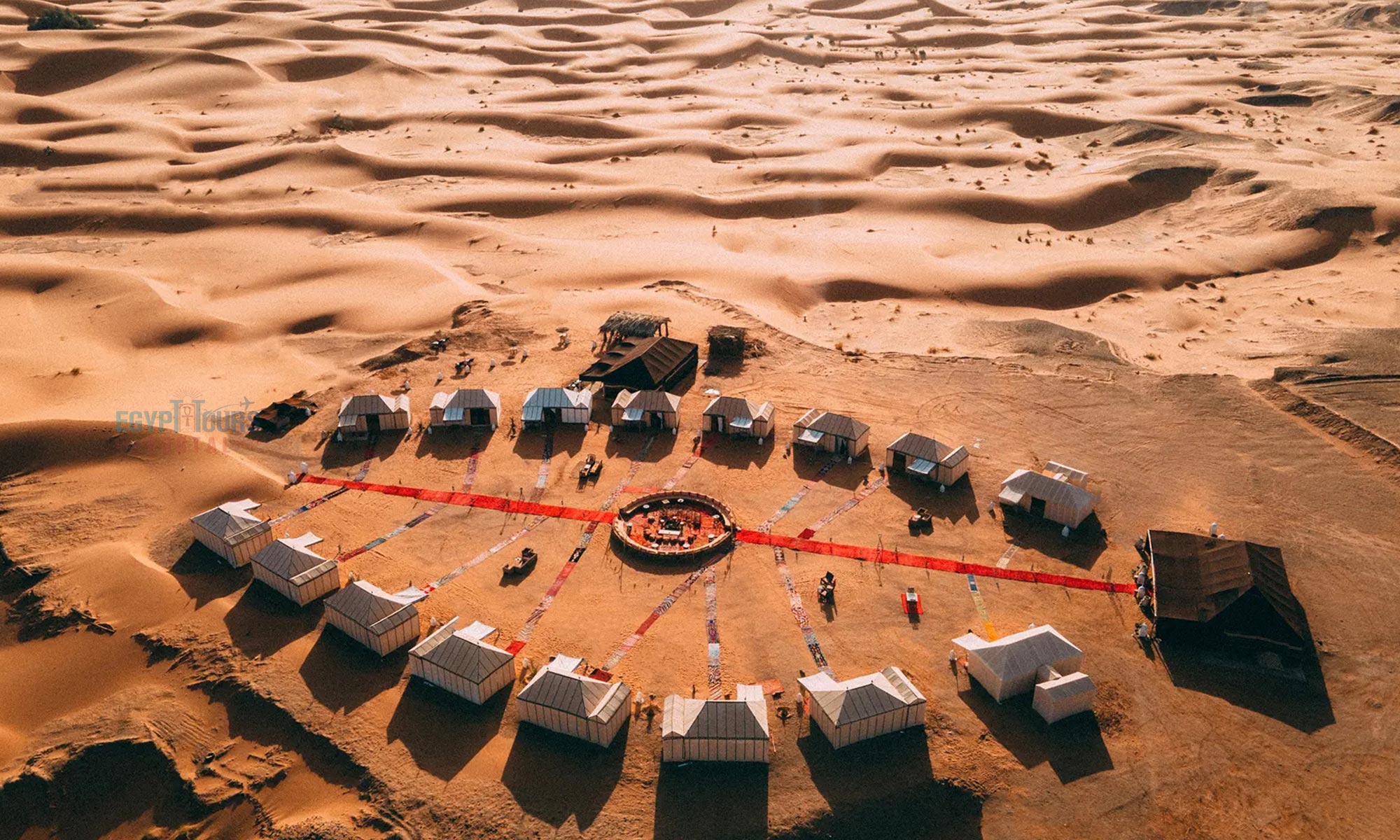
By late afternoon, you arrive in Merzouga, resting briefly before the most enchanting moment of the day. As the sun begins to sink, you mount your camel and ride gently across the golden dunes, watching the desert glow in shifting shades of amber and rose. The trek leads you deep into the Sahara, where your desert camp awaits, an unforgettable night beneath endless stars, surrounded by silence, sand, and pure desert wonder.
As dawn breaks over the Sahara, you wake to a breathtaking sunrise above the dunes, where soft golden light slowly spills across the endless sea of sand. After soaking in this quiet, magical moment, you mount your camel once more and ride back across the dunes, the desert now glowing with gentle morning hues. Your international voyage continues to
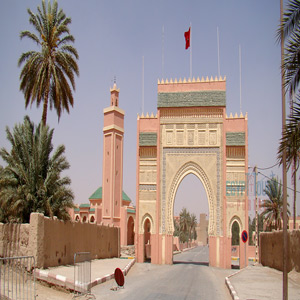
Rissan is a magical ancient desert town whose roots stretch deep into Moroccan history. It was established as a major caravan crossroads from the medieval period onward. Rissani flourished between the 14th and 18th centuries as a vital trading hub linking Morocco with sub-Saharan Africa. Gold, salt, spices, and enslaved goods once passed through its markets, and the town later became the cradle of Morocco’s ruling dynasty.
At the spiritual heart of Rissani stands the Mausoleum of Moulay Ali Sharif is a spititual gem found in the core of Rissani built in the 17th century and dedicated to Moulay Ali Sharif (1659), the founder of the Alaouite dynasty, which has ruled Morocco since 1631 and continues to this day. Moulay Ali Sharif was a descendant of the Prophet Muhammad, and his lineage gave religious legitimacy to the dynasty’s rise to power. The mausoleum remains one of the most sacred pilgrimage sites in southern Morocco, especially revered by Moroccans. Set next to palm groves and desert stillness, the mausoleum embodies traditional Moroccan sacred architecture and devotion, revealing the spiritual roots of Moroccan kingship and the deep link between faith, history, and the Sahara.
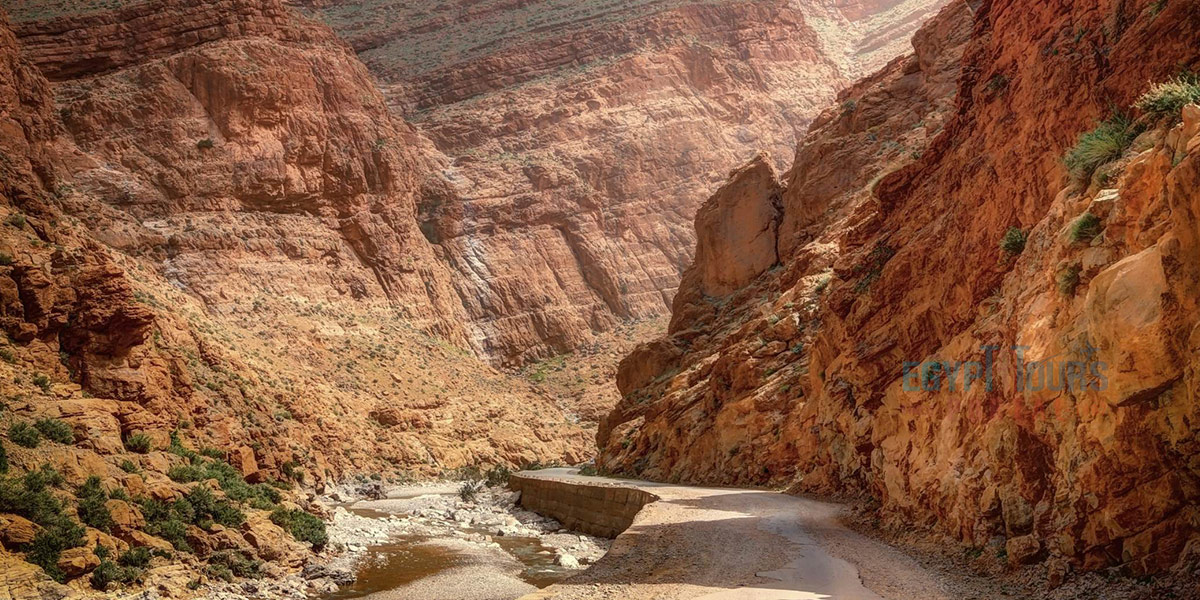
The road then leads through ever-changing landscapes to the dramatic Todra Gorges, where towering limestone cliffs rise high above a narrow river corridor, creating one of Morocco’s most striking natural wonders. Nearby, the lush Tinerhir Oasis offers a refreshing contrast, with palm groves and traditional villages nestled along the valley floor.
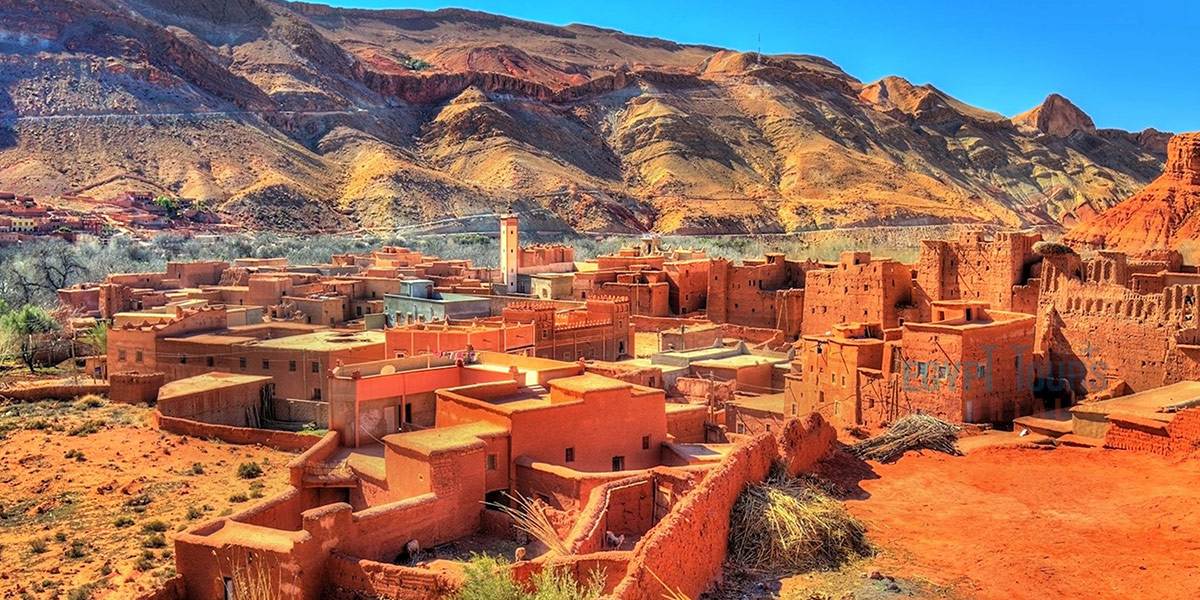
You will then embark on a scenic drive through the Dades Valley, famously known as the Valley of a Thousand Kasbahs. Winding roads reveal ancient fortified villages, dramatic rock formations, and fertile oases that tell stories of caravan routes and desert life. By evening, you arrive in the heart of the valley, where the peaceful surroundings of the Dades Valley welcome you for a restful overnight stay, surrounded by mountains, history, and timeless beauty.
After breakfast, the journey unfolds through the fragrant Roses Valley and the palm-filled landscapes of Skoura, where ancient kasbahs rise gently from orchards and oasis gardens, painting a scene of timeless rural Morocco. Along the way, you pause for memorable photos at the historic Taourirt Kasbah and the legendary Atlas Film Studios, where desert landscapes have been transformed into cinematic worlds.
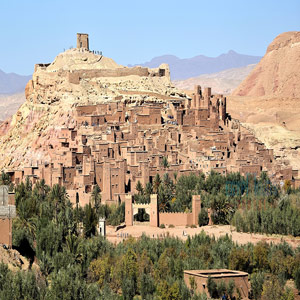
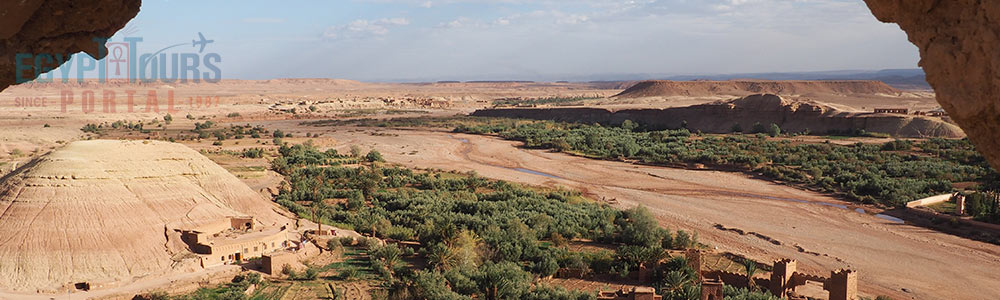
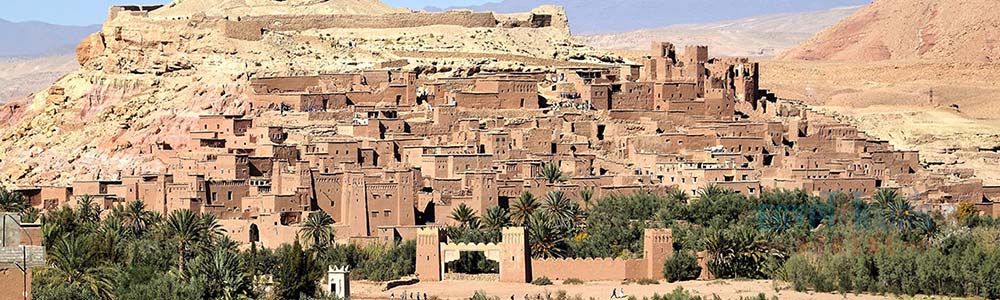
Aït Ben Haddou is an epic ksar, which is a fortified village where natural beauty and timeless legend merge in a breathtaking desert setting. It is famous for its extraordinary state of preservation and dramatic hillside silhouette. It is one of the country’s most evocative heritage sites since the 11th century during the Almoravid period, offering a vivid glimpse into life along the desert’s edge in pre-modern times. Crafted entirely from sun-dried earth and clay using the traditional architectural style of southern Morocco, the ksar rises in layered tiers above the valley. Positioned along ancient caravan routes that once connected the Sahara with Marrakech, it was conceived as a defensive stronghold, with tightly clustered homes, narrow winding alleys, and fortified walls designed to protect both people and precious goods. It stands as an outstanding example of traditional Moroccan earthen clay architecture and has been proudly recognized as a UNESCO World Heritage Site since 1987.
Within this magical establishemnet holds, a labyrinth of passageways, old granaries, and majestic viewpoints reveals how desert communities once lived, traded, and safeguarded their supplies against the harsh elements. Thanks to its epic landscape and authentic atmosphere, Aït Ben Haddou has also captured the imagination of filmmakers from around the world, serving as a backdrop for iconic productions such as Lawrence of Arabia (1962), The Mummy (1999), Gladiator (2000), Kingdom of Heaven (2005), Prince of Persia (2010), The Odyssey (2026), the television series Game of Thrones, and many more, cementing its place as both a historical treasure and a living legend of cinema.
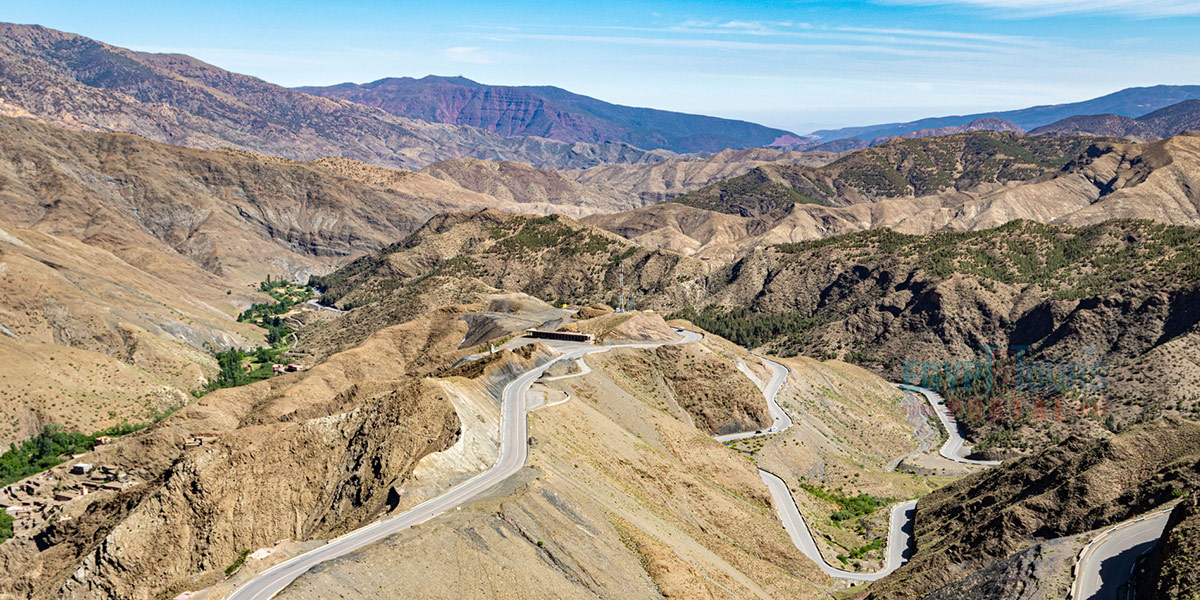
The road then ascends into the majestic High Atlas Mountains, crossing the breathtaking Tizi n’Tichka Pass at 2,260 meters, where marvelous views of peaks and valleys stretch to the horizon. As the mountains give way to plains, you arrive in Marrakech, the vibrant Red City, ready to settle in and spend the night surrounded by its magical atmosphere.
After breakfast, step out with your guide into the beating heart of Marrakesh, a city where color, sound, and movement shape everyday life, and tradition flows effortlessly into the present.
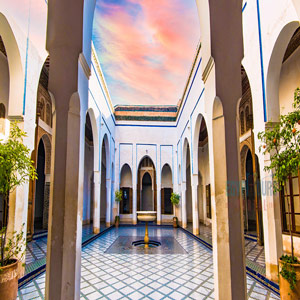
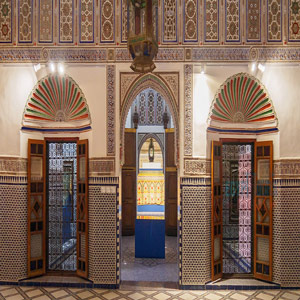
The elegant Bahia Palace is a refined 19th-century residence designed to express power, prestige, and impeccable taste. Peaceful courtyards, fragrant gardens, and lavishly decorated rooms unfold one after another, adorned with carved cedar ceilings, intricate zellij mosaics, and delicate stucco work. Every detail reflects the sophisticated lifestyle of Marrakesh’s former aristocracy and the height of Moroccan craftsmanship.
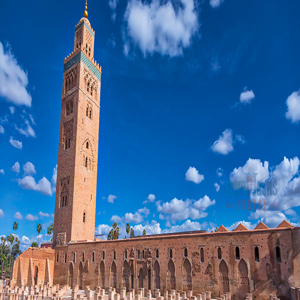
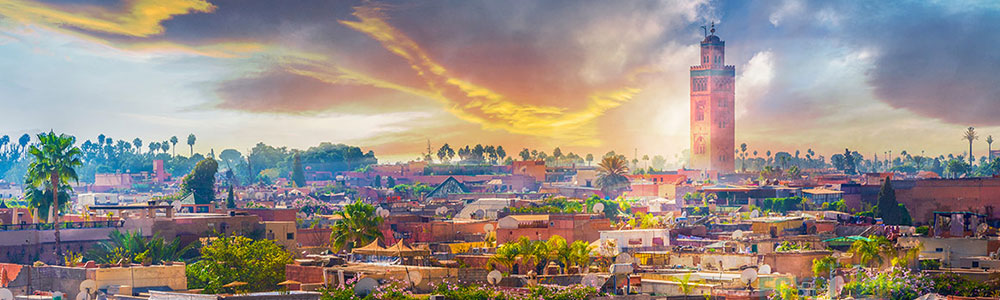
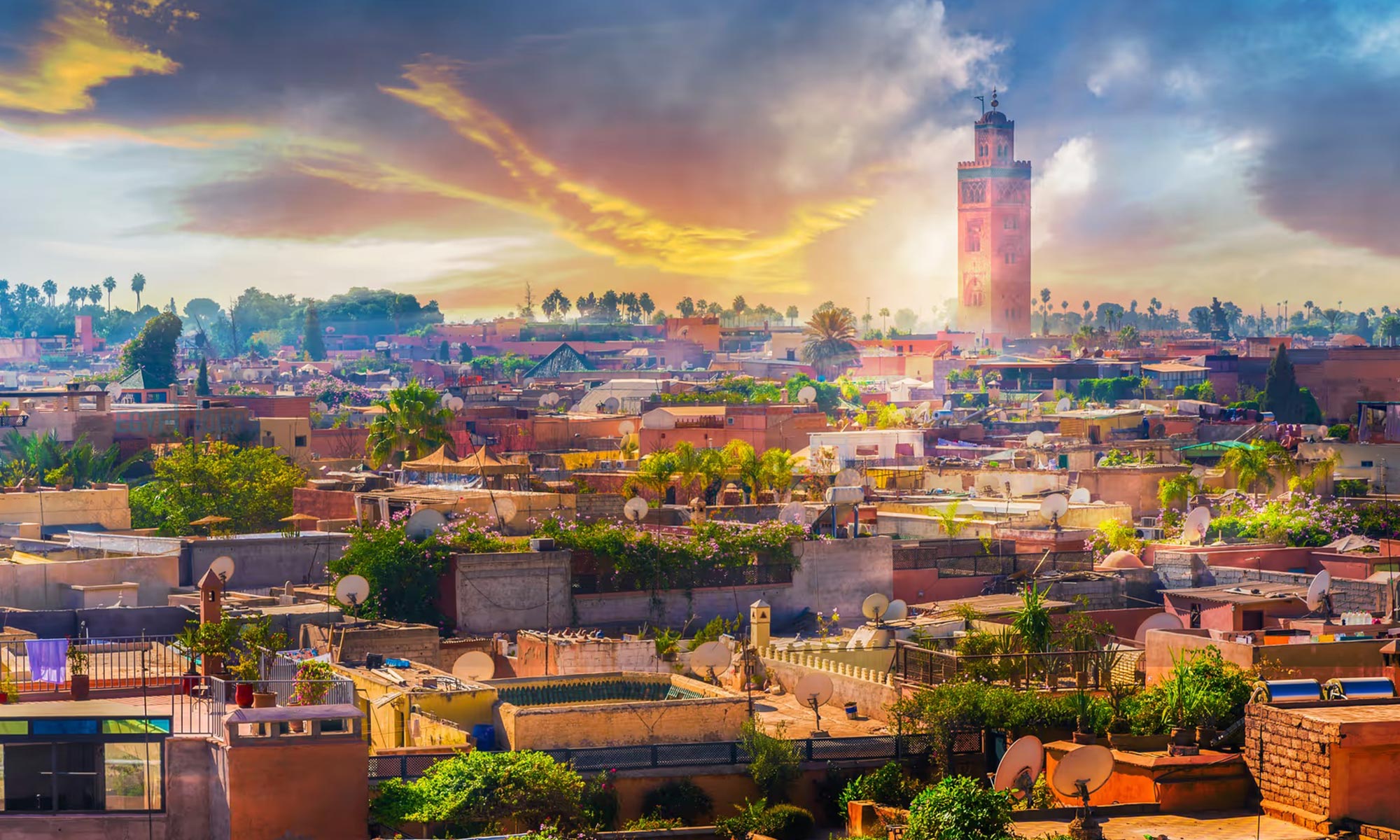
The city skyline, Koutoubia Mosque is a spiritual symbol of the Red City that was built in 1147 by the Almohad caliph Abd al-Mu’min, its majestic minaret defines Marrakesh’s horizon and showcases the harmony, balance, and strength of Almohad architecture. While the entrance is reserved for worshippers, the surrounding gardens and the mosque’s silhouette at sunset create an unforgettable visual experience.
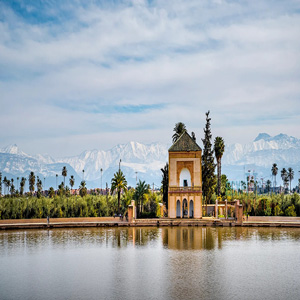
The Magical Menara Gardens is located against the distant silhouette of the Atlas Mountains, that offers a moment of bliss where nature, geometry, and history meet. It was established in the 12th century during the Almohad dynasty, the gardens were designed around a vast reflecting pool fed by an ancient underground irrigation system. Olive groves stretch quietly across the landscape, while the elegant green-roofed pavilion overlooking the water has become one of Marrakech’s most iconic scenes. Menara is not about extravagance; it is about balance, serenity, and the timeless Moroccan relationship between water, land, and sky.
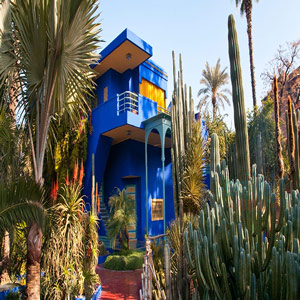
Majorelle Gardens feel like stepping into a living work of art made with the power of nature. It was created in the 1920s by French painter Jacques Majorelle and later restored by Yves Saint Laurent. This botanical paradise bursts with color, creativity, and imagination. Towering bamboo, exotic cacti, water lilies, and rare plants from around the world surround fountains and pathways painted in the famous Majorelle blue. The garden is both playful and peaceful, a vibrant oasis where art, nature, and design blend into one of Marrakech’s most enchanting escapes.
Dar Si Said Museum is a graceful 19th-century palace that invites everyone into the refined world of traditional Moroccan craftsmanship. Ornate courtyards, carved cedar ceilings, and zellij tilework form a stunning backdrop for collections of jewelry, carpets, woodwork, weapons, and everyday objects from across Morocco. Each room tells a story of regional identity, skill, and artistry passed down through generations. Walking through Dar Si Said feels like wandering through a quiet palace of memory, where Morocco’s cultural heritage is preserved in elegant detail.
You will have your lunch, and it will be served at a local restaurant in Marrakesh, then proceed to visit:
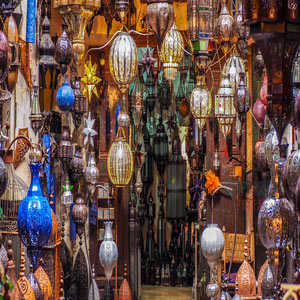
The Medina of Marrakesh is the living core of the city and a UNESCO World Heritage Site. It holds a grand natural labyrinth of narrow alleys, hidden riads, and ancient gates that lead you into busy souks where artisans still handcraft leather goods, metalwork, textiles, lanterns, spices, and perfumes, an immersive sensory experience filled with color, scent, and sound.
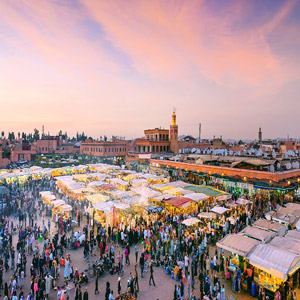
The legendary Jemaa el-Fna is a square unlike any other, loaded with natural history and culture. As daylight fades, it transforms into a vibrant open-air stage alive with food stalls, musicians, storytellers, and performers. The energy is electric, the atmosphere unforgettable, a place that can only be truly understood by standing within it, watching Marrakesh come alive before your eyes.
Head back to your hotel in Marrakesh to enjoy your overnight.
You will have your breakfast, then end your 15-night Egypt & Morocco tour package by heading straight to Marrakech Menara Airport to catch your scheduled flight back home.
Feel free to share your thoughts about adding or removing any tours from this itinerary while sending your tour inquiry. We can fully customize it to accommodate your exact requirements and fulfill your needs , check the most faqs regarding tour booking.
We have multiple payment methods in our payment system. Check How to Pay for This Tour
Visa requirements vary depending on your nationality, length of stay, and travel purpose. For the latest information and eligibility details, please visit our Egypt visa guide.
We accept payments via secure online payment links, credit/debit cards, bank transfers, and cash upon arrival when agreed in advance.
For your security, please only complete card payments through our approved secure payment gateway and never share card details via email, WhatsApp, or social media.
Our payment, cancellation, and refund policies vary depending on the tour type, travel dates, services booked, and supplier conditions.
Send request, and one of our travel specialists will contact you with all the details of your tour. You can also review our payment and cancellation policy for additional information.
Services vary by tour package and may include accommodation, transportation, guided tours, airport transfers, domestic flights, entrance fees, and selected meals. Please refer to your tour itinerary for a complete list of included services.
We offer private, customizable journeys tailored to your pace, moving away from the "factory-style" mass-market tours.

Travel with elite, licensed Egyptologists who act as storytellers, not just tour leaders.
24/7 "high-touch" support with a dedicated coordinator for every aspect of your multi-vendor itinerary.
Our "Tailor-Made" planning workflow ensures your trip matches your specific priorities and interests.
We prioritize premium guide quality and vetted, safe hotels to ensure a stress-free environment.
Advanced safety protocols and 24/7 emergency contact for total peace of mind during your adventure.