Summary
- Luxor Temple was built around 1400 BCE in Thebes and dedicated to royal renewal and divine kingship.
- Constructed by Amenhotep III and expanded by Ramesses II, it reflects multiple historical layers.
- Key features include the First Pylon, Great Colonnade, courts, sanctuaries, and Abu Haggag Mosque.
- It was central to the Opet Festival, linking it to Karnak via the Avenue of Sphinxes.
- The temple shows continuous use from ancient Egypt through Roman, Christian, and Islamic periods.
Luxor Temple is a divine embodiment of the royal power and faith of the ancient Egyptians kings and the Ancient Egyptian people, which stood the test of time. Every monument within the great temple of Luxor has a story to tell, uncovering a great deal about the religion of the ancient Egyptian, the connection between the ancient gods of Egypt, the ancient Egyptian pharaohs, and the people. It also shows how the religious festival took place & why, the ancient Egyptians mastered the art of architecture in order to create something that can stand the test of time and radiate some of the most epic tales.
What Is the Glorious Luxor Temple?
Luxor Temple is one of the most important religious and ceremonial monuments of ancient Egypt, located in the heart of modern Luxor on the east bank of the Nile. Built mainly during the New kingdom around 1400 BCE, it was known in ancient Egyptian as Ipet-resyt, meaning “The Southern Sanctuary.”
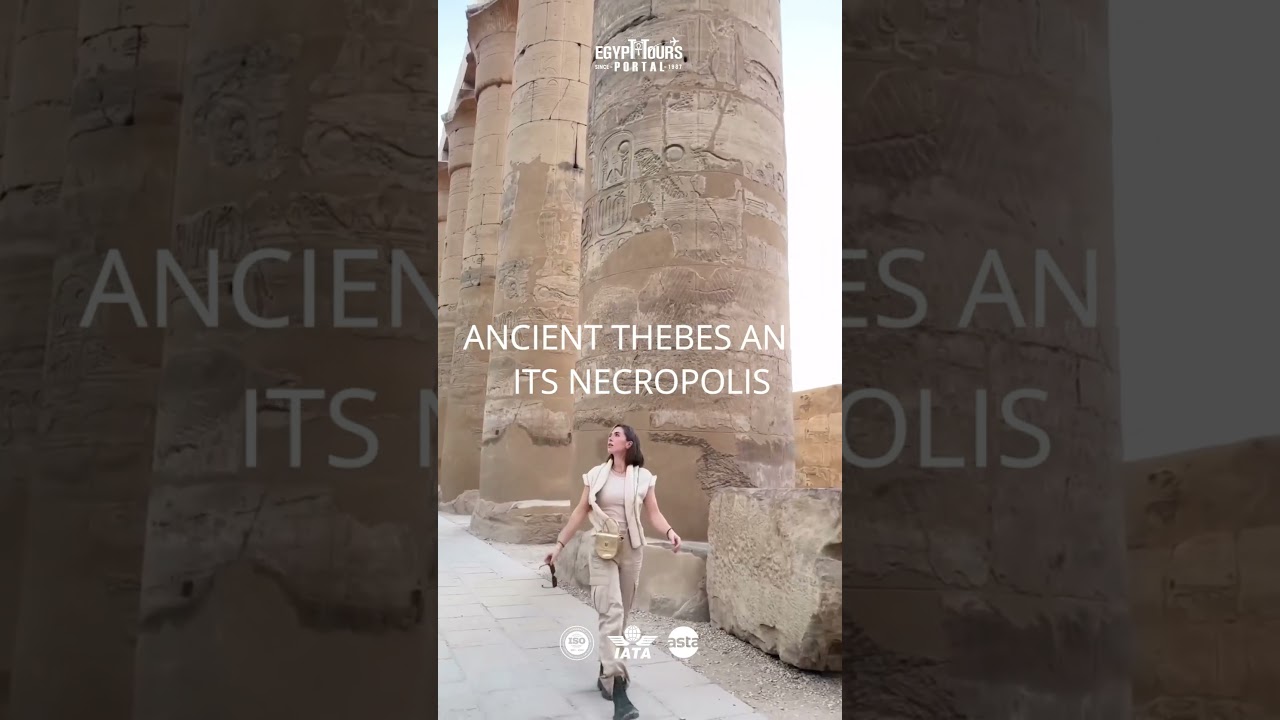
Unlike many temples that were primarily dedicated to a specific deity, Luxor Temple was strongly connected with the renewal of kingship, the divine nature of the pharaoh, and the sacred relationship between the ruler and the gods of Thebes. It formed a major part of ancient Thebes, one of Egypt’s greatest capitals, and today it belongs to the UNESCO World Heritage Site Ancient Thebes with its Necropolis.
Ancient Egyptian Temples
Explore the marvelous temples of the ancient Egyptian civilization
Discover The Rich History of Luxor Temple
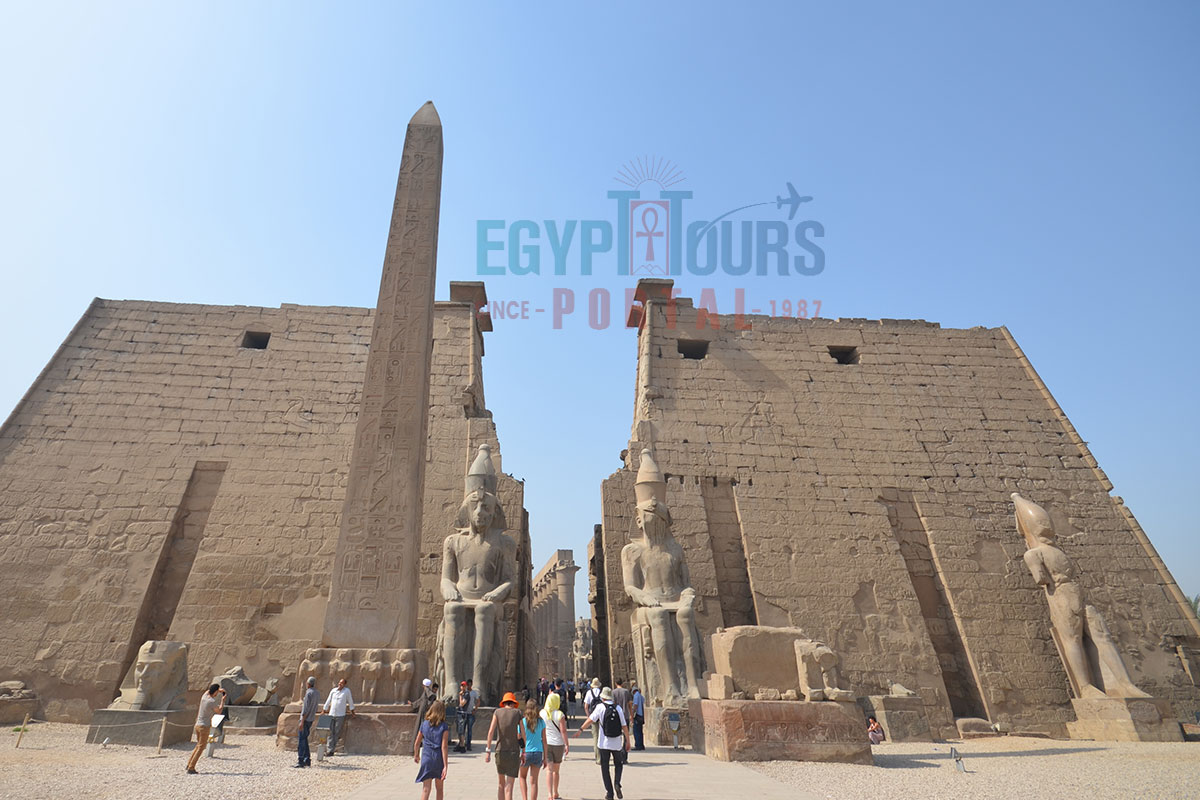
The history of Luxor Temple covers more than 3,400 years, making it one of the rare monuments in Egypt that reflects several civilizations in one place. Its main structure was built by Amenhotep III of the 18th Dynasty, while later rulers such as Tutankhamen (1333-1323 BC) and Horemheb completed and decorated parts of the temple. Around a century later, Ramses II (1279-1213 BC) expanded the complex by adding the grand entrance pylon, colossal statues, a large courtyard, and obelisks.
During the Roman period, the temple was transformed into part of a military fortress and administrative center, while later Christian and Islamic communities reused parts of the sacred space. The still-active Abu Haggag Mosque, built within the temple complex, shows how Luxor Temple remained a place of worship across pharaonic, Roman, Christian, and Islamic periods. The Luxor Temple was inscribed on the UNESCO World Heritage List in 1979.
Shed Light on the Special Location of Luxor Temple
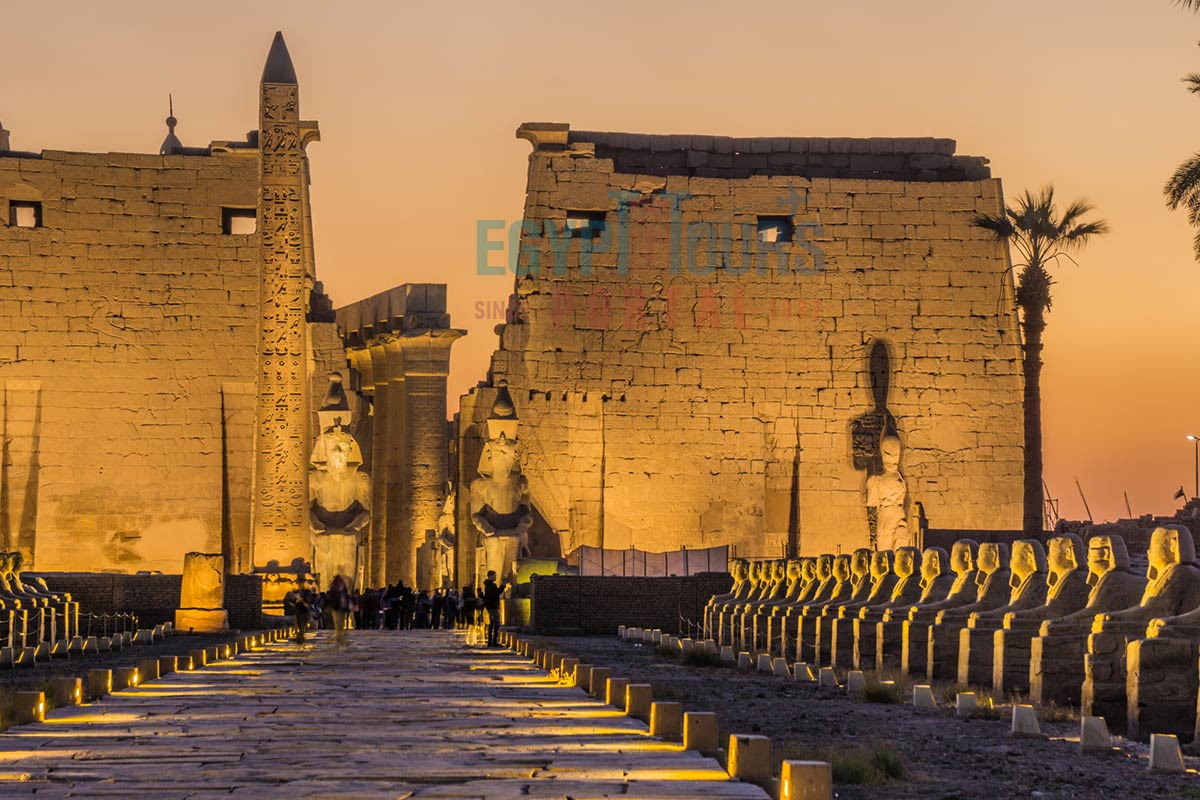
Luxor Temple stands in the center of Luxor city, in Upper Egypt, directly on the east bank of the Nile River. This central position makes it one of the easiest ancient Egyptian temples to visit, as it lies close to the Nile Corniche, hotels, markets, and other major attractions.
In ancient times, the temple belonged to Thebes, the powerful religious and political capital of Egypt during the New Kingdom. Its location was not random; it was placed as the southern counterpart to Karnak Temple, and both temples were connected by the Avenue of Sphinxes, creating a sacred ceremonial route used during major religious festivals.
Explore How the Construction of Luxor Temple Came To Be
Luxor Temple was built on a space of 7,390.16 ha (28.5336 sq mi) as part of Thebes, mainly from Nubian sandstone quarried from Gebel el-Silsila, a major stone source used for many monuments in Upper Egypt. The main construction phase began under Amenhotep III, who created the sanctuary, inner chambers, and elegant court.
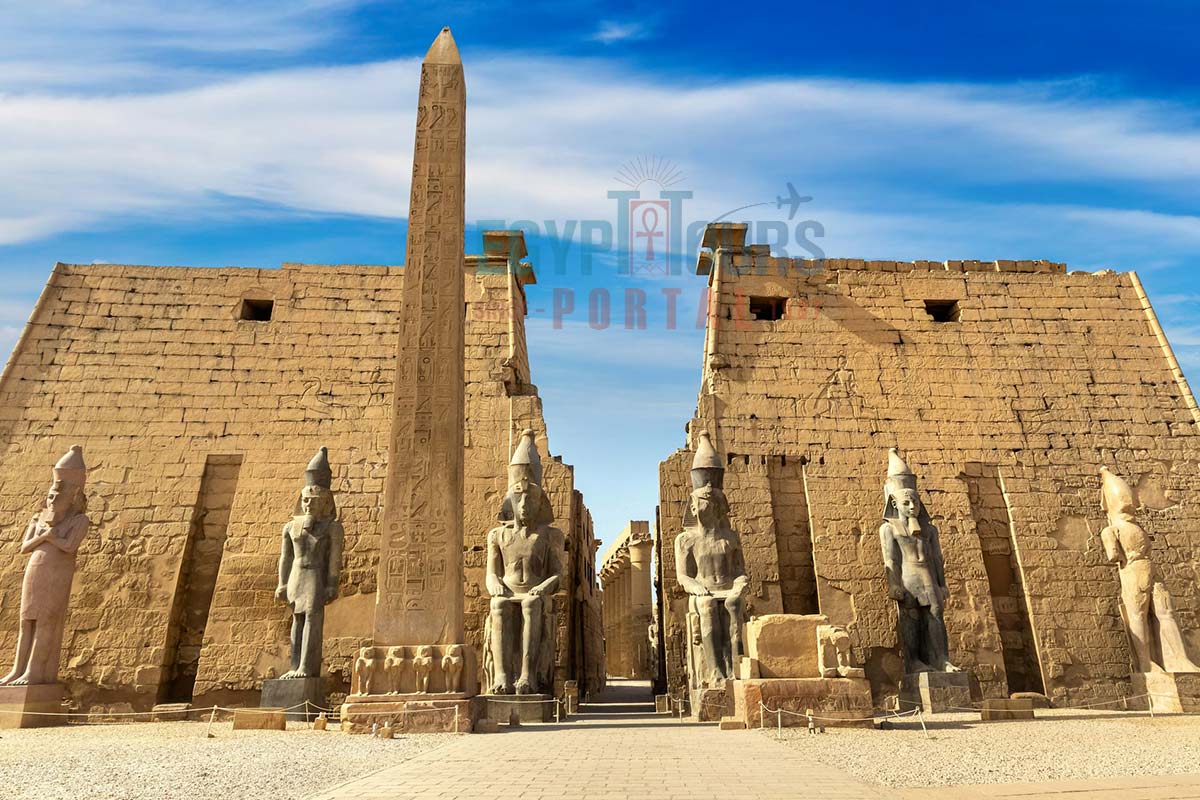
Tutankhamun and Horemheb later added important reliefs, especially scenes related to religious processions. Ramesses II then reshaped the temple’s entrance by adding a massive pylon, seated colossal statues of himself, a large open courtyard, and two pink granite obelisks. One of these obelisks still stands at Luxor Temple, while the other was moved to Place de la Concorde in Paris in the 19th century.

Ancient Egyptian Architecture
Explore the marvelous architecture of the ancient Egyptian civilization
Shed Light on What is inside Luxor Temple
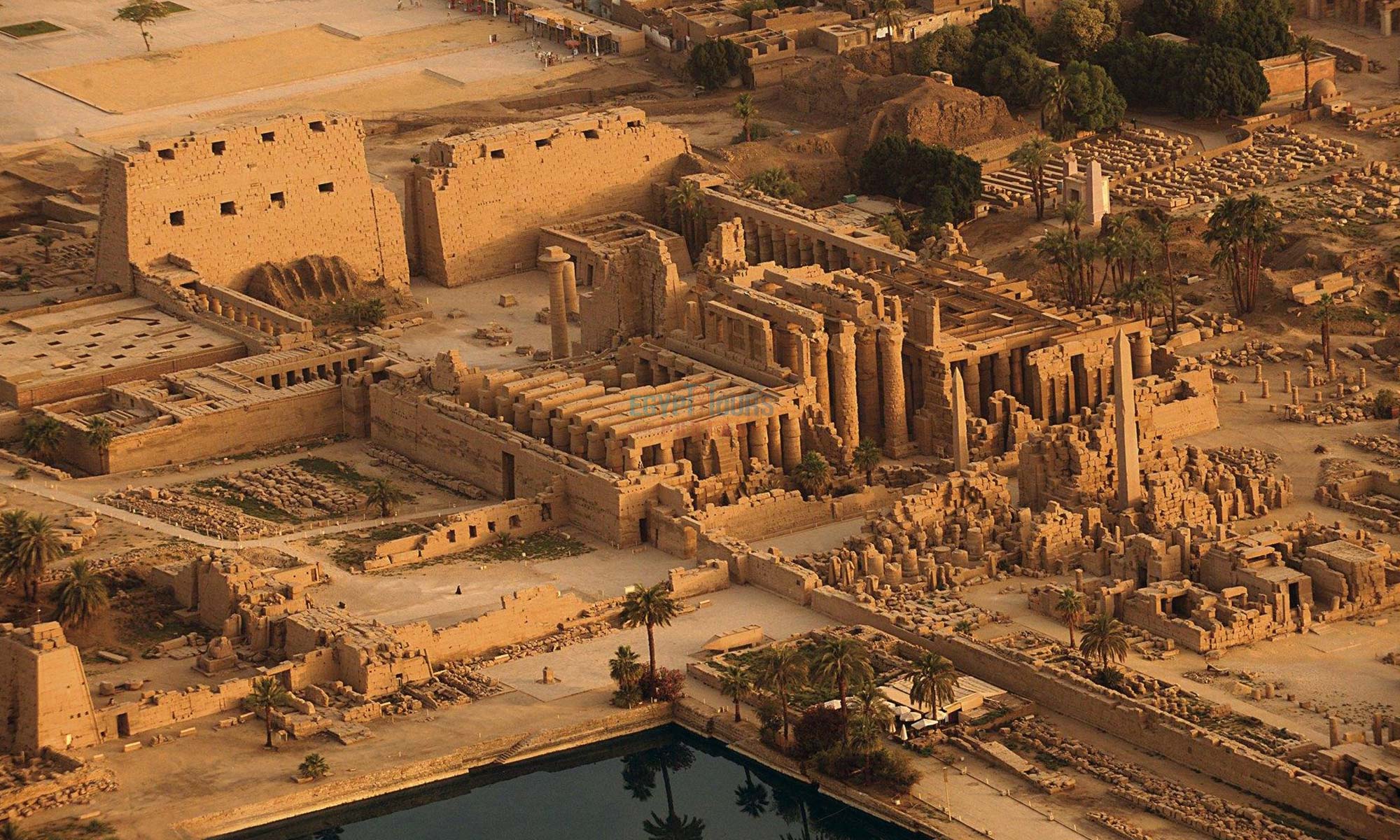
The Divine Royal Temple is a true architectural wonder, loaded with some of the most captivating works of artistic monuments, which include the Pylon & court of Ramses II, the Great Colonnade & court of Amenhotep III, the Inner Sanctuary and Barque Shrines, Abu Haggag Mosque, and the Avenue of Sphinxes. Each one contains facts about the most powerful kings to ever rule Egypt and the royal culture of the ancient Egyptian Civilization.
1. The First Pylon of Ramses II
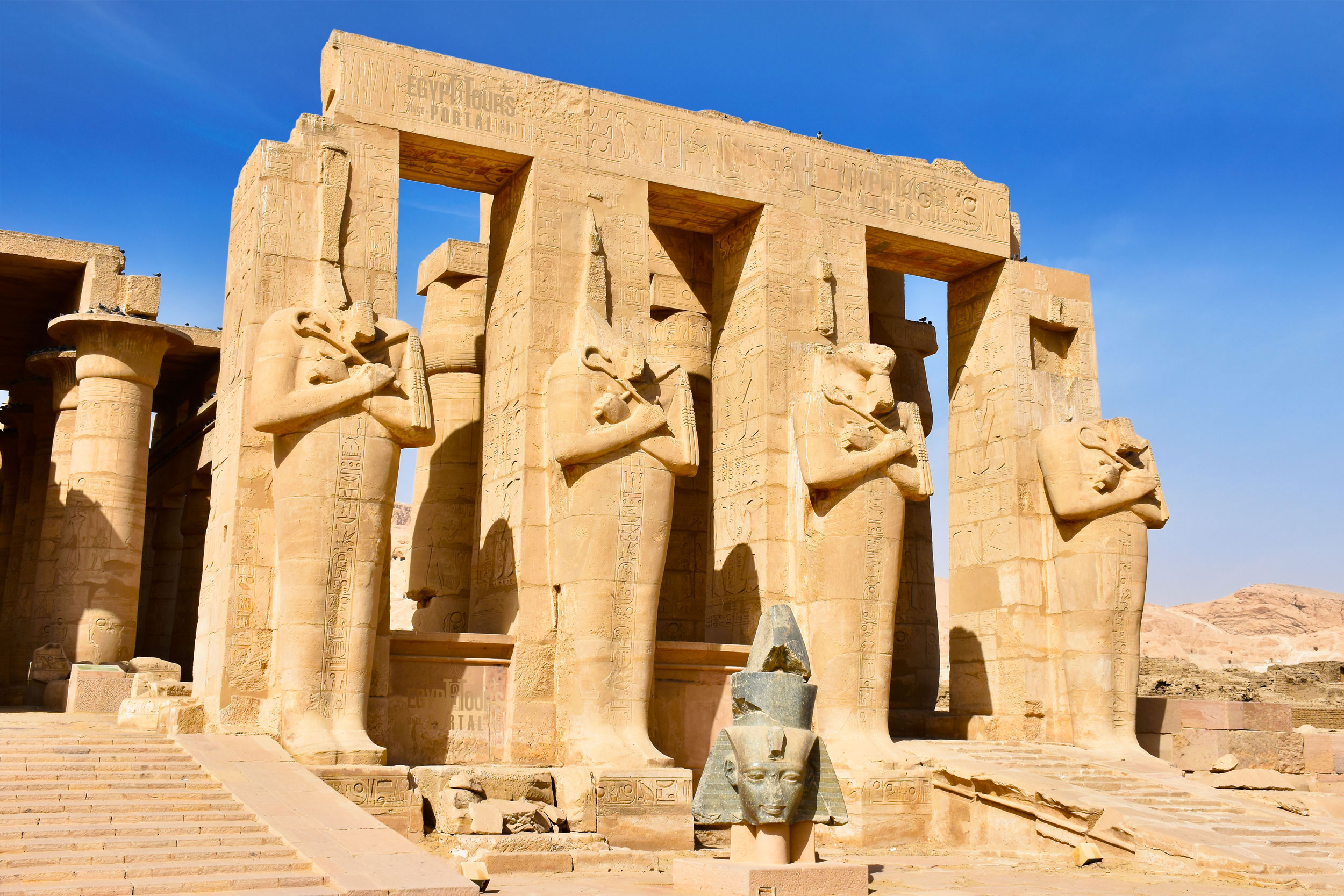
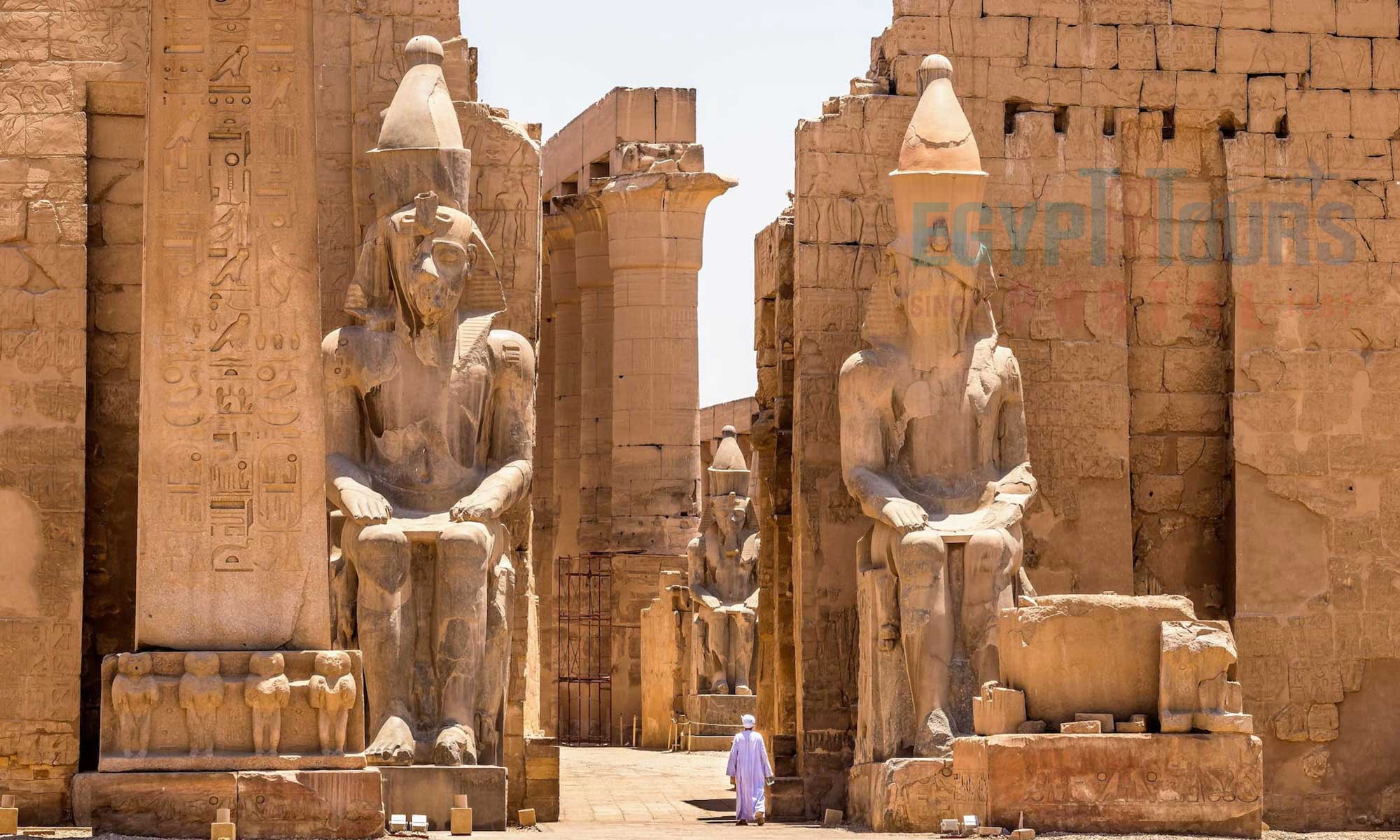
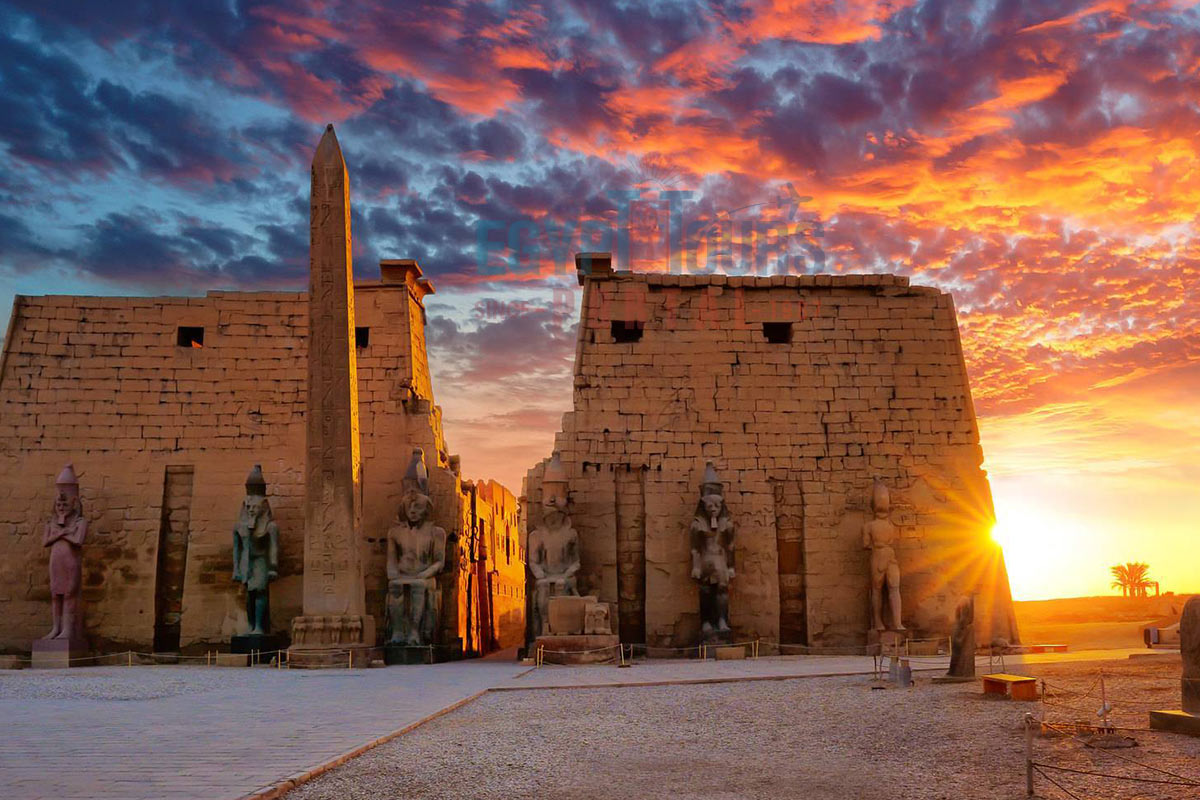
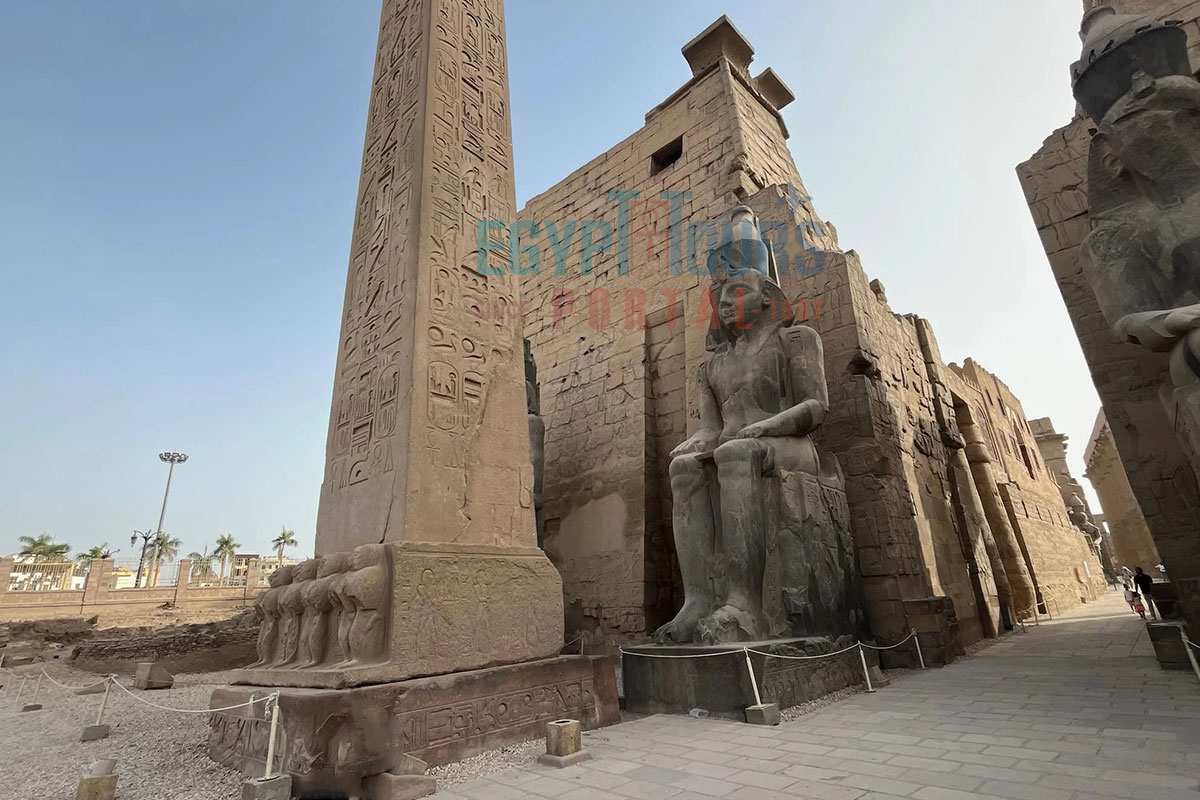
The First Pylon of Ramses II forms the monumental entrance to Luxor Temple and immediately announces the power and authority of one of Egypt’s greatest pharaohs. Its walls are decorated with dramatic battle scenes, especially those connected with Ramses II’s military campaigns, presenting him as a victorious ruler chosen and protected by the gods. In front of the gateway stand colossal seated statues of Ramses II, designed to project both political dominance and divine kingship. The entrance was once flanked by two obelisks, but only one remains at Luxor today; its twin was taken to France in the 19th century and now stands in the Place de la Concorde in Paris.
2. The Court of Ramses II
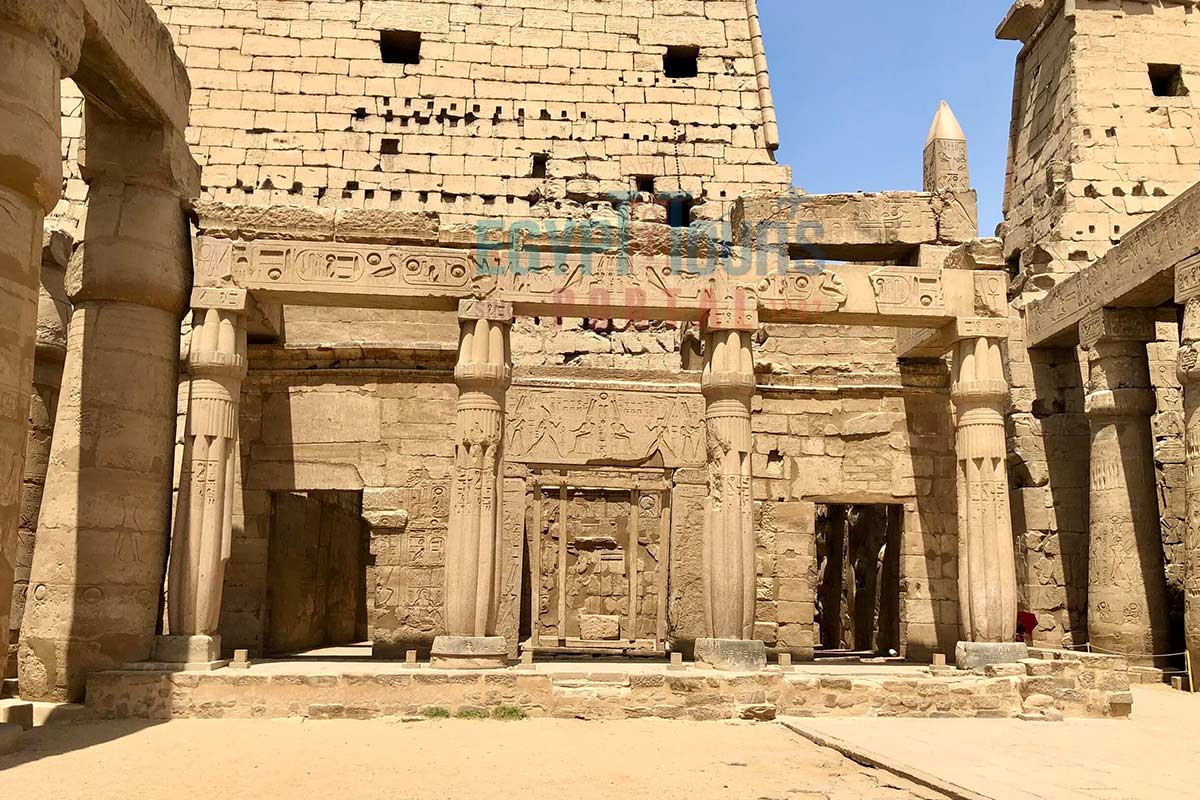
Beyond the First Pylon lies the grand Court of Ramses II, a spacious open courtyard surrounded by elegant papyrus-bud columns, statues, shrines, and ritual spaces. This court reflects Ramses II’s desire to leave a powerful architectural mark on Luxor Temple and connect himself to its sacred function. Many of the statues in this area represent the king in divine or idealized forms, showing him not simply as a ruler but as a figure connected to the gods. The courtyard also contains older religious elements, including shrines connected with the Theban Triad, which shows how Ramses II expanded the temple while preserving its ancient spiritual purpose.
3. The Great Colonnade of Amenhotep III
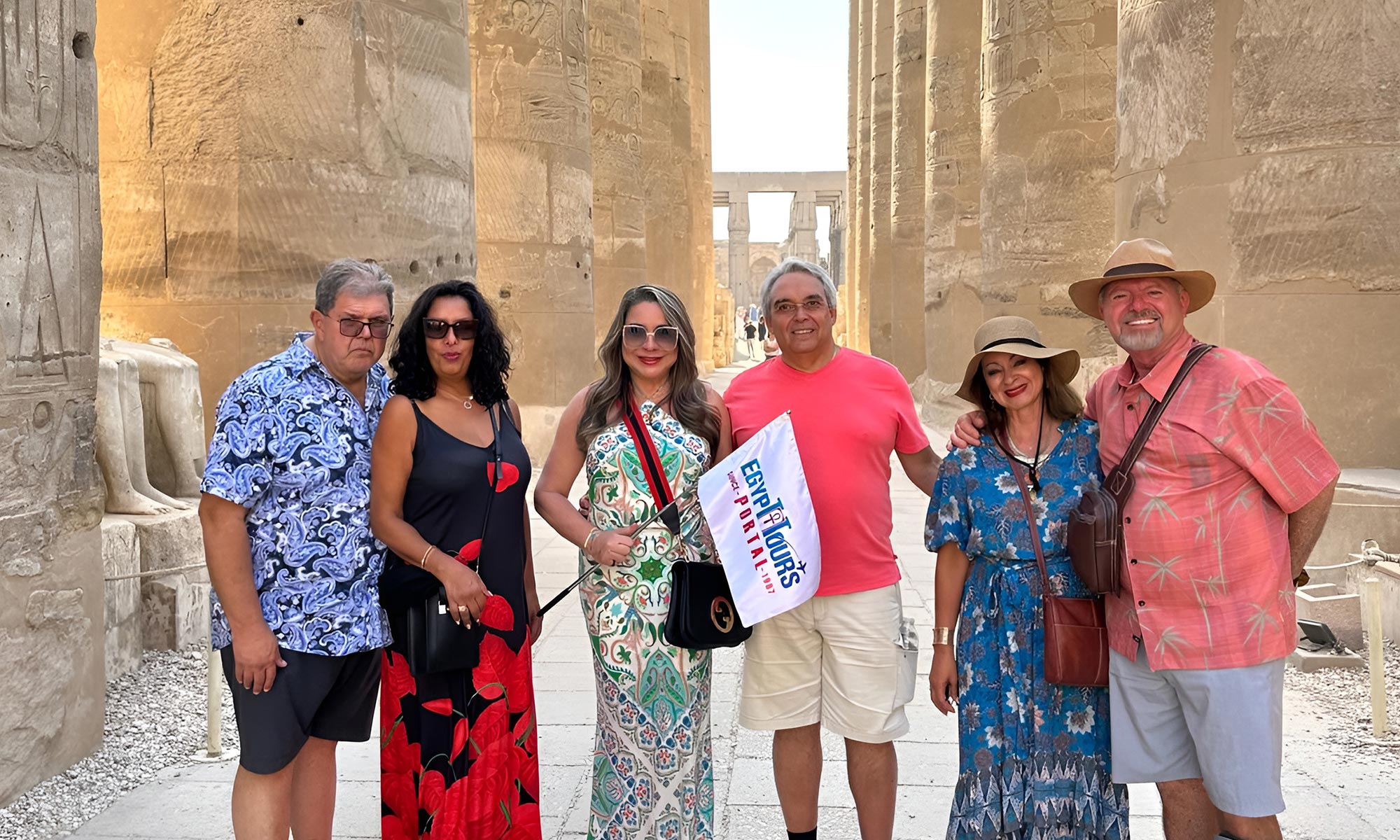
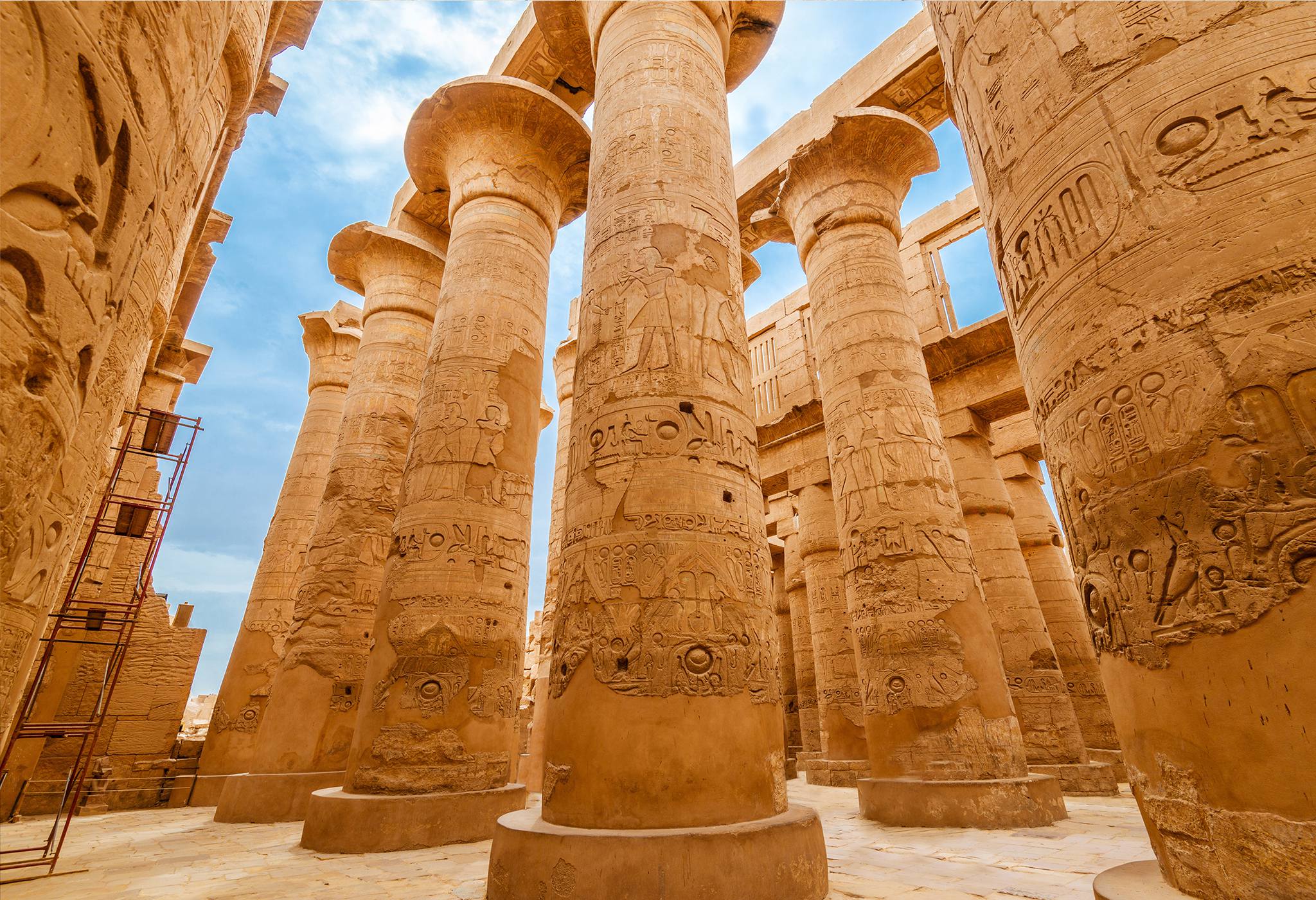
The Great Colonnade of Amenhotep III is one of the most impressive architectural features of Luxor Temple. This majestic passageway contains 14 enormous papyrus-bundle columns, each rising nearly 19 meters high, creating a powerful ceremonial path through the temple. The walls are decorated with detailed scenes of the Opet Festival, showing priests, musicians, dancers, officials, and sacred barques during the procession from Karnak to Luxor. These reliefs are important because they reveal how the festival celebrated the renewal of divine kingship and the sacred relationship between Amun, the pharaoh, and the people of Thebes.
4. The Great Court of Amenhotep III
The Great Court of Amenhotep III is a beautifully balanced courtyard that reflects the elegance and precision of New Kingdom architecture. Surrounded by rows of columns and richly carved walls, it was designed as a ceremonial space where rituals, processions, and religious gatherings could take place. Its symmetry and proportions show the architectural skill of Amenhotep III’s reign, a period known for artistic refinement and monumental building. This court allows visitors to appreciate the original core of Luxor Temple before the later additions of Ramses II, making it one of the best places to understand the temple’s earliest sacred design.
5. The Inner Sanctuary and Barque Shrines
At the heart of Luxor Temple lies the Inner Sanctuary, the most sacred area of the complex. This space housed the barque shrine of Amun, where the god’s sacred boat rested during ritual ceremonies, especially during the Opet Festival. Alexander the Great later rebuilt part of the sanctuary and added inscriptions in traditional Egyptian style, presenting himself as a legitimate pharaoh accepted by the gods. Nearby is Amenhotep III’s “birth room,” a deeply symbolic chamber showing the divine birth of the king, including scenes where the god Amun approaches the queen, reinforcing the belief that the pharaoh’s rule came from divine origin.
6. Abu Haggag Mosque
The Abu Haggag Mosque is one of the most fascinating features of Luxor Temple because it shows the site’s continuous religious importance across different civilizations. Built in the 13th century, the mosque stands above ancient temple structures and remains active today, making Luxor Temple not only an archaeological site but also a living place of worship.
Its presence reflects the long transformation of the temple from a pharaonic sanctuary to a Roman and Christian space, and later to an Islamic religious landmark. The annual Moulid of Abu Haggag includes lively processions and celebrations that many scholars see as echoing the ancient Opet Festival, showing how ritual memory can survive across thousands of years.
Uncover The Great Avenue of Sphinxes and Shrine Stations
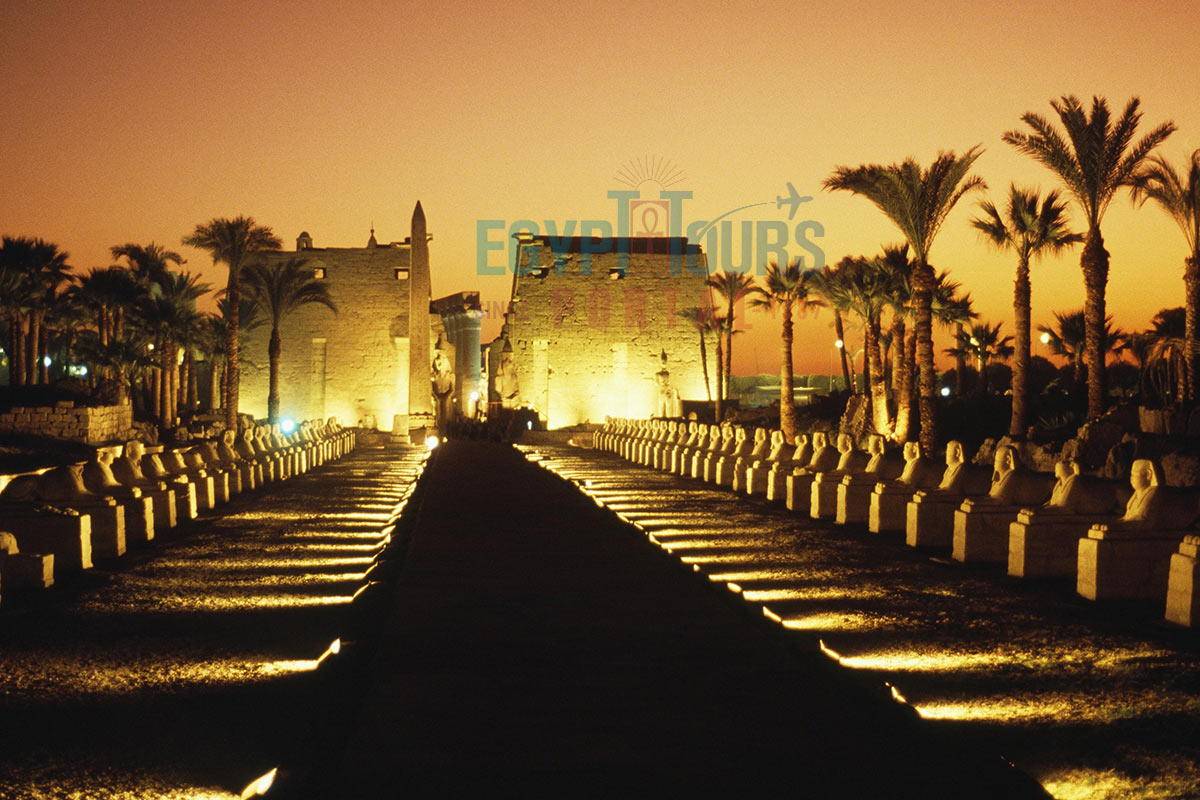
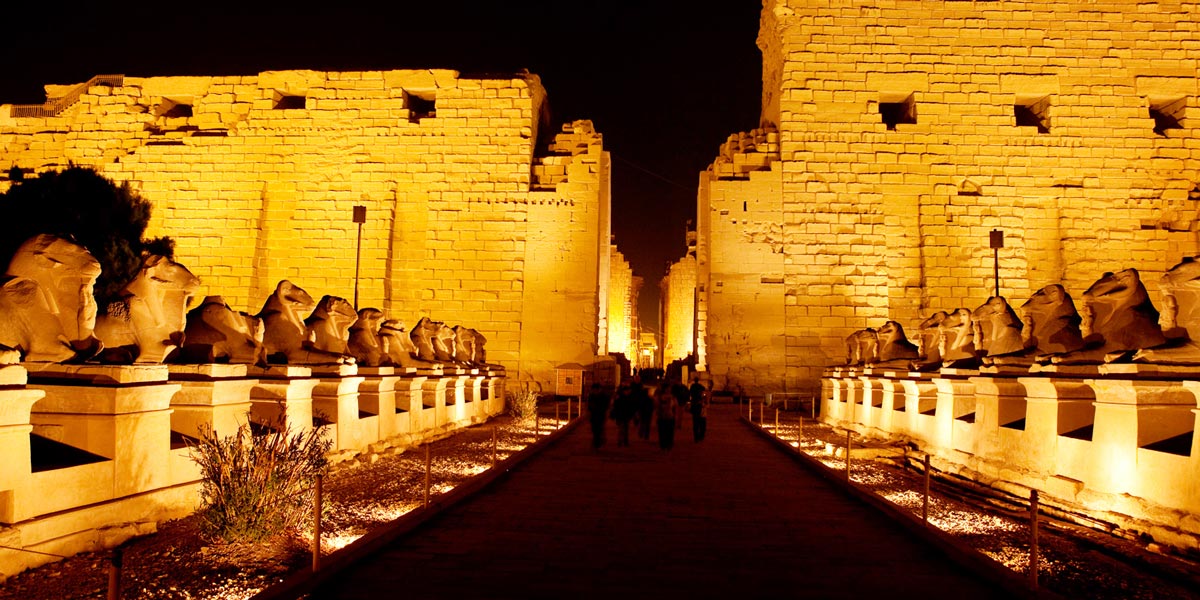
The Avenue of Sphinxes was a sacred ceremonial road about 2.7 kilometers long that connected Luxor Temple with Karnak Temple. In ancient Egypt, it was known as a “path of the god,” reflecting its role in religious processions. The avenue was lined with sphinx statues, including human-headed and ram-headed forms, which acted as symbolic guardians of the sacred route.
During the Opet Festival, priests carried the sacred barques of Amun, Mut, and Khonsu along this avenue, stopping at shrine stations along the way. These stations allowed rituals to be performed during the journey, turning the road itself into an active religious space rather than simply a route between two temples.
The Grand Excavation of Luxor Temple
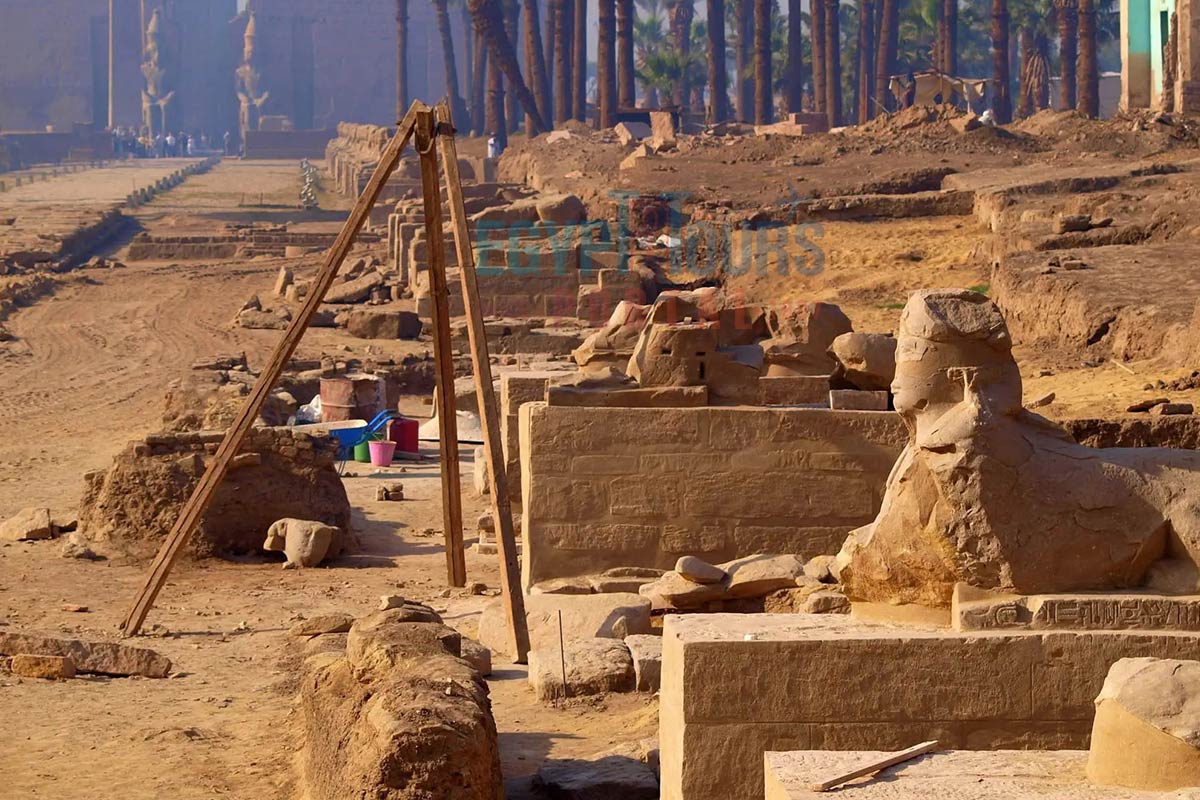
For many centuries, Luxor Temple was partly hidden beneath the growing city. Ancient Egyptian Houses, shops, storage buildings, huts, and layers of rubble gradually covered much of the ancient structure, creating an artificial mound that reached about 14.5 to 15 meters high. Serious excavation began after 1884 under the French Egyptologist Gaston Maspero, who worked to clear the temple and reveal its buried courts, colonnades, and sanctuaries.
The process was complex because parts of the modern village had developed over the temple, requiring the removal of buildings and compensation for residents. Excavation continued gradually into the 20th century, allowing the temple to re-emerge as one of Egypt’s most impressive ancient monuments.
Shed Light on the Great Importance of Luxor Temple
Luxor Temple is important because it was not only a place of worship but also a ceremonial center for the ideology of kingship. The temple celebrated the idea that the pharaoh’s authority was divine, renewable, and protected by the gods. Its most important ritual role was connected to the Opet Festival, during which sacred images of Amun, Mut, and Khonsu traveled from Karnak to Luxor in a grand procession.
These rituals renewed the power of the king and strengthened his relationship with the gods and the people. The temple is also important because it preserves multiple historical layers, showing how one sacred site could be adapted by Egyptians, Romans, Christians, and Muslims across thousands of years.
The Deep-Rooted Mythology of Luxor Temple
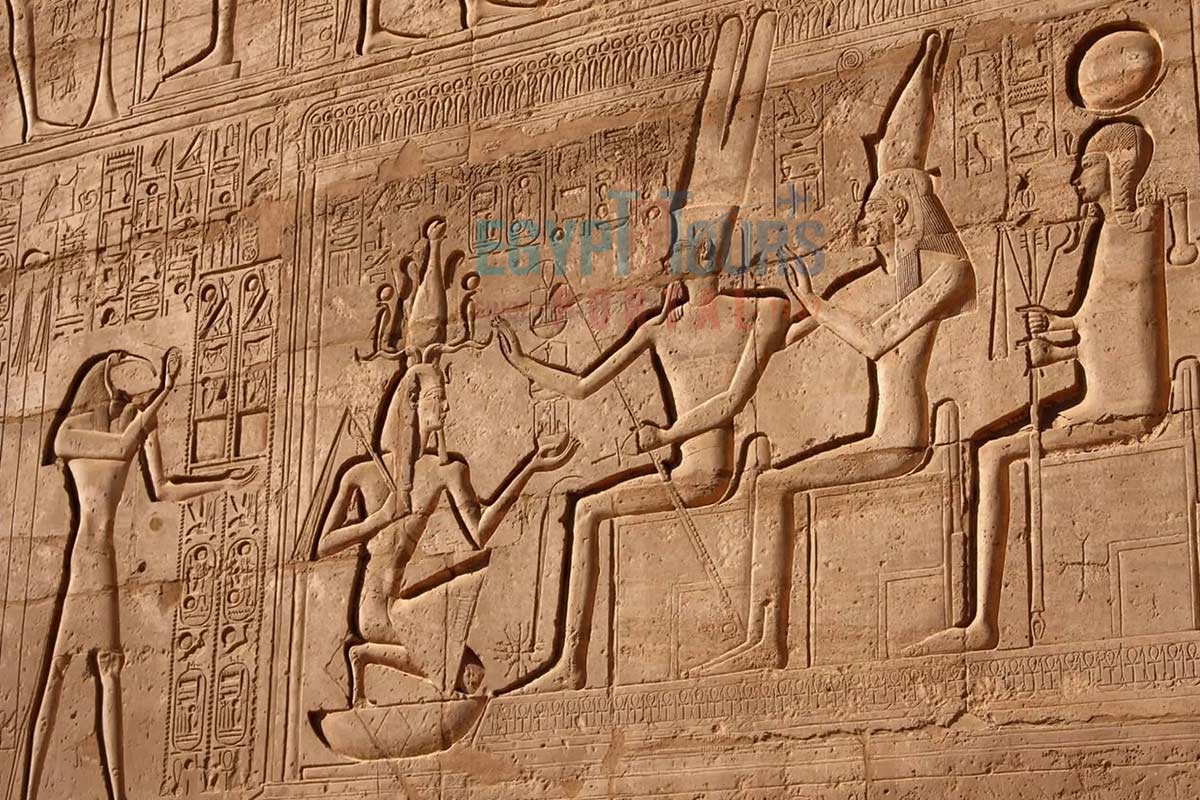
The ancient Egyptian mythology of Luxor Temple is deeply tied to the Theban Triad, made up of Amun, his wife Mut, and their son Khonsu. During the Opet Festival, the divine image of Amun was carried from Karnak to Luxor, where rituals symbolized fertility, rebirth, and the renewal of royal power.
Some scholars also interpret Luxor Temple as a sanctuary dedicated to the Royal Ka, the divine spiritual essence of kingship. This means the temple was not only about honoring the gods but also about regenerating the sacred force that made the pharaoh a legitimate ruler. In this sense, Luxor Temple functioned as a mythological stage where divine power, kingship, and cosmic order were renewed.
The Royal Festivals of Luxor Temple
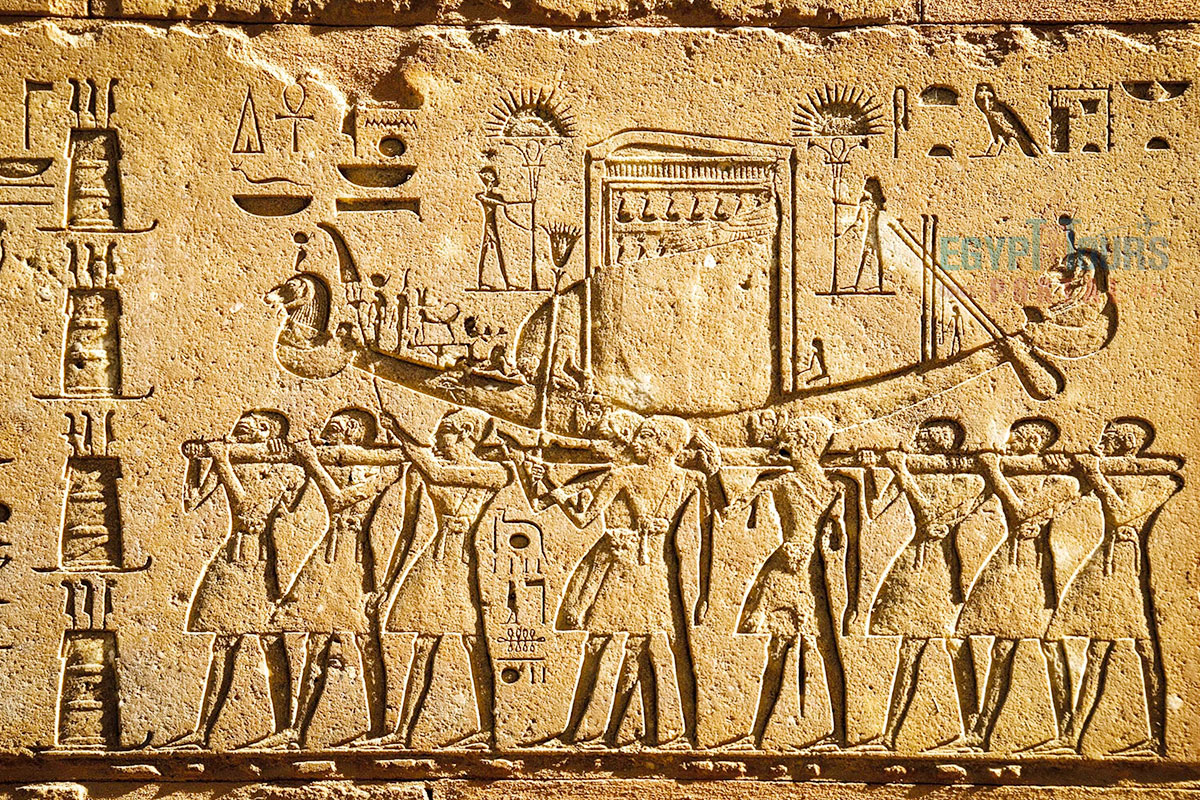
The most famous festival associated with Luxor Temple was the Opet Festival, one of the greatest celebrations of ancient Thebes. During this event, the sacred statues of Amun, Mut, and Khonsu were transported from Karnak to Luxor Temple in ceremonial barques.
The procession involved many different social classes of Egypt, including priests, musicians, dancers, soldiers, officials, and members of the public, making it both a religious and social event. The purpose of the festival was to renew the divine power of the king and celebrate the relationship between the gods and the royal household. It also reinforced Thebes as a sacred city and reminded the people that the pharaoh ruled with divine approval.
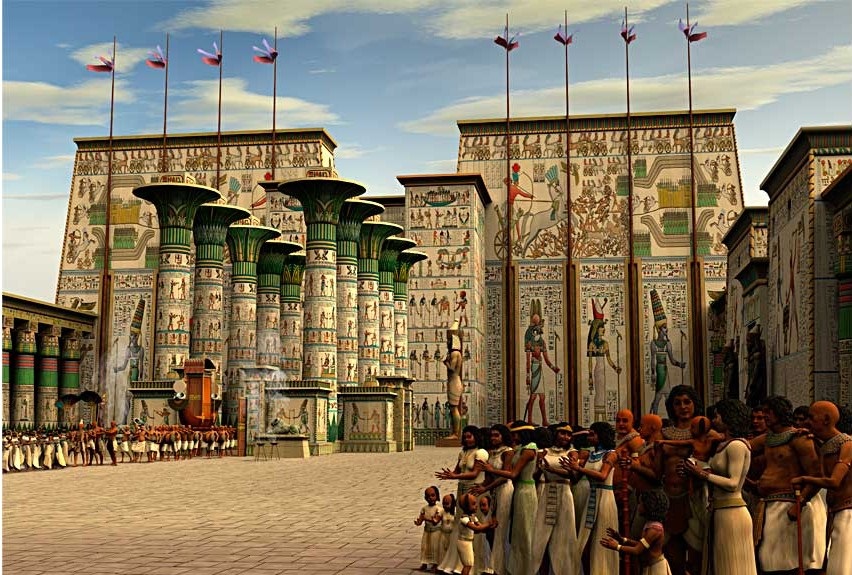
Ancient Egyptian Festivals: Divine Rituals and Seasons
Discover Ancient Egypt's sacred festivals honoring gods, marking seasons, and blending ritual, myth, and community joy in a cyclical celebration of life.
Explore The Incredible Facts About the Luxor Temple
- Luxor Temple was founded around 1400 BCE and is located in Luxor, Upper Egypt, at coordinates 25°42′0″N, 32°38′21″E, on a space of 7,390.16 ha (28.5336 sq mi).
- Luxor Temple is known as one of the world’s most remarkable open-air monuments.
- It was founded around 1400 BCE during the New Kingdom, it was mainly built by Amenhotep III, completed and decorated by Tutankhamun and Horemheb, and later expanded by Ramesses II.
- Its ancient name, Ipet-resyt, means “The Southern Sanctuary.”
- The temple honored the Theban Triad; Amun, Mut, and Khonsu, and hosted the Opet Festival, where their sacred statues were brought from Karnak to renew kingship and divine rebirth.
- The Temple is linked to Karnak by the 2.7 km Avenue of Sphinxes.
- The temple evolved, with restoration by Alexander the Great, later use by the Romans as a fortress, conversion into Christian spaces, and the addition of the active Abu Haggag Mosque.
- It is one of the most magical places anyone can explore at night, as it is one of the few temples that open into the evening.
- In 1979, Luxor Temple was listed by UNESCO as part of Ancient Thebes with its Necropolis, confirming its exceptional global value.
Enjoy the Glory of Luxor Temple Through Our Majestic Trips
The unforgettable Luxor Temple is where the essence of royal kingship, divinity, and the brilliant architecture of the golden days of ancient Egyptian civilization. Through our marvelous Egypt tours and Nile River cruises, everyone will come to enjoy the most incredible travel experience among some of the most marvelous archaeological temples ever made in existence.