Summary
- Ramses II ruled Egypt for 66 years (1279-1213 BC), the second-longest reign in ancient Egyptian history, and became known to the Greeks as Ozymandias.
- His military reputation rests on the Battle of Kadesh (1274 BC) against the Hittites, followed by the Treaty of Kadesh (1259 BC), one of the oldest peace treaties to survive in both parties' own words.
- He built more than any pharaoh before him, including Abu Simbel, the Ramesseum, the new Delta capital of Pi-Ramesses, and major additions to Karnak and Luxor Temple.
- He fathered more than 100 children with two principal queens, Nefertari and Isetnofret, and several secondary consorts, and celebrated an unmatched 13 to 14 Sed jubilee festivals.
- His mummy traveled from the Valley of the Kings to a 1976 restoration in Paris and now rests in Cairo's National Museum of Egyptian Civilization, distinct from his colossal statue near the Grand Egyptian Museum.
- His legacy keeps expanding: archaeologists uncovered new artifacts bearing his name as recently as 2023 and 2024, and he remains one of the most depicted pharaohs in film, fiction, and games, from "The Ten Commandments" to "Civilization VI."
Ramses the Great is one of the few rulers in history who carved his name across the memories of countless future generations. Across a reign of 66 years, Ramses II, a.k.a Ozymandias, fought the largest chariot battle the ancient world ever recorded, signed history's earliest surviving peace treaty, fathered more than a hundred children, and carved his name into more temples than any pharaoh before or since, so thoroughly that later Ancient Egyptians simply called him "the Great Ancestor."
His legend proved durable enough to inspire a Romantic-era poem about a shattered statue in the desert, and his actual mummy once traveled to Paris on what is still, incorrectly, remembered as a passport.
This article covers who Ramses II really was, how he rose to the throne, the battle and treaty that defined his military reputation, the temples and cities he built from the Delta to Nubia, his family life and the wife he loved most, and the strange afterlife of his body. All that defined his name and life will be found here and explored fully.
Who Was Ramses the Great?
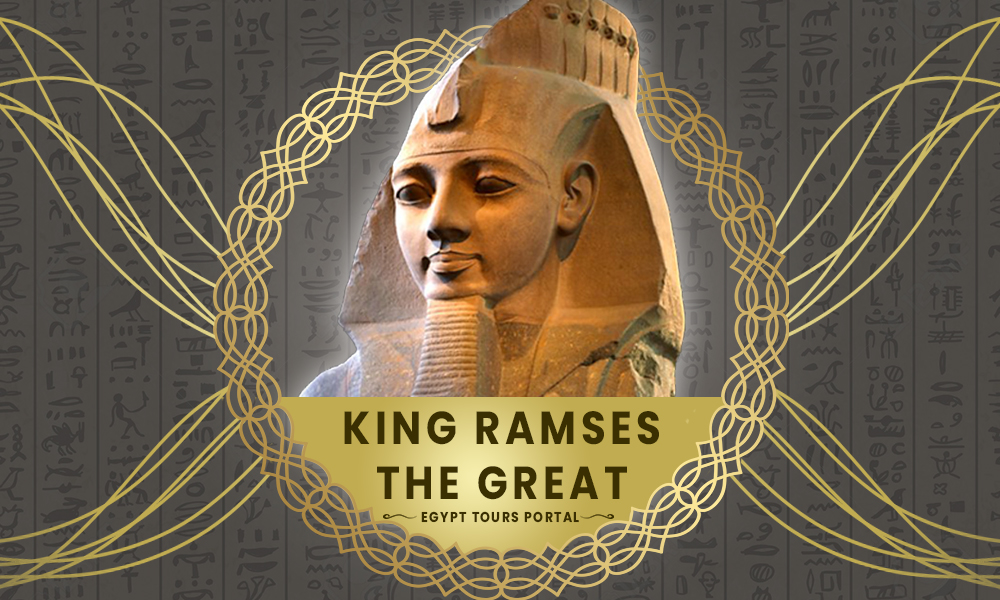
Ramses II, also written Ramesses II, ruled Egypt as the third pharaoh of the 19th Dynasty from 1279 to 1213 BC, a reign of 66 years, two months, and roughly two weeks, the second-longest in ancient Egyptian history after Pepi II.
The Greeks who visited Egypt centuries later knew him as Ozymandias, a rough transliteration of his throne name, Usermaatre Setepenre, "the Maat of Ra is powerful, chosen of Ra." Contemporary Egyptians called him Sese, and generations of pharaohs afterward invoked him simply as the Great Ancestor, adopting his name for their own in hopes of matching his glory and longevity.
His birth name, Riamesesu, meaning "Ra has fashioned him," became so closely tied to Egyptian kingship that nine later pharaohs took the name Ramesses in turn. His fuller titulary carried epithets befitting a warrior-king, among them "the strong bull, beloved of right" and "protector of Egypt who curbs foreign lands", titles he then spent six decades trying to earn on the battlefield and in stone.
Discover His Grand Origins and Rise to Power
Ramses was born around 1303 BC to Seti I and Queen Tuya, into a family that had only recently entered royal circles: his grandfather, Ramses I, began his career as a military vizier before founding the 19th Dynasty. Seti I recognized his son's potential early, naming him prince regent at around age fourteen and bringing him along on campaigns in Nubia, Libya, and Palestine as second-in-command. By 22, Ramses was leading his own campaigns alongside his sons.
He ascended the throne in 1279 BC at about 25 years old, inheriting an empire that stretched from Nubia to the Levant and a rivalry with the Hittites that had simmered since his father's reign. Within his first few years as king, he had already crushed a Sherden pirate raid threatening Mediterranean trade routes and founded a new Delta capital built for the war he knew was coming.
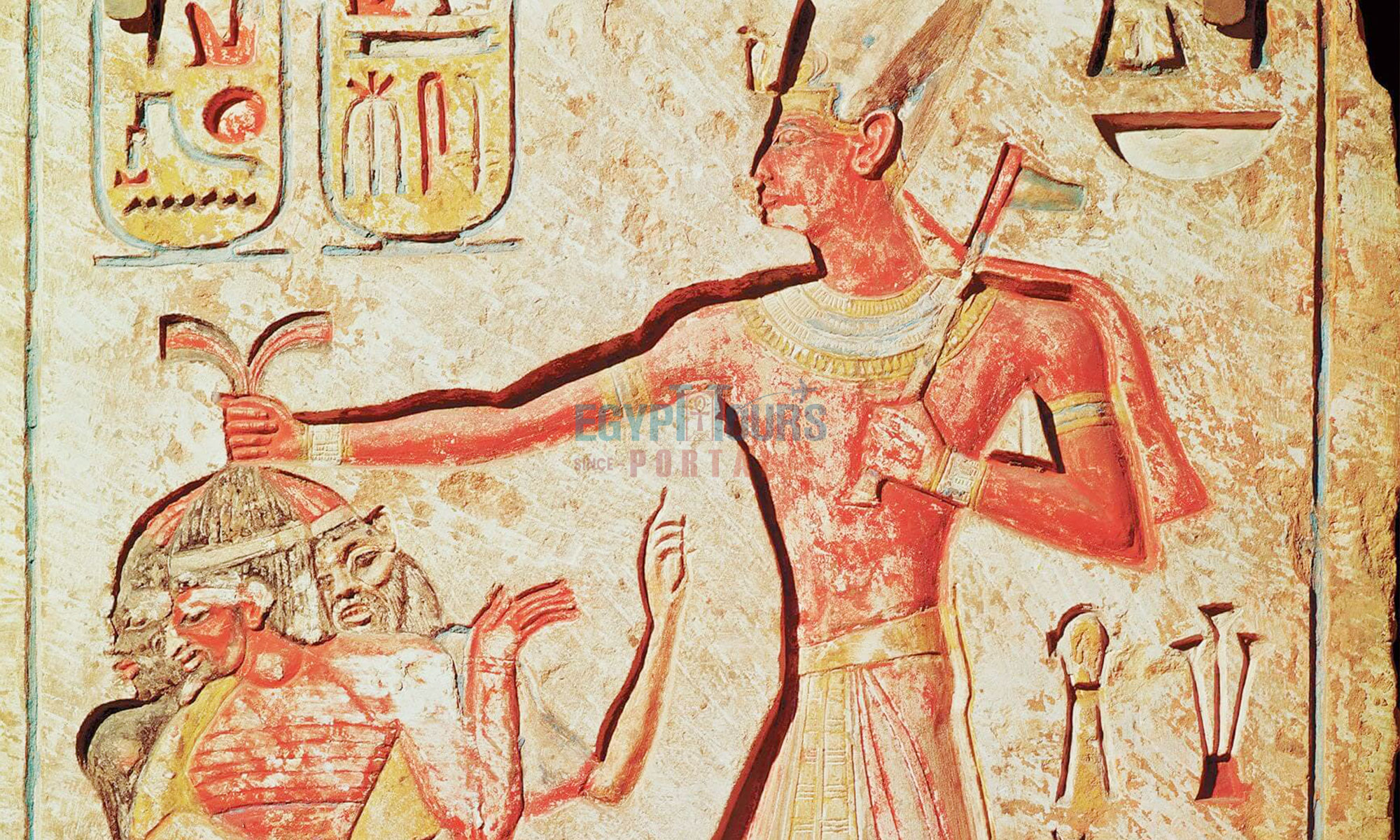
Ancient Egyptian Enemies: War, Invasion, and the Defense of the Divine Land
Discover ancient Egypt's rivals—Nubia, Hyksos, Hittites, and more. Explore military strategies, cultural exchanges, and the 'Nine Bows' shaping its identity.
The Battle of Kadesh and the World's First Peace Treaty
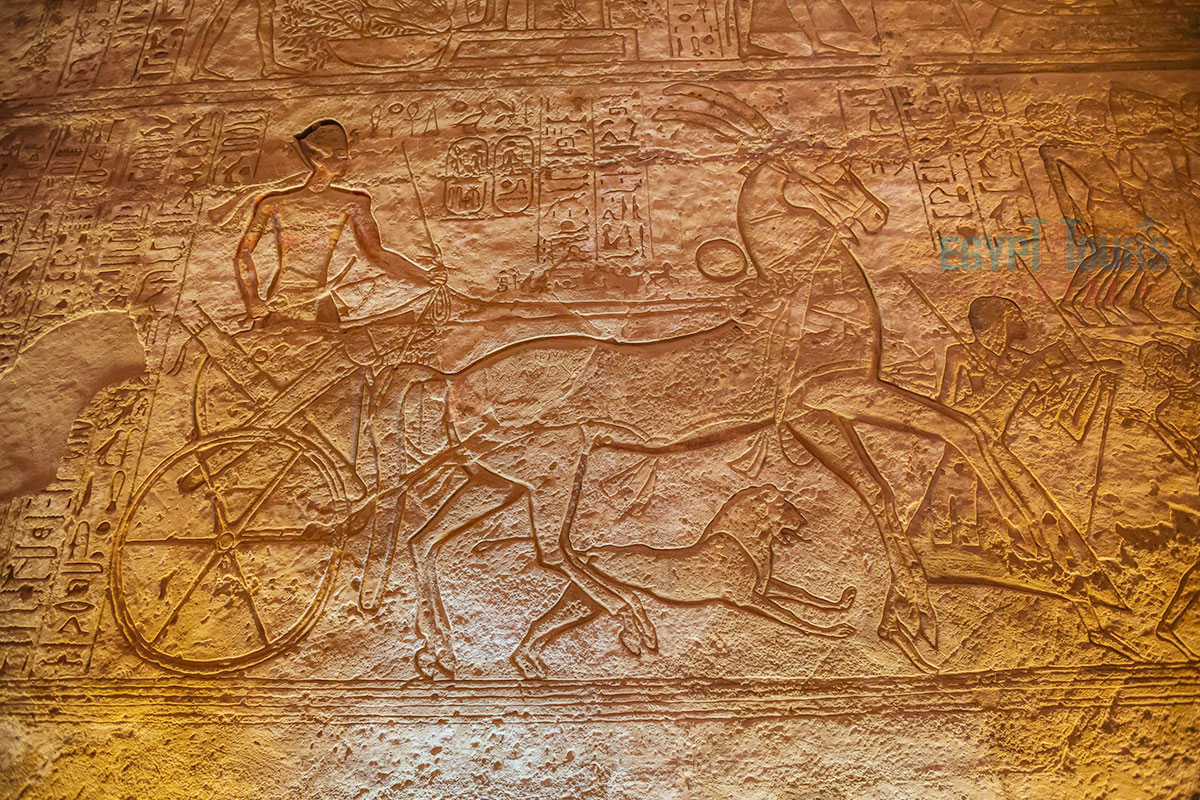
The Incredible Battle of Kadesh
In his fifth regnal year, 1274 BC, Ramses marched roughly 20,000 Egyptian troops toward the city of Kadesh on the Orontes River, where a Hittite army under King Muwatalli II, possibly numbering as many as 40,000 to 50,000 men and a formidable chariot corps, lay waiting in ambush. Egyptian forces were caught badly outnumbered and nearly overrun before Ramses personally rallied his divisions and, with reinforcements arriving in time, drove the Hittites back across the river.
Both sides went home claiming victory; modern historians generally call it a tactical stalemate, since the Hittites retained control of Kadesh and Syria regardless. It remains one of the best-documented battles of the ancient world, recorded by Ramses himself in inscriptions across multiple temple walls, including the Ramesseum and Abu Simbel.
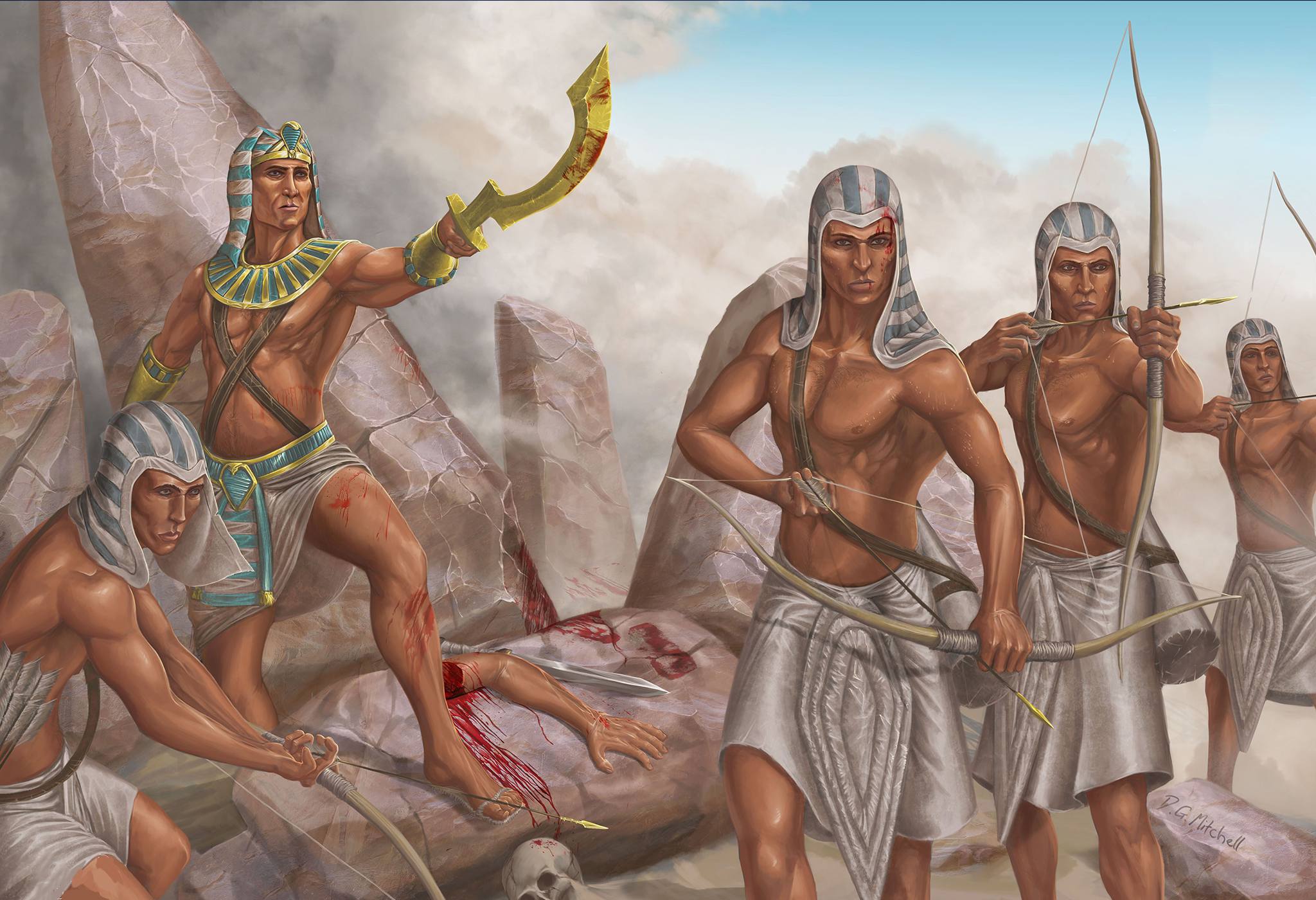
Ancient Egyptian Battles
Explore renowned ancient Egyptian battles and learn about historical ancient Egyptian wars. Click here to discover more.
Campaigns North, South, and Beyond
Kadesh was one battle in a much longer war. In his fourth regnal year, Ramses had already captured the Hittite vassal state of Amurru and raised a victory stela at Nahr el-Kalb, near modern Beirut. Three years after Kadesh, in year seven, he split his forces: one column under his son Amun-her-khepeshef chased Shasu tribes to the Dead Sea and seized Edom and Moab, while Ramses himself struck at Jerusalem and Jericho before the two forces reunited to retake Damascus.
By years eight and nine, he had pushed north past the Dog River as far as Tunip, deeper into Hittite territory than any Egyptian army in roughly 120 years, and in year ten, temple records claim he charged into battle at Dapur without bothering to put on his armor, six of his own sons fighting at his side.
Two quieter fronts rounded out his military record. As a young commander of about 22, Ramses led campaigns south of Egypt's first Nile cataract into Nubia, subduing revolts later commemorated on the temple walls of Beit el-Wali and Gerf Hussein, while to the west he held roughly 300 kilometers of Mediterranean coastline against Libyan incursions, anchored by a fortress at Zawyet Umm El Rakham. Neither campaign produced a treaty or a poem, but together with Kadesh they kept his borders quiet for most of six decades.
The Treaty of Kadesh
Fifteen more campaigns followed over the next decade and a half before Ramses and the Hittite king Hattusili III finally negotiated peace in 1259 BC. The Treaty of Kadesh, recorded in both Egyptian hieroglyphs and Hittite cuneiform, is the oldest peace treaty known to survive in both parties' own words, eighteen articles establishing mutual defense and a stable border, with each side's version claiming the other had asked first. It held for the rest of Ramses's reign, and no further Egyptian military campaigns in Canaan are recorded afterward.
Ramses II's Building Legacy
The pharaoh's ambition did not stop at the battlefield; it moved into stone almost immediately, and stayed there for six decades. By his third year on the throne, Ramses had launched what historians consider the most ambitious building program since the pyramids, raised some 1,500 years earlier, and he had his cartouches carved unusually deep into temple walls, deep enough to resist later erasure and to catch sharp shadow under the Egyptian sun, a signature he applied even to older monuments he had only restored rather than built.
Abu Simbel
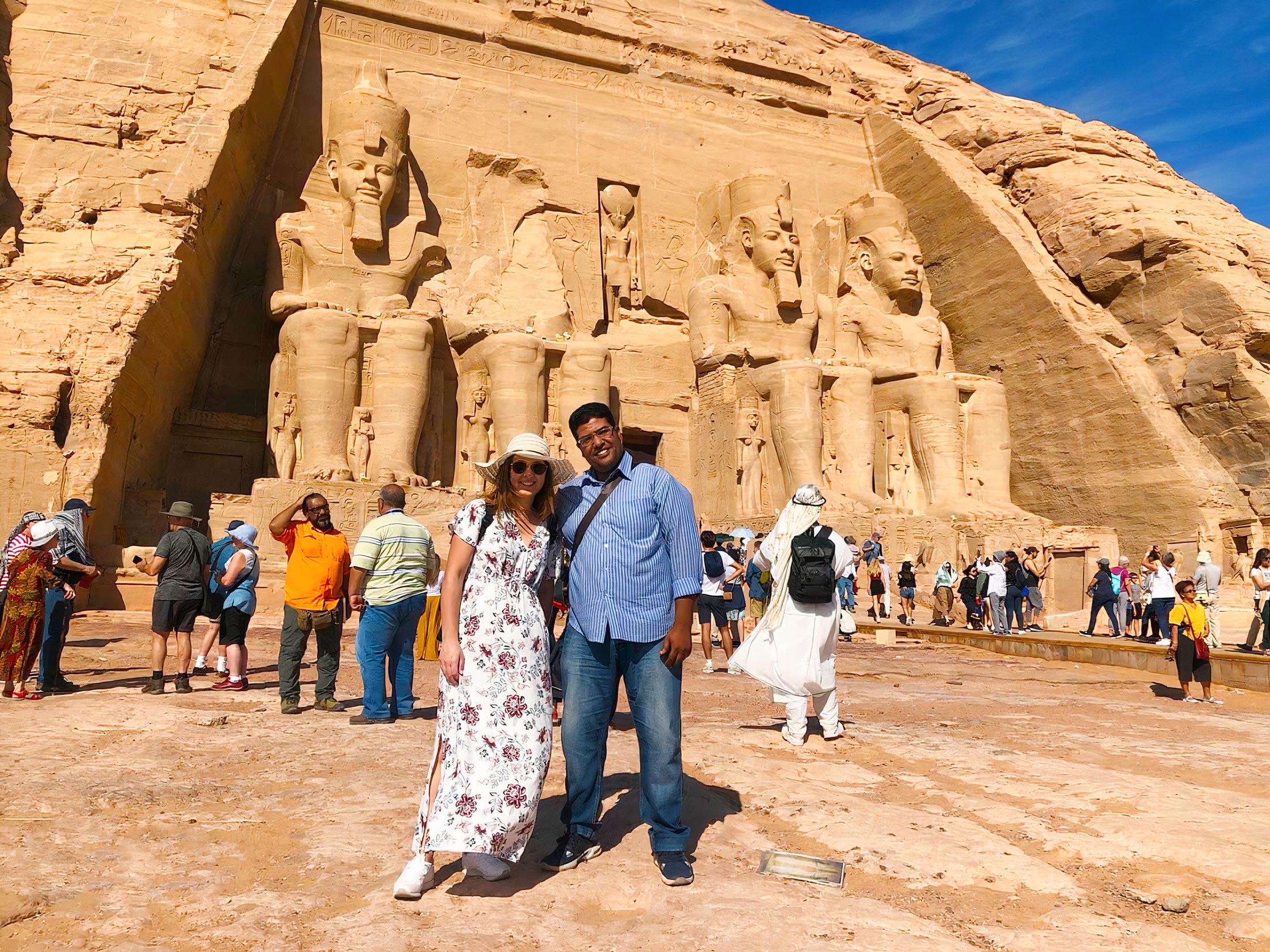
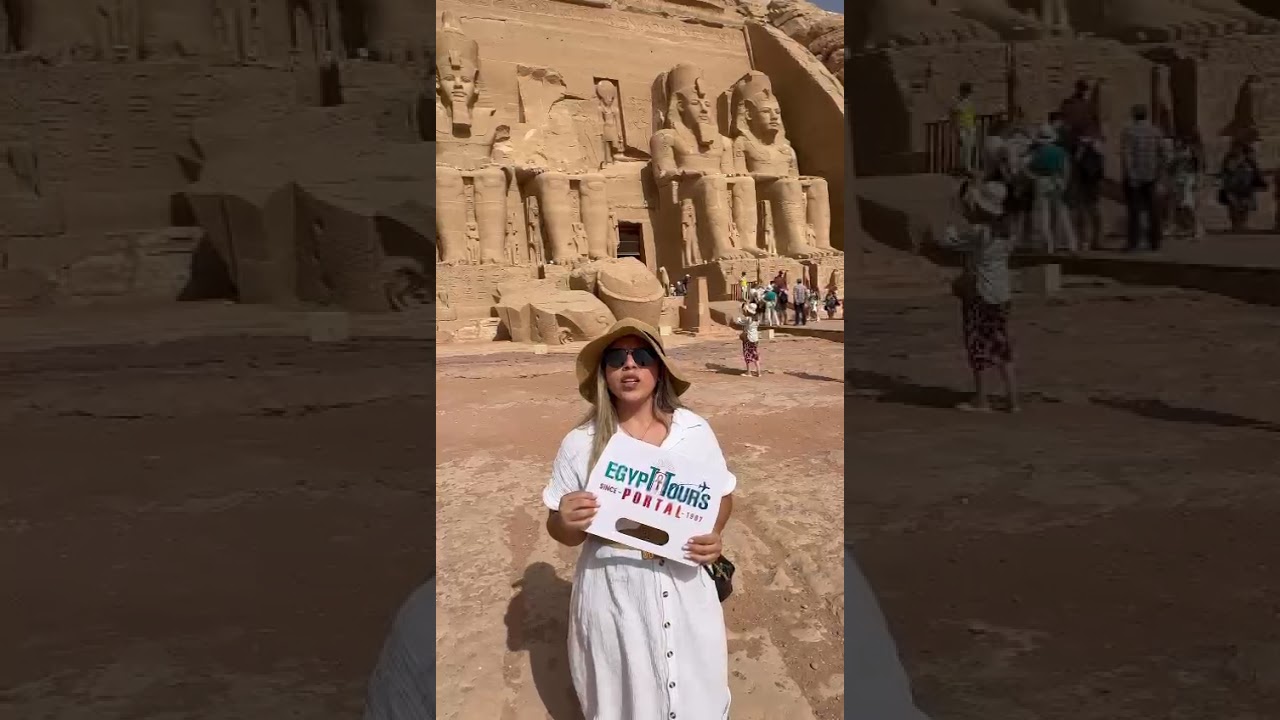
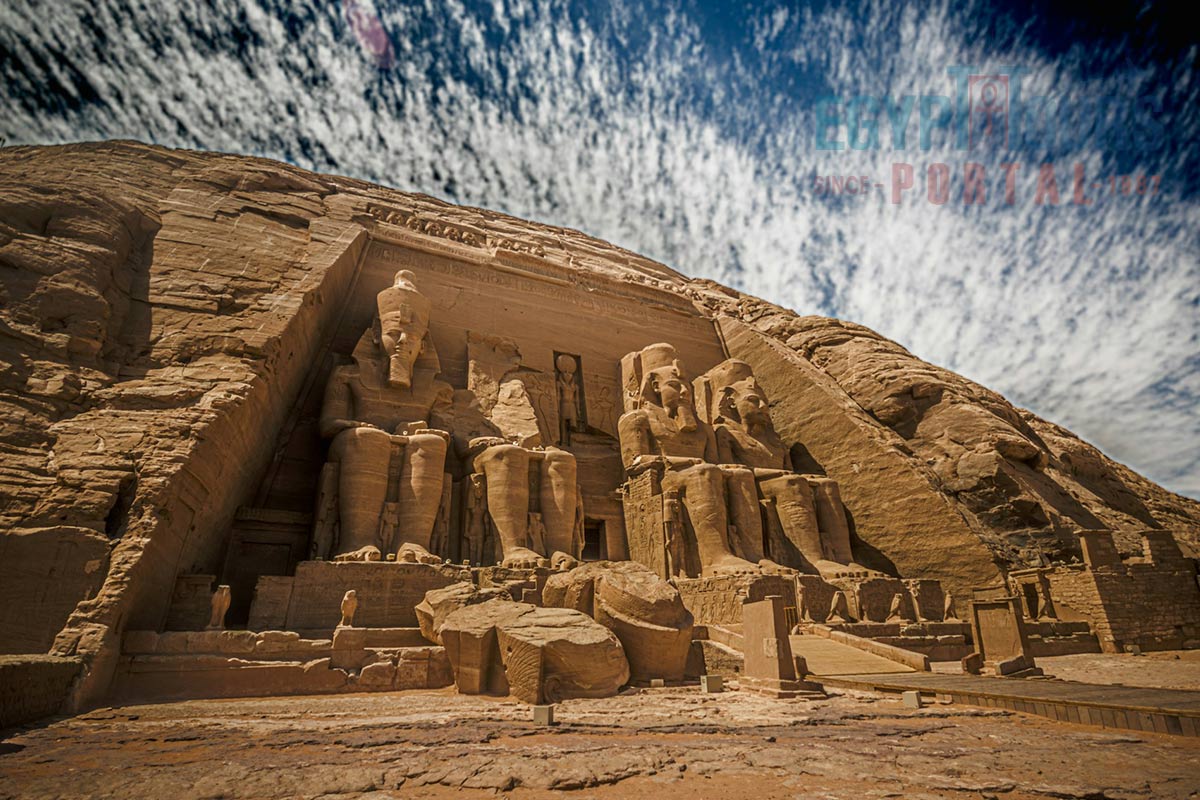
Carved into a Nubian cliffside around 1255 BC, Abu Simbel paired a larger temple for Ramses himself with a smaller one for his queen, its facade dominated by four seated colossi of the king, each roughly 20 meters tall. Historians have called the site "ego cast into stone," built as much to declare Ramses a living god at Egypt's southern frontier as to honor the gods themselves.
Buried under sand for centuries, it was rediscovered in 1813 and later became the centerpiece of one of the 20th century's largest engineering rescues: the Abu Simbel relocation project, when UNESCO cut both temples into more than a thousand blocks and reassembled them 65 meters higher to escape the rising waters of Lake Nasser.
The Ramesseum
On Thebes's west bank, the Ramesseum served as Ramses's mortuary temple, its pylon carved with his own account of Kadesh and its courtyard once dominated by an enthroned granite statue of the king standing 17 meters tall and weighing over a thousand tons, the same fallen giant that inspired Percy Bysshe Shelley's poem "Ozymandias." Thirty-nine of its original 48 hypostyle columns still stand, their ceilings once painted with gold stars on blue, and the complex also housed a school for scribes.
Pi-Ramesses
In the Nile Delta, Ramses founded an entirely new capital, Pi-Ramesses, meaning "Domain of Ramses, Great in Victory," on the site of a summer palace his father had already built. Positioned closer to the Hittite frontier than Thebes or Memphis, it grew to include vast temple precincts, a royal palace complete with a private zoo, gardens, and orchards; today, only its colossal statue fragments remain above ground near the modern village of Qantir.
Karnak and Luxor Temple
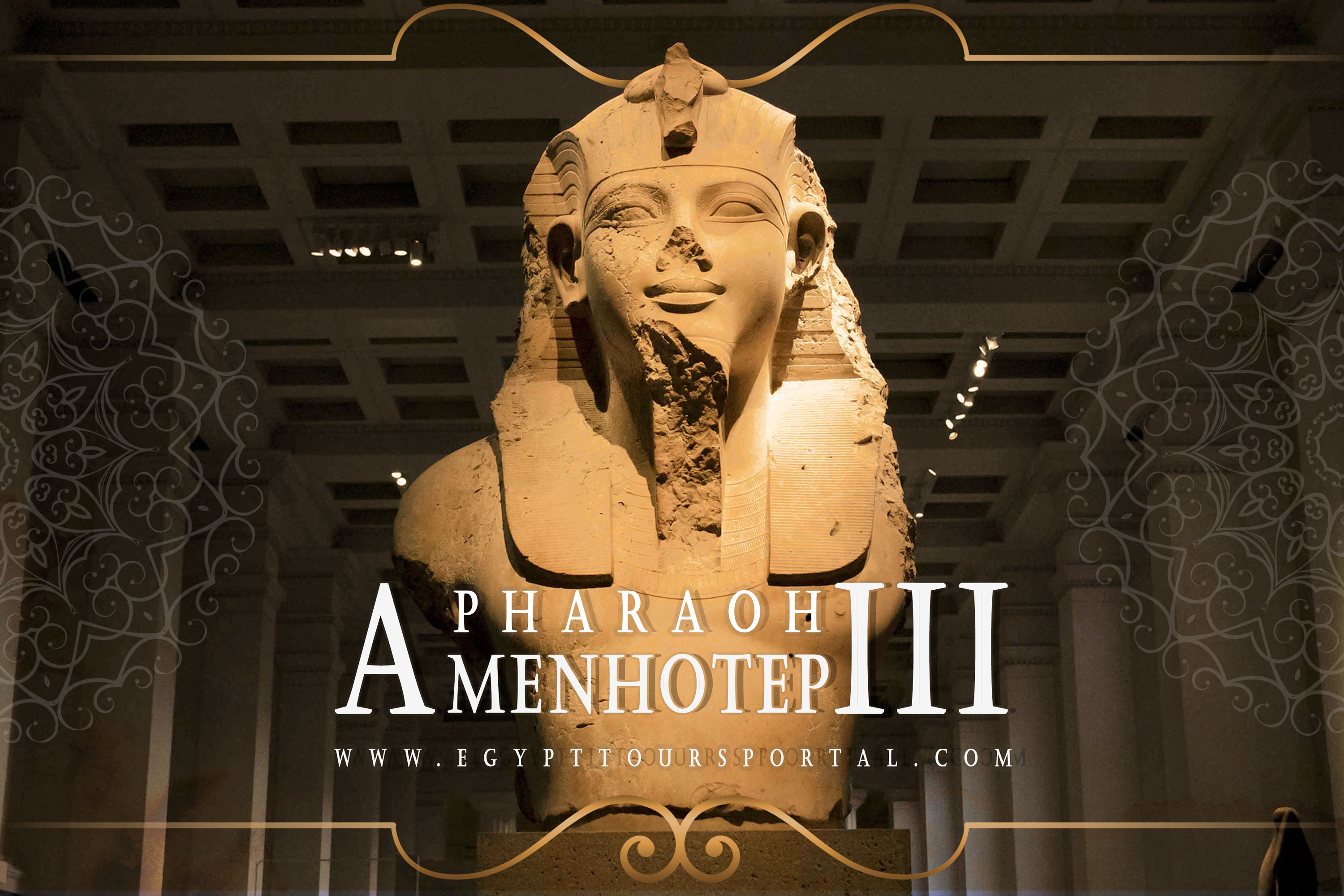
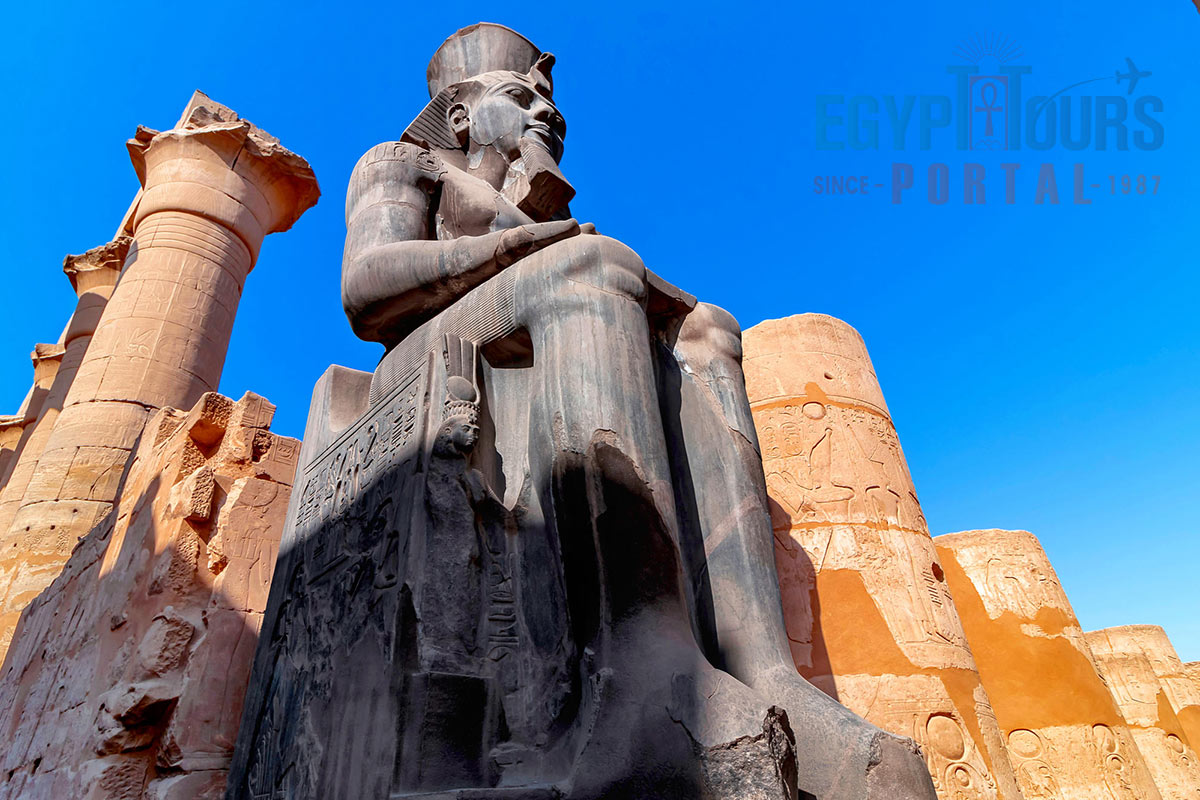
At Thebes, Ramses added a great hypostyle hall to Karnak Temple and expanded the Luxor Temple that Amenhotep III had founded a century earlier, adding his own courtyard, pylon, and colossal statues to the older king's design. His name and cartouche appear so often across ancient Thebes that Egyptologists still use the density of his inscriptions as a rough index of how much building activity a temple saw during his reign.
The Nubian Temples
Beyond Abu Simbel, Ramses raised a chain of smaller temples throughout Nubia, including Beit el-Wali, Derr, and Gerf Hussein, each reinforcing Egyptian religious and political authority along the Nile's southern reach. Abu Simbel itself was dedicated to Ra-Horakhty, the deified Ramses, Amun-Ra, and Ptah, a lineup that placed the living king directly among Egypt's principal gods rather than merely beneath them.
Family Life: Wives, Children, and Nefertari
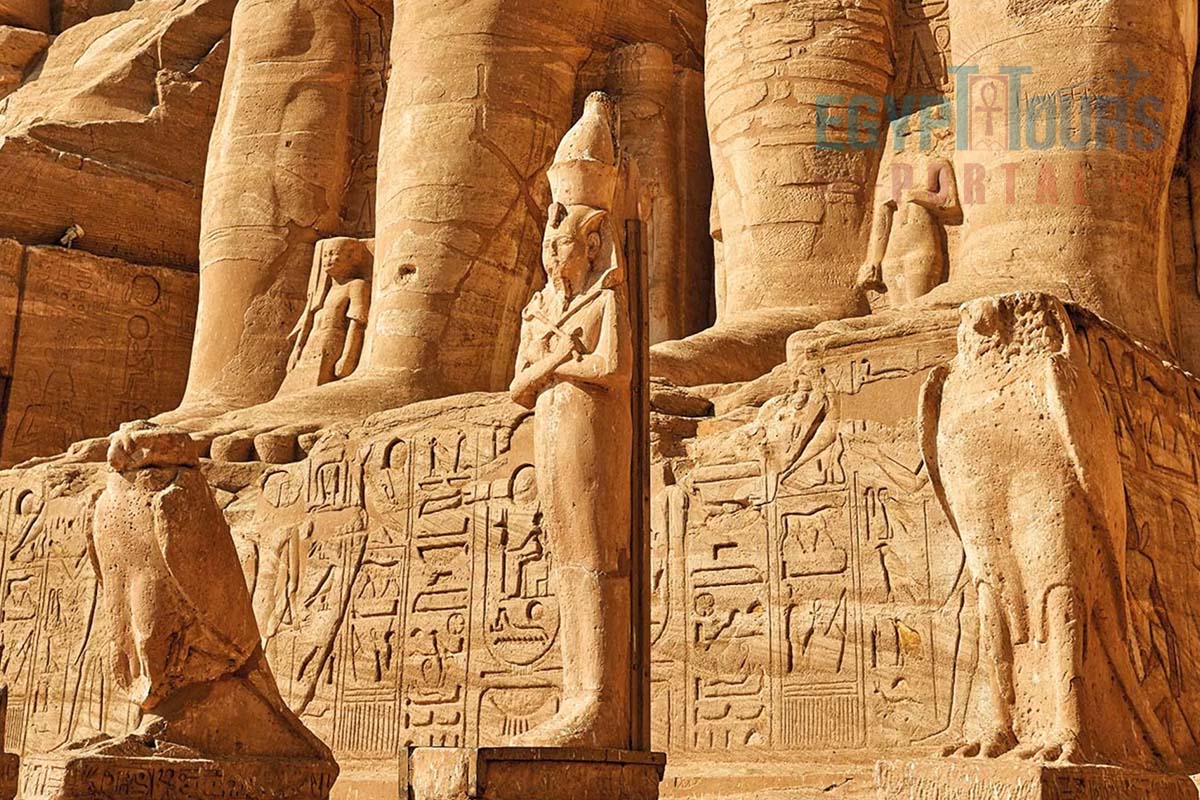
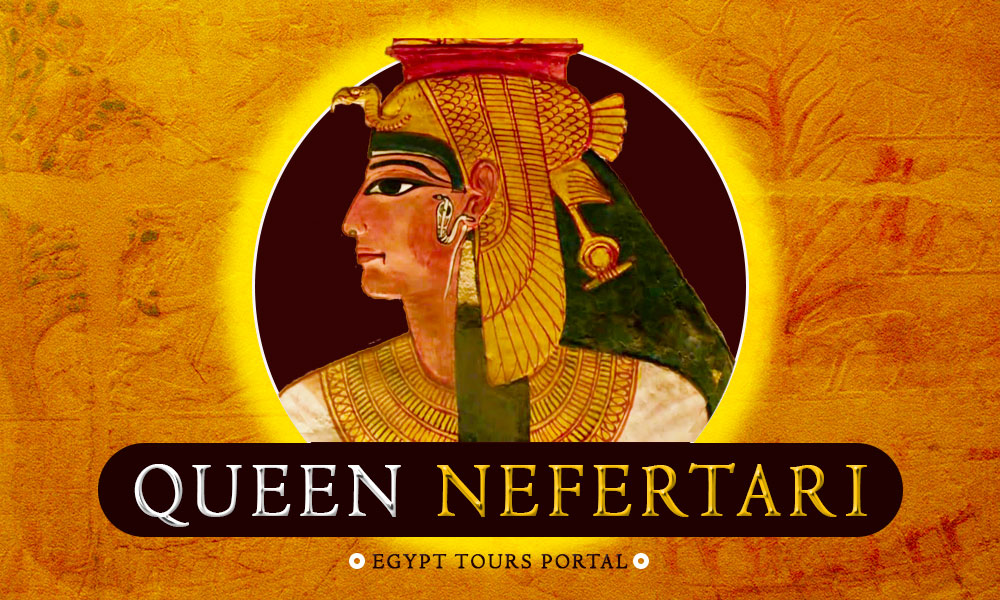
Ramses maintained two principal queens, Isetnofret and Nefertari, the latter clearly his favorite: she appears beside him in more inscriptions than any other consort, and Abu Simbel's smaller temple was built expressly for her.
Secondary consorts included the Hittite princess Maathorneferure, sent to Egypt as part of the peace settlement with Hatti, along with Nebettawy, Henutmire, Bintanath, and Meritamen, the latter two also his own daughters, a practice not uncommon among New Kingdom pharaohs seeking to keep royal bloodlines concentrated.
Ancient sources and modern Egyptologists differ on an exact tally, but Ramses is generally credited with fathering more than a hundred children over his long reign, including at least fifty sons whose names survive in inscriptions. His firstborn, Amun-her-khepeshef, accompanied him into battle; his eventual successor, Merneptah, was only his thirteenth son, inheriting the throne well into his own sixties after outliving nearly all his older brothers.
Nefertari's tomb in the Valley of the Queens, discovered in 1904, remains one of ancient Egypt's most celebrated works of funerary art, its ceiling painted with gold stars on a deep blue ground above walls illustrated with passages from the Book of the Dead.
Physical Description, Health, and Death
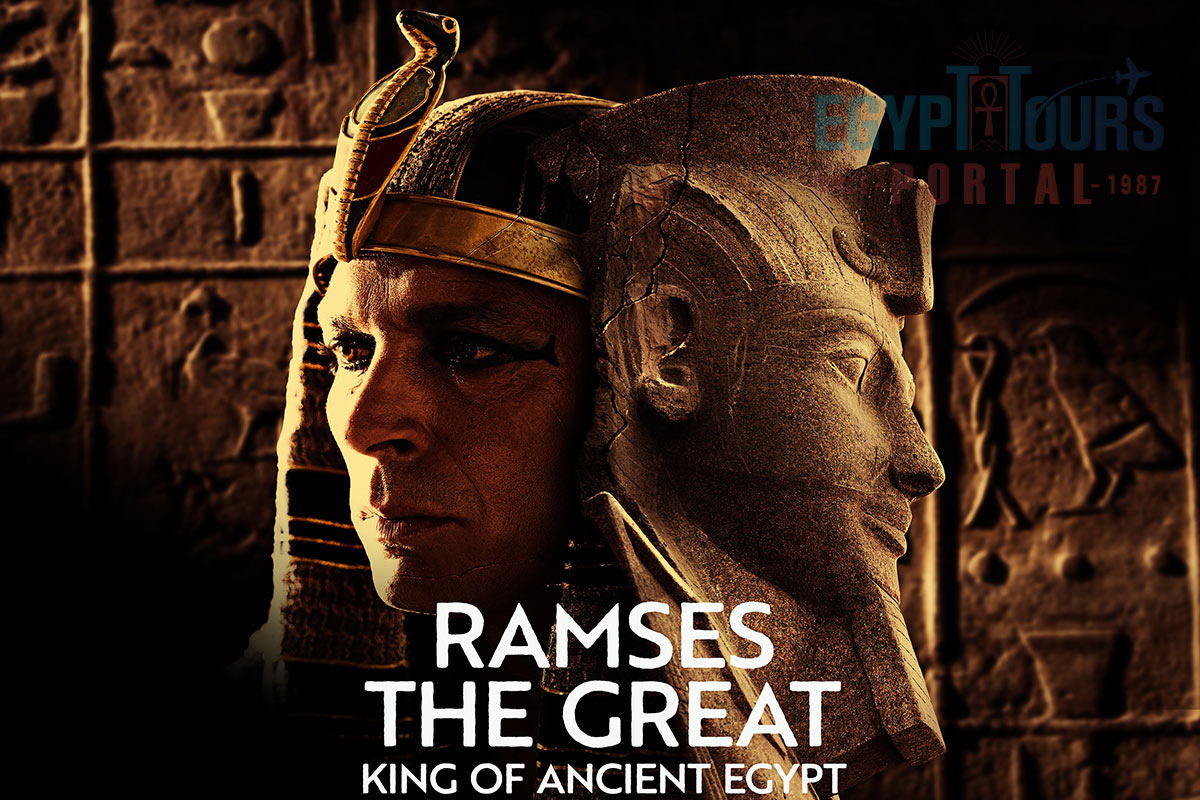
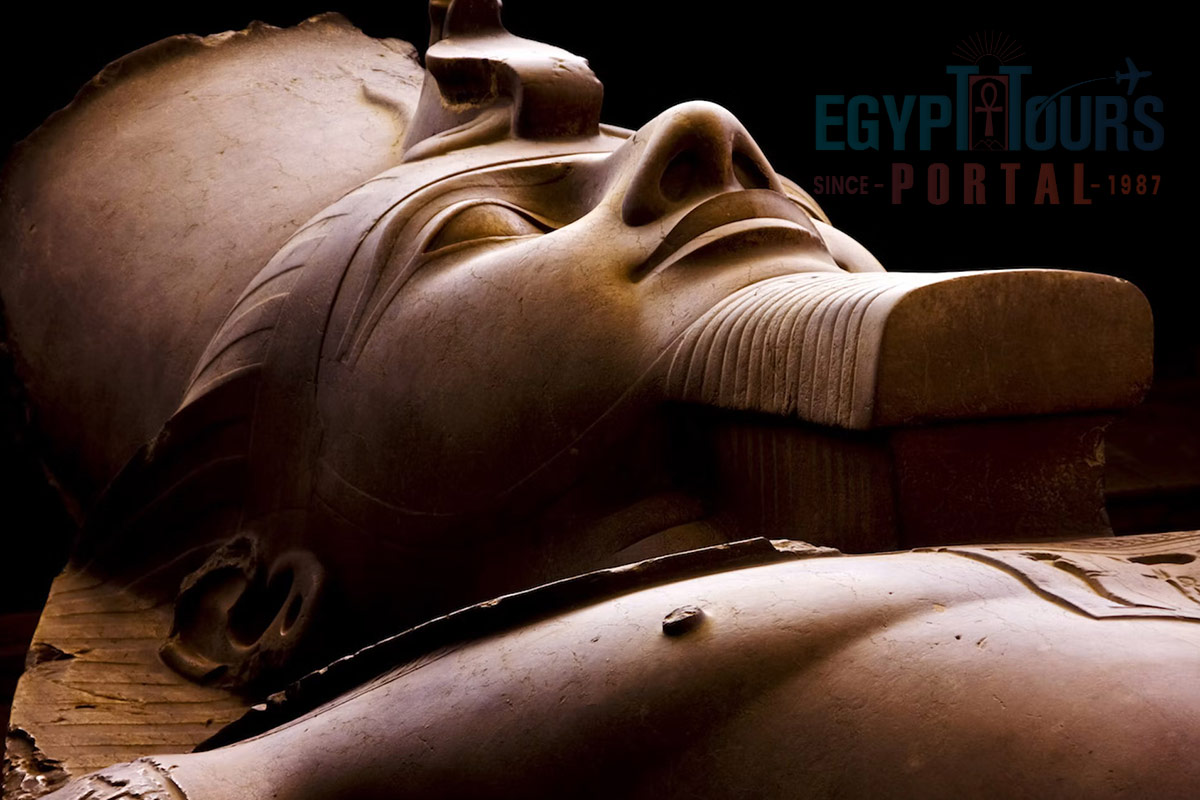
Examination of his mummy shows Ramses stood about 1.7 meters tall, with an aquiline nose, a strong jaw, and hair that forensic analysis in 1976 confirmed was naturally reddish before turning white with age. Pierre-Fernand Ceccaldi, the Paris forensic scientist who conducted that analysis, concluded the hair and skull shape suggested a "Berber type," fair-skinned ancestry; the Senegalese historian Cheikh Anta Diop later disputed that reading, arguing hair structure alone cannot establish ethnicity without comparative Nubian samples, while Egyptologist Frank Yurco has instead traced Ramses's features to his family's roots in Egypt's northeastern Delta rather than the south.
Red hair carried its own weight in Egyptian belief, where it was associated with Set, slayer of Osiris, a curious footnote for a king who otherwise styled himself alongside Egypt's more benevolent gods. In a stranger postscript decades later, French police arrested a man in 2006 for attempting to sell tufts of the king's hair online, reportedly kept by his father from the 1970s examination team; the relics were returned to Egypt in 2007.
His later years were not gentle: the mummy shows severe dental problems, arthritis, hardened arteries, and a significant abscess in the jaw serious enough that some researchers consider it a plausible cause of death, though a 2020 claim by Egyptian scholar Ali Gomaa that he had suffocated was disputed by former antiquities chief Zahi Hawass, who noted the mummy's lungs were never preserved for testing. Ramses died on 13 August 1213 BC, in his sixty-seventh regnal year, at around 90 years old.
The Mummy's Journey: From the Valley of the Kings to Paris and Back
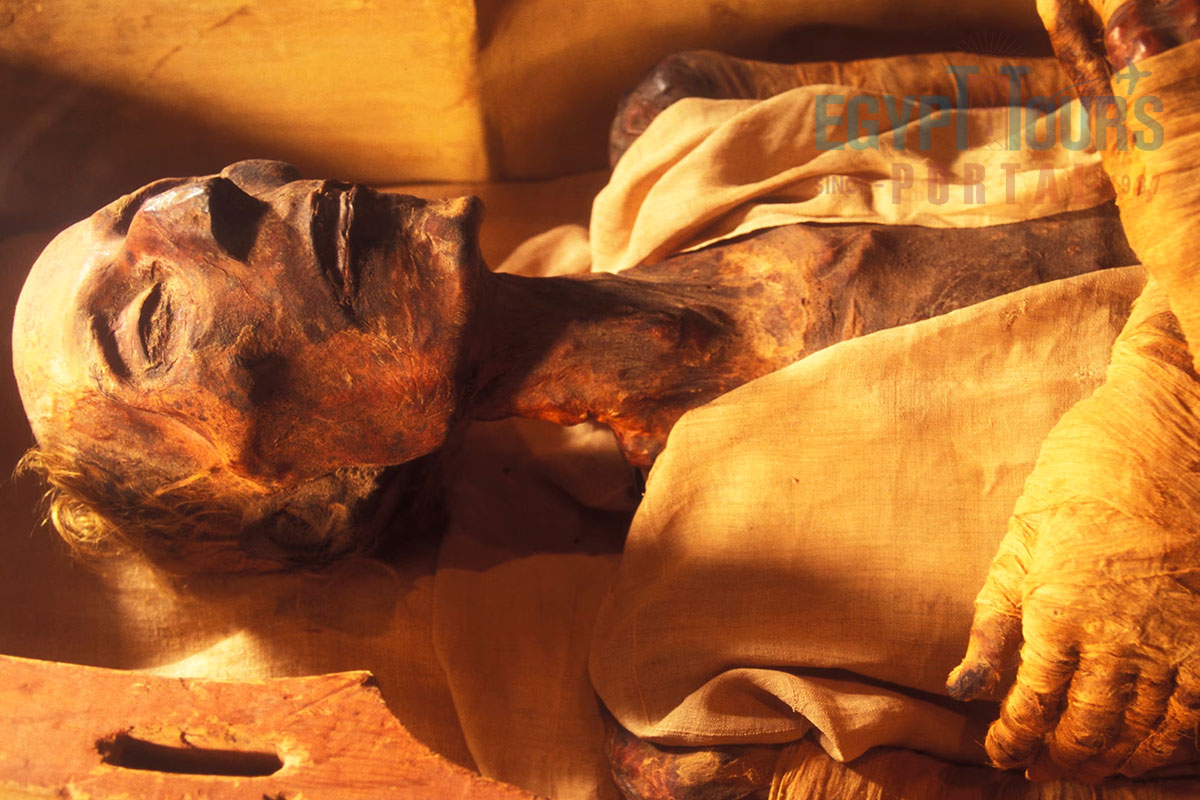
Ramses was first buried in tomb KV7 in the Valley of the Kings, but ancient tomb robbers forced priests to relocate his body twice more for safekeeping, ultimately hiding it in the tomb of the high priest Pinedjem II, where it lay undisturbed for nearly three thousand years. Rediscovered in 1881 inside an ordinary reused coffin, the mummy eventually made its way to the Egyptian Museum in Cairo.
By 1975, the mummy's condition had deteriorated badly enough that French doctor Maurice Bucaille arranged for it to be flown to Paris for conservation treatment, where it arrived in September 1976 to full military honors and underwent forensic analysis at the Musée de l'Homme. Popular retellings often claim Egyptian authorities issued the mummy an actual passport for the trip; in truth, French customs required extensive documentation rather than a literal passport, though the story has proven far more durable than the paperwork itself.
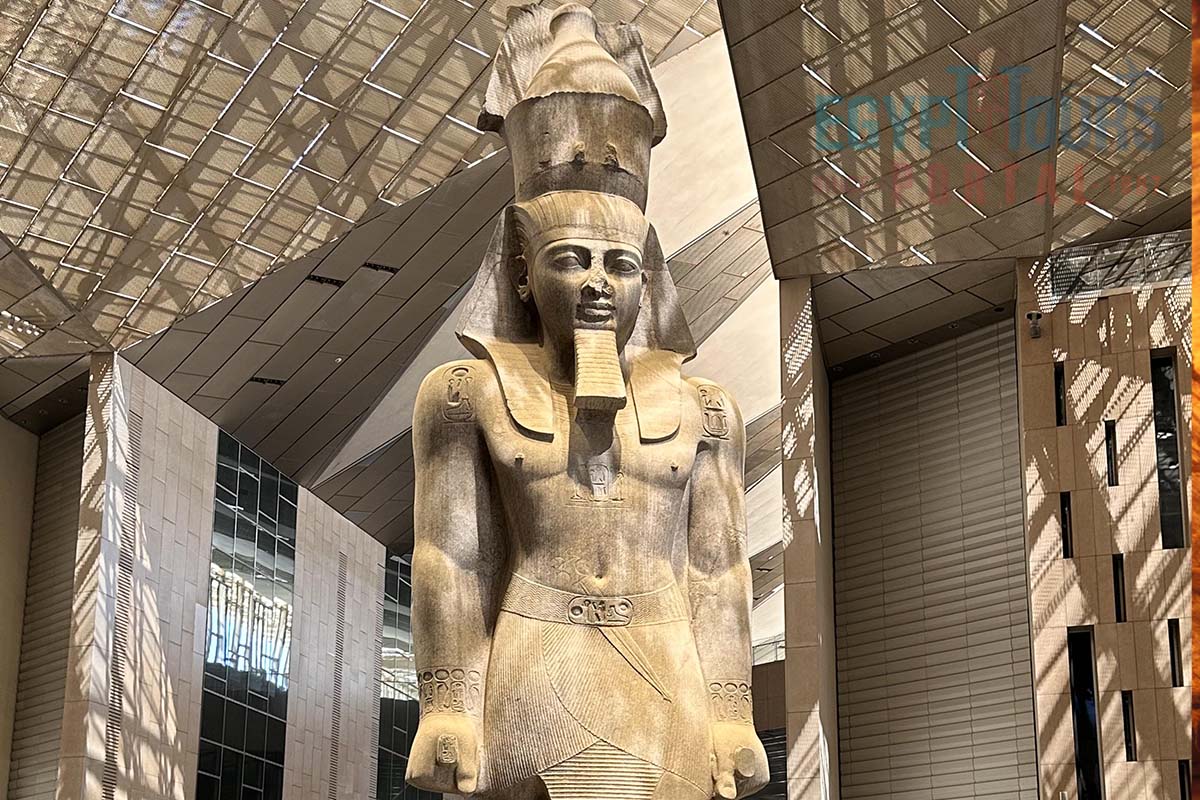
Restored and irradiated to eliminate fungal growth, Ramses returned to Egypt in May 1977, and in April 2021 his mummy was moved once more, this time to the National Museum of Egyptian Civilization as part of the widely televised Pharaohs' Golden Parade, distinct from the colossal 83-ton statue of Ramses that now stands near the entrance of the Grand Egyptian Museum, having spent decades before that guarding Cairo's Ramses Square.
Why Is He Called "The Great"?
No pharaoh built more or reigned longer, and both facts fed directly into how later generations remembered him. Beyond the sheer volume of temples, statues, and inscriptions he left across Egypt and Nubia, Ramses celebrated an extraordinary thirteen or fourteen Sed festivals, the ancient jubilee ritual meant to renew a king's strength, far more than any other pharaoh on record.
By his thirtieth year on the throne, Egypt was, by most accounts, more prosperous and secure than it had been in nearly a century, a peace purchased largely by the treaty he had signed with the Hittites.
By his twenty-eighth year, Ramses had also come to favor the god Amun above every other deity in the pantheon, and he ranked among the small handful of pharaohs actually worshipped as a god during his own lifetime rather than only after death.
The reverence outlasted him by generations: decades later, Ramesses IV left an inscription at Abydos asking the gods to grant him "the long lifespan and the extended reign" of his predecessor, adding that "more numerous are the things which I have done... than that which [Ramesses II] did... in his 67 years", a rare case of one pharaoh publicly measuring his own record against another's.
Modern historians continue debating, and largely rejecting, his popular association with the pharaoh of the biblical Exodus, a link for which Egypt's own Supreme Council of Antiquities has stated there is no archaeological evidence.
Recent Archaeological Discoveries About Ramses II
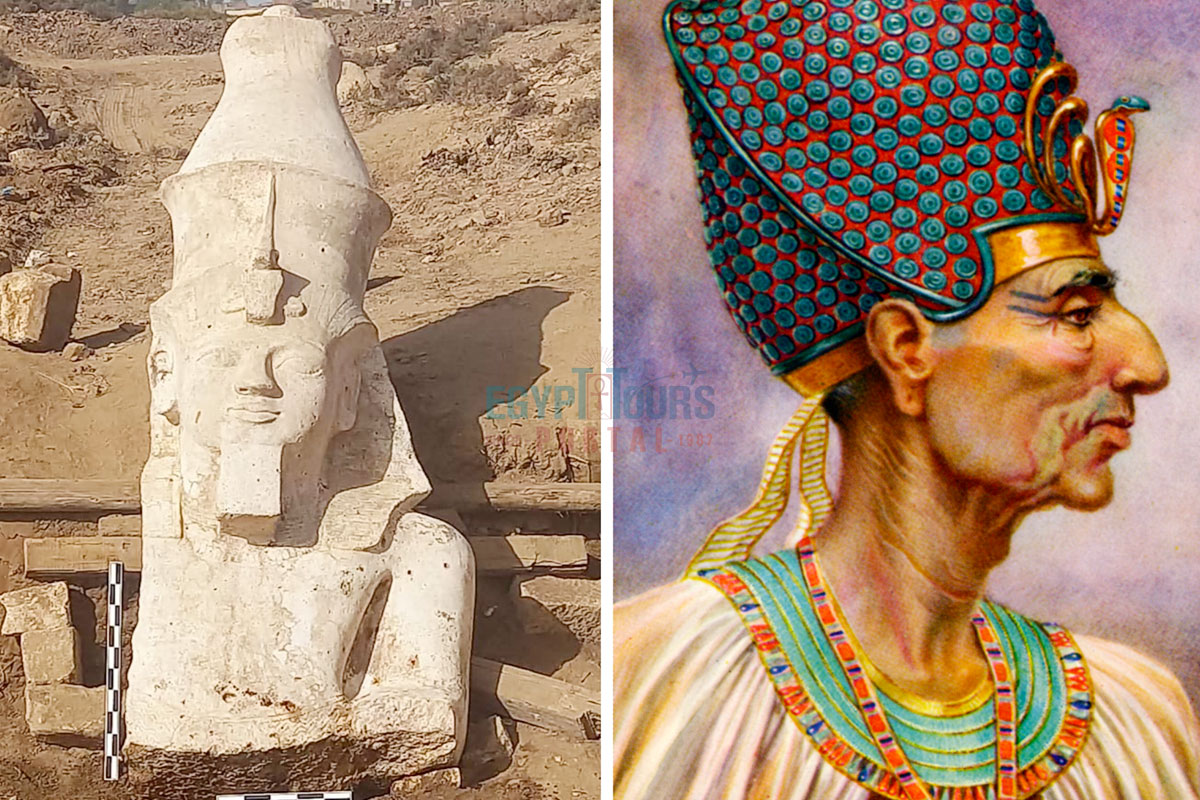
Egypt's ground has not finished giving up its secrets. In 2018, archaeologists working in Cairo's Matariya district uncovered a stone platform believed to have served as a ceremonial royal seat, alongside scarabs, amulets, and inscribed blocks bearing his name. A year later, in December 2019, a red granite bust of the king turned up near Memphis, its wig marked with the "Ka" symbol; Egyptologists called it the first granite Ka statue ever found.
In May 2023, researchers from the Sorbonne identified a fragment of granite sarcophagus, later reused around 1000 BC by a high priest, as originally carved for Ramses himself, its inscriptions invoking Ra and Osiris. Most recently, in September 2024, excavators uncovered a golden sword bearing his name inside a 3,200-year-old fort along the Nile, proof that, more than three thousand years on, Ramses the Great is still, quite literally, being unearthed.
Explore Ramses the Great in Popular Culture
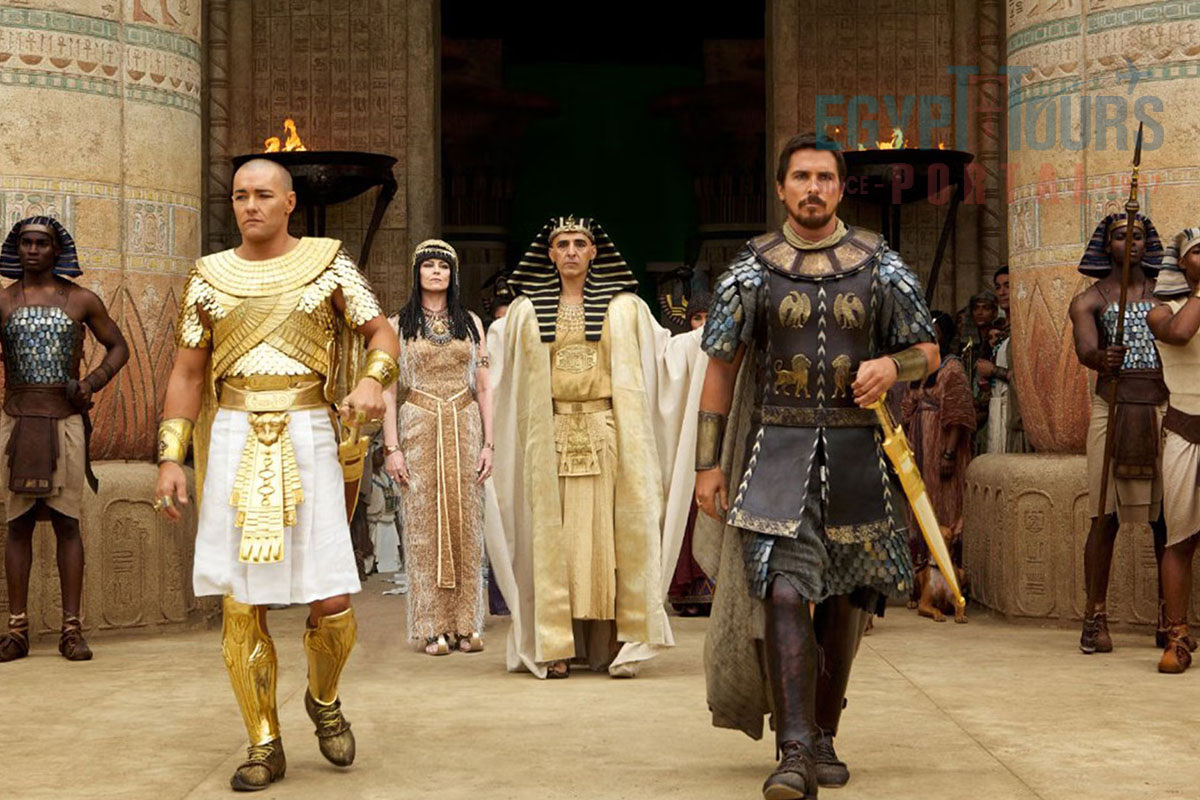
Shelley's "Ozymandias" was only the beginning of his afterlife in art. Yul Brynner played him as a proud, doomed antagonist in The Ten Commandments (1956), a role echoed decades later by Ralph Fiennes's voice work in the animated The Prince of Egypt (1998) and by Joel Edgerton in Exodus: Gods and Kings (2014).
French novelist Christian Jacq built an entire five-book series around his reign, while Norman Mailer's Ancient Evenings and Anne Rice's The Mummy, or Ramses the Damned each reimagined him for very different audiences.
Comic book readers may recognize a trace of him in Adrian Veidt's alter ego, also named Ozymandias, in Watchmen, and he appears as a legendary ancestor in Rick Riordan's The Kane Chronicles. Strategy gamers have commanded his civilization directly, since Ramses appears as a playable leader in Civilization V and Civilization VI.
Nearly two and a half thousand years after the Greek historian Diodorus Siculus first recorded the boastful inscription that inspired Shelley, Ramses the Great remains one of the few pharaohs as recognizable in fiction as he is in fact.
Visiting Ramses II's Monuments Today
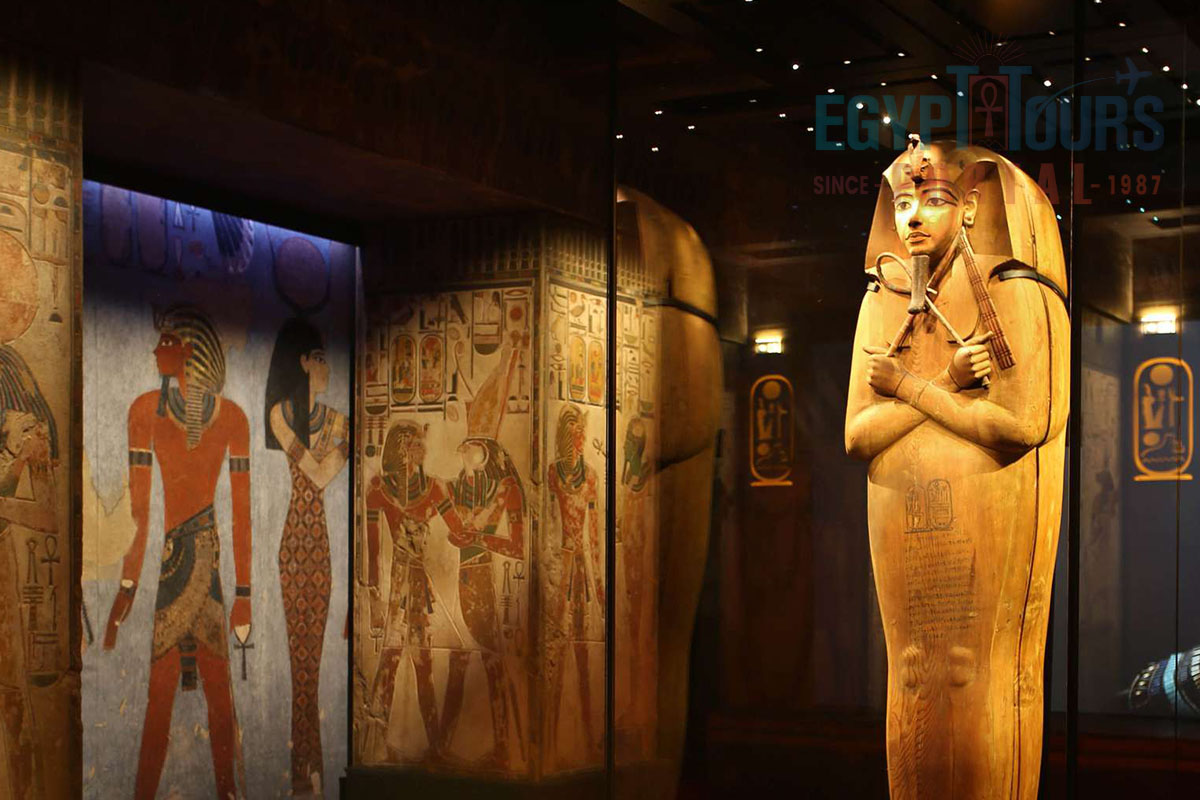
Travelers curious to see Ramses's legacy firsthand have more options than almost any other pharaoh offers. Abu Simbel remains a highlight of any Aswan day tour, while the Ramesseum, Karnak, and Luxor Temple all sit within easy reach of Luxor's day tours. His colossal statue and the artifacts once buried with his sons in the Valley of the Kings' tomb KV5 draw steady crowds among Egypt's UNESCO World Heritage sites, and a broader look at ancient Egyptian civilization helps place his reign within the fuller 3,000-year sweep of Egypt's pharaohs.
Discover the Majestic and Famous Legacy of Ramses the Great
Ramses the Great spent sixty-six years making sure Egypt would not forget him, and by any reasonable measure, it never has. Between the temples of Abu Simbel and Luxor, the treaty that ended a war with the Hittites, and a mummy that has traveled farther after death than most rulers travel in life, his reign reads less like ancient history and more like a case study in legacy built to outlast its builder.
For anyone standing before his colossi at Abu Simbel or the fallen giant at the Ramesseum today, the sense of scale Shelley once mocked as vanity still, somehow, lands as awe. If you would like to visit the best attractions built by King Ramses, then you can check our Egypt vacations and Nile river cruises, which are customized to offer the best holiday in Egypt while visiting the best attractions of King Ramses, plus tours to the many epic wonders of Egypt.