Summary
- Philae Temple is a temple complex in Aswan, mainly dedicated to Isis, goddess of motherhood, magic, healing, protection, and divine kingship.
- The complex originally stood on Philae Island near the First Cataract but was relocated to Agilkia Island to save it from flooding.
- Its history stretches from the 7th or 6th century BC to the 6th century AD, covering Late Period, Ptolemaic, Roman, and Byzantine phases.
- Philae preserved the last known hieroglyphic inscription from AD 394 and the last known Demotic inscription from AD 452.
- UNESCO rescued the complex between 1977 and 1980, dismantling it into about 40,000 blocks and rebuilding it on Agilkia Island.
Philae Temple is one of the most enchanting temple complexes in Egypt and one of the last temples to ever be built & the finest surviving monuments of the ancient cult of Isis, the goddess of motherhood, magic, healing, protection, and divine kingship. Although it is commonly called “Philae Temple,” it is actually a temple complex, not a single building. It includes the great Temple of Isis, smaller chapels, courts, pylons, colonnades, birth house, Roman-era structures, and later Christian additions.
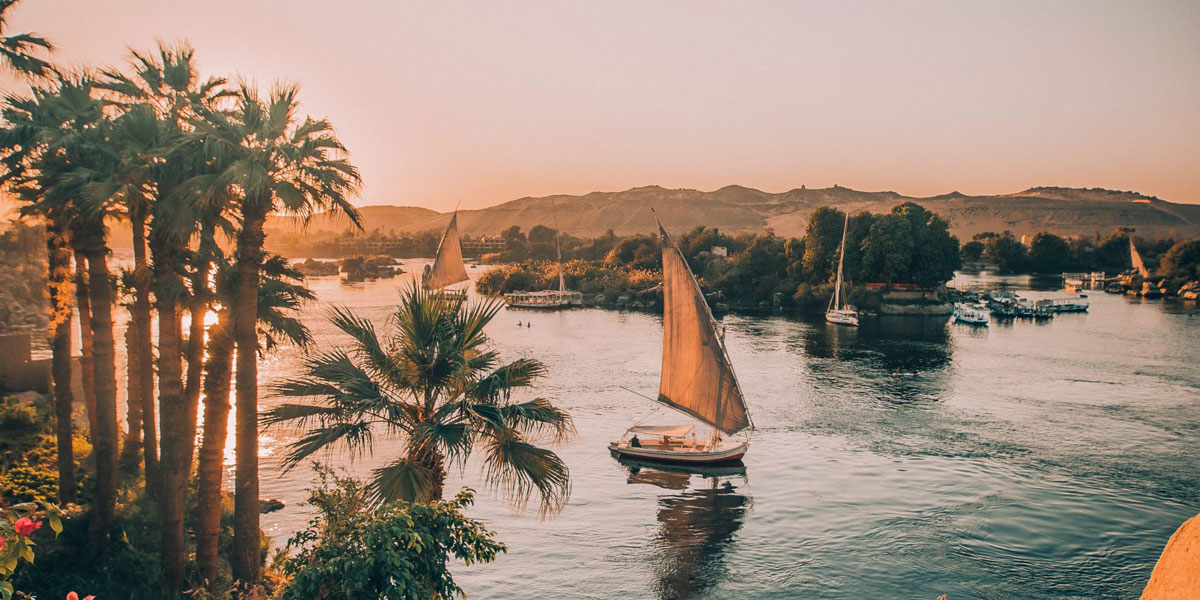
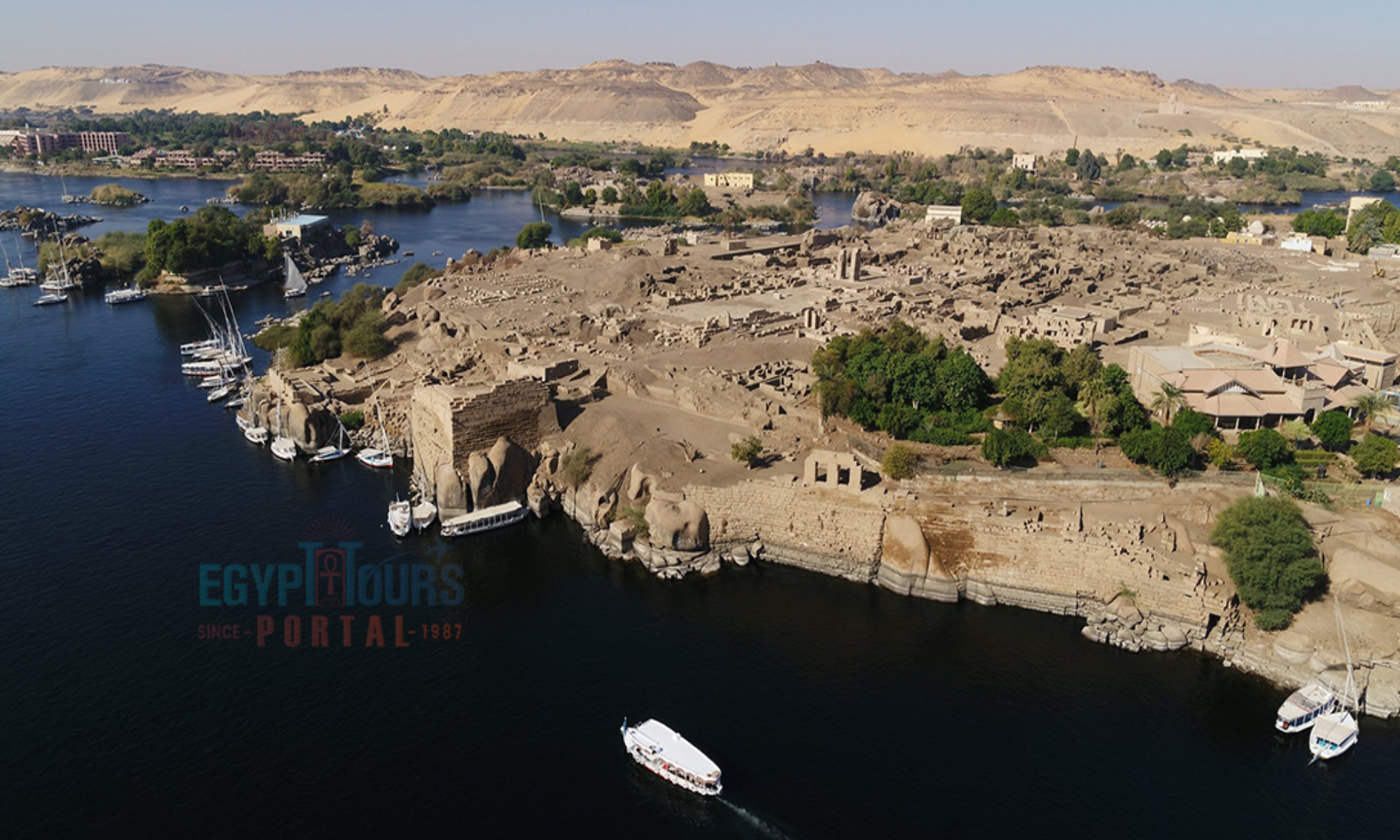
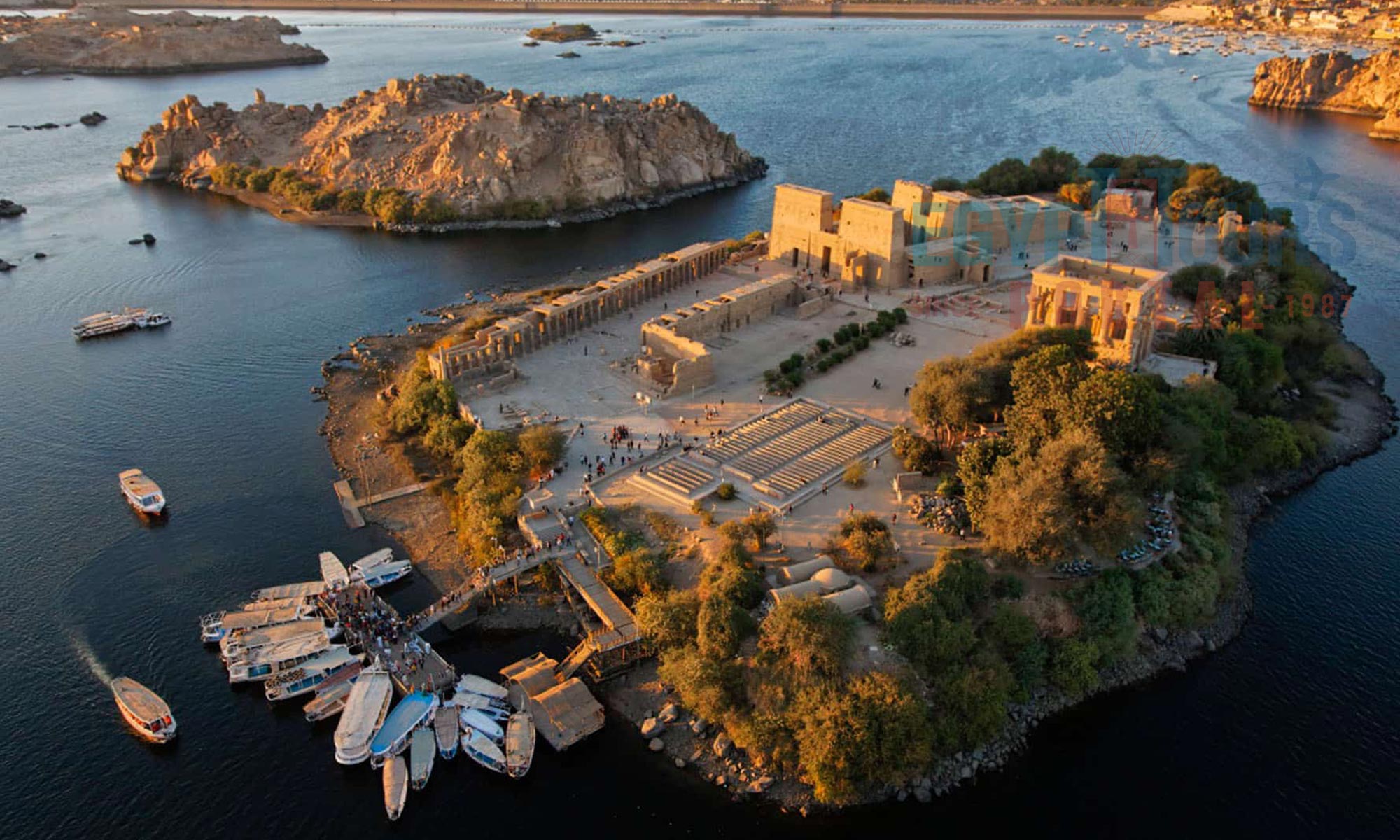
The temple originally stood on Philae Island near the First Cataract of the Nile, but today it stands on Agilkia Island after being moved there in the 20th century to save it from flooding. Its romantic island setting, sacred association with Isis and Osiris, and dramatic rescue by UNESCO made it one of the most beloved monuments in Aswan.
Philae was historically known as one of the last strongholds of ancient Egyptian religion. Long after many traditional temples had declined, worship of Isis continued at Philae into Late Antiquity, attracting Egyptians, Nubians, Greeks, Romans, and pilgrims from across the Mediterranean world. The temple’s walls preserve religious scenes connected with Isis, Osiris, Horus, divine birth, healing, protection, and resurrection, making the complex one of the most important sources for understanding late Egyptian religious belief.
The Grand Location and How to Get to Philae Temple
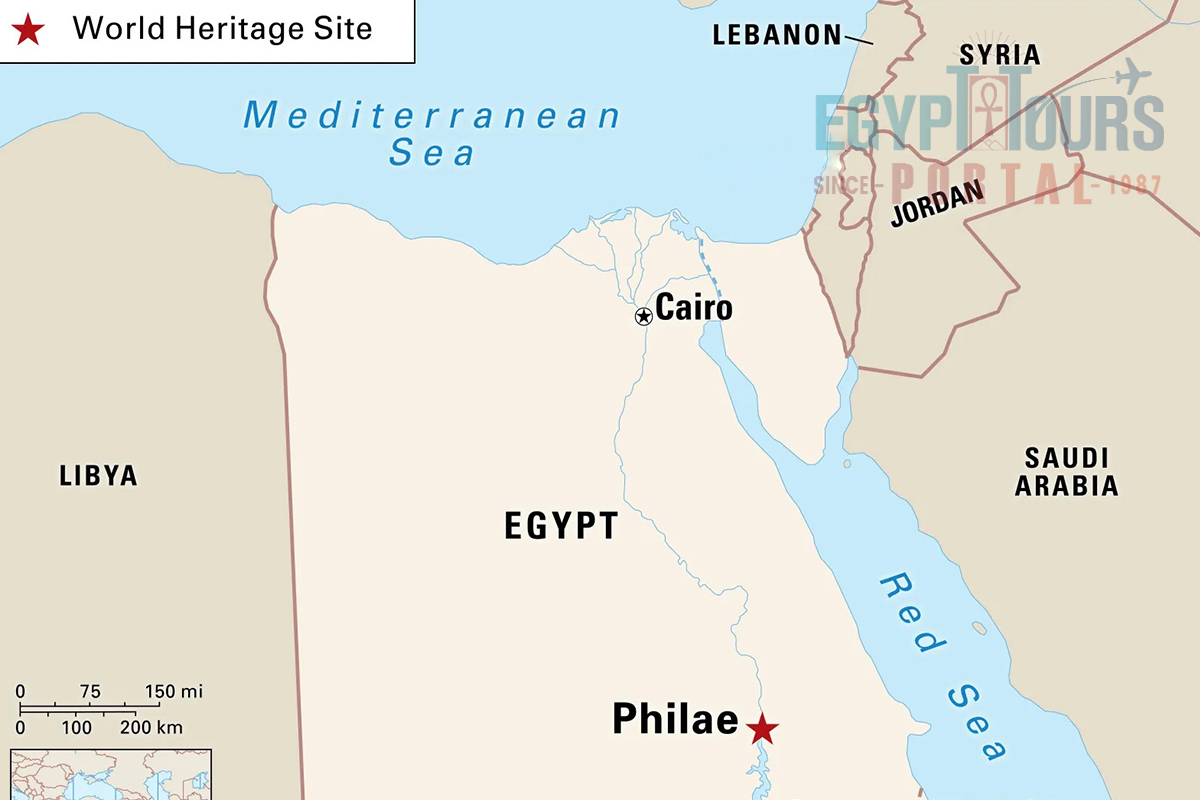
Philae Temple is located in Aswan, Aswan Governorate, Upper Egypt, in the historic region of Nubia. Its current location is Agilkia Island, in the reservoir of the Aswan Low Dam, downstream of the Aswan High Dam and Lake Nasser. The original Philae Island stood near the First Cataract of the Nile River, an area that historically marked the border zone between Egypt and Nubia.
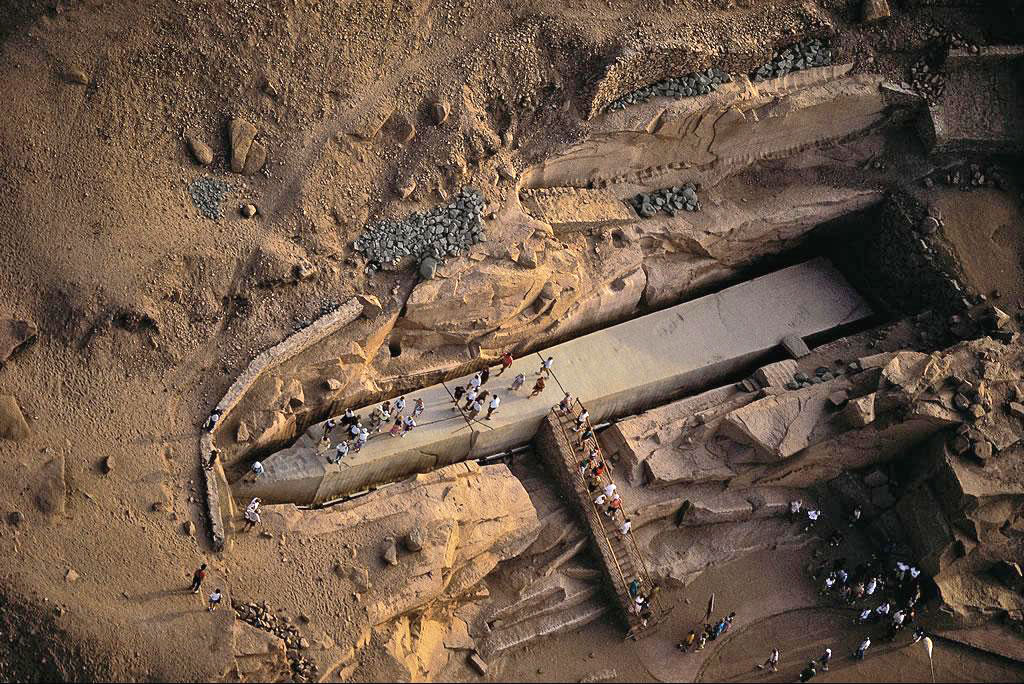
From Aswan, reaching Philae Temple is easy and enjoyable. Travelers usually drive from central Aswan to the Philae marina near the old dam area, then take a short motorboat ride to Agilkia Island. The boat journey is part of the experience, as the temple gradually appears above the water with its pylons, colonnades, and island setting, creating one of the most beautiful approaches to any temple in Egypt. The visit is often combined with the Aswan High Dam, the Unfinished Obelisk, and sometimes the Nubian Village, making Philae one of the essential stops in any Aswan itinerary.
Ancient Egyptian Temples
Witness the magnificant temples of the ancient Egyptian civilization
The Divine History of the Honorable Temple of Philae
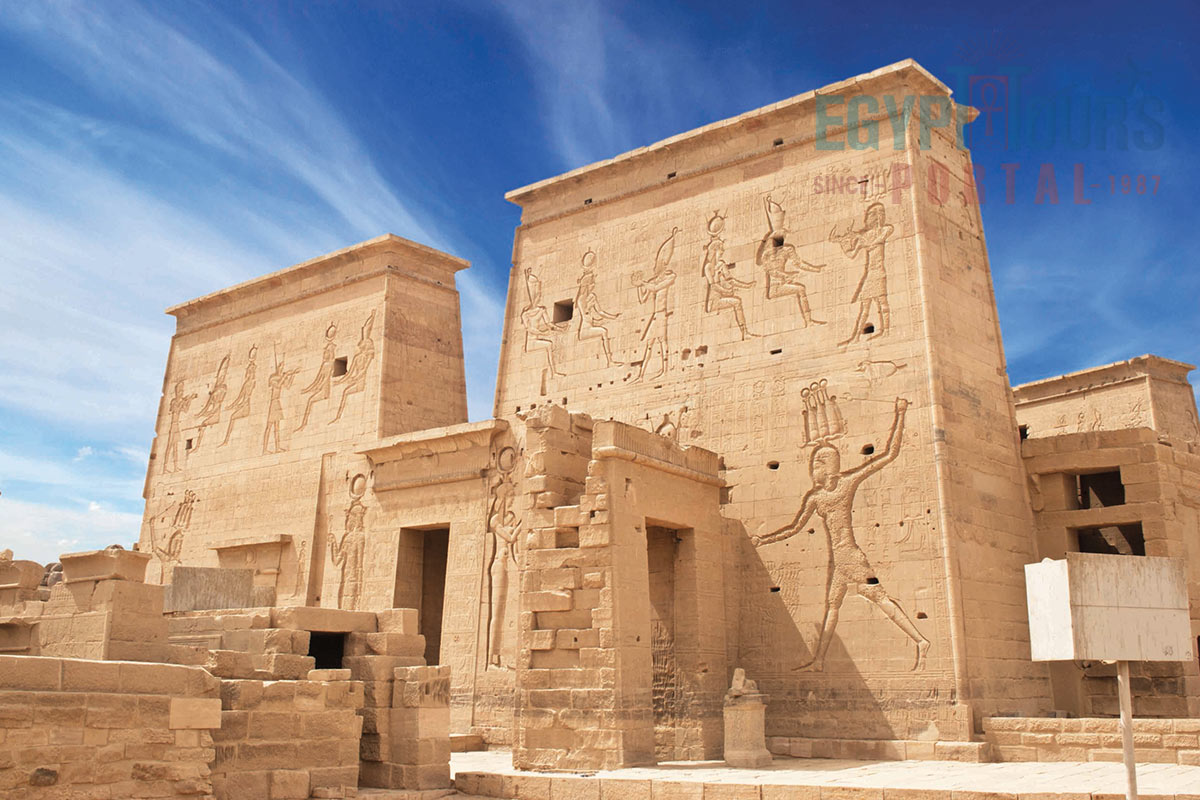
Philae’s history reflects one of the longest and most complex sacred timelines in Egypt. In the Pharaonic era, the island’s ancient name meant “boundary,” reflecting its role as Egypt’s southern frontier, where pharaohs maintained a strong garrison and where Greek and Roman soldiers later had barracks. The earliest religious building may have been a shrine built by Taharqa of the 25th Dynasty, probably dedicated to Amun, though it is known only from reused blocks.
The earliest certain evidence of Isis worship on Philae was a small kiosk built by Psamtik II of the 26th Dynasty, followed by additions from Amasis II and Nectanebo I; only two elements from Nectanebo I survive, including a kiosk originally used as the vestibule of the old Isis temple and a gateway later incorporated into the first pylon. During the Ptolemaic era, more than two-thirds of Philae’s surviving structures were built, and the island became a major pilgrimage center for Egyptians, Nubians, and visitors from Anatolia, Crete, and mainland Greece, gradually surpassing Elephantine as southern Egypt’s leading sanctuary.
Pilgrims left inscriptions on the walls, including proskynemata, and three Roman inscriptions from 116 BC on the first pylon are considered the oldest known Latin inscriptions in Egypt. Philae also received Nubian additions from Arqamani and Adikhalamani, though scholars debate whether these reflect cooperation with the Ptolemies or Nubian occupation during unrest in Upper Egypt. In the Roman era, Mediterranean pilgrimage declined, but Philae remained important to Nubians and official delegations from Meroë; Roman emperors continued adding monuments up to Caracalla, and Diocletian built a triple arch and in AD 298 withdrew Rome’s southern frontier to around Philae.
The island preserves the last known Egyptian hieroglyphic inscription, dated AD 394, and the last known Demotic inscription, dated AD 452. Christianity appeared by the 4th century, coexisting for a time with traditional worship; by the mid-5th century, multiple churches existed beside pagan temples, while a treaty in 452 still guaranteed access to the cult image of Isis. The temple was officially closed in AD 537 under Justinian I, although some scholars argue organized paganism had already ended in the 5th century, and evidence suggests traces of traditional worship may have survived into the 6th century.
Philae then became an important Christian center, with five temples converted into churches, including the Temple of Isis dedicated to Saint Stephen, and two purpose-built churches added on the north side. In the 19th century, Philae attracted European travelers such as Joseph Bonomi the Younger and Amelia Edwards, whose romantic descriptions helped fuel Victorian interest and early tourism. In the 20th century, the Aswan Low Dam, completed in 1902 and raised in 1907–1912 and 1929–1934, repeatedly flooded the island, damaging vegetation, relief colors, bricks, and temple surfaces with silt.
By the 1960s, Philae was submerged up to one-third of the buildings year-round, prompting UNESCO’s rescue project. Engineers built a large cofferdam using steel plates and 1 million cubic meters of sand, pumped out the water, documented the monuments with photogrammetry, dismantled them into about 40,000 blocks weighing 2 to 25 tons, and transferred them to Agilkia Island, about 500 meters / 1,600 feet away, reshaping the new island to resemble ancient Philae; the transfer took place between 1977 and 1979, saving one of Egypt’s most important sacred complexes from permanent flooding.
The Mythological Significance and the Osiris Legend of Philae Temple
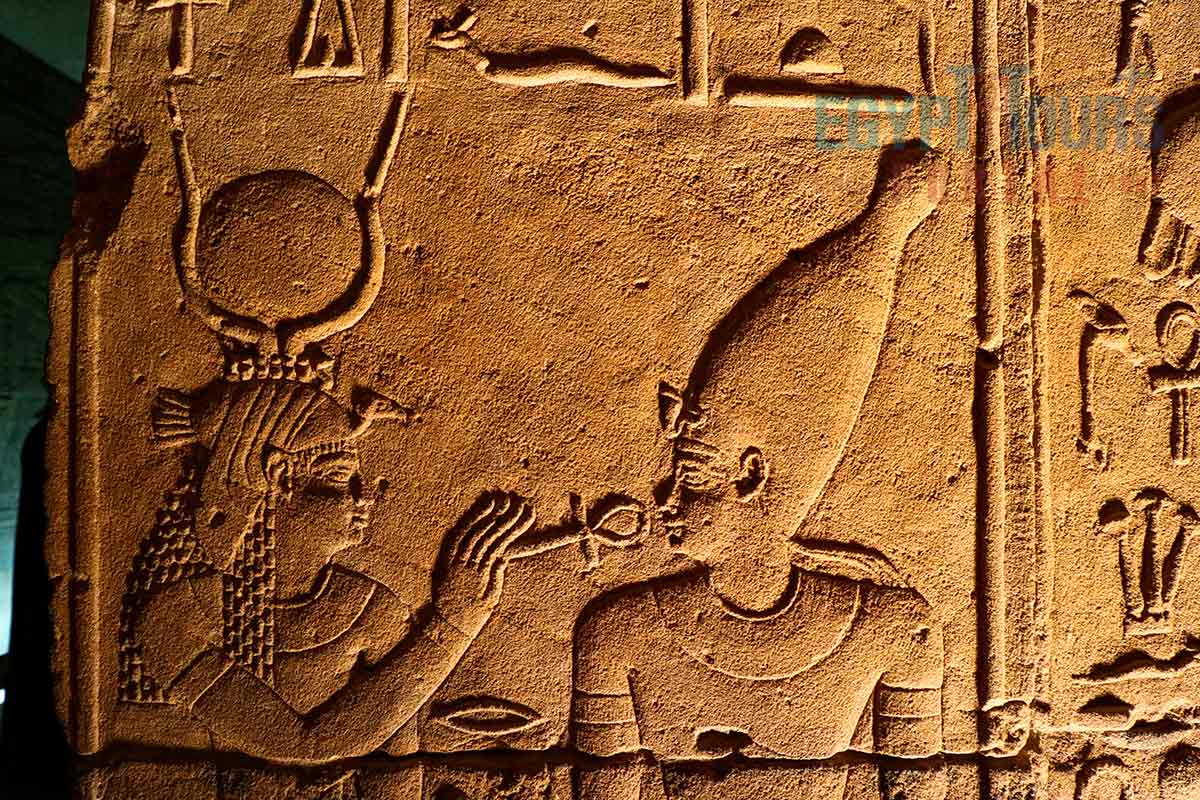
Philae Temple is deeply connected with the myths of the ancient Egyptian gods of Isis, Osiris, and Horus, especially the Osirian story of Death, mourning, magical restoration, divine motherhood, afterlife, and rebirth. According to one of the most renowned tales in ancient Egyptian mythology, Osiris was a divine king who brought civilization, order, agriculture, and justice to Egypt before being murdered and dismembered by his brother Seth; Isis then searched for his body, restored him through magic, and conceived Horus, who later avenged his father and became the model of legitimate kingship.
Philae and nearby Bigeh Island were believed to be linked with the tomb or resting place of Osiris, making the temple a major pilgrimage center where worshippers honored Osiris’s mysteries and sought Isis’s protection. Its island setting near the First Cataract strengthened its symbolism, as islands rising from the Nile suggested creation, fertility, protection, and resurrection.
The Temple of Isis preserved these beliefs through reliefs showing offerings, divine birth, protection, resurrection, and royal legitimacy, while Isis appeared as mother, magician, mourner, protector, and queen; Horus symbolized continuity and rightful rule; and Osiris represented afterlife hope. Politically, the myth reinforced kingship because the living pharaoh was linked with Horus and the dead king with Osiris.
During the Ptolemaic and Roman periods, Isis worship spread across the Mediterranean, and Philae became one of the last great centers of traditional Egyptian religion, preserving the last known hieroglyphic inscription in AD 394 and the last known Demotic inscription in AD 452. Even after Christianity spread, Philae remained sacred, with several temples converted into churches, including the Temple of Isis, later associated with Saint Stephen.
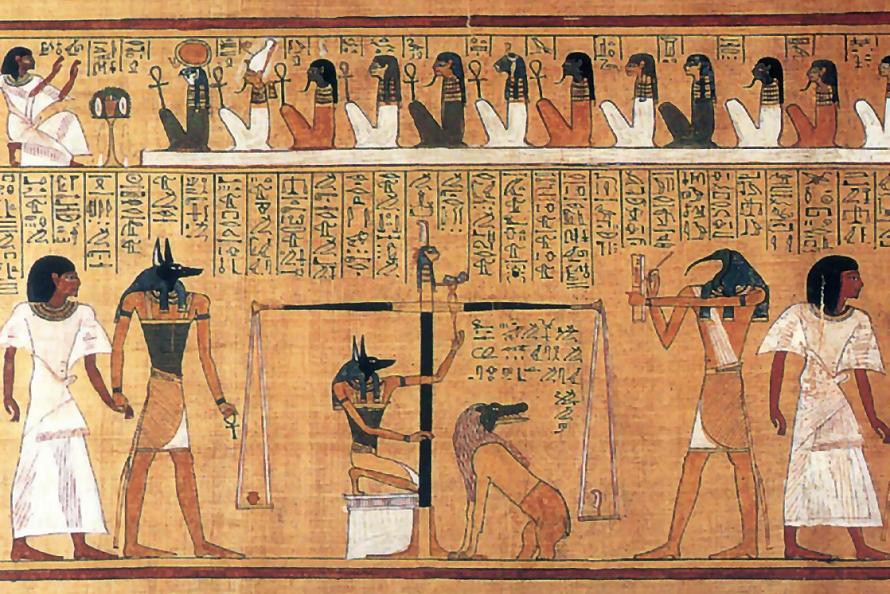
The Egyptian Mythology Story of Osiris
Listen to the Tragedy of the Grand Tale of Isis and Osiris
Learn About the Very Special Geography of Philae Temple
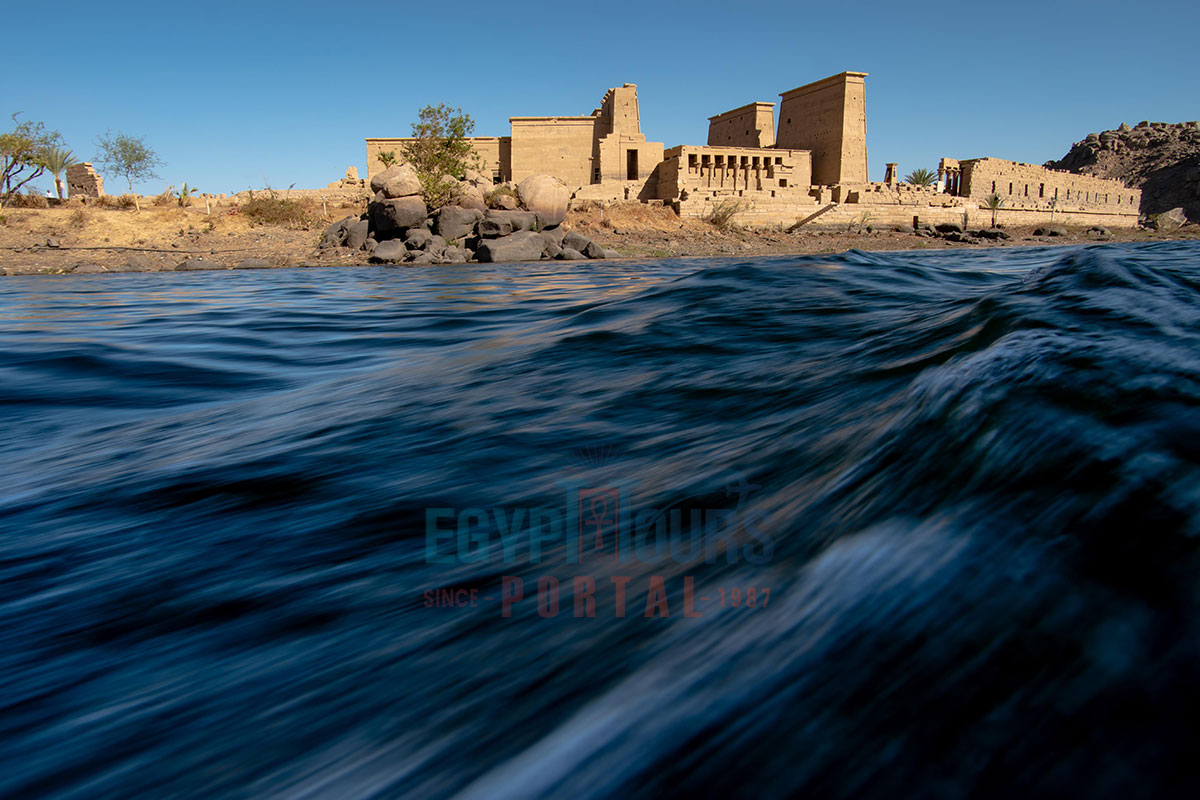
Philae was written in the history books by many great ancient scholars, such as Strabo, Diodorus Siculus, Ptolemy, Seneca, and Pliny the Elder, and its name originally referred to two small islands located around latitude 24° north, just above the First Cataract near Aswan, ancient Swenet, meaning “Trade.” Although Philae proper was the smaller island, it became the more famous because of its picturesque ruins and sacred importance.
Before flooding, it measured about 380 meters long and 120 meters wide, was formed of syenite, had steep sides, and was surrounded at the top by a high enclosing wall. Ancient reports even claimed that birds did not fly over it and fish did not approach its shores, emphasizing its sacred character. During the Ptolemaic period, Philae became a popular pilgrimage destination, especially for visitors connected with the tomb of Osiris, as well as officials on secular business; the number of visitors became so burdensome that priests petitioned Ptolemy VIII Physcon to stop public officials from staying there at temple expense.
This petition was later preserved on the Philae Obelisk, taken to England in the 19th century by William John Bankes, and its hieroglyphs helped scholars better understand the Egyptian consonantal alphabet when compared with the Rosetta Stone. Philae was not only a religious center but also a commercial hub between Meroë and Memphis, because goods moving between Egypt and Nubia had to be unloaded and reloaded around the difficult cataract waters at Syene and Philae.
Nearby granite quarries attracted miners and stonemasons, and a road or gallery was cut into the rocks along the Nile’s east bank to support this traffic. The island was also famous for the dramatic effects of light and shadow near the Tropic of Cancer, where the sun’s movement caused temple shadows to shift strikingly across the walls, creating a powerful contrast between darkened surfaces and the intense surrounding light.
Uncover How the Construction of the Philae Temple Came to Be
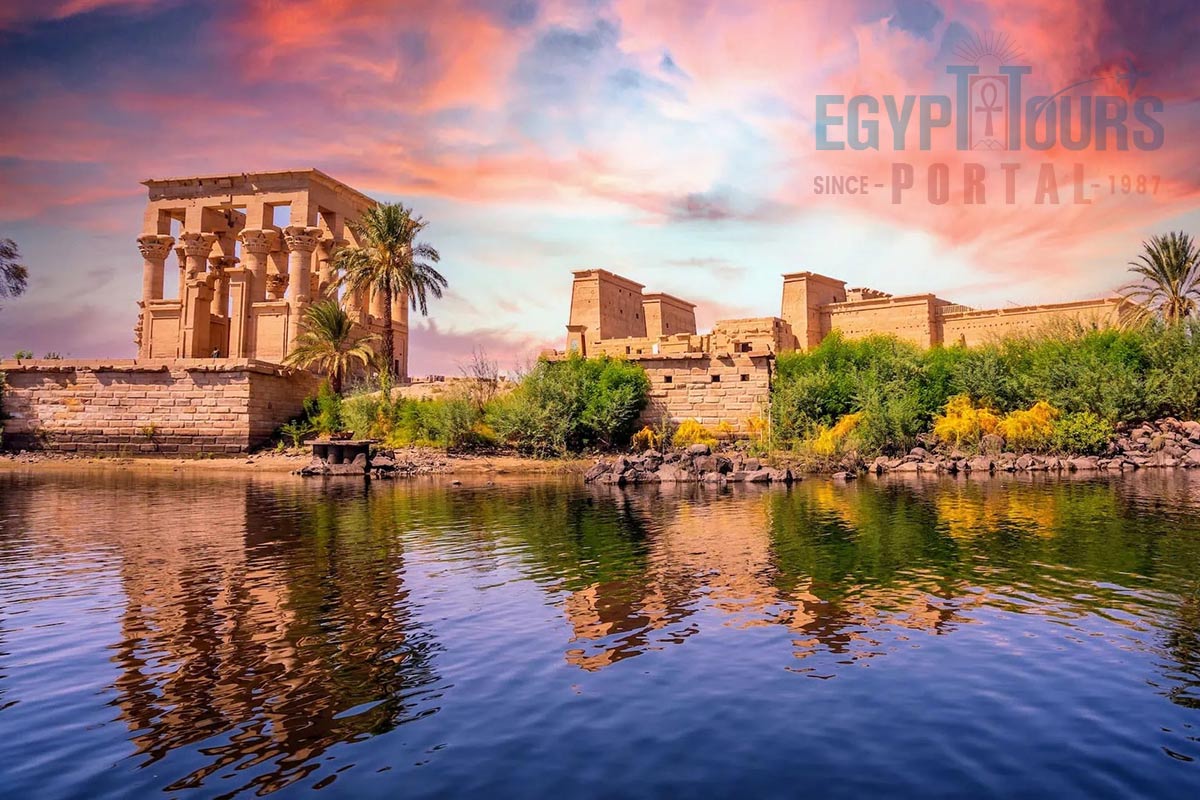
Philae’s islands were remarkable for their architectural richness, with monuments from different periods, from the age of the pharaohs to the Roman Caesars, covering much of their area, though the main structures stood at the southern end of the smaller island. The oldest major monument was a temple of Isis built under Nectanebo I between 380 and 362 BC; Nectanebo I, also known by his Egyptian royal name Nekhtnebef, founded Egypt’s 30th and last native dynasty after overthrowing Nepherites II.
Most of the surviving ruins, however, belong to the Ptolemaic period, especially the reigns of Ptolemy II Philadelphus, Ptolemy V Epiphanes, and Ptolemy VI Philometor between 282 and 145 BC, with later Roman traces dedicated to Ammon-Osiris. The complex featured two colossal granite lions, two obelisks each about 13 meters / 43 feet high, large pyramidal propyla, a sequence of sacred spaces from the dromos and pronaos to the portico and inner sekos/adyton, and monolithic shrines at the corners of the adytum that served as cages for a sacred hawk, with surviving examples now in the Louvre and the Museum of Florence.
Beyond the main court stood smaller temples, including one dedicated to Isis, Hathor, and deities linked with childbirth and midwifery, decorated with scenes showing the birth of Ptolemy Philometor in the form of Horus; the myth of Osiris appeared widely across the walls, and two inner chambers were especially rich in symbolic imagery. Greek inscriptions were also carved on the great propyla, but were partly damaged by later Egyptian figures who cut across them.
The monuments show the survival of traditional ancient Egyptian art long after native pharaonic rule ended, though many sculptures were later deliberately mutilated, first by early Christians and later by Byzantine iconoclasts, while images of Horus were often less damaged, possibly because some Christians saw symbolic parallels with their own beliefs.
The temple builders carefully prepared the rocky island by leveling uneven ground and strengthening weak areas with masonry; the western wall of the Great Temple and the dromos wall rested on strong foundations below the ancient water level and on the granite bed of the Nile, with steps cut in places to connect the temple and river.
At the southern end of the dromos stood a smaller temple likely dedicated to Hathor, with a portico of 12 columns, arranged four in front and three deep, whose capitals combined palm, doum palm, and lotus forms; its columns, ceilings, walls, and sculptures were once painted in vivid colors that survived unusually well because of Egypt’s dry climate.

Ancient Egyptian Architecture
Explore the genius architecture of the ancient Egyptian civilization
Rescue and Relocation Of the Ethereal Philae Temple
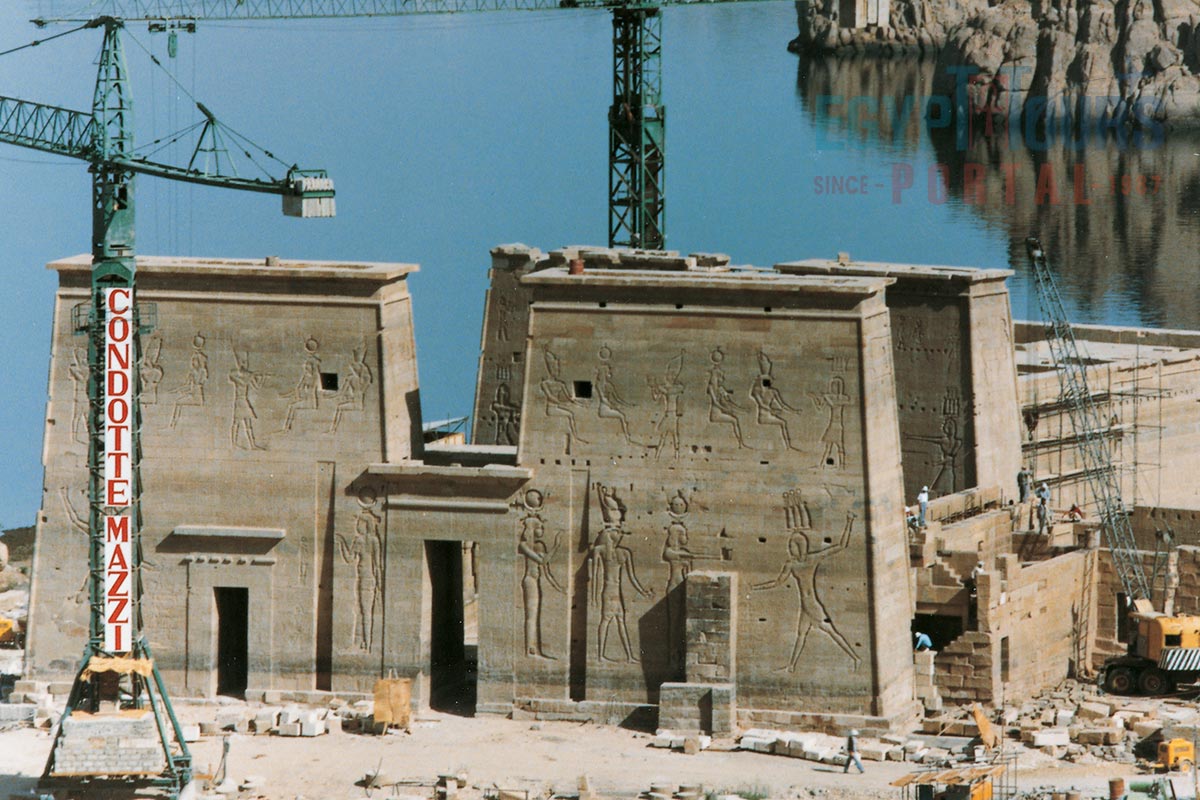
The rescue and relocation of Philae Temple is one of the greatest preservation projects in archaeological history. When the Aswan Low Dam was completed in 1902, Philae began to suffer repeated flooding. The dam was raised between 1907 and 1912 and again between 1929 and 1934, leaving the island submerged for much of the year. The water-damaged reliefs, washed away colors, and covered stones with silt and debris.
The danger increased dramatically with the construction of the Aswan High Dam between 1960 and 1970, which threatened many Nubian monuments. UNESCO launched a major rescue campaign for Nubian heritage, and Philae was eventually saved through a complex relocation plan. A large cofferdam was built around the original island, water was pumped away, and the monuments were carefully documented using photogrammetry. Then the temple complex was dismantled into around 40,000 blocks, each weighing between 2 and 25 tons, and moved to nearby Agilkia Island, about 500 meters away.
Agilkia Island was reshaped to resemble the original island of Philae as closely as possible. The temples were reconstructed at a higher level, about 12.40 meters above the original location, allowing them to survive above the water. The relocation work took place mainly between 1977 and 1980, under UNESCO supervision, with Egyptian and international cooperation. This operation turned Philae into a global symbol of cultural heritage rescue.

Philae Temple Relocation Process
Witness the Miracle-Rescue of the Divine Philae Temple
Discover How to Enjoy Philae Temple Sound and Light Show
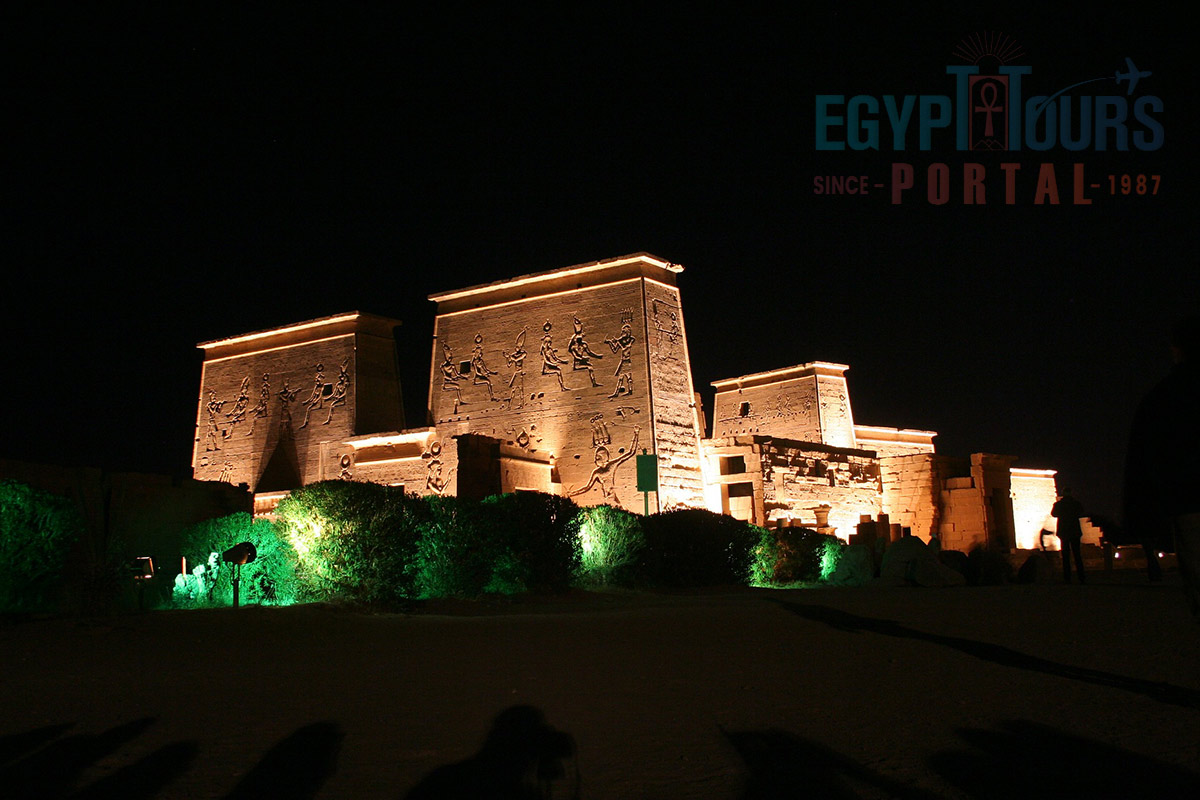
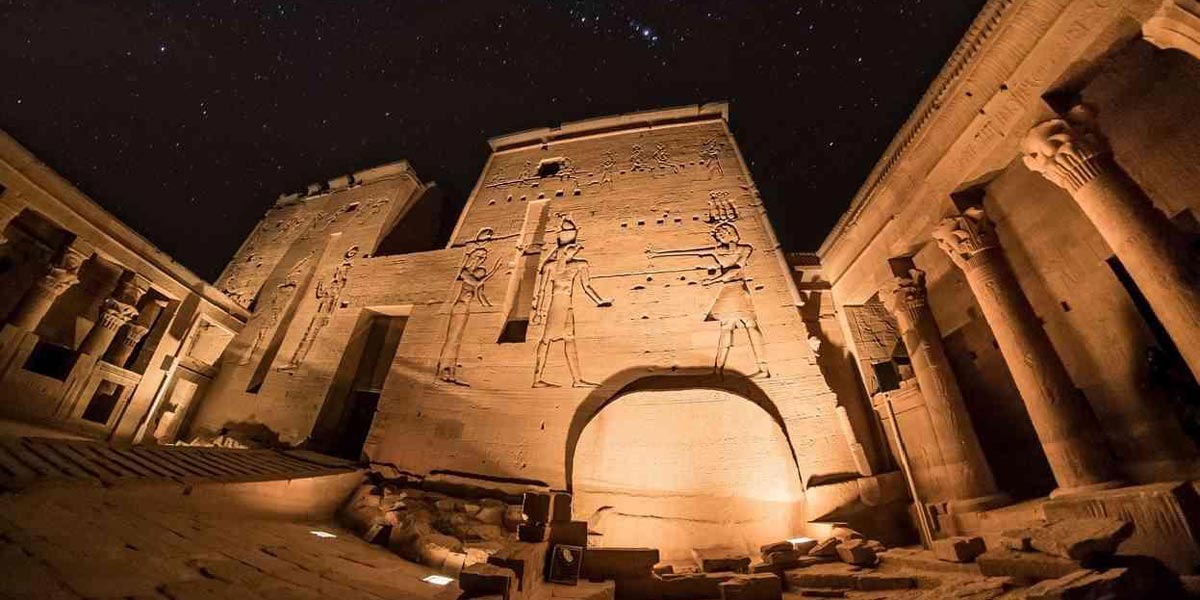
The Philae Temple Sound and Light Show is one of the most atmospheric evening experiences in Aswan. Held at the relocated temple complex on Agilkia Island, the show uses lights, music, narration, and dramatic storytelling to present the myths of Isis, Osiris, and Horus, along with the history of the island and its rescue from flooding. Everyone can enjoy it through our epic Aswan day tours, which focus on shedding divine lunar light across architecture, reliefs, and hearing the sounds of ancient sagas carrying the most grand historical explanations, the emotional and mystical side of Philae.
The temple’s island location makes the experience especially powerful. Visitors arrive by boat after dark, then walk through illuminated pylons, colonnades, courts, and sanctuaries as the story unfolds. The reflections of the temple on the water create a sacred atmosphere that suits Philae’s identity as a place of magic, resurrection, and divine motherhood. For travelers staying overnight in Aswan, the sound and light show offers a memorable way to experience the temple beyond ordinary sightseeing.
The Fate-Changing Dam Near the Philae Temple of Isis
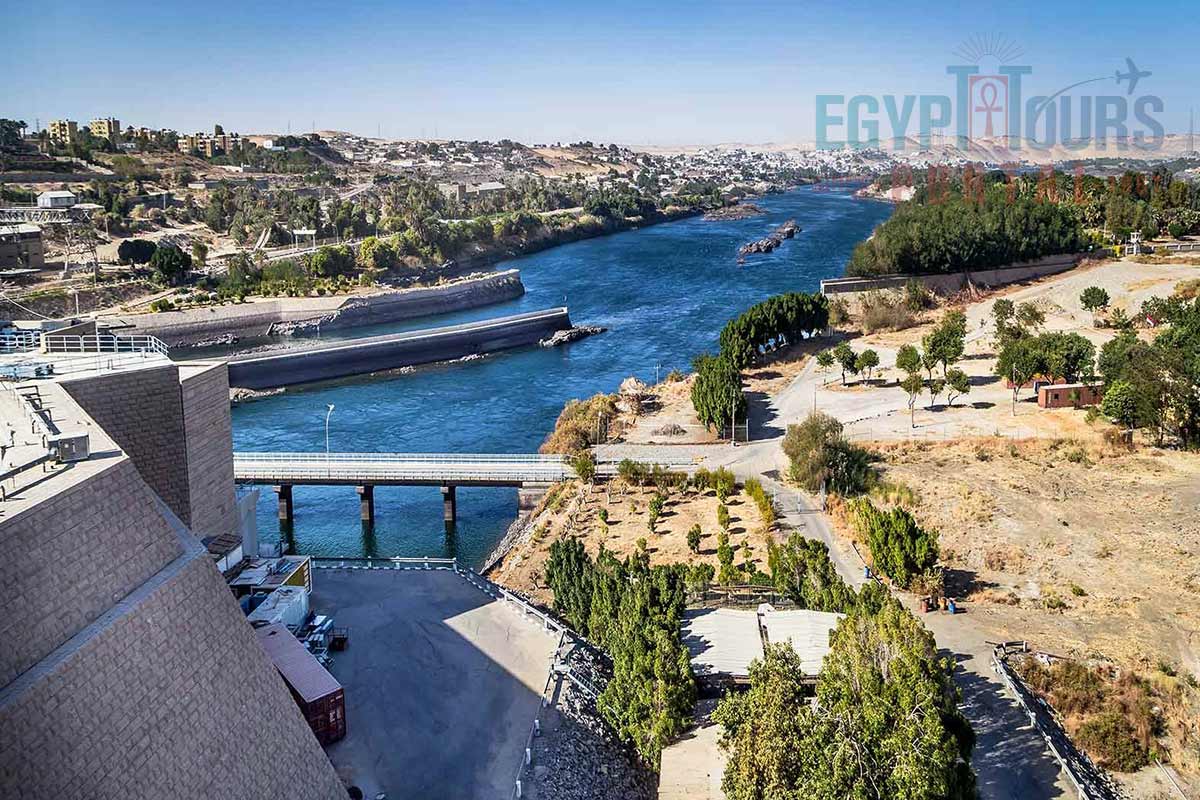
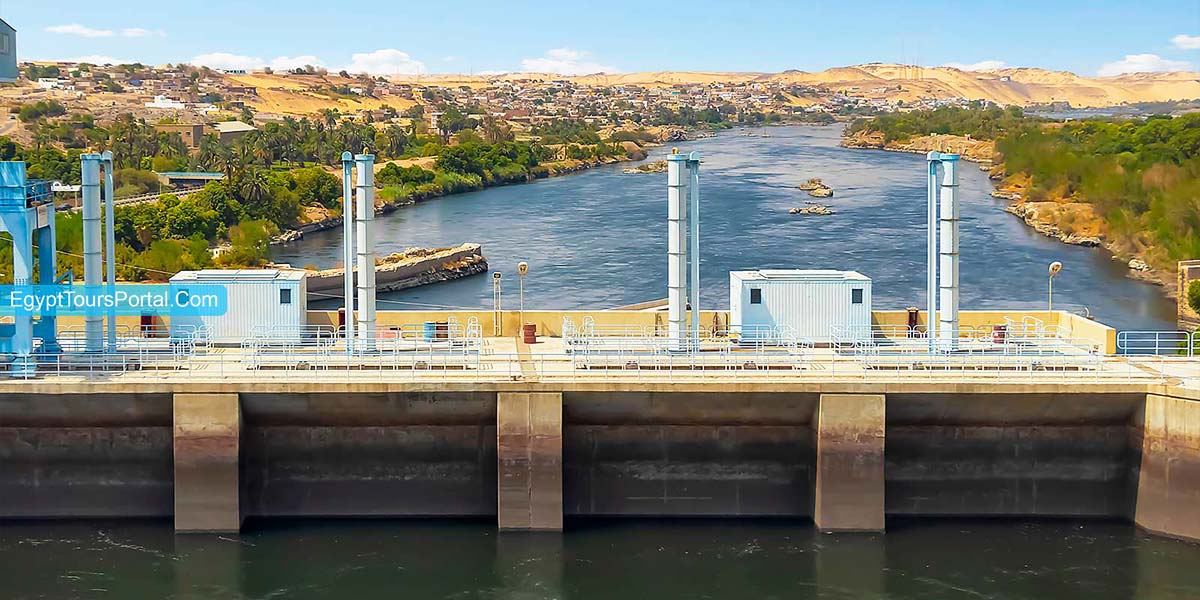
The modern story of Philae Temple cannot be separated from Aswan’s dams. The first major threat came from the Aswan Low Dam, completed in 1902 by the British. Although it supported irrigation and modern water control, it caused the original Philae Island to flood repeatedly. After later height increases, the temple was almost always underwater except when the dam’s sluices were opened between July and October.
The second major dam was the Aswan High Dam, built between 1960 and 1970. This project transformed Egypt’s economy by improving flood control, irrigation, and electricity production, but it also endangered many ancient Nubian monuments. Philae was part of this wider crisis, along with temples such as Abu Simbel. The temple’s relocation to Agilkia Island preserved one of Egypt’s most important sacred monuments while also showing the difficult balance between modern development and heritage protection.
Uncover the Majestic Facts of Philae Temple
- Philae Temple originally stood on Philae Island near the First Cataract but now stands on Agilkia Island in Aswan.
- It is mainly dedicated to Isis, but also includes worship of Osiris, Horus, Hathor, Amun, and other deities.
- The site was founded in the 7th or 6th century BC, developed strongly during the Ptolemaic Period, remained active under the Romans, and was abandoned as a traditional pagan sanctuary in the 6th century AD.
- Philae preserved the last known hieroglyphic inscription from AD 394 and the last known Demotic inscription from AD 452, making it one of the final witnesses of ancient Egyptian religious writing.
- The Temple of Isis was later converted into a Christian church dedicated to Saint Stephen, while other churches were also built on the island.
- The original island was damaged by flooding after the Aswan Low Dam, then saved by UNESCO when the complex was dismantled into about 40,000 blocks and reconstructed on Agilkia Island between 1977 and 1980.
- In 1979, Philae was listed by UNESCO as part of the World Heritage Site “Nubian Monuments from Abu Simbel to Philae”.
Explore The Vaiours Egypt Tours Leading to Philae Temple
Philae temple is one of the most famous Egypt tourist attractions, where a lot of tourists prefer to visit and discover the great treasures of the golden ancient Egyptian civilization. So, if you desire to explore Egypt, then check our Egypt Tours Packages and Nile River cruises to choose your ideal trip.