Summary
- The Muhammad Ali Mosque, also known as the Alabaster Mosque, was commissioned in 1832 by Muhammad Ali Pasha as a powerful symbol of Egypt’s modernization and was completed in 1857 during the reign of Sa’id Pasha.
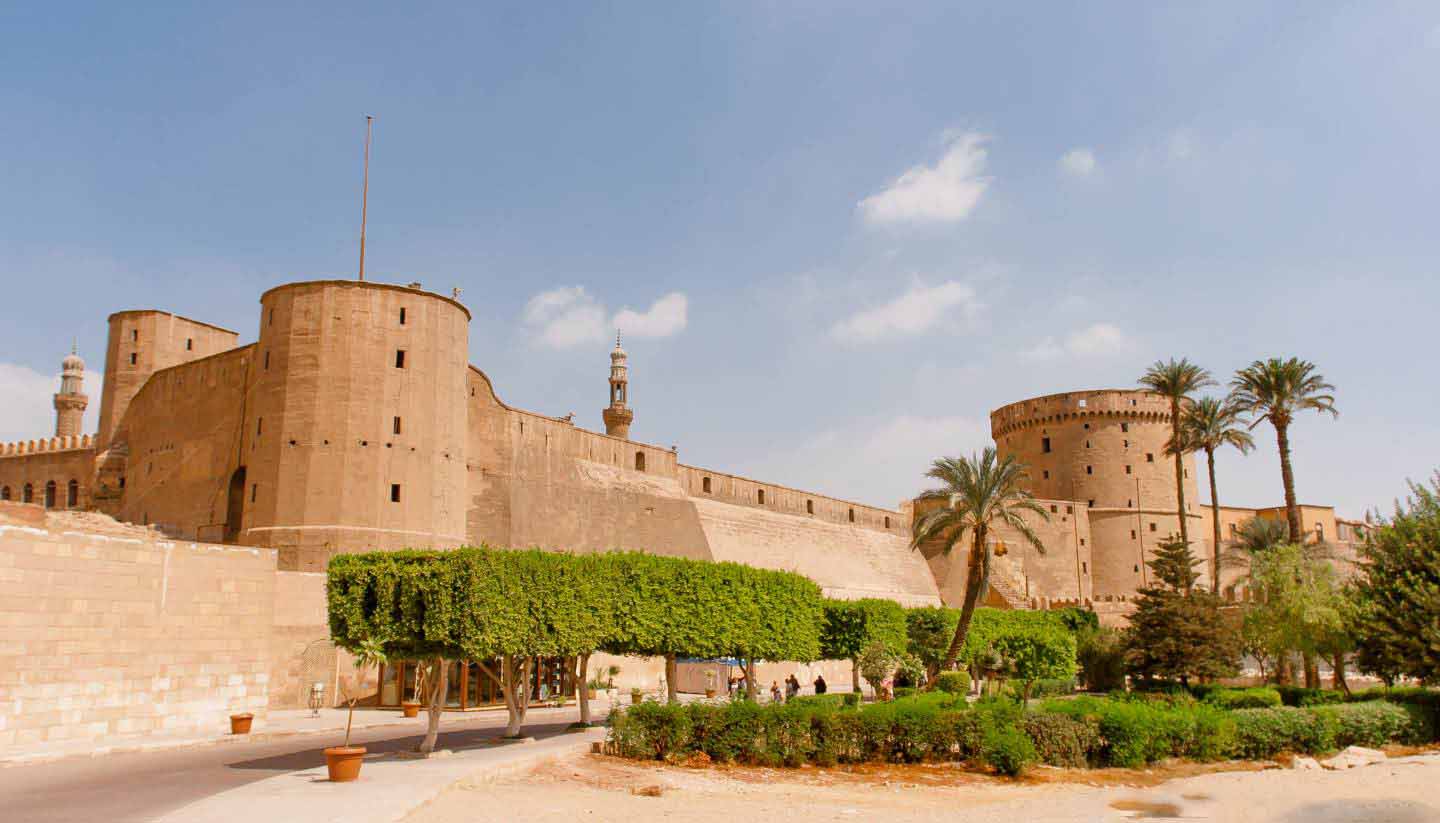
- It was built inside the Citadel of Saladin, Cairo’s historic seat of political and military power, giving the mosque both strategic visibility and deep symbolic importance.
- Its architecture is strongly Ottoman in style, featuring a grand central dome, semi-domes, twin minarets, a spacious courtyard, alabaster cladding, and richly decorated interiors that set it apart from Cairo’s older Mamluk monuments.
- The mosque also houses the tomb of Muhammad Ali Pasha and reflects the close connection between religion, dynastic ambition, and political authority in 19th-century Egypt.
- Today, it remains one of Cairo’s most visited landmarks, admired for its history, panoramic Citadel views, peaceful prayer hall, and lasting status as one of the finest monuments of 19th-century Islamic architecture.
Muhammad Ali Mosque is a symbol of elegance & independence and rises majestically above Cairo from the heights of the Citadel. It was constructed in the 19th century during a period of major reform. The mosque reflects the vision of Muhammad Ali Pasha, the ruler who reshaped Egypt into a modern state. The Muhammad Ali Mosque, across the ages, has become a symbol of the modern embodiment of Egypt’s transformation. Known widely as the Alabaster Mosque, this grand structure is not only a place of worship but also a powerful statement of political ambition, architectural evolution, and cultural identity.
The Deep Historical Background of Muhammad Ali Mosque
The history of the Muhammad Ali Mosque is closely tied to the rise of Muhammad Ali Pasha and his vision to modernize Egypt in the 19th century. The mosque was built in memory of Muhammad Ali Pasha’s eldest son, Tusun Pasha, who died in 1816. It was commissioned in 1832, the mosque was built during a period when Muhammad Ali was consolidating power and transforming Egypt into a centralized, modern state. He chose the historic Cairo Citadel as its location, the long-standing seat of political authority, and ordered the demolition of older Mamluk structures to make way for his grand project, symbolizing a decisive break from the past.
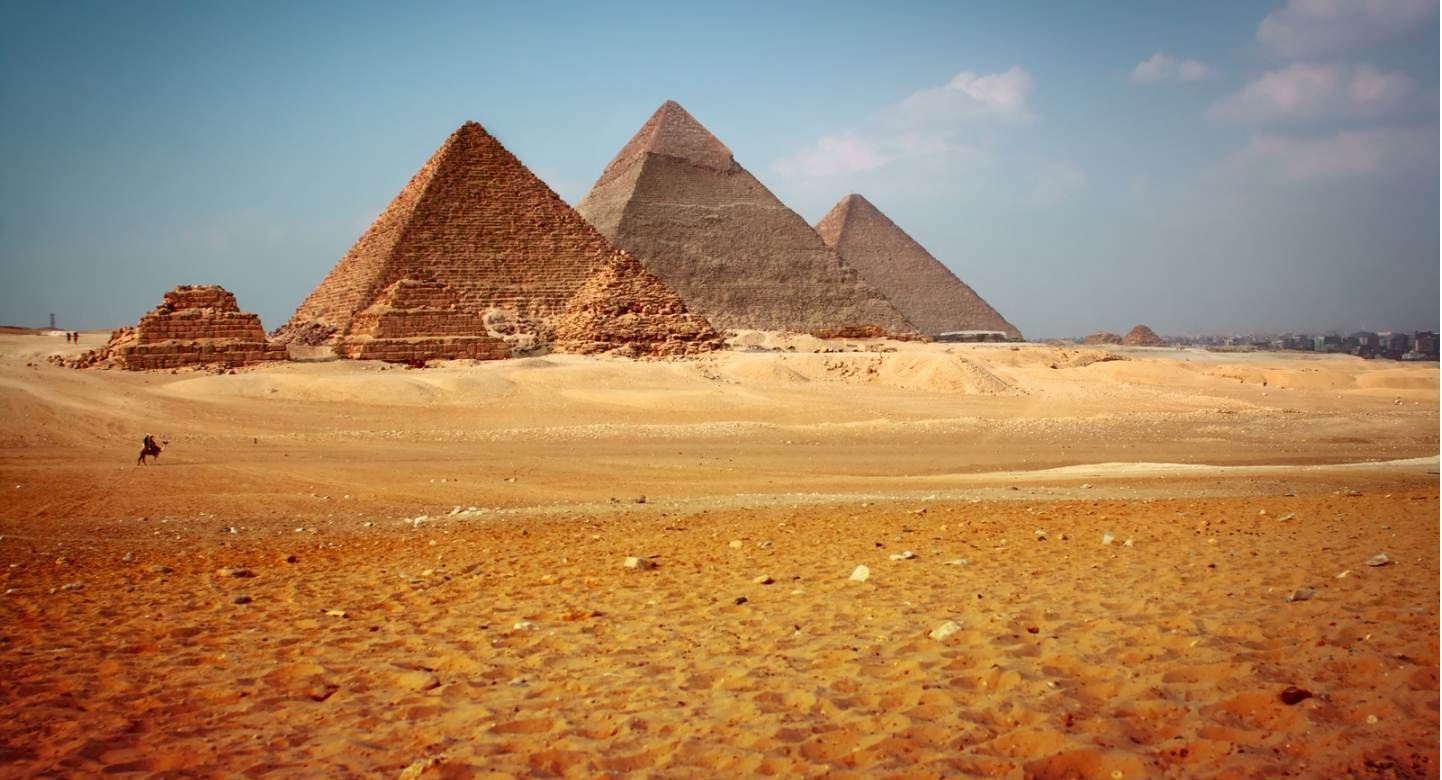
The project was only completed in 1857 during the reign of Sa’id Pasha. Today, it stands as one of Cairo’s most recognizable landmarks, distinguished by its striking silhouette and twin minarets rising above the Citadel. The design was inspired by the Sultan Ahmed Mosque in Istanbul, reflecting strong Ottoman architectural influence. Parts of the original Citadel structures were reused in its foundation, while the extensive use of alabaster on its walls gave it the name “Alabaster Mosque” which may have been taken from the Pyramids of Giza themselves.
Before completion, some exterior surfaces were temporarily finished with wood painted to resemble marble, and portions of the alabaster were later removed and reused in the palaces of Abbas I. By the late 19th century, structural issues began to appear, and after insufficient early repairs, the mosque required a major restoration. A comprehensive reconstruction was initiated by King Fuad in 1931 and completed under King Farouk in 1939, stabilizing the building and preserving its architectural integrity. Muhammad Ali Pasha himself is buried within the mosque, in an elegant tomb made of Carrara marble, where his remains were transferred in 1857 from Hosh al-Basha.
The Powerful Location of the Muhammad Ali Mosque
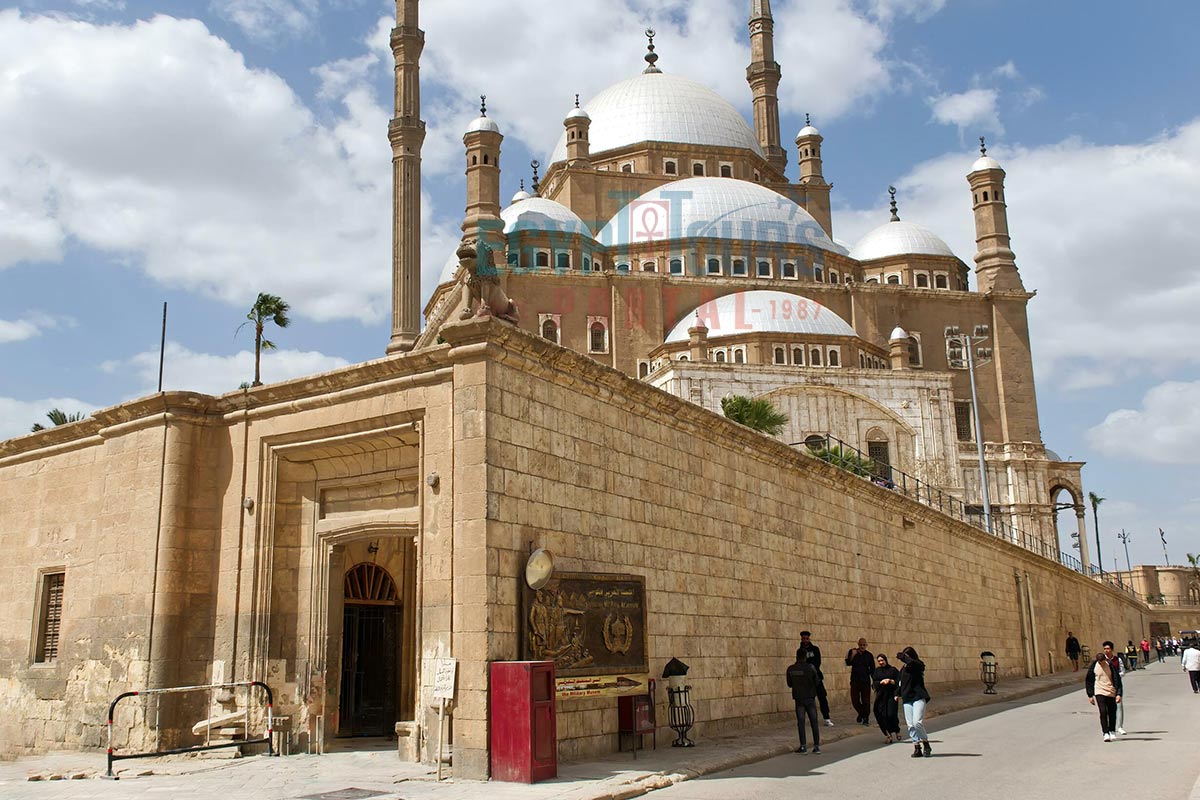
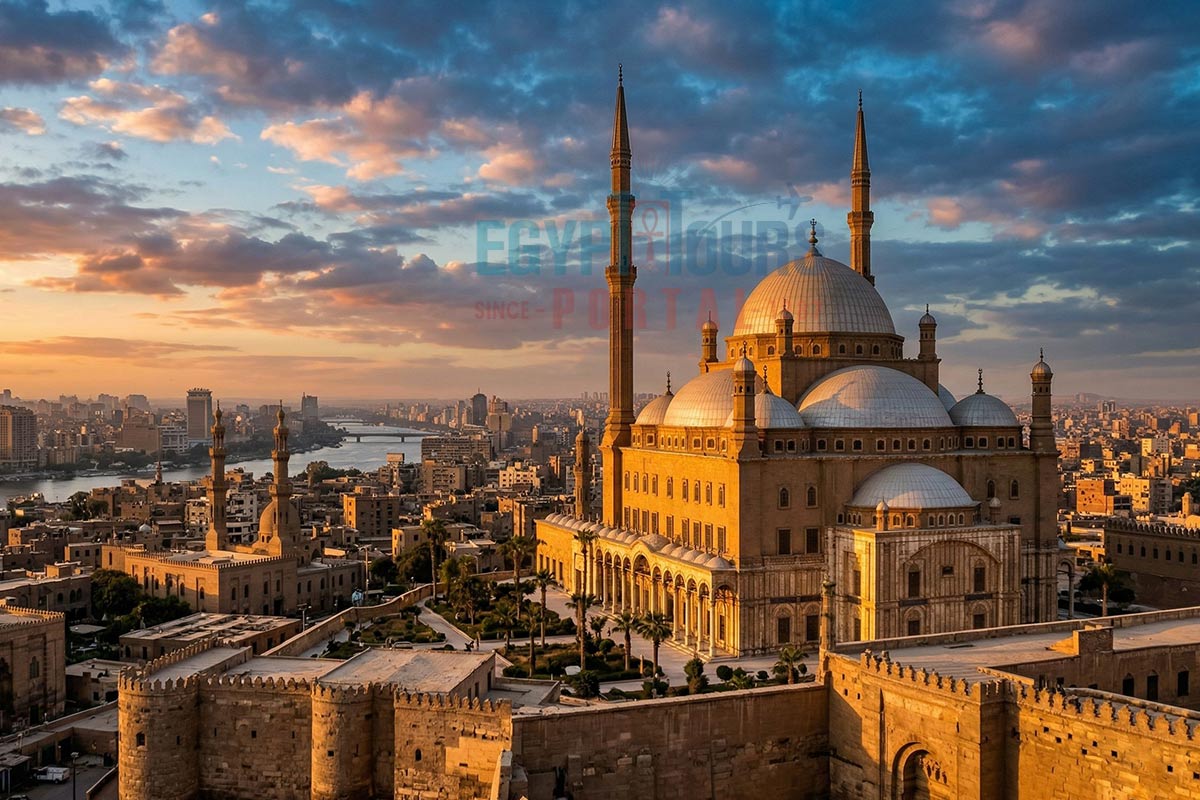
The Muhammad Ali Mosque is located within the historic Citadel of Saladin, a fortified complex that rises above the eastern part of Cairo. Perched on one of the highest points in the city, the mosque dominates the skyline and can be seen from many areas across Cairo, making it one of the most visually striking landmarks in Egypt.
This strategic location enhances both the symbolic and practical importance of the mosque. It reinforces its role as a statement of authority while also making it one of the most accessible and rewarding sites for visitors exploring Cairo’s rich historical landscape.
Explore the Grand Political and Cultural Significance of Muhammad Ali Mosque
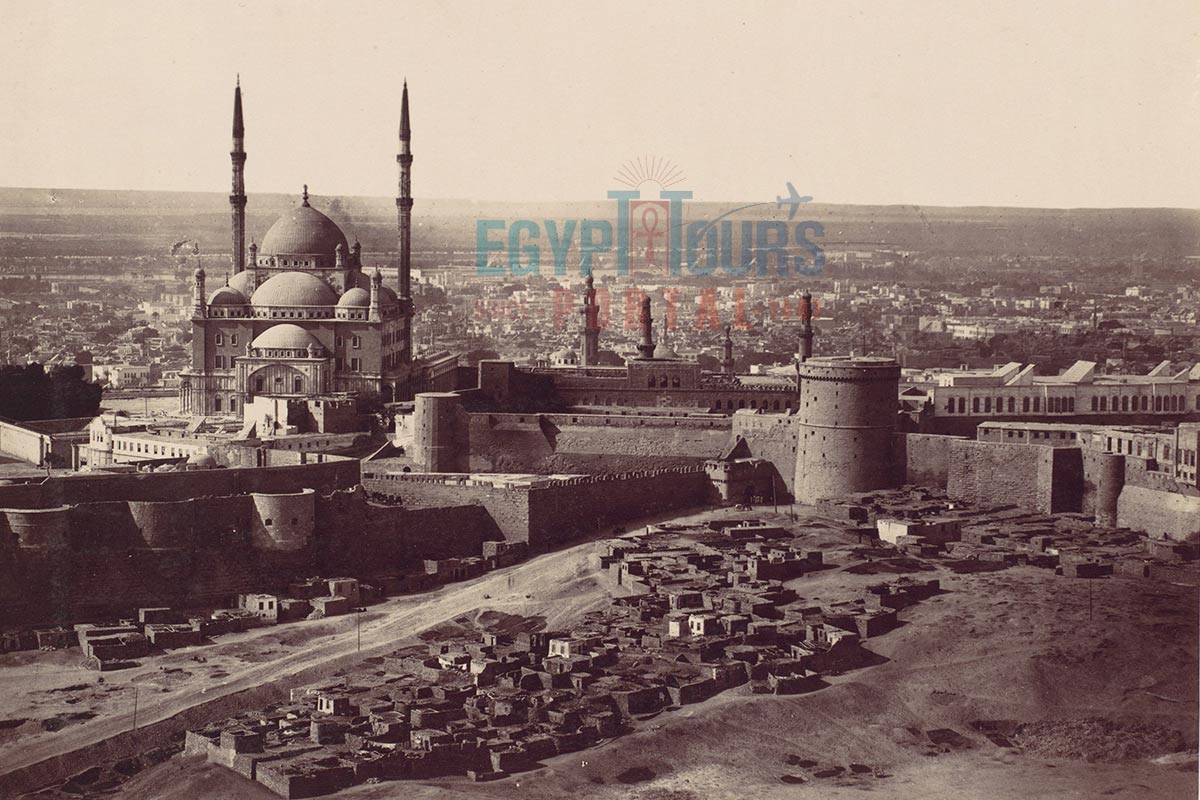
The Muhammad Ali Mosque was far more than a religious structure; it was a declaration of authority and identity. By adopting a purely Ottoman architectural style, Muhammad Ali aligned himself with the Ottoman Empire while simultaneously asserting his independence from it.
The mosque’s design marked a clear break from traditional Egyptian Mamluk architecture, which had dominated Cairo for centuries. Instead of blending styles, Muhammad Ali deliberately chose a new architectural language that reflected his broader modernization efforts, including military reform, industrial development, and increased engagement with Europe.
The presence of European elements, such as the famous clock tower gifted by King Louis Philippe of France in 1846, further highlights Egypt’s growing international connections during this period.
Discover the Majestic Architecture & Interior of the Muhammad Ali Mosque
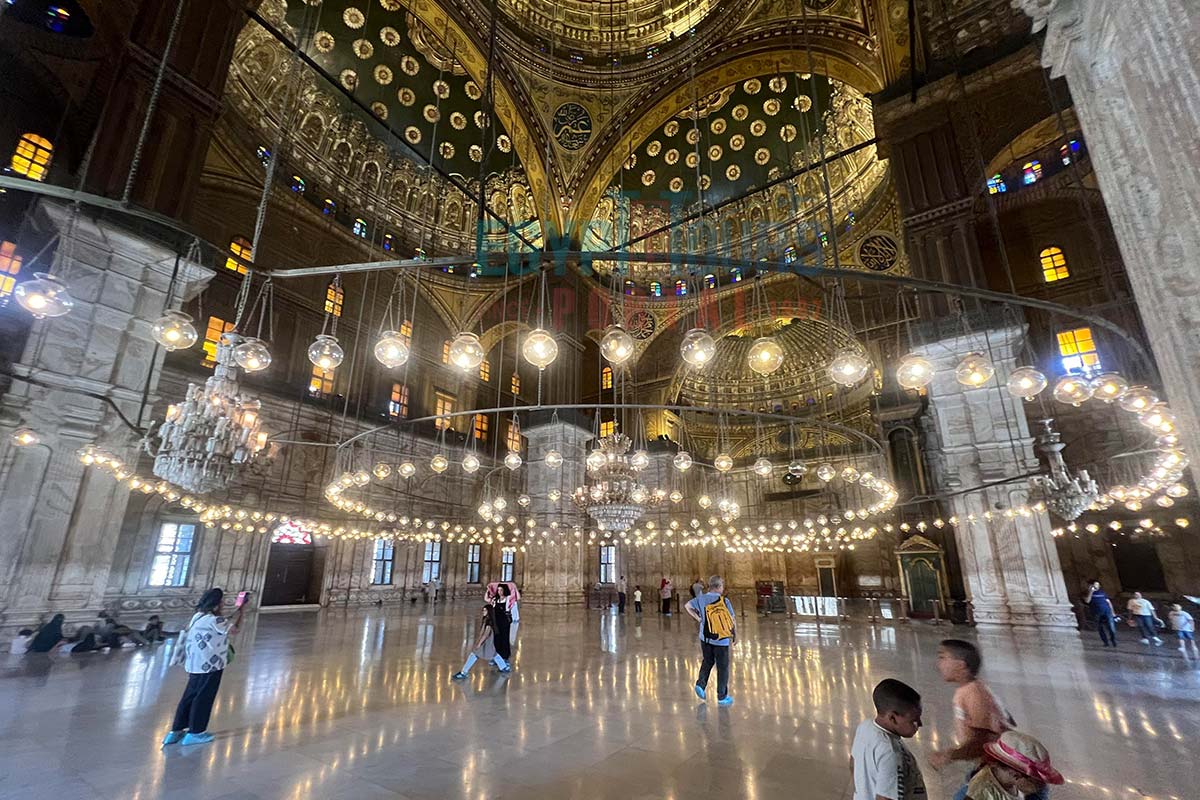
The exterior and interior architecture and design of the Muhammad Ali Mosque is one of the clearest visual statements of political ambition in 19th-century Egypt. Rather than following the long-established Mamluk style that had shaped Cairo’s religious monuments for centuries, the mosque was designed almost entirely in the classical Ottoman style, making it stand out dramatically from the rest of the city’s historic architecture.
This was a deliberate choice. Muhammad Ali Pasha wanted a mosque that would reflect a new era in Egypt, one tied to reform, centralized power, and a broader Ottoman imperial identity, while also asserting his own authority. As a result, the mosque does not simply function as a religious building; it also acts as an architectural declaration of change.
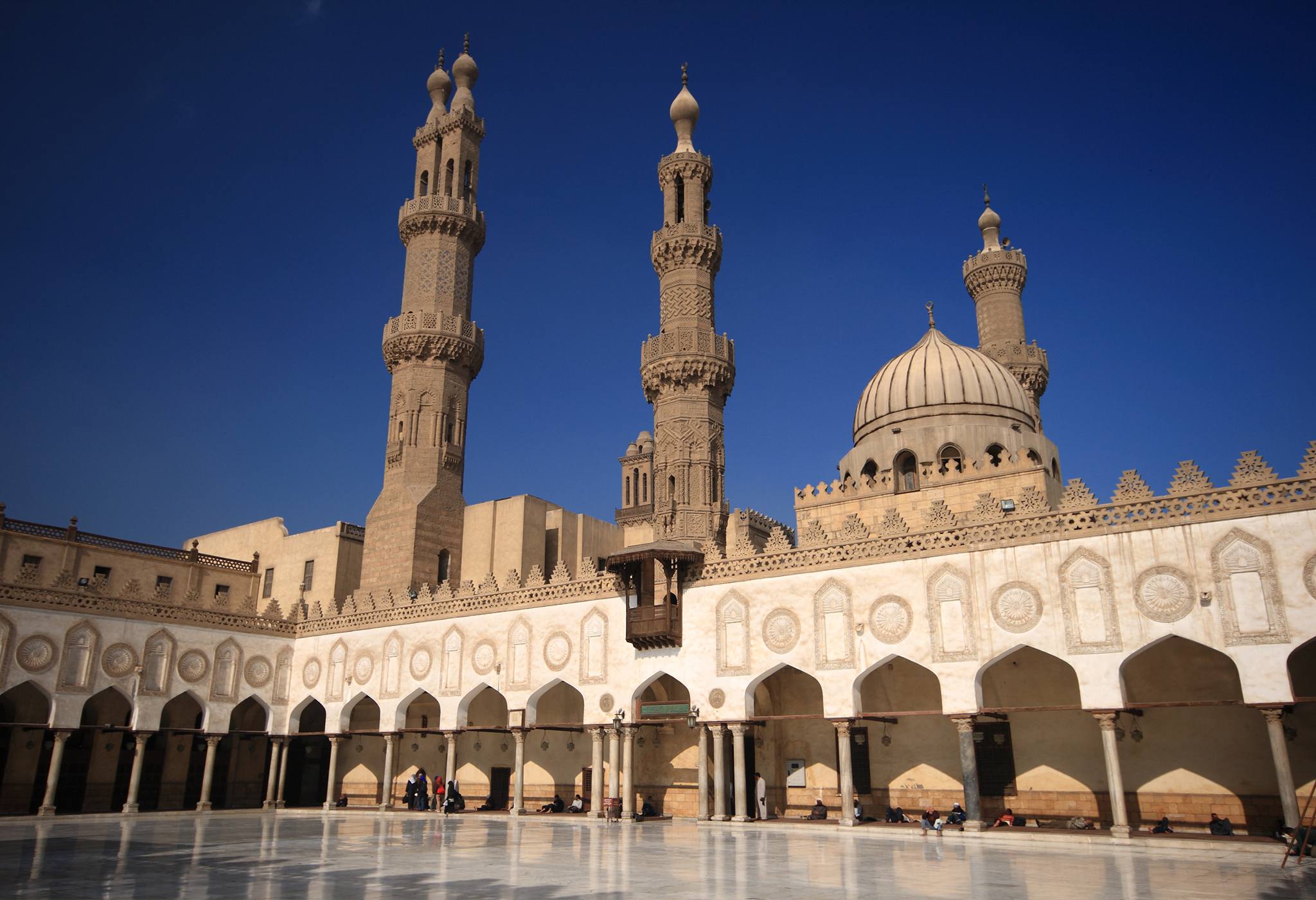
Islamic Landmarks in Egypt
Explore the marvelous structures of the Egyptian Islamic culture
Ottoman Inspiration and Imperial Vision of Muhammad Ali Mosque
The mosque’s overall design was inspired by the great imperial mosques of Istanbul, especially the tradition seen in monuments such as the Şehzade Mosque and the Sultan Ahmed Mosque. This influence is most visible in its massing, where a large central dome dominates the composition and is surrounded by semi-domes and smaller subsidiary domes that create a balanced, cascading silhouette.
This arrangement gives the building a sense of grandeur and rhythm, guiding the eye upward and outward at the same time. From a distance, the mosque’s profile appears smooth, monumental, and highly symmetrical, which is one reason it has become such a defining element of Cairo’s skyline.
The Magical Layout and Spatial Design of Muhammad Ali Mosque
The main prayer hall is nearly square in plan, measuring about 45 by 46 meters, and it is crowned by a central dome that rises to approximately 52 meters at its highest point and spans around 21 meters in diameter. This dome is supported internally by four massive piers, which carry the heavy load of the roof system. Around the central dome are four semi-domes that help distribute structural pressure while also enlarging the interior space visually and functionally.
Smaller corner domes complete the composition, creating a layered system of roofing that is both elegant and technically sophisticated. This dome-centered planning is characteristic of Ottoman mosque architecture, where the goal was often to create a unified, open, and soaring interior rather than the more compartmentalized spatial arrangements found in earlier Cairene traditions.
Explore the Building Materials and the Alabaster Identity of Muhammad Ali Mosque
The materials used in the mosque also contribute significantly to its identity. The core structure is built primarily from limestone, but the lower walls and much of the visible surface treatment were clad in alabaster, which gave the mosque its popular name, the Alabaster Mosque. This alabaster facing creates a soft, luminous effect, especially when touched by changing daylight.
Muhammad Ali reportedly insisted on the use of this material not only for beauty but also to support a local industry that had been declining. Although alabaster was visually impressive, it was not the easiest or most durable material for such a broad architectural application, which later contributed to conservation challenges. Even so, its use gave the mosque a distinctive elegance unlike that of other major monuments in Cairo.
The Minarets and Vertical Grandeur of Muhammad Ali Mosque
One of the most striking features of the mosque is its pair of tall Ottoman-style minarets, which rise to more than 80 meters and are capped with pointed conical finials. These slender cylindrical minarets differ sharply from the heavier, more angular minarets common in Mamluk Cairo. Their form reinforces the Ottoman identity of the building and adds to its vertical drama.
Positioned at the corners of the mosque’s main mass, they frame the composition and amplify its monumentality. Because of the mosque’s elevated location inside the Citadel, these minarets appear even more commanding when viewed from below, contributing to the impression that the building watches over the city.
The Courtyard and Ablution Fountain of Muhammad Ali Mosque
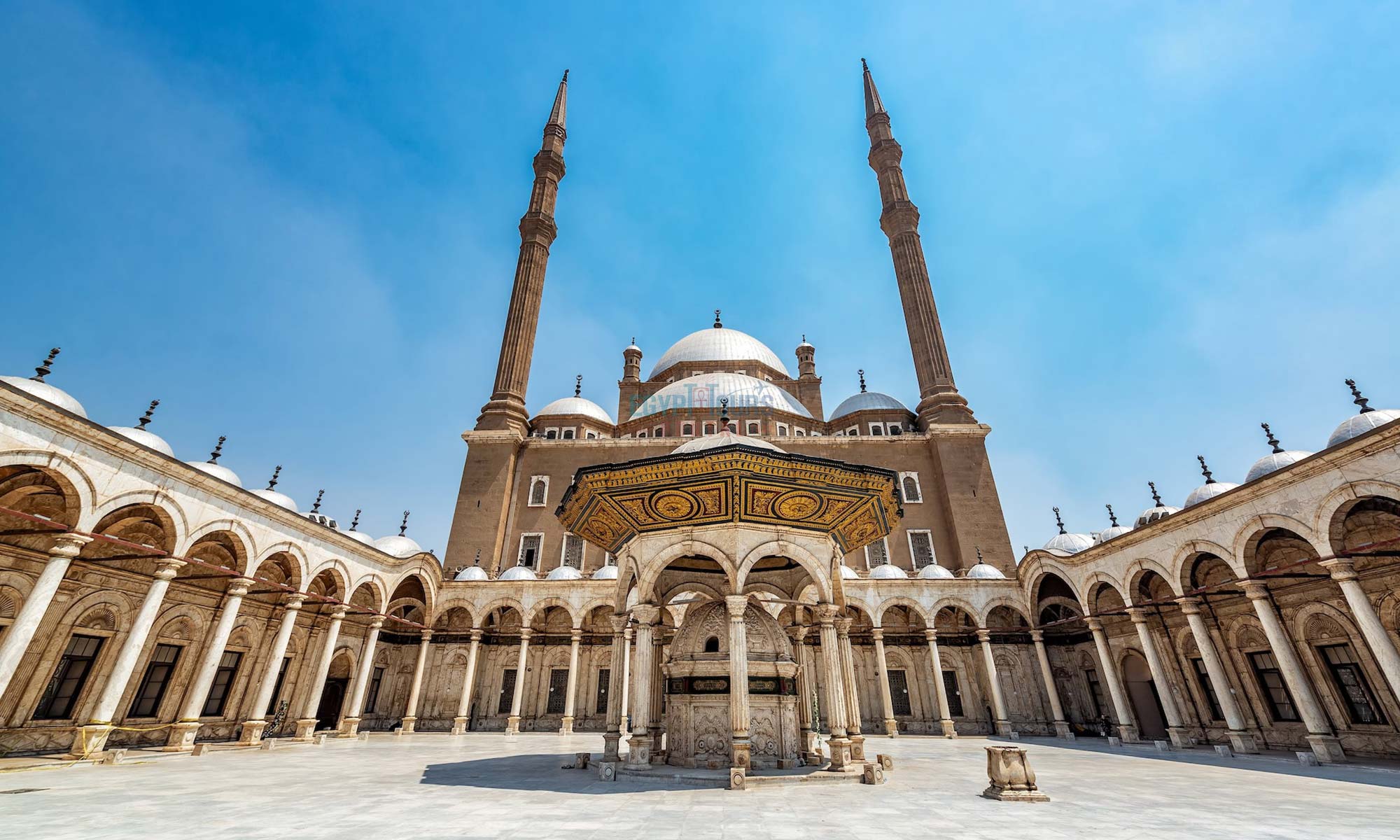
The mosque’s courtyard, or sahn, is another major architectural element. Measuring approximately 55 by 57 meters, it is surrounded by arcaded porticoes supported by columns and topped with numerous small domes. This repeated rhythm of arches and domes creates a sense of order and calm, while also preparing visitors for the scale and solemnity of the prayer hall.
At the center of the courtyard stands a richly decorated ablution fountain, sheltered by a carved wooden canopy supported by columns. The fountain is not only functional but also decorative, adding to the ceremonial atmosphere of the open space. The courtyard also includes the famous clock tower, a diplomatic gift from King Louis Philippe of France, whose European style adds another layer to the mosque’s already hybrid historical context.
Interior Design and Decorative Features of Muhammad Ali Mosque
Inside the prayer hall, the architecture is designed to create both awe and unity. The vast central space is open and visually coherent, allowing worshippers to gather beneath the great dome without excessive fragmentation. The mihrab, which marks the direction of Mecca, is set into an apse-like projection and crowned by a semi-dome, giving it visual emphasis within the hall.
Beside it stands the original wooden minbar, richly carved and gilded, while a second alabaster minbar was added later during the reign of King Farouk. The walls, domes, and arches are decorated with ornamental painting, calligraphy, and gold detailing that reflect Ottoman taste more than traditional Cairene design. The decorative program avoids the dense Mamluk surface vocabulary and instead emphasizes broad, flowing forms, large inscription bands, and a sense of imperial spaciousness.
Light, Atmosphere, and Visual Experience of Muhammad Ali Mosque
Light also plays a crucial role in the mosque’s architecture. Windows placed around the domes, walls, and upper zones allow daylight to filter softly into the interior, highlighting the polished surfaces and decorative details. This natural illumination changes throughout the day, giving the hall a shifting visual character. Combined with the hanging chandeliers and the pale glow of alabaster and stone, the effect is both grand and serene. The architecture is therefore not just about form and structure, but also about atmosphere.
Engineering Challenges and Restoration of Muhammad Ali Mosque
From an engineering perspective, the mosque was ambitious but not without problems. The great weight of the central dome and surrounding domes placed immense stress on the arches and supporting walls. Over time, structural weaknesses developed, including cracks and outward pressure on the exterior walls.
These problems became so serious that a major restoration campaign was launched in the 1930s under King Fuad I and continued under King Farouk. Engineers dismantled and rebuilt key domes, reinforced the structure, and carefully preserved the original decorative scheme. This restoration history is important because it shows that the mosque’s architecture was both visually magnificent and technically demanding.
The Great Tomb of Muhammad Ali Pasha
The tomb of Muhammad Ali Pasha is the most unique monument inside the Muhammad Ali Mosque, reflecting the Ottoman tradition of burying rulers within the religious complexes they commissioned. Positioned near the southeastern side of the prayer hall, the tomb is marked by an elegant cenotaph made of fine Carrara marble, surrounded by an ornate bronze screen.
Although Muhammad Ali died in 1849, his remains were transferred to the mosque in 1857, once construction was completed, reinforcing the building’s role as both a place of worship and a monument to his legacy. The tomb’s refined design, combined with its placement within the mosque, symbolizes the close connection between political power, religious authority, and personal commemoration, ensuring that Muhammad Ali’s presence remains at the heart of the monument he created.
Architectural Legacy and Symbolism of Muhammad Ali Mosque
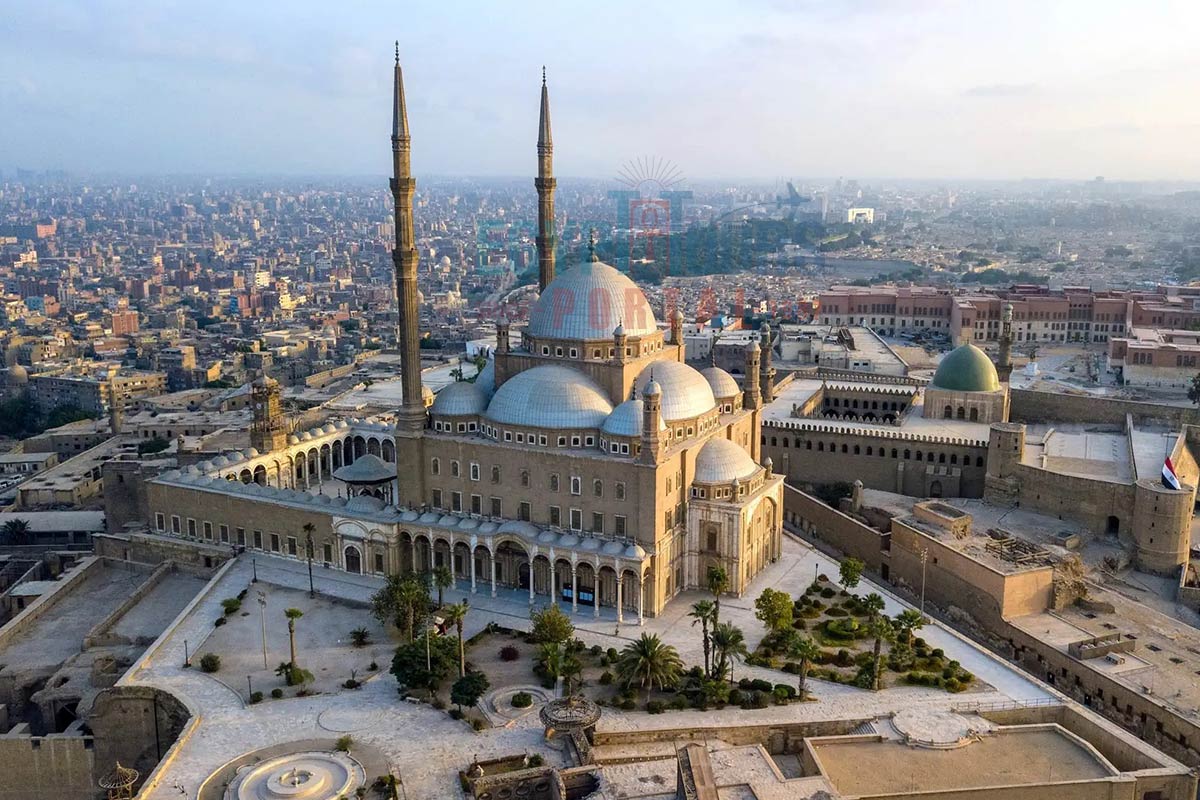
The architecture of the Muhammad Ali Mosque is powerful because it operates on several levels at once. It is a place of worship, a dynastic monument, an imperial statement, and a landmark of Cairo. Its domes, minarets, alabaster cladding, courtyard, and commanding position within the Citadel all work together to create a structure that feels both majestic and symbolic. More than almost any other 19th-century building in Egypt, it captures the moment when architecture became a language through which Muhammad Ali expressed religion, authority, modernity, and legacy all at once.
Cast Your Eyes on The Epic Wonders of Cairo with Our Amazing Trips
The Muhammad Ali Mosque is more than a beautiful building; it is a powerful expression of ambition, identity, and transformation. Through its history, architecture, and enduring presence, it tells the story of a ruler determined to redefine Egypt and leave a legacy that would stand the test of time.
If you are in Cairo and prefer to visit this amazing archaeological site, then our Egypt Tours offers everyone the chance to book your trip to the old Cairo attractions through our Cairo day tours, plus a magical Nile River Cruise that will uncover the ethereal heritage of Egypt.