Summary
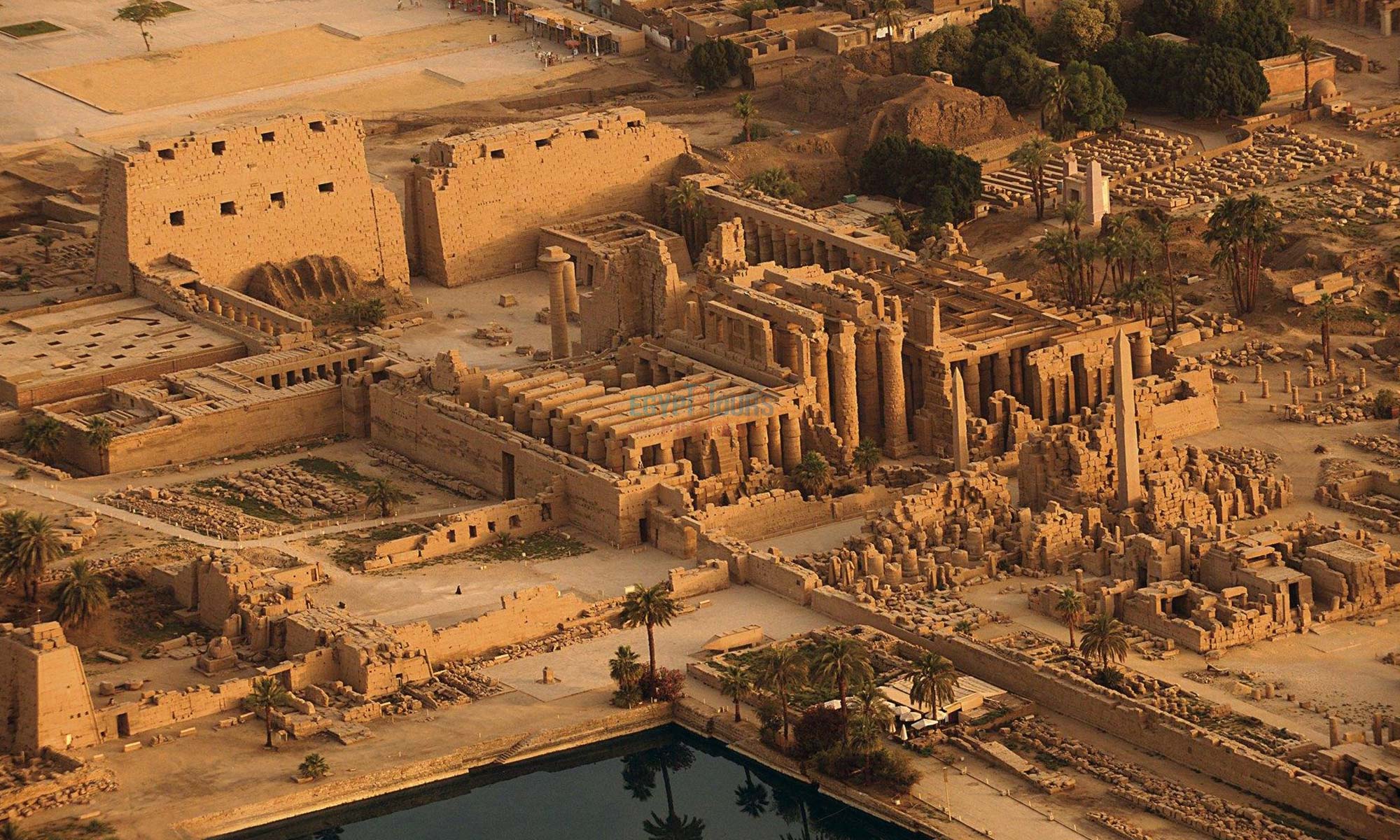
- Karnak is not a single temple but a vast religious complex in Luxor, made of temples, pylons, courts, chapels, obelisks, sacred lakes, and shrines.
- Its ancient name was Ipet-Isut, meaning “The Most Selected of Places,” reflecting its role as the holiest religious center of ancient Thebes.
- Karnak was mainly dedicated to Amun-Re and the Theban Triad of Amun, Mut, and Khonsu, serving religious, political, ceremonial, and social functions.
- Its architecture developed over around 1,500 years through nearly 30 pharaohs, with major features such as the Great Hypostyle Hall, Avenue of Sphinxes, Sacred Lake, obelisks, and multiple precincts.
- Karnak remains an active archaeological landscape, with discoveries such as the Karnak Cachette, Akhenaten’s talatat blocks, sacred lakes, jewelry caches, and hidden structures continuing to reveal new chapters of ancient Egyptian history.
Karnak is not a single temple but a vast and complex network of sacred spaces built by multiple rulers across centuries to honor the holy trinity of ancient Egypt and gain the favor of the ancient Egyptian gods. It includes four main sections: the Precinct of Amun-Re (the largest and most important), the Precinct of Mut, the Precinct of Montu, and the now-dismantled temple of Akhenaten. Each section was dedicated to different deities and religious functions.
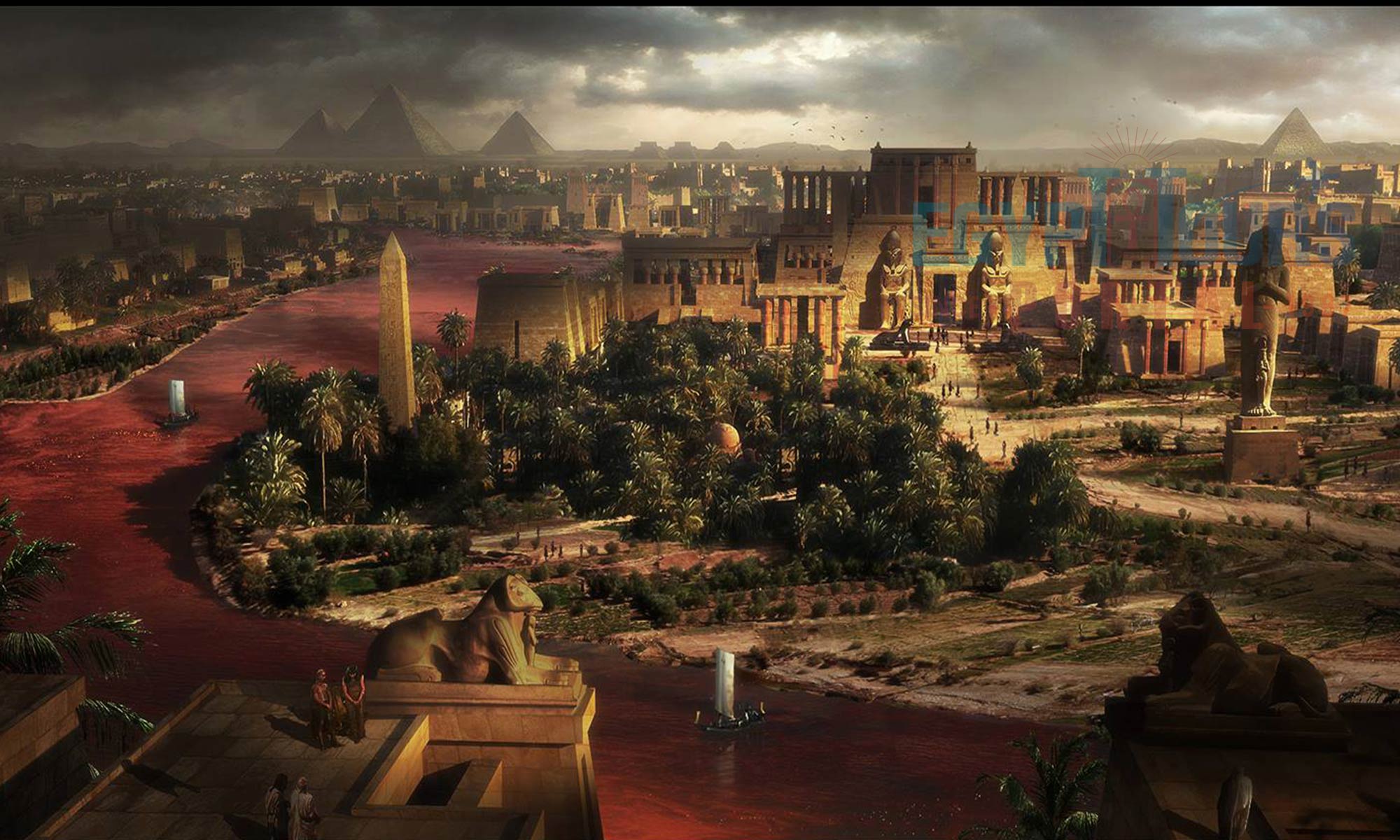
The scale, diversity, and layered development of Karnak make it unique; it is often described as a “religious city” rather than a temple. It contains pylons, courts, hypostyle halls, sanctuaries, sacred lakes, obelisks, statues, and chapels, all arranged along a processional axis leading toward the most sacred inner spaces.
Its purpose went far beyond worship; it was a ceremonial center where daily rituals were performed by the ancient Egyptian priests, offerings were presented to the gods, and major ancient Egyptian festivals such as the Opet Festival took place. The Karnak Temple was able to show the social hierarchy of the ancient Egyptian society in the greatest and most clear light, where everyone knew what role to play in this great empire. Karnak also served as a political stage where pharaohs demonstrated their divine authority, reinforcing the belief that kingship was granted and renewed by the gods.
Discover the Grand Meaning Behind the Karnak Temple Name
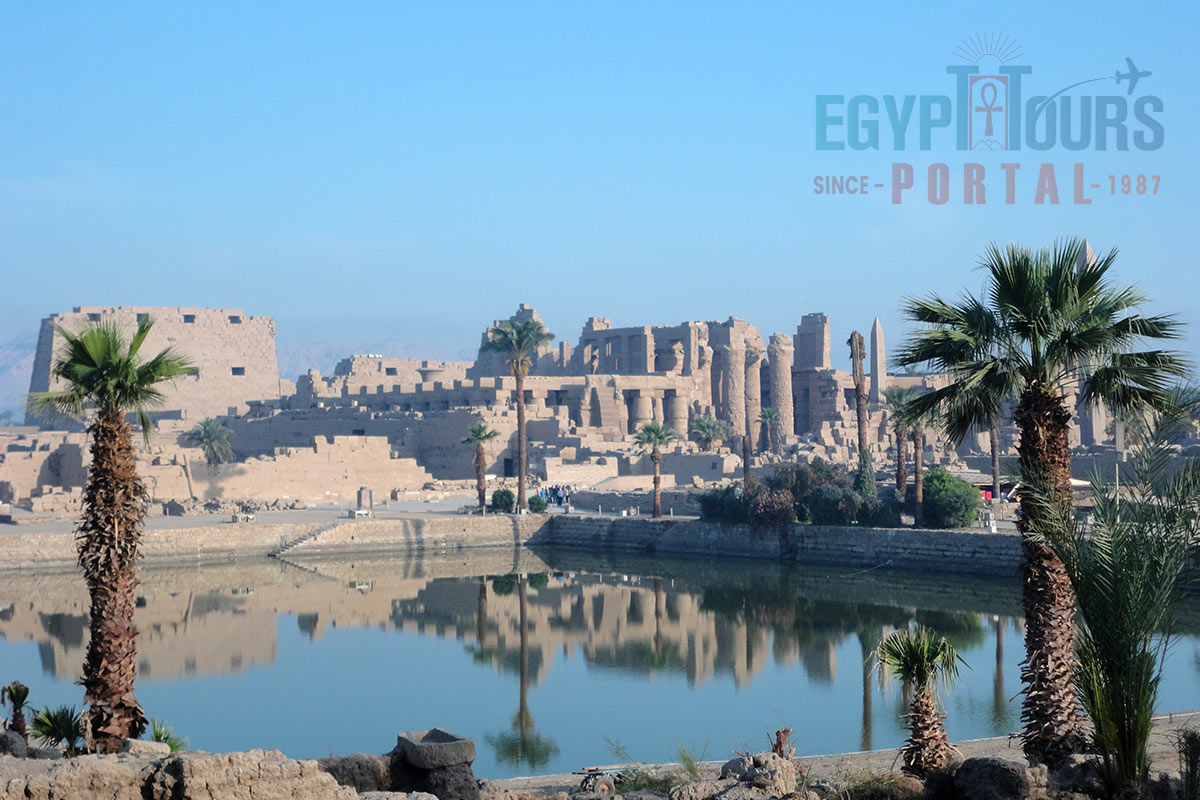
The word "Karnak" was known as Ipet-isut, meaning “The Most Selected of Places” or “The Most Sacred of Places.” This name reflects its status as the holiest religious center of Thebes. The modern name “Karnak” comes from the nearby village of El-Karnak, whose name is often interpreted as “fortified village.” While the modern name is geographic, the ancient name reveals the temple’s deep spiritual significance as a place where divine presence was believed to dwell on earth.
The Spiritual Location of Karnak Temple
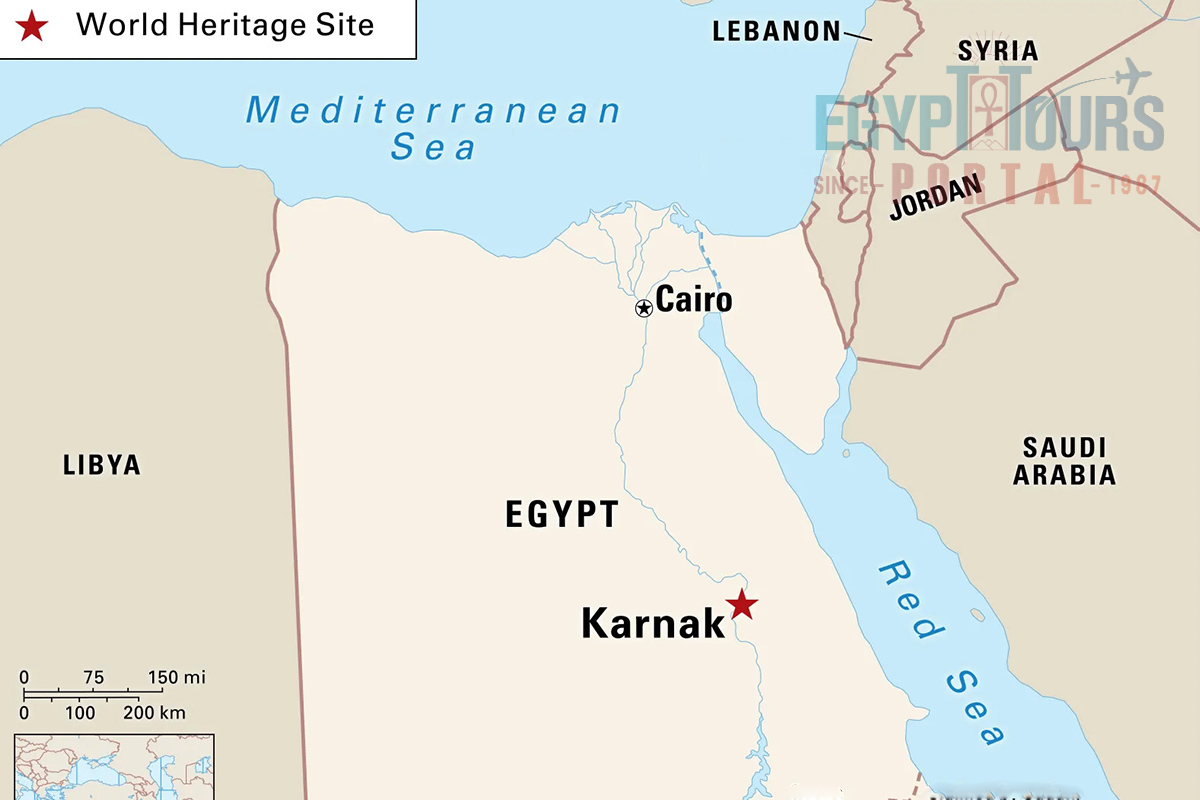
Karnak is located on the east bank of the Nile River in Luxor (ancient Thebes), about 2.5 kilometers north of Luxor Temple. This placement was highly symbolic, as the east bank represented life, sunrise, and rebirth in Egyptian belief, making it the ideal location for temples dedicated to the gods.
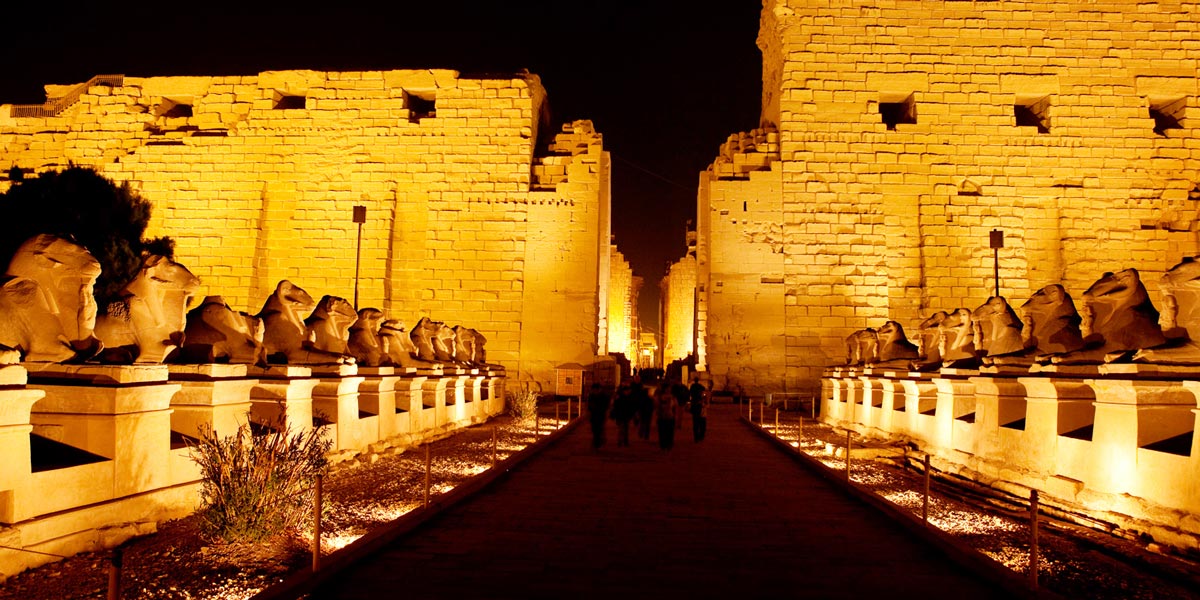
Karnak was directly connected to Luxor Temple by the famous Avenue of Sphinxes, a ceremonial road approximately 2.7 kilometers long, used during religious processions. Its position within Thebes made it the central religious hub of Upper Egypt and one of the most important sacred landscapes in the ancient world.
Ancient Egyptian Temples
Discover the majestic temples of the ancient Egyptian civilization
The Colossal and Immortal Architecture of Karnak Temple
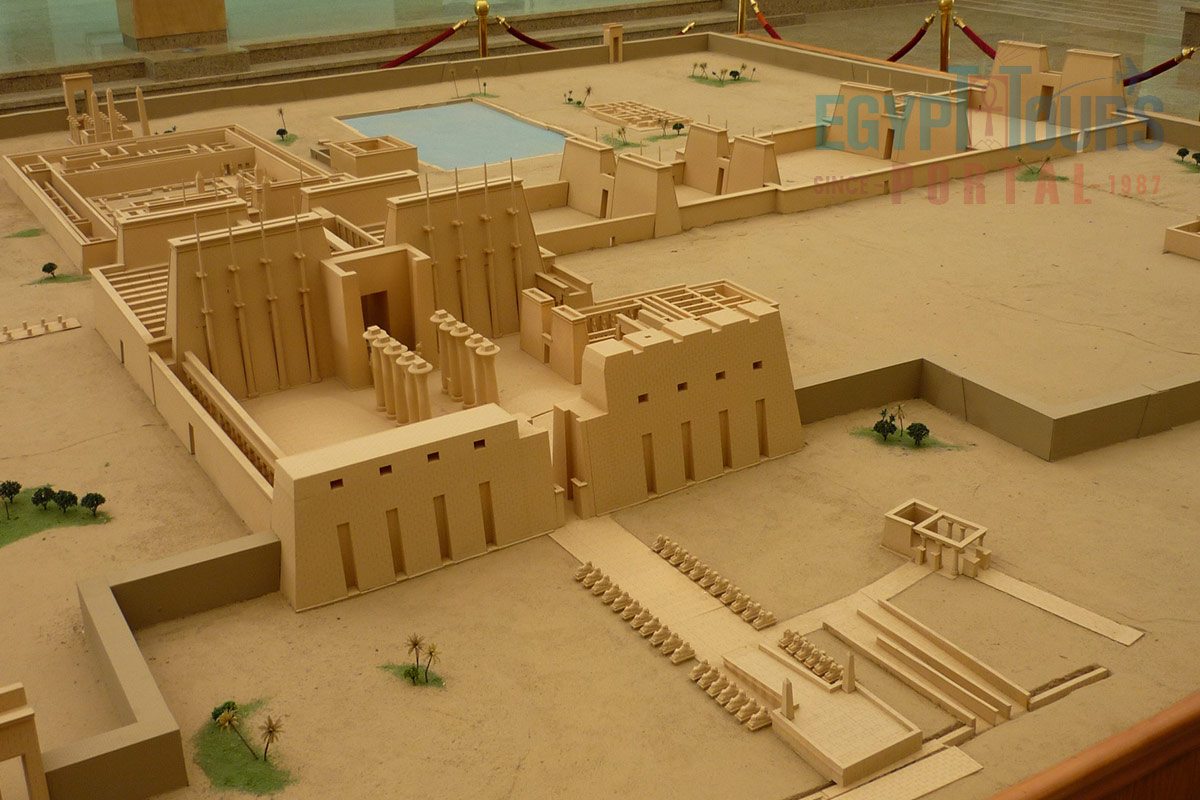
The architecture of the Karnak temple is monumental, complex, and symbolic, representing the peak of ancient Egyptian architecture and design. The Karnak Temple Complex architecture is extraordinary because it was not built as one single temple, but evolved over around 1,500 years through the work of nearly 30 pharaohs, creating a vast open-air museum of layered styles, religious symbolism, and royal ambition.
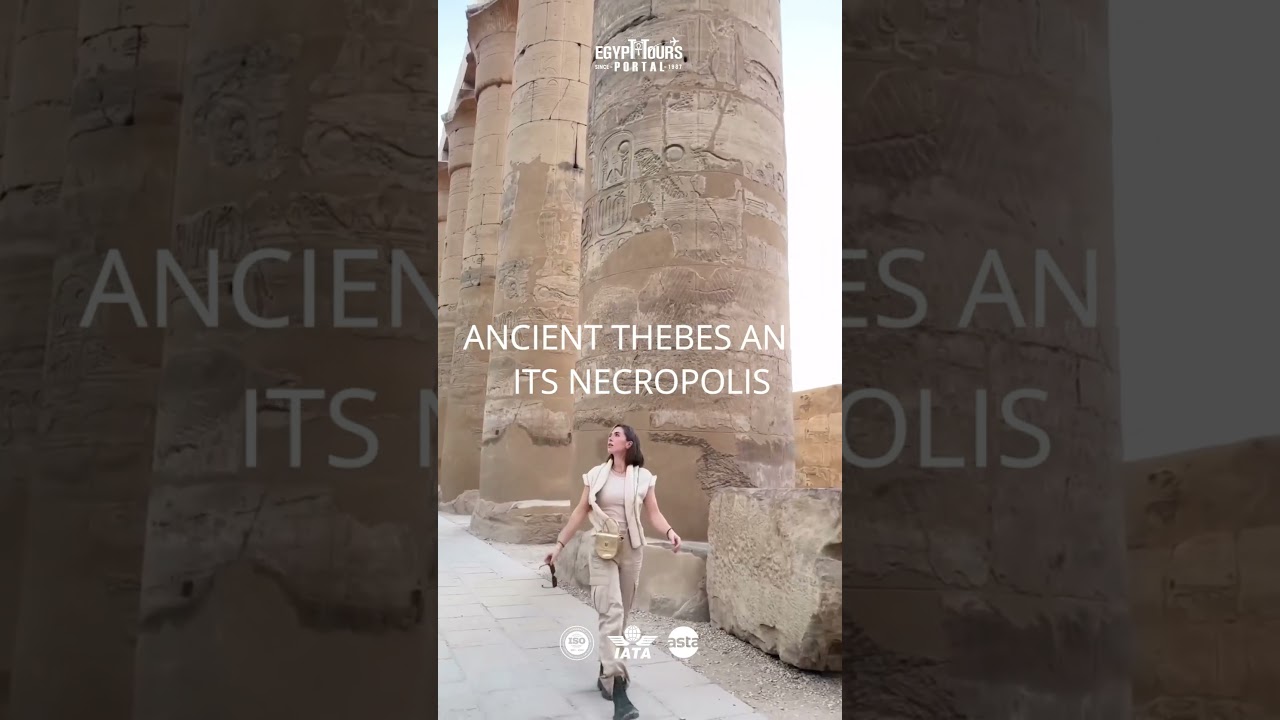
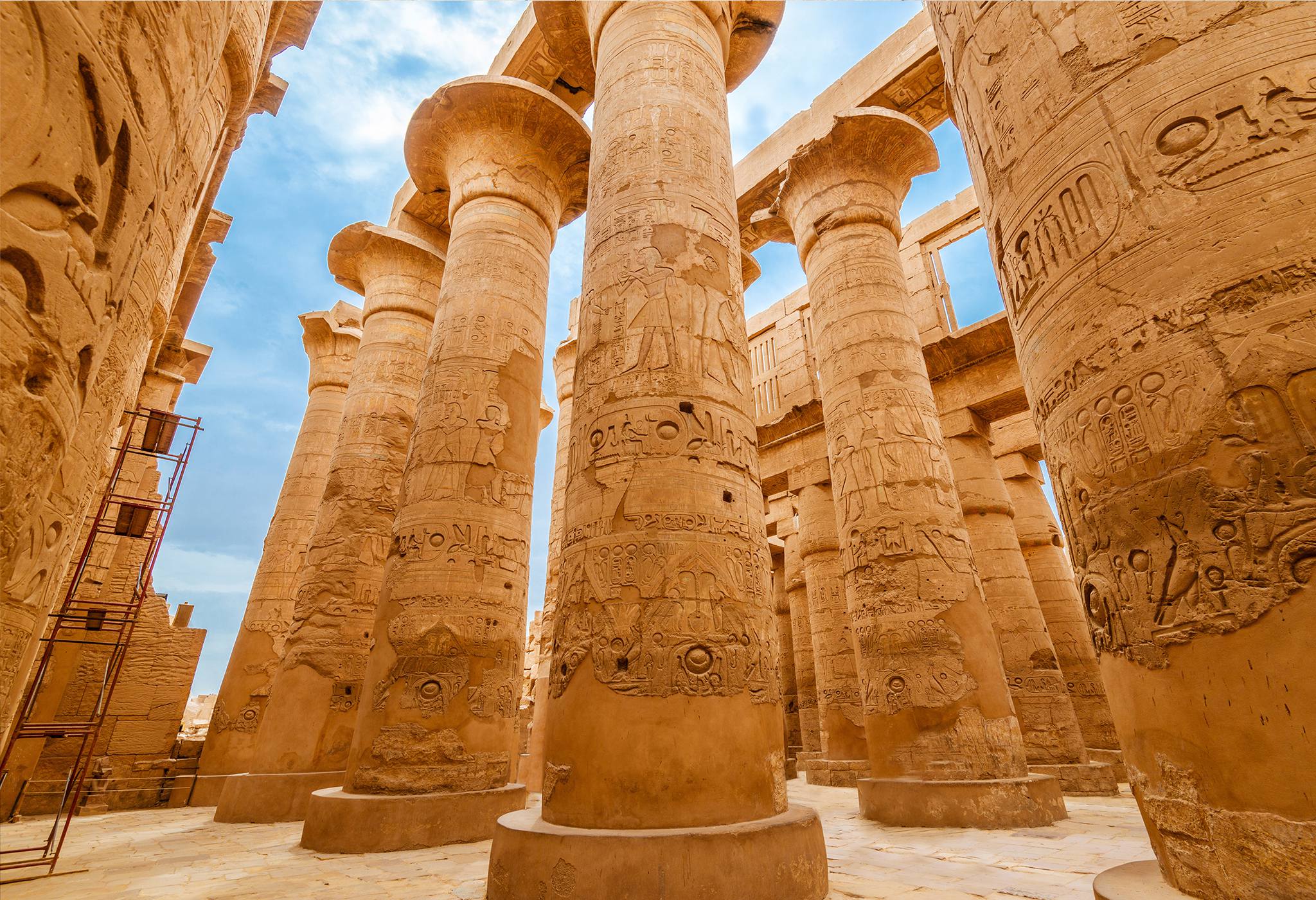
Its most famous feature is the Great Hypostyle Hall, a massive space of about 54,000 square feet filled with 134 sandstone columns arranged in 16 rows, including 12 central columns rising around 69 feet with open papyrus capitals. The hall used clever clerestory lighting, allowing natural light through stone-grille windows while keeping the interior cool, and its columns were once covered with colorful reliefs and hieroglyphs honoring the pharaohs and Amun-Ra.
Karnak Temple was organized around north-south and east-west axes, with 10 monumental pylons marking sacred processional routes and reflecting cosmic order. The Precinct of Amun-Re, the largest section, was designed as the earthly home of the god, moving from open public spaces into increasingly sacred inner areas.
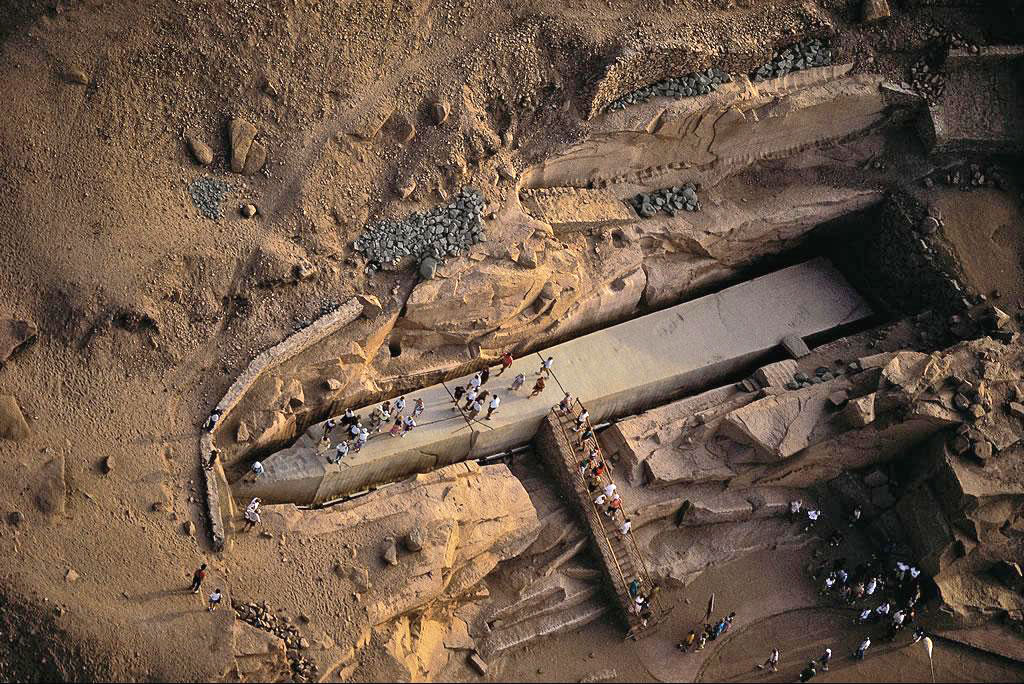
The Karnak Temple complex also included the Sacred Lake, used for priestly purification and symbolizing the primeval waters of creation, along with massive red granite obelisks such as Hatshepsut’s, carved from single stones and transported from Aswan, proving the unmatched engineering power and religious devotion of ancient Egypt. The temple’s layout reflects a symbolic journey from the outer world into the hidden presence of the god, moving from open spaces into darker, more sacred inner sanctuaries.

Ancient Egyptian Architecture
Explore the brilliant architecture of the ancient Egyptian civilization
Learn about the Magnificent History of Karnak Temple Complex
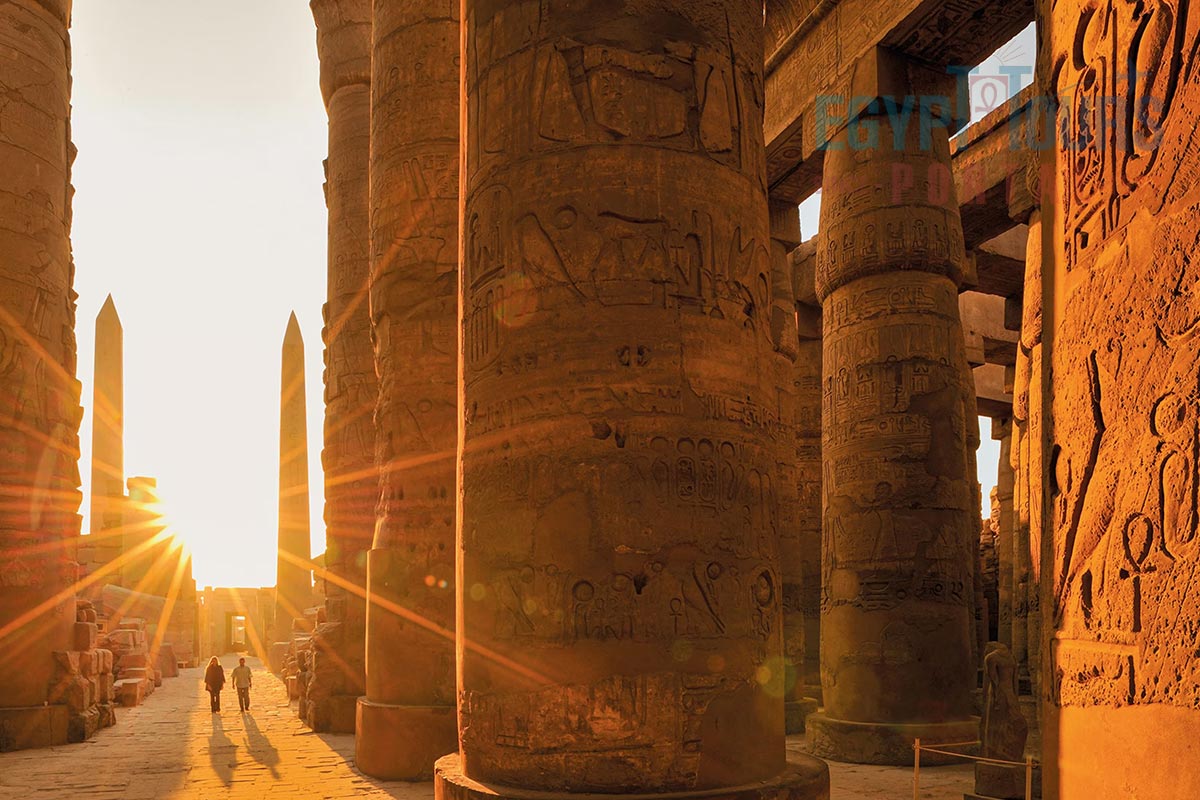
The history of Karnak Temple is closely tied to the rise of Thebes. Before the 11th Dynasty, Thebes was not a major political or religious center, and any early shrines in the area were likely small and dedicated to local deities such as Montu. The earliest known artifact from Karnak is a small eight-sided column from the 11th Dynasty mentioning Amun-Re, while the tomb of Intef II refers to a “house of Amun,” suggesting that a shrine or small temple already existed there. The ancient name Ipet-Isut, meaning “the most select of places,” originally referred to the central core of the Precinct of Amun-Re and was already in use by the 11th Dynasty.
Karnak Temple During the Middle Kingdom
By the Middle Kingdom (2040–1780 BCE), when Theban rulers unified Egypt, Karnak had already become holy ground. The rise of Thebes strengthened the status of Amun, the local god, who gradually merged with the sun god Ra to become Amun-Ra. The earliest surviving major structures include the White Chapel of Senusret I and the Middle Kingdom court, while excavations near the Sacred Lake revealed evidence of a planned settlement. The most important building development of this era was the layout of the Middle Kingdom court.
Karnak Temple During the New Kingdom
During the New Kingdom (1570–1070 BCE), Karnak transformed from a modest sanctuary into a vast state religious center as Egypt’s wealth and imperial power expanded. The complex became one of the main ceremonial stages of the Egyptian empire, where rulers expressed devotion to Amun-Ra, celebrated military victories, and reinforced the divine legitimacy of kingship.
Karnak Temple During the Eighteenth Dynasty
The 18th Dynasty saw massive expansion at Karnak. Amenhotep I built a barque shrine and gateway, while Thutmose I enclosed the Middle Kingdom temple and connected the Fourth and Fifth Pylons, the earliest parts of the temple still standing in place. Hatshepsut and Thutmose III added another fortified enclosure wall and constructed or enlarged the Sacred Lake.
Thutmose III also expanded the main temple by about 50% with the Akh-menu, known as the Festival Hall of Thutmose III, designed to echo a great tent shrine. After the Amarna interruption, construction resumed under Tutankhamun and Horemheb, and the Ninth Pylon was built using talatat blocks from the demolished Akhetaten.
Karnak Temple During the Nineteenth Dynasty
The 19th Dynasty brought some of Karnak’s most famous architectural achievements. The Great Hypostyle Hall may have begun earlier, but most of its construction was completed under Seti I and Ramesses II. Merenptah recorded his victories over the Sea Peoples on the walls of the Cachette Court, at the beginning of the processional route toward Luxor Temple, and his son Seti II added two small obelisks before the Second Pylon and a triple barque shrine dedicated to Amun, Mut, and Khonsu. After this, the final rulers of the dynasty made relatively few additions.
Karnak Temple During the Twentieth Dynasty
As Egypt’s imperial power declined during the 20th Dynasty, construction activity at Karnak also decreased. The most important works of this period focused on the Temple of Khonsu, which was built and expanded under Ramesses III and Ramesses IV. A large barque station was also added before the Second Pylon, large enough to be considered a major temple in its own right. Later rulers contributed little to the wider complex, and the growing power of the priesthood is reflected in images where the High Priest Amenhotep appears at the same scale as Ramesses IX.
Karnak Temple During the Third Intermediate Period
During the Third Intermediate Period, Egypt became politically divided, with pharaohs ruling from the north while the High Priests of Amun controlled Thebes. The northern kings appear to have added little to Karnak, while the High Priests, especially Herihor and Pinedjem I, continued decorating the Temple of Khonsu. This period shows how Karnak remained religiously important even when Egypt’s political unity weakened.
Karnak Temple During the Twenty-Second Dynasty
The Libyan rulers of the 22nd Dynasty planned major work near the Second Pylon, including a colonnade and new gateway, later replaced by the First Pylon. Their construction surrounded the barque shrines of Seti II and Ramesses III. Shoshenq I also commemorated his military campaigns in Syria-Palestine by building the Bubastis Portal, one of the most important monuments of this dynasty at Karnak.
Karnak Temple During the Twenty-Fifth Dynasty
During the 25th Dynasty, the Nubian pharaoh Taharqa made important additions to Karnak, including the Edifice of Taharqa in the forecourt between the First and Second Pylons. This changed the arrangement of the Avenue of Sphinxes, which was moved to the sides of the court, where they remain today. Taharqa also added a colonnade to the Precinct of Montu.
Karnak Temple During the Late Period and Thirtieth Dynasty
The last major change to Karnak’s layout came during the 30th Dynasty under Nectanebo I, who built the massive First Pylon and the huge enclosure walls surrounding the whole Karnak complex. These works completed a planning scheme begun by the 22nd Dynasty kings and helped define the temple’s final monumental form.
Karnak Temple During the Ptolemaic Period
In the Ptolemaic period, Philip Arrhidaeus replaced the shrine of Thutmose III with a red granite shrine aligned with the temple’s main axis. The Opet Temple was the last important cult building constructed within Karnak, showing that the complex remained ritually active even in the final centuries of pharaonic-style religion.
Karnak Temple During the Christian Era
By the 4th century AD, Karnak was mostly abandoned as a pagan religious center. After Constantine the Great recognized Christianity in 323 AD and pagan temples were ordered closed in 356 AD, Christian churches were built among Karnak’s ruins. The best-known example is the reuse of the central hall of Thutmose III’s Festival Hall, where painted saints and Coptic inscriptions can still be seen.
The Precinct of Amun-Re of the Divine Karnak Temple
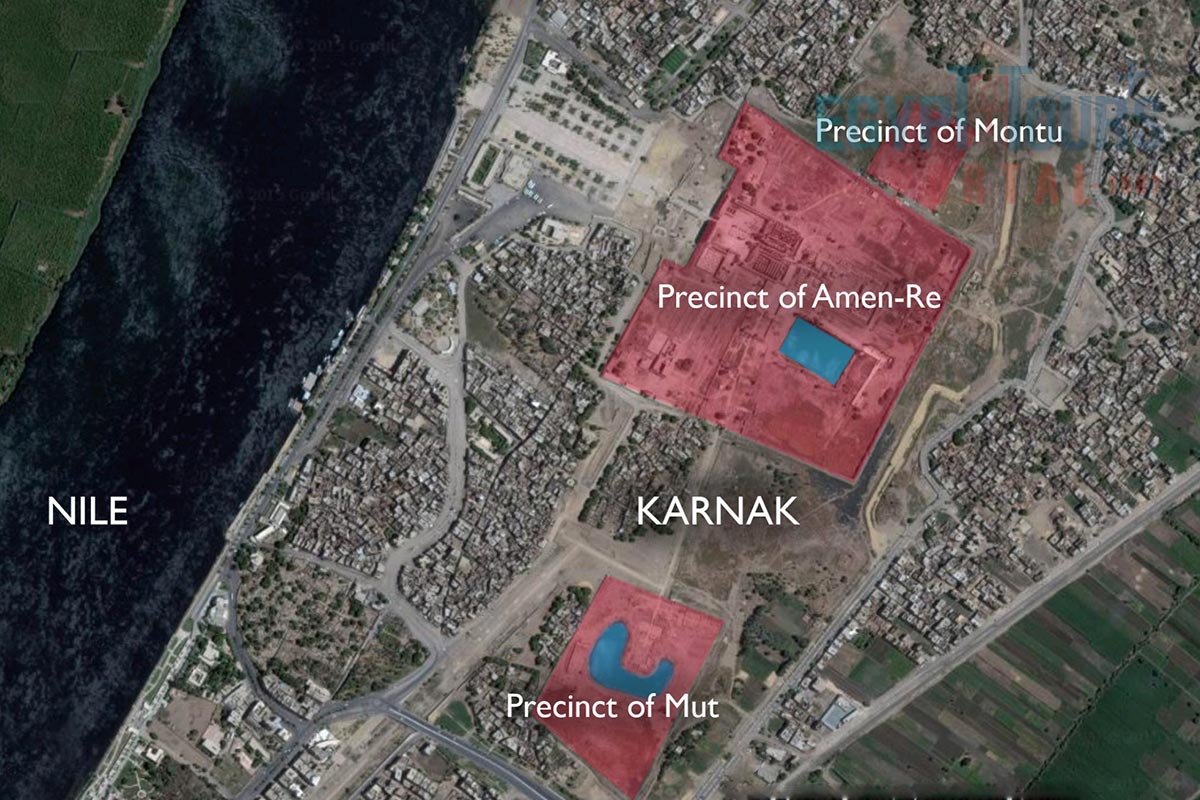
The Precinct of Amun-Re is the largest and most important enclosure within the Karnak Temple Complex near Luxor, and it is the main section open to the public. It is dedicated to Amun-Re, the chief god of the Theban Triad, and occupies around 25 hectares / 62 acres. The Temple of Amun itself covers about 61 acres and includes many structures, courts, pylons, shrines, obelisks, chapels, lakes, and processional spaces. Some areas are closed or semi-closed because of excavation and restoration, especially parts of the north-south axis, while the northwest corner contains the Open Air Museum, which requires an extra ticket.
History of the Precinct of Amun-Re
The history of the Precinct of Amun-Re is closely connected to the rise of Thebes. Before the 11th Dynasty, Thebes was not a major center, and early shrines were likely small and dedicated to local gods such as Montu. The earliest known artifact from the area is an 11th Dynasty eight-sided column mentioning Amun-Re, while the tomb of Intef II refers to a “house of Amun,” suggesting an early shrine or temple. The ancient name Ipet-Sut, meaning “the most select of places,” originally referred to the central core of the Amun-Re precinct and was already used by the 11th Dynasty.
East-West Axis of the Precinct of Amun-Re
The main temple follows an east-west axis, originally entered from a Nile-side quay that is now dry and located several hundred meters from the river. This ceremonial axis led worshippers and processions inward through monumental gateways, courts, pylons, halls, obelisks, and sanctuaries, gradually moving from public spaces toward the most sacred inner zones of Amun-Re’s temple.
Cult Terrace of the Precinct of Amun-Re
The modern entrance sits over the end of the ancient cult terrace, causing many visitors to miss its significance. The terrace contains eroded inscriptions known as the Nile Level Texts, recording flood levels from several kings of the Third Intermediate Period. Although often mistaken for a dock or quay, the cult terrace was not primarily for water access; it was intended for the presentation of cult images.
Corridor of Sphinxes of the Precinct of Amun-Re
The original quay once led through a corridor of sphinxes toward the entrance of the Second Pylon. When the First Pylon was later constructed, these sphinxes were moved aside. This reflects how the temple’s architecture was repeatedly reshaped as later rulers expanded and redefined sacred routes.
First Pylon of the Precinct of Amun-Re
The First Pylon is the massive front gateway of the precinct. Construction began during the 30th Dynasty, but it was never fully completed. It measures about 113 meters wide and 15 meters thick. Large piles of mud bricks remain against the inside of the pylon, offering rare evidence of the ramps or construction methods used to build such huge gateways.
Forecourt of the Precinct of Amun-Re
The original First Pylon and forecourt were created during the 22nd Dynasty, enclosing several older structures and forcing the earlier avenue of sphinxes to be moved. This area became one of the great open ceremonial spaces of the temple, gathering together monuments from different periods.
Boat Shrines of Seti II Within the Precinct of Amun-Re
The boat shrines of Seti II were built to honor the sacred barques of Amun, Mut, and Khonsu. These shrines played a role in temple processions, when divine images were carried in portable barques during festivals and rituals.
Kiosk of Taharqa In the Precinct of Amun-Re
The Kiosk of Taharqa was built in the forecourt, but its construction required the removal of the criosphinx corridor, with the statues moved to the sides of the open court. Only one column remains standing today, bearing inscriptions of Taharqa, Psamtik II, and Ptolemy IV Philopator.
Temple of Ramesses III In the Precinct of Amun-Re
On the south side of the forecourt stands the small Temple of Ramesses III. Its inscriptions show the king slaughtering captives while Amun-Re looks on, a traditional royal image symbolizing the defeat of chaos and the king’s role as protector of Egypt.
Bubastis Portal of the Precinct of Amun-Re
The Bubastis Portal leads from the first court toward the area south of the Temple of Ramesses III. It records the military campaigns and conquests of Shoshenq I of the 22nd Dynasty in Syria-Palestine, making it an important historical and political monument.
Second Pylon of the Precinct of Amun-Re
The Second Pylon was built by Horemheb near the end of his reign and was only partly decorated by him. Ramesses I later usurped Horemheb’s reliefs and added his own, and Ramesses II later usurped them again. Horemheb filled the pylon towers with thousands of reused blocks, including talatat from the dismantled monuments of Akhenaten, as well as material from temples of Tutankhamun and Ay. The pylon’s roof collapsed in late antiquity and was restored in Ptolemaic times.
Third Pylon of the Precinct of Amun-Re
The Third Pylon was built by Amenhotep III and was once magnificent, with parts plated in gold and decorated with precious materials. In constructing it, Amenhotep dismantled older monuments and placed their blocks inside the pylon as fill. These blocks were later recovered by archaeologists and allowed reconstructions of monuments such as the White Chapel of Senusret I and the Red Chapel of Hatshepsut, now displayed in Karnak’s Open Air Museum.
Obelisks of Thutmose I and Hatshepsut Within the Precinct of Amun-Re
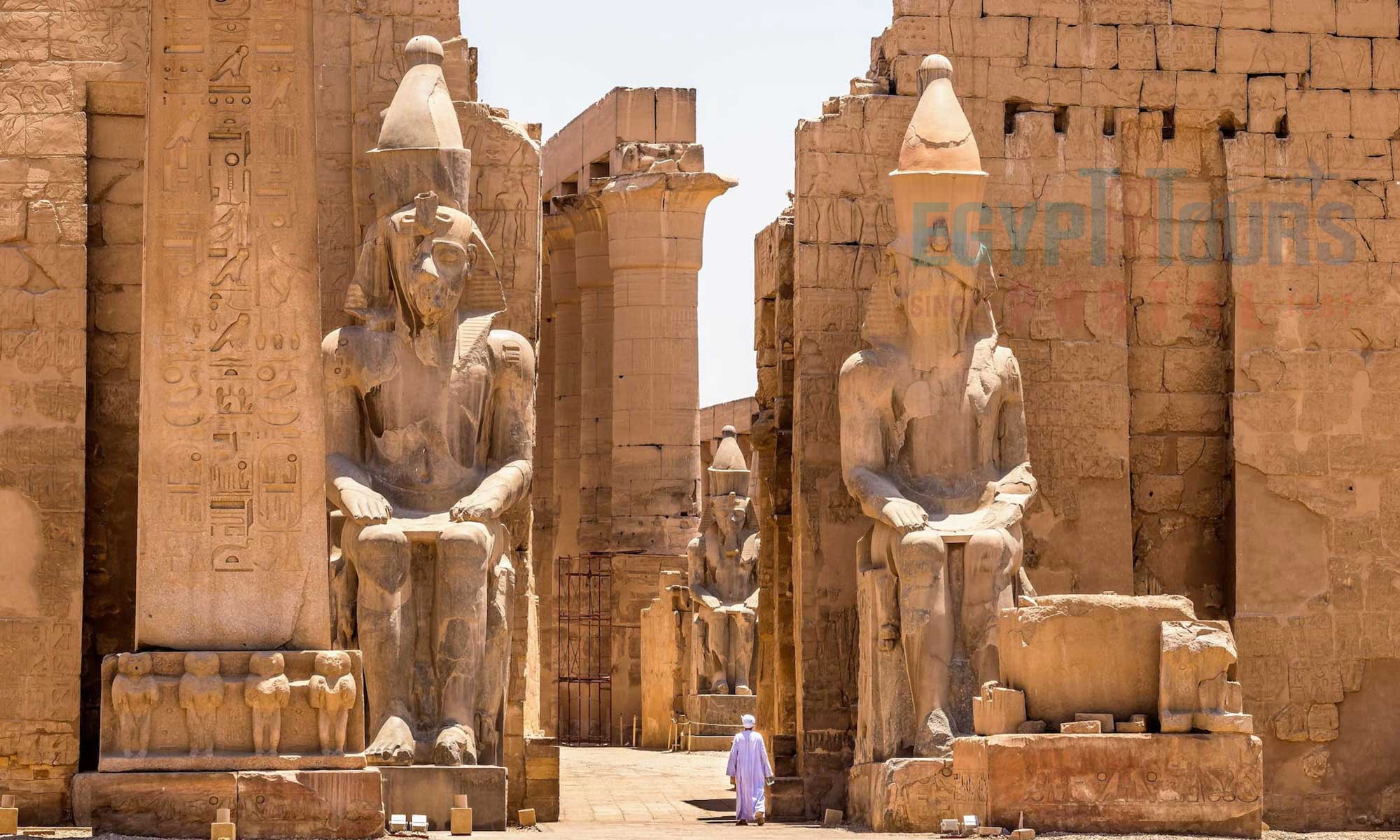
In a narrow court stand important obelisks, including one of Thutmose I, measuring about 21.2 meters / 70 feet high and weighing nearly 150 tons. Nearby is the surviving obelisk of Hatshepsut, nearly 30 meters / 98 feet high. Later kings blocked its view from ground level with walls, while its companion obelisk lies broken near the Sacred Lake.
Fourth, Fifth, and Sixth Pylons Within the Precinct of Amun-Re
The Fourth and Fifth Pylons were built by Thutmose I. The Sixth Pylon, built by Thutmose III, leads into a Hall of Records, where the king recorded tributes. Some images of Amun on the Sixth Pylon were restored by Tutankhamun after being vandalized by Akhenaten, then later recarved and usurped by Horemheb.
Sanctuary of Philip Arrhidaeus Within the Precinct of Amun-Re
The sanctuary of Philip Arrhidaeus was built on the site of an earlier sanctuary of Thutmose III. It preserves blocks and inscriptions from the older structure, showing how later rulers continued to rebuild sacred spaces while preserving or reusing earlier royal material.
Middle Kingdom Structures of the Precinct of Amun-Re
Evidence of earlier Middle Kingdom structures includes a pillar inscribed with the name of Intef II, discovered in the early 1980s. Excavations in the Middle Kingdom courtyard have revealed large raw-brick foundations and a religious complex about 70 meters wide and more than 100 meters long, probably consisting of concentric enclosures, storage areas, an access platform, and a central “god’s abode.”
Festival Hall of Thutmose III Within the Precinct of Amun-Re
The Festival Hall of Thutmose III, also called Akh-menu, stands east of the main temple complex. It was built to celebrate the king’s Hed-Sed jubilee and later became part of the annual Opet Festival. It contains the Karnak King List, showing Thutmose III with earlier kings who contributed to the temple, and also includes the famous Botanical Garden of Thutmose III.
North-South Axis of the Precinct of Amun-Re
The north-south axis leads toward the Precinct of Mut and includes several large pylons, though much of the area is closed to visitors because of excavation and restoration. This axis reflects Karnak’s complex ceremonial planning beyond the main east-west route.
Cachette Court of the Precinct of Amun-Re
The Cachette Court, or First Court, became famous after Georges Legrain discovered more than 900 statues there in 1903, buried beneath the court, probably during a Ptolemaic-period clearing of the complex. Nearby finds also included the famous Karnak Cachette of nearly 800 stone statues, 17,000 bronze statues, and many other artifacts discovered around 1903–1905.
Seventh to Tenth Pylons of the Precinct of Amun-Re
The Seventh Pylon includes scenes of Thutmose III smiting Asiatic enemies and lists conquered towns and peoples from his Syria-Palestine campaigns. The Eighth Pylon was built by Hatshepsut and marks the end of the area normally accessible to the public. The Ninth and Tenth Pylons were built or completed by Horemheb, using talatat blocks from the dismantled Temple of Amenhotep IV as core building material.
Sacred Lake of the Precinct of Amun-Re
The Sacred Lake was used by priests for purification before performing temple rituals. Today, the Karnak sound and light show is viewed from a seating area beside the lake. Its religious purpose made it an essential part of temple ritual life.
Temple of Ptah Within the Precinct of Amun-Re
The Temple of Ptah lies north of the main Amun temple, inside the boundary wall. It was built by Thutmose III on the site of an earlier Middle Kingdom temple and was later enlarged by the Ptolemies.
Temple of Ramesses II Within the Precinct of Amun-Re
The Temple of Ramesses II, also called the Temple of the Hearing Ear, is located east of the main complex on the east-west alignment. It was built during the reign of Ramesses II and reflects the king’s continued architectural investment in Karnak.
Temple of Khonsu Within the Precinct of Amun-Re
The Temple of Khonsu is one of the best examples of an almost complete New Kingdom temple. It was originally constructed by Ramesses III on the site of an earlier temple dedicated to the god of the moon and travellers, and its construction appears to be mentioned in the Harris Papyrus.
Open Air Museum of the Precinct of Amun-Re
Karnak’s Open Air Museum, located in the northwest corner of the complex, contains reconstructions of earlier monuments found reused inside later pylons. Its most important monuments include the White Chapel of Senusret I and the Red Chapel of Hatshepsut, both crucial for understanding the earlier architectural phases of Karnak.
The Great Hypostyle Hall of the Karnak Temple Complex
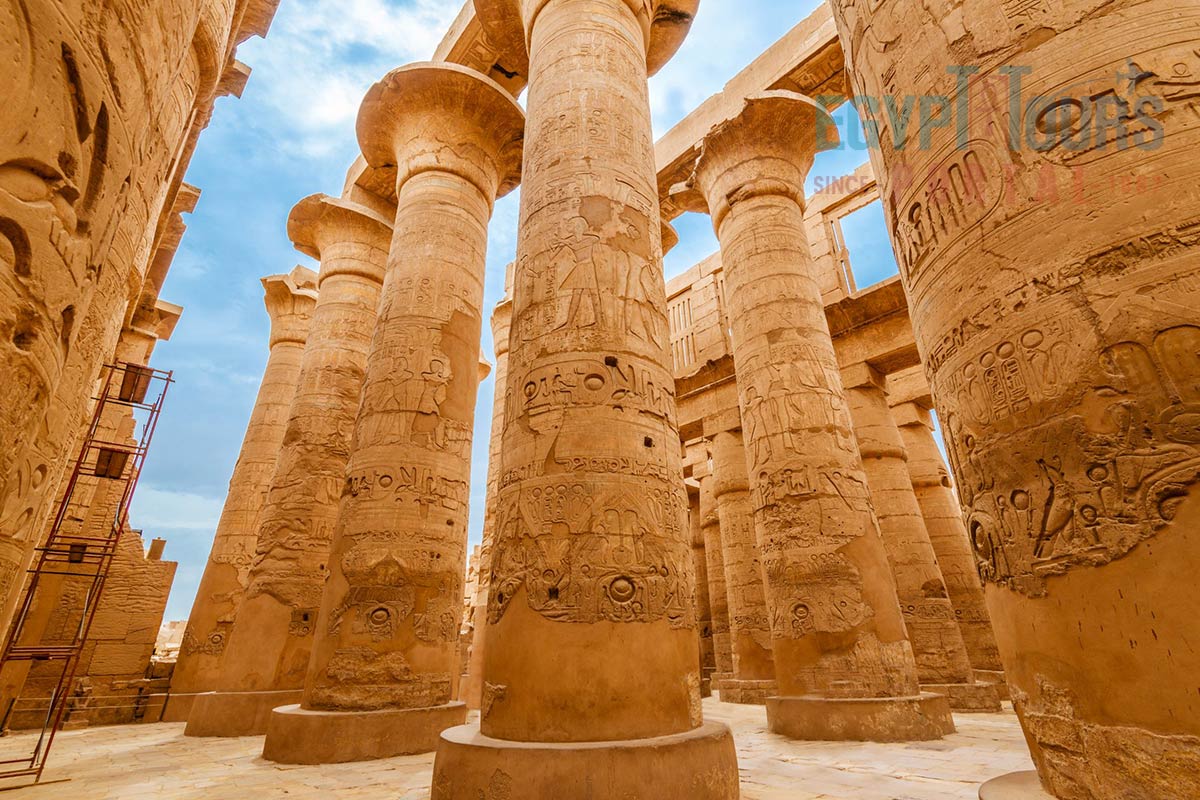
The Great Hypostyle Hall is located inside the Karnak Temple Complex, specifically within the Precinct of Amun-Re, and is one of the most visited monuments of ancient Egypt. It was built during the 19th Dynasty, around 1290–1224 BC, and was dedicated to Amun-Re, the supreme deity of Thebes.
Architecture and Construction of the Great Hypostyle Hall
The hall covers about 5,000 square meters or 1.2 acres, and its roof, now fallen, was once supported by 134 massive columns arranged in 16 rows. The majority of the columns measure about 14 meters high and have capitals shaped like closed papyrus buds, while the 12 central columns are much larger, reaching about 24 meters high and 10 meters in circumference, with open bell-shaped papyrus capitals.
These taller central columns supported a raised roof section fitted with clerestory windows, allowing natural light to enter the hall. Symbolically, the papyrus columns represented the primeval marsh from which the creator god Atum emerged from the waters of Nun at the beginning of creation.
The hall was once thought by earlier scholars to have been built by Horemheb or Amenhotep III, but it is now understood to have been constructed by Seti I, who decorated the northern wing with inscriptions. The southern wing was completed by his son Ramesses II. Construction likely involved large mudbrick ramps extended from the north and south sides of the hall, filled with alluvial earth and desert sand, allowing builders to raise heavy stone blocks into position.
Inscriptions and Reliefs of the Great Hypostyle Hall
The Great Hypostyle Hall is covered with inscriptions and reliefs that make it one of the finest examples of ancient Egyptian art and royal propaganda. Its walls, columns, architraves, abaci, and clerestory areas were decorated by several rulers, especially Seti I and Ramesses II, with later additions by pharaohs such as Ramesses III, Ramesses IV, and Ramesses VI. These carvings record religious ceremonies, military victories, royal achievements, and devotion to Amun-Re, turning the hall into both a sacred space and a historical archive.
Seti I’s reliefs, especially in the northern wing, are known for their high-quality bas-relief carving, subtle modeling, and refined artistic style. Ramesses II decorated the southern wing and the twelve large columns of the central nave, using sunken reliefs that were carved into the stone rather than raised from it. The outer walls also contain battle scenes, with Seti I represented on the north side and Ramesses II on the south. One of the most important historical inscriptions near the southern wall records the Egyptian-Hittite peace treaty, signed by Ramesses II in Year 21 of his reign.
Later Additions and Continued Use of the Great Hypostyle Hall
Over the centuries, later rulers, priests, Roman emperors, and even ordinary Egyptians added inscriptions, repairs, and religious graffiti to the hall. Some later figures, including Ramesses IV and the High Priest of Amun Herihor, decorated empty spaces or covered older inscriptions to associate themselves with the glory of the monument. The Great Hypostyle Hall remained in use for about 17 centuries, continuing until the decline of pagan religion in Egypt around the 4th century CE.
Collapse and Restoration of the Great Hypostyle Hall
In 1899, eleven of the hall’s massive columns collapsed in a chain reaction after groundwater weakened their foundations. The reconstruction was supervised by Georges Legrain, the chief archaeologist at Karnak, and was completed in May 1902. Later restoration work continued to strengthen the remaining columns and preserve the temple structure.
The Grand Precinct of Mut of the Karnak Temple Complex
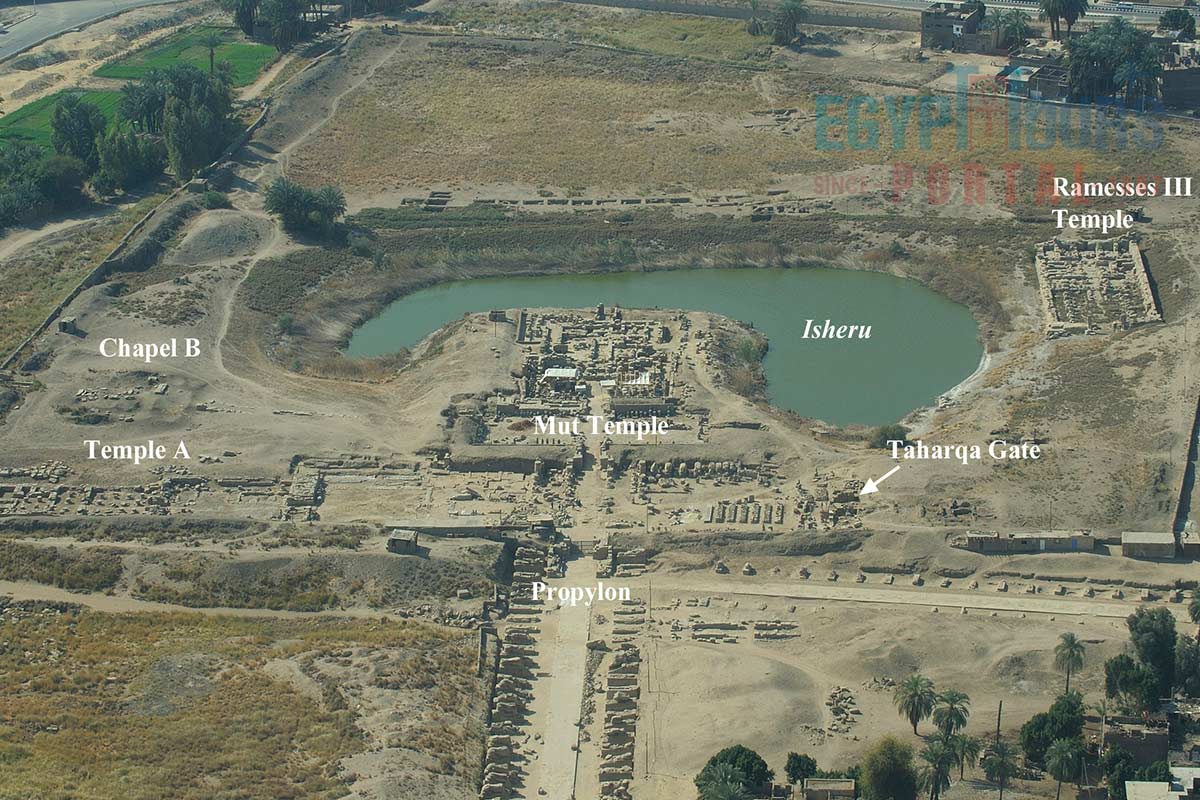
The Precinct of Mut is the second golden piece of the ancient Egyptian holy trinity, an ancient Egyptian temple compound in South Karnak, on the east bank of the Nile about 325 meters south of the Precinct of Amun-Re, covering around 9 hectares / 22 acres and forming one of the four main enclosures of the Karnak Temple Complex. This magnificant monument is dedicated to the goddess Mut, the wife of Amun-Ra and mother of Khonsu in the Theban Triad. The precinct includes at least six temples: the Mut Temple, Contra Temple, and Temples A, B, C, and D, with the sacred man-made lake Isheru surrounding the main temple on three sides.
Although much of the site is damaged, it contains important structures from many periods, including early work linked to Thutmose II and III, later additions by Ramesses II, Ramesses III, Taharqa, Ptolemy VI, and Roman emperors Augustus and Tiberius. The precinct is famous for its many Sekhmet statues, possibly commissioned by Amenhotep III, and for ceramic female figurines that may relate to fertility, childbirth, and healing rituals. Excavations were carried out, revealing the precinct as a major religious space devoted to motherhood, divine protection, ritual birth, and the sacred power of the goddess Mut.
The Miraclious Precinct of Montu of the Karnak Temple Complex
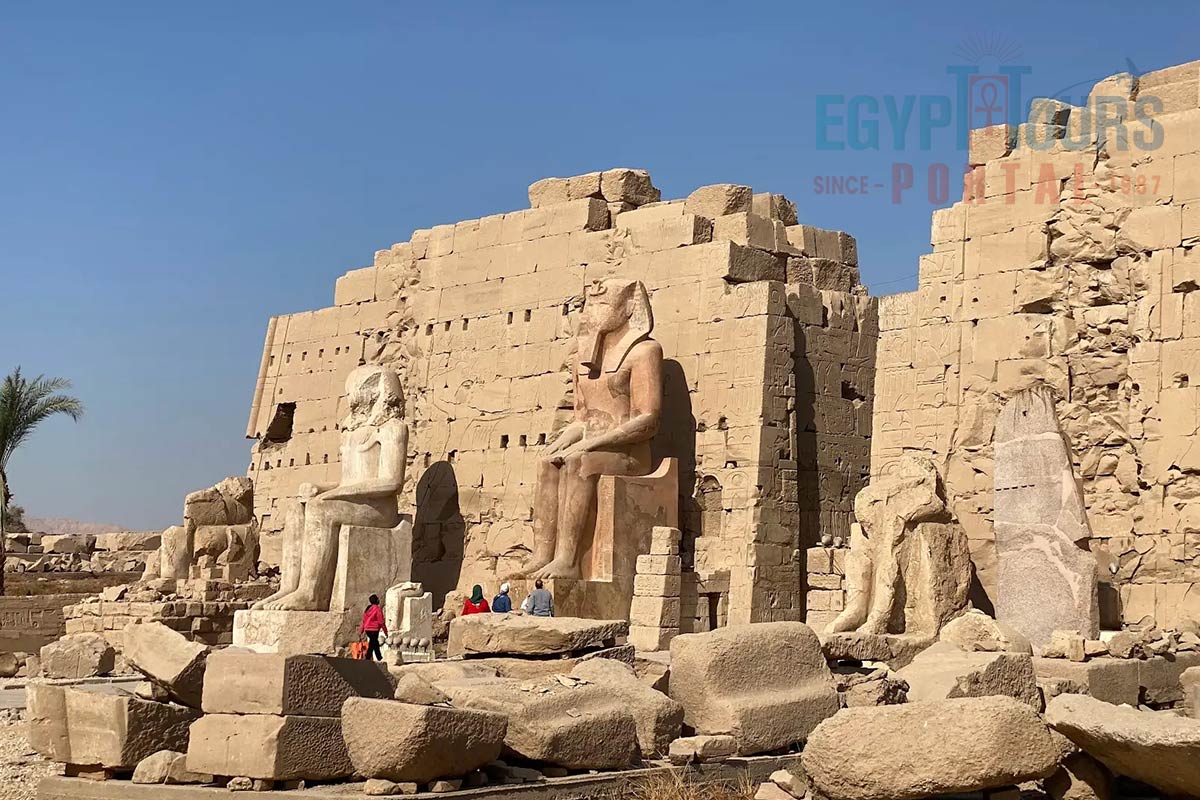
The Precinct of Montu is the third magical piece of the divine holy trinity, a monument of great power located within the vast Karnak Temple Complex. It is one of Karnak’s four main temple enclosures and was dedicated to Montu, the ancient Egyptian god of war. Covering about 20,000 m², the precinct is now poorly preserved, but it once included several important structures, such as the Temple of Montu, Temple of Harpre, Temple of Ma’at, a sacred lake, and the monumental Gateway of Ptolemy III Euergetes and Ptolemy IV Philopator, also known as Bab el’Adb, which remains the most visible feature and can be seen from the Precinct of Amun-Re.
This gateway was reached by a dromos from a quay connected to a channel leading toward Montu’s field at Medamud, and it opened into a large court decorated with a 25th Dynasty colonnade. The mud-brick enclosure was restored by Nectanebo in the 30th Dynasty. The Temple of Montu followed the traditional Egyptian temple plan with a pylon, court, columned rooms, boat room, and naos; its ruins mainly date to Amenhotep III, who rebuilt a Middle Kingdom sanctuary dedicated to Montu-Re, while Ramesses II expanded it with a forecourt and two obelisks.
The Temple of Ma’at is notable as the only surviving temple dedicated to Ma’at and served as a court for judging royal tomb robbers under Ramesses IX at the end of the 20th Dynasty. The Temple of Harpre may have begun in the 21st Dynasty, but was mostly built under Hakor of the 29th Dynasty.
The Dismantled Temple of Amenhotep IV of the Karnak Temple Complex
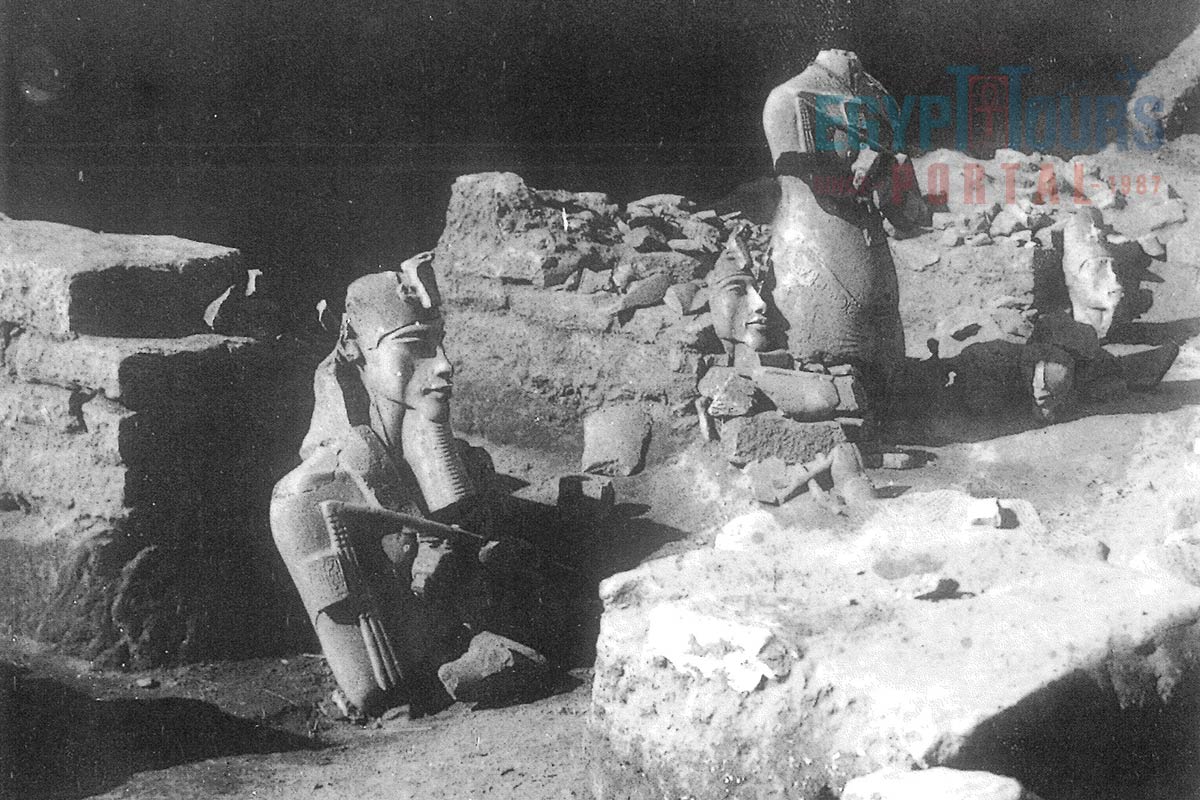
The Temple of Amenhotep IV was an ancient New Kingdom monument at Karnak, built during the first four years of Akhenaten’s 18th Dynasty reign, when he was still known as Amenhotep IV; it may have been started near the end of his father Amenhotep III’s reign and completed by Akhenaten. It stood east of the Precinct of Amun-Re, outside its boundaries, and formed part of an early Aten religious complex before Akhenaten moved his capital to Amarna.
Its main temple was called Gem-pa-Aten, meaning “The Sun Disc is Found in the Estate of the God Aten,” while other buildings included Hwt-benben, or “The Mansion of the Benben Stone,” Rud-menu, meaning “Sturdy are the Monuments of the Sun Disc Forever,” and Teni-menu, meaning “Exalted are the Monuments of the Sun Disc Forever.”
The buildings were constructed quickly using small talatat blocks, which made them easy to dismantle and reuse later inside other Karnak structures. Gem-pa-Aten was a large open-air temple, about 130 × 216 meters, probably roofless so offerings could be exposed to direct sunlight, and it contained offering tables, statues of Akhenaten, images of Nefertiti, and objects inscribed for the Aten, though it was later so thoroughly destroyed that even its foundations were almost erased.
Hwt-benben, built to the east, was closely linked to Gem-pa-Aten and devoted to the solar cult, while Teni-menu may have contained domestic and storage rooms and possibly functioned as a royal residence. Parts of Teni-menu were reused in Karnak’s Ninth Pylon, later identified and reassembled like a giant puzzle, and some are now displayed in the Luxor Museum, showing residential, administrative, royal, and solar jubilee scenes, including imagery connected to Akhenaten’s first Sed Festival, likely celebrated alongside Amenhotep III.
Uncover the Many Karnak Temple Archaeological Discoveries
Karnak Temple remains one of Egypt’s most active and revealing archaeological landscapes, where more than a century of excavation continues to uncover new layers of history. Between 1903 and 1905, Georges Legrain discovered the famous Karnak Cachette near the Seventh Pylon, recovering over 800 stone statues and nearly 17,000 bronze artifacts from a pit filled with groundwater. Later research also revealed thousands of reused talatat blocks from Akhenaten’s dismantled Aten temple, allowing scholars to reconstruct parts of a lost monument hidden inside later pylons.
Modern studies have expanded understanding beyond royal architecture, such as the 2006 Opet Temple zooarchaeology project, which found more than 5,000 animal remains linked to sacrifice and temple consumption. Geoarchaeological research further suggests that Karnak may have originally stood on an elevated Nile island, echoing the ancient Egyptian idea of the Primeval Mound rising from the waters of creation.
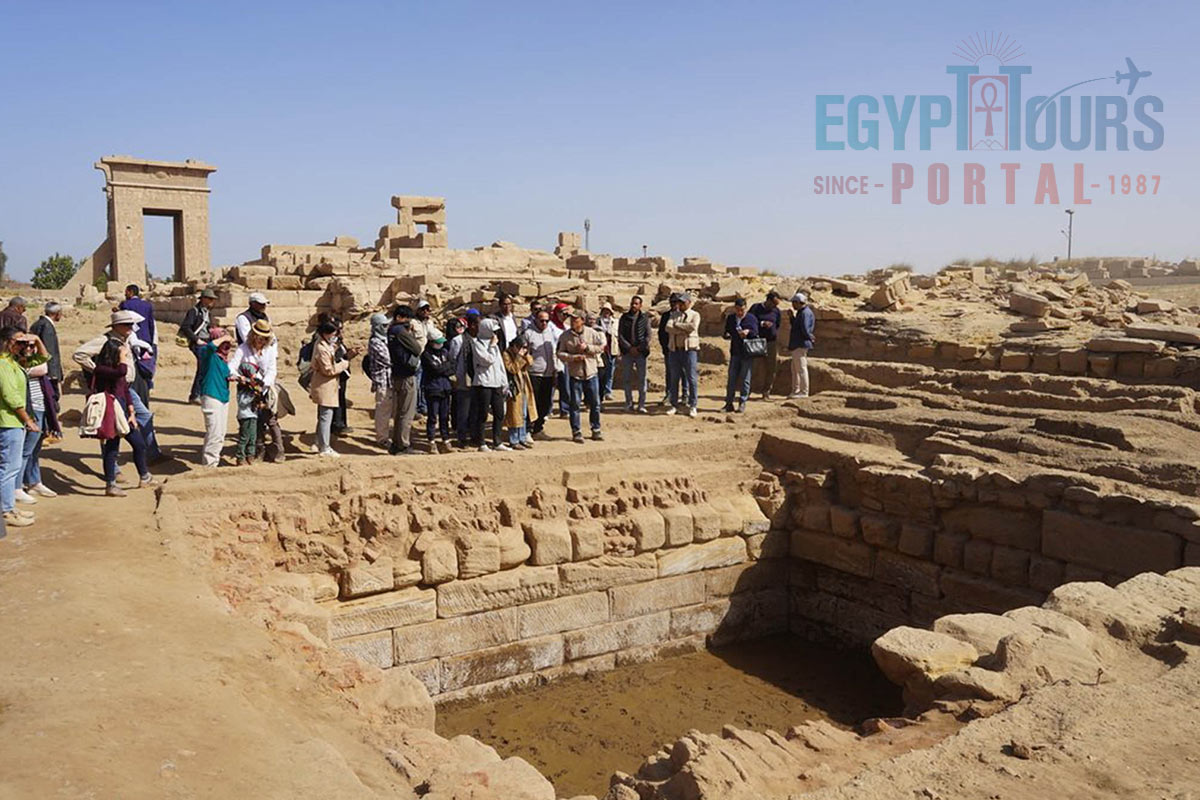
The discovery of a shrine in 2018, was announced to show its dedication to Osiris-Ptah Neb, which dates back to the 25th Dynasty. In 2025, an Egyptian-French mission uncovered a rare 26th Dynasty jewelry cache in the northwestern sector of Karnak, including gold rings, amulets, a metallic brooch, and a golden amulet showing the Theban Triad of Amun, Mut, and Khonsu. In 2026, an Egyptian-Chinese mission announced the discovery of a previously unknown sacred lake in the Montu Temple precinct, helping scholars better understand water rituals, priestly purification, and the symbolism of Nun, the primordial waters of creation.
Modern technology is also reshaping the study of Karnak, as the Karnak Stones Project used ground-penetrating radar in unexplored areas and documented hundreds of sandstone blocks connected to rulers such as Thutmose III and Ramesses II. These discoveries show that Karnak is not only a monumental temple complex from the past, but an active archaeological landscape where new evidence continues to reveal hidden chapters of ancient Egyptian religion, ritual, and royal history.
Facts About the Karnak Temple
- Karnak Temple is not one temple; it is a vast religious complex of temples, pylons, chapels, courts, obelisks, sacred lakes, and shrines.
- Its ancient Egyptian name was Ipet-Isut, meaning “The Most Selected of Places.”
- Karnak is one of the greatest examples of ancient Egyptian religion, kingship, architecture, ritual, engineering, and sacred landscape planning.
- Karnak is located on the east bank of the Nile in Luxor, ancient Thebes, about 2.5 km north of Luxor Temple.
- Construction began in the Middle Kingdom, especially under Senusret I, and continued into the Ptolemaic Period.
- Around 30 pharaohs contributed to Karnak, making it one of the most layered architectural sites in ancient Egypt.
- The complex was mainly dedicated to Amun-Re, the chief god of Thebes and head of the Theban Triad.
- The Theban Triad consisted of Amun, Mut, and Khonsu.
- The Precinct of Amun-Re is the largest and most visited section of Karnak.
- Karnak covers more than 100 hectares, making it one of the largest religious complexes ever built.
- The Great Hypostyle Hall contains 134 massive columns arranged in 16 rows.
- The 12 central columns of the Hypostyle Hall rise about 21–24 meters, creating a monumental “forest of stone.”
- The columns were once brightly painted and carved with hieroglyphs honoring pharaohs and Amun-Re.
- The Hypostyle Hall was mainly built by Seti I and completed by Ramesses II.
- Karnak has 10 major pylons, built across different periods as ceremonial gateways.
- The temple layout follows major east-west and north-south axes, reflecting sacred processional movement and cosmic order.
- Karnak was linked to Luxor Temple by the 2.7 km Avenue of Sphinxes.
- The avenue was used during the Opet Festival, when sacred barques of Amun, Mut, and Khonsu traveled between Karnak and Luxor.
- The Sacred Lake was used by priests for ritual purification before temple ceremonies.
- The lake also symbolized Nun, the primeval waters of creation.
- Queen Hatshepsut erected one of Karnak’s tallest surviving ancient obelisks.
- Karnak contains the White Chapel of Senusret I and the Red Chapel of Hatshepsut, now reconstructed in the Open Air Museum.
- Thutmose III expanded Karnak greatly and built the Akh-menu, or Festival Hall.
- The Festival Hall contains the famous Karnak King List.
- The Temple of Khonsu is one of the best-preserved New Kingdom temples inside Karnak.
- The Precinct of Mut lies south of Amun-Re’s precinct and includes the sacred lake Isheru.
- The Mut Precinct is famous for many statues of the lioness goddess Sekhmet.
- The Precinct of Montu was dedicated to Montu, the ancient Egyptian god of war.
- The Temple of Amenhotep IV/Akhenaten at Karnak was later dismantled, and its talatat blocks were reused inside later pylons.
- The discovery of those talatat blocks helped scholars reconstruct scenes from Akhenaten’s lost Aten temple.
- In 1903–1905, Georges Legrain discovered the Karnak Cachette, containing over 800 stone statues and nearly 17,000 bronze objects.
- Karnak was added to the UNESCO World Heritage List in 1979 as part of Ancient Thebes with its Necropolis.
- The site continued to be reused after the pharaonic period, including during the Roman and Christian eras.
- Christian churches were later built among Karnak’s ruins, especially inside reused temple spaces.
- Modern archaeology continues to reveal new evidence at Karnak, including jewelry caches, sacred lakes, hidden structures, and reused stone blocks.
Witness the Sight of A Living Miracle With Our Ethereal Trips
Karnak Temple is one of the most important attractions in Egypt, where is a lot of tourists around the world come to explore it, so if you prefer to visit this historical monument and the other archaeological sites in Egypt you can check our Egypt Tours and choose your perfect journey to Egyptand enjoy the most magical Nile cruise between Luxor and Aswan which is by far the most adventurous and magical experience to do across Upper Egypt.