
Summary
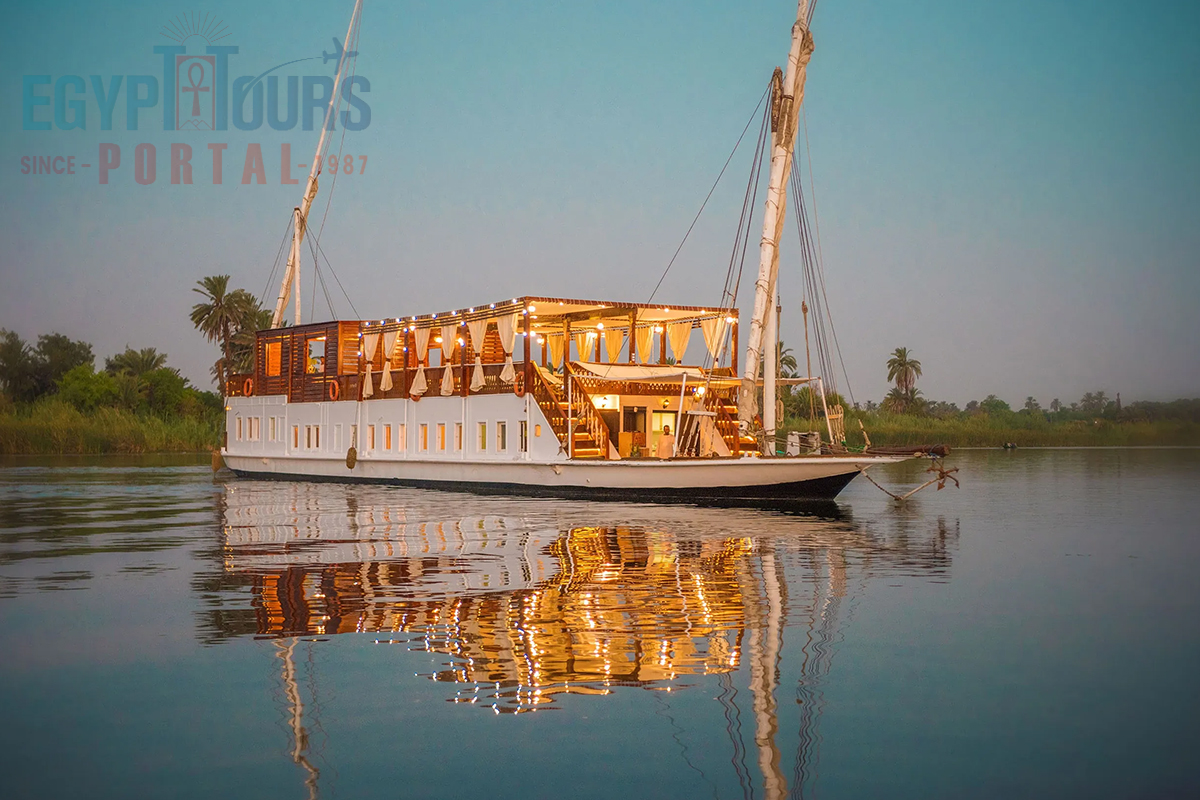
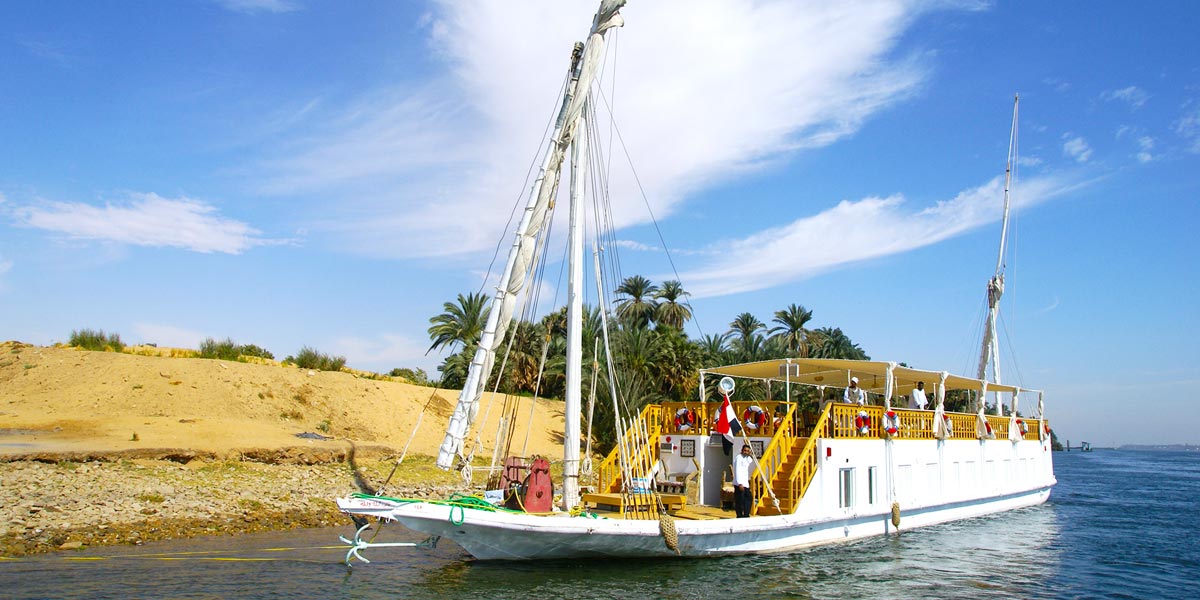
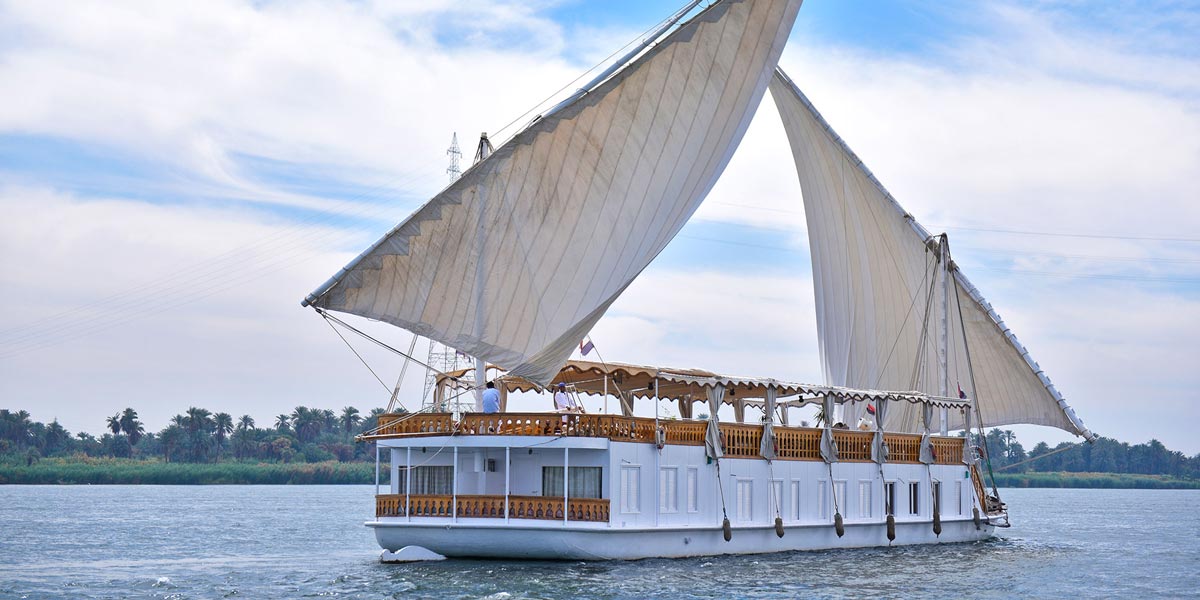
- A dahabiya is a two-masted sailing boat carrying a maximum of around 16 passengers, a small fraction of a standard cruise ship's capacity, which lets it moor at riverbank sites larger ships cannot reach.
- The route runs the same core stretch as a standard Nile cruise, Luxor, Esna, Edfu, Kom Ombo, and Aswan, but at a slower, more flexible, wind-driven pace.
- Esna's Temple of Khnum, recently restored to reveal a complete zodiac ceiling, and Edfu's Temple of Horus, Egypt's best-preserved Ptolemaic temple, anchor the river's middle stretch.
- Kom Ombo's Temple of Sobek and Haroeris is uniquely symmetrical, split between the crocodile god and the falcon god Horus the Elder, with a nearby museum of mummified crocodiles.
- Aswan closes the route with Philae Temple, the Aswan High Dam, Elephantine Island, the Unfinished Obelisk, and Nubian villages, a markedly different landscape from the Luxor stretch where the journey began.
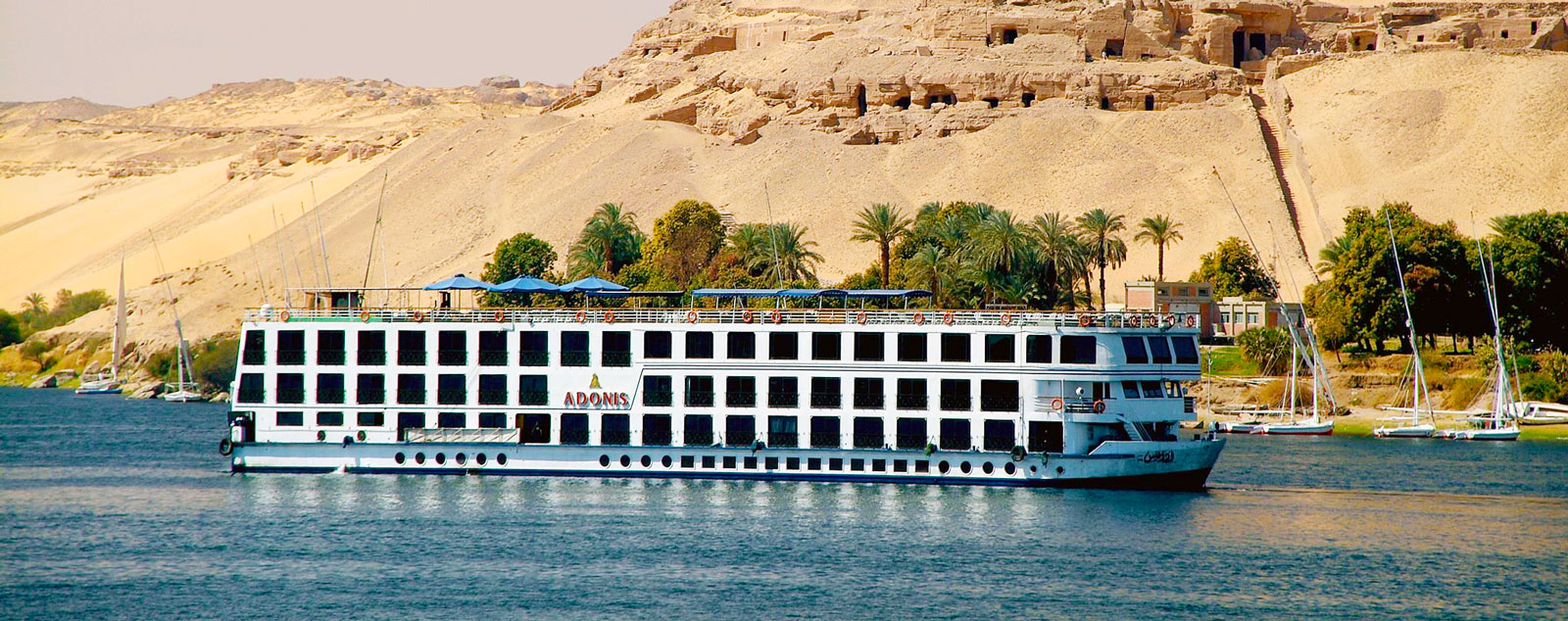
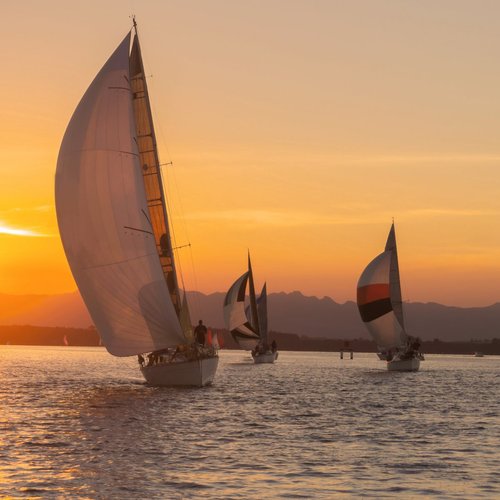
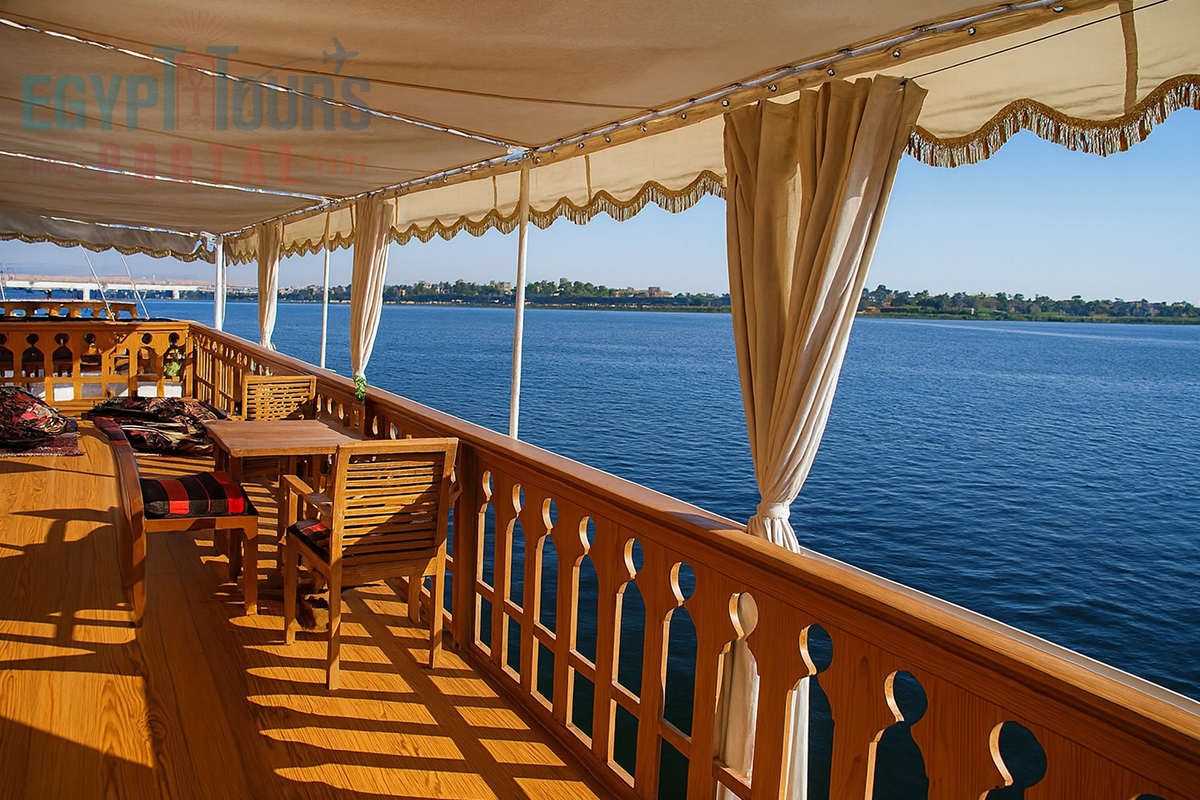
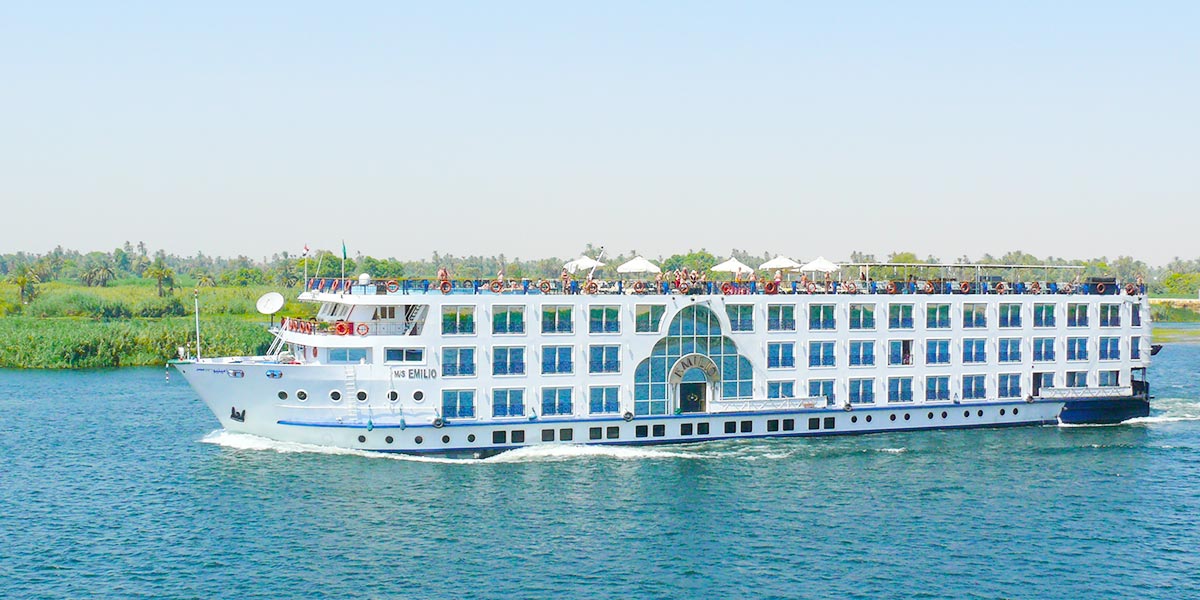
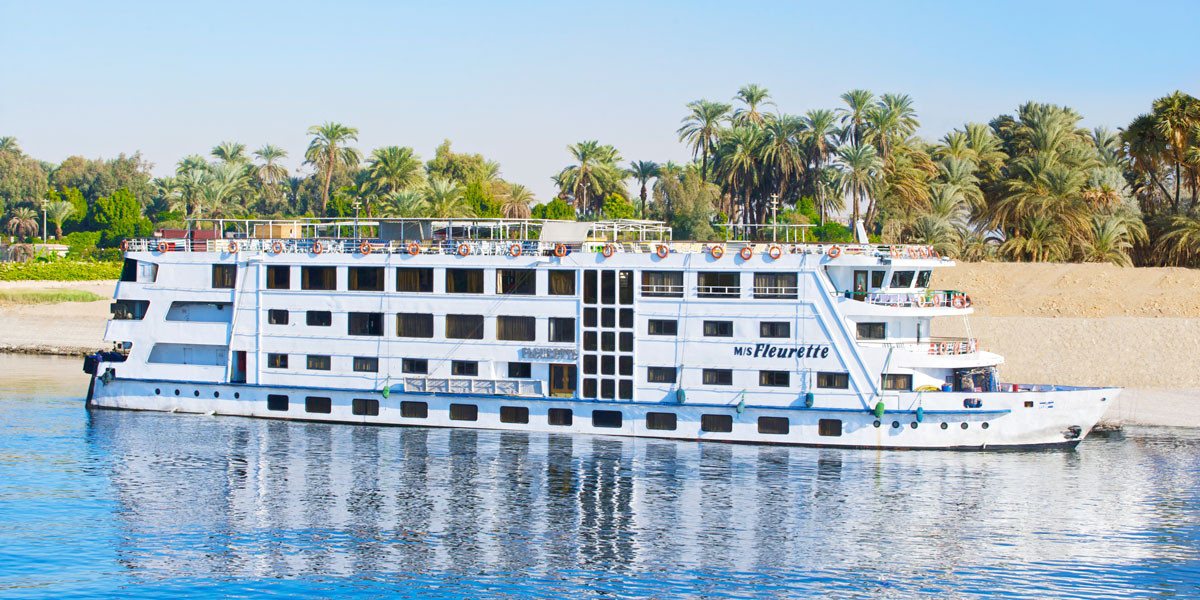
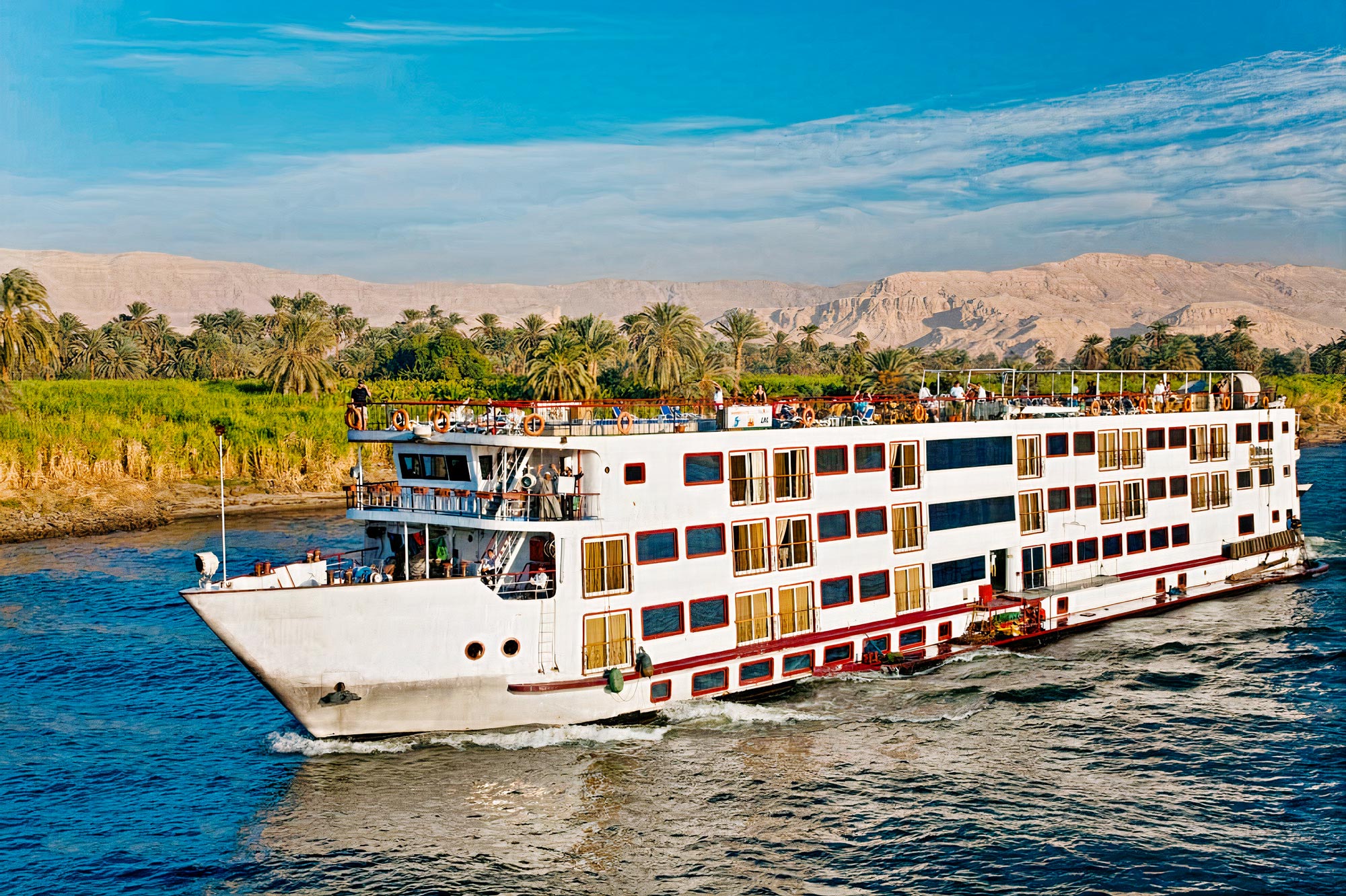
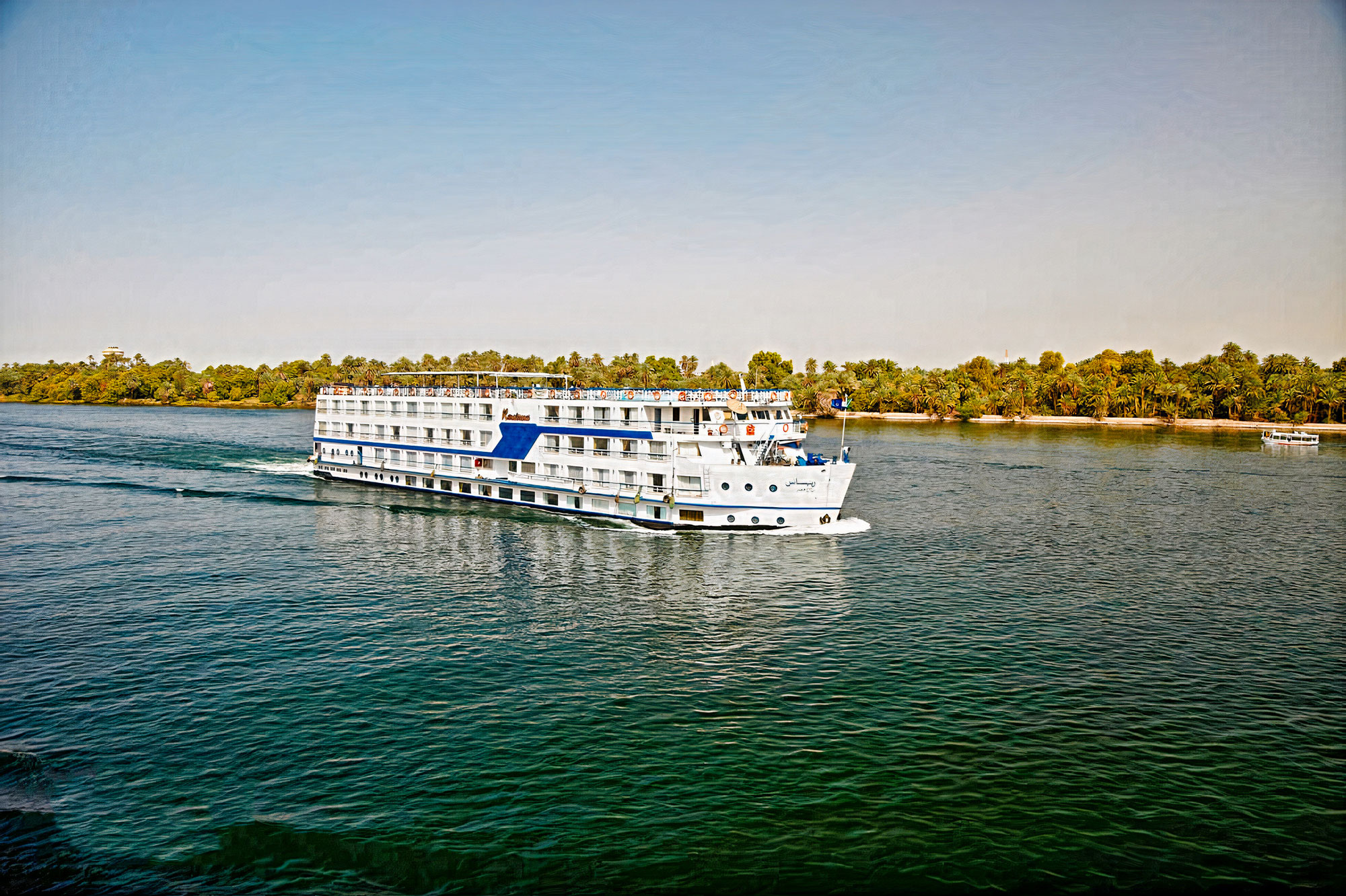
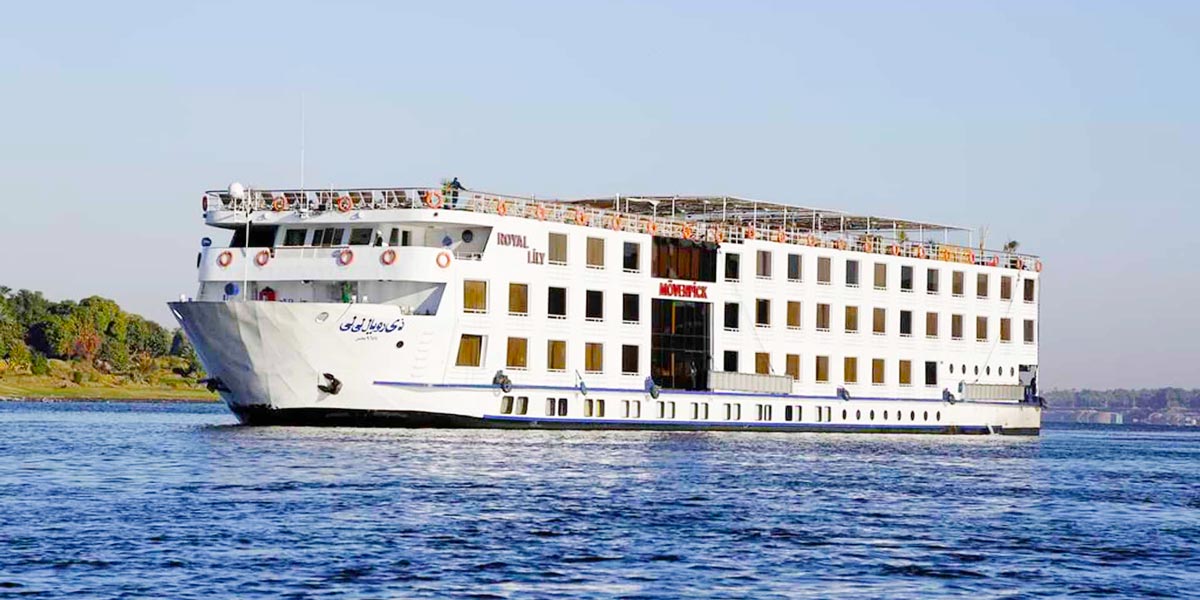
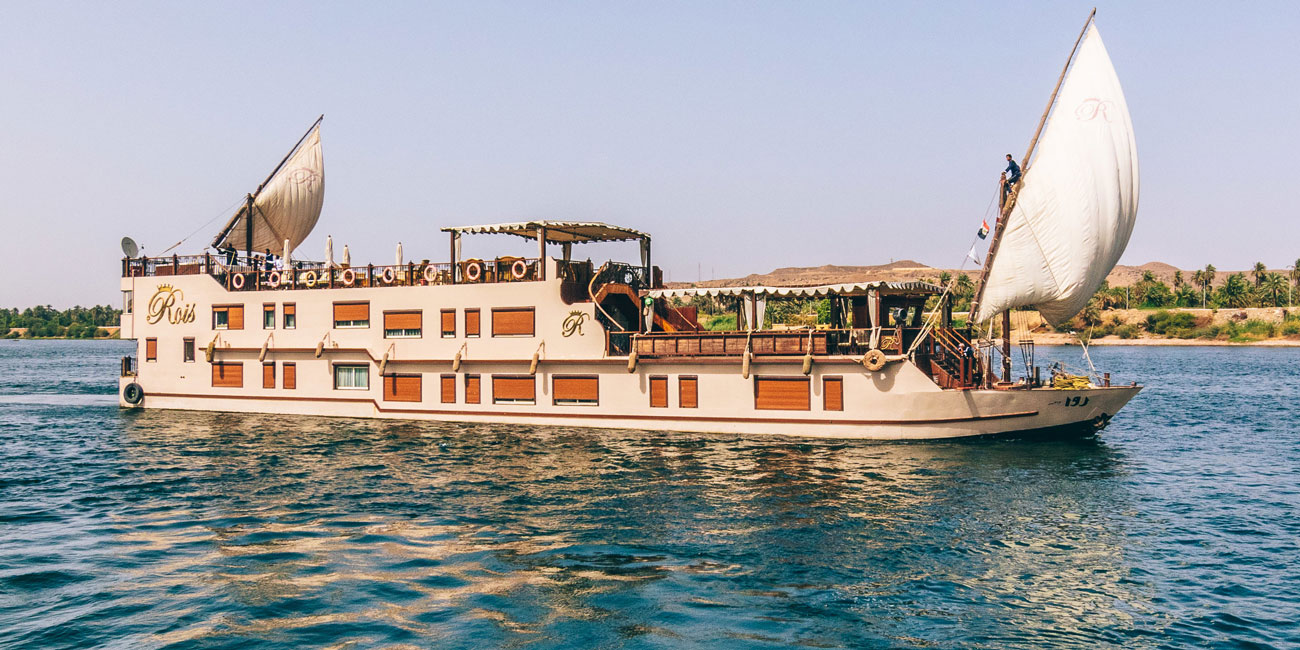
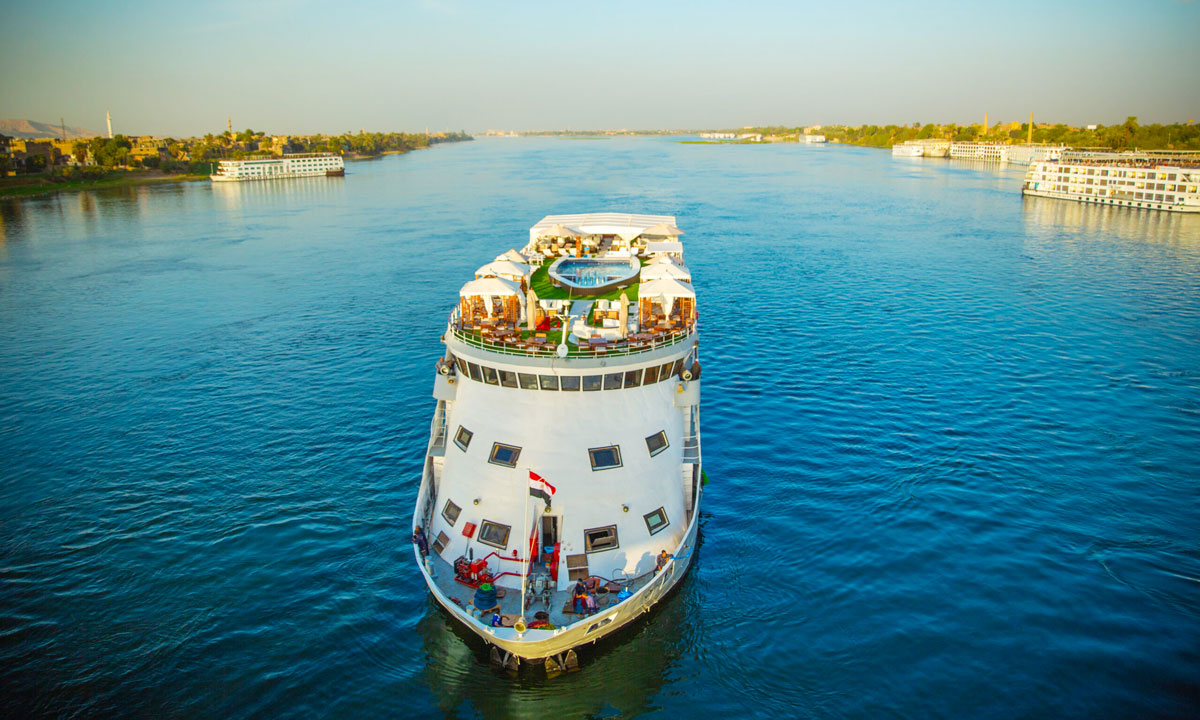
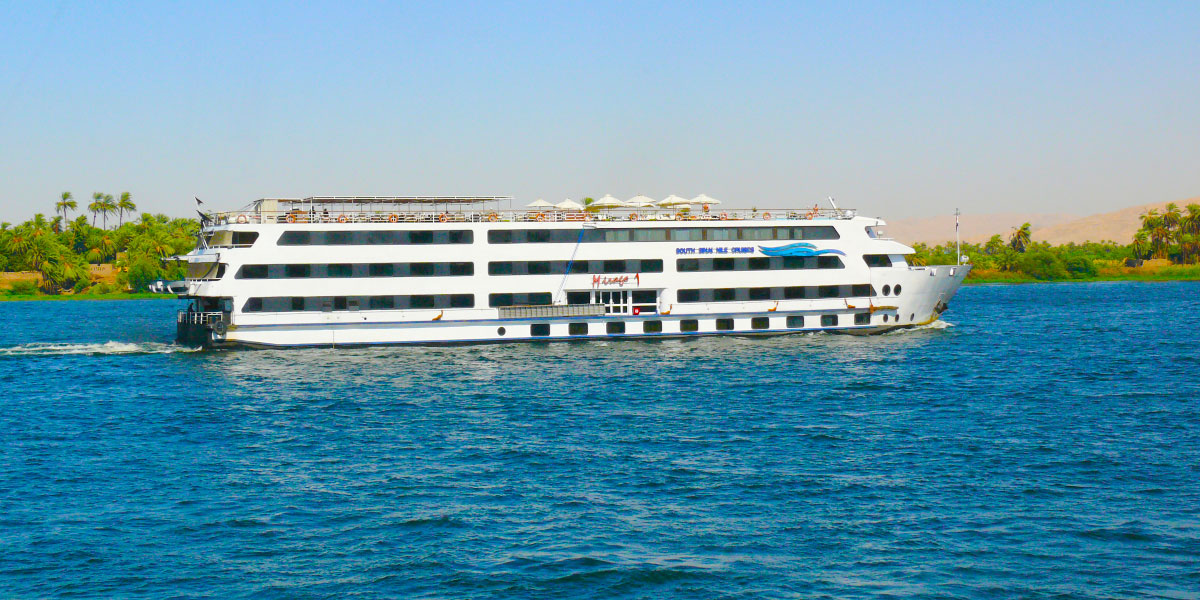
Dahabiya Nile River Cruises are the definition of an inclusive experience that brings the best of Egypt and what it hides from the eyes along the magical route that connects the ethereal cities of Luxor & Aswan. Where a standard Nile cruise ship moves on a fixed schedule with a petrol engine and a few hundred fellow passengers, a dahabiya moves largely under sail, or under tow when the wind fails, with a maximum of around sixteen guests aboard.
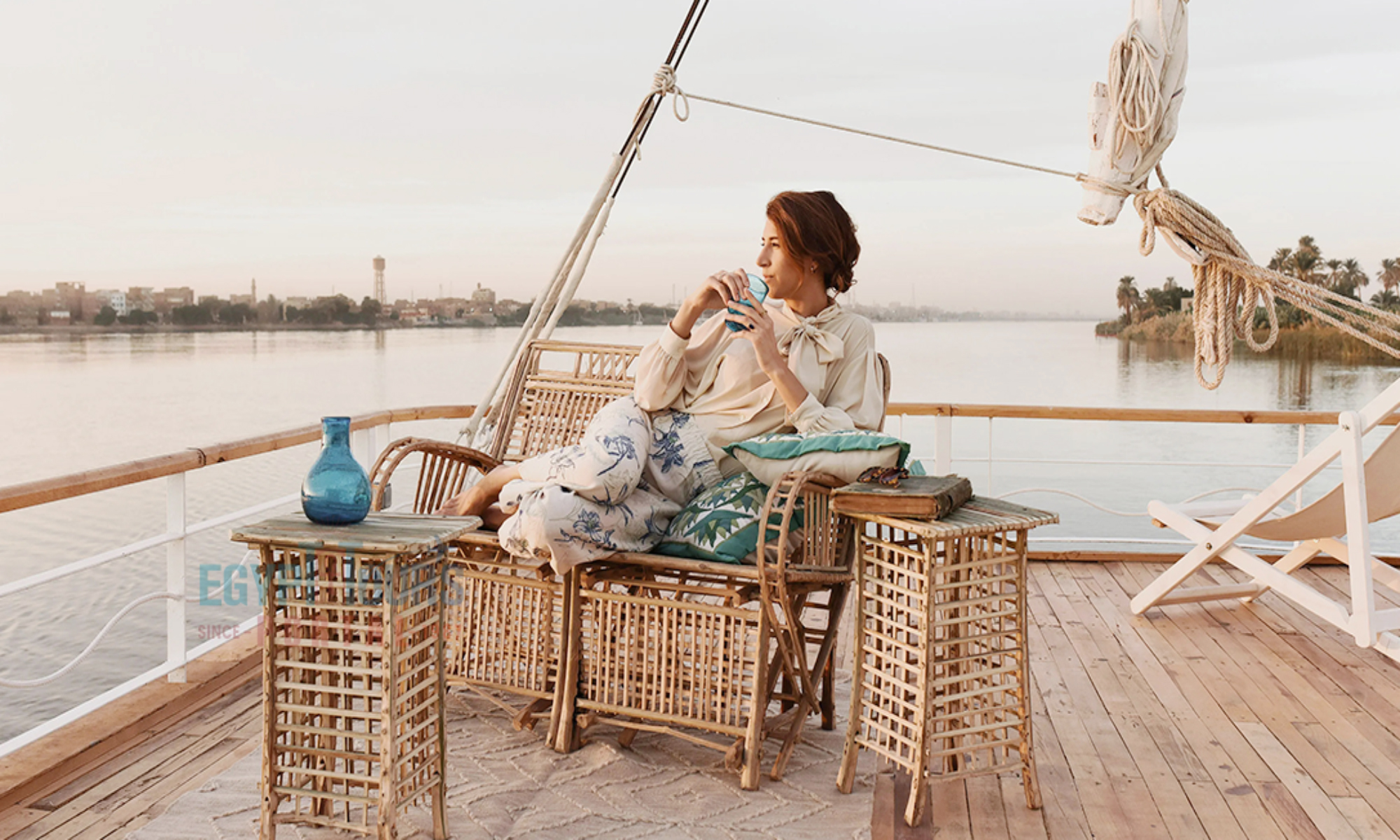
The name comes from the Arabic word dahab, meaning gold, a nod to the gilded vessels Egypt's elite once used to travel the river in genuine comfort. Modern dahabiyas keep that scale deliberately small, typically four large cabins plus one or two suites, each with a private bathroom, air conditioning, and a furnished sitting area.
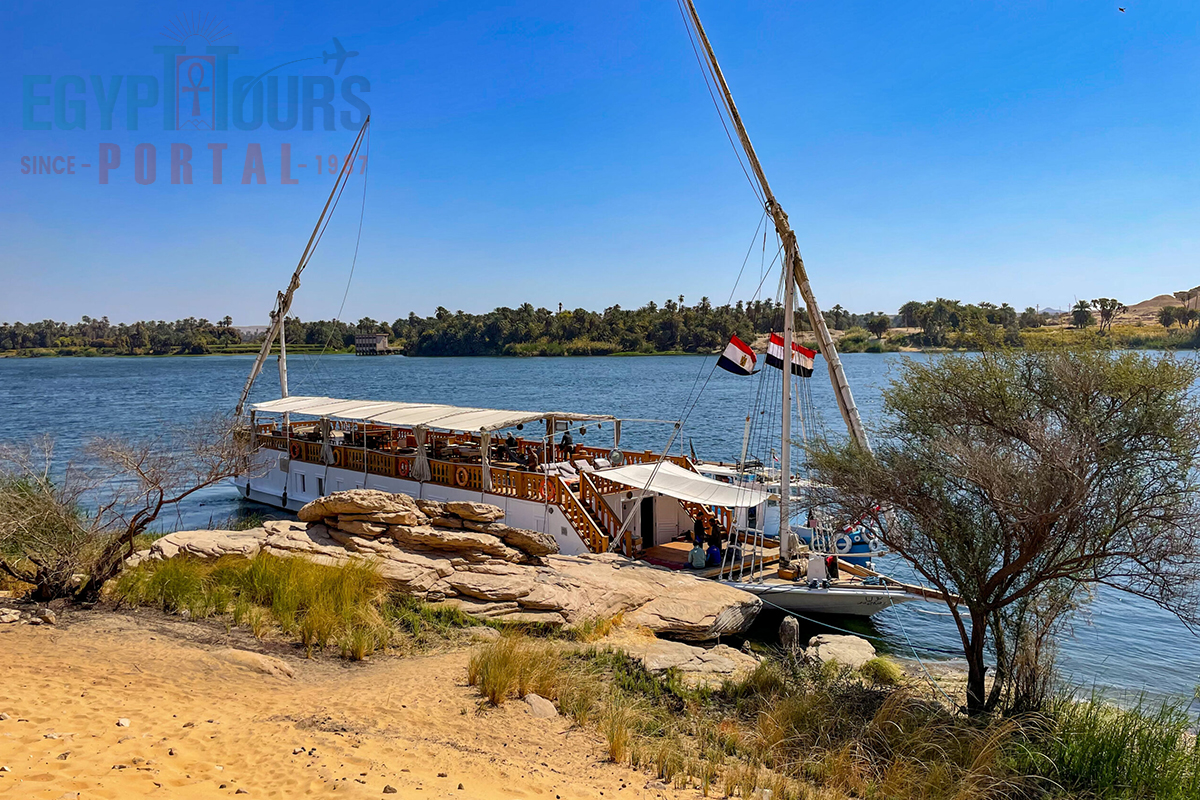
That smaller size changes where the boat can go. Standard itineraries between Luxor and Aswan run three to four nights, up to ten or more, and while the headline stops, Karnak, the Valley of the Kings, Edfu, Kom Ombo, and Philae, remain the same, a dahabiya can moor at sites along the way that larger ships simply pass by, mooring at an east-bank sandbar or a quiet stretch of riverbank rather than a fixed, crowded dock. This guide follows that route south, stop by stop, from Luxor through Esna, Edfu, and Kom Ombo, to Aswan.
Exploring Luxor From a Grand Dahabiya Nile Cruise
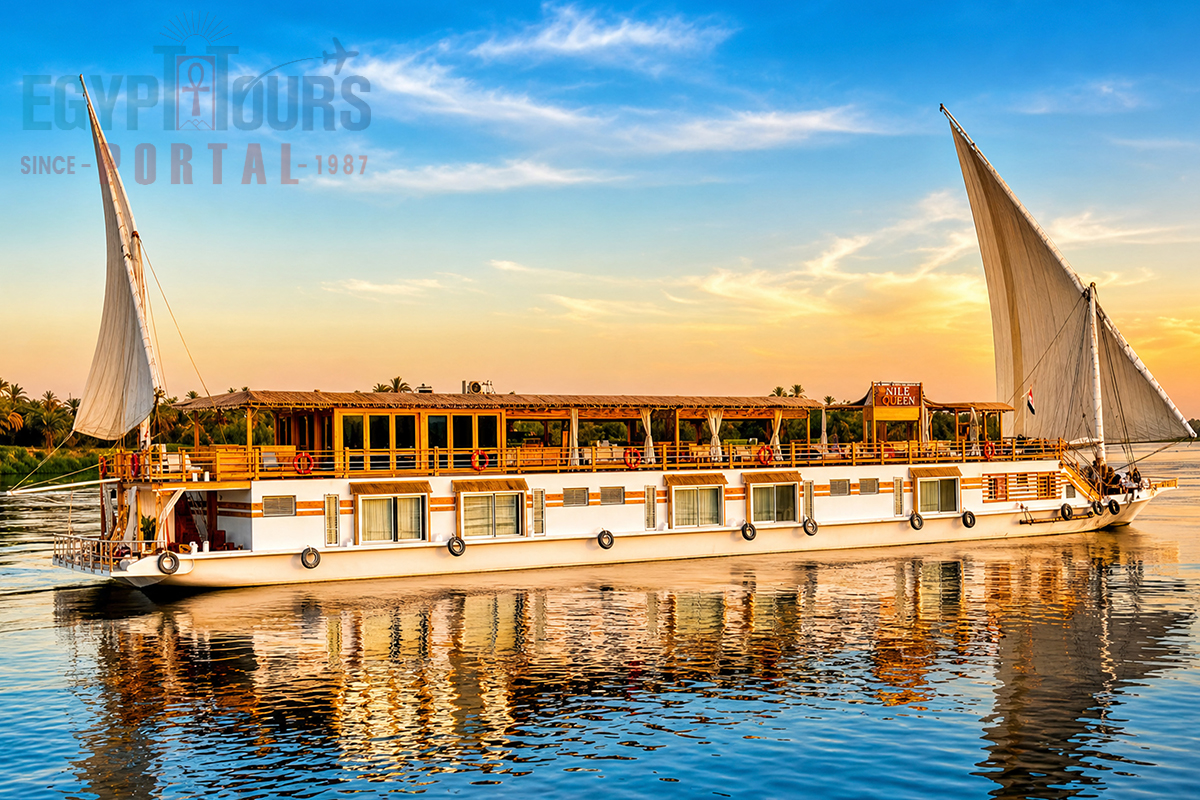
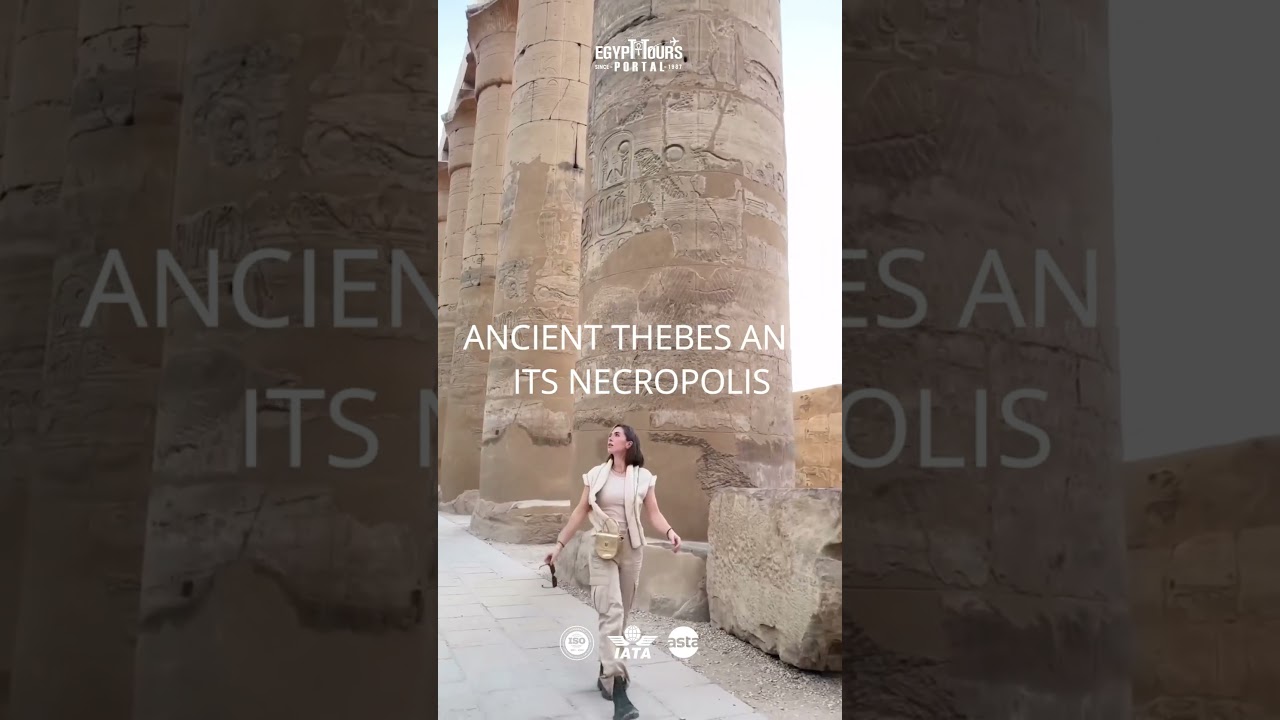
Every dahabiya itinerary begins or ends in Luxor, ancient Thebes, and the city alone could fill a cruise on its own. On the East Bank, Karnak Temple, the largest religious complex ever built, anchors the standard route, its Great Hypostyle Hall holding 134 columns, some rising 21 meters, across little more than a single chamber.
A short drive away, Luxor Temple sits directly on the riverbank and is especially striking lit after dark, its colonnades and colossal seated statues of Ramses II visible from a dahabiya's own deck as it moors nearby.
The West Bank holds the necropolis proper: the Valley of the Kings, resting place of more than 60 royal tombs including Tutankhamun's; the Valley of the Queens, where Nefertari's tomb carries some of the best-preserved painted reliefs anywhere in Egypt; and Hatshepsut's mortuary temple at Deir el-Bahri, its three terraced colonnades cut directly into the cliffs.
The Colossi of Memnon, two 18-meter quartzite statues of Amenhotep III, stand alone in a field just off the main road, easily visited on the way to or from the valley tombs.
A dahabiya's slower pace and smaller size also make room for stops a standard itinerary rarely has time for: the Luxor Museum, with its royal mummies and Akhenaten-era statuary, and sites like Medinet Habu and the Ramesseum on the West Bank, both well suited to an unhurried half-day rather than a rushed stop between two bus departures. A sunrise hot air balloon ride over the valley is worth arranging before the boat casts off south, offering a view of the entire West Bank layout at once.
Discovering Esna From a Magical Dahabiya Nile Cruise
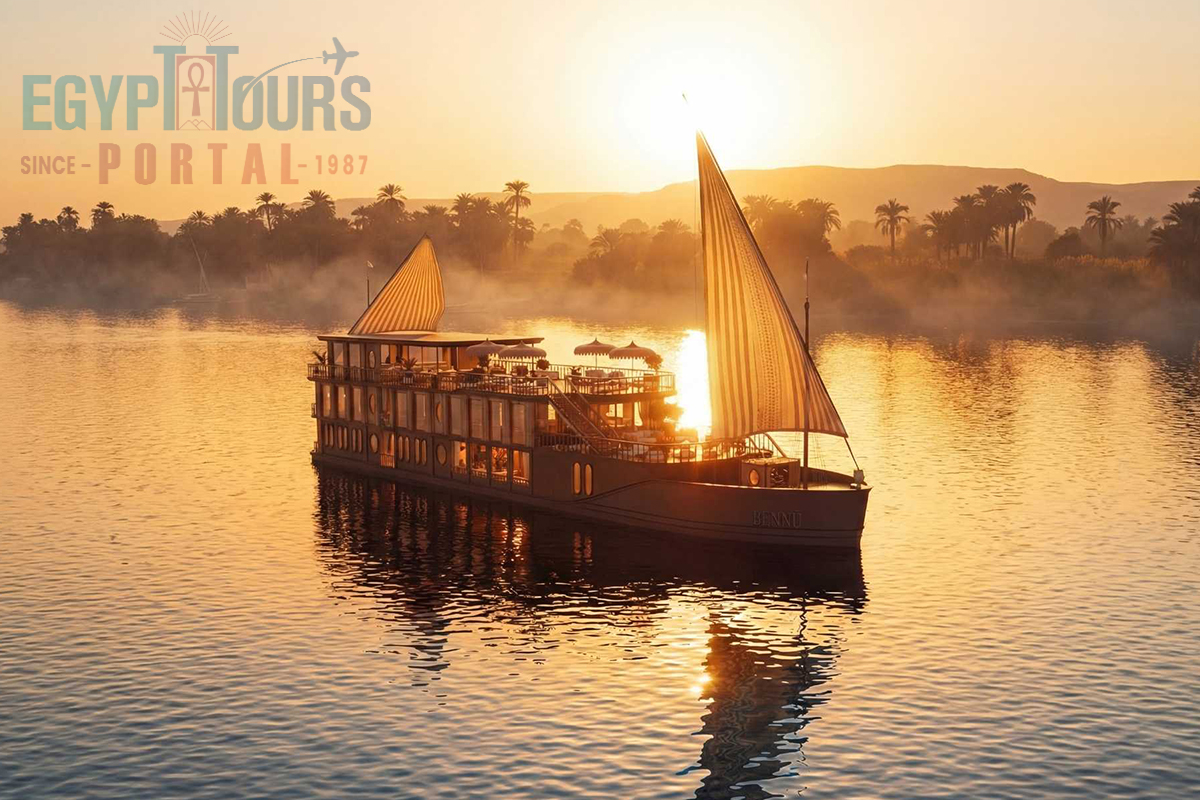
South of Luxor, the river narrows past Esna, roughly 55 kilometers downstream, home to the Temple of Khnum, the ram-headed god ancient Egyptians associated with the Nile's source and with the potter's wheel that shaped life itself.
Buried under centuries of sediment and debris until the 19th century, the temple's hypostyle hall, 24 columns rising about 12 meters and crowned with lotus and palm capitals, has undergone extensive recent restoration, uncovering a ceiling painted with the complete zodiac, all twelve signs from Aries to Pisces in their traditional order, alongside depictions of Jupiter, Saturn, and Mars.
Esna is also where the Nile passes through a lock, since the completion of the Esna Barrage regulates water levels for cruise traffic heading further south. For a dahabiya, the wait at the lock is less an inconvenience than part of the river's working rhythm, a chance to watch river traffic up close while the temple's freshly cleaned reliefs wait just beyond the riverbank. Few standard itineraries linger here long; a dahabiya's schedule usually allows the kind of unhurried visit the zodiac ceiling deserves.
Witnessing Edfu From a Marvelous Dahabiya Nile Cruise
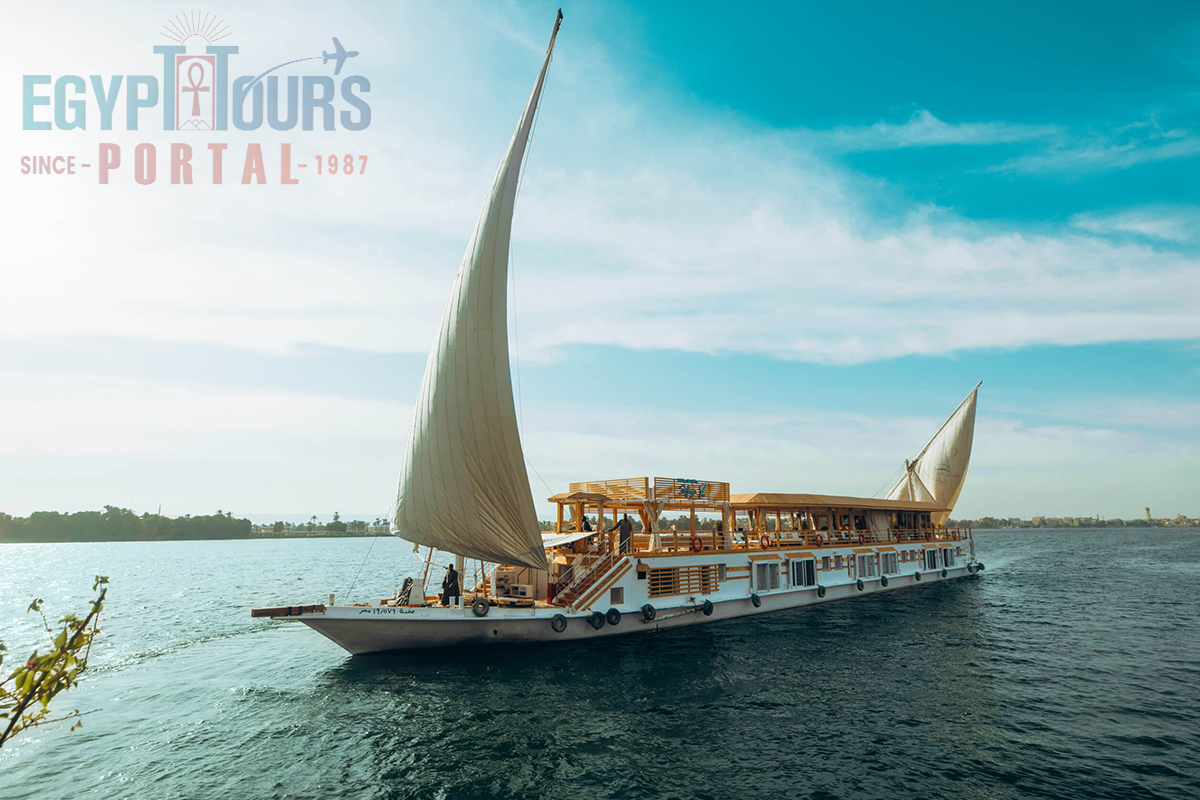
Continuing south, Edfu sits roughly 60 kilometers north of Aswan and about 110 kilometers south of Luxor, home to the Temple of Horus, widely regarded as the best-preserved Ptolemaic temple anywhere in Egypt.
Built over nearly 180 years, from 237 to 57 BCE, under a succession of Ptolemaic rulers, the temple stretches more than 140 meters and covers roughly 7,000 square meters, its first pylon rising 36 to 37 meters, among the tallest surviving in the country.
Buried under sand and silt for centuries, Edfu Temple was uncovered by the French Egyptologist Auguste Mariette in the 1860s, which is a large part of why its reliefs, forecourt of 32 columns, twin hypostyle halls, and 13 surrounding chapels survive in such sharp detail today.
The temple once hosted the annual Festival of the Living Falcon, in which a sacred falcon was ceremonially crowned to symbolize renewed kingship, a ritual echoed in the granite falcon statues still flanking the temple's entrance. A dahabiya typically moors within easy walking or horse-drawn carriage distance of the site, a traditional approach that standard cruise buses bypass entirely.
Uncover Kom Ombo Temple From an Epic Dahabiya Nile Cruise
Further south, Kom Ombo holds a temple unlike any other on the river: a double sanctuary built in near-perfect symmetry, one half dedicated to Sobek, the crocodile god, and the other to Haroeris, "Horus the Elder," each with matching courts, halls, and chambers running along a shared central axis. Construction began under Ptolemy VI Philometor between 180 and 145 BCE, with additions continuing under later rulers through 47 BCE.
Just beside the temple, the Crocodile Museum displays a handful of the roughly 300 mummified crocodiles discovered in the surrounding area, a vivid reminder of how seriously the cult of Sobek was once observed here.
Recent restoration work has turned up further finds, including a bust of the Roman emperor Marcus Aurelius and a Ptolemaic-era sandstone sphinx, a sign that Kom Ombo's archaeology is still actively unfolding. The temple sits directly on the riverbank, making it one of the easiest stops on the entire route for a dahabiya to reach on foot straight from its own mooring.
Enjoy Aswan From a Golden Dahabiya Nile Cruise
The route's southern terminus, Aswan, is where the Nile Valley's character shifts most visibly, granite outcrops replacing the flat floodplain, and Nubian culture coloring everything from music to architecture. Philae Temple, dedicated to Isis and relocated to Agilkia Island during the 1960s and 1970s UNESCO rescue campaign ahead of the Aswan High Dam's completion, is best reached by a short boat crossing, a journey that mirrors a dahabiya's own unhurried approach to the river.
The Aswan High Dam itself, completed in 1970, created Lake Nasser and fundamentally reshaped the Nile's annual flood cycle.
Elephantine Island, sitting in the middle of the river directly opposite the city, holds the ruins of ancient Abu and a working Nubian village, while the Unfinished Obelisk, abandoned in its granite quarry bed after cracking roughly 3,500 years ago, reveals more about ancient Egyptian quarrying technique than any finished monument could.
The Nubian Museum rounds out the picture with artifacts rescued from villages flooded by the dam, and a felucca ride around Kitchener's Island's botanical gardens is, fittingly, the one standard excursion that puts every passenger back on a traditional sailboat exactly like the one that brought them south. A stop at a Nubian village for tea and conversation closes out most itineraries, a quieter counterpart to Luxor's grand temples at the river's other end.
Why Booking a Dahabiya Makes These Attractions Easier to Explore
Visiting Luxor, Esna, Edfu, Kom Ombo, and Aswan independently means arranging a car and driver for each stop, coordinating entry tickets and guides separately at every temple, and finding overnight accommodation in at least two or three different cities along the way.
Booking a dahabiya Nile cruise or standard ship alike, collapses all of that into a single reservation: the boat itself becomes the hotel, the transport, and the fixed base from which every site on this list is reached, usually by a short walk or a quick transfer straight from the gangplank.
That matters most at the sites themselves. A cruise's included guide already knows which hour avoids the heaviest crowds at Karnak or Edfu Temple, already holds the entry tickets, and already knows the route between the dock and the temple gate well enough to make a 45-minute stop feel unhurried rather than rushed.
Packing and unpacking happens exactly once, at the start and end of the trip, rather than at a new hotel every one or two nights, and the boat covers the overnight distance between cities while passengers sleep, so a morning in Edfu and an afternoon in Kom Ombo on the same day is entirely normal rather than a logistical stretch.
The practical details of actually arranging this sit in the guide to how to book a Nile cruise, while the essential trip information guide covers what to confirm before departure. Travelers weighing a dahabiya specifically against a larger standard ship, in terms of comfort, cost, and exactly which of these sites each one can reach, will find that comparison laid out in the luxury Nile cruises collection and the wider Nile River Cruises lineup.
All You Need To Know About Dahabiya Nile Cruise
Explore all about Dahabiya Nile Cruises, including their unique features, booking, pricing, onboard experiences, and attractions!
Book a Grand Dahabiya Nile Cruise to the Magical Gems of Upper Egypt
A dahabiya cruise covers the same five essential stops as any standard Nile sailing, yet the smaller boat, the wind-driven pace, and the quieter moorings in between change how each one is experienced, less a checklist of monuments than an unhurried passage down the river that built them all.
Travelers ready to plan one can start with our complete Nile River Cruises lineup for comparison against standard ships, and review how to book a Nile cruise for the exact steps to reserve a cabin on the river's most traditional way to travel.





![The Best Time for a Nile Cruise Tour [year]/[year plus=1]](https://www.egypttoursportal.com/images/2021/06/The-Best-Time-for-a-Nile-Cruise-Tour-Acmar-Nile-Cruise-Egypt-Tours-Portal.jpg)