Whatsapp Me
We’re nominated for Egypt’s Leading Travel Agency 2026 – Your vote matters! Vote Now
Egypt Tours Portal
Egypt Civilization

Ancient Egyptian Clothing and Fashion: Style, Status, and Sacred Symbolism

Dive into the fascinating history of ancient Egyptian clothing, from the luxurious linen of royalty to the practical garments worn by commoners. Explore their advanced textile techniques, the cultural and symbolic significance of attire, and the evolution of fashion shaped by foreign influences.

ETP TEAM
Written by ETP TEAM
Published Dec 08, 2024 Updated Jan 14, 2025 15 min read

Ancient Egyptian Clothing and Fashion: Style, Status, and Sacred Symbolism

Summary

  • Ancient Egyptian clothing, crafted primarily from linen, was shaped by the region's hot climate and cultural values.
  • Linen production was a cornerstone of the economy, with garments symbolizing purity and status.
  • The pharaohs and elite wore intricate, pleated garments adorned with gold and gemstones, while commoners relied on simpler, practical attire.
  • Accessories such as jewelry, wigs, and cosmetics highlighted social distinctions and had protective or spiritual significance.
  • Clothing also played a vital role in religious and funerary contexts, with priests donning pure white linen and the deceased wrapped in richly adorned mummy wrappings.
  • Egyptian fashion evolved, integrating influences from Nubia, the Levant, and Greece, showcasing the civilization's adaptability and artistic sophistication.

Ancient Egyptian clothing is a living symbol of the ingenuity and resourcefulness of one of the world's oldest civilizations, which also offers a window into their daily lives, beliefs, and social structures. From the fine, translucent linen worn by pharaohs to the practical kilts and dresses of commoners, Egyptian attire was shaped by the region's hot climate, abundant resources, and deep cultural values. Every garment, accessory, and adornment symbolized the wearer’s status, role, and connection to the divine.

Over millennia, the evolution of Egyptian clothing showcased their advanced textile techniques, artistic expression, and adaptability to foreign influences. Whether through the intricate pleating of royal robes, the use of gold and gemstones in jewelry, or the practicality of simple sandals, their clothing was a harmonious blend of function and symbolism. This article explores the materials, styles, and cultural significance of ancient Egyptian clothing, shedding light on how this remarkable civilization wove its identity into every fiber of its attire.

The Innovative Evolution of Ancient Egyptian Fashion
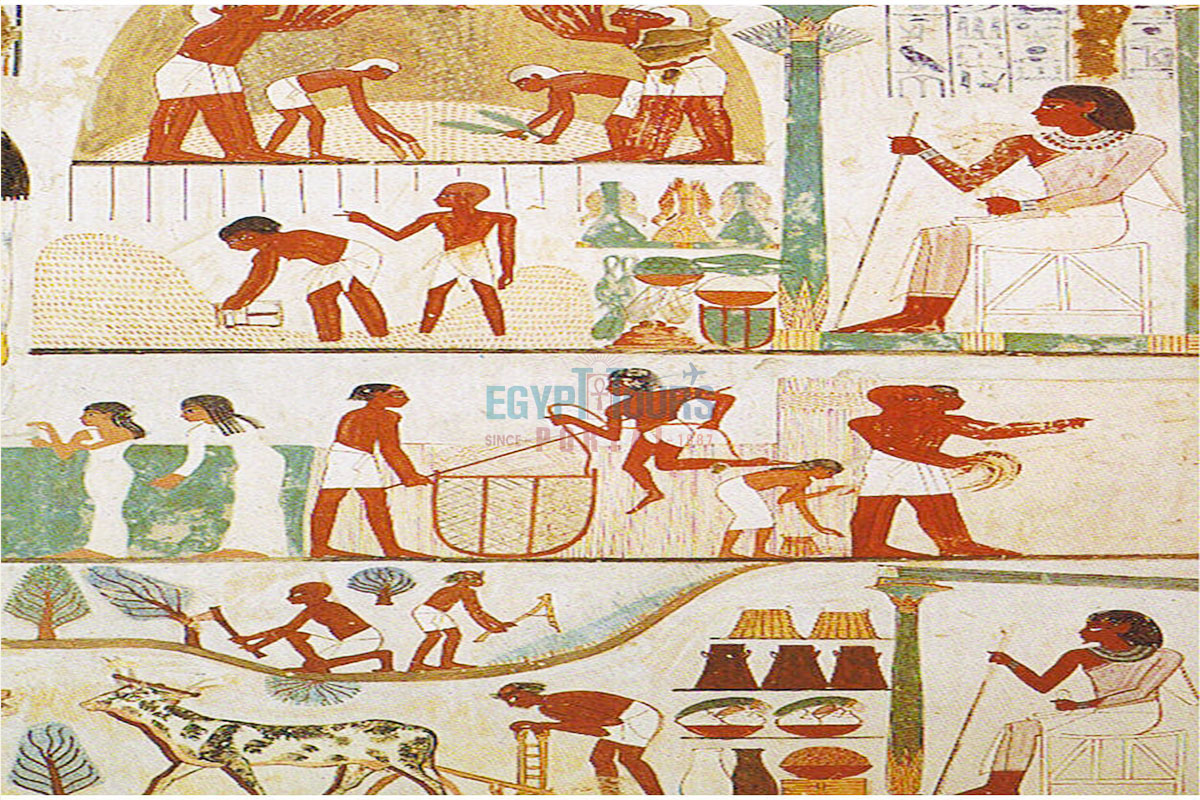
Ancient Egyptian Clothes Evoulation - Egypt Tours Portal
Ancient Egyptian Clothes Evolution - Egypt Tours Portal

Ancient Egyptian fashion evolved over millennia, blending simplicity, functionality, and symbolic adornment to reflect societal norms, environmental needs, and cultural values. Beginning in the Early Dynastic Period (c. 3150 BCE), clothing transitioned from animal hides to linen, prized for its breathability in Egypt’s arid climate. The Old Kingdom (c. 2613–2181 BCE) saw distinctions between classes, with upper-class women donning long dresses and men wearing kilts, while practicality defined lower-class attire.

The Middle Kingdom (c. 2040–1782 BCE) introduced pleated gowns, longer kilts, and elaborate wigs, signaling increased sophistication. In the New Kingdom (c. 1570–1069 BCE), fashion became more vibrant, with intricate embroidery, jewelry, and refined wigs, exemplified by King Tutankhamun's garments. The Late Period and Ptolemaic Dynasty (c. 664–30 BCE) brought Greek and Persian influences, blending external styles with Egyptian traditions. Throughout its history, white linen symbolized purity, gold reflected divinity, and kohl offered both practical and spiritual protection.

Despite external influences and trade introducing new materials, Egyptian fashion retained its essence, harmonizing elegance with functionality and leaving a timeless legacy of artistry and cultural identity.

The Many Incredible Materials and Textile Production in Ancient Egypt
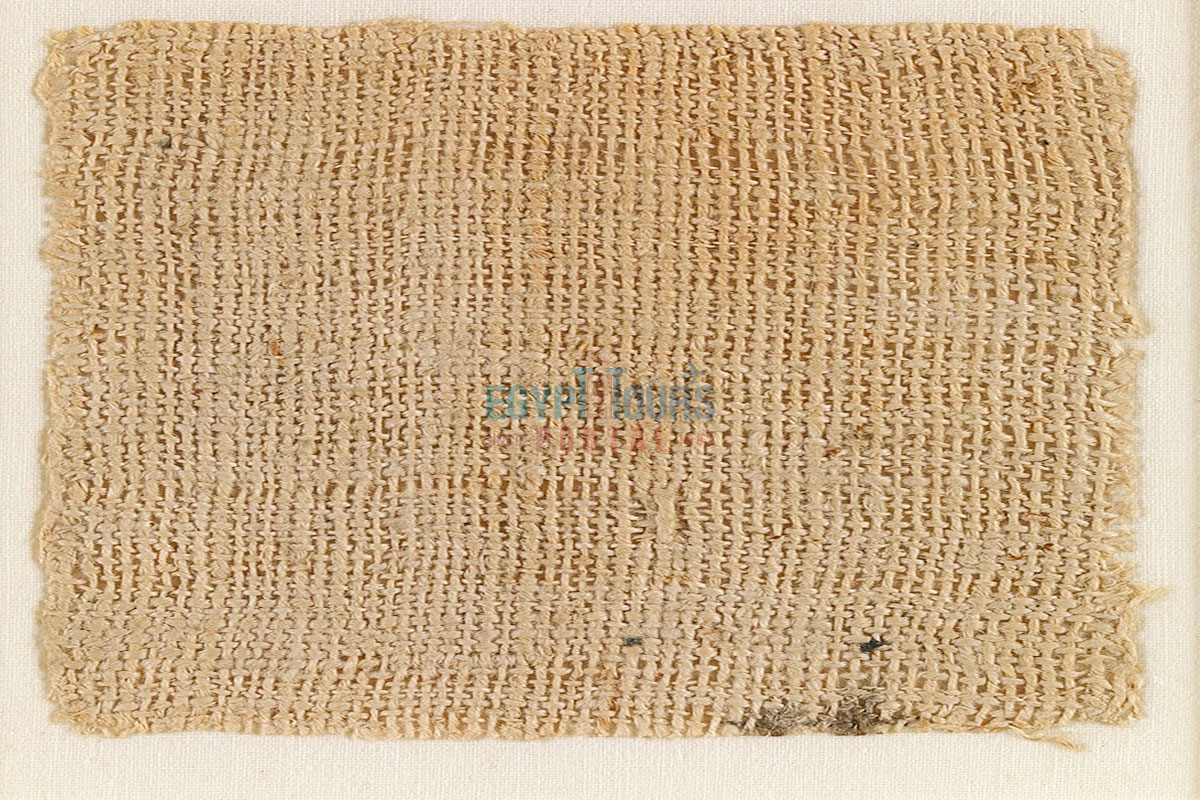
Ancient Egyptian Linen - Egypt Tours Portal

The Prevalence of Linen

Linen, derived from the flax plant, was the cornerstone of ancient Egyptian clothing due to its lightness, durability, and suitability for the region's arid climate. Its production was deeply integrated into the agricultural and economic systems of the Nile River Valley, dating back to circa 5000 BCE. By the Old Kingdom (2686–2181 BCE), linen had become a staple material in everyday clothing, religious practices, and even burial rituals.

Harvesting Flax:

Flax plants were cultivated in the fertile Nile Delta, taking advantage of the annual inundation that enriched the soil. The plants were harvested before flowering to yield the finest fibers. Workers pulled the plants from the roots rather than cutting them to maximize fiber length, essential for creating durable and high-quality linen.

Processing Flax into Linen:

Retting: Stalks were soaked in water for several days to loosen the fibers from the woody stem. This process was carefully timed to avoid weakening the fibers.

Beating and Combing: After retting, the softened stalks were beaten to separate the fibers, which were then combed to produce fine strands.

Spinning: The combed fibers were spun into thread using hand spindles and whorls. This labor-intensive process determined the thread’s thickness and quality, with finer threads reserved for luxury textiles.

Weaving: Threads were woven on horizontal looms, introduced as early as the Predynastic Period (c. 6000–3150 BCE). Skilled weavers, often women, crafted fabrics ranging from coarse, functional cloth to gossamer-thin, translucent linen favored by the elite.

Variety and Quality:

Linen was categorized by its weave, thread count, and thickness. Archaeological finds show textiles ranging from coarse cloth used for everyday wear to fine linen called “royal linen,” used in temple offerings and royal garments. Linen garments were also used as currency and tribute, underscoring their value in both domestic and international trade.

Cultural Significance of Linen:

Linen’s pale color symbolized purity and was often left undyed, especially for religious purposes. Priests and those involved in temple rituals wore pure white linen garments, as wool and other animal-derived fabrics were considered ritually impure. 

Fine linen was a luxury item, signifying wealth and status. Royal tombs, such as that of Tutankhamun, contained dozens of linen garments, highlighting their importance in both life and the afterlife.

The Brilliant Dyeing Techniques and Color Symbolism of the Ancient Egyptian

Ancient Egypt Colors of Clothes -Egypt Tours Portal

Despite the difficulty of dyeing linen due to its smooth fibers, the Egyptians developed innovative methods to add color to their textiles. These dyed fabrics were rare and highly valued, often reserved for ceremonial purposes or the elite.

Pigments and Their Sources:

  • Red: Extracted from madder root, symbolizing energy, vitality, and the protective power of the goddess Sekhmet.
  • Blue: Derived from woad or indigo, representing the heavens and the Nile, often associated with the god Amun.
  • Yellow: Created using saffron or pomegranate rinds, symbolizing the sun and eternity.
  • Green: Made by combining blue and yellow or using malachite, signifying fertility and rebirth.

Dyeing Techniques:

Dyes were mixed with mordants such as alum to fix the colors. Fabric pieces were dipped in boiling dye baths and left to dry in the sun, repeating the process to achieve deeper hues.

Cultural and Religious Uses:

Dyed linen is often featured in ceremonial garments, banners, and temple hangings. Certain colors were imbued with protective or spiritual significance, such as blue, which symbolized the protective power of the goddess Hathor.

Archaeological Evidence:

Fragments of dyed textiles have been found at sites like Deir el-Medina, demonstrating advanced textile technology. Painted depictions in tombs also suggest that fabrics may have been adorned with intricate patterns and embroidered borders, combining color and texture for aesthetic appeal.

 The Meaningful Clothing Styles Across the Ancient Egyptian Social Classes

Ancient Egyptian Clothes Across Time- Egypt Tours Portal

Attire of the Pharaohs and Nobility

Clothing served as a visual declaration of status and divinity for the pharaohs and nobility. Their garments were crafted from the finest linen and embellished with intricate details.

Pharaonic Garments:

The shendyt: A pleated kilt worn by pharaohs, was made from fine, almost transparent linen. Pleating added both texture and an element of luxury.

Animal Skins: Leopard skins, often draped over the shoulders, were symbols of divine authority and used in religious ceremonies to emphasize the ruler’s connection with the gods.

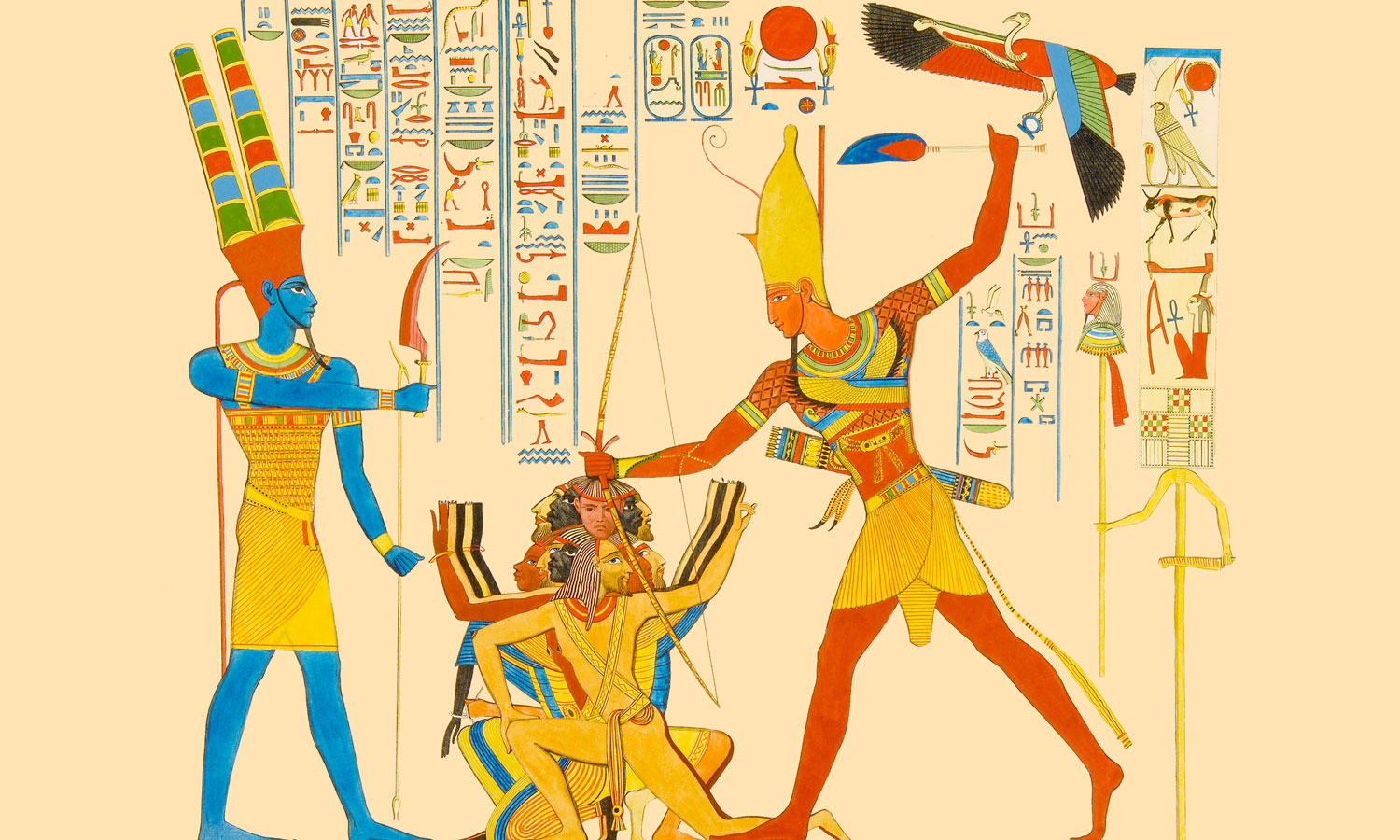
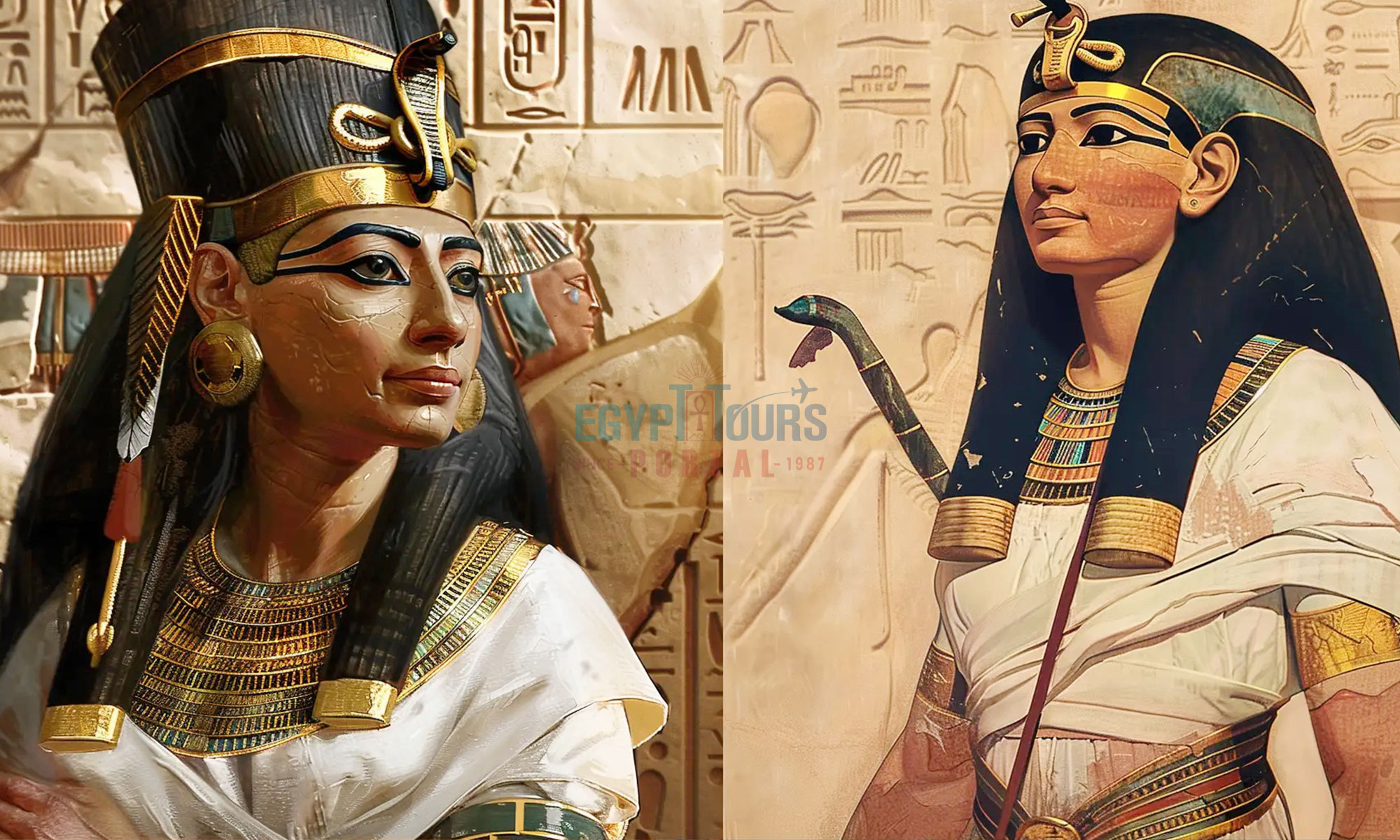
Headdresses: Pharaohs wore the nemes, a striped cloth headdress symbolizing their role as the unifier of Upper and Lower Egypt. The uraeus (cobra symbol) on the nemes denoted protection by the goddess Wadjet.

Nobility and Elite Fashion:

Garments for the nobility featured gold-thread embroidery, elaborate beadwork, and precious stones such as lapis lazuli and turquoise.
Wealthy women often wore flowing, sheer dresses layered with colorful shawls or capes for added elegance.

Ceremonial Clothing:

Festival attire included intricate jewelry, such as the usekh collar, and embellished clothing. These outfits were depicted in tomb paintings, emphasizing their ceremonial importance.

Explore the Beautiful Gender-Specific Garments and Fashion of the Ancient Egyptians

Ancient Ancient Egyptian Clothes Types - Egypt Tours Portal
Ancient Egyptian Clothes Types - Egypt Tours Portal

The majority of Egyptians wore simple, functional clothing suited to their daily lives.

The Clothes of Men:

Men’s clothing evolved subtly over the centuries, maintaining a balance between practicality and social distinction:

Old Kingdom: The shendyt, Short kilts were the standard garment for male workers and farmers, preferred for their ease of movement. Linen garments were often undyed, reflecting practicality and cost-efficiency.

Middle Kingdom: Longer kilts with pleats and sashes signified increased wealth.

New Kingdom: Sheer blouses and intricately pleated kilts became popular among the upper classes, reflecting greater prosperity and external influences.

The Clothes of Women:

The kalasiris, a sleeveless sheath dress, was made from coarser linen and secured with straps. Shawls and Capes were for wealthier women who used these as outer layers for warmth or modesty. Variations in length or adornment distinguished working-class women from the elite. Elite women of ancient Egypt wore brightly decorated linen dresses, while working-class women relied on simple, coarse fabrics.

The Clothes of Children:

Children often went unclothed until around age six, a practical response to the heat and active nature of childhood. Wealthier children sometimes wore simple linen garments or adorned themselves with jewelry.

The Clothes of Laborers:

Tomb paintings depict laborers wearing minimal clothing or working nude in harsh environments like construction sites and quarries. This practice allowed for greater mobility and minimized wear on garments.

Jul 28, 2018

Discover the Incredible and Efficient Daily Life in Ancient Egypt

Explore more fascinating details about the daily routines, beliefs, and traditions of the Egyptians.

The Creative Accessories and Personal Adornments of the Ancient Egyptians

Jewerly In Ancient Egypt - Egypt Tours Portal
Jewelry In Ancient Egypt - Egypt Tours Portal

The Beautiful Jewelry and Amulets of Ancient Egypt

Jewelry was not merely ornamental but deeply symbolic, serving spiritual and protective functions:

  • Gold and Precious Stones: Associated with the divine, these materials were used for pectorals, bracelets, and anklets.
  • Amulets: Common shapes included the scarab (rebirth) and the Eye of Horus (protection).
  • Lower-Class Jewelry: Made from faience or clay, it imitated the wealthier designs and retained symbolic value.

The Meaning Behind the Majestic Wigs and Hairstyles of Ancient Egypt

Wigs in Ancient Egypt - Egypt Tours Portal

Wigs were essential for hygiene, fashion, and ceremony:

Materials and Crafting: Human hair and plant fibers were woven into elaborate styles.

Symbolism: Wigs denoted status and were often paired with perfumed cones for festive occasions.

The Splendid Footwear of the Ancient Egyptians
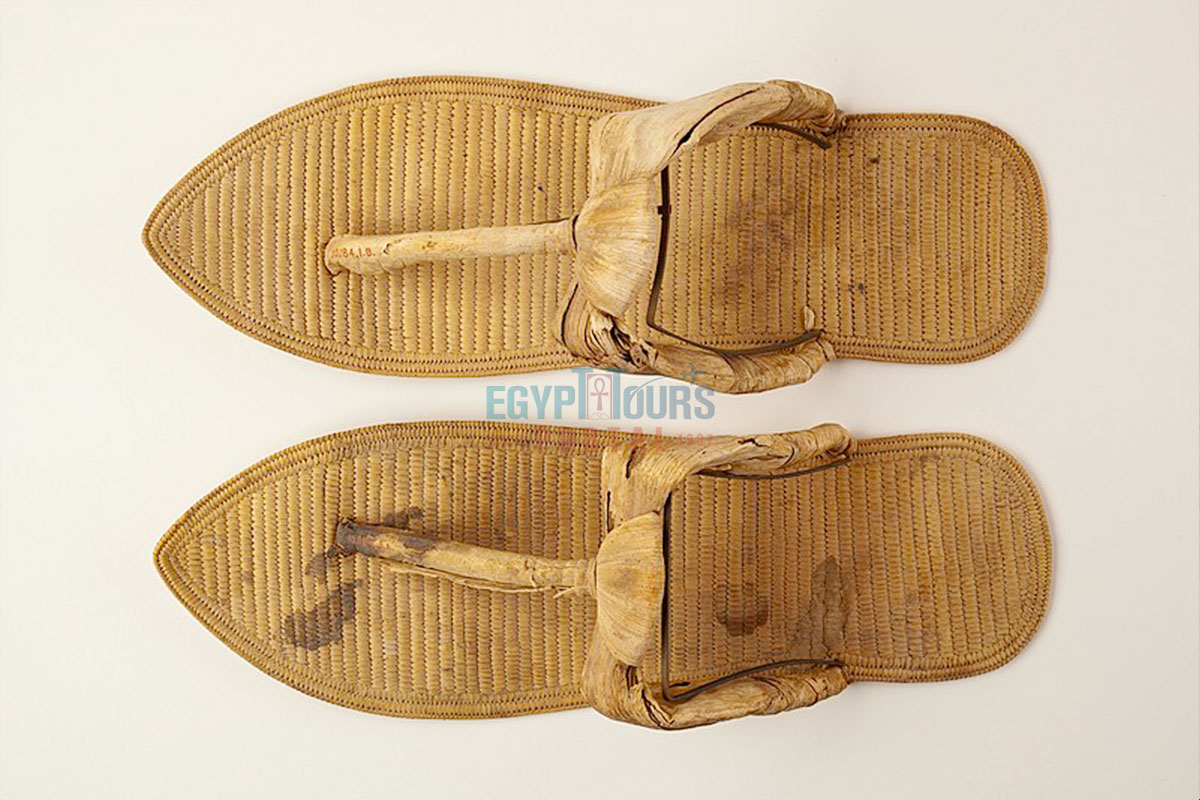
Sandals In Ancient Egypt - Egypt Tours Portal

Sandals and Their Construction in Ancient Egypt

Footwear in ancient Egypt was as much a marker of social status as it was a functional necessity. Sandals were the most common form of footwear and were skillfully crafted from readily available materials. The materials and designs varied according to the wearer’s class and purpose:

Common Materials:

  • Papyrus and Palm Fiber: These lightweight materials were used for everyday sandals, especially by the lower and middle classes.
  • Leather: More durable and often reserved for wealthier individuals, leather sandals were sometimes dyed or embossed with intricate patterns.
  • Gold and Precious Materials: Exclusive to royalty and the elite, sandals made from gold, gilded leather, or inlaid with precious stones were symbols of power and divinity.

Design Features:

Sandals typically consisted of a flat sole with straps or thongs securing them to the foot. Archaeological finds reveal various strap styles, including those crossing the foot or looping between the toes.

Sandals discovered in Tutankhamun’s tomb, dating to the 14th century BCE, demonstrate exceptional craftsmanship. Among the 90 pairs found, some were ceremonial, featuring gold decorations and designs depicting conquered enemies on the soles—symbolizing the pharaoh’s dominance over his foes.

Manufacture and Craftsmanship:

Cobblers, depicted in tomb reliefs and workshop scenes, used tools such as awls, knives, and needles to assemble sandals. Tomb paintings from the Old and New Kingdoms show cobblers at work, emphasizing their importance in society.

Barefoot Practices

For much of the population, going barefoot was both a practical and cultural norm. Sandals, while common, were not essential for daily life and were often reserved for specific situations:

Practicality:

  • The soft sands and warm climate of Egypt made barefoot walking comfortable for most of the year.
  • Sandals were worn primarily in rocky or hazardous terrain, during travel, or for ceremonial purposes.

Cultural Significance of Footwear in Ancient Egypt:

Bare feet symbolized humility and purity in certain religious contexts, such as when entering temples.
Workers and laborers, particularly those involved in construction, farming, or quarrying, often went barefoot to maintain agility and ease.

Social Contexts:

While the elite and priests used sandals adorned with luxurious materials, they often chose to walk barefoot within their homes or on softer grounds.

Barefoot practices highlight the practicality of ancient Egyptian culture, where function often took precedence over decoration for the lower classes.

 The Amazing Cosmetics and Personal Grooming of Ancient Egypt

Makeup of Ancient Egypt - Egypt Tours Portal

Makeup Practices

Cosmetics were integral to Egyptian daily life, blending practicality with cultural significance. Both men and women adorned themselves with makeup, emphasizing the belief in personal presentation and its connection to spiritual well-being.

Kohl:

A black eyeliner made from powdered galena (lead sulfide) or stibnite, kohl was applied around the eyes using sticks or reeds.
Beyond its aesthetic appeal, kohl protected against the harsh sun’s glare, reduced the risk of infections, and symbolized protection from the gods, particularly Horus.

Henna:

Derived from the Lawsonia inermis plant, henna was used to dye nails, hair, and even skin. Its reddish hue symbolized vitality and rejuvenation.

Ochre:

Red ochre, mixed with fat or water, was applied as a rouge to cheeks and lips. Yellow ochre was occasionally used for lighter tones, signifying youth and beauty.

Cosmetic Tools:

Cosmetic jars, palettes, and applicators were crafted from alabaster, faience, or ivory, often intricately carved. Some jars doubled as luxury items, adorned with depictions of gods or animals.

The Gorgeous Perfumes and Oils of the Ancient Egyptian Society
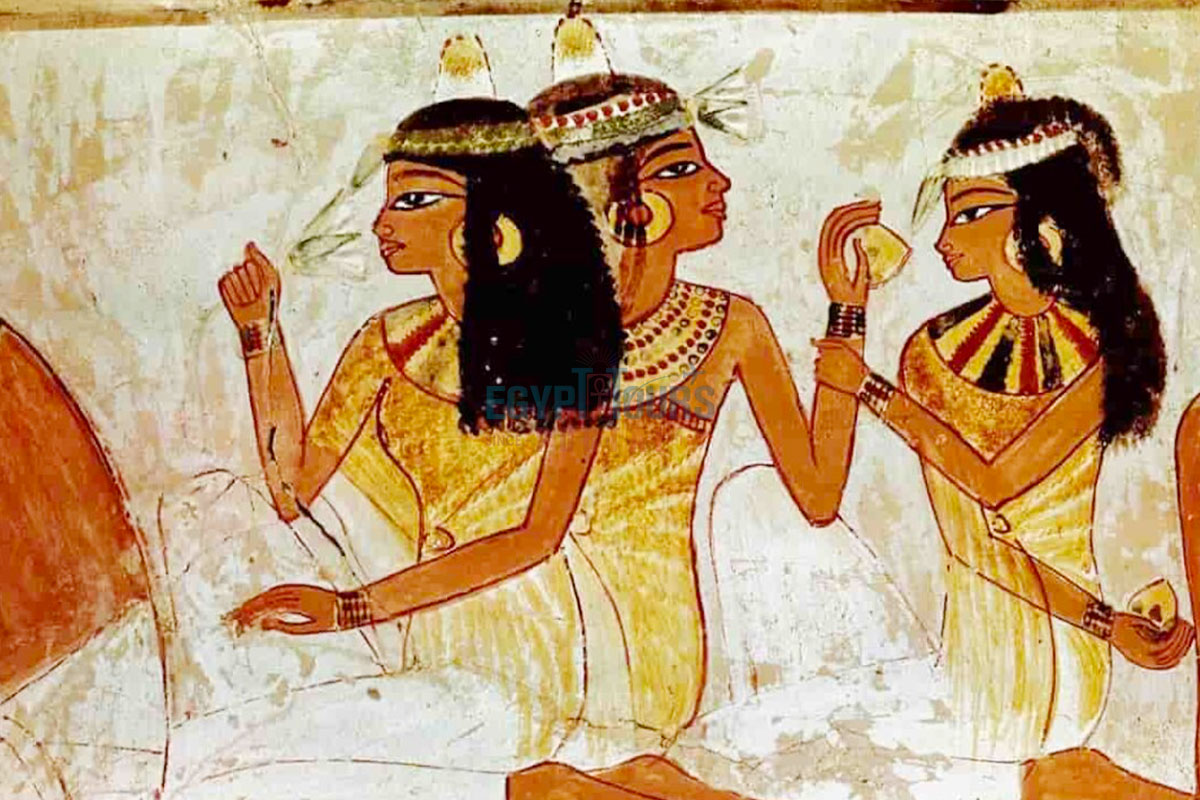
Ancient Egyptian Oils and Perfumes - Egypt Tours Portal

Perfumes and oils played a vital role in both daily life and rituals, reflecting the Egyptians’ emphasis on cleanliness and sensory enhancement.

Kyphi:

A fragrant blend of myrrh, frankincense, honey, and spices, kyphi was used as a perfume, incense, and even medicine. Records from the New Kingdom list detailed recipes for its preparation.

Oils:

Scented oils, infused with herbs or flowers like lotus and jasmine, were used to moisturize the skin and protect it from the arid climate. Wealthier Egyptians imported exotic oils from regions such as Punt (modern-day Somalia or Ethiopia).

Ritual Use:

Perfumed cones, often worn atop wigs, melted to release fragrance during banquets and festivals. The scented oils also had a purifying role in religious ceremonies.

The Majestic Clothing in Ancient Egyptian Religious and Funerary Contexts
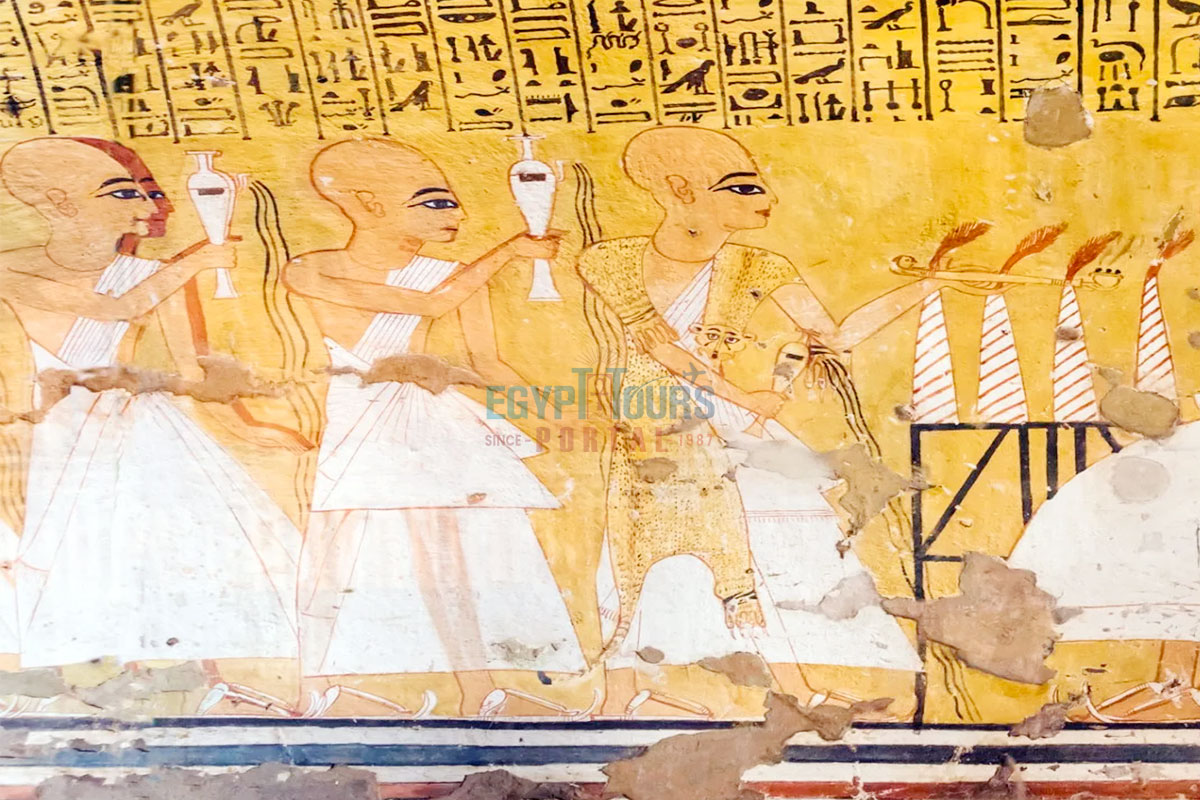
Ancient Egyptian Priests Clothes - Egypt Tours Portal
Ancient Egyptian Priests' Clothes - Egypt Tours Portal

Priestly Garments

Priests adhered to strict dress codes dictated by religious requirements:

White Linen Robes:

Symbolizing purity and light, priests wore white garments free from impurities. Wool and other animal-derived materials were forbidden in sacred spaces.

The robes were often paired with simple sashes or belts.

Shaving Rituals:

Priests shaved their entire bodies, including eyebrows and hair, to maintain ritual cleanliness. This practice underscored the importance of hygiene in religious service.

Leopard Skins:

High-ranking priests of ancient Egypt or those performing significant ceremonies wore leopard pelts, representing the spiritual connection between humans and deities.

Funerary Dress of Ancient Egyptian Priests

The attire of the deceased was carefully chosen to reflect their status and ensure their protection and comfort in the afterlife.

Mummy Wrappings:

Mummies were wrapped in multiple layers of linen, often with intricate bandaging patterns. Royal burials sometimes included over 20 layers of linen, with each layer inscribed with protective spells.

Jewelry and Amulets:

Amulets, such as heart scarabs and ankhs, were placed within the wrappings. These objects were believed to protect the deceased and grant them passage to the afterlife.

Jewelry included gold bracelets, rings, and necklaces, signifying the wealth and status of the individual.

Funerary Masks:

Elaborate ancient Egyptian masks, such as the famed gold mask of Tutankhamun, were crafted to preserve the deceased’s likeness and honor their divine connection.
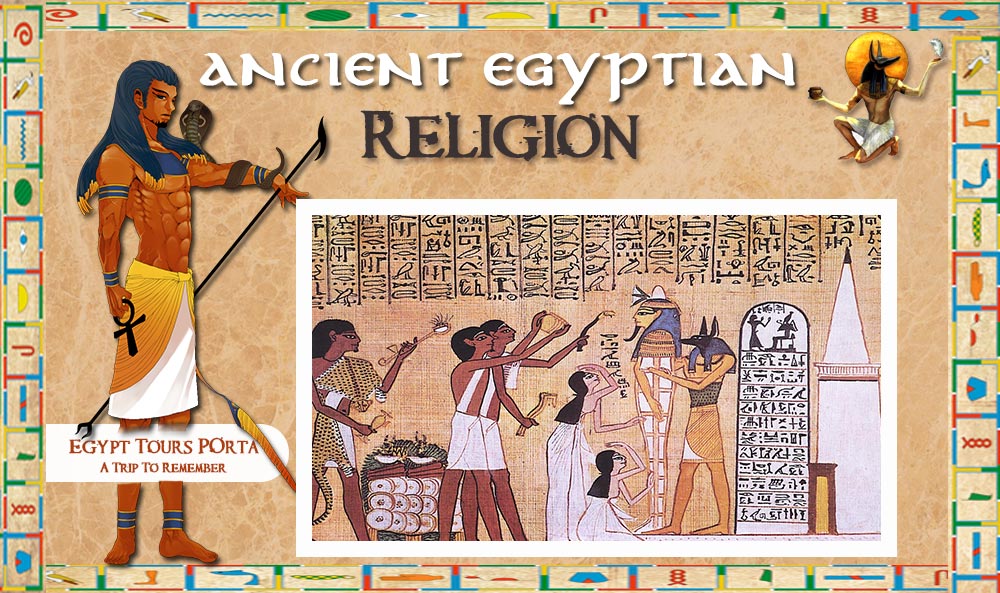
Feb 25, 2019

Ancient Egyptian Religion: Gods, Magic, and Afterlife

Explore glorious details about the beliefs and attire of the religion of the ancient Egyptians.

The Major Influence of Ancient Egyptian Fashion on Foreign Cultures

Ancient Egyptian Clothes Infulence - Egypt Tours Portal
Ancient Egyptian Clothes Influence - Egypt Tours Portal

Egypt’s interaction with neighboring civilizations introduced new elements:

Nubian Influence:

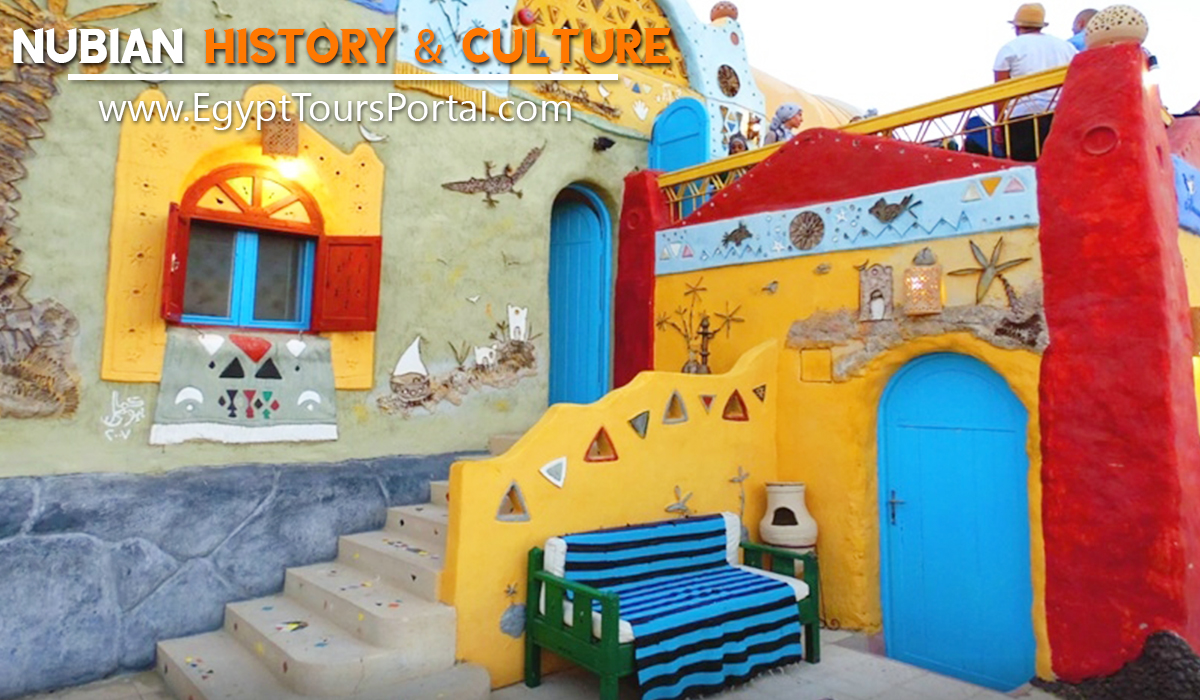
The conquest of Nubia brought vibrant textiles, bold patterns, and additional uses of gold and semi-precious stones.

Hellenistic Influence:

During the Ptolemaic period (305–30 BCE), Greek-style tunics, cloaks, and silk fabrics blended with traditional Egyptian fashion, creating a cosmopolitan style.

Explore the Fashion Sense and Clothing of the Ancient Egyptians

The footwear, cosmetics, and ceremonial attire of ancient Egypt reveal a culture that masterfully combined practicality, artistry, and symbolism. Whether through the simplicity of woven sandals or the grandeur of Tutankhamun’s gold-encrusted footwear, the Egyptians showcased an appreciation for both beauty and function.

Similarly, their devotion to grooming, perfumes, and religious garments reflects a society deeply attuned to aesthetics, hygiene, and spiritual significance. This holistic approach to attire and self-presentation cemented their legacy as pioneers of style and innovation.

The Imagination and creativity of the ancient Egyptians can be shown clearly in their clothing, which can be seen across the walls of the greatest temples and attractions in Egypt. So book your favorite Egypt tour or Nile cruise to discover the magical marvels of this one-of-a-kind civilization.

ETP TEAM

Egypt Tours Portal is dedicated to preserving and sharing the rich history, culture, and mysteries of ancient Egypt, helping travelers and history enthusiasts explore Egypt’s most iconic destinations and monuments. The team consists of experienced Egyptologists, archaeologists, historians, travelers, content creators, marketers, consultants, and explorers with 5–20 years of expertise in their respective fields.

The website provides accurate, regularly updated information developed by qualified experts and supported by trusted sources to ensure reliability and educational value. Drawing on more than 39 years of industry knowledge and resources, Egypt Tours Portal offers a wide range of travel services, including Egypt tours, Nile cruises, day tours, shore excursions and multi-country tours. Their services have earned positive reviews from travelers, recognition through awards, and mentions by respected news outlets and travel blogs, delivering both educational and memorable travel experiences across Egypt.

Leave a Comment

Don't Just See Egypt. Experience It.

From private sunrise viewings at Giza to dining with local families in Aswan, unlock an extraordinary journey crafted entirely around your pacing and desires.

Private Certified Egyptologists Handpicked Heritage Stays 100% Tailor-Made Pacing Zero Hidden Service Fees
Explore Egypt Tours
Pick Your Journey

Related Tours to This Article

4 Days Cairo Tour Packages
IATA-Egypt-Tours-Portal

4 Days Cairo Tour Packages

Great journey in Egypt for 4 days Cairo tour Packages joining a private tour guide to visit Giza Pyramids complex, Coptic & Islamic landmarks in old Cairo.
Cairo – Giza
4 Days / 3 Nights Classic Tour
4 Days Cairo and Alexandria Itinerary
IATA-Egypt-Tours-Portal

4 Days Cairo and Alexandria Itinerary

Book a private 4-day itinerary to explore Cairo and Alexandria's famous monuments, with stays in 5-star hotels. Secure your spot now!
Cairo / Giza / Alexandria
4 Days / 3 Nights Classic Tour
5 Days Cairo and Alexandria Tour Package
IATA-Egypt-Tours-Portal

5 Days Cairo and Alexandria Tour Package

Enjoy a 5-day Cairo and Alexandria tour with Giza Pyramids, Old Cairo, Alexandria Library, Qaitbay Citadel, Pompey's Pillar, hotels, guide and transfers.
Cairo / Giza / Alexandria
5 Days / 4 Nights Classic Tour
5 Days Cairo & Luxor Tour Package
IATA-Egypt-Tours-Portal

5 Days Cairo & Luxor Tour Package

Experience the Pyramids, Cairo, and Luxor with a private guide on our 5-day tour package. Book now for an unforgettable Cairo and Luxor adventure!
Cairo / Luxor
5 Days / 4 Nights Classic Tour
6 Days Cairo, Luxor & Aswan Holiday
IATA-Egypt-Tours-Portal

6 Days Cairo, Luxor & Aswan Holiday

Enjoy 6 Days Cairo, Luxor & Aswan tour package-joining a private tour guide to visit the most famous tourist attraction in Cairo, Luxor & Aswan. Book Now!
Cairo / Giza / Aswan / Luxor
6 Days / 5 Nights Classic Tour
6 Days Cairo and Nile Cruise Package
IATA-Egypt-Tours-Portal

6 Days Cairo and Nile Cruise Package

Exceptional 6 days Cairo and Nile Cruise package to visit Cairo & Pyramids, then Nile cruise Aswan to Luxor to visit ancient temples and tombs, Book Now!!!
Cairo / Aswan / Kom Ombo / Edfu / Luxor
6 Days / 5 Nights Classic Tour
7 Days Cairo and Hurghada Holiday
IATA-Egypt-Tours-Portal

7 Days Cairo and Hurghada Holiday

Join the 7-day Cairo and Hurghada holiday for a journey through Cairo's ancient attractions and a relaxing stay by the Red Sea in Hurghada.
Cairo – Giza – Hurghada
7 Days / 6 Nights Classic Tour
7 Days Cairo, Luxor & Hurghada Holiday
IATA-Egypt-Tours-Portal

7 Days Cairo, Luxor & Hurghada Holiday

Enjoy a 7-day Egypt tour to Cairo, Luxor, and Hurghada with Giza Pyramids, Karnak, Valley of the Kings, Hatshepsut Temple, Red Sea snorkeling & expert guides.
Cairo – Giza – Luxor – Hurghada
7 Days / 6 Nights Classic Tour
8 Days Cairo Nile Cruise and Hurghada Tour
IATA-Egypt-Tours-Portal

8 Days Cairo Nile Cruise and Hurghada Tour

Eight-day tour combining Cairo, a Nile cruise visiting Luxor & Aswan, and a relaxing stay in Hurghada to explore the Red Sea.
Cairo / Giza / Aswan / Kom Ombo / Edfu / Luxor / Hurghada
8 Days / 7 Nights Classic Tour
9 Days Cairo, Luxor & Hurghada Tour Package
IATA-Egypt-Tours-Portal

9 Days Cairo, Luxor & Hurghada Tour Package

Enjoy 8 nights / 9 days Cairo, Luxor & Hurghada tour package to visit ancient Egypt monuments in Cairo & Luxor, then move to Hurghada. Book now!!!
Cairo / Giza / Luxor / Hurghada
9 Days / 8 Nights Classic Tour
9 Days Alexandria, Cairo & Sharm El Sheikh Holiday
IATA-Egypt-Tours-Portal

9 Days Alexandria, Cairo & Sharm El Sheikh Holiday

Explore Alexandria, Cairo & Sharm El Sheikh in 9 days, with iconic sights in Cairo & Alexandria, and Red Sea adventures in Sharm El Sheikh.
Cairo / Giza / Alexandria / Sharm El Sheikh
9 Days / 8 Nights Budget Tour
10 Days Egypt Tour Cairo, Nile Cruise & Hurghada
IATA-Egypt-Tours-Portal

10 Days Egypt Tour Cairo, Nile Cruise & Hurghada

Join our 10-day tour of Egypt, featuring a visit to Cairo, a Nile cruise through Luxor and Aswan & a relaxing stay in Hurghada. Secure your booking today!
Cairo / Giza / Aswan / Kom Ombo / Edfu / Luxor / Hurghada
10 Days / 9 Nights Classic Tour
12 Days Hurghada, Cairo & Nile Cruise Holiday Packages
IATA-Egypt-Tours-Portal

12 Days Hurghada, Cairo & Nile Cruise Holiday Packages

Enjoy 12 Days Egypt tours to Cairo, Nile Cruise & Hurghada to visit the most famous attractions in Egypt. joining a private tour guide. Book Now!
Cairo / Giza / Aswan / Kom Ombo / Edfu / Luxor / Hurghada
12 Days / 11 Nights Classic Tour
13 Days Alexandria, Cairo and Nile Cruise Holidays
IATA-Egypt-Tours-Portal

13 Days Alexandria, Cairo and Nile Cruise Holidays

Enjoy 13 days Cairo and Nile cruise holidays in addition to visiting Alexandria sightseeing, then move to enjoy Red Sea holidays in Hurghada. Book Now!
Cairo / Giza / Aswan / Abu Simbel / Kom Ombo / Edfu / Luxor / Hurghada / Alexandria
13 Days / 12 Nights Classic Tour
15 Days Marvelous Tour Package in Egypt
IATA-Egypt-Tours-Portal

15 Days Marvelous Tour Package in Egypt

Book a 15-day tour of Egypt today to explore the renowned landmarks in top tourist destinations, then cap it off with a relaxing holiday at Hurghada.
Cairo/Giza/Aswan/Abu Simbel/Kom Ombo/Edfu/Luxor/Hurghada/Alexandria
15 Days / 14 Nights Classic Tour
Keep Exploring

What to Read Next

Dive deeper into this topic. Discover more insights, expert advice, and inspiration in our recommended articles.
Ancient Egyptian Medicine: The Sacred Science and Origins of Healing Practices
Tue, 06 Aug 2019

Ancient Egyptian Medicine: The Sacred Science and Origins of Healing Practices

Discover how ancient Egyptian doctors blended magic, surgery, and herbal remedies to treat disease, shaping the foundation of modern medicine.

Ancient Egyptian Mathematics: The Foundation of Geometry and Engineering
Wed, 07 Aug 2019

Ancient Egyptian Mathematics: The Foundation of Geometry and Engineering

Explore how Ancient Egyptian mathematics shaped civilization through geometry, fractions, and engineering marvels like pyramids, using advanced calculations.

Ancient Egyptian Food and Drinks: What Did They Eat and How?
Thu, 08 Aug 2019

Ancient Egyptian Food and Drinks: What Did They Eat and How?

Explore ancient Egyptian food recipes & drinks like bread and beer, meats, vegetables, and fruits, plus the diet of commoners and royalty, and cooking methods.

Ancient Egyptian Entertainment: Sports, Music, and Games
Thu, 08 Aug 2019

Ancient Egyptian Entertainment: Sports, Music, and Games

Discover how Ancient Egyptians celebrated life through sports, music, dance, games, and festivals, blending joy with faith in daily and sacred traditions.

Ancient Egyptian Economy: Planning Mastery & Resource Management
Sat, 10 Aug 2019

Ancient Egyptian Economy: Planning Mastery & Resource Management

Discover how ancient Egypt’s detailed bureaucracy and the Nile fueled one of history’s greatest economies, blending agriculture, trade, and cultural wealth.

Ancient Egyptian Craftsmen: The Skilled Artisans Behind the Immortal Milestones of Egypt
Sat, 10 Aug 2019

Ancient Egyptian Craftsmen: The Skilled Artisans Behind the Immortal Milestones of Egypt

Discover the legacy of ancient Egyptian craftsmen, stone masons, jewelers, potters, and more, whose artistry shaped Egypt’s cultural and spiritual identity.

Ancient Egyptian Calendar: Time, Nature, System, & Divine Order
Sat, 10 Aug 2019

Ancient Egyptian Calendar: Time, Nature, System, & Divine Order

Explore how the ancient Egyptian calendar used stars, Nile floods, and myth to guide farming, rituals, and daily life for over 5,000 years of civilization.
Ancient Egyptian Coins: Symbols of Power, Wealth, and Culture
Wed, 21 Aug 2019

Ancient Egyptian Coins: Symbols of Power, Wealth, and Culture

Discover the history of Ancient Egyptian coins, from barter and metal weights to Ptolemaic minting, Roman influence, and the symbolism behind their design.

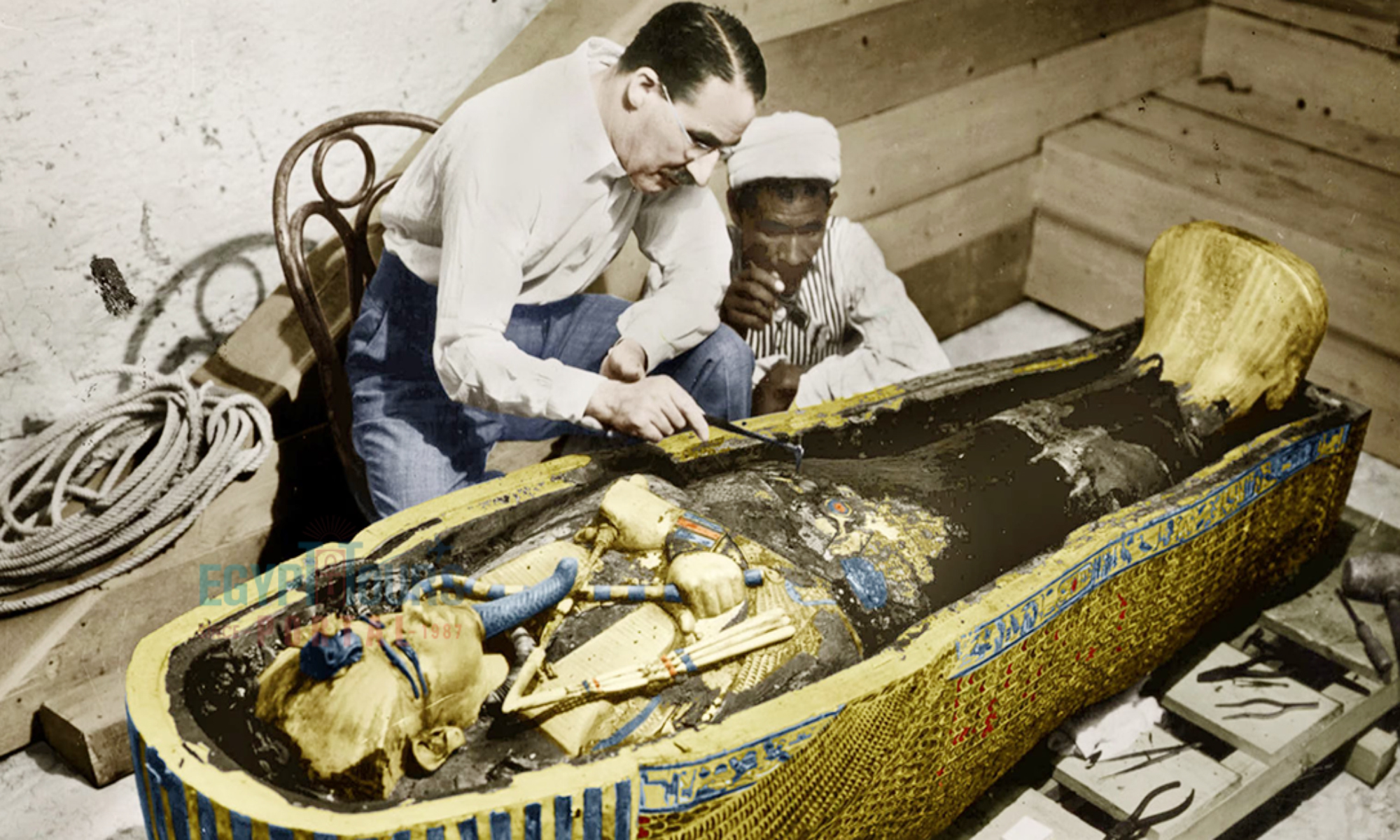
Discover the Life-Changing Discovery of Tutankhamun Tomb
Mon, 09 Sep 2019

Discover the Life-Changing Discovery of Tutankhamun Tomb

Discovery of Tut’s tomb by Howard Carter in 1922 stunned the world, reshaping Egyptology and igniting global fixation with ancient Egypt & the Pharaoh's curse.

Ancient Egyptian Trade
Mon, 26 Oct 2020

Ancient Egyptian Trade

Explore the ancient Egyptian trade history, goods, routes, trading partners, ships, cultural impact, and fascinating facts in this comprehensive article.

Thebes: The Eternal Capital of Ancient Egypt
Thu, 04 Jul 2019

Thebes: The Eternal Capital of Ancient Egypt

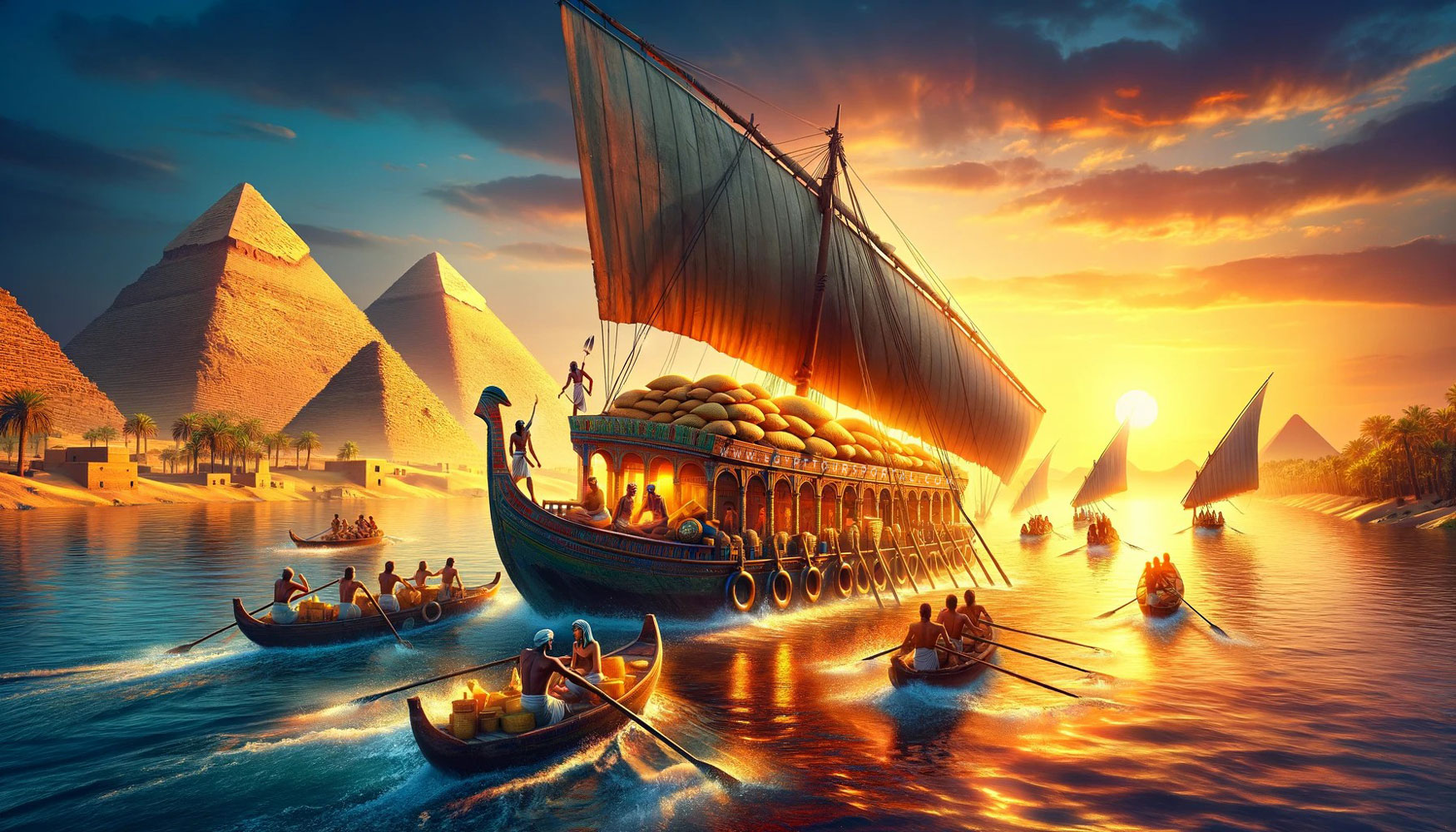
Explore Thebes, Egypt’s grand capital of the New Kingdom; home to Karnak, Luxor, the Valley of the Kings, and the grand legacy of ancient Egyptian civilization.
Ancient Egyptian Art
Mon, 12 Apr 2021

Ancient Egyptian Art

Explore Ancient Egyptian Art history, colors, hieroglyphics, literature, paintings, sculptures, styles, papyrus, tombs, animals, martial art, and facts.

Crime & Punishment in Ancient Egypt
Sat, 17 Apr 2021

Crime & Punishment in Ancient Egypt

Punishment was one of the fundamental elements of the life of Egyptians. Read more about crime & punishment in ancient Egypt.

False Doors In Ancient Egypt
Wed, 21 Apr 2021

False Doors In Ancient Egypt

Insights into Ancient Egypt's False Doors: Understanding their development, inscriptions, spiritual importance, and vital facts!

Ancient Nubia: The Culture That Shaped Egypt’s South
Mon, 24 Jun 2019

Ancient Nubia: The Culture That Shaped Egypt’s South

Explore the rich heritage of Nubian culture in Egypt, from ancient kingdoms and temples to language, crafts, and vibrant traditions still alive today.

Book With Confidence

Why Travel With Egypt Tours Portal

The "Boutique" Advantage

01

We offer private, customizable journeys tailored to your pace, moving away from the "factory-style" mass-market tours.

Gold-Standard Guides

02

Travel with elite, licensed Egyptologists who act as storytellers, not just tour leaders.

Seamless Logistics

03

24/7 "high-touch" support with a dedicated coordinator for every aspect of your multi-vendor itinerary.

2026/04/egypt-tours-portal-clients-at-giza-pyramids.jpg
04

True Customization

Our "Tailor-Made" planning workflow ensures your trip matches your specific priorities and interests.

05

Luxury & Comfort

We prioritize premium guide quality and vetted, safe hotels to ensure a stress-free environment.

06

Protection & Security

Advanced safety protocols and 24/7 emergency contact for total peace of mind during your adventure.

Book With Confidence.

Book your trip with peace of mind knowing every detail is handled with care.

Enjoy flexible options, secure payments, and dedicated support to make your journey smooth and worry-free from start to finish.

Read Our Confidence Policy

Pay Monthly

Split your total trip cost into easy monthly installments, making it more flexible and affordable for your budget.

Fast Booking

Complete your booking in just a few simple steps with a quick and streamlined process designed to save you time.

24/7 Support

Our dedicated support team is available around the clock to assist you before, during, and after your trip.

Rated 5 Stars

Highly rated by thousands of travelers for quality service, reliable experiences, and unforgettable journeys.

Pay Monthly

Split your total trip cost into easy monthly installments, making it more flexible and affordable for your budget.

Fast Booking

Complete your booking in just a few simple steps with a quick and streamlined process designed to save you time.

24/7 Support

Our dedicated support team is available around the clock to assist you before, during, and after your trip.

Rated 5 Stars

Highly rated by thousands of travelers for quality service, reliable experiences, and unforgettable journeys.

Traveler Video Reviews

Inside The Experience: Watch Authentic Traveler Stories Before Booking

Clients Feedback
https://dynamic-media-cdn.tripadvisor.com/media/photo-o/12/04/24/3e/rk-w.jpg
Erin W
Kiawah Island, South Carolina

"We had a great experience touring Aswan, Edfu, and Luxor with Mahmoud. I would highly recommend him as a guide. He adapted to our needs (2 teenagers) and kept everything interesting. He was always prompt, professional, and easy to communicate with. He was also very prompt answering questions via WhatsApp"

Read More
https://dynamic-media-cdn.tripadvisor.com/media/photo-o/1a/f6/f1/79/default-avatar-2020-21.jpg
Estelle V

"We would like to share our wonderful experience with Egypt Tours Portal. From the very first quote to our final airport drop-off, we were impressed by the professionalism, organization, and excellent communication from Walaa and the entire team. Our tour guides in both Luxor (“Habibi” was the best!) and Cairo were incredibly knowledgeable, helpful, and passionate about sharing Egypt’s history and treasures with us. We especially appreciated how thoughtfully the itinerary was planned — allowing us time to rest in the afternoons, scheduling visits during the cooler hours, and remaining flexible to accommodate our needs. Everything was smooth, well-organized, and made our trip truly memorable. We wholeheartedly recommend Egypt Tours Portal to anyone looking to discover the incredible history, culture, and wonders Egypt has to offer."

Read More
https://dynamic-media-cdn.tripadvisor.com/media/photo-o/1a/f6/e7/3d/default-avatar-2020-55.jpg
Tim K

"We had an outstanding time touring Luxor with our guide, Essra. She was knowledgeable, professional, and incredibly kind throughout the entire experience. Her explanations of Karnak Temple, Luxor Temple, the Valley of the Kings, Hatshepsut Temple, and the Colossi of Memnon brought Egypt's history to life. What really set her apart was her thoughtfulness. She made sure we stayed comfortable in the heat, surprising us with water and refreshments. She also took us to an excellent local restaurant that we never would have found on our own. Her attention to detail, genuine care, and passion for sharing Egypt made this one of the highlights of our trip. We highly recommend her to anyone visiting Luxor. On another note, the drivers we had each day were great. So professional, always on time and personable."

Read More
https://dynamic-media-cdn.tripadvisor.com/media/photo-o/1a/f6/e2/a7/default-avatar-2020-44.jpg
Will S
Bluff Park, Alabama

"We had a great vacation. Omar Haridi did our Nile Cruise and Zizi did our Cairo tour. They were amazing and very knowledgeable."
Read More
https://dynamic-media-cdn.tripadvisor.com/media/photo-o/1a/f6/ed/00/default-avatar-2020-4.jpg
Mira F

"The best experience of my lifetime! Nour, the tour guide was absolutely amazing! Went over and beyond thinking about every little thing. I had a mishap and Egypt Air overbooked my flight and bumped me to a later flight causing me to miss an entire day of activities. Nour made sure I got to do every single thing I missed that first day. But that’s not all: his knowledge of old Egypt is unparalleled, he truly brings Egypt (Aswan Luxor) alive. I’ve traveled all over the world and met many tour guides: Nour stands apart from all of them. He’s also considerate, caring and genuinely wants his guests to enjoy the trip and learn the most about the incredible history of Egypt. He’s also funny and genuinely great to be around. Please, do yourself a favor when booking a trip in Upper Egypt and ask for Nour. Hands down the best guide ever!"

Read More
https://dynamic-media-cdn.tripadvisor.com/media/photo-o/1a/f6/f6/0d/default-avatar-2020-34.jpg
Paul B
Hook, United Kingdom

"Excellent guide Mr Mohamed Osman, who was incredibly knowledgeable and very informative. Couldn't ask for more. Food on day 1 was ok, but much better at lunch on day 2. Hotel was excellent. Also our driver was excellent. All in all a great experience. Would highly recommend."

Read More
https://dynamic-media-cdn.tripadvisor.com/media/photo-o/1a/f6/eb/6d/default-avatar-2020-19.jpg
Marianna A

"Our experience in Egypt, especially in Luxor and Aswan, was truly unforgettable, and a huge part of that was thanks to our incredible guide Omar. We cannot recommend him highly enough. From the moment we met him, it was clear that he was exceptionally knowledgeable, professional, and deeply passionate about Egyptian history and culture. What made our tour extraordinary was that our guide is not only a master’s in Egyptology but is also currently pursuing a PhD in Egyptology. His depth of knowledge was absolutely remarkable. He is also very creative and artistic. Every temple, tomb, monument, and historical site came alive through his explanations. He did not simply recite facts, he explained the historical context, symbolism, religious beliefs, architecture, and fascinating stories behind everything we saw. It truly felt like we were traveling through ancient Egypt with a real scholar and expert by our side. He brought ancient Egyptian history to life by assigning us the roles of Egyptian gods and legendary heroes. Through these interactive mini-plays, we were able to experience, understand, and truly connect with the stories he shared. In Luxor, visiting Karnak Temple, Luxor Temple, the Valley of the Kings, and Hatshepsut Temple became an unforgettable educational and emotional experience because of the way he explained the history in such an engaging and easy-to-understand manner. In Aswan, his insights about Philae Temple, Nubian history, and ancient Egyptian civilization added so much depth to our trip. He answered every question thoughtfully and with incredible detail, and you could genuinely feel his passion for Egyptology. Beyond his academic expertise, he was one of the kindest and most caring people we met during our travels. He constantly made sure we were comfortable, safe, hydrated, and enjoying ourselves. He was patient, attentive, organized, and always willing to help with anything we needed. His warm personality and kindness made us feel welcomed not just as tourists, but as friends. He also paced the tours perfectly, allowing us enough time to truly appreciate each site without ever feeling rushed. His professionalism, friendliness, and genuine care created a relaxed and enjoyable atmosphere throughout the trip. Thanks to him, our visit to Egypt became far more than a vacation. It became an unforgettable journey into history and culture. If you are planning to visit Luxor, Aswan, or anywhere in Egypt, choosing this guide will be one of the best decisions you can make. He is truly exceptional, and we feel incredibly lucky to have had him as our guide. Thank you again for such an amazing experience. We will never forget it. Marianna and Khris"
Read More
https://dynamic-media-cdn.tripadvisor.com/media/photo-o/1a/f6/f0/d5/default-avatar-2020-17.jpg
James H

"This has been a tour agency and guides I can’t wait to give a glowing review to and to recommend to friends and family. Both Riham and Walid were happy to help coordinate excursions and share a wealth of knowledge. 10/10 experience"

Read More
https://dynamic-media-cdn.tripadvisor.com/media/photo-o/1a/f6/ec/a2/default-avatar-2020-3.jpg
H D

"We had a wonderful experience with the 5 day cruise. The price is wry reasonable. The best part is that the visits are done in very small numbers with a guide. It is almost like having a private guide. The food was good with lots of variety and all the staff members are very friendly and helpful. Omar Haradi, our guide was very knowledgeable and very generous with his time and with sharing his knowledge."

Read More
https://dynamic-media-cdn.tripadvisor.com/media/photo-o/1a/f6/f2/59/default-avatar-2020-24.jpg
Marlina
West Palm Beach, Florida

"We just returned home from an incredible trip to Egypt, and we cannot say enough good things about Egypt Tours. From the moment we booked our trip until the day we flew home, their communication, organization, and attention to detail were outstanding. Our adventure began in Cairo, where we were warmly welcomed at the airport by our guide, Abdulrahman Mosbah. He immediately made us feel comfortable and at ease, and our Nile River sunset cruise was the perfect introduction to Egypt. Abdul’s warm personality and infectious enthusiasm made our first day both fun and memorable. The following day, we toured with Reda Elgendy, who brought the pyramids to life with fascinating stories and historical insights. Seeing the Grand Egyptian Museum (GEM) was truly breathtaking and a highlight of our time in Cairo. In Aswan, we were greeted at the airport by Ahmed Haggag, who guided us over the next two days. Ahmed was incredibly knowledgeable, thorough in his explanations, and always kept us entertained with his great sense of humor. We learned so much while enjoying every moment of our time with him. Our final stop was Luxor, where we met Ghada Kamel. Saving the best for last, Ghada was absolutely exceptional. Her passion for Egypt’s history and culture made our visits to the temples and the Valley of the Kings unforgettable. She was engaging, informative, and truly outstanding. This trip exceeded all of our expectations. Not only did we experience some of the world’s most amazing historical sites, but each of our guides also shared valuable insights into Egyptian culture and daily life. We returned home with wonderful memories, a deeper appreciation for Egypt, and gratitude for the amazing team at Egypt Tours. We highly recommend Egypt Tours to anyone planning a trip to Egypt. It was truly the trip of a lifetime!"

Read More
https://dynamic-media-cdn.tripadvisor.com/media/photo-o/1a/f6/de/5a/default-avatar-2020-36.jpg
Alejandro M

"We loved it, great experience and treatment. Our guide Noah had great knowledge of the subject. Thank you very much."

Read More
https://dynamic-media-cdn.tripadvisor.com/media/photo-o/1a/f6/f0/d5/default-avatar-2020-17.jpg
Jeff T

"Our trip in May 2026 was fantastic! We saw all the major wonders of Egypt! Our incredibly knowledgeable guide Walid Ahmed met us at the hotel and was great at explaining all the particular uniqueness of each tomb and temple, inserting background myths and stories, keeping our tour on track, taking and sharing so many pictures so we could be in them as a couple and helping us navigate local customs. We strongly recommend Egypt, the tour and Walid!"

Read More
https://dynamic-media-cdn.tripadvisor.com/media/photo-o/1a/f6/e7/3d/default-avatar-2020-55.jpg
Joe P

"We had a wonderful week long vacation in Egypt, split between Cairo and Luxor. The tour was very professionally run with excellent communication starting weeks before our arrival and then nearly daily while in Egypt. A highlight was our English-speaking guide in Luxor, Walid Ahmed, who was extremely knowledgeable and exceptionally kind. The tour was flexible and accommodating, allowing last minute special detours and restaurant choices. Overall, it was one of the best vacations of our life."

Read More
https://dynamic-media-cdn.tripadvisor.com/media/photo-o/1a/f6/f1/79/default-avatar-2020-21.jpg
Damien B

"We had Ahmed Refaat as our family guide in Cairo, and he truly made our trip to Egypt unforgettable. His positive attitude, passion for Egypt’s history and culture, and incredible patience made all the difference throughout our stay in Cairo. Ahmed brought every site to life with fascinating explanations and was always attentive to our needs, making the experience enjoyable for both adults and children. We especially recommend him for visits to Saqqara and the Grand Egyptian Museum (GEM), where his deep knowledge and enthusiasm greatly enhanced our understanding and appreciation of these extraordinary places. Without any hesitation, we highly recommend Ahmed Refaat to anyone visiting Egypt. Thank you again for helping create such wonderful memories for our family!"

Read More
https://dynamic-media-cdn.tripadvisor.com/media/photo-o/1a/f6/ef/73/default-avatar-2020-13.jpg
Departure20554993605

"Knowledgeable guide, clean vehicle, interesting stories about the sites. Tour guide: Muhmmed Abd El-aal was very nice to be in the company of, dry attentive and honest."

Read More
HELP CENTER

Frequently Asked Questions

Linen Was the Primary Material, Made From the Flax Plant. It Was Lightweight and Ideal for the Hot Climate. Wool Was Less Common and Used Sparingly for Certain Garments.
Men Typically Wore a Shendyt, a Type of Kilt Wrapped Around the Waist. In Later Periods, Tunics and Long Robes Became More Common.
Women Often Wore a Kalasiris, a Sheath Dress That Was Fitted or Pleated, and Sometimes Elaborately Decorated. Wealthier Women Adorned Their Dresses With Jewelry and Embroidery.
Children Often Wore No Clothing Until Adolescence Due to the Hot Climate, Though Wealthier Families Might Dress Their Children in Simple Tunics or Jewelry.
Jewelry, Such as Necklaces, Bracelets, and Anklets, Was Widespread. Both Men and Women Wore Wigs, and Sandals Were Made From Papyrus or Leather.

Yes, Colors Often Held Symbolic Meanings:

  • White Represented Purity and Light.
  • Blue and Green Symbolized Fertility and Life.
  • Gold Was Associated With the Divine and Eternity.
The Elite Wore Finely Woven, Elaborately Decorated Garments With Jewels and Vibrant Colors, While Commoners Wore Simpler, Coarser Linen Clothing.
Wigs Were a Significant Part of Personal Grooming, Worn by Both Men and Women for Protection From the Sun and as a Status Symbol. They Were Made From Human Hair, Plant Fibers, or a Mix of Both.
Sandals Made From Papyrus or Leather Were the Most Common Footwear, Though Many Egyptians, Especially Commoners, Went Barefoot.
Priests Wore Simple White Linen Garments to Symbolize Purity. They Often Shaved Their Heads and Bodies as Part of Their Religious Practices.
Clothing Was Handwoven From Linen. The Flax Was Harvested, Processed Into Threads, and Then Woven Into Fabric on Looms.
Yes, Both Men and Women Used Cosmetics, Including Kohl for Eye Makeup and Scented Oils to Moisturize and Protect Their Skin From the Sun.
Pharaohs Wore Highly Ornate Garments, Including Robes of Fine Linen, Crowns, and Ceremonial Adornments Such as the Nemes Headdress and Fake Beards.
Early Clothing Was Simpler and More Functional. Over Time, Garments Became More Elaborate, Incorporating Pleats, Embroidery, and Jewels, Especially During the New Kingdom.
The Dead Were Often Dressed in Fine Linen and Adorned With Jewelry for Burial. Clothing Was Chosen to Reflect Status and Prepare Them for the Afterlife.
The entire country of Egypt deserve to be explored with its every heavenly detail but there are places that must be seen before any other such as the breathtaking Hurghada's red sea, The wonders of Cairo the pyramids of Giza, the great sphinx, the Egyptian Museum, Khan El Khalili Bazaar, the wonders of Luxor like Valley of the Kings, Karnak & Hatshepsut temple and the wonders of Aswan such as Abu Simbel temples, Philea temple, Unfinished obelisk and The Wonders of Alexandria like Qaitbat Citadel, Pompey's Pillar and Alexandria Library. Read more about the best places to visit in Egypt.
If you want to apply for a Visa On Arrival that lasts for 30 days then you should be one of the eligible countries, have a valid passport with at least 6 months remaining and pay 25$ USD in cash, as for the E-Visa for 30 day you should have a valid passport for at least 8 months, complete the online application, pay the e-visa fee then print the e-visa to later be presented to the airport border guard. You could also be one of the lucky ones who can obtain a free visa for 90 days. Read more about Egypt travel visa.
Egypt has a variety of delicious cuisines but we recommend "Ful & Ta'meya (Fava Beans and Falafel)", Mulukhiya, "Koshary", a traditional Egyptian pasta dish, and Kebab & Kofta, the Egyptian traditional meat dish. Read more about Top Traditional Egyptian Food.
The best time to travel to Egypt is during the winter from September to April, as the climate becomes a little tropical, accompanied by a magical atmosphere of warm weather with a winter breeze. You will be notified in the week of your trip if the Climate is unsafe and if any changes have been made. Read more about Best Time to Visit Egypt.
You should pack everything you could ever need in a small bag so you can move easily between your destinations. Read more about What to Pack for Your Egypt Tour.
We have been creating the finest vacations for more than 20 years around the most majestic destinations in Egypt. Our staff consists of the best operators, guides and drivers who dedicate all of their time & effort to make you have the perfect vacation. All of our tours are customized by Travel, Financial & Time consultants to fit your every possible need during your vacation. It doesn't go without saying that your safety and comfort are our main priority and all of our resources will be directed to provide the finest atmosphere until you return home.

You will feel safe in Egypt as the current atmosphere of the country is quite peaceful after the government took powerful measures like restructuring the entire tourist police to include all the important and tourist attractions in Egypt. Read more about is it safe to travel to Egypt.
Wear whatever feels right and comfortable. It is advised to wear something light and comfortable footwear like a closed-toe shoe to sustain the terrain of Egypt. Put on sun block during your time in Egypt in the summer to protect yourself from the sun.
The best activity is by far boarding a Nile Cruise between Luxor and Aswan or Vise Versa. Witness the beauty of Egypt from a hot balloon or a plane and try all the delicious Egyptian cuisines and drinks plus shopping in old Cairo. Explore the allure and wonders of the red sea in the magical city resorts of Egypt like Hurghada and many more by diving and snorkeling in the marine life or Hurghada. Behold the mesmerizing western desert by a safari trip under the heavenly Egyptian skies.
There are a lot of public holidays in Egypt, too many to count, either religious or nation, the most important festivals are the holy month of Ramadan, which ends with Eid Al Fitr, Christmas, and New Year's Eve. Read more about festivals & publich holidays in Egypt.
Egypt is considered to be one of the most liberal Islamic countries but it has become a little bit conservative in the last couple of decades so it is advised to avoid showing your chest, shoulders or legs below the knees.
Arabic is the official language and Most Egyptians, who live in the cities, speak or understand English or at least some English words or phrases. Fewer Egyptians can speak French, Italian, Spanish, and German. Professional tour guides, who work in the tourism sector, are equipped to handle visitors who cannot speak Arabic and they will speak enough English and other languages to fulfill the needs of all our clients.
The fastest way is a car, of course, a taxi. If you are in Cairo ride a white taxi to move faster or you could board the fastest way of transportation in Egypt metro if the roads are in rush hour.
The temperature in Egypt ranges from 37c to 14 c. Summer in Egypt is somehow hot but sometimes it becomes cold at night and winter is cool and mild. The average of low temperatures vary from 9.5 °C in the wintertime to 23 °C in the summertime and the average high temperatures vary from 17 °C in the wintertime to 32 °C in the summertime. The temperature is moderate all along the coasts.
It is the home of everything a traveler might be looking for from amazing historical sites dating to more than 4000 years to enchanting city resorts & beaches. You will live the vacation you deserve as Egypt has everything you could possibly imagine.
Our Partners

Partners Who Share Our Vision of Quality Travel

Partner Logo
Partner Logo
Partner Logo
Partner Logo
Partner Logo
Partner Logo
Partner Logo
Partner Logo
Partner Logo
Partner Logo