14 Days Giza, Nile Cruise, Casablanca, Fez, & Ouarzazate Tour
Tour Details
| Duration | 14 Days / 13 Nights |
| Tour Location | Giza / Cairo / Luxor / Aswan / Edfu / Kom Ombo / Casablanca / Ouarzazate / Aït Ben Haddou / Merzouga / Chefchaouen / Rabat / Fez / Marrakech |
| Tour Availability | Everyday |
| Pickup & Drop Off | Cairo Airport / Mohammed V Airport |
| Tour Type | Classic Tour |
Legendary 14 Days Giza, Nile Cruise, Casablanca, Fez, & Ouarzazate Tour
14 Days Giza, Nile Cruise, Casablanca, Fez, & Ouarzazate Tour is a thrilling quest that uncovers the true beauty and greatness of Morocco & Egypt. This unforgettable passage through North Africa unveils layers of ancient civilization, spiritual depth, and refined culture, thoughtfully crafted by a multi-award-winning, ISO-certified travel agency with over three decades of global excellence and more than ten consecutive TripAdvisor Certificates of Excellence. Every element is seamlessly arranged, from private air-conditioned transportation, magical nile cruise, and elegant hotels to carefully timed flights and the insight of expert Egyptologists and local Morocco specialists, creating a truly magical Egypt & Morocco international travel experience.
Over 13 unforgettable nights, this Egypt & Morocco travel experience has the power to shed light on the greatest highlights of North Africa. Across the golden lands and waters of Egypt, UAE travelers will get to explore the legendary monuments of Cairo, Luxor, and Aswan, from the Giza Pyramids, the grand Egyptian museum, and the sphinx, to the Nile Valley’s timeless treasures, including Kom Ombo Temple, Edfu Temple, Philae Temple, Karnak Temple Complex, Hatshepsut Temple, Valley of the Kings, Colossi of Memnon, Abu Simbel temple, and more sublime gems. The adventure then continues to Morocco, beginning in Casablanca and Rabat, moving through the blue streets of Chefchaouen and the historic medina of Fez, before crossing the Middle Atlas to the Sahara for a camel ride among the dunes of Merzouga. The route winds past Rissani, Todra Gorge, the Dades and Roses Valleys, Skoura, and iconic sites such as Aït Ben Haddou, Taourirt Kasbah, and the Atlas Film Studios, culminating in Marrakech, where gardens, palaces, souks, and the vibrant Jemaa el-Fna Square bring this remarkable journey to a magical close. Book this international tour across Egypt & Morocco and witness all the cultural & archaeological wonders come to life.
Tour Highlights
Giza Attractions
- Giza Pyramids Complex
- The Sphinx
- The Valley Temple
- The Grand Egyptian Museum
- Saqqara Step Pyramid
Aswan Attractions
- Philae Temple
- Abu Simbel Temples
- Edfu Temple
- The Unfinished Obelisk
- Kom Ombo Temple
Luxor Attractions
- Karnak Temples Complex
- Luxor Temple
- Colossi of Memnon
- Valley of the Kings
- Hatshepsut Temple
Casablanca Attractions
- Hassan II Mosque
- Mohammed V Square
- Casablanca Corniche
- Rick’s Café
- The Central Market
Rabat Attractions
- Hassan Tower
- Mausoleum of Mohammed V
- Kasbah of the Udayas
- Royal Palace
Marrakech Attractions
- Bahia Palace
- Koutoubia Mosque
- Medina and Souks
- Jemaa el-Fna Square
Fez Attractions
- Al-Qarawiyyin University
- Bou Inania Madrasa
- Chouara Tanneries
- Chefchaouen’s blue alleys
Merzouga Attractions
- Dades Valley
- Aït Ben Haddou
- Todra Gorge
- Erg Chebbi
Tour Inclusions
- Meet & assist at Cairo International Airport & Marrakech International Airport.
- 2 Nights’ accommodation at a 5* hotel in Cairo on a bed-and-breakfast basis.
- 1 Night's accommodation in Aswan at your hotel.
- 3 Nights’ accommodation on a 5* Nile Cruise on a full-board basis.
- 2 Night's accommodation in Marrakech at your hotel.
- 1 Night's accommodation in Casablanca at your hotel.
- 1 Night's accommodation in Fez at your hotel.
- 1 Night's accommodation in Chefchaouen at your hotel.
- 1 night's desert camping in Merzouga.
- 1 Night's accommodation in Dades Valley at your hotel.
- Entrance fees to all sites in the itinerary.
- All transfers by a state-of-the-art A/C vehicle.
- Domestic Flights (Cairo/Aswan & Luxor/Cairo).
- Professional Tour Guides throughout your tours in Egypt and Morocco.
Tour Exclusions
- International Airfare.
- Egypt & Morocco entry visa.
- Any optional Tours/Activities.
- Personal expenses.
- Gratuities (Tipping).
Tour Itinerary
Day 1: Arrival to Cairo
The moment you arrive at Cairo International Airport, our dedicated representative will be waiting to welcome you and ensure a smooth, effortless arrival. You’ll be personally assisted through passport control, luggage identification, and portage before being escorted to a private, air-conditioned vehicle for a comfortable transfer to your hotel, where you’ll check in and unwind after your journey.
As evening gently settles over the city, you’ll be collected from your hotel for a magical Nile Dinner Cruise experience. Drift along the timeless river while enjoying a delicious dinner and a vibrant live show featuring graceful belly dancing, a traditional folkloric band, and the mesmerizing Tannoura performance, inspired by Egypt’s whirling dervish heritage and centuries-old spiritual traditions.
After this enchanting night on the Nile, you’ll be transferred back to your hotel to relax and enjoy a peaceful overnight stay.
Meals: Dinner
Overnight: Cairo Hotel
Day 2: The Sublime Treasures of the Giza Complex
After breakfast, you will meet your private Egyptologist and step into a realm where time itself seems to stand still, beginning your journey at one of the legendary Seven Wonders of the World.
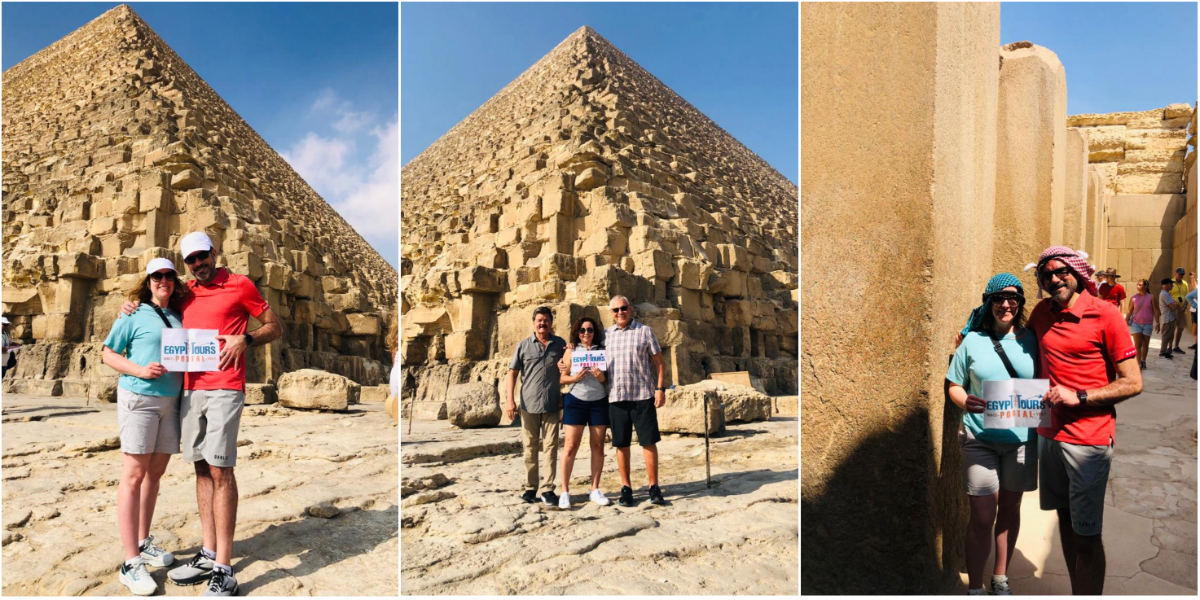
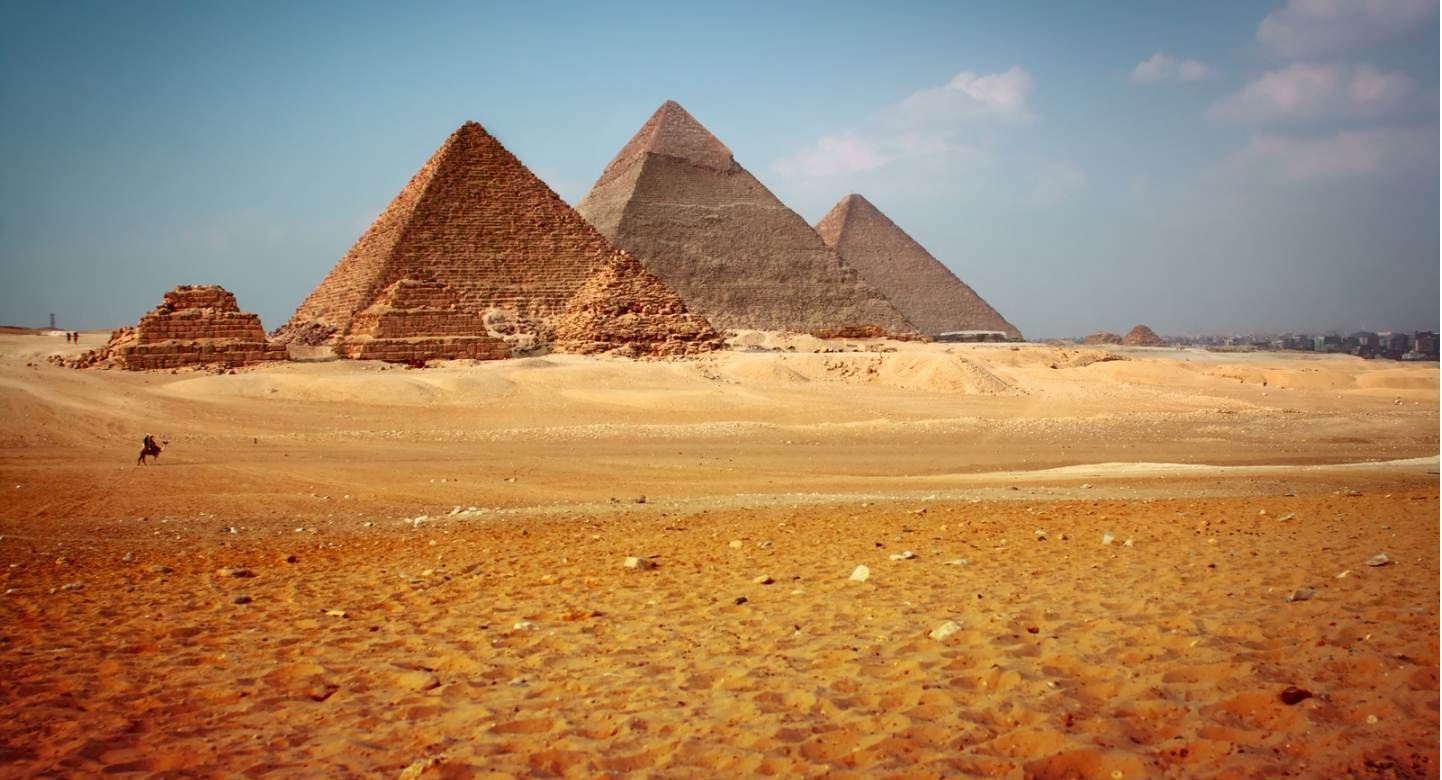
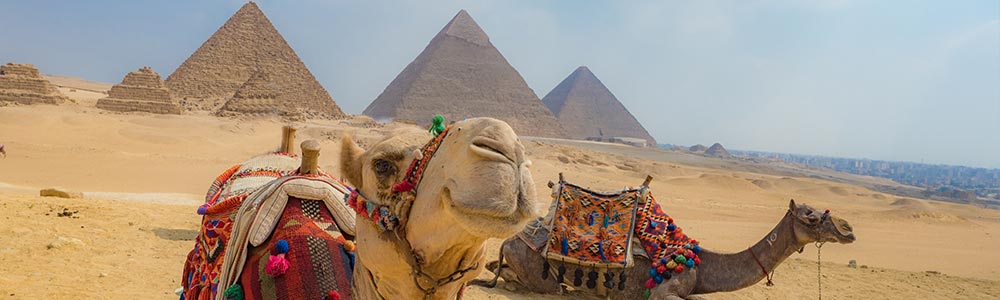
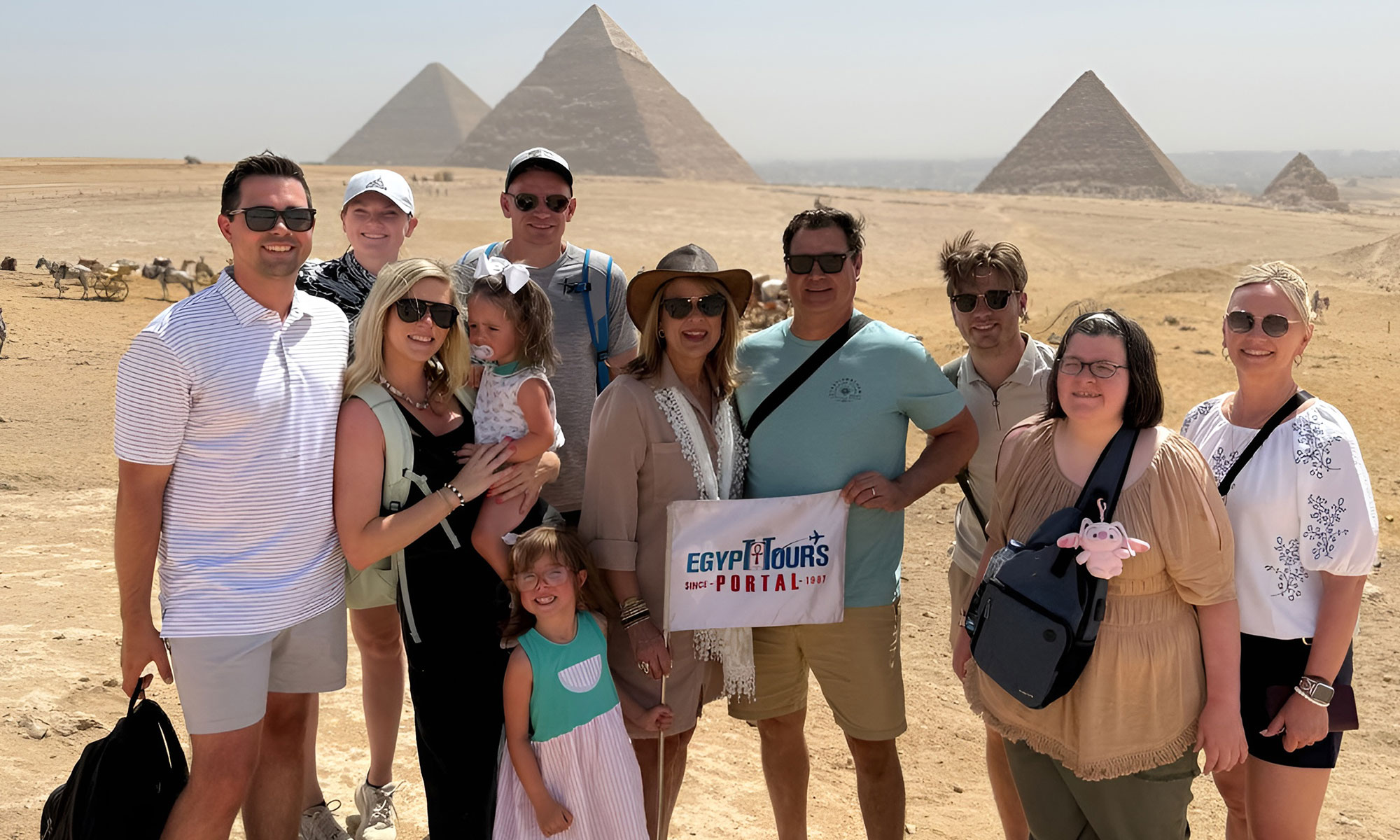
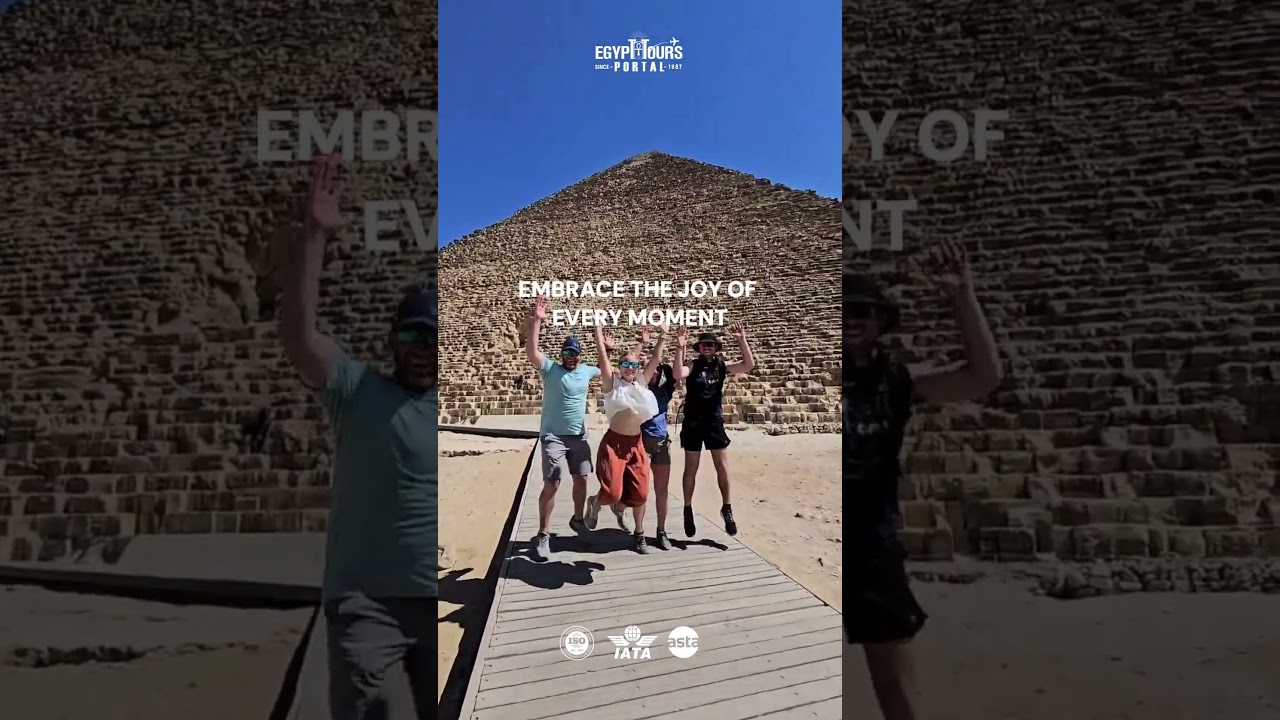
The sacred Giza Pyramids Complex unfolds like a vast open-air museum beneath the desert sky, a masterpiece of human ambition built around 2600 BC by the rulers of the 4th Dynasty. These monumental structures have endured for millennia, standing as eternal symbols of power, belief, and architectural genius.
The eternal Great Pyramid of King Khufu is a colossal marvel that holds a light speed passgae to the heavens. It was constructed in 2750 BC under the vision of his master architect Hemiunu. As the only surviving wonder of the ancient world, this monumental structure continues to astonish with its precision and scale. Within its immense stone body lie the King’s Chamber, Queen’s Chamber, the soaring Grand Hall, the mysterious Big Void, and other sophisticated internal passages that still challenge modern understanding.
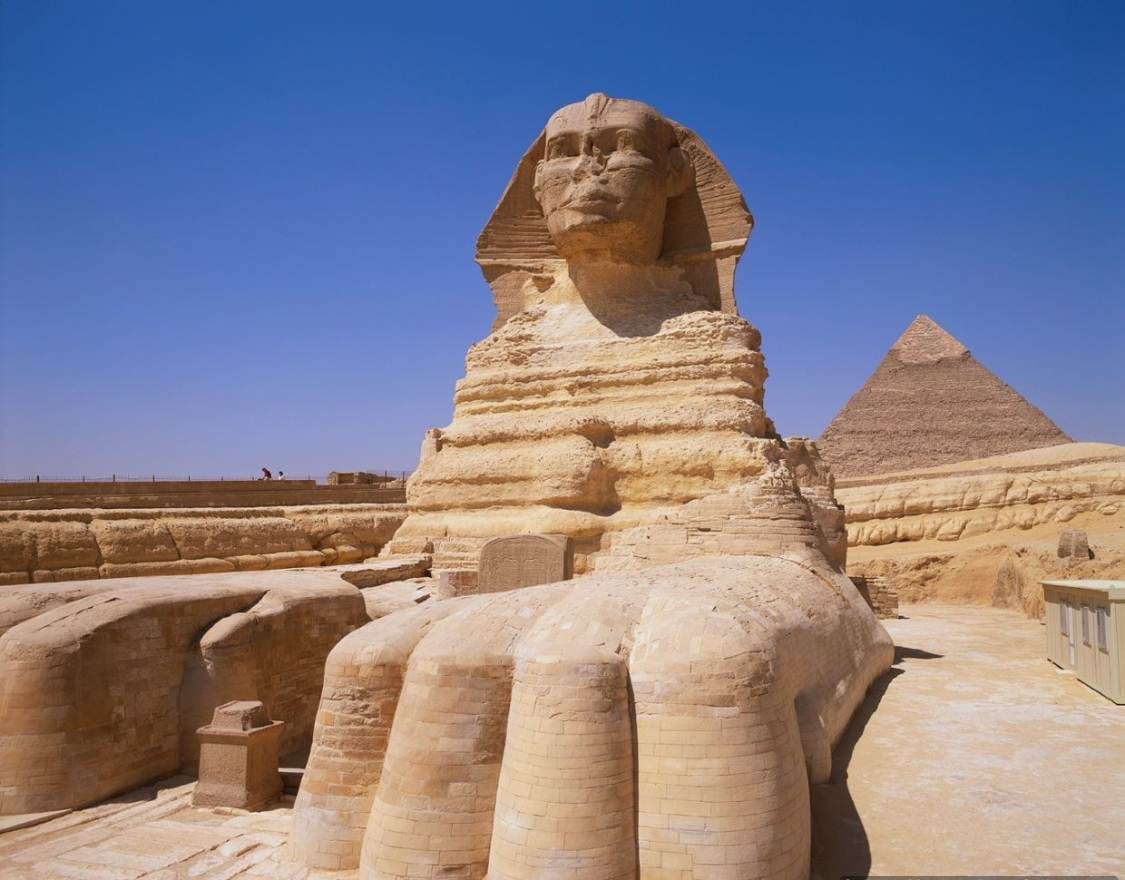
The Horus of the Horizon “Sphinx ” gazes eternally across the sands of time. It was carved from a single block of limestone during the reign of King Chephren (2558–2532 BC). This mythical guardian combines the body of a lion with the face of a king, symbolizing strength and wisdom. Between its paws rests the Dream Stela of Thutmose IV, added in 1401 BC, recounting a legendary tale of divine destiny and kingship.
The Valley Temple is a sacred structure of the 4th Dynasty, where ancient priests once performed purification rites and the mummification process ceremonies for royal kings, queens, princes, and princesses. This temple offers rare insight into the spiritual rituals that prepared Egypt’s rulers for eternity.
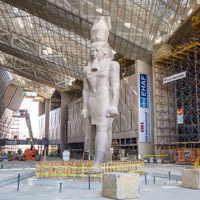
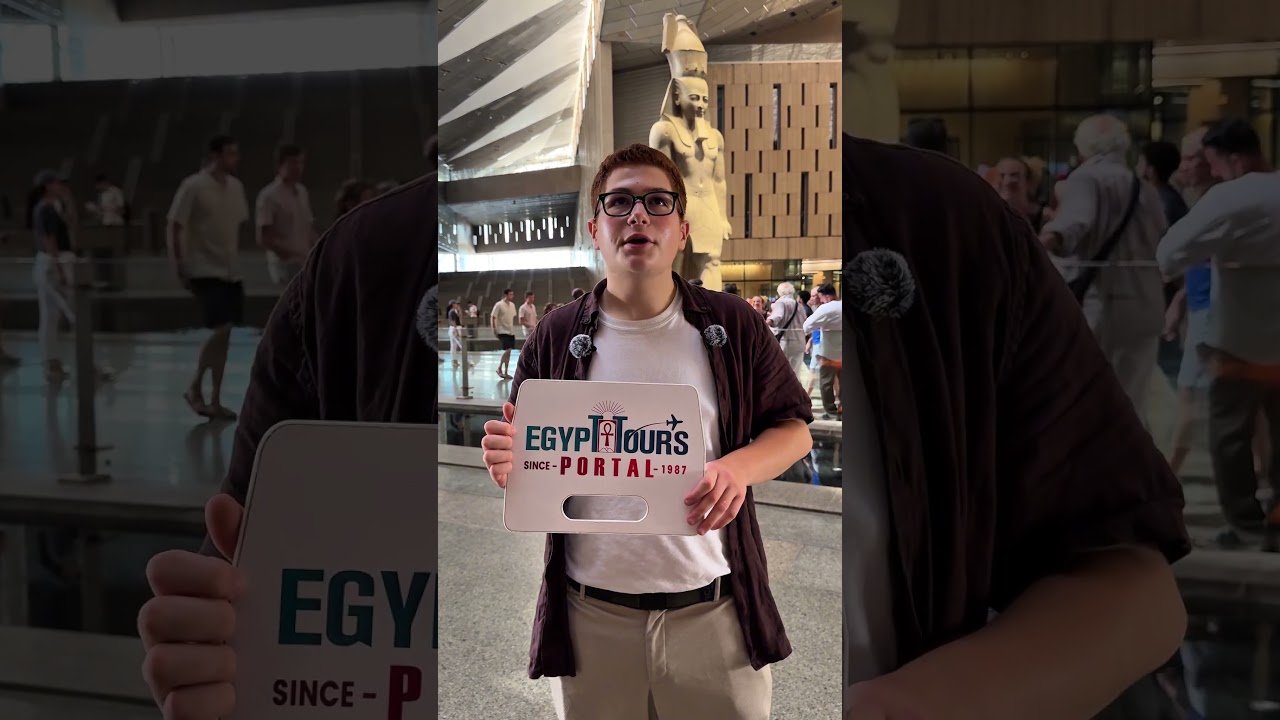
The Grand Egyptian Museum is a billion-dollar, magnificent architectural landmark aligned with the golden pyramids and spanning nearly 490,000 square meters. This extraordinary institution unveils 5,000 years of Egyptian history, housing one of the largest conservation centers in the Middle East alongside advanced research and educational facilities. Among its most breathtaking highlights are the Hanging Obelisk, the towering 11-meter colossus of Ramses II, and the complete collection of over 5,000 artifacts from the tomb of Tutankhamun, displayed together for the first time.
Proceed to have your Lunch at a Pyramids / Nile view restaurant, then move to visit:
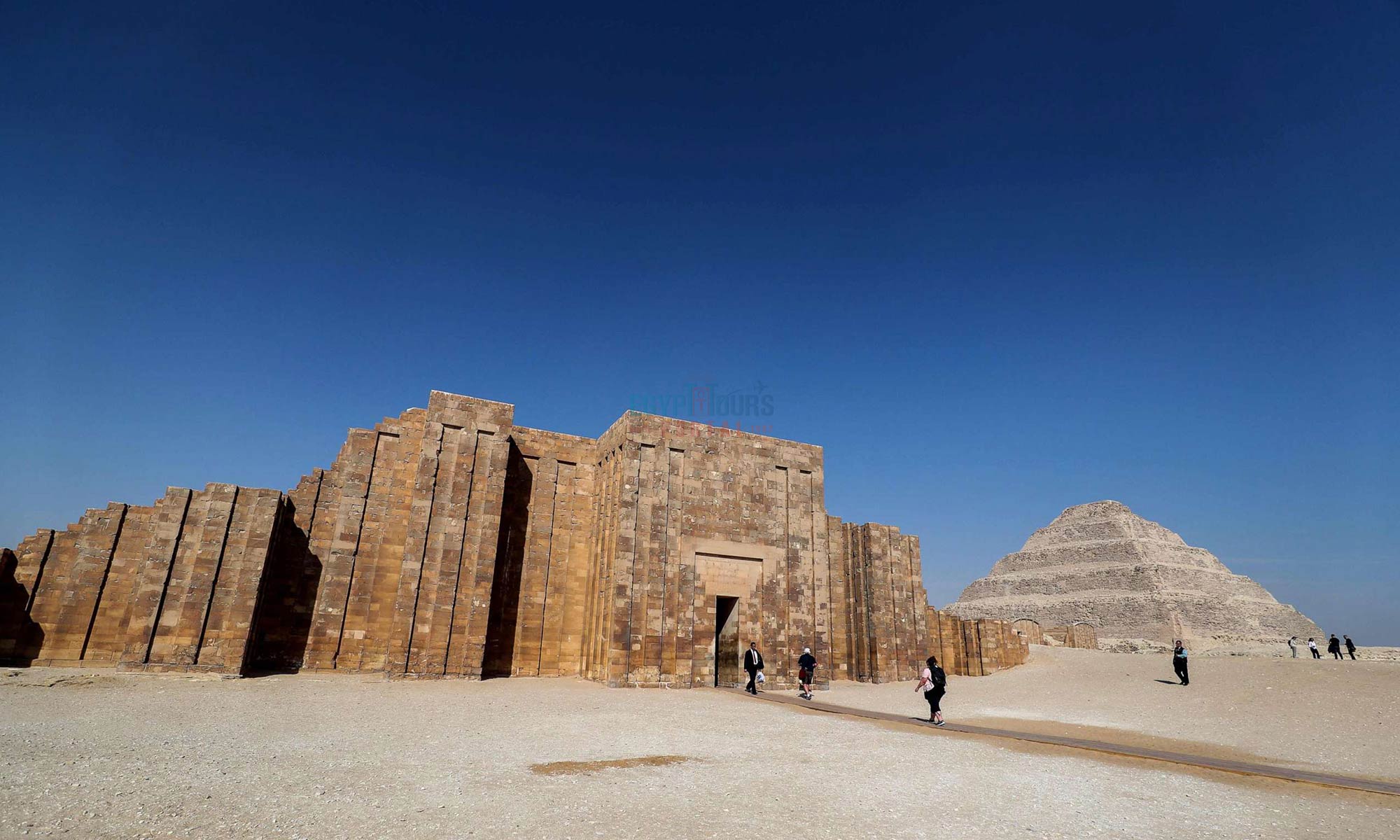
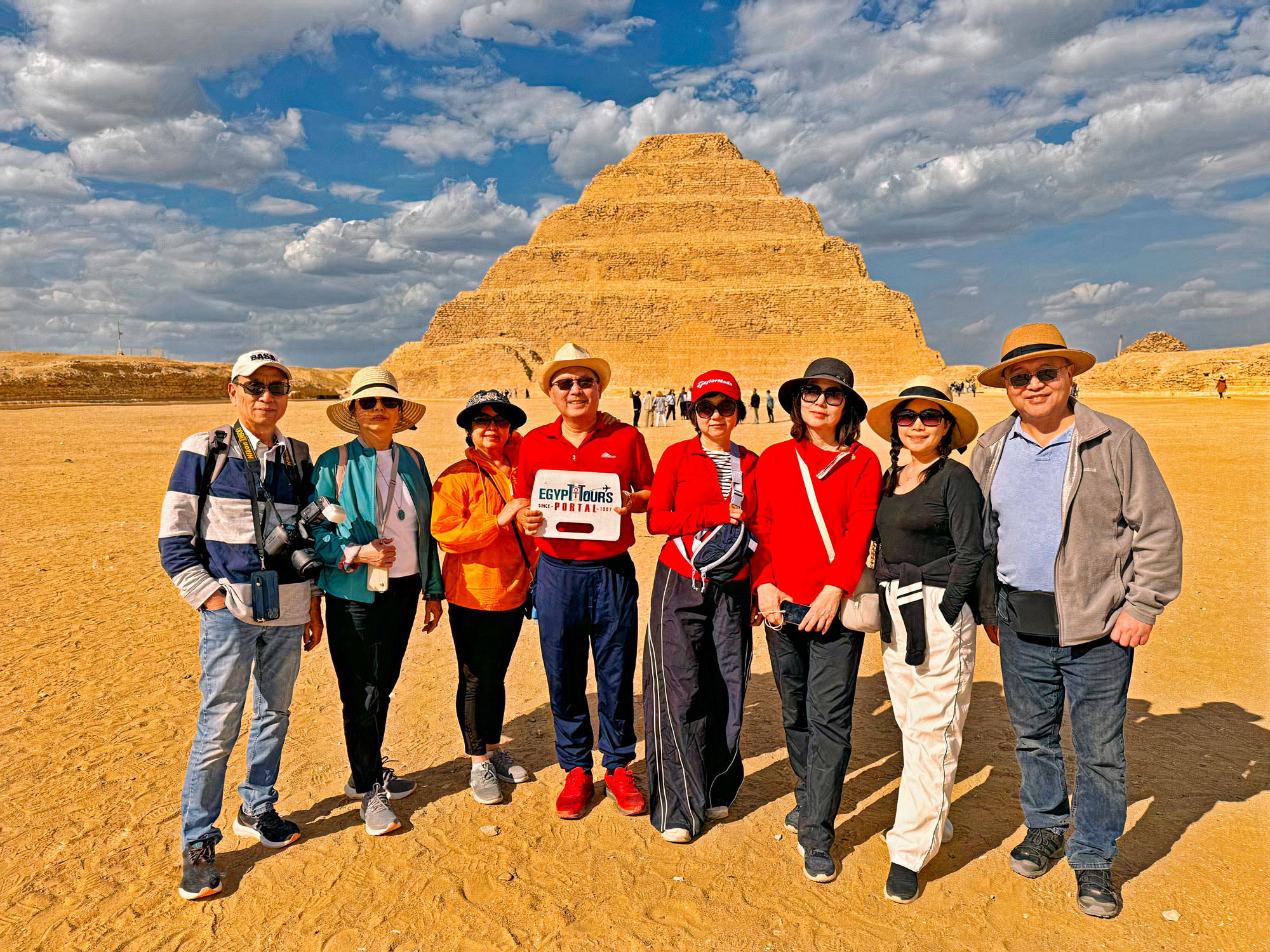
The majestic Saqqara step pyramid is the world’s earliest large-scale stone monument. It was built for Pharaoh Djoser (2649–2611 BC) and designed by his visionary architect Imhotep, this six-tiered pyramid rises 62 meters high within its own vast ceremonial complex. It marked a turning point in architectural history and launched the golden age of pyramid construction that would shape ancient Egypt forever.
Finally, we will head back to the airport to book your flight to Aswan.
Meals: Breakfast, Lunch
Flight: From Cairo to Aswan
Overnight: Aswan Hotel
Day 3: The Glories of Aswan
You will reunite with your tour guide and continue your 14-day Egypt and Morocco adventure in the enchanting city of Aswan, where serene landscapes and monumental history blend in perfect harmony. Your exploration begins with Aswan’s most captivating landmarks:
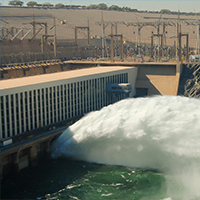
The blissful Aswan High Dam rises as a triumph of modern engineering, constructed between 1960 and 1970 AD. This colossal structure reshaped Egypt’s future by controlling the Nile’s floods, boosting agricultural stability, and generating hydroelectric power, becoming a powerful symbol of national progress and innovation.
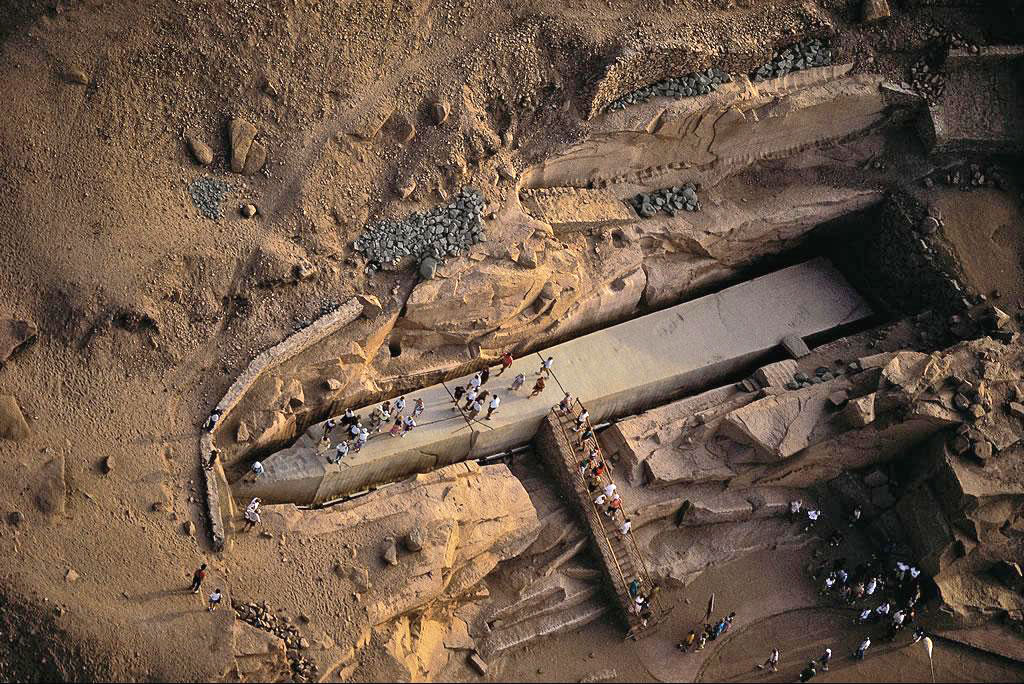
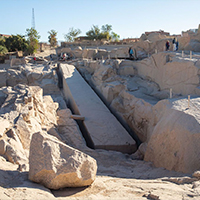
The open-air museum Unfinished Obelisk is an extraordinary open-air museum frozen in time. Commissioned by Queen Hatshepsut (1508–1458 BC) to stand proudly at Karnak Temple, this colossal monument was abandoned when cracks appeared during its carving. Resting in its original quarry, it reveals the ingenious stone-cutting techniques and ambitious vision of ancient Egyptian craftsmen.
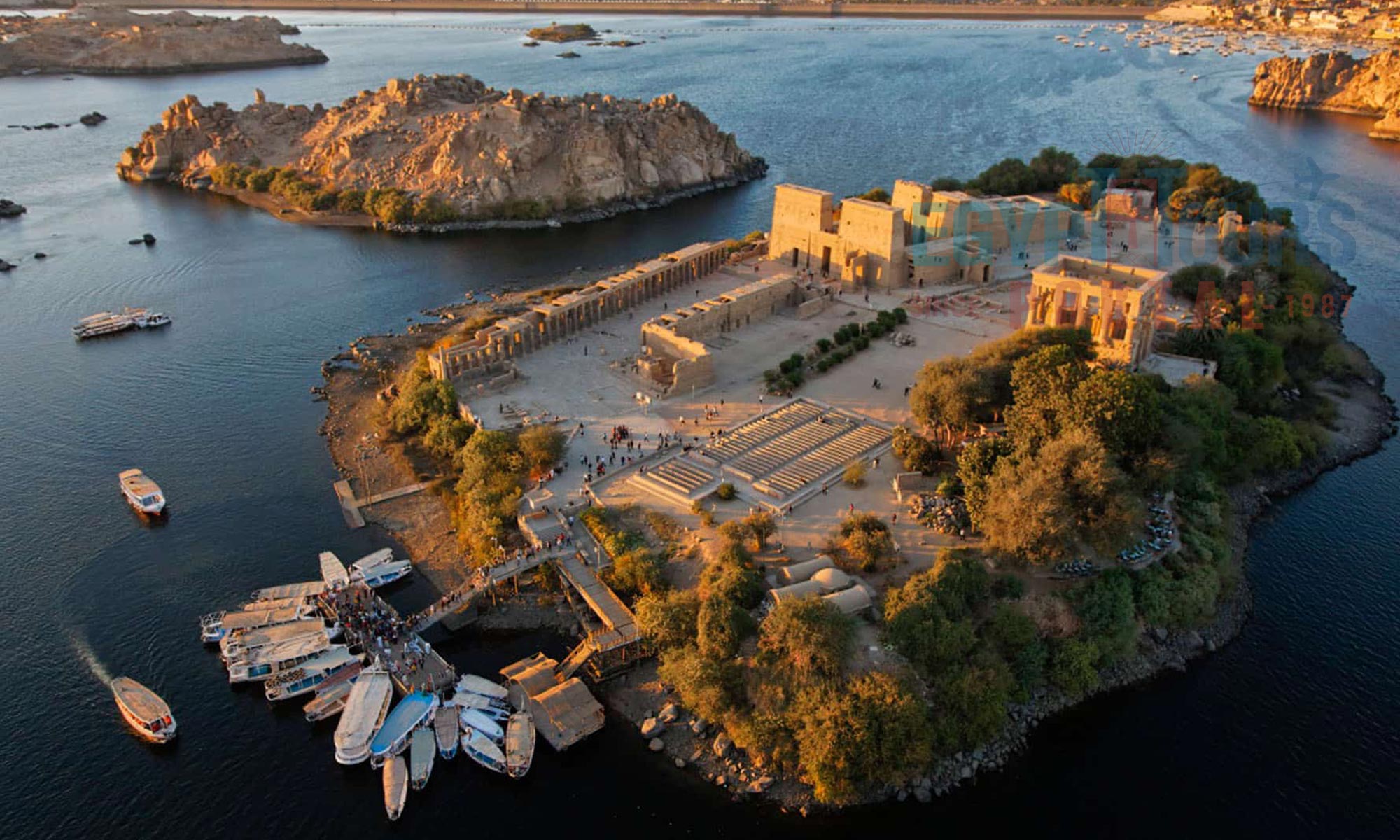
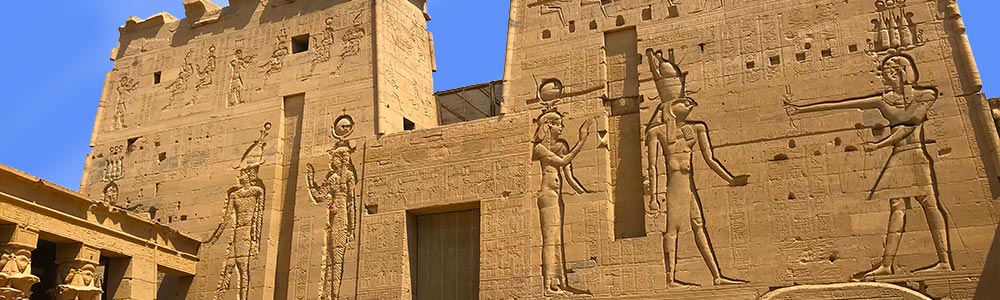
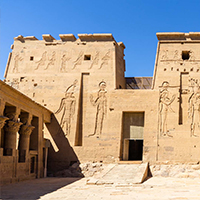
The mythical Philae temple is a jewel of ancient Egyptian art and mythology. It came into existence in 280 BC by King Ptolemy II, this beautifully preserved temple tells the timeless and moving story of the Myth of Osiris. To save it from rising waters, the entire complex was carefully relocated to Agilkia Island during the UNESCO Nubia Campaign of the 1960s and 1970s, ensuring its survival for future generations.
As the day draws to a close, you will be transferred to your 5-star deluxe Nile cruise. Settle in, enjoy a delicious lunch and dinner on board, and relax as you spend a peaceful overnight surrounded by the gentle rhythms of the Nile, ready for the next chapter of your unforgettable journey.
Meals: Breakfast, Lunch, Dinner
Overnight: Onboard the Nile Cruise
Day 4: The Golden Abu Simbel Temples
Early morning, have your breakfast boxes, then join your private tour guide to visit one of the most historical places in the world:
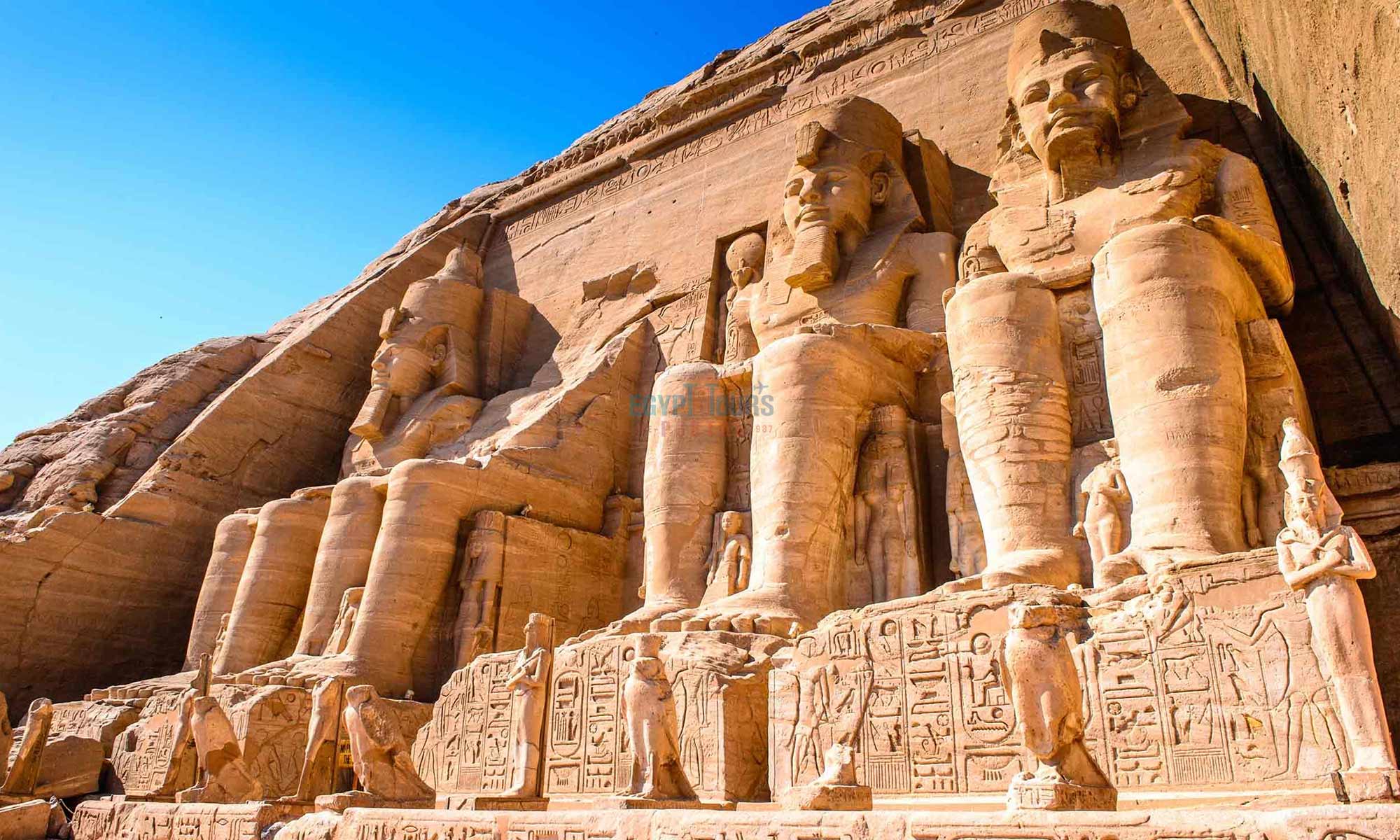
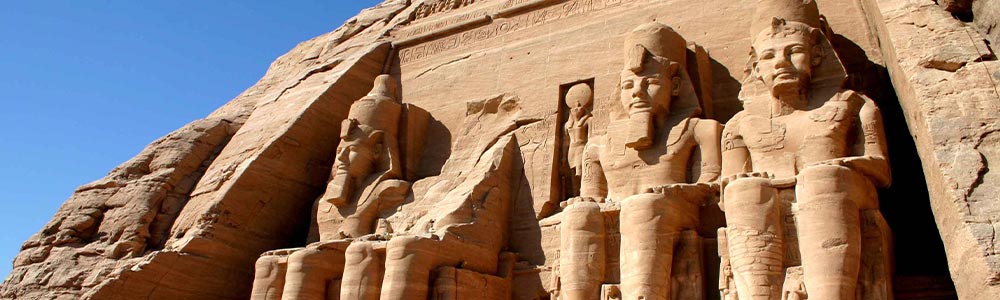
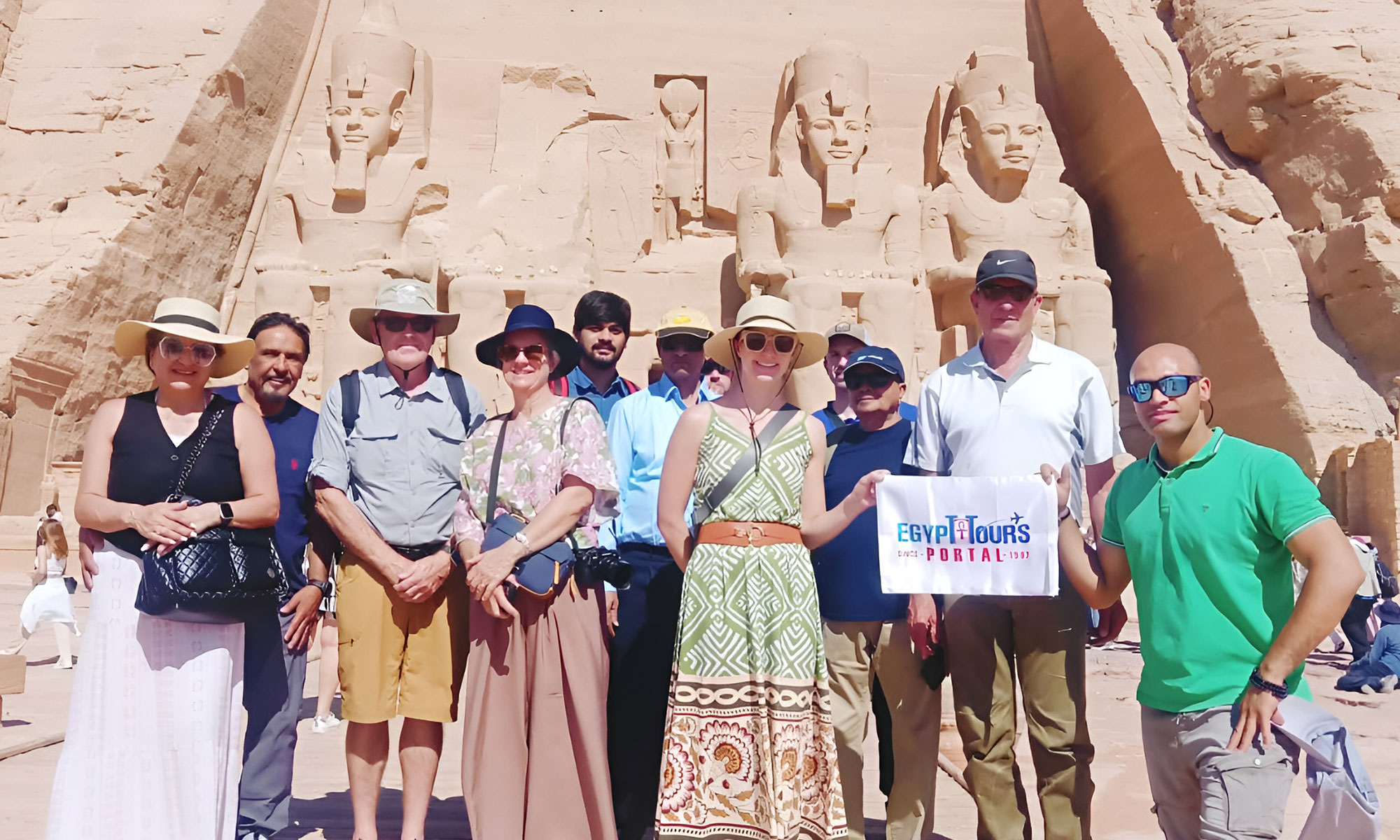
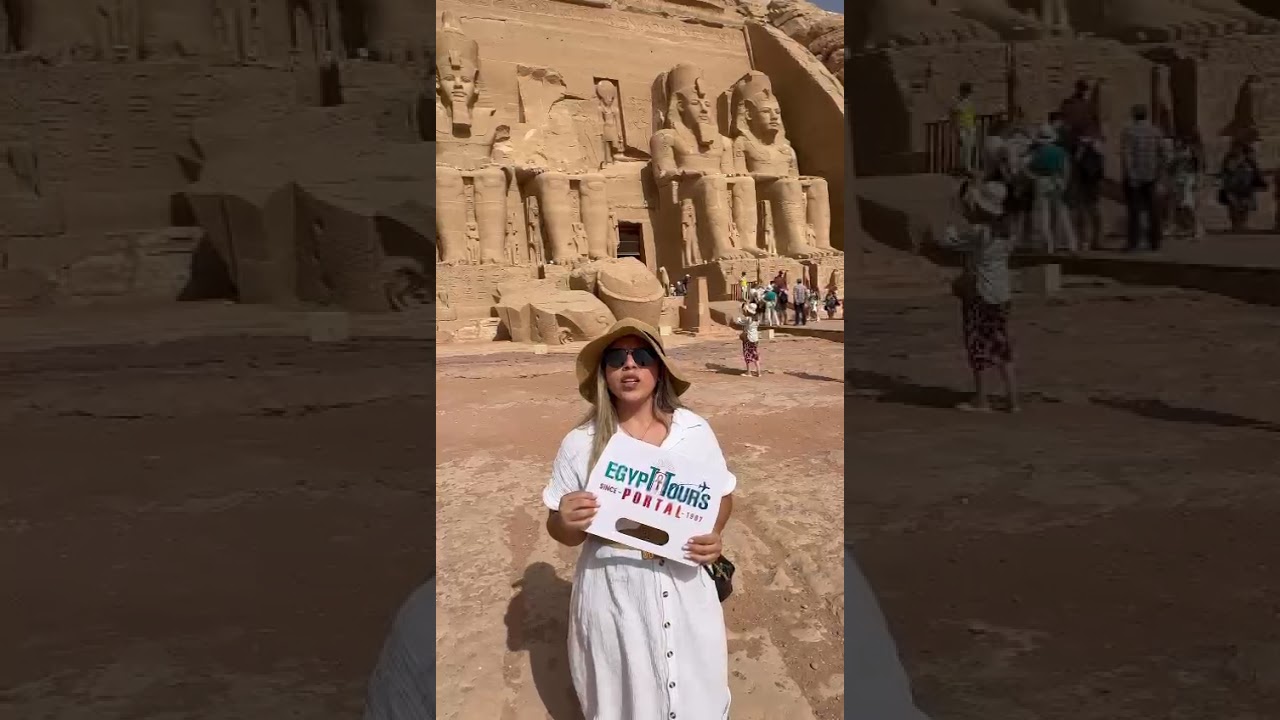
The celestial Abu Simbel temple rises as an eternal monument to divinity, power, and artistic genius, carved into the living rock of southern Egypt to defy time itself. These majestic sanctuaries were created around 1200 BC by the legendary Pharaoh Ramses II (Ozymandias) to honor the great gods of ancient Egypt: Amun, Ptah, and Re-Harakty, while eternally celebrating his triumph at the Battle of Kadesh and the achievements of his reign.
The Great Temple of Ramses II is famed for its sacred Sun Festival, a miraculous event that occurs twice each year on February 22 and October 22, when the rising sun penetrates the inner sanctuary to illuminate the statues of Ramses II and the gods, leaving only Ptah, the god of the underworld, in shadow. Nearby stands the equally magnificent second temple, lovingly dedicated to Queen Nefertari, Ramses II’s beloved wife, honoring her alongside the goddess Hathor. Together, these temples form one of humanity’s most breathtaking expressions of devotion, engineering mastery, and royal legacy, an achievement that continues to inspire wonder across the ages.
Return to your cruise to have your lunch & dinner meal, and start sailing, and overnight.
Meals: Breakfast, Lunch, Dinner
Overnight: Onboard the Nile Cruise
Day 5: The Majestic temples of Edfu and Kom Ombo
Breakfast then begin a guided trip to visit:
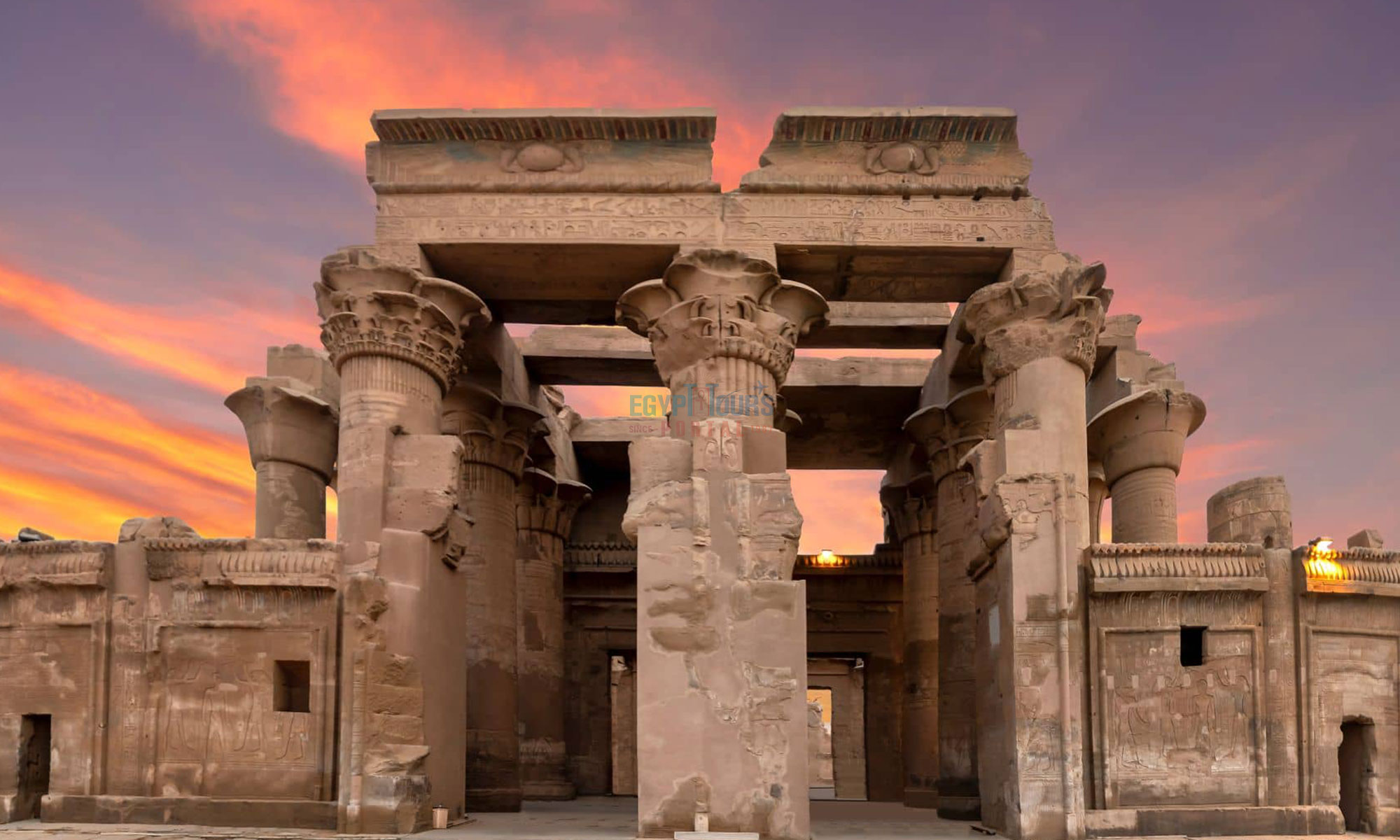
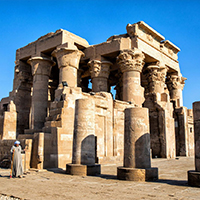
The Marvelous Kom Ombo Temple came to add something new to the mythical landscape of southern Egypt. It was built between 180 BC and 47 BC, rising on a gentle bend of the Nile like a mirror of divine balance. Uniquely designed as two temples in one, it honors Haroeris (Horus the Elder) on one side and Sobek, the powerful crocodile god of the Nile, on the other. Its walls, often called the “Hill of Gold,” preserve fascinating carvings that reveal ancient Egyptian knowledge of medicine, astronomy, and artistic practice, offering rare insight into how science and spirituality were intertwined.
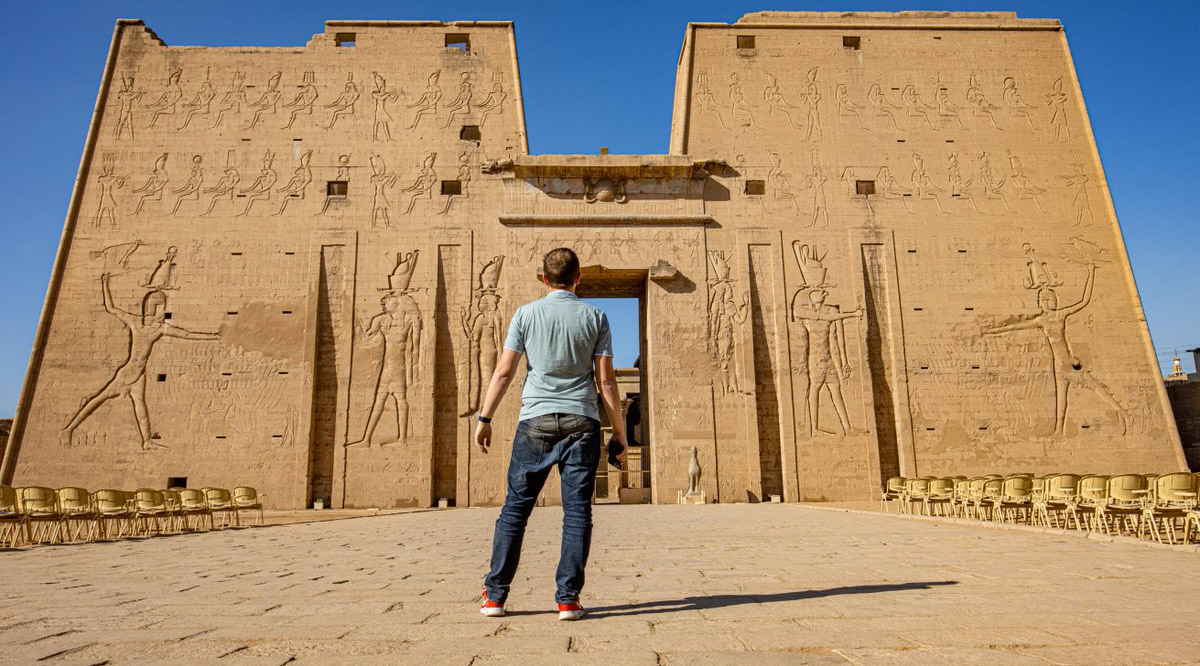
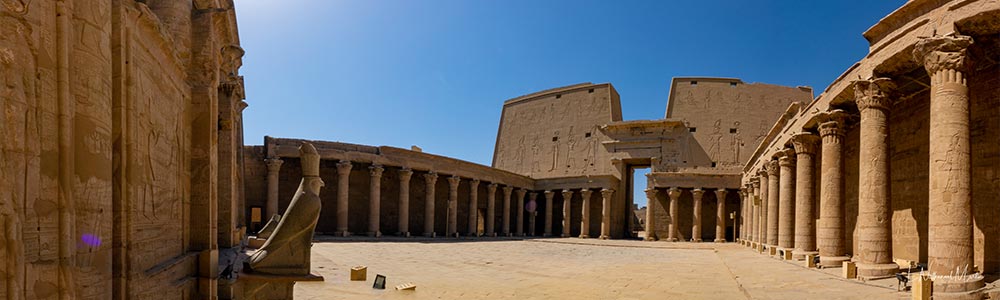
The gigantic Edfu temple is one of the best-preserved temples in all of Egypt, which witnessed a great battle between light and darkness. It was constructed between 237 BC and 57 BC, this colossal sanctuary is dedicated to Horus, the sky falcon god. It stands on the very ground where legend says Horus battled his eternal enemy Set, and its towering pylons and richly carved reliefs vividly recount epic tales of divine struggle, justice, and cosmic order.
Have your lunch & dinner on the cruise and sail to Luxor, arrive late at night, and overnight on board.
Meals: Breakfast, Lunch, Dinner
Overnight: Onboard the Nile Cruise
Day 6: The Glorious Luxor Attractions
Disembarkation at 8:00 a.m after breakfast and check-out from the Nile cruise. Then join your private tour guide to continue your journey by visiting Luxor tourist attractions such as:
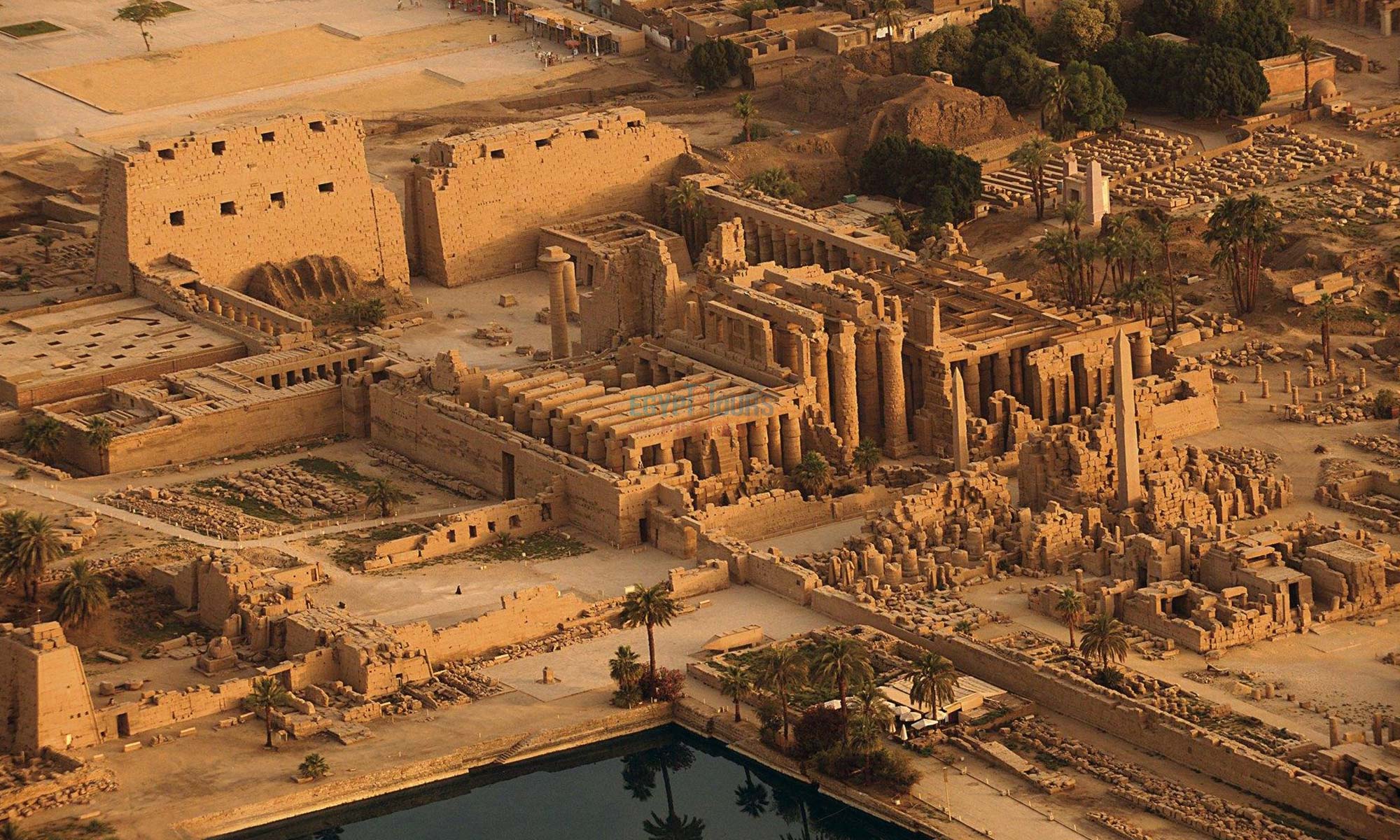
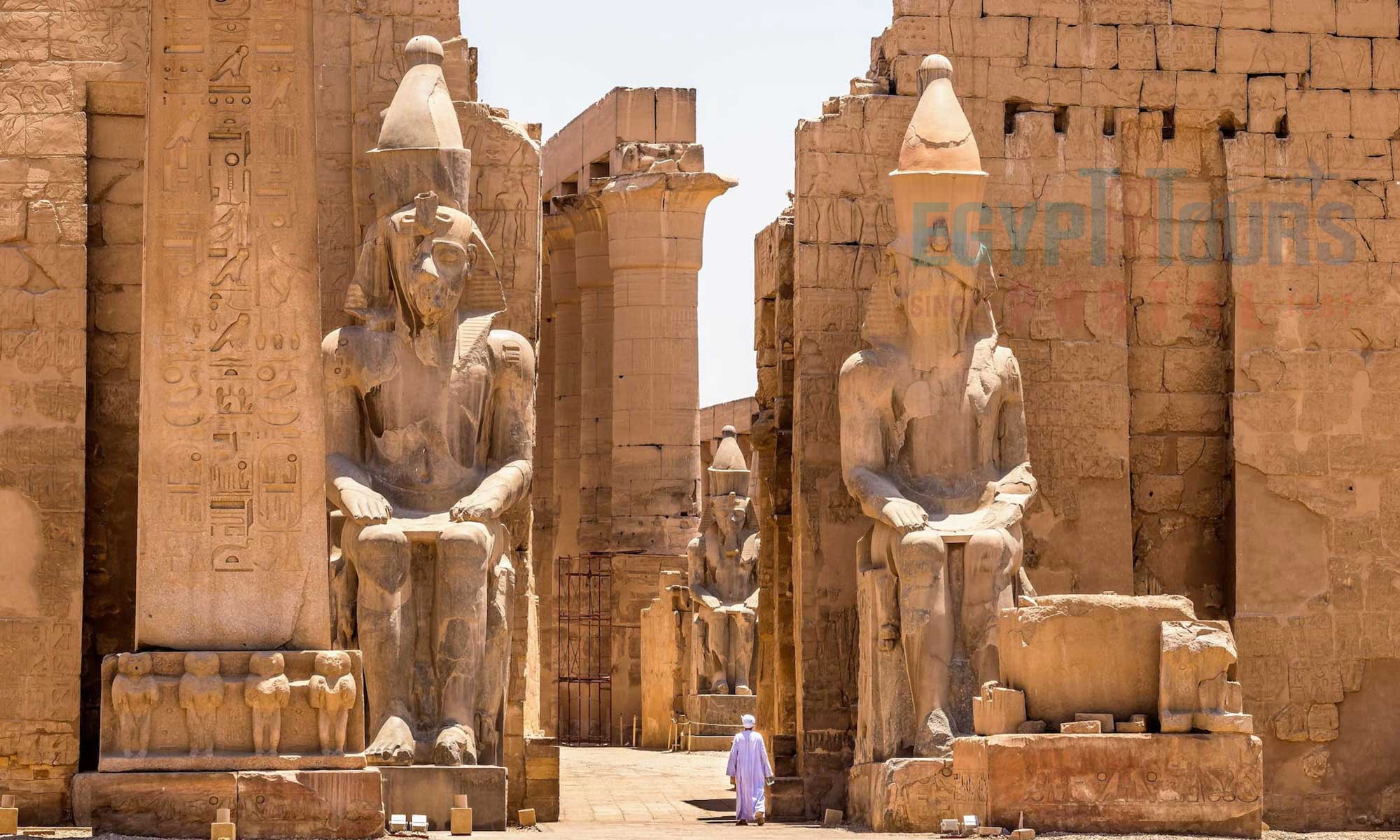
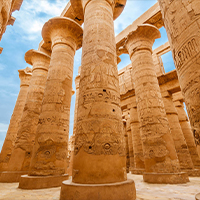
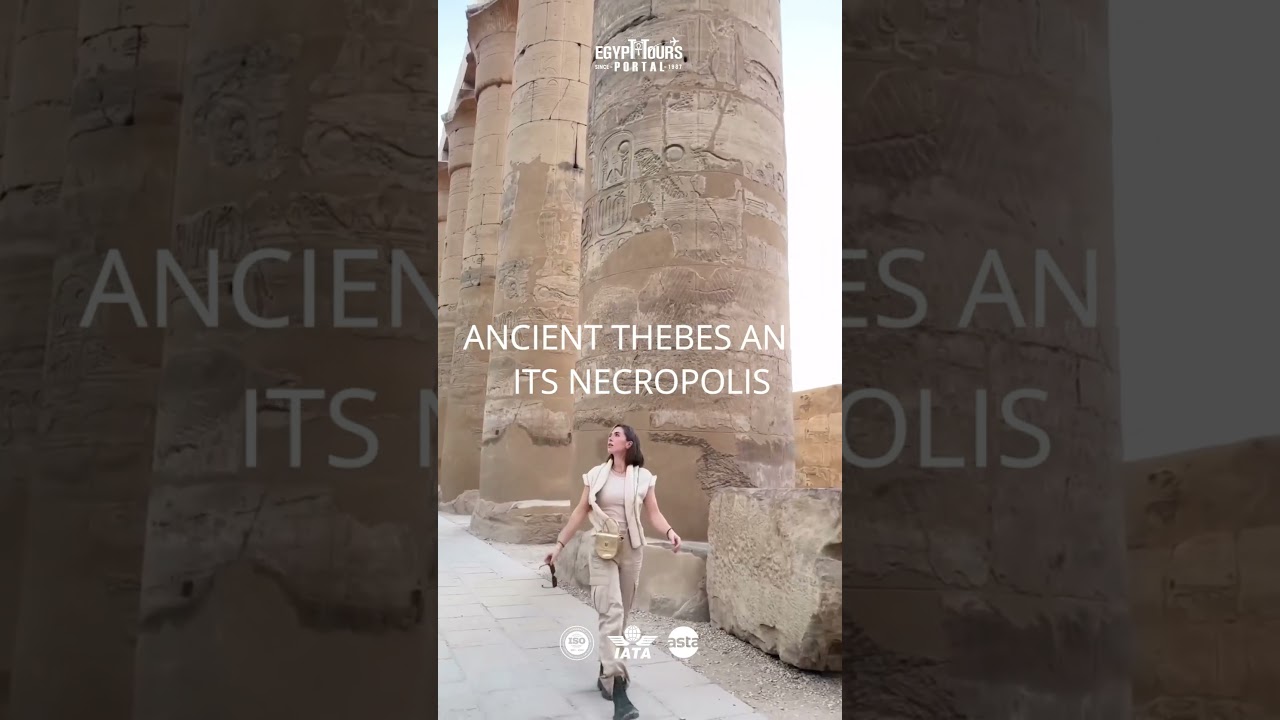
The Karnak Temple complex is a celestial creation made with the power of the gods. It is the biggest religious complex in the world that spans an extraordinary 247 acres, its construction unfolded over nearly two millennia, from the Middle Kingdom through the Greco-Roman period (2000 BC–30 BC). Dedicated primarily to the Theban Triad of Amun, Mut, and Khonsu, this sacred city of stone reveals the power and devotion of ancient Egypt through monumental highlights such as the celestial Avenue of Sphinxes leading toward Luxor Temple, the awe-inspiring Precinct of Amun-Re, the legendary Great Hypostyle Hall, and countless chapels, pylons, and sanctuaries that together form an eternal masterpiece of sacred architecture.
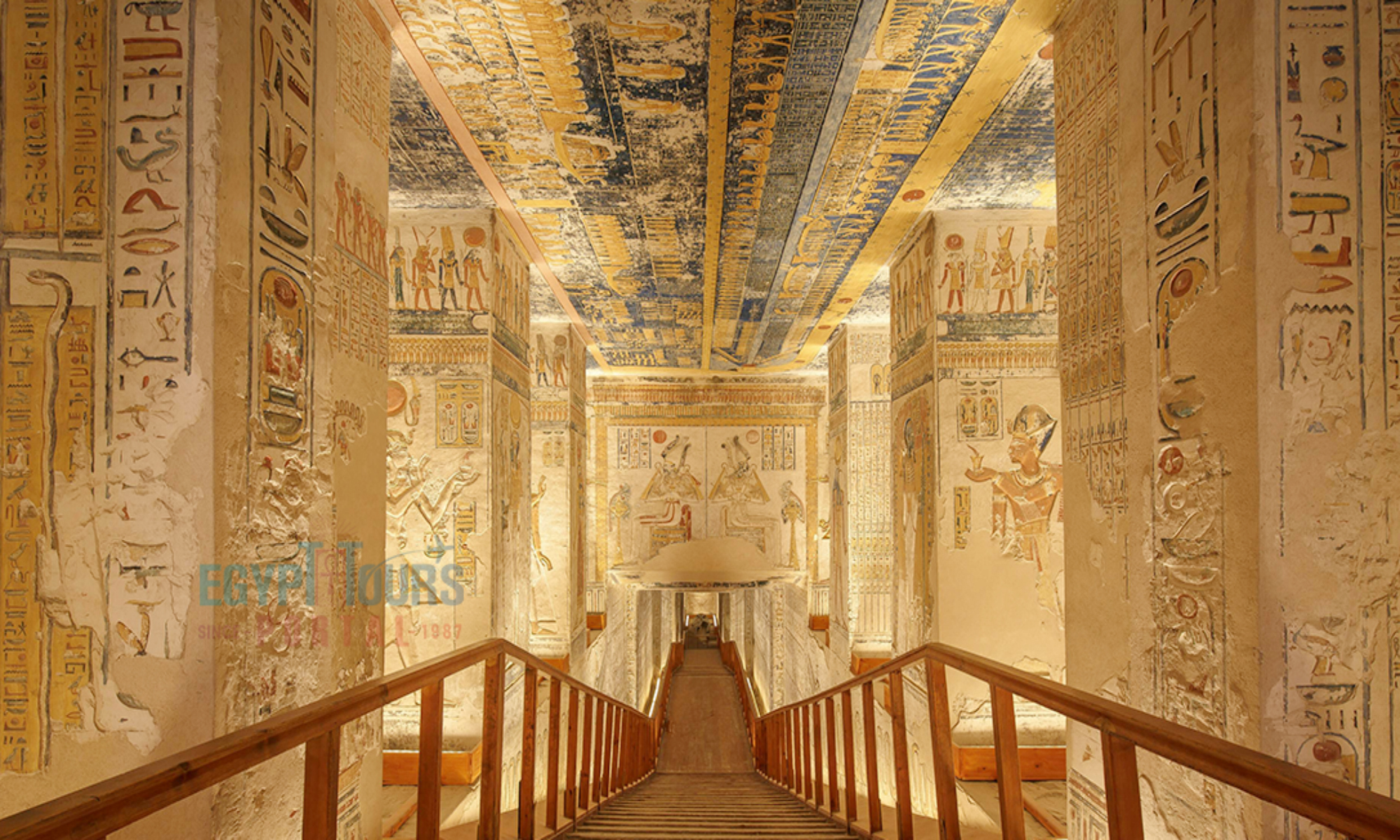
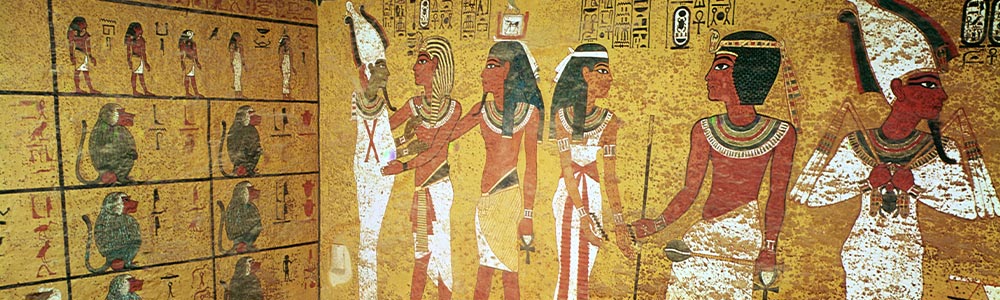
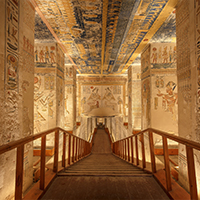
The Valley of the Kings is a vast underground necropolis carved deep within a sacred mountain. Over a span of nearly 500 years during the New Kingdom (1570–1050 BC), this hidden valley became the final resting place for Egypt’s greatest rulers, housing 63 royal tombs belonging to legendary figures such as Ramses the Great, Hatshepsut, Seti I, Tutankhamen, and many others. Each tomb unfolds like a painted manuscript, preserving vivid scenes and inscriptions that reveal the religious beliefs, artistic brilliance, and royal traditions of ancient Egyptian civilization.
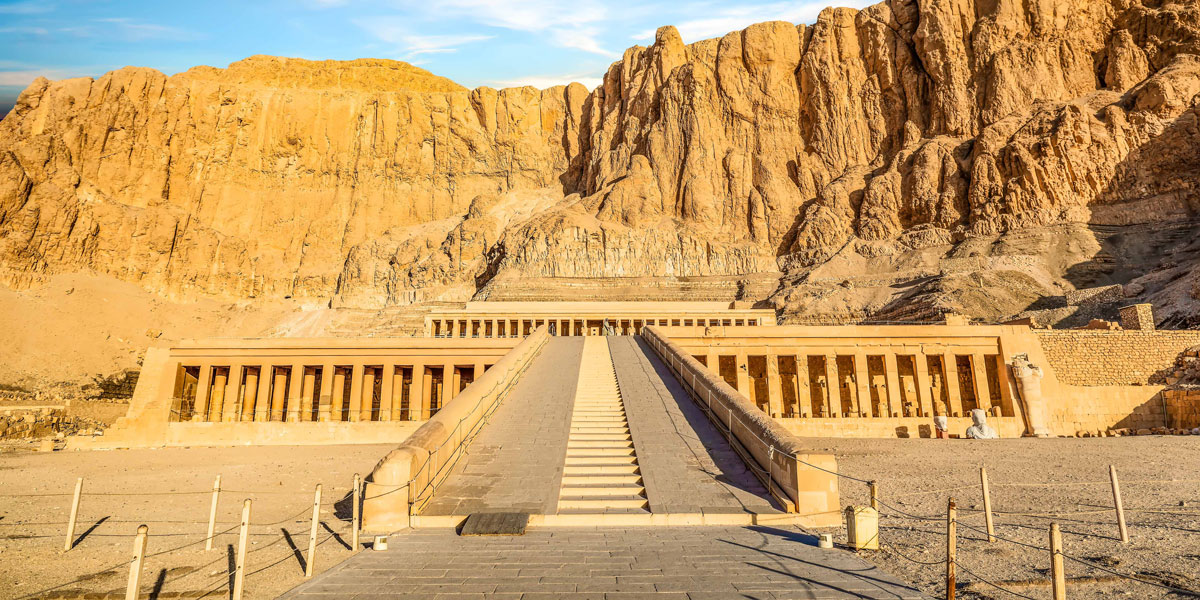
The Captivating Temple of Queen Hatshepsut (1507–1458 BC) is a divine sanctuary rising gracefully from the cliffs of Deir el-Bahari. It was caved into the mountain cliffs in 1479 BC, this architectural marvel stands as the most refined example of New Kingdom classical design. Dedicated to the creator sun god Amun, the temple immortalizes the achievements and identity of Queen Hatshepsut, reflecting her power, elegance, and enduring legacy through harmonious terraces, grand ramps, and perfectly balanced proportions.
After savoring a delicious lunch at a local restaurant, your journey continues to:
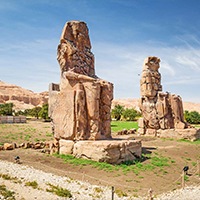
Colossi of Memnon are made of two towering seated statues that have silently watched over the Theban plains for millennia. It was carved in 1350 BC in the likeness of Pharaoh Amenhotep III (1386–1349 BC), these massive monuments once guarded his vast mortuary temple. Despite centuries of damage and restoration, the statues still display intricate reliefs along their sides depicting the king’s family, royal heritage, and the Nile god Hapi, standing today as hauntingly beautiful remnants of a forgotten masterpiece.
You will head back in your vehicle to the airport to catch your flight to Cairo, where you will head to your hotel and spend the overnight.
Meals: Breakfast, Lunch
Flight: From Luxor to Cairo
Overnight: Cairo Hotel
Day 7: Fly from Cairo to Casablanca
After enjoying breakfast, you will check out of your hotel and be greeted by our representative for a smooth and comfortable transfer to Cairo International Airport. There, you will board your flight and continue your extraordinary Egypt & Morocco adventure.
Upon arrival at Mohammed V International Airport in Casablanca, our welcoming local team will be waiting for you with a personalized name sign. They will assist with any arrival and visa formalities if required, then introduce you to your private driver. You will then be escorted in comfort to your hotel in Casablanca for check-in and a relaxing overnight stay, with the option to enjoy a light evening city tour upon request, an elegant first glimpse into the spirit and rhythm of this captivating Atlantic city.
Meals: Breakfast
Flight: From Cairo to Casablanca
Overnight: Casablanca Hotel
Day 8: The Amazing Capablanca & Rabat Attractions
You will start your day with breakfast at your hotel in Casablanca, then meet your private guide for a journey that gracefully weaves together Atlantic horizons and royal legacy.
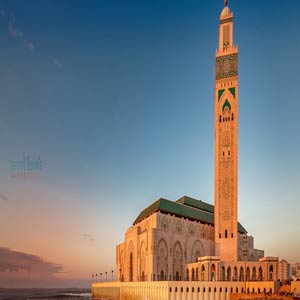
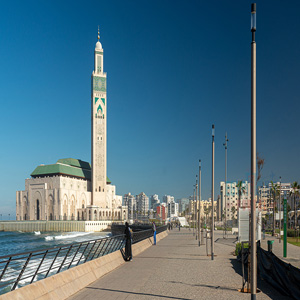
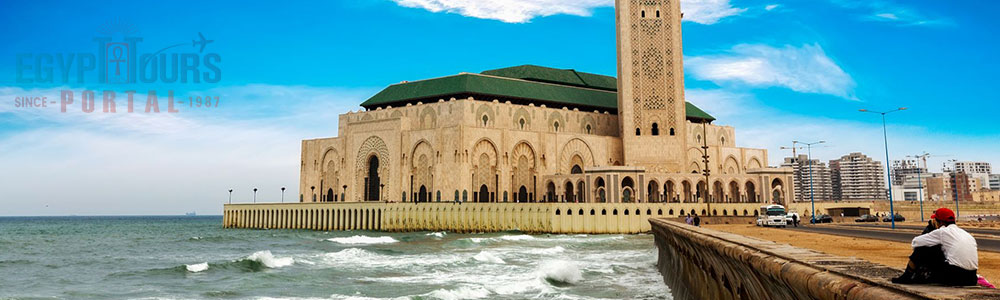
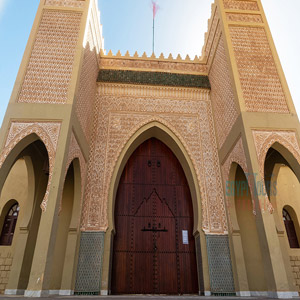
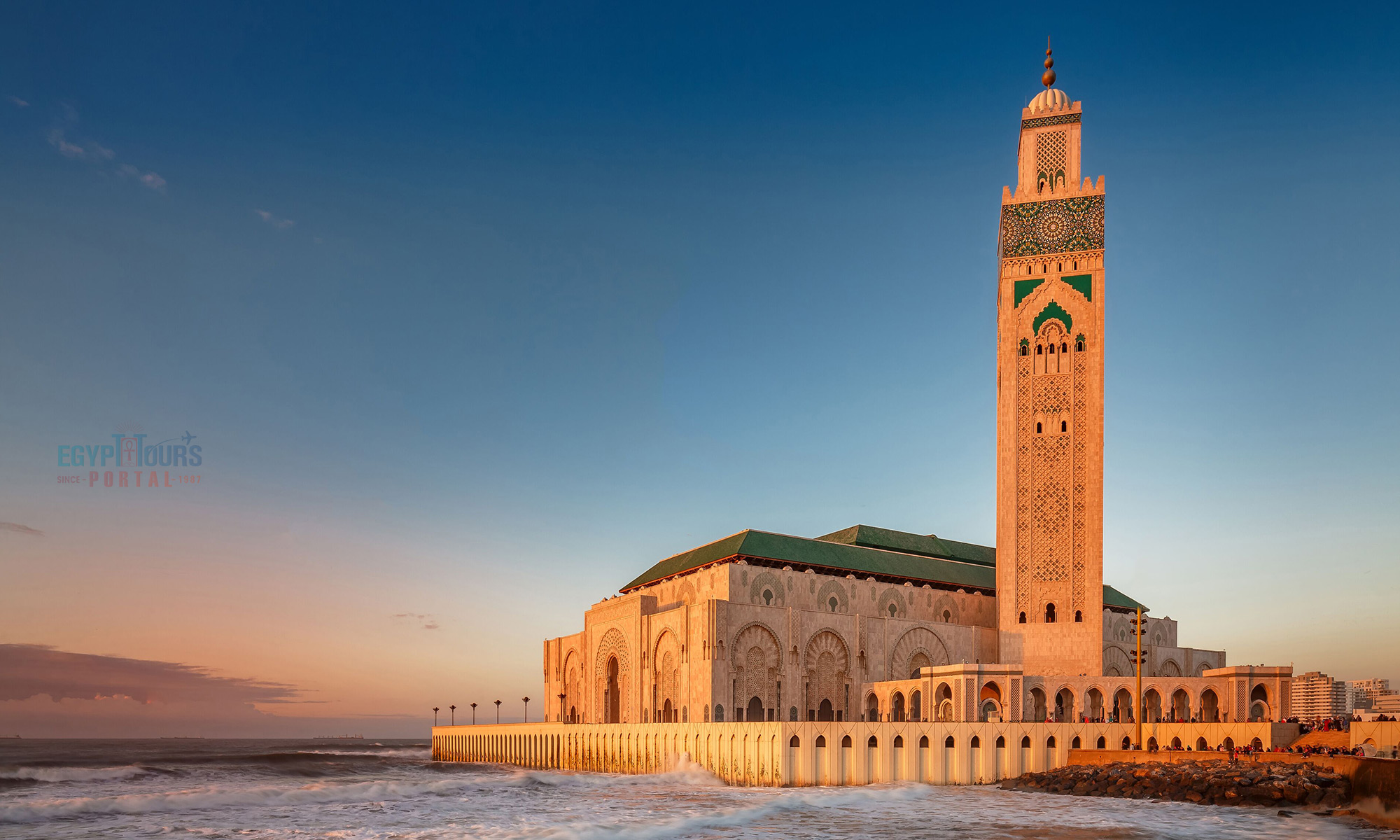
The magnificent Hassan II Mosque is a contemporary architectural jewel where ocean, stone, and spirit unite. Completed in 1993 and dramatically set above the Atlantic Ocean, this monumental masterpiece was designed by architect Michel Pinseau and brought to life by master artisans from across Morocco. Its soaring 210-meter minaret, once the tallest in the world, rises elegantly above vast prayer halls and open courtyards, creating a sacred space that embodies both profound devotion and extraordinary craftsmanship.
A panoramic exploration of Casablanca follows, unveiling the city’s captivating contrasts. Along the breezy promenades of La Corniche and Ain Diab, modern life unfolds beside the rhythm of rolling waves, while wide boulevards shaped by French influence reflect the city’s 20th-century transformation. In the historic Quartier Habous and the Old Medina, older traditions linger in narrow streets and bustling markets. Landmarks such as Rick’s Café, Mohammed V Square, the Sacred Heart Cathedral, and the vibrant Central Market offer vivid glimpses into the everyday heartbeat of Morocco’s largest city.
You then continue by private vehicle to Rabat, Morocco’s elegant capital, where history and modern governance exist in seamless harmony.
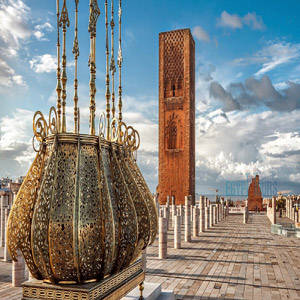
The Hassan Tower remains a powerful testament to Almohad greatness and power. It was commissioned in the 12th century by Caliph Abu Yusuf Yaqub al-Mansur, it was meant to form part of one of the largest mosques ever envisioned. Construction halted upon his death in 1199, leaving behind the striking 44-meter minaret surrounded by orderly rows of stone columns, silent witnesses to a grand yet unfinished dream.
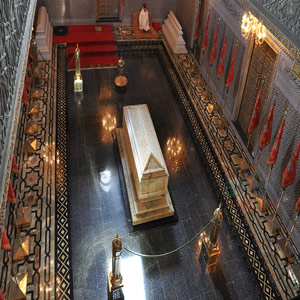
The Mausoleum of Mohammed V, the final resting place of King Mohammed V, offers a moment of reverence and reflection. This noble monument houses the tombs of King Mohammed V, King Hassan II, and Prince Abdallah. Completed in 1971 and designed by Cong Vo Toan, the gleaming white-marble structure harmoniously blends traditional Moroccan artistry with refined modern lines, creating an atmosphere of dignity, grace, and tranquility.
Lunch is served at a local restaurant before continuing the exploration with Rabat’s historic treasures.
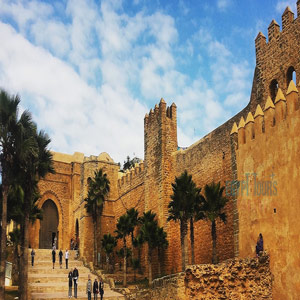
The Kasbah of the Udayas rises as a historic coastal stronghold shaped by centuries of rule. Its winding lanes and sweeping ocean views are crowned by the beautifully adorned Bab Oudaia gate, dating to the late 12th century, where classic Almohad stonework welcomes visitors with enduring character and timeless beauty.
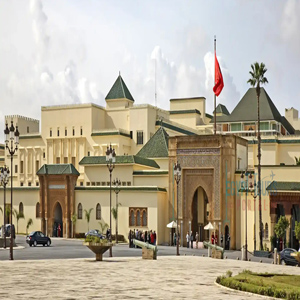
The Royal Palace of Rabat (Dar al-Makhzen) was built in 1864 in order to be and still remains the active royal residence, and the heart and pride of the capital. Set within a guarded complex of ceremonial gates and expansive courtyards, it symbolizes Morocco’s enduring monarchy. Though interior access is restricted, its majestic exterior alone conveys authority, tradition, and continuity.
As the day draws to a close, you will journey toward Chefchaouen, pausing along the way for scenic stops. Upon arrival, enjoy a gentle evening stroll through the enchanting blue-painted medina before settling in for a restful overnight stay in Chefchaouen, where mountain serenity and dreamlike hues await.
Meals: Breakfast, Lunch
Overnight: Chefchaouen Hotel
Day 9: The Austral Cities of Chefchaouen and Fes
Begin your day with a delightful breakfast, then set out with your private guide and driver to uncover the enchanting beauty of Chefchaouen, Morocco’s dreamlike Blue Pearl, beginning with:
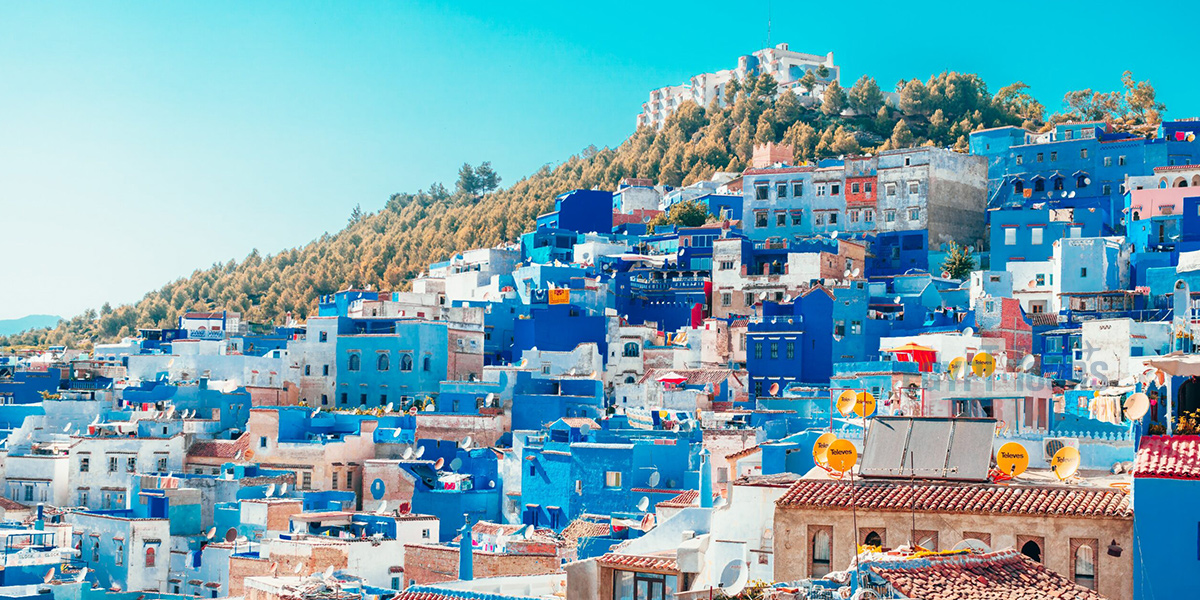
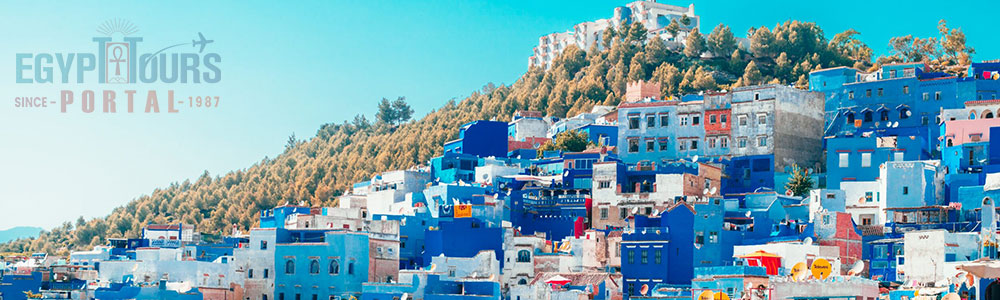
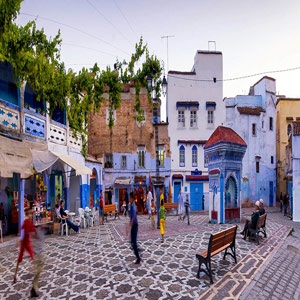
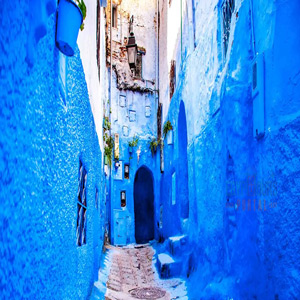
Chefchaouen was founded in 1471 AD as a fortified town in the embrace of the Rif Mountains. Over the centuries, especially from the 15th and 16th centuries onward, its walls were painted in serene shades of blue, a tradition influenced by Andalusian and Jewish communities. These luminous hues are often linked to spiritual symbolism, reflecting the sky, heaven, and a sense of tranquility. As you wander through the medina’s narrow lanes, stairways, and arched doorways, each brushed in soft blues from powder to deep indigo, you’ll feel immersed in a peaceful, cooling atmosphere. This iconic blue medina has become Chefchaouen’s defining identity and one of the most photographed historic urban landscapes in Morocco.
Outa el Hammam Square is a timeless gathering place that has served as the city’s social and cultural stage for centuries. Anchored by the Kasbah of Chefchaouen, built shortly after the town’s founding in the 15th century, the square presents a striking contrast between the Kasbah’s warm red walls and the surrounding blue streets. Framed by cafés, restaurants, and local shops, the square reflects the rhythm of daily medina life, from the ritual of pouring sweet mint tea to animated evening conversations. As night falls and golden lights illuminate the scene, the square transforms into the vibrant heartbeat of Chefchaouen.
From here, continue your journey by private vehicle to Fes, enjoying lunch along the way. Upon arrival, your guide will lead you through the majestic Royal Gate of the city and into the spiritual and intellectual soul of Morocco.
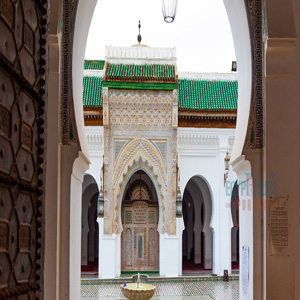
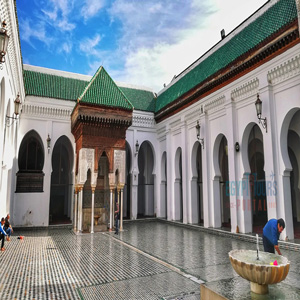
Al-Qarawiyyin University is a majestic establishment founded in 859 AD by Fatima al-Fihri, stands as the world’s oldest continuously operating university. Within its historic walls, generations of scholars studied theology, astronomy, mathematics, and law, shaping Islamic scholarship and profoundly influencing European intellectual thought. Its legacy remains one of the greatest milestones in global educational history.
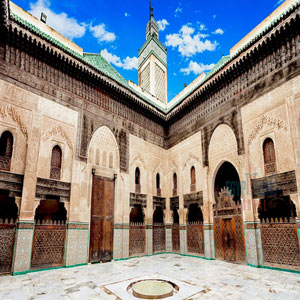
The Bou Inania Madrasa reveals the refined artistry of the 14th century. This magnificent Marinid masterpiece is one of the rare madrasas that also functioned as a congregational mosque. Its intricately carved cedar wood, gleaming marble floors, and elaborate muqarnas ceilings represent the pinnacle of Marinid architectural brilliance.
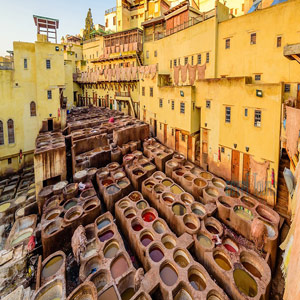
The legendary Chouara Tanneries have been in continuous operation since medieval times. The artisans still use natural dyes such as saffron and indigo to color leather in the same traditional way practiced for centuries. From surrounding terraces, the honeycomb-like vats filled with vibrant hues create one of Fes’s most iconic and enduring images of living craftsmanship.
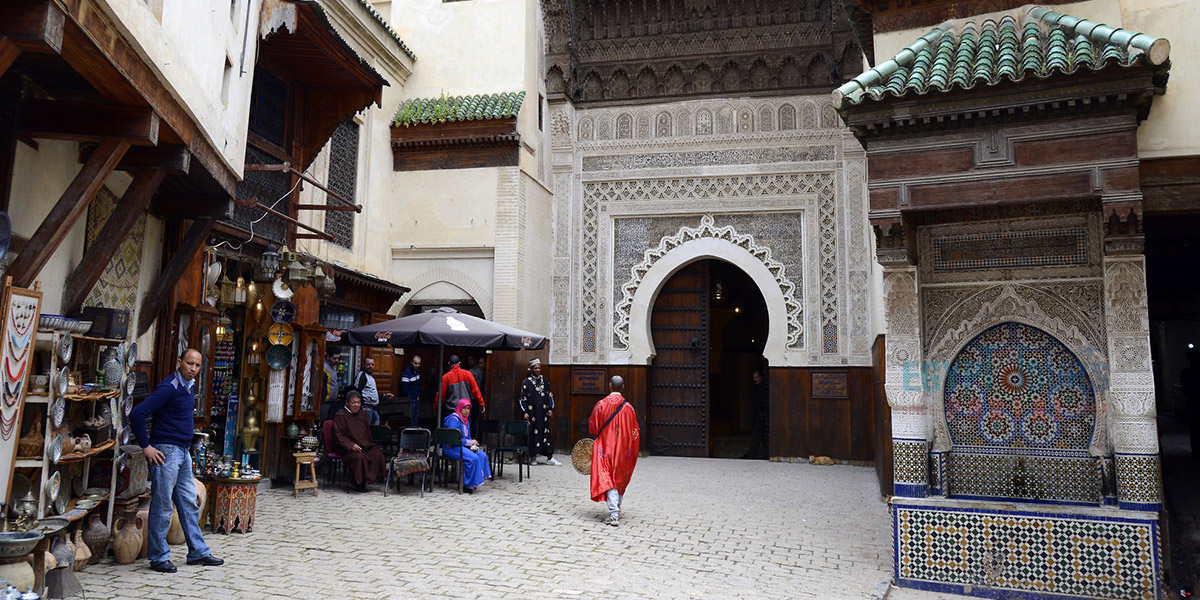
The elegant Nejjarine Fountain, dating back to the 18th century, is adorned with exquisite floral zellij tiles and delicately carved cedar wood. Located beside a former caravanserai that once welcomed merchants traveling across North Africa, it stands as a reminder of Fes’s role as a thriving center of trade and cultural exchange.
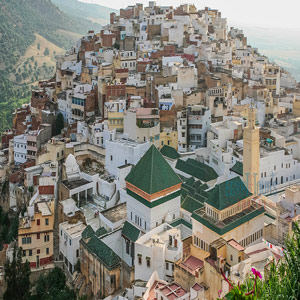
Hidden within the winding alleys of Fes el-Bali lies the Moulay Idriss Mausoleum, one of the city’s most sacred sites. Dedicated to Moulay Idriss II, founder of Fes and a descendant of the Prophet Muhammad who died in 828 AD, the shrine has long been a major spiritual center and pilgrimage destination for Moroccans. Though non-Muslims may not enter the inner sanctuary, visitors can admire its exquisite zellij tilework, carved cedar doors, marble columns, and softly glowing lanterns. More than a monument, the mausoleum remains a living heart of Fes, where daily life slows in reverence, revealing the city’s profound blend of faith, history, and tradition.
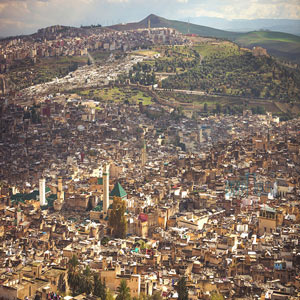
Fes el-Bali itself offers a magical passage into a living medieval world. With more than 9,000 narrow alleys, it is the largest car-free urban area on Earth. Donkeys still carry goods through its winding streets, and artisan workshops echo with centuries-old trades, preserving a way of life that has endured across generations.
As evening descends, you will retire to a traditional riad in Fes, where intricate tilework, tranquil courtyards, and lantern-lit arches create the perfect setting for a restful and atmospheric overnight stay.
Meals: Breakfast, Lunch
Overnight: Fes Riad
Day 10: Witness the Golden Sahara Leading to Merzouga
After breakfast, the spirit of adventure calls as you bid farewell to Fes and set your course southward toward Merzouga, where the vast Sahara begins to whisper its ancient secrets. Your journey first unfolds through Ifrane, often called Morocco’s “Little Switzerland,” before entering the serene cedar forests of Azrou. Here, playful wild monkeys roam freely among towering trees, and the untouched wilderness provides a perfect backdrop for unforgettable photographs.
The road continues to the small Berber village of Zaida, where you pause for lunch and catch a glimpse of authentic mountain life shaped by tradition and simplicity. From there, the Atlas Mountains rise dramatically around you as you pass through Midelt, a highland town framed by rugged peaks and sweeping valleys that stretch endlessly toward the horizon. As you move onward to Rich and then Erfoud, the landscape begins its quiet transformation, rocky plains soften, palm groves appear, and the first signs of the Tafilalet Saharan oasis signal that the desert is near.
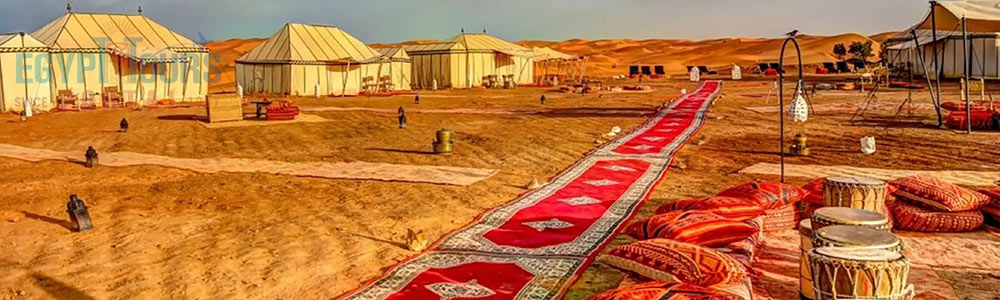
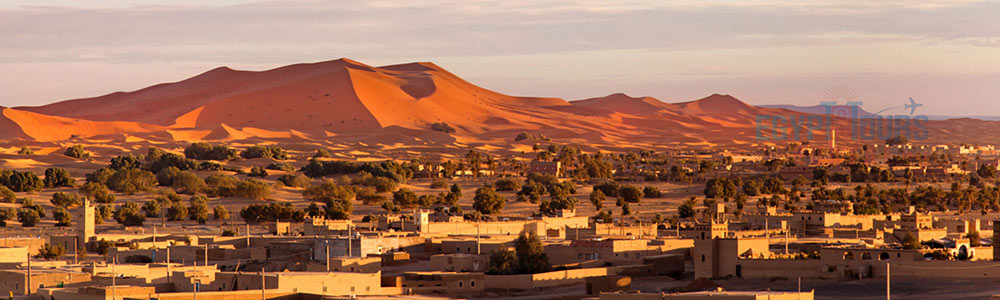
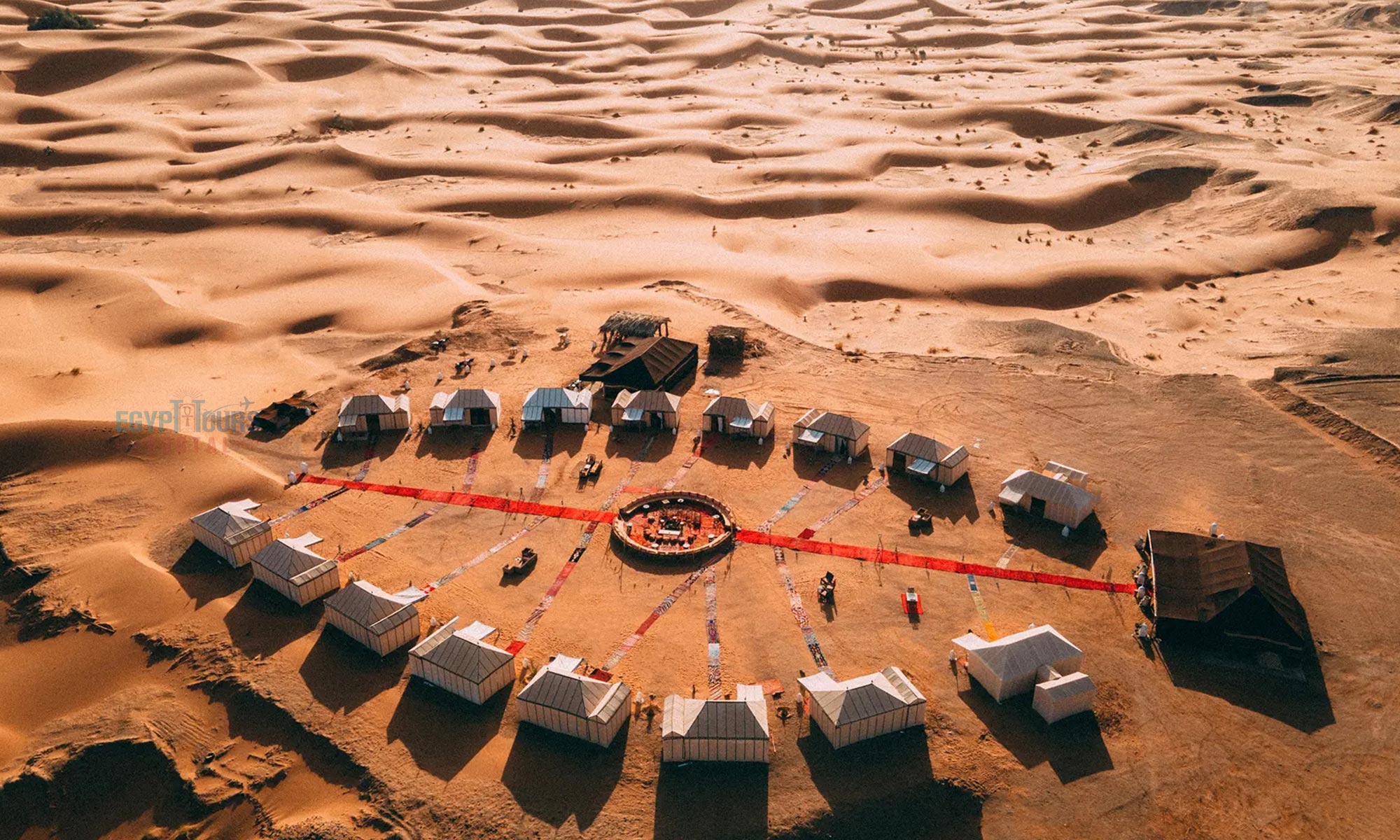
By late afternoon, you reach Merzouga and take a brief rest before the most magical chapter of the day begins. As the sun slowly melts into the horizon, you mount your camel and glide gently across golden dunes glowing in hues of amber, copper, and rose. The rhythm of the camel’s steps carries you deeper into the heart of the Sahara, where your desert camp awaits. There, beneath an endless canopy of stars and wrapped in desert silence, you will spend an unforgettable night surrounded by sand, serenity, and pure Saharan wonder.
Meals: Breakfast, Lunch
Overnight: Desert Camp
Day 11: The Marvelous Rissani and the Road to Dades Valley
As the first light of dawn touches the Sahara, you awaken to a mesmerizing sunrise over the dunes, where waves of golden sand shimmer beneath a sky brushed with soft amber and rose. The desert is silent, vast, and eternal. After savoring this serene and unforgettable moment, you mount your camel once more and ride gently back across the glowing dunes, the morning light casting long, graceful shadows over the endless sea of sand. Your international journey then continues toward the historic lands of southern Morocco.
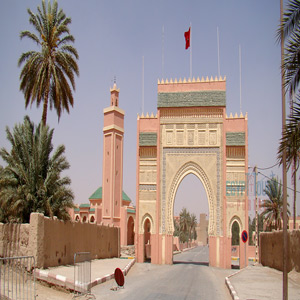
Rissani emerges like a mirage of history, a mystical desert town whose origins reach deep into Morocco’s past. From the medieval era onward, it stood as a vital crossroads for caravans crossing the Sahara. Between the 14th and 18th centuries, Rissani flourished as a powerful trading center connecting Morocco to sub-Saharan Africa. Gold, salt, spices, and enslaved goods once flowed through its bustling markets, shaping its wealth and influence. In time, this remarkable town became the cradle of Morocco’s ruling dynasty, anchoring its place in the nation’s story.
Rissani stands the Mausoleum of Moulay Ali Sharif, a sacred treasure built in the 17th century and dedicated to Moulay Ali Sharif (1659), the founder of the Alaouite dynasty. This royal lineage has ruled Morocco since 1631 and continues to this day. As a descendant of the Prophet Muhammad, Moulay Ali Sharif’s ancestry granted profound religious legitimacy to the dynasty’s rise. Today, the mausoleum remains one of the most revered pilgrimage sites in southern Morocco, especially cherished by Moroccans. Framed by palm groves and desert stillness, the complex reflects traditional Moroccan sacred architecture and deep devotion, embodying the spiritual foundation of Moroccan kingship and the enduring bond between faith, history, and the Sahara.
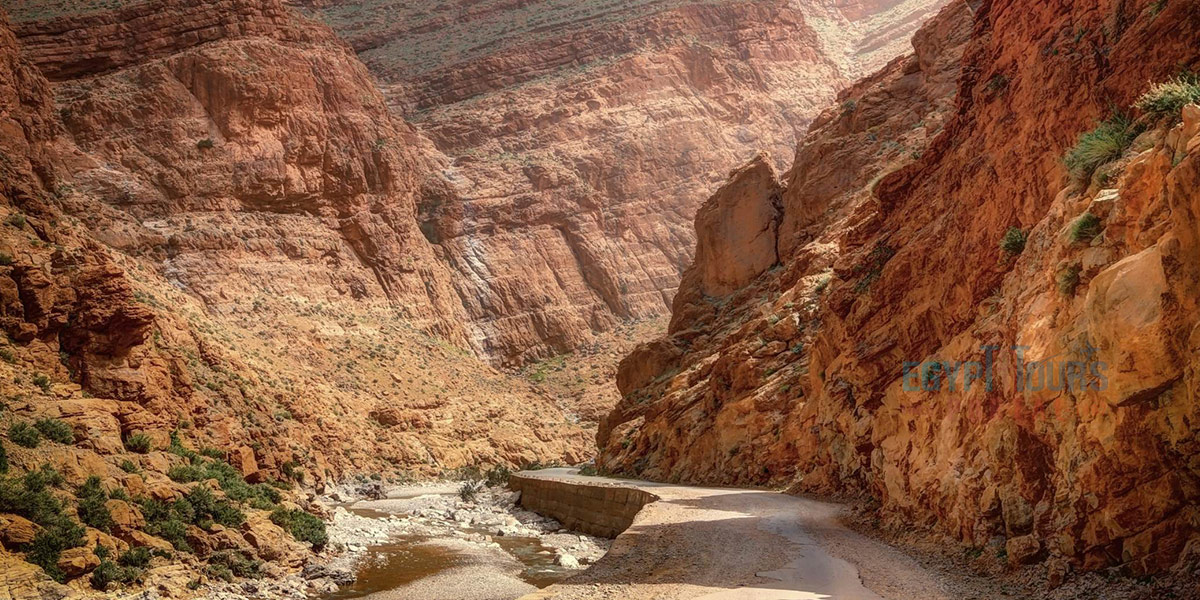
From here, the road winds onward through landscapes that transform with every mile, leading you to the awe-inspiring Todra Gorges. Towering limestone cliffs rise dramatically above a narrow river passage, forming one of Morocco’s most breathtaking natural wonders. Just beyond, the verdant Tinerhir Oasis unfolds as a refreshing contrast, lush palm groves and traditional villages resting peacefully along the valley floor.
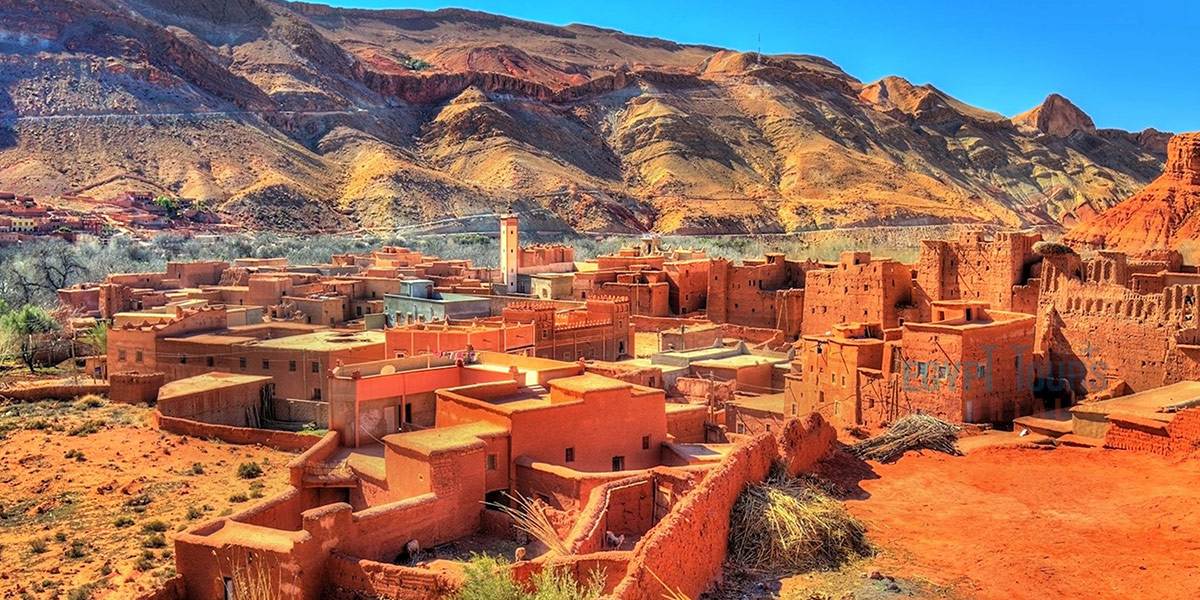
Your adventure continues through the legendary Dades Valley, famously known as the “Valley of a Thousand Kasbahs.” Along its winding roads, ancient fortified villages cling to hillsides, dramatic rock formations sculpt the horizon, and fertile oases whisper stories of old caravan routes and desert survival. As evening descends, you arrive in the heart of the valley, where the tranquil beauty of the Dades surrounds you. Here, embraced by mountains, history, and timeless serenity, you settle in for a restful overnight stay in one of Morocco’s most enchanting landscapes.
Meals: Breakfast, Lunch
Overnight: Dades Valley Hotel
Day 12: The Magical Aït Ben Haddou
After breakfast, your journey unfolds through the enchanting Roses Valley, where, in spring, blooming damask roses scent the breeze and color the landscape with delicate pink hues. The road then leads into the emerald embrace of Skoura, a tranquil oasis where ancient kasbahs emerge gracefully from palm groves, orchards, and flourishing gardens. Here, rural Morocco reveals itself in warm earthen tones and sweeping green canopies, offering a living tapestry of oasis life that has endured for centuries. Along the way, you pause for memorable photographs at the historic Taourirt Kasbah, once the grand residence of the powerful Glaoui family, and at the legendary Atlas Film Studios, where vast desert horizons have been transformed into cinematic worlds recognized across the globe.
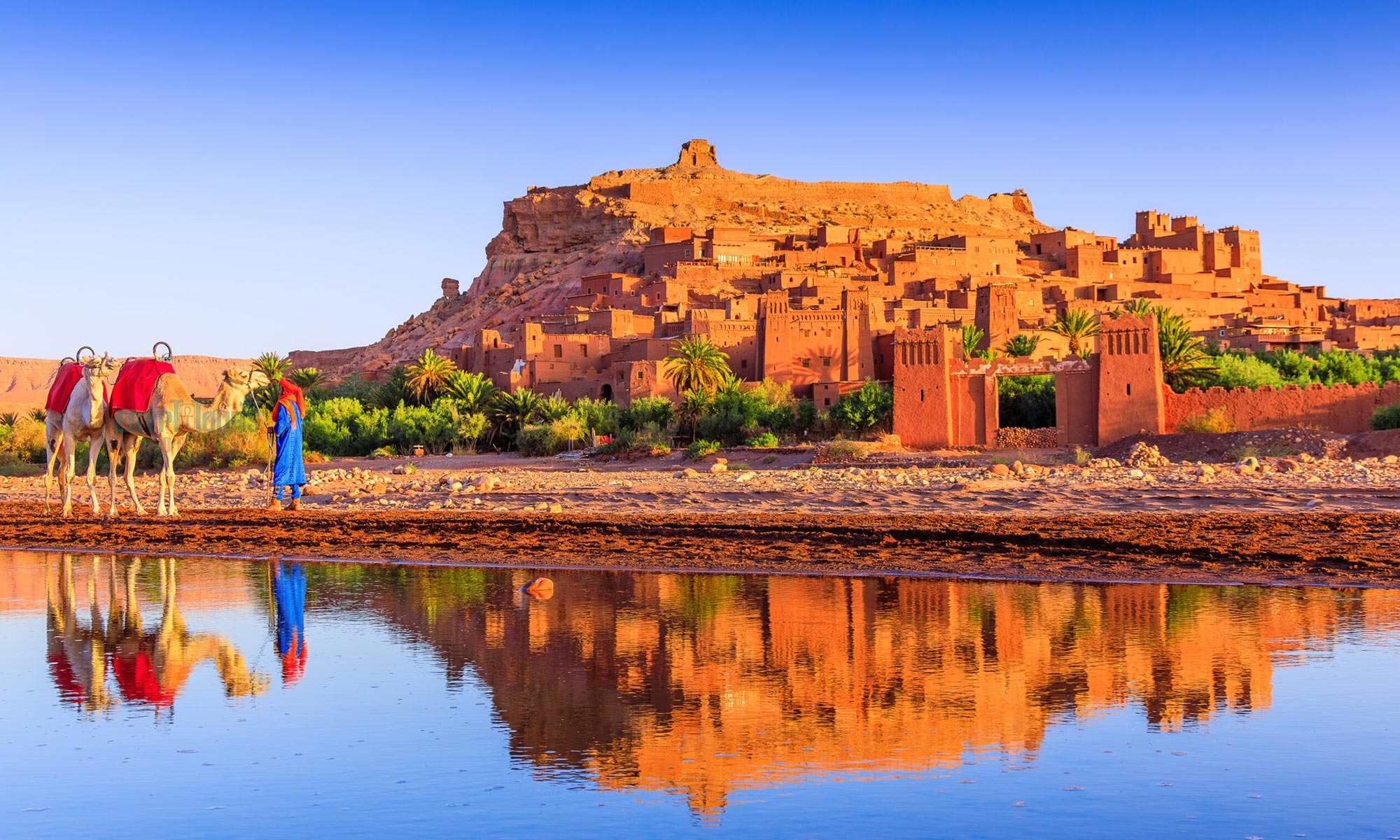
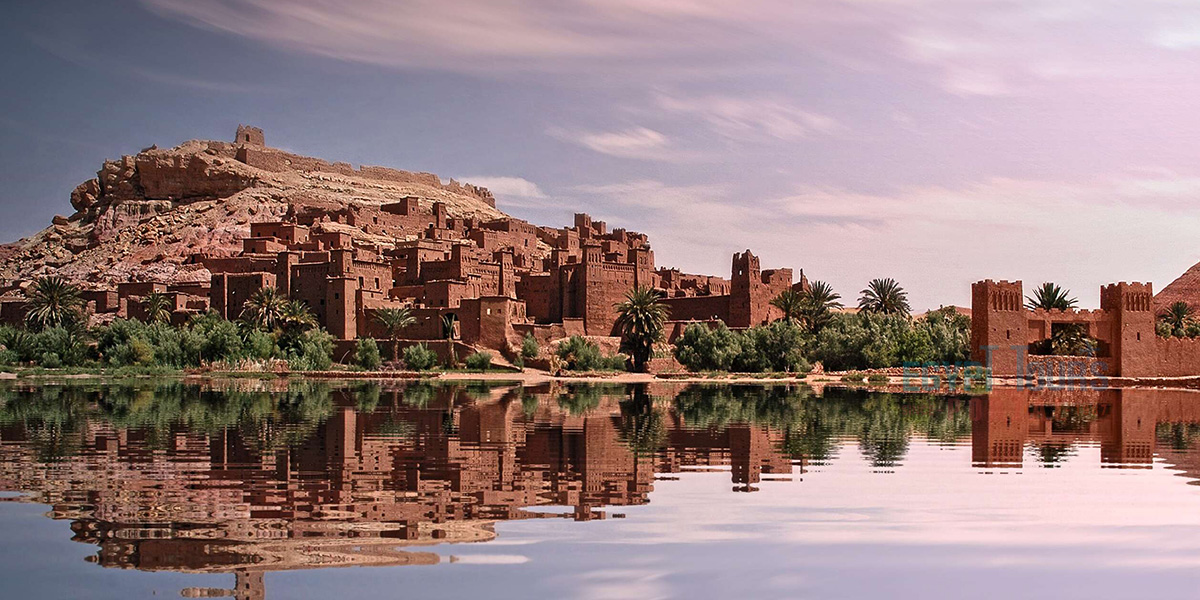
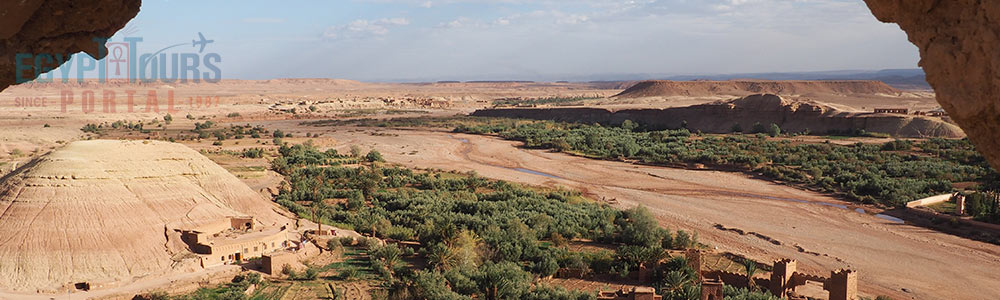
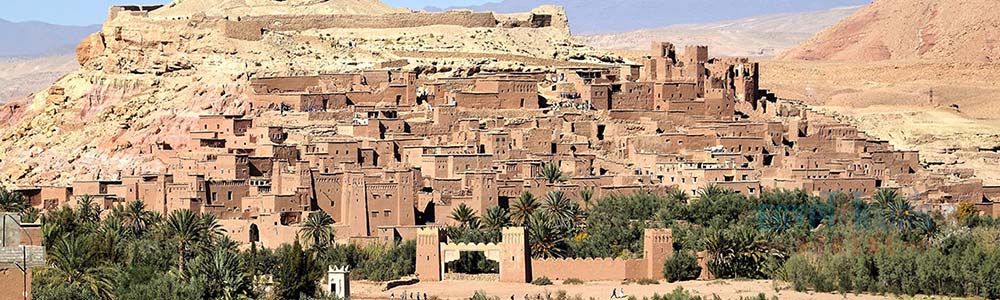
The extraordinary Aït Ben Haddou, an epic ksar, fortified village, where natural splendor and enduring legend blend in a breathtaking desert setting. Famous for its remarkable preservation and dramatic silhouette climbing the hillside, this architectural treasure dates back to the 11th century during the Almoravid period. Built entirely from sun-dried earth and clay in the traditional style of southern Morocco, the ksar rises in layered tiers above the valley, glowing in shades of gold and amber under the sun. Positioned along ancient caravan routes that once linked the Sahara to Marrakech, it was conceived as a defensive stronghold, with tightly clustered homes, narrow winding alleys, and fortified walls designed to protect both its people and their valuable goods. Recognized as an outstanding example of Moroccan earthen clay architecture, Aït Ben Haddou has proudly held UNESCO World Heritage status since 1987.
Within this magical establishemnet holds, a labyrinth of passageways, old granaries, and majestic viewpoints reveals how desert communities once lived, traded, and safeguarded their supplies against the harsh elements. Thanks to its epic landscape and authentic atmosphere, Aït Ben Haddou has also captured the imagination of filmmakers from around the world, serving as a backdrop for iconic productions such as Lawrence of Arabia (1962), The Mummy (1999), Gladiator (2000), Kingdom of Heaven (2005), Prince of Persia (2010), The Odyssey (2026), the television series Game of Thrones, and many more, cementing its place as both a historical treasure and a living legend of cinema.
From here, the road ascends into the dramatic heights of the High Atlas Mountains, crossing the awe-inspiring Tizi n’Tichka Pass at 2,260 meters above sea level. Along this spectacular mountain route, panoramic views of rugged peaks and deep valleys unfold endlessly before you. As the majestic mountains gradually yield to wide plains, you descend toward Marrakech, the vibrant Red City, where you settle in for the night, embraced by its warm colors, dynamic energy, and undeniable magic.
Meals: Breakfast, Lunch
Overnight: Marrakech Hotel
Day 13: The Miraculous city of Marrakech
After breakfast, step out with your guide into the vibrant soul of Marrakesh, a city where color dances on every wall, rhythms echo through ancient streets, and centuries-old traditions flow seamlessly into modern life. Here, every step feels alive with story and sensation.
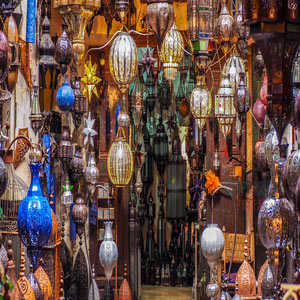
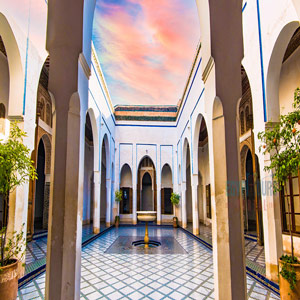
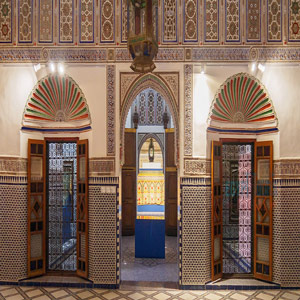
The refined Bahia Palace, an exquisite 19th-century residence, was conceived as a statement of power, prestige, and flawless taste. One tranquil courtyard leads to another, framed by fragrant gardens and lavish chambers adorned with carved cedar ceilings, intricate zellij mosaics, and delicate stucco artistry. Each detail reveals the sophistication of Marrakesh’s former aristocracy and stands as a testament to the brilliance of Moroccan craftsmanship at its peak.
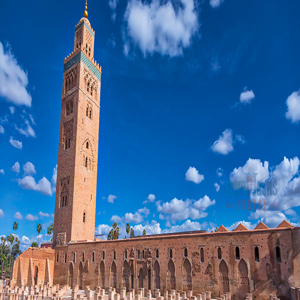
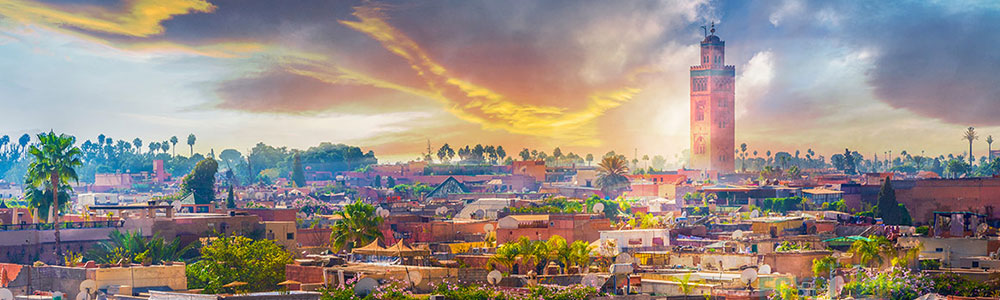
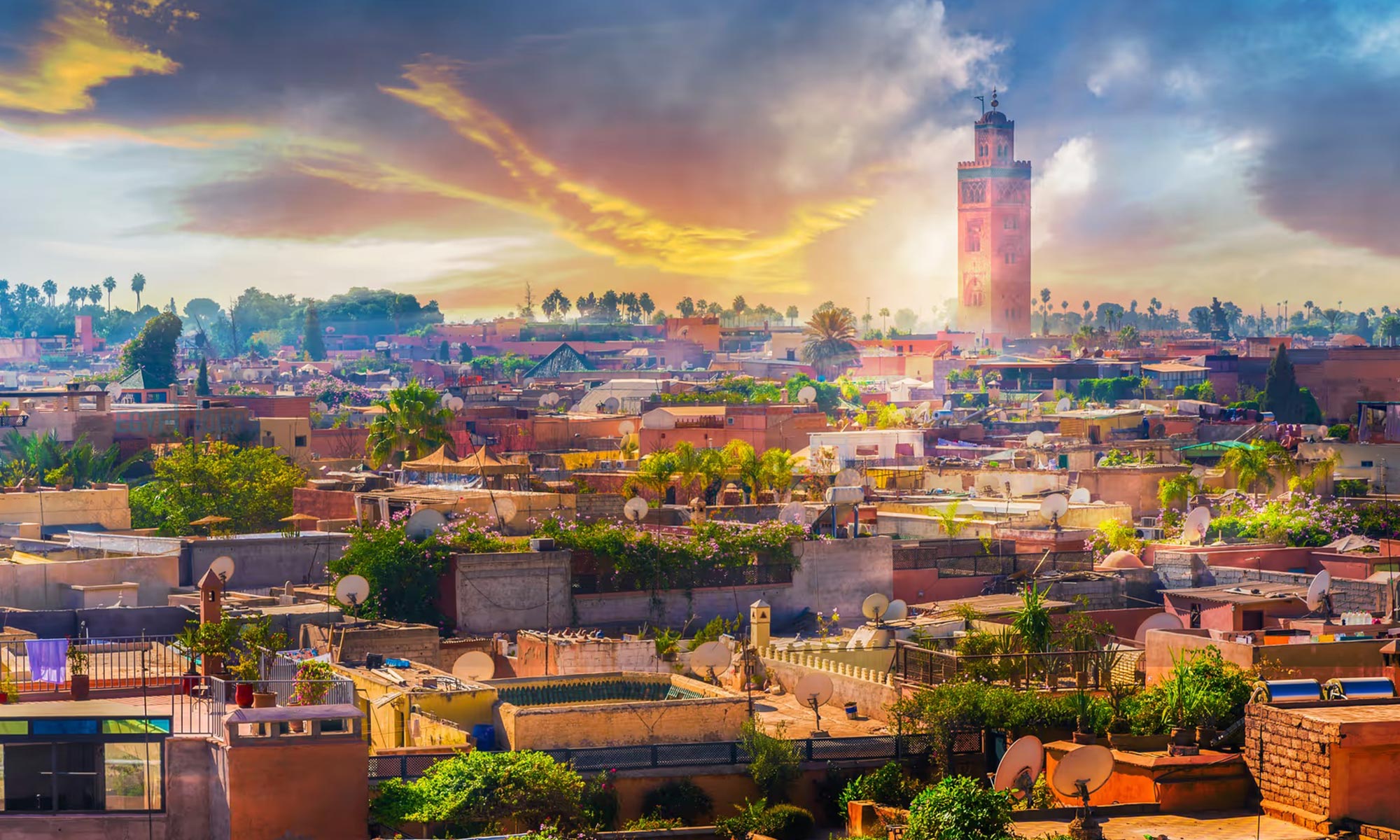
The Koutoubia Mosque remains the spiritual emblem of the Red City. Built in 1147 by the Almohad caliph Abd al-Mu’min, its majestic minaret defines Marrakesh’s horizon and embodies the harmony and strength of Almohad architecture. While entry is reserved for worshippers, the surrounding gardens and the mosque’s golden silhouette at sunset create a vision that lingers long after you leave.
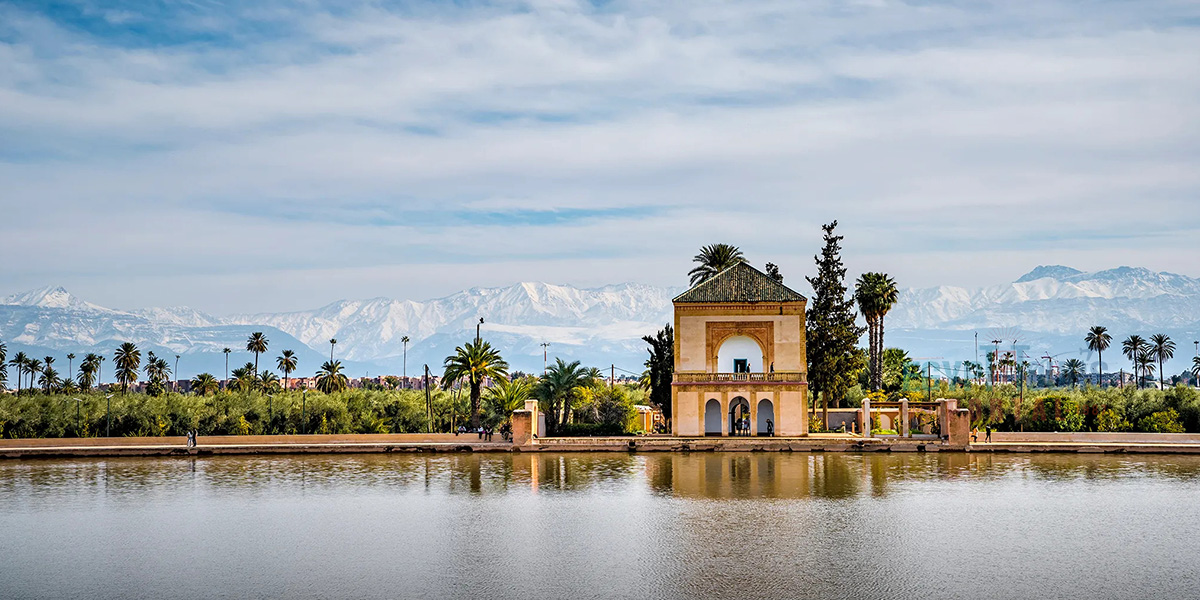
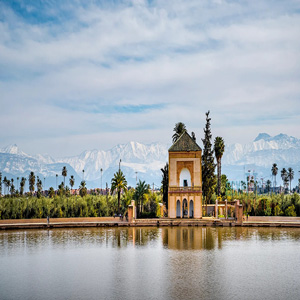
The enchanting Menara Gardens stand across the Atlas Mountains, offering a serene pause where nature, geometry, and history meet in perfect balance. Established in the 12th century during the Almohad dynasty, the gardens were designed around a vast reflecting pool fed by an ancient underground irrigation system. Olive groves stretch peacefully across the land, and the elegant green-roofed pavilion mirrored in still waters forms one of Marrakesh’s most iconic images. Menara speaks not of extravagance, but of serenity, equilibrium, and Morocco’s timeless bond between water, earth, and sky.
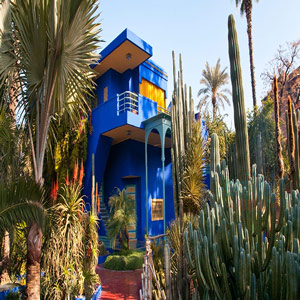
The radiant Majorelle Gardens feel like stepping into a living canvas painted by nature itself. Created in the 1920s by French artist Jacques Majorelle and later lovingly restored by Yves Saint Laurent, this botanical sanctuary bursts with color and imagination. Towering bamboo, exotic cacti, tranquil water lilies, and rare plants from across the globe surround fountains and pathways washed in the famous Majorelle blue. Here, art and landscape blend effortlessly, forming one of Marrakesh’s most captivating escapes.
Within the graceful walls of Dar Si Said Museum, a 19th-century palace unfolds as a tribute to Morocco’s refined artistry. Ornate courtyards, intricately carved cedar ceilings, and luminous zellij tilework provide an elegant setting for collections of jewelry, carpets, woodwork, weapons, and everyday treasures from across the kingdom. Each room whispers stories of regional identity and craftsmanship passed lovingly from generation to generation. Walking through Dar Si Said feels like entering a palace of memory where Morocco’s cultural heritage is preserved in exquisite detail.
You will have your lunch, and it will be served at a local restaurant in Marrakesh, then proceed to visit:
The Medina of Marrakesh is a grand UNESCO World Heritage Site, forms the living core of the city. Its labyrinth of narrow alleys, hidden riads, and ancient gates leads into bustling souks where artisans continue to handcraft leather goods, metalwork, textiles, lanterns, spices, and perfumes. Every turn awakens the senses with vibrant color, intoxicating scent, and the rhythm of daily life.
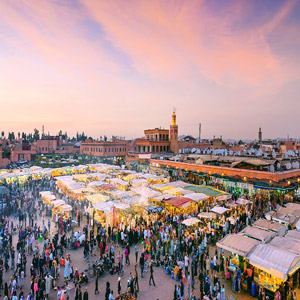
The legendary Jemaa el-Fna, a square unlike any other. As daylight fades, it transforms into an electrifying open-air theatre alive with food stalls, musicians, storytellers, and performers. The energy becomes magnetic, the atmosphere unforgettable. Jemaa el-Fna is not merely a place to visit; it is an experience to stand within, to watch, to feel, as Marrakesh reveals its soul before your eyes.
As evening settles, return to your hotel in Marrakesh, where dinner awaits and the magic of the day gently gives way to a restful night in the heart of the Red City.
Meals: Breakfast, Lunch
Overnight: Marrakech Hotel
Final Day: Departure
You will have your breakfast, then end your 13-night Egypt & Morocco tour package by heading straight to Marrakech Menara Airport to catch your scheduled flight back home.
Hint: You can share your thoughts about adding or removing any tours from your tour itinerary to be able to accommodate your requirements and fulfill your needs.
Tour Prices
All prices above are per person
Send a Request and Let the Dream Begin
Note: We have multiple ways for our payment system Check How to Pay for This Tour
Check the most frequently asked questions regarding tour booking. Check Now
Pay Monthly
24/7 Customer Support
Best Prices
Rated 5* Stars
Fast Booking
What to Pack
-
Hat.
-
Camera.
-
Umbrella.
-
Medication.
-
Comfortable Shoes.
-
Sunblock & Sunglasses.
-
Warm clothes in winter.
-
Cotton clothes in summer.
-
Valid Passport for 6 months.
-
Note: Check our blog about what to pack for Egypt.
Tour Map
What You Will Love About This Tour?
-
A 14-day journey for UAE guests will link Egypt’s ancient marvels with Morocco’s royal cities and Sahara wonders creates a truly immersive North African experience.
-
This international tour features private A/C transfers, quality accommodations, a luxury Nile cruise, organized flights, and expert guides.
-
Our UAE travelers will explore Cairo, Luxor, and Aswan, including the Pyramids, GEM, Sphinx, Karnak, Hatshepsut Temple, Valley of the Kings, Memnon, Kom Ombo, Edfu, Philae, and Abu Simbel.
-
Casablanca, Rabat, Chefchaouen, Fez, and the Middle Atlas lead to Merzouga’s dunes and camel trek, where a great adventure awaits.
-
This magical trip will pave a magical road to Rissani, Todra Gorge, Dades and Roses Valleys, Skoura, Aït Ben Haddou, Taourirt Kasbah, Atlas Film Studios, ending in Marrakech.
Essential Trip Information
If you want an in-depth insight into our trips, then Essential Trip Information provides detailed information about all of that is linked to our itineraries, visa info, what is mainly included & excluded, the most important info regarding your transfers & accommodation with us, and almost everything you need to know about the amazing adventures we arrange.
View Essential Trip InformationRead Before You Go
The Top 25 Types of Egyptian Food
Discover Egypt's rich food culture with 25+ authentic dishes, from koshari to konafa. Taste history throu...
The Best Egypt Travel Tips 2026
Will you travel to Egypt? Here are the best Egypt travel tips for 2026 which will give you important hi...
Best 15 Cities to Visit in Egypt Today 2026
Discover the top 15 cities to visit in Egypt, from ancient wonders to beach resorts, for an unforgettable...
List of Foreign Embassies and Consulates in Egypt
Here is a list of embassies and consulates in Egypt with each info about the embassy such as its address,...