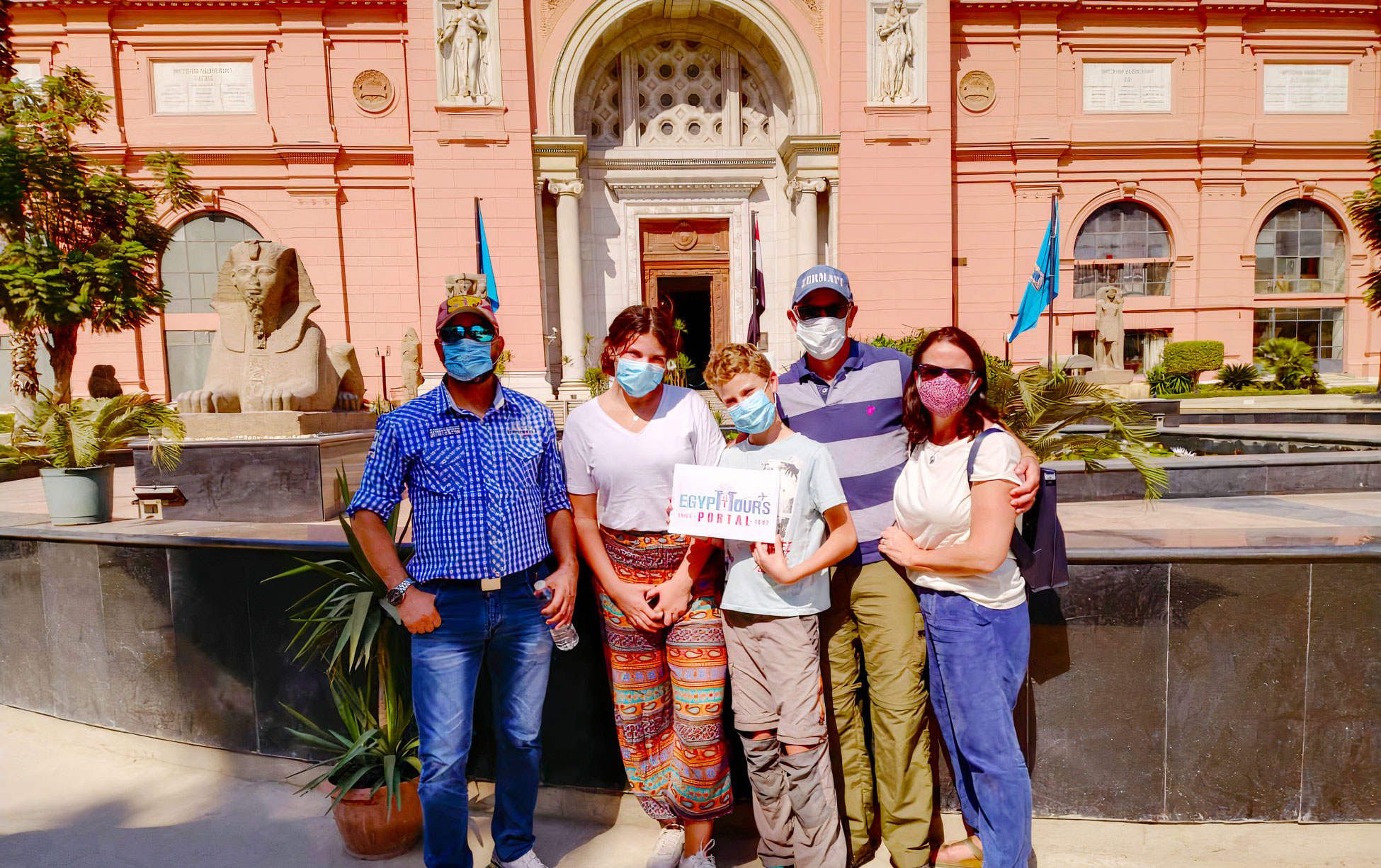
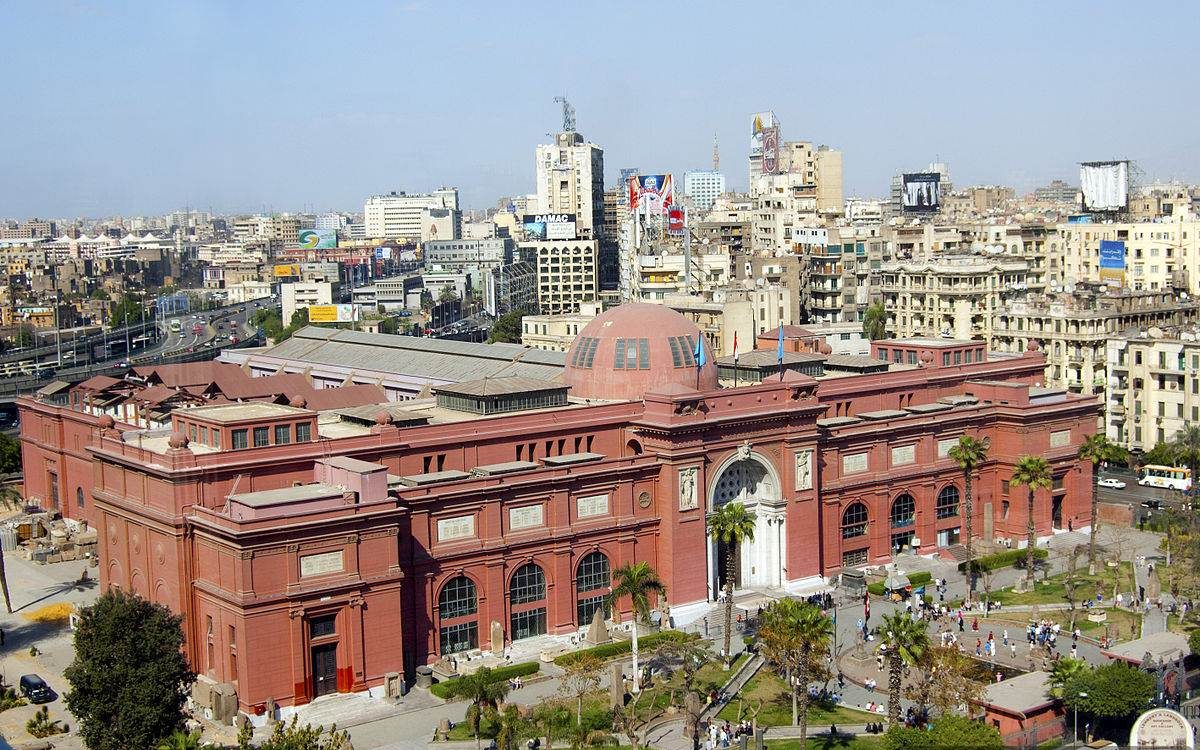
The Egyptian Museum, a.k.a the Museum of Egyptian Antiquities, and also called the Cairo Museum or Egyptian Museum in Cairo (EMC), is one of the most important Egyptological museums in the world and the first official museum in the history of Egypt. It was the first purpose-built national museum in the Middle East and remains one of Africa’s largest and most historic museums. The EMC in itself is considered a true historical gem and an archaeological wonder that survived for over 120 years.
It is a national history museum dedicated to ancient Egyptian civilization and used to house one of the largest collections of Egyptian antiquities ever assembled, with more than 170,000 objects recorded in its holdings. Its collection spans from the Predynastic Period to the Greco-Roman Period, making it a complete visual journey through thousands of years of Egyptian history.
Although many major objects have been transferred to newer museums such as the National Museum of Egyptian Civilization (NMEC) and the Grand Egyptian Museum (GEM), the Egyptian Museum in Tahrir remains a landmark of Egyptology, museum history, and Cairo’s cultural identity.
It still preserves major collections of statues, coffins, papyri, jewelry, funerary objects, royal artifacts, daily-life tools, and masterpieces from different periods of ancient Egypt. The Ministry of Tourism and Antiquities describes it as the oldest archaeological museum in the Middle East and the home of the largest collection of Pharaonic antiquities in the world.
The Glorious Location of the Egyptian Museum
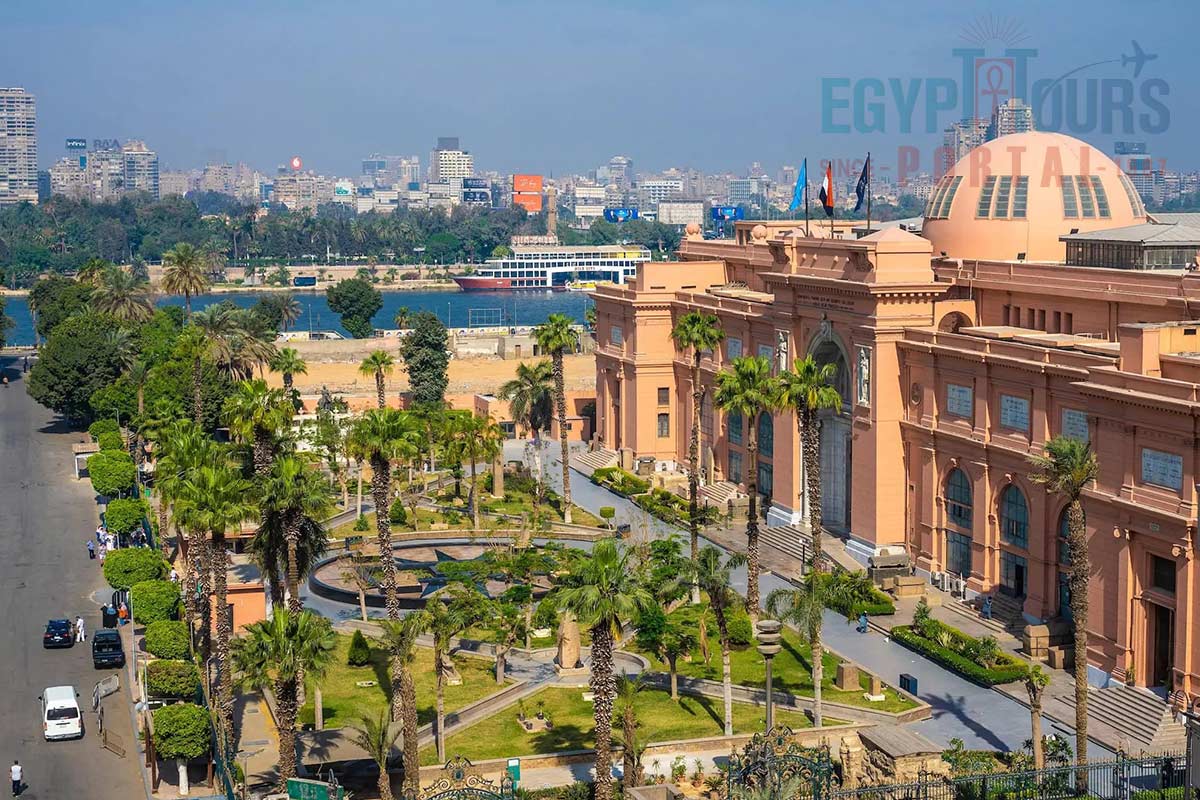
The Egyptian Museum is located in the heart and soul of Downtown Cairo, on the northern side of Tahrir Square, one of Egypt’s most famous and easily reached public squares. Its central location places it close to the Nile River, major hotels, government buildings, transport routes, and the historic urban core of modern Cairo. The current museum building occupies a site in Tahrir Square, formerly known as Ismailia Square, and was constructed as a permanent home for Egypt’s antiquities after earlier collections had moved between Ezbekieh, the Cairo Citadel, Boulaq, and Giza.
The museum can be reached by public transportation, taxi, private car, or Cairo Metro. The easiest metro access is through Sadat Station, which directly serves Tahrir Square. Visitors during one of our magical Cairo tours will arrive by private car and can use the nearby multi-story Tahrir parking lot. Because the museum sits in one of Cairo’s busiest areas, the metro or a planned transfer is often the most convenient option.
The Classical Layout of the Egyptian Museum
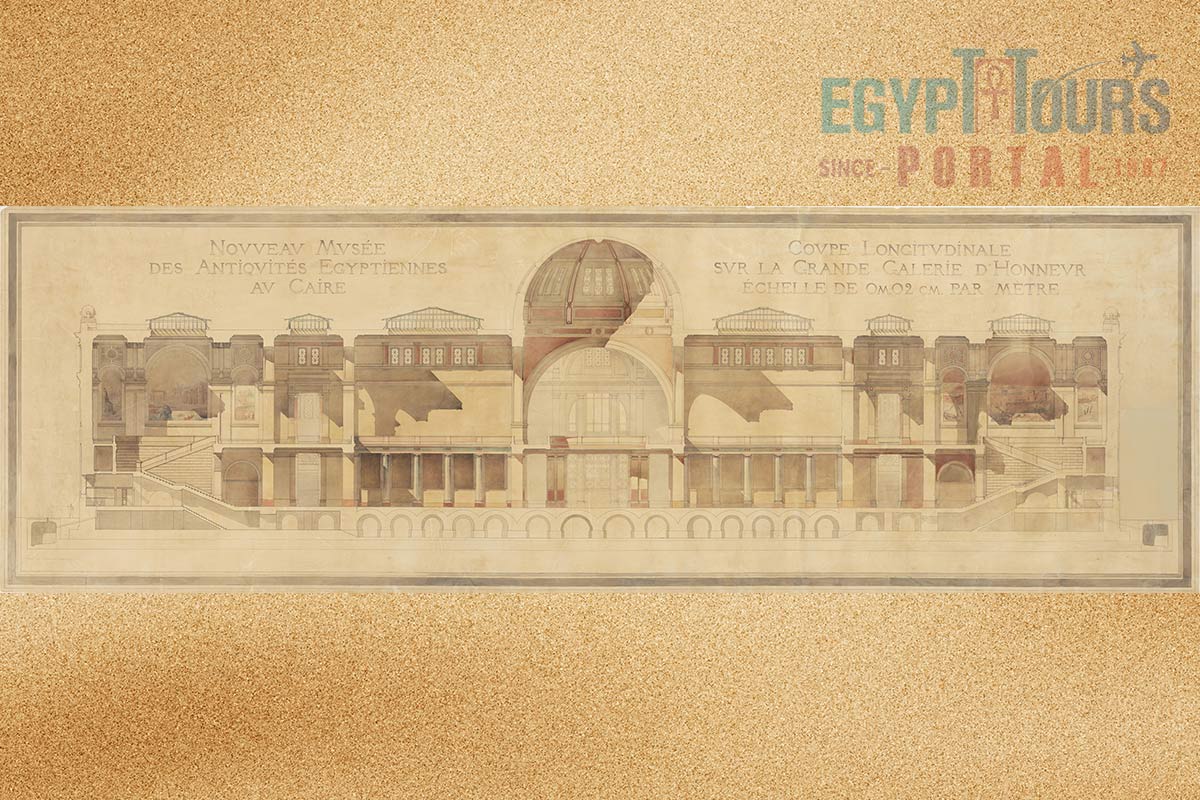
The Egyptian Museum has two main floors: the ground floor and the first floor. The ground floor mainly displays large-scale stone monuments, including statues, reliefs, architectural elements, sarcophagi, and monumental objects. These are generally arranged in chronological order, moving through Egyptian history from the earliest periods toward the later eras.
The first floor is dedicated mostly to smaller and more delicate objects, including papyri, coins, textiles, wooden sarcophagi, funerary objects, jewelry, and selected royal collections. Many papyrus pieces are fragmentary because of their great age, and they include texts in different languages such as ancient Egyptian, Greek, Latin, and Arabic. The coin collection includes Egyptian, Greek, Roman, and Islamic examples made from metals such as gold, silver, and bronze, making it useful for understanding trade, economy, and cultural contact across different periods.
The museum’s display style historically reflected the enormous richness of its collections. Large statues were placed on the ground floor for architectural and practical reasons, while funerary and smaller objects were placed upstairs. Gaston Maspero once defended the dense display style by saying that the museum resembled a pharaonic tomb or temple, where every surface and space was used for imagery, inscriptions, and sacred material.
The Transformative History of the Epic Egyptian Museum In Cairo
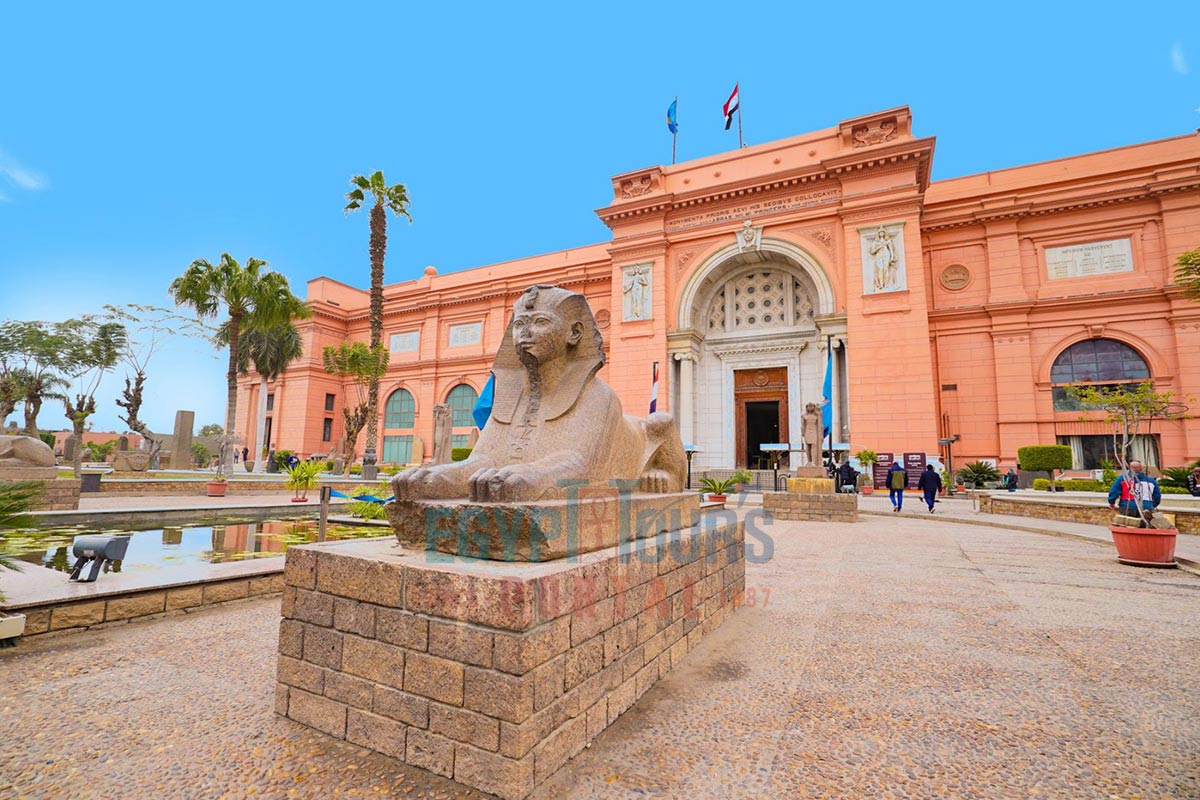
The history of the Egyptian Museum began before the current Tahrir building existed. In 1835, the Egyptian government established an early museum near Ezbekieh Garden, marking one of the first official attempts to protect Egyptian antiquities from uncontrolled trade and removal. However, the early collection suffered from political instability and loss. In 1848, Muhammad Ali Pasha instructed Linan Bek, Minister of Education, to prepare reports on archaeological sites and send artifacts to the Egyptian Museum, but this effort weakened after Muhammad Ali’s death in 1849.
The situation worsened when the collection was reduced and moved to a hall in the Cairo Citadel. In 1855, Khedive Abbas I donated the contents of this hall to Archduke Maximilian of Austria during his visit to the Citadel; these objects are now in the Kunsthistorisches Museum in Vienna. A more systematic museum project began in 1858, when Auguste Mariette, after founding the new Antiquities Department, established the Boulaq Museum in a former warehouse on the Nile bank. Mariette saw Boulaq as temporary, especially after the building was damaged by the 1878 Nile flood.
After Mariette’s death, Gaston Maspero attempted to move the museum but struggled with overcrowding. By 1889, the Boulaq building had become too full, so Khedive Ismail offered one of his palaces in Giza, at the site of today’s zoo, as a new museum. The collections moved there in 1889 and were reorganized by Jacques de Morgan. Later directors included Victor Loret and Maspero again. Finally, in 1902, the artifacts moved to the current museum in Tahrir Square, designed by French architect Marcel Dourgnon and built by the Italian company of Giuseppe Garozzo and Francesco Zaffrani.
The foundation stone for the Tahrir museum was laid on 1 April 1897 in the presence of Khedive Abbas Hilmi II, the prime minister, and cabinet members. The transfer from Giza to Tahrir was a huge operation involving about 5,000 wooden carts, two trains, and roughly 19 round trips. The first shipment alone carried around 48 stone coffins weighing more than 1,000 tons in total. Mariette’s tomb was also moved to the museum garden according to his wish to be buried among the antiquities he had spent his life protecting. The museum officially opened on 15 November 1902.
The Historical Development of the Egyptian Museum In Cairo
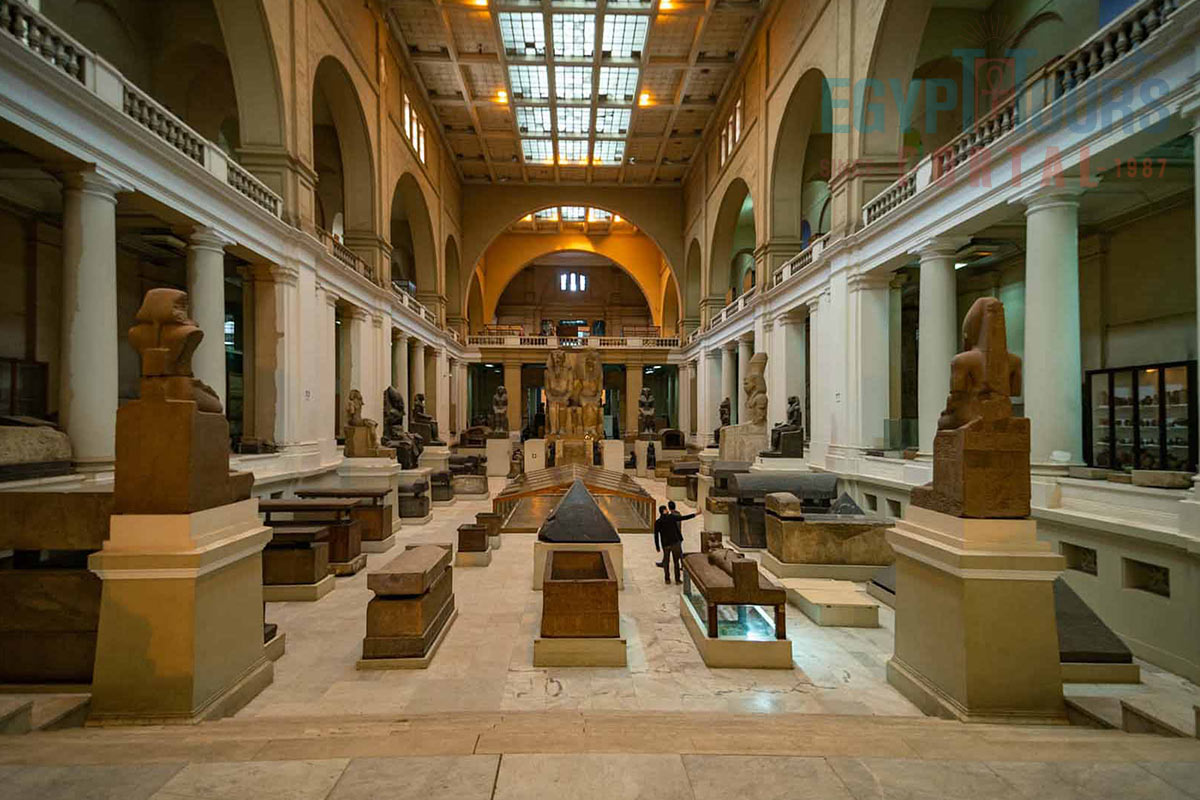
Since the time of its opening, the Egyptian Museum has gone through several major phases of development, restoration, and modernization. Its garden once extended toward the banks of the Nile, but in 1954, much of the surrounding property was taken to build the Cairo Municipality Building. In 1983, the museum building itself was registered as a heritage site because of its architectural value. In 2004, the museum appointed Wafaa El Saddik as its first female director general. In 2006, a major renovation began, including a cultural center and an administrative-commercial annex on the western side.
Later, because pollution and heavy traffic had damaged and obscured the museum’s original appearance, the Ministry of Antiquities launched a rehabilitation initiative in 2012, supported by the German Foreign Ministry and the International Environmental Quality Association. This project included architectural and engineering restoration, improvement of the surrounding Tahrir Square area, restoration of the museum’s original exterior color, wall surfaces, decorative details, window glass, UV protection for artifacts, and the original ventilation system.
By 2016, the eastern and northern wings had been restored, lighting problems were addressed, and artifact displays were reorganized. In July 2016, internal and external lighting upgrades enabled nighttime visits. In 2018, a final development phase introduced a new exhibition layout, restored display cases, repainted walls, upgraded outlets and lighting, and displayed the collections of Yuya and Thuya on the upper floor, along with King Tutankhamun artifacts pending further transfers to the Grand Egyptian Museum. The redistribution of objects was overseen by a committee involving museum leaders from Turin, the Louvre, Berlin, and other institutions.
The museum also faced difficult modern events. During the 2011 Egyptian Revolution, the museum was broken into; two mummies were destroyed, a third was damaged by fire, several artifacts were damaged, and 54 objects were stolen. Some were recovered and restored, and restored artifacts were shown in the 2013 “Damaged and Restored” exhibition.
Separate theft cases were also recorded, including 38 missing artifacts announced in 2004 and a 2025 theft of a 3,000-year-old gold bracelet from the reign of King Amenemope, which authorities said was stolen, sold through jewellers, and melted down. After that, the need for a more secure & state of the art museum was never greater, and soon after came the Grand Egyptian Museum.

The Grand Egyptian Museum: The World’s Largest Egyptological Hub
Explore Egypt’s Grand Egyptian Museum in Giza, showcasing Tutankhamun’s full collection and over 100,000 ancient artifacts.
The Magnificent Library of the Egyptian Museum In Cairo
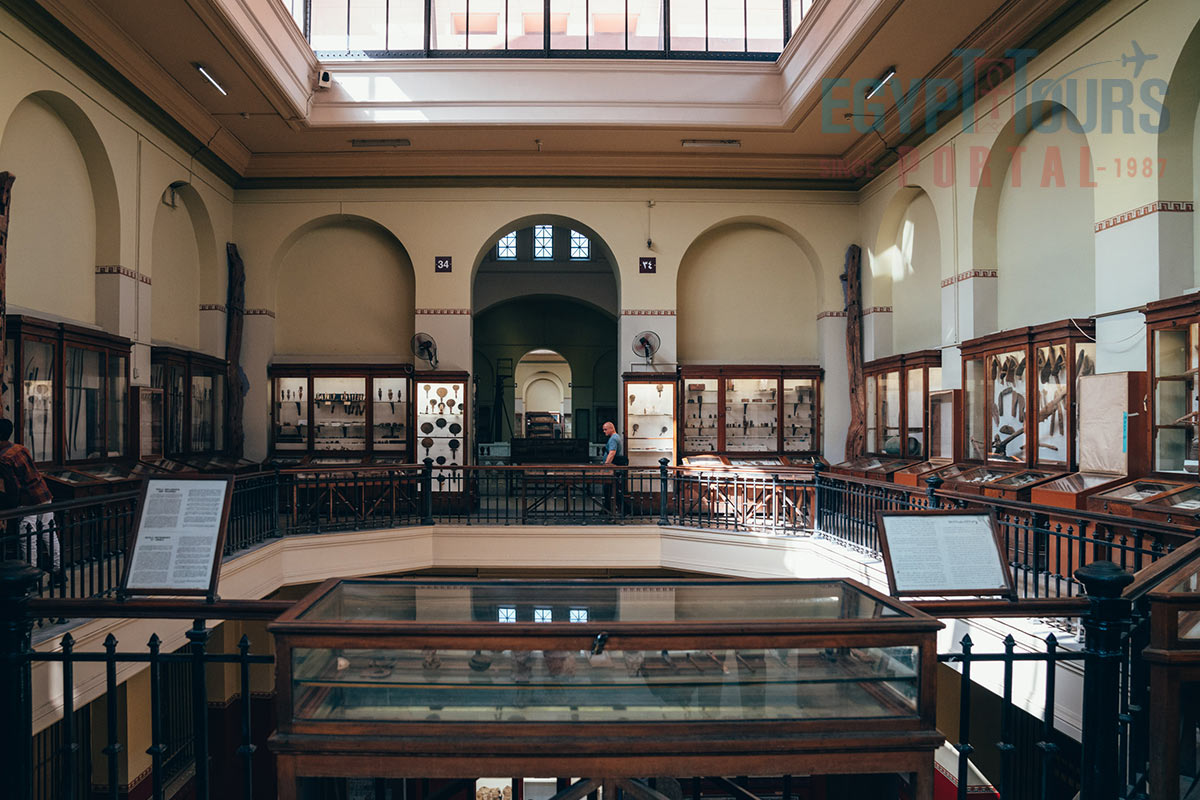
The Egyptian Museum’s library was established at the museum’s opening, with funding for book purchases allocated from 1899. Gaston Maspero supported creating a permanent budget for the library and appointed Dacros as the first librarian from 1903 to 1906. Later librarians expanded the catalogue and holdings, including Monier, who compiled a catalogue until 1926, and Abdel Mohsen El-Khashab, assisted by Diaa El-Din Abu Ghazi, who became head librarian in 1950. Abu Ghazi developed catalogues, expanded international exchanges, and helped grow the library into its current two-story form, with two reading rooms and publication storage.
The library holds more than 50,000 books and volumes, including rare and specialized works on ancient Egyptian, Greek, Roman, and Near Eastern archaeology. Important holdings include Description de l’Égypte, Antiquités de l’Égypte et de la Nubie, works by Lepsius, plus maps, paintings, photographs, and research material. This makes the museum library not just a support space for visitors, but a major scholarly resource for Egyptology and archaeology.
The Marvelous Collections and Attractions of the Egyptian Museum in Cairo
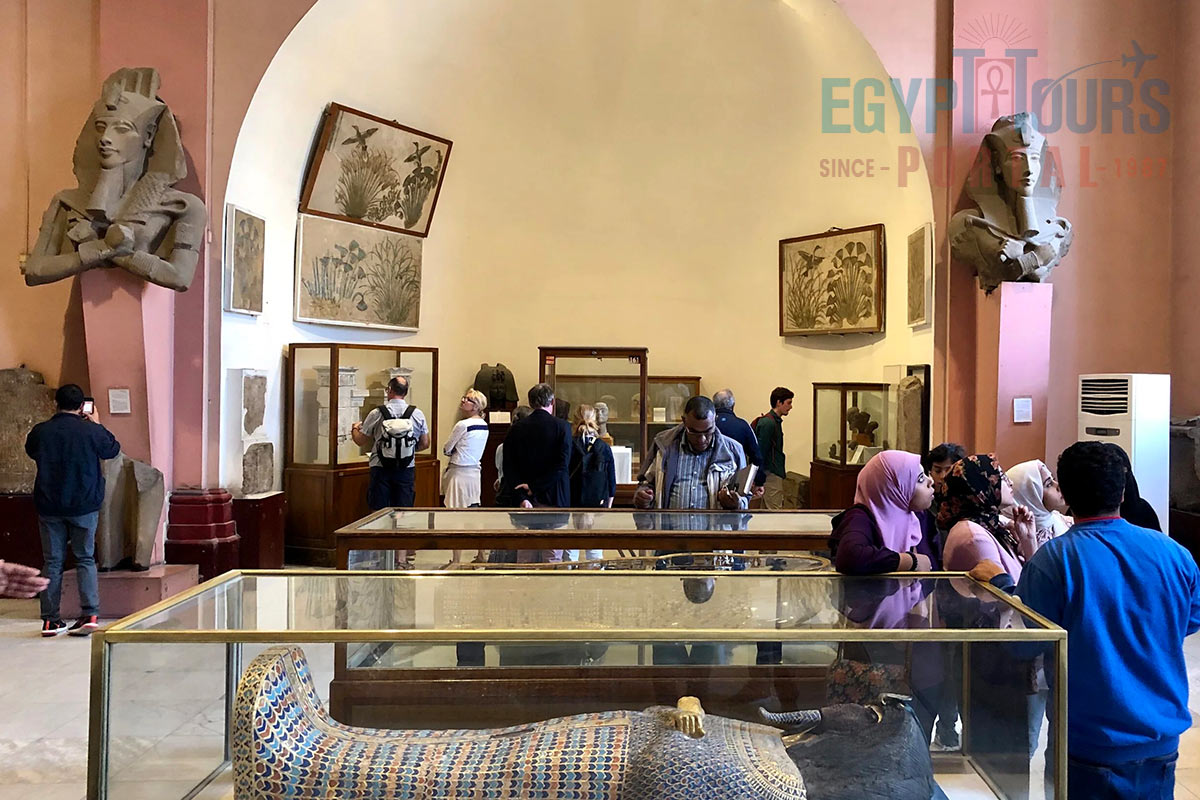
The Egyptian Museum’s collections cover all major phases of ancient Egyptian history. The Prehistoric Period is represented by pottery, jewelry, hunting tools, and daily-life objects from before writing, reflecting early settlement across northern, central, and southern Egypt. The Early Dynastic Period includes artifacts from the First and Second Dynasties, such as the Narmer Palette, the statue of Khasekhemwy, vessels, and tools.
The Old Kingdom collection includes statues of Djoser, Khafre, Menkaure, Sheikh El-Balad, Seneb, Pepi I, and Merenre, as well as coffins, wall paintings, and the collection of Queen Hetepheres I. The Middle Kingdom collection includes the statue of Montuhotep II, statues of 12th Dynasty rulers such as Senusret I and Amenemhat III, treasures of princesses Mereret, Sithathoriunet, and Khenmet, plus coffins, jewelry, daily-life tools, and pyramid fragments from the Faiyum region.
The New Kingdom collection traditionally included treasures of Tutankhamun, statues of Hatshepsut, Thutmose III, Ramesses II, Amenhotep III, and Queen Ti, chariots, papyri, jewelry, Akhenaten’s collection, amulets, writing tools, and agricultural instruments. However, the current state of these collections has changed: many objects are being transferred to the Grand Egyptian Museum in Giza, including the full Tutankhamun tomb collection. The GEM officially opened to the public in November 2025 and presents a major new home for Tutankhamun’s complete collection and other key artifacts.
The Royal Mummy Collection, once displayed in a dedicated hall opened in 1994, is no longer at the Egyptian Museum in Tahrir. On 3 April 2021, 22 royal mummies, 18 pharaohs and 4 queens, were transferred to the National Museum of Egyptian Civilization (NMEC) in Fustat during the Pharaohs’ Golden Parade, where they are now displayed in climate-controlled cases.
The Late Period collection includes the Tanis treasures, made of gold, silver, and precious stones from the tombs of 21st and 22nd Dynasty kings and queens; funerary masks of Psusennes I, Amenemope, and Shoshenq II; statues of Amun, Mentuhotep, and Taweret; the Canopus Jar Lid from Abu Qir; the Stela of Baiankh; and Nubian artifacts, some of which have moved to the Nubian Museum in Aswan. The Roman Period collection includes the Dush Treasure, discovered in 1989.
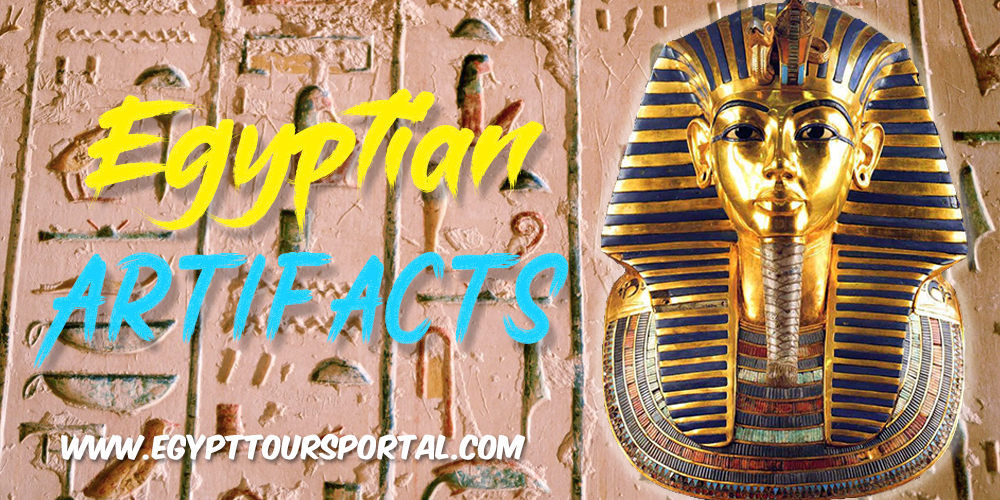
Ancient Egyptian Artifacts
Explore the marvelous artifacts of the ancient Egyptian civilization
Access, Opening Time, and Tickets of the Egyptian Museum
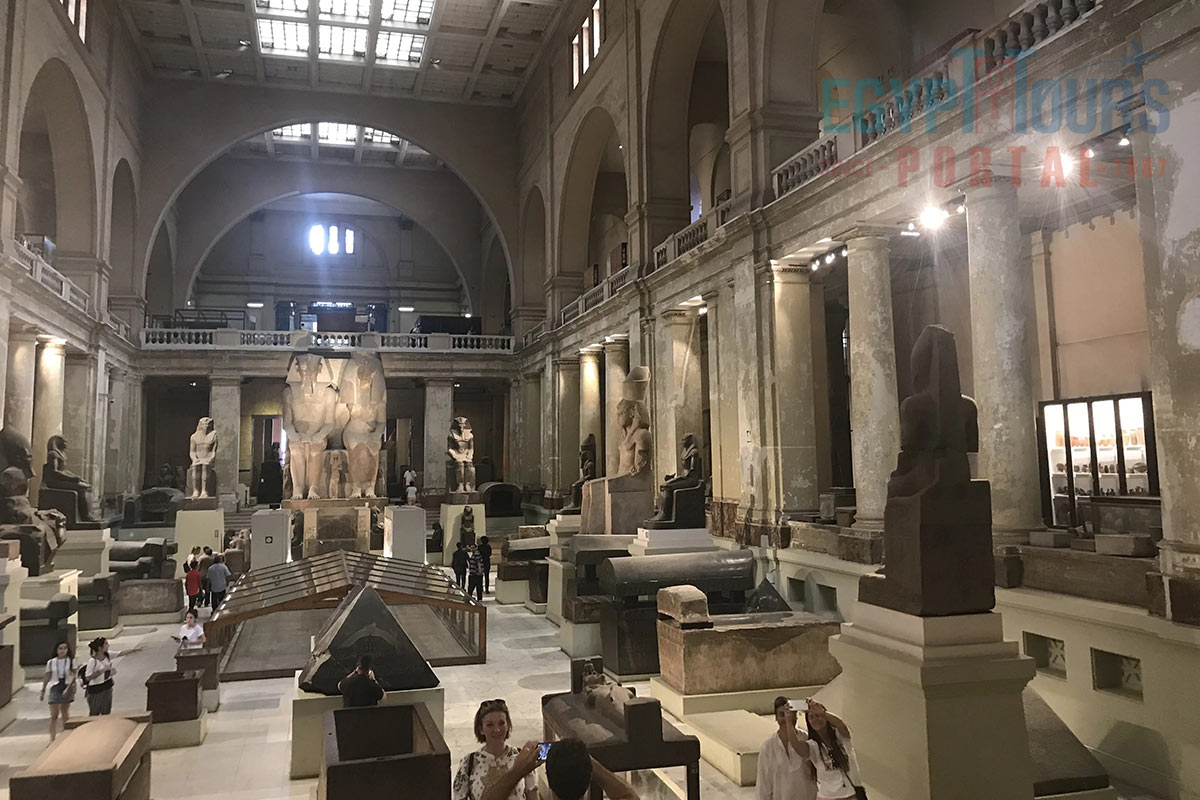
The Egyptian Museum is located on the northern side of Tahrir Square and can be reached by metro, public transport, taxi, private car, or organized transfer. The nearest metro station is Sadat Station, which opens directly onto Tahrir Square. Parking is available at the multi-story Tahrir parking lot.
The official Egyptian Museum ticket office opens from 8:30 AM to 3:00 PM. The Egyptian Museum in Cairo is open from 9:00 AM to 5:00 PM, with tickets at 30 EGP for Egyptian/Arab adults, 10 EGP for Egyptian/Arab students, 550 EGP for foreign adults, and 275 EGP for foreign students; children under 6 enter free. Because hours and prices can change by season or official updates, visitors should verify before visiting.
Photography inside the museum may be restricted because camera flashes can affect small artifacts’ colors. Personal photography may be permitted for a fee, except in sensitive halls such as the Hall of the Golden Mask and the former Royal Mummy Halls, though rules may change after object transfers. Audio guides are available inside the museum.
The Miraculous Pharaohs’ Golden Parade
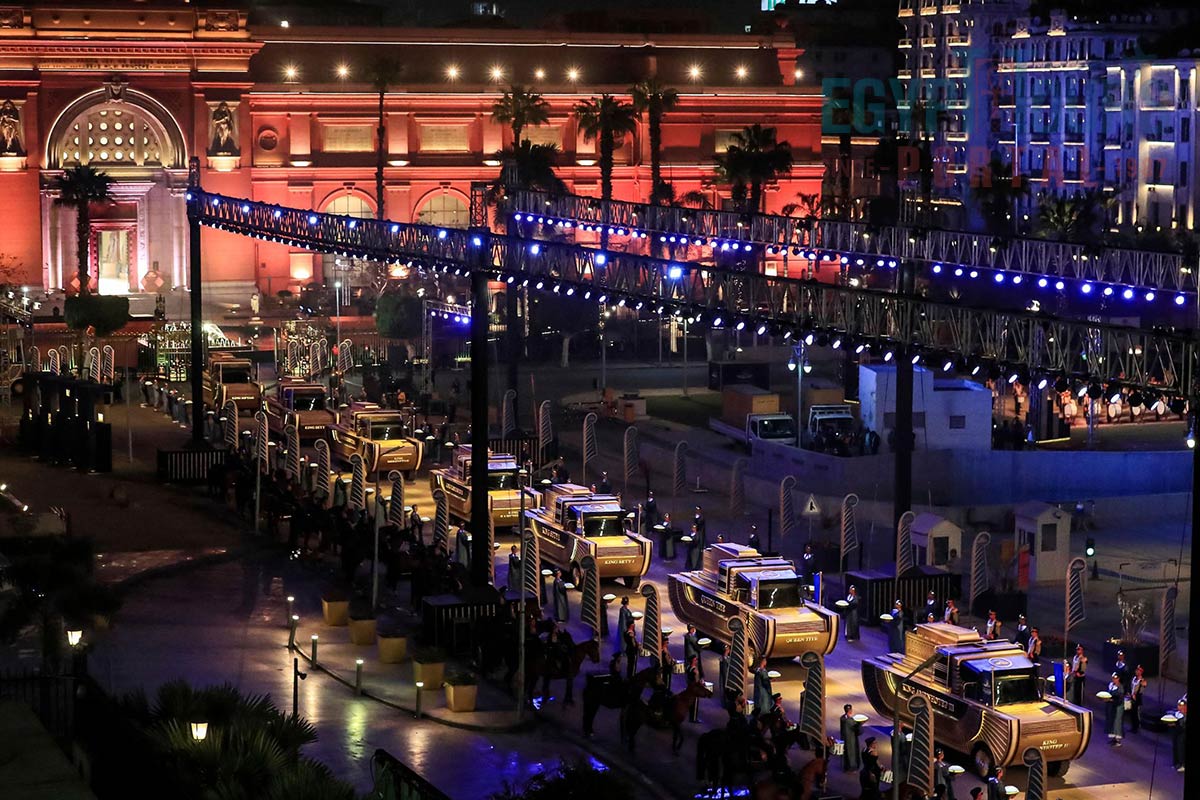
The Pharaohs’ Golden Parade took place on 3 April 2021, when 22 royal mummies were transferred from the Egyptian Museum in Tahrir to the National Museum of Egyptian Civilization in Fustat. The mummies included 18 kings and 4 queens from ancient Egypt’s royal families. Roads around the two museums were closed under heavy security, and the convoy was received at NMEC by Egyptian President Abdel Fattah el-Sisi, accompanied by a ceremonial salute from the Republican Guard.
This event was one of the most important cultural moments in modern Egyptian museum history. It marked the relocation of the royal mummies from a traditional Egyptological display setting to a specialized museum environment with climate-controlled cases designed to better regulate temperature and humidity. It also repositioned the Egyptian Museum in Tahrir within a wider museum network that now includes NMEC and the Grand Egyptian Museum.
Discover the Current State of the Egyptian Museum in Cairo
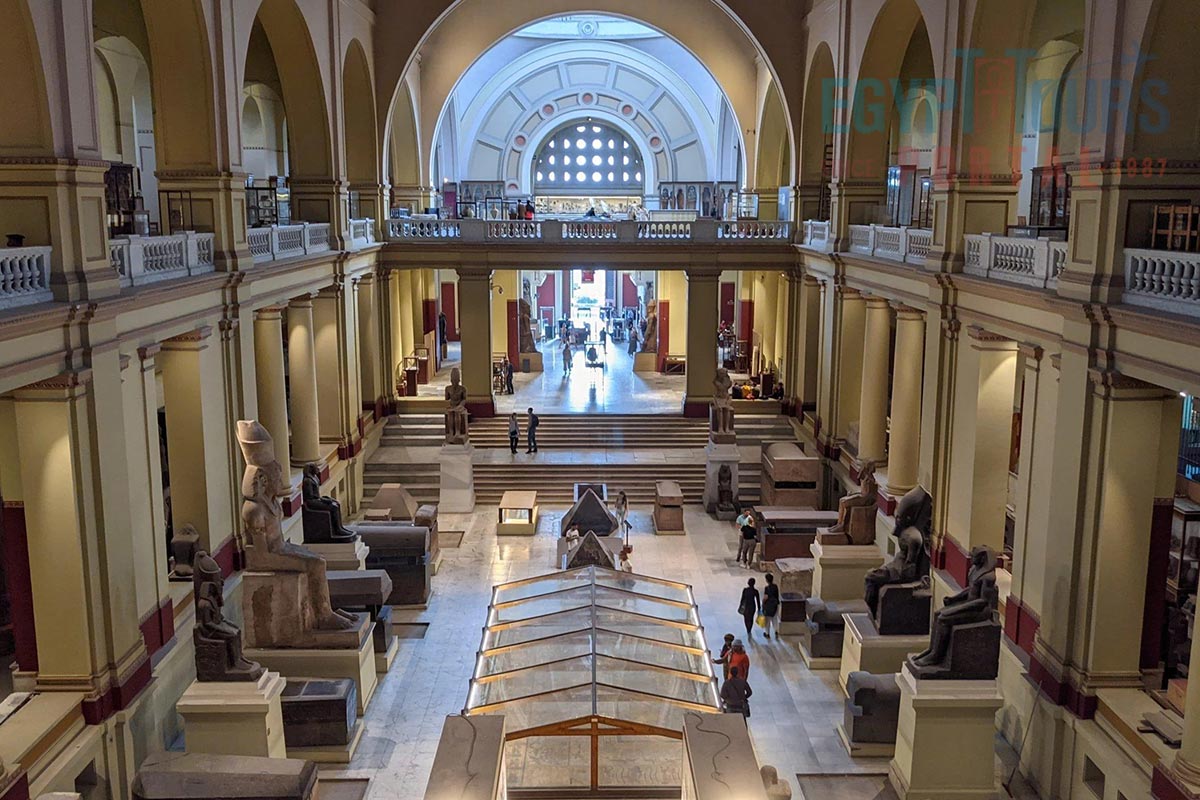
The Egyptian Museum in Tahrir remains open and important, but its role is changing. It is no longer the sole home of Egypt’s most famous treasures, because major collections have moved or are moving to newer institutions. The royal mummies are now at NMEC, and the complete Tutankhamun collection has moved or is being consolidated at the Grand Egyptian Museum, which opened to the public in November 2025 and is promoted as the world’s largest museum devoted to a single civilization.
This does not diminish the Egyptian Museum’s value. Instead, it is transforming from an overcrowded all-purpose storehouse into a more focused historic museum with deep Egyptological importance. Its own building is a heritage monument, its collections still cover the full sweep of ancient Egyptian history, and its role in the story of archaeology, preservation, museum display, and Egyptian national identity remains unmatched.
Choose Your Legendary Tours to the Egyptian Museum
So if you are already in Cairo and want to visit the Egyptian Museum and the marvels of Egypt, or if you are outside Egypt, check our Egypt tours, which are mixed by amazing Nile river cruise to make your Egypt vacation a trip to remember.